Athens with Kids: The Complete Family Guide to Activities, Tips & What to Skip
Athens is far more family-friendly than most travelers expect. From interactive museum programs and funicular rides to free outdoor ceremonies and canal kayaking, this guide covers the best activities for children of all ages, honest pricing breakdowns, and practical logistics for navigating Athens with kids.
Plan and book this trip
Tools from our partner Travelpayouts help you compare flights and hotels. If you book through them, we may earn a commission at no extra cost to you.
Flights
Hotels map
TL;DR
- Athens works well for families year-round, but spring (April-May) and autumn (September-October) offer the most comfortable temperatures for sightseeing with children.
- The Acropolis is unmissable, but go before 9am in summer to avoid dangerous heat and heavy crowds.
- Many state museums and archaeological sites offer free or reduced admission for children and EU residents under 25, making Athens genuinely affordable for families.
- The Stavros Niarchos Foundation Cultural Center is the city's best free family space, with a huge park, seasonal activities, and year-round events for kids.
- Athens is not just for history-obsessed older children. Dedicated children's museums, a tourist train, funicular rides, and beach day trips make it a realistic destination for families with toddlers too.
Why Athens Works for Families (And Where It Falls Short)
Athens tends to get underestimated as a family destination. The assumption is that a city built around ancient ruins and history museums appeals mainly to adults with an academic interest in antiquity. That's not the full picture. Yes, the Acropolis is the headline attraction, and yes, some parts of it are a steep uphill walk over uneven limestone. But alongside the archaeology, Athens has dedicated children's museums, enormous free parks, seasonal outdoor activities, a tourist train that loops past the major landmarks, and a beach riviera accessible by tram from the city center.
Where Athens genuinely does challenge families is in its summer climate. June through August sees average highs above 30°C regularly, with heatwaves pushing past 38°C in central Athens. Exposed ancient sites like the Acropolis have almost no shade, and the marble pathways reflect heat intensely. Families visiting in summer need to restructure their day around the heat, which means early starts, long midday breaks, and evening activity. This isn't a dealbreaker, but it requires planning that first-time visitors sometimes underestimate.
⚠️ What to skip
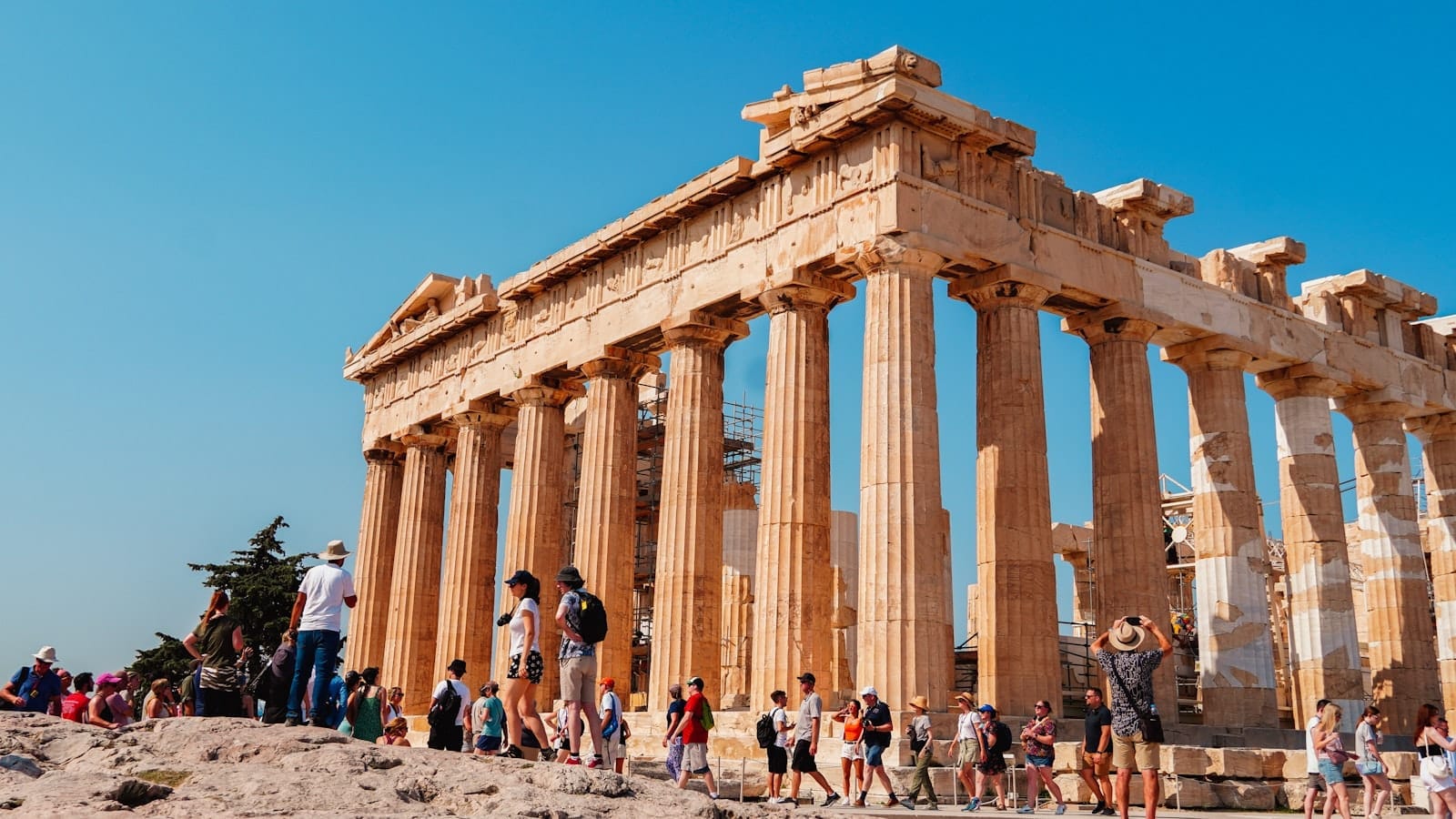
In July and August, aim to arrive at the Acropolis gates early. By 10:30am the exposed hilltop becomes genuinely uncomfortable for young children, and queues at the entrance can stretch 30-45 minutes on peak days. Book timed-entry tickets in advance through hhticket.gr.
The Acropolis and Acropolis Museum: Getting the Most Out of Both
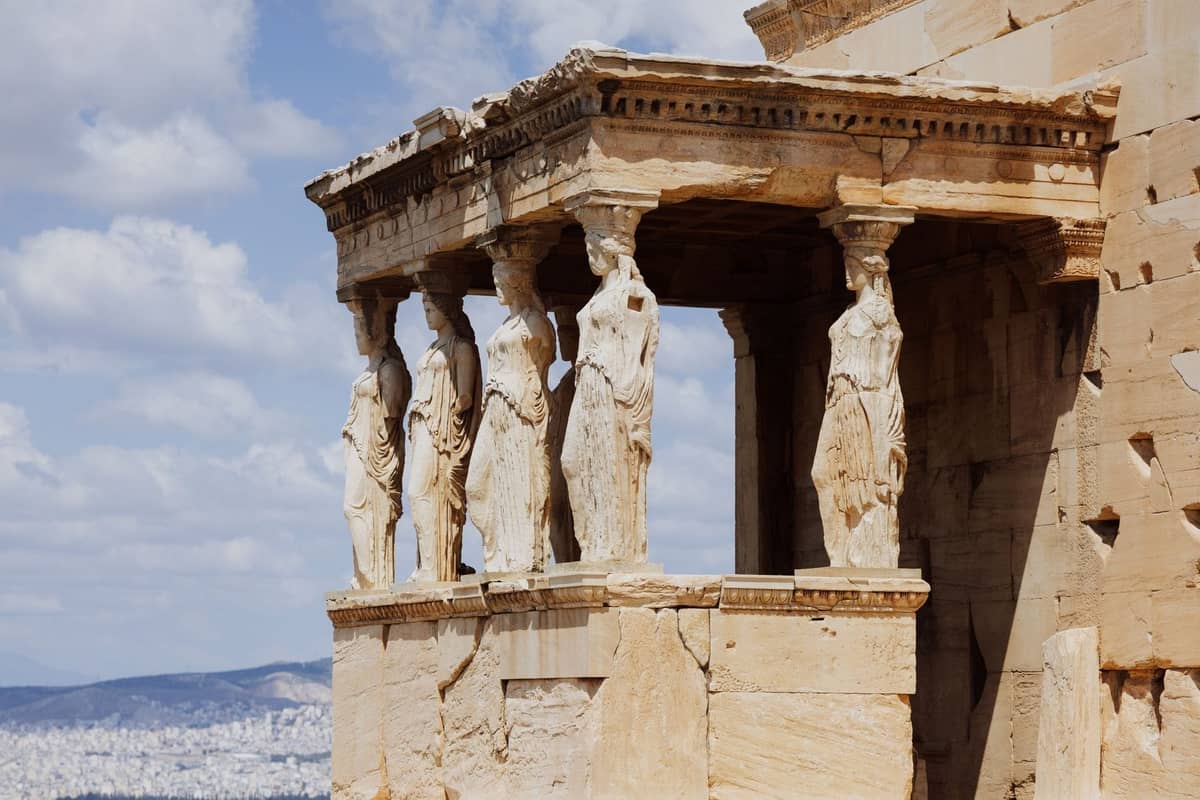
The Acropolis is the obvious starting point for any Athens family itinerary, and for good reason. The Parthenon, the Erechtheion with its Caryatid porch, and the sweeping panorama over the city are awe-inspiring for children who have any frame of reference for ancient history. The Acropolis & Slopes ticket (€30 year-round, reduced €15) covers the hill and south slope monuments including the Theatre of Dionysus. Other sites such as the Ancient Agora and Roman Agora require separate tickets. EU citizens under 25 enter free with valid ID, and children under 18 from any country generally receive free or heavily reduced entry — verify current terms at hhticket.gr before your visit.
The Acropolis Museum at the base of the hill is arguably better suited to children than the hilltop itself. The building is air-conditioned (critical in summer), the layout is logical and not overwhelming, and the museum specifically offers children's backpacks containing maps, games, and activity sheets themed around the goddess Athena and the original Parthenon sculptures. This kind of hands-on engagement makes a real difference for kids aged 6-12. Tickets are €20 for adults year-round (€10 reduced), with free entry for eligible children — check the museum's official site, theacropolismuseum.gr, for the current policy. The museum's rooftop restaurant also has direct views of the Acropolis and is a genuinely good lunch stop, though it books up fast.
💡 Local tip
If you're visiting both the Acropolis hilltop and the Acropolis Museum on the same trip, do the museum first on a separate day (or afternoon). The museum provides context that makes the actual ruins much more meaningful for children, especially the gallery showing where the original Parthenon sculptures were positioned.
Best Family-Friendly Attractions Beyond the Acropolis

The National Archaeological Museum is the largest archaeological museum in Greece and one of the most important in the world. For families, the key rooms are the ones containing the Antikythera Mechanism (an ancient analog computer that genuinely astonishes children and adults alike), the gold death masks from Mycenae, and the bronze statue of Zeus or Poseidon mid-throw. The museum is large, so plan for two to three hours maximum with children and focus on two or three rooms rather than attempting everything. Admission is around €12 for adults in high season, reduced in winter, and free for EU under-25s.
- Mount Lycabettus Funicular The funicular (cable car) up to the summit of Lycabettus Hill at 277 meters is a genuine hit with kids. The ride itself takes a few minutes and the panoramic view from the top covers the entire city. Return tickets are around €7.50 for adults and half-price for children, but verify current fares at the station in Kolonaki. The summit also has a cafe and a small church.
- Happy Train (Athens Tourist Train) A 40-minute open-air road train departing from near Syntagma and Ermou that loops past the Temple of Olympian Zeus, the Panathenaic Stadium, Hadrian's Arch, Monastiraki, and through Plaka. It requires zero walking and provides a structured overview of the central landmarks. Good for younger children or families with limited mobility. Tickets are sold at the boarding point.
- Hellenic Children's Museum Specifically designed for children up to 12, with interactive rooms including a Bubble Room and the Room of Pythagoras. Located in the Plaka area. This is the kind of hands-on, language-barrier-free space that saves a trip when younger children hit their archaeological-site limit. Check current hours and programs at hcm.gr.
- Stavros Niarchos Foundation Cultural Center (SNFCC) A vast free public space in Kallithea (about 20 minutes from the center by tram or taxi) housing the National Library, the National Opera, and a large landscaped park. In summer, the canal runs free kayaking, sailing, and cycling sessions for families. In winter, an ice rink typically opens. The park itself is free, well-maintained, and has plenty of open space for children to run around.
- Changing of the Guard at the Hellenic Parliament The Evzone guards change every hour at the Tomb of the Unknown Soldier in front of Parliament on Syntagma Square. The full ceremonial change with full dress uniform happens every Sunday at 11am and draws large crowds. It's free, takes about 10 minutes, and children find the elaborate uniforms and slow-motion choreography genuinely captivating.
Families who want more outdoor time should know that the National Garden in central Athens has a small zoo, duck ponds, and shaded walkways, making it one of the best midday retreats in the city center. Entry is free. For older children interested in ancient athletics, the Panathenaic Stadium (where the first modern Olympics were held in 1896) allows visitors to walk on the actual track and sit in the marble seating — a hands-on history experience that tends to land well with sports-minded kids.
Neighborhoods Worth Exploring with Children
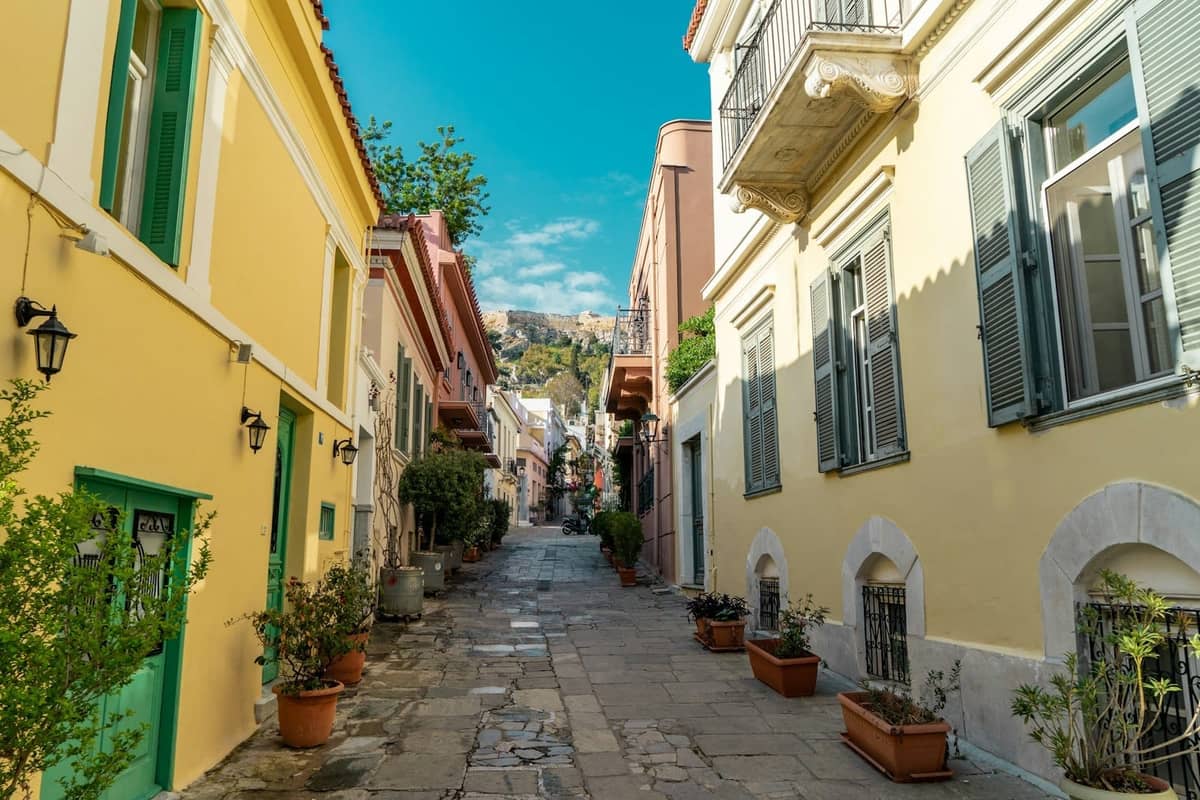
Not all of Athens is equally navigable with a stroller or young children in tow. The best areas for family wandering are Plaka and Monastiraki, which are relatively flat (by Athens standards), pedestrian-friendly in their central sections, and packed with affordable souvenir shops, street food, and cafes. Plaka in particular has a village-like atmosphere with narrow lanes that children enjoy exploring. The Monastiraki Flea Market on Sundays is chaotic but genuinely entertaining for older kids.
The pedestrianized promenade along Dionysiou Areopagitou Street, which runs between the Acropolis Museum and Thisio, is one of the most pleasant walking routes in the city for families. It's wide, shaded in parts, and free of traffic. It connects directly to the Ancient Agora, where children can run around a large open archaeological site rather than being confined to museum corridors. The Agora requires a separate site ticket (verify at hhticket.gr).
✨ Pro tip
Athens' pavements in older neighborhoods like Plaka and Monastiraki are uneven, cobbled, and sometimes steep. A lightweight, foldable stroller is manageable on main routes, but a baby carrier is significantly easier for the Acropolis ascent and for narrow lane exploration in Plaka and Anafiotika.
Practical Logistics: Getting Around, Timing, and Costs
Athens' public transport network is genuinely family-friendly in terms of coverage, though not always in terms of comfort during peak hours. The Metro is the easiest option for families, with air-conditioning and clear signage in English. Line 1 (Green), Line 2 (Red), and Line 3 (Blue) cover most central attractions. The tram runs from Syntagma down to the coast and is useful for day trips to the Athenian Riviera beaches. Buses and trolleybuses cover the full metro area but can get crowded and hot. Children under a certain height or age typically travel free on public transport, but verify current OASA regulations before your trip.
Taxis and ride-hailing apps (Beat is the most widely used local option) are a practical alternative for families with young children, particularly for airport transfers or late-evening returns. Athens International Airport 'Eleftherios Venizelos' (IATA: ATH) is in Spata, roughly 30-35km from the city center. The Metro Line 3 runs directly from the airport to Syntagma and Monastiraki in about 40 minutes. Express bus X95 also covers the airport-Syntagma route and operates 24/7, though travel time varies with traffic. Taxi fares between the airport and central Athens are set by law, with separate day and night tariffs. Always use official airport taxis from the designated rank in arrivals.
- Book Acropolis and Acropolis Museum tickets online in advance, especially in July and August. Same-day tickets at the gate can mean long queues.
- EU citizens under 25 get free entry to most state-run museums and archaeological sites with valid ID — bring passports or ID cards for children.
- Plan major outdoor sites (Acropolis, Ancient Agora, Temple of Olympian Zeus) for 8-10am in summer. Use midday hours for air-conditioned museums.
- Budget for separate tickets at each archaeological site — the multi-site combo pass was discontinued in 2025.
- Carry water at all times in summer. Fountains are scarce on the Acropolis hill, and buying bottled water from vendors at tourist sites costs significantly more than from supermarkets.
- Sunday mornings are the best time for the full Changing of the Guard ceremony at Parliament, but the area around Syntagma gets busy. Arrive 10-15 minutes early for a good view.
For families considering day trips, both Cape Sounion and Aegina Island work well with children. Cape Sounion is about 70km from Athens by road (roughly 1.5 hours by bus from Pedion tou Areos terminal) and has a dramatic clifftop temple and swimming options nearby. Aegina is a short ferry ride from Piraeus (around 40-70 minutes depending on the ferry type) and offers beaches, a well-preserved ancient temple, and a relaxed atmosphere very different from central Athens.
Honest Assessment: What Works, What Doesn't
Athens is not a purpose-built family resort destination. There are no theme parks, water parks are outside the city center, and the pace of the city involves a lot of walking on hard surfaces in often hot conditions. Families with children under 3 will find the logistics harder than those with children aged 6 and above, simply because of stroller navigation and the absence of dedicated toddler infrastructure at most archaeological sites.
That said, the city is considerably more affordable for families than many Western European capitals once you factor in the free and reduced admissions. A family of two adults and two EU children under 25 visiting the Acropolis combined site, the National Archaeological Museum, and several other state sites could easily spend a full three days of sightseeing with museum admission costs well under €50 total. Add the numerous free activities in Athens like the National Garden, the Changing of the Guard, the SNFCC park, and wandering Plaka, and the budget picture becomes quite manageable. For a fuller picture of costs, see our Athens on a budget guide.
The best overall timing for visiting Athens with kids is late April through early June, or September through mid-October. Temperatures during these periods are typically 20-28°C, crowds at major sites are lighter than peak summer, and most seasonal activities are running. For more detail on planning around the calendar, the best time to visit Athens guide covers monthly conditions in depth.
ℹ️ Good to know
Greece uses Type C and Type F (Europlug and Schuko) power sockets at 230V/50Hz. The emergency number is 112 (EU standard), and tourist police in Athens can be reached on 171. Athens tap water is officially safe to drink in the city center, which is useful to know for refilling children's water bottles throughout the day.
FAQ
Is Athens a good destination for families with young children?
Yes, with realistic expectations. Athens works well for families with children aged 5 and above who can handle walking on uneven terrain. Toddlers are manageable but require a good baby carrier rather than a stroller in many areas. The city offers dedicated children's museums, interactive museum programs, free parks, a tourist train, and funicular rides alongside the archaeological sites, so it's not exclusively an adult destination.
Do children get free entry to the Acropolis and other museums in Athens?
EU citizens under 25 generally receive free entry to state-run archaeological sites and museums, including the Acropolis, when presenting valid ID. Children under 18 from non-EU countries may qualify for free or reduced admission at some major sites. Policies are reviewed periodically, so verify current terms on culture.gov.gr or the individual museum's official website before your visit.
What is the best time of year to visit Athens with kids?
Late April through early June and September through mid-October are the most comfortable periods. Summer (June-August) is very hot, with central Athens frequently exceeding 35°C, which makes prolonged outdoor sightseeing difficult for children. If you must visit in summer, structure your day with early morning starts at outdoor sites and air-conditioned museums for the hottest midday hours.
How do I get from Athens airport to the city center with kids?
Athens International Airport (ATH) in Spata is 30-35km from central Athens. The easiest family options are Metro Line 3 (about 40 minutes to Syntagma, no changes required), or a taxi from the official airport taxi rank using the legally set flat rate. Pre-booked private transfers are also available. Avoid unlicensed taxis and always use metered or flat-rate official vehicles.
What are the best free things to do in Athens with children?
The Changing of the Guard at the Hellenic Parliament is free and engaging for children. The National Garden has a small zoo and duck ponds at no charge. The SNFCC park in Kallithea is free with seasonal family activities. Wandering Plaka and Monastiraki costs nothing. Areopagus Hill next to the Acropolis is free to climb and offers excellent views without the entrance fee.