Athens in Summer: What to Expect in June, July & August
Summer in Athens means intense heat, peak crowds, and some of the longest days in Europe. This guide breaks down what each month actually looks like, how to handle the heat, and how to get the most out of your visit in June, July, or August.

Plan and book this trip
Tools from our partner Travelpayouts help you compare flights and hotels. If you book through them, we may earn a commission at no extra cost to you.
Flights
Hotels map
TL;DR
- Summer (June–August) brings average highs of roughly 28–34°C, with July the hottest month and occasional heatwaves above 40°C.
- June is the sweet spot: warm but not brutal, crowds are building but manageable, and prices are slightly lower than July.
- Book the Acropolis for early morning (open from 8:00) — visiting after 11:00 in July or August is genuinely uncomfortable.
- August is peak tourist season for Greece overall, but Athens city itself quiets down as locals leave — especially around 15 August (Assumption Day).
- If summer heat concerns you, consider September or October instead — see our best time to visit Athens guide for a full seasonal breakdown.
Summer Weather in Athens: The Real Numbers
Athens has a hot-summer Mediterranean climate (Köppen Csa), which means very low rainfall from June through August and relentless sunshine. The hot season officially runs from around 10 June to 12 September, when average daily highs consistently exceed 29–30°C. That sounds manageable on paper, but the Athens urban basin — surrounded by mountains and full of heat-absorbing concrete — amplifies temperatures considerably compared to the coast.
- June Average highs around 26–28°C, lows around 18–20°C. Sea temperature near Athens roughly 22°C. Minimal rain. The most comfortable of the three summer months.
- July The hottest month. Average highs around 33°C, lows around 22–23°C. Skies are clearest. Sea temperature near Athens around 26°C. Rainfall approximately 6–9 mm for the entire month.
- August Slightly more humid than July. Average highs similar to July (32–33°C). Occasional heatwaves push temperatures to 38–40°C or above. Sea temperatures peak. Locals leave the city in large numbers.
⚠️ What to skip
Heatwaves exceeding 40°C do occur in July and August. If you are visiting with young children, elderly family members, or have heat-related health concerns, plan all outdoor activity before 11:00 and after 18:00. The midday window (13:00–17:00) is genuinely dangerous during heatwave conditions.
One common misconception worth addressing: Athens is not 'unbearably hot' for everyone. Many travelers manage the summer heat comfortably by starting sightseeing early, carrying water, wearing a hat, and retreating to air-conditioned museums or shaded cafes during peak afternoon hours. It requires planning, not avoidance. That said, if you are sensitive to heat and want relaxed sightseeing, June is significantly better than August.
Month-by-Month Breakdown: June, July, and August
Each summer month in Athens has a distinct character. Understanding the differences helps you set realistic expectations and pick the right window for your trip.
June is the entry point into high season. Temperatures are warm rather than punishing, crowds at major sites like the Acropolis and the Acropolis Museum are significant but not at their July peak, and hotel prices — while elevated — haven't yet hit their ceiling. The Athens Festival (Epidaurus and Odeon of Herodes Atticus performances) is in full swing from June, which adds genuine cultural value to a summer visit.
July is peak of peak: the hottest, the most crowded, and the most expensive month of the year. If you're visiting in July, early-morning tickets to outdoor sites are not optional — they're essential. The National Archaeological Museum and the Acropolis Museum become excellent midday refuges, being air-conditioned and genuinely world-class. Book timed entry in advance where possible — both sell out.
August surprises many visitors. Greece overall is at peak tourist capacity, but Athens city itself often feels quieter after the first week. Greek families decamp to islands and coastal villages, especially around 15 August (the Assumption of the Virgin Mary, a major public holiday). Some small family-run restaurants and local shops close for a week or two around this date. The city takes on an almost subdued quality in the second and third weeks of August, while tourist sites remain busy with international visitors.
💡 Local tip
The Odeon of Herodes Atticus hosts performances of opera, ballet, and classical music from June through September as part of the Athens Epidaurus Festival. Watching a concert in this 2nd-century Roman theatre with the illuminated Acropolis overhead is one of the genuinely special summer experiences in Athens. Book tickets early at the festival's official website — popular performances sell out weeks in advance.
Crowds, Costs, and Booking Logistics
Summer is the most expensive time to visit Athens across the board. Flights from major European cities and North America reach their annual price peak in July and August. Hotels in central neighborhoods like Plaka, Monastiraki, and Koukaki book out weeks in advance for good properties. Budget accommodation options with reliable air conditioning fill up fastest — a detail worth paying attention to, since not all budget hotels in Athens have adequate A/C.
✨ Pro tip
When booking accommodation for July or August, filter explicitly for air conditioning and check recent reviews that mention room temperature. A room with a window unit that can't cool below 26°C is not a functional option in August heat. Pay the extra €15–20 per night for confirmed central A/C if your budget allows.
The Acropolis requires advance online booking in summer. Tickets are sold via the official e-ticket platform at hhticket.gr. Timed entry slots for July and August sell out days in advance during peak weeks. The €30 Acropolis & Slopes ticket covers the hill and south slope monuments including the Ancient Agora, the Theatre of Dionysus, and the Roman Agora — other sites such as the Roman Agora require separate tickets. Verify current pricing at hhticket.gr before your visit.
- Book the Acropolis entry slot for 8:00–9:00 opening. By 10:30, the site is crowded and the sun is already strong.
- Pre-book the Acropolis Museum separately — it requires its own ticket and is worth a full morning or evening visit.
- The National Archaeological Museum is less visited than the Acropolis but equally impressive; visit on a hot afternoon when outdoor sites are uncomfortable.
- Ferry tickets to nearby islands from Piraeus sell out for peak August weekends — book at least 2–3 weeks ahead for Hydra, Aegina, or Spetses.
- Airport transfers: the X95 express bus runs 24/7 from Athens International Airport (ATH) to Syntagma Square and takes 40–60 minutes depending on traffic. The Metro Line 3 takes around 40 minutes to Syntagma. Taxis operate on official flat-rate fares between the airport and city centre — verify current rates at the airport's official site before travel.
What to Do in Athens in Summer: Practical Priorities
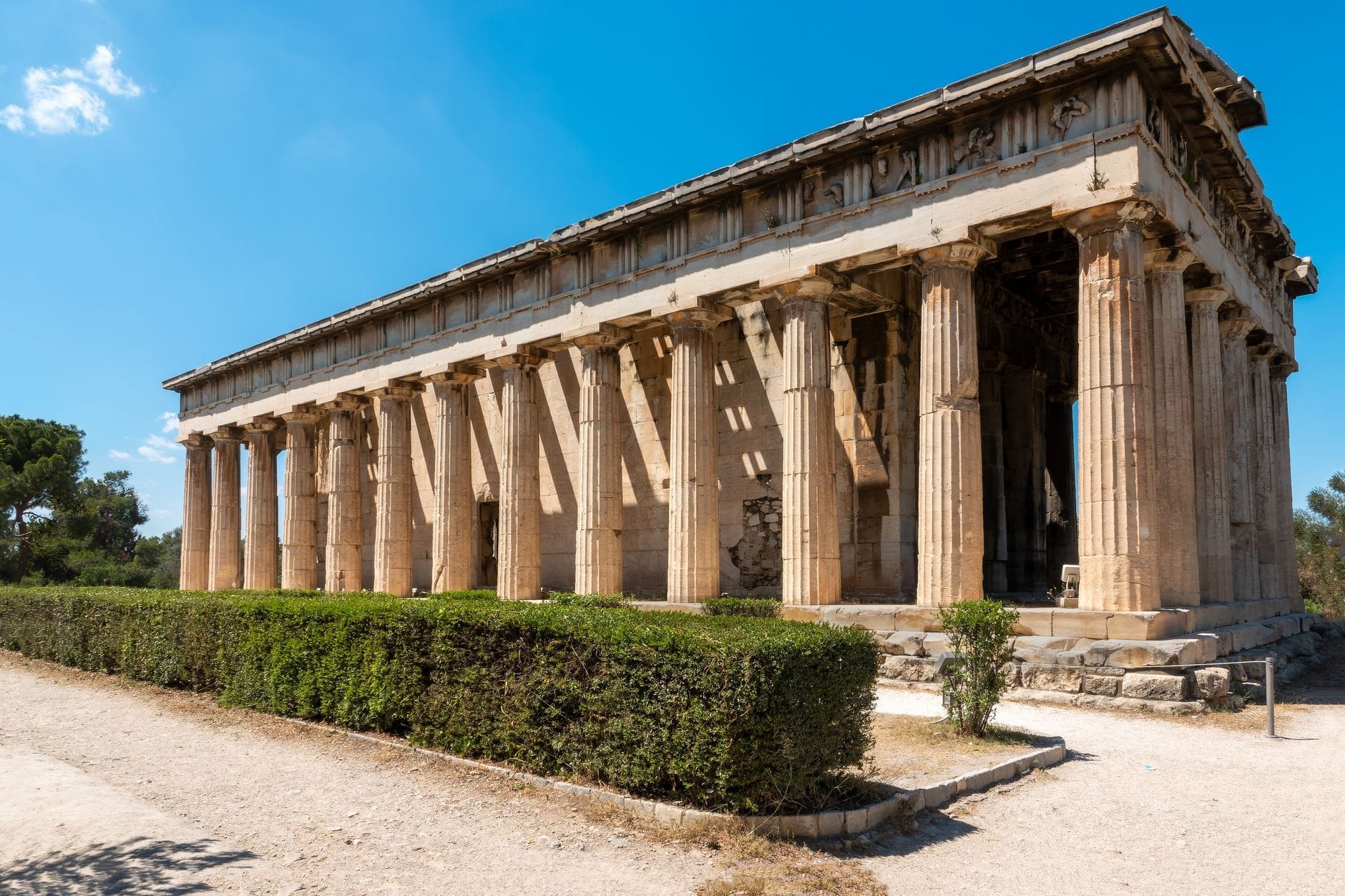
The core archaeological sites remain the main draw regardless of season, but summer demands a different approach to them. Beyond the Acropolis itself, the Temple of Hephaestus in the Ancient Agora is one of the best-preserved ancient Greek temples in existence and far less crowded than the Parthenon. The Temple of Olympian Zeus is best visited early morning when the light is soft and the site is nearly empty.
Summer evenings are Athens at its most enjoyable. Rooftop bars across Monastiraki and Psyrri fill up after 21:00, when temperatures drop to a bearable 24–26°C and the lit Acropolis provides an extraordinary backdrop. Dinner before 21:00 marks you immediately as a tourist — Greeks eat late, and the better restaurants don't hit their stride until 21:30 or 22:00.
Day trips from Athens to the coast or islands are worth building into a summer itinerary. Cape Sounion and the Temple of Poseidon is a classic 1.5-hour drive (or organized tour) from central Athens, with swimming spots nearby. Aegina Island is reachable from Piraeus in under an hour by fast ferry and makes for a manageable and rewarding day trip. The Lake Vouliagmeni on the Athenian Riviera is a thermal lake about 25 km from the centre — a popular half-day escape from city heat.
Heat Management: How to Sightsee Without Suffering
The visitors who struggle most in an Athens summer are those who try to sightsee like they would in April. The heat between 12:00 and 17:00 in July and August is not a minor inconvenience — it is a serious physical factor that requires adaptation. The visitors who enjoy summer most treat it as a two-session day: early morning outdoor activity, a long midday pause, and a full evening programme.
- Start outdoor sites by 8:00. The Acropolis at 8:30 on a July morning is extraordinary: cooler air, low-angle light, and far fewer people.
- From roughly 12:00 to 17:00, move indoors: museums, churches, covered markets, or your hotel room with A/C.
- The Athens Central Market (Varvakios Agora) near Monastiraki is a covered indoor space worth visiting late morning — and one of the more authentic non-tourist experiences in central Athens.
- Carry at least 1.5 litres of water when outdoors. Tap water in Athens is safe to drink, so refill bottles freely.
- Wear a hat with a brim rather than a cap — UV levels in Athens in July are classified as 'very high' to 'extreme' around midday.
- Sunscreen SPF 50+ and sunglasses are not optional in July and August; reapply sunscreen every 2 hours when outdoors.
Athens in summer is perfectly manageable for families, but requires more planning than an adult-only trip. For detailed advice on pacing, child-friendly sites, and avoiding meltdowns (literal and metaphorical), see our guide on Athens with kids. The National Garden near Syntagma is one of the best midday retreats in the city — shaded paths, a small zoo, and duck ponds that children tend to enjoy regardless of age.
Getting Around Athens in Summer

The Athens Metro is air-conditioned and the most practical way to move around the city in summer heat. Lines 2 and 3 cover the main tourist corridor through Syntagma and Monastiraki, while Line 3 connects the airport with the city and Line 1 runs out toward the port at Piraeus. Walking between sites in Plaka and Monastiraki is feasible early morning, but planning a 20-minute midday walk in August heat is an easy way to arrive somewhere overheated and irritable. Use the metro for anything over 15 minutes of walking distance during peak heat hours.
Taxis are plentiful and metered; ride-hailing apps like Beat operate widely across Athens. From Athens International Airport (IATA: ATH), located in Spata approximately 33 km from central Athens, the Metro Line 3 is the most reliable option — around 40 minutes to Syntagma Square. The X95 express bus covers the same route and runs 24 hours. For full transport options including routes and transfer strategies, the getting around Athens guide covers everything in detail.
FAQ
Is Athens too hot to visit in July and August?
Not too hot to visit, but hot enough to require planning. Average highs in July reach 33°C and heatwaves above 40°C occur. Visitors who schedule outdoor sightseeing before 11:00 and after 18:00, use air-conditioned museums during midday, and stay hydrated generally manage the heat well. June is significantly more comfortable than August for outdoor activity.
How crowded is the Acropolis in summer?
Very crowded, especially in July. The site receives thousands of visitors daily during peak summer weeks. Book your timed entry slot online at hhticket.gr as early as possible — July and August slots sell out days in advance. The 8:00 opening slot is by far the least crowded and the most pleasant in terms of temperature and light.
What is there to do in Athens in summer evenings?
Summer evenings are genuinely one of Athens' best features. Open-air cinema screenings (therina cinema) operate across the city from June through August — a classic Athenian summer tradition. The Athens Epidaurus Festival brings theatre, opera, and music to the Odeon of Herodes Atticus under the Acropolis. Rooftop bars in Monastiraki and Psyrri are packed from 21:00. Restaurants come alive after 21:30.
Does it rain in Athens in summer?
Rainfall in June through August is minimal. July is one of the driest months of the year, with total monthly rainfall typically around 6–9 mm and roughly one rainy day per month. Pack for sun, not rain. Afternoon thunderstorms are rare but can occur, particularly in August.
Is August a good time to visit Athens?
It depends on your priorities. Athens in August is very hot (average highs 32–33°C with possible heatwaves), expensive, and crowded at tourist sites. However, the city itself becomes quieter than June or July as locals leave for the islands, especially around 15 August. If you want beaches, island day trips, and summer nightlife with fewer locals around, August works. If you want comfortable sightseeing, June is better. For a calmer and cooler alternative, September retains warm weather and extends beach season while crowds and prices drop.