EMST Athens: Inside Greece's National Museum of Contemporary Art
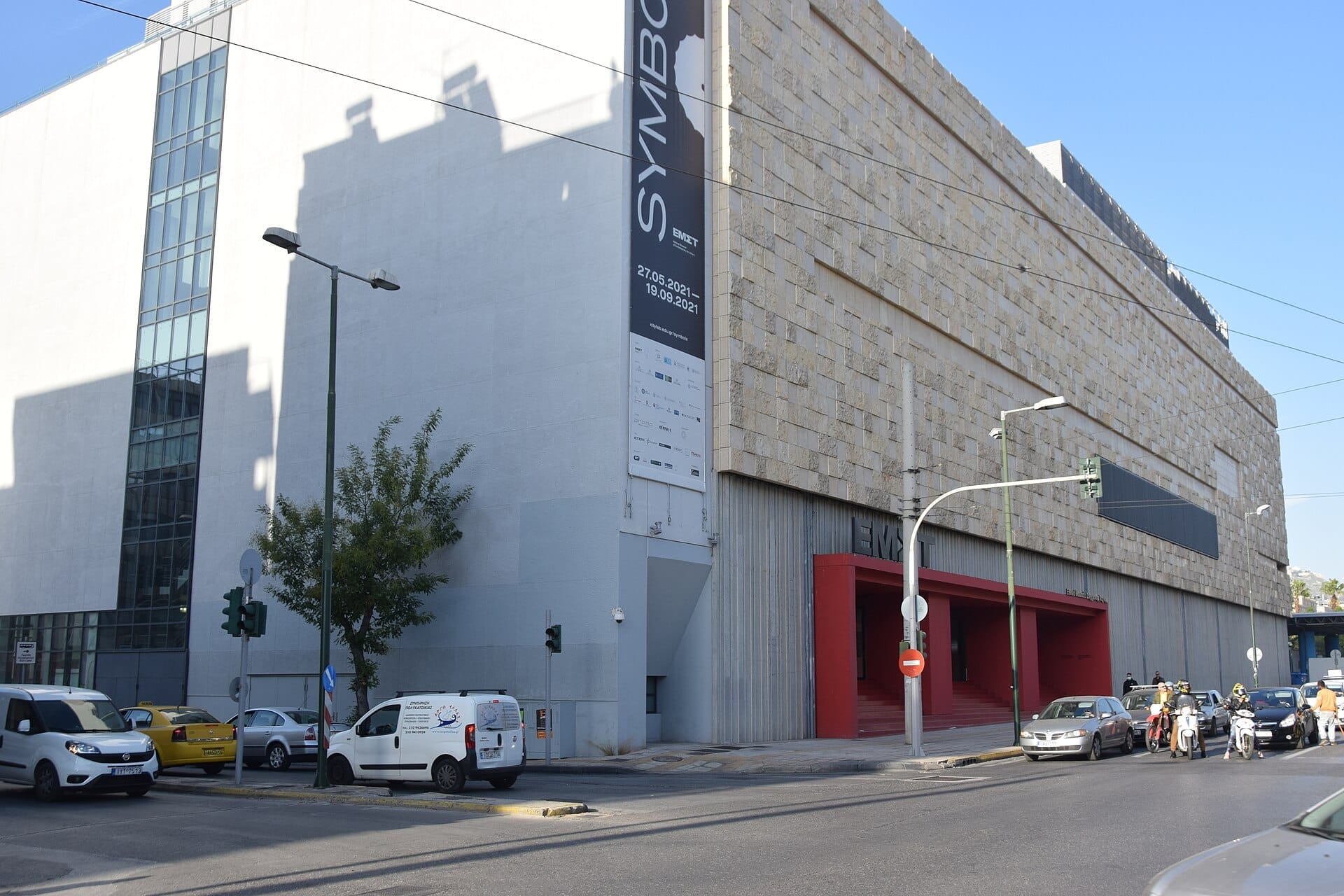
The National Museum of Contemporary Art Athens (EMST) anchors the Koukaki neighborhood inside a dramatically refurbished 1960s brewery. With a permanent collection spanning Greek and international art from the 1960s to today, it is the country's most significant institution for contemporary work and a genuinely rewarding stop beyond the ancient sites.
Quick Facts
- Location
- Kallirrois Ave & Amvr. Frantzi St, former FIX Brewery, Koukaki, Athens 11743
- Getting There
- Syngrou-Fix station, Metro Line 2 (Red Line) — the museum is directly adjacent
- Time Needed
- 1.5 to 3 hours depending on current exhibitions
- Cost
- €8 standard | €4 reduced | Free for under-12s and visitors with disabilities (plus accompanying person)
- Best for
- Contemporary art enthusiasts, architecture lovers, travelers seeking alternatives to ancient-site crowds
- Official website
- www.emst.gr/en
What EMST Actually Is — and Why It Matters
The National Museum of Contemporary Art Athens, universally known by its Greek acronym EMST, is Greece's flagship institution for art made from the 1960s onwards. It opened in 2000 in a provisional ground-floor space of the old FIX Brewery while the building around it was gradually transformed. The refurbishment of the FIX factory was largely completed by the mid-2010s, and EMST officially opened to the public in its permanent home in February 2020. The result is a museum that felt a long time coming — Greece had no national contemporary art institution of this scale for decades — and one that has quickly become a serious cultural address in southern Europe.
The collection is wide-ranging: Greek artists who came of age in the post-junta period sit alongside international figures, and the curatorial approach tends toward thematic rather than strictly chronological arrangement. Expect painting, sculpture, photography, video installation, and works on paper. Rotating temporary exhibitions mean the experience changes substantially across visits, so checking the current program on the official website before you go is worthwhile.
💡 Local tip
The museum is closed every Monday and on major Greek public holidays including Orthodox Easter Sunday and Christmas. Plan your visit around the published opening hours on the official website.
The Building: A Modernist Industrial Icon Repurposed
The FIX Brewery was built and expanded during the 1950s and early 1960s and was for a long time one of the most recognizable industrial structures in Athens. The brewery closed in 1983, leaving behind a large reinforced-concrete shell on Kallirrois Avenue in what was then a fairly unglamorous stretch of the city. The conversion into a museum is one of the more architecturally consequential renovation projects in modern Athens. The exterior retains the raw industrial character of the original structure, with heavy concrete forms and wide spans that would look at home in a city like Berlin or Rotterdam.
Inside, the spatial logic of the old factory has been largely preserved: ceiling heights are generous, load-bearing columns remain exposed, and natural light enters through large openings that were carefully integrated into the renovation. This gives the galleries a seriousness of scale that smaller private spaces in Athens simply cannot offer. Large-format installations and video works fit naturally into the space in a way that feels intentional rather than retrofitted.
If you have an interest in how industrial structures get a second life, EMST is worth comparing to other cultural repurposings around Athens. The broader Koukaki neighborhood has itself shifted considerably over the past decade, with the area between Syngrou Avenue and the Acropolis slopes now carrying a mix of design shops, independent cafes, and cultural venues that didn't exist in this density fifteen years ago.
Tickets & tours
Hand-picked options from our booking partner. Prices are indicative; availability and final rates are confirmed when you complete your booking.
Guided tour of the Acropolis, Parthenon and Museum in Athens
From 50 €Instant confirmationFree cancellationGuided tour of the Acropolis and Parthenon in Athens
From 34 €Instant confirmationFree cancellationSmartphone audio tour for the Acropolis Museum
From 12 €Instant confirmationFree cancellationAthens original street art small group guided walking tour
From 49 €Instant confirmationFree cancellation
What the Visit Feels Like, Hour by Hour
EMST opens at 11:00 on all operating days, and the first hour tends to be the quietest. If you arrive close to opening on a weekday, you will often have entire gallery rooms to yourself. The light at this time of day comes through the upper-level windows at a low angle that suits the industrial architecture well, and the absence of crowds lets you spend time with individual works without negotiating around other visitors.
By early afternoon, particularly on weekends, the museum fills noticeably. School groups occasionally pass through mid-week, which can make the ground-floor areas temporarily noisy. The solution is to move upward: the upper levels tend to attract fewer casual visitors and often house the more challenging installation-based work. If you are visiting specifically for the permanent collection, use the museum map available at the entrance to identify where those galleries are on any given day, as the distribution between permanent and temporary spaces shifts.
Thursday evenings are the museum's most atmospheric time slot. The late closing time of 22:00 means you can visit after dinner and often find the building almost empty. The combination of large, dimly lit industrial spaces, contemporary art, and near-silence makes for a genuinely different experience than daytime visits.
ℹ️ Good to know
Thursday is the only day the museum stays open until 22:00. On all other open days (Tuesday, Wednesday, Friday, Saturday, Sunday), it closes at 19:00. The museum is closed on Mondays.
Getting There and Getting Around Once Inside
Transit access is exceptionally straightforward. Syngrou-Fix metro station on Line 2 (the Red Line) sits directly adjacent to the museum's main entrance. The journey from Syntagma by metro takes around five minutes. If you are coming from the Acropolis Museum or the Makriyanni area, EMST is an easy addition to the same day, either on foot via the pedestrianized routes south of the Acropolis or by metro one stop from Akropoli station.
For visitors combining EMST with other Koukaki stops, the neighborhood's cafe strip is walkable from the museum's entrance. If you are planning a full afternoon across multiple sites, the Acropolis Museum is the most logical pairing: the two institutions are under fifteen minutes apart on foot or one metro stop, and they represent very different poles of Athenian cultural life.
Inside the building, accessibility is handled thoughtfully. Visitors with reduced mobility should use the entrance on Syngrou Avenue rather than the main pedestrian approach. Elevators connect all floors. Visitors with disabilities and one accompanying person are admitted free of charge, upon presentation of the relevant documentation.
Photography, Practical Logistics, and What to Bring
Photography policies in contemporary art museums change depending on current exhibitions, particularly when internationally loaned works are on display. Check at the front desk on arrival. In general, the museum's own permanent collection works tend to be photographable without flash, but temporary shows may restrict this. The architectural spaces themselves, including the exterior, are freely photographable and produce strong results: the contrast between rough concrete and refined installation work is particularly photogenic in the upper galleries.
There is a museum shop near the entrance that carries Greek art publications, design objects, and exhibition catalogues. The selection skews toward local publishing and is worth a look if you have an interest in Greek contemporary art writing. A cafe operates within the building; service quality varies, but it functions as a reasonable rest point mid-visit.
The museum is entirely indoors and climate-controlled, which makes it a practical option during Athens' summer months when outdoor sites become genuinely uncomfortable between noon and 16:00. If you are visiting in July or August and find the Acropolis unbearable in the afternoon heat, EMST offers a cool, substantive alternative without requiring a long journey.
⚠️ What to skip
EMST closes on major Greek public holidays, including 1 January, 6 January, 25 March, 1 May, Orthodox Easter Sunday, 15 August, 28 October, and 25–26 December. If your Athens visit overlaps with any of these dates, plan around the closure.
Honest Assessment: Who This Is For and Who Might Find It Underwhelming
EMST rewards visitors with some appetite for contemporary art. The collection is serious and the presentation is curated with care, but it does not offer the immediate accessibility of a natural history museum or the crowd-pleasing spectacle of the Acropolis. If you are indifferent to post-1960s art and are visiting Athens primarily for ancient history, this museum probably should not take priority over the National Archaeological Museum or the archaeological sites.
That said, EMST is notably unhyped relative to its quality. It does not appear on most standard three-day Athens itineraries, which means visitor numbers stay manageable and the experience remains calm even when the ancient sites are packed. For travelers spending four or more days in Athens, or those with a genuine interest in contemporary art, it is one of the more rewarding afternoons the city offers.
Travelers planning a culturally dense Athens visit should cross-reference the best museums in Athens to sequence their days effectively. EMST pairs well with the Benaki Museum for a full day of Athenian cultural institutions, moving from Greek cultural heritage in the morning to contemporary practice in the afternoon.
Insider Tips
- Thursday evenings bring extended hours until 22:00. Arrive after 19:00 and the museum is almost empty — the combination of industrial architecture, contemporary art, and near-silence is unusually atmospheric.
- The Syngrou-Fix metro station is named partly because of the brewery; the FIX family name refers to the brewery's founding family, Johann Fix, a Bavarian brewer who established the operation in the 19th century. The factory's industrial legacy extends well beyond its time as a beer producer.
- If a major temporary exhibition has just opened, the ground-floor galleries will be busiest. Head to the upper floors first to see the permanent collection in quieter conditions, then work your way down.
- The museum's exterior on Kallirrois Avenue is one of the stronger examples of mid-century Greek industrial architecture that survived into the 21st century in anything close to its original form. Spend a few minutes viewing it from across the avenue before entering.
- Admission is €4 for holders of student IDs, seniors, and several other eligible categories — confirm the full reduced-rate list at the ticket desk or on the official website, as it can be broader than commonly listed online.
Who Is National Museum of Contemporary Art (EMST) For?
- Contemporary art enthusiasts seeking Greece's most serious institutional collection
- Architecture lovers interested in adaptive reuse of industrial modernist buildings
- Travelers spending four or more days in Athens who have covered the main ancient sites
- Summer visitors looking for a substantive, climate-controlled afternoon during peak heat
- Budget travelers timing a visit for the first-Thursday free evening admission (18:00–22:00, excluding July and August)
Nearby Attractions
Other things to see while in Koukaki & Makrygianni:
- Acropolis Museum
Built directly over an archaeological excavation in Athens' Makrigianni district, the Acropolis Museum opened in 2009 and now houses the defining sculptural record of ancient Athens. It is one of the most thoughtfully designed museum buildings in Europe, and the collection inside is extraordinary by any standard.