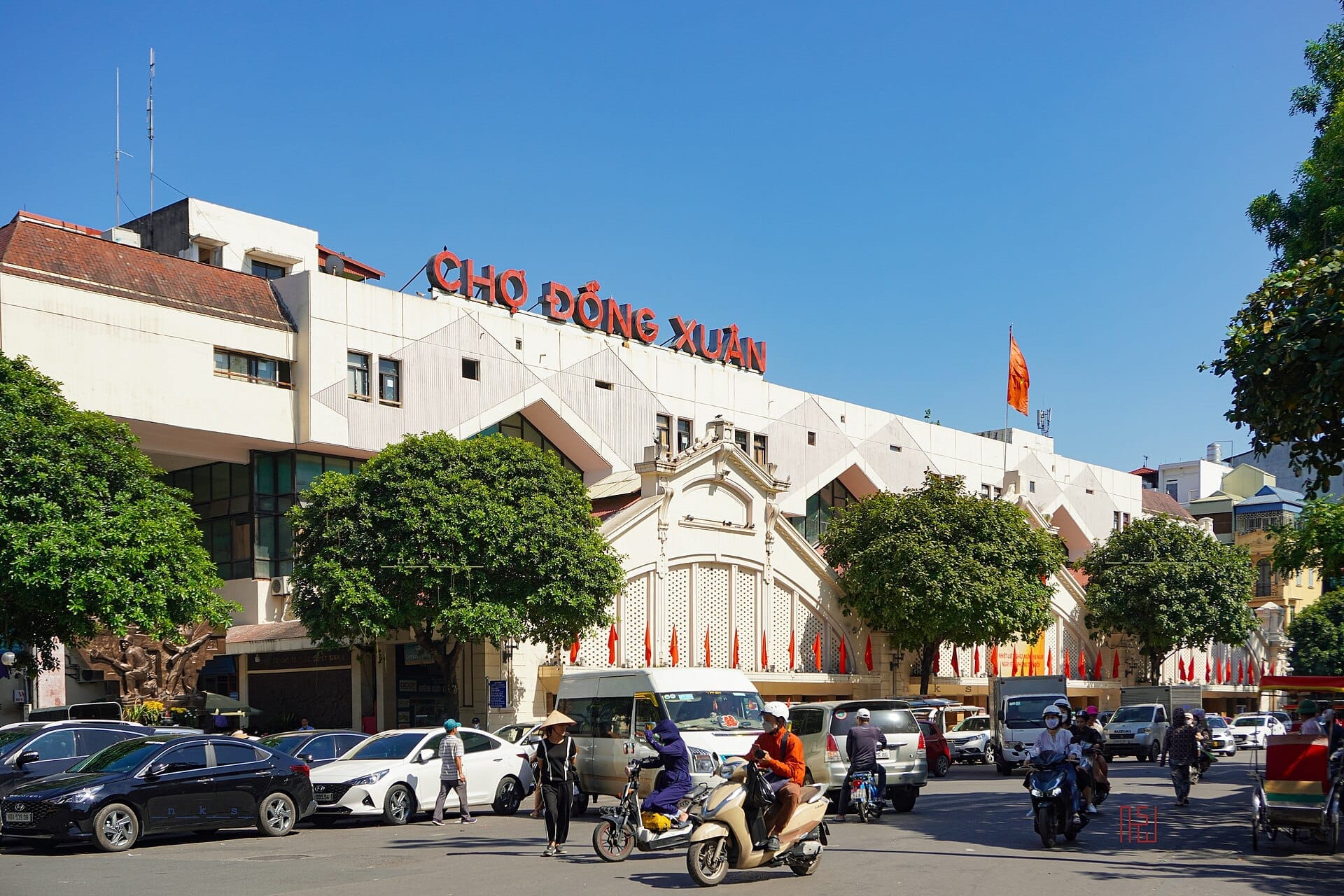
Đồng Xuân Market
Đồng Xuân Market is the largest and oldest covered market in Hanoi's Old Quarter, operating since 1889. A wholesale hub by day and a street food destination by night, it rewards visitors who know what they're looking for.
DiscoverHanoi's Old Quarter is the city's oldest and most layered district, a grid of narrow streets dating back to the 14th century where each lane was once dedicated to a single trade. Today it mixes colonial shophouses, street food stalls, pocket temples, and one of Southeast Asia's most atmospheric night markets into a single walkable square kilometer.
Located in Hanoi
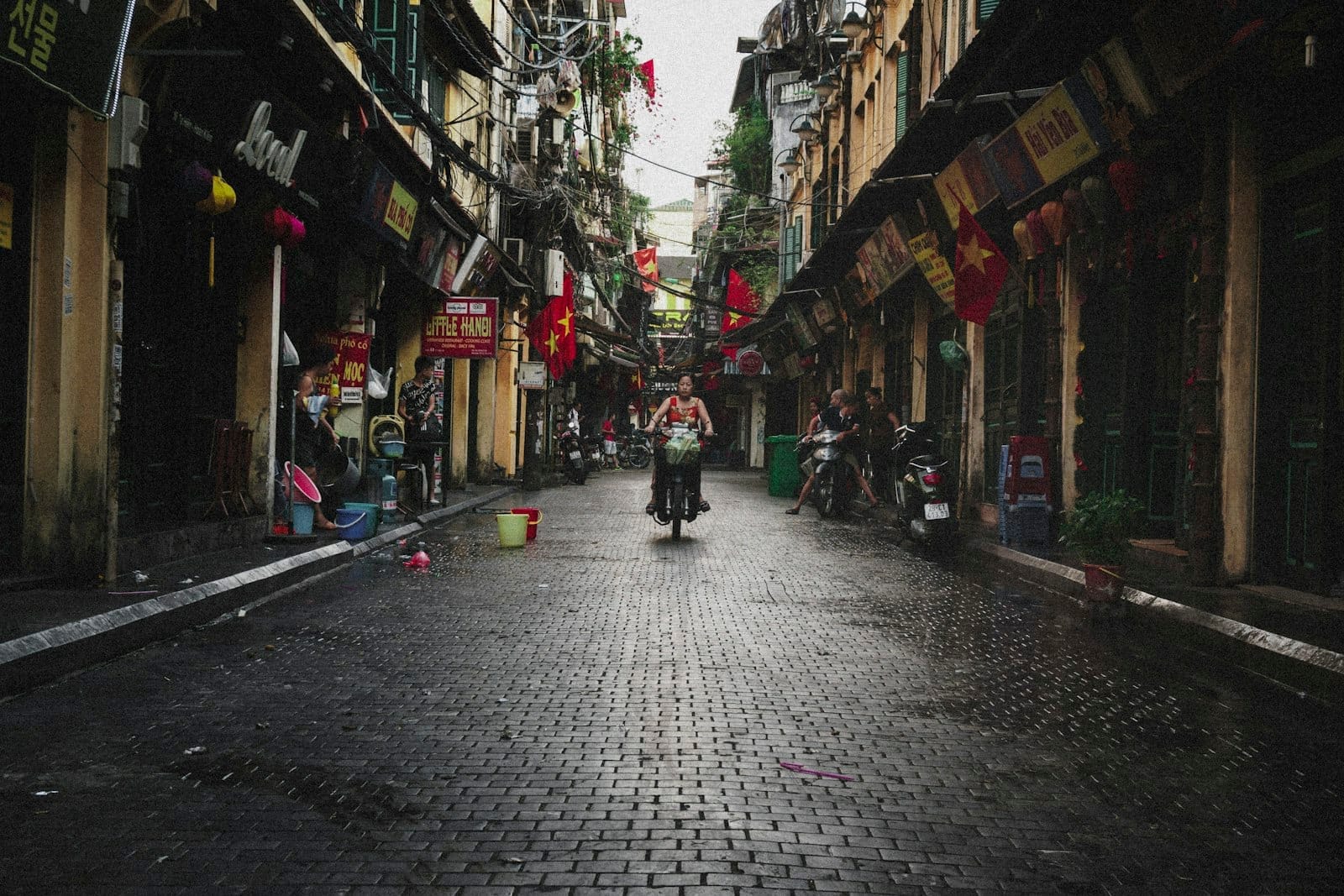
The Old Quarter is where Hanoi's history is most legible: a dense, low-rise grid of streets with names like Hang Bac (Silver Street) and Hang Gai (Silk Street), each carrying traces of the guilds that defined them centuries ago. It is noisy, occasionally chaotic, and impossible to understand in a single visit, which is exactly why most travelers end up staying longer than planned.
The Old Quarter, known in Vietnamese as Pho Co, occupies the northern edge of Hoan Kiem district. Its southern boundary is the shoreline of Hoan Kiem Lake, its eastern edge runs along Tran Nhat Duat and the Red River embankment, its western edge roughly follows Phung Hung Street, and its northern limit is defined by Hang Dau and Dong Xuan market. The whole area is approximately one square kilometer, which sounds compact until you are actually inside it.
The street grid traces a plan that was already established by the time the Ly dynasty designated Thang Long (present-day Hanoi) as its capital in 1010, with craft streets forming between the 10th and 13th centuries. Artisan guilds clustered along specific lanes to be near the royal citadel to the west, and the street names that survive today reflect that original organization. Hang Thiec (Tin Street), Hang Dong (Copper Street), Hang Vai (Fabric Street): the preffix 'Hang' simply means 'goods' or 'merchandise'.
To the south, the Old Quarter flows into the calmer streets around Hoan Kiem Lake, which acts as a natural decompression zone between the Old Quarter's intensity and the wider city. To the west, beyond Phung Hung, lies the Ba Dinh district with its broad French-planned boulevards and government buildings. Understanding these adjacencies matters: you can walk from the Old Quarter to the lake in under five minutes, and from the lake to the French Quarter in another ten.
Early morning is the Old Quarter at its most functional. By 6am, the lanes around Dong Xuan market are stacked with deliveries: crates of dragon fruit, bundles of water spinach, whole pigs on motorbike racks. Pho shops open their shutters and pull out plastic stools. The air at this hour carries charcoal smoke, pho broth, and the faint sweetness of lotus tea. Street cleaners work the alleys before the traffic builds. If you are only here for two or three days, getting up early once is worth it for this alone.
By mid-morning the lanes are dense with scooters and the first tour groups. The architecture reveals itself more clearly in the flat morning light: the signature 'tube houses' are typically two to three meters wide and run twenty or thirty meters deep, a form that evolved to minimize street-front tax liability under various colonial regimes. Upper floors overhang the pavements, and narrow courtyards bring light into the interior. Many buildings layer two or three architectural eras at once, a French-arched ground floor topped by older Vietnamese roof tiles.
Afternoons, especially in summer, are humid and slow. Shopkeepers retreat behind curtains. The streets along Hang Gai and Hang Bong, which cater most directly to tourists, stay active, but many of the residential lanes off Hang Buom or Hang Chieu quiet down noticeably. The light turns golden and heavy around 4pm, and the photographic quality of the streets at this hour is notable: the densely layered facades, the overhead tangle of power cables, the narrow strips of sky above.
After dark, the character shifts again. The weekend night market along Hang Dao and Dong Xuan fills the street from Friday through Sunday, and the surrounding lanes fill with people eating at folding tables set directly on the pavement. Ta Hien Street, sometimes called 'Beer Street', is the concentrated center of the backpacker drinking scene: narrow, loud, and wall-to-wall with bars serving bia hoi (fresh draught beer brewed daily, typically priced under 10,000 VND per glass). It is genuinely lively, but it is also the most touristy corner of the Old Quarter by a significant margin.
⚠️ What to skip
Noise is a real factor. Streets within two blocks of Ta Hien and Luong Ngoc Quyen are loud well past midnight on weekends. If you are a light sleeper, choose accommodation on a quieter lane or bring earplugs. The further north toward Dong Xuan you stay, the more local the atmosphere, but early morning market noise replaces the bar noise.
The single most important thing you can do in the Old Quarter is walk without a destination. That said, several specific stops are worth anchoring your exploration. Dong Xuan Market at the northern end of Hang Dao is the district's main covered market, a three-story iron and concrete structure from the early French colonial period. The ground floor sells produce and street food; upper floors are wholesale clothing and household goods. Go in the morning for the food hall.
The Old Quarter Night Market runs Friday, Saturday, and Sunday evenings along Hang Dao, Hang Duong, and Dong Xuan. It is touristy, but it is also genuinely used by local families. The mix of lacquerware, embroidered goods, fake branded clothing, and street food reflects the Old Quarter's commercial character honestly enough.
Bach Ma Temple on Hang Buom Street is one of the Old Quarter's oldest religious sites, dedicated to the white horse spirit said to have guided the construction of the original citadel walls. It is small, easily overlooked, and rarely crowded. The Ngoc Son Temple is technically just across the lake boundary but is the Old Quarter's most visited religious site by far, reachable via the red-painted The Huc Bridge from the lake's northern shore.
Train Street, a narrow residential lane running alongside an active rail line in the western edge of the Old Quarter near Hang Bong, became famous internationally for the tiny gap between the trains and the buildings. The lane's cafe scene has been periodically closed and reopened by authorities concerned about safety. Check local conditions before making a special trip. The Train Street situation changes frequently.
💡 Local tip
The Hanoi Tourism Information Centre at 28 Hang Dau (near the southern entrance to Dong Xuan market) offers free maps and can advise on current conditions, including Train Street access. Hours are subject to change; check before visiting.
The Old Quarter is one of the best places in Vietnam to eat, and most of what is worth eating costs almost nothing. Hanoi's canonical dishes are well represented here: pho bo (beef noodle soup) is on almost every corner, bun cha (grilled pork patties with cold vermicelli and dipping broth) is a lunchtime institution, and banh mi stalls operate from early morning until mid-afternoon. For a broader overview of where to eat across the city, the Hanoi eating guide covers neighborhoods beyond the Old Quarter too.
Street food is most densely concentrated around Dong Xuan market, along Hang Buom, and on the lanes immediately south of the market. Look for pho shops that have been operating from the same ground-floor space for decades, recognizable by their permanently blackened kitchen walls and loyal morning queues. Bun oc (snail noodle soup) and bun rieu (crab paste noodle soup) are harder to find outside of Hanoi and particularly good in Old Quarter stalls.
The mid-range restaurant scene is concentrated along Hang Bong, Hang Be, and the streets nearest the lake. These are sit-down places with English menus, priced typically between 80,000 and 250,000 VND per main dish. Quality varies considerably. Cafes and specialty coffee shops have multiplied in the streets around Ma May and Hang Buom in recent years, part of a broader Vietnamese specialty coffee movement. Egg coffee (ca phe trung), a Hanoi invention made with whipped egg yolk and condensed milk, is available throughout but originated in the city and is best tried here.
The drinking scene is heavily concentrated on Ta Hien and Luong Ngoc Quyen, where bia hoi corners serve fresh beer at pavement tables from the late afternoon onward. This is genuine local drinking culture that happens to be well-known to tourists: the bia hoi concept, where small breweries deliver fresh beer daily to corner stalls that then sell it cheaply until it runs out, predates the tourist industry in Hanoi by several decades. The atmosphere is egalitarian and loud. For quieter drinking, the rooftop bars and cocktail spots on Ma May and the lanes near the lake offer a more relaxed alternative.
From Noi Bai International Airport (approximately 45 km north), the most reliable options are taxi or ride-hailing apps, particularly Grab, which shows fixed prices before you book. The journey takes 45 to 75 minutes depending on traffic, and the drop-off point for the Old Quarter is typically the Hang Dau or Dinh Tien Hoang area near the lake. City buses also connect the airport at a fraction of the cost, though they require a transfer. See the getting around Hanoi guide for detailed transport options across the city.
Within the Old Quarter, walking is the only sensible option. Streets are too narrow and congested for taxis to navigate reliably, and many of the most interesting lanes are effectively pedestrian in practice even where scooters technically have right of way. The entire Old Quarter can be crossed on foot in under 20 minutes; the challenge is not distance but the density of things to stop for.
Cyclos, the three-wheeled pedal taxis, are available at the edges of the Old Quarter and operate primarily on tourist circuits. They are a legitimate local transport form and pleasant for a slow circuit of the main lanes, but negotiate the fare clearly before setting off. Motorbike taxis (xe om) and Grab bike are useful for reaching destinations beyond walking range quickly. Grab bike in particular is convenient and price-transparent.
For day trips out of the Old Quarter, the main long-distance bus stations are southwest and southeast of the center. Train connections to cities along the coast depart from Hanoi Station (Ga Ha Noi) on Le Duan Street, about 2 km southwest. The day trips from Hanoi guide covers the logistics for reaching Ninh Binh, Ha Long Bay, and other destinations from the city.
ℹ️ Good to know
The Old Quarter has no metro station. Hanoi's first metro line (Cat Linh to Ha Dong) runs in the southwestern part of the city and is not useful for Old Quarter access. A second line is under construction, but the Old Quarter's narrow streets make surface-level transit the practical reality for the foreseeable future.
The Old Quarter has the highest concentration of tourist accommodation in Hanoi, from dormitory hostels to boutique hotels converted from tube houses. For a fuller breakdown of accommodation options across the city, the Hanoi accommodation guide compares neighborhoods in detail. Within the Old Quarter itself, location within the neighborhood matters more than most travelers realize before arriving.
The lanes between Hang Be, Ma May, and Hang Buom offer the most balanced position: close to the lake, accessible to restaurants and cafes, but far enough from Ta Hien that weekend noise does not penetrate past midnight. Streets directly adjacent to Ta Hien and Luong Ngoc Quyen are best avoided by anyone sensitive to noise. The lanes north of Hang Duong toward Dong Xuan are quieter at night but busier from 5am onward as the market activates.
Boutique hotels in converted tube houses are the Old Quarter's signature accommodation type. These buildings work well architecturally: the narrow frontage creates an intimate lobby, and the depth of the building allows for a small internal courtyard or a rooftop terrace. Room sizes on lower floors can be small and dark; ask specifically about natural light if that matters to you. The Old Quarter suits independent travelers, first-time visitors to Hanoi, and those who want to be in the center of things. It is less suited to travelers who want quiet mornings, easy car access, or proximity to Ba Dinh's major monuments.
Several of Hanoi's major sights sit within a short walk or ride of the Old Quarter. The Hoa Lo Prison is about 1.5 km southwest, walkable through the edge of the French Quarter. The Temple of Literature is approximately 3 km west and typically visited by taxi or Grab from the Old Quarter. The Ho Chi Minh Mausoleum and the surrounding Ba Dinh Square complex are around 4 km west, best combined as a half-day trip.
The Vietnam Museum of Ethnology is 7 km west in the Cau Giay area, 20 to 30 minutes by Grab and widely considered one of the best museums in Southeast Asia. It rewards a dedicated half-day rather than a rushed visit. For the lake immediately to the south, the Thang Long Water Puppet Theatre on Dinh Tien Hoang is a five-minute walk from the Old Quarter's southern edge and hosts performances most evenings.
The currency throughout Vietnam is the Vietnamese Dong (VND). The Old Quarter is cash-dependent for street food and markets; ATMs are available on the main streets near the lake and along Hang Bac. Budget roughly 50,000 to 100,000 VND for a street food meal, 150,000 to 300,000 VND for a sit-down restaurant, and under 10,000 VND per glass of bia hoi. Do not drink tap water; bottled water is available everywhere for a few thousand Dong.
The best months to visit Hanoi generally are October and November, when temperatures drop from the summer humidity and the sky tends toward clear. April and May are also pleasant. July and August are hot and wet. For full seasonal detail, the best time to visit Hanoi guide covers this in depth. When visiting temples like Bach Ma or the small pagodas within the Old Quarter, modest dress is appropriate: covered shoulders and knees.
⚠️ What to skip
Motorbike theft from bags and phones grabbed from hands are the most reported petty crimes in the Old Quarter. Keep bags on the side away from traffic, avoid using phones while walking on busy streets, and be particularly attentive around Hang Dao and Ta Hien after dark when crowds are densest.
Đồng Xuân Market is the largest and oldest covered market in Hanoi's Old Quarter, operating since 1889. A wholesale hub by day and a street food destination by night, it rewards visitors who know what they're looking for.
Discover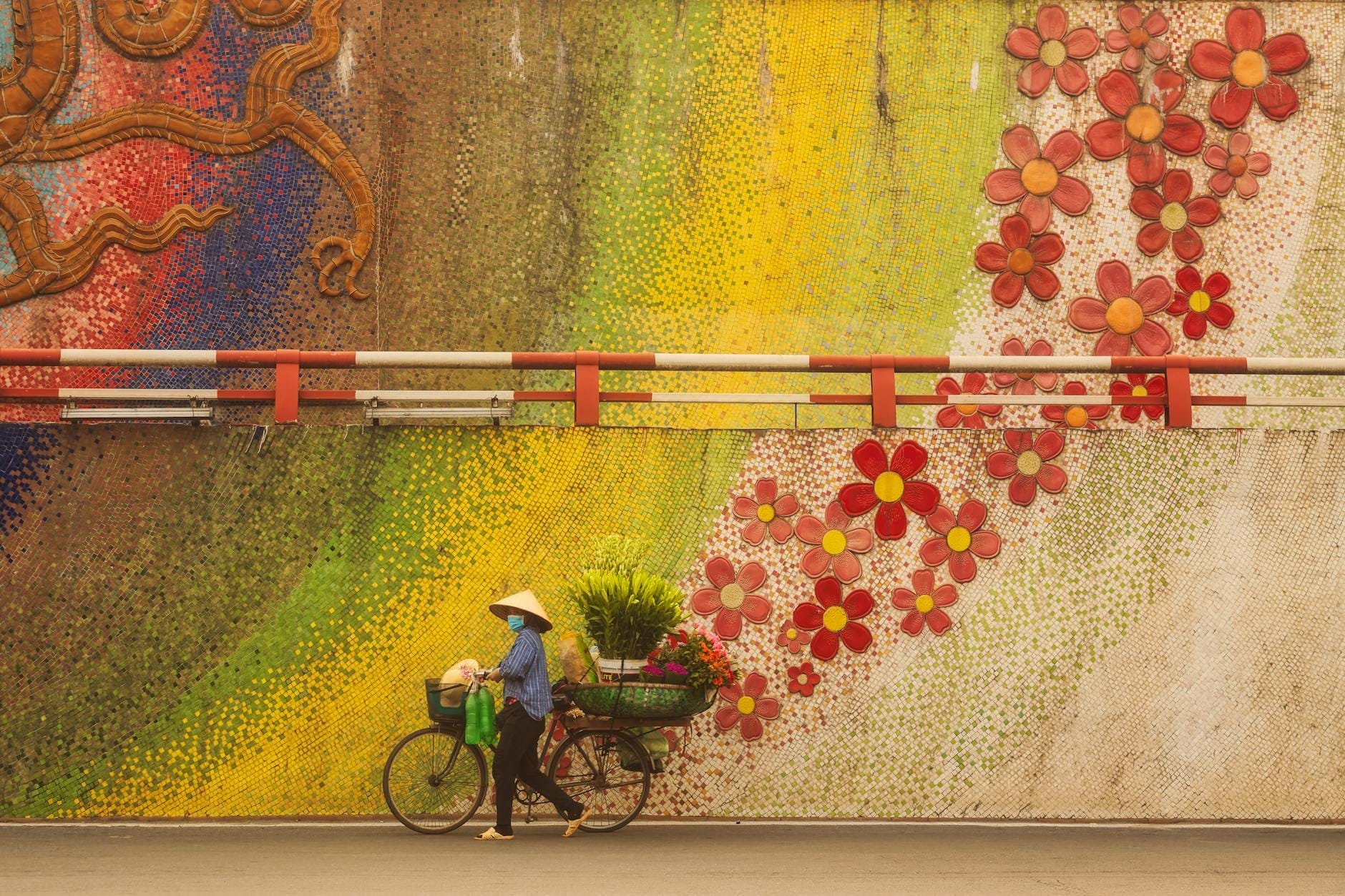
The Hanoi Ceramic Mosaic Mural runs for 3.85 kilometres along the embankment roads bordering the Old Quarter, recognised by Guinness World Records as the longest ceramic mosaic mural on earth. Created to mark Hanoi's 1,000th anniversary in 2010, it tells the city's history in fired clay and coloured tile — and it's completely free to experience on foot.
Discover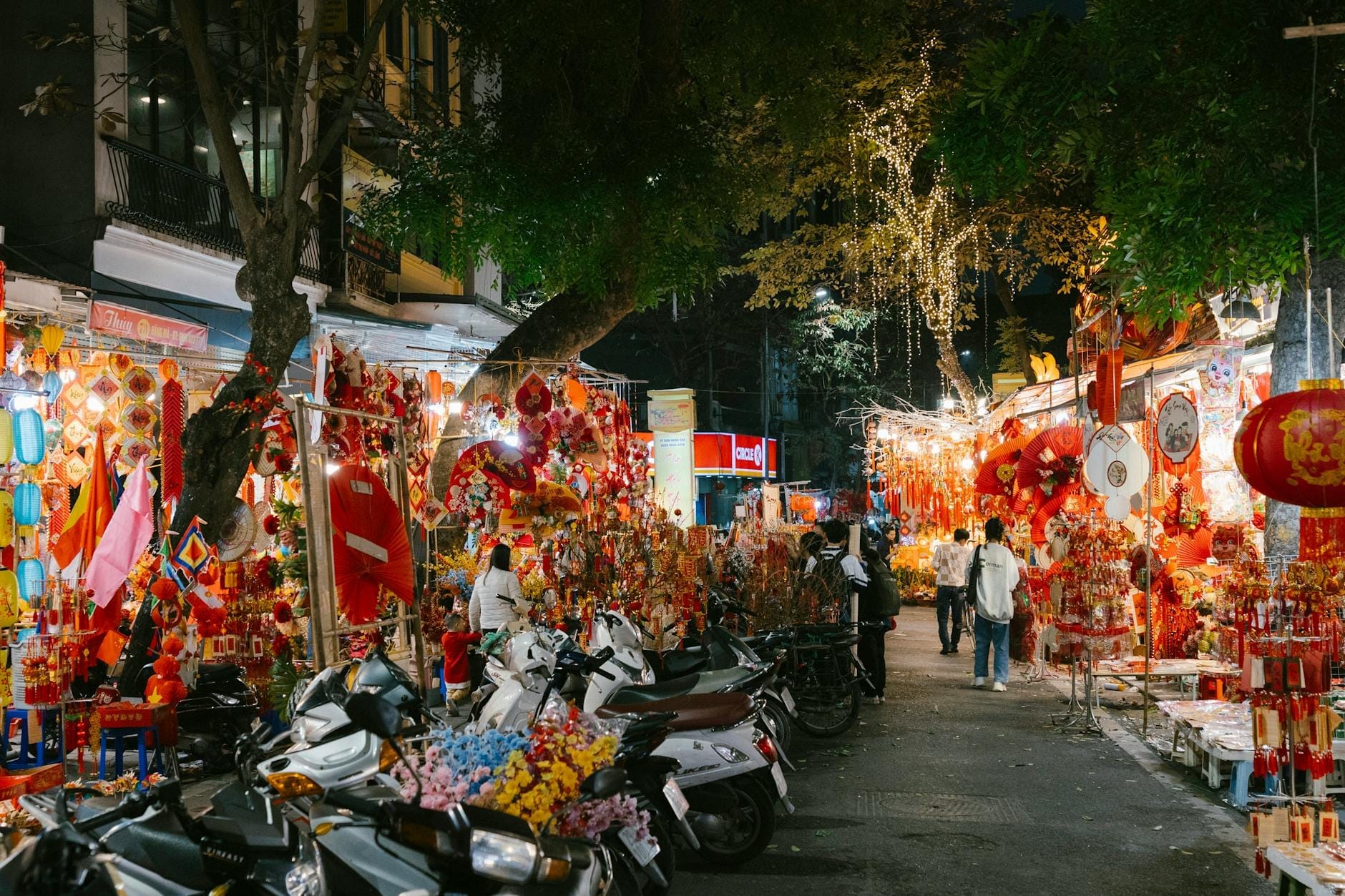
Every Friday, Saturday, and Sunday evening, the streets around Hang Dao in Hanoi's Old Quarter close to traffic and fill with market stalls, street food vendors, and live folk performances. It's the most accessible snapshot of local weekend culture in the city center, though knowing what you're walking into makes the difference between an enjoyable evening and an overwhelming one.
Discover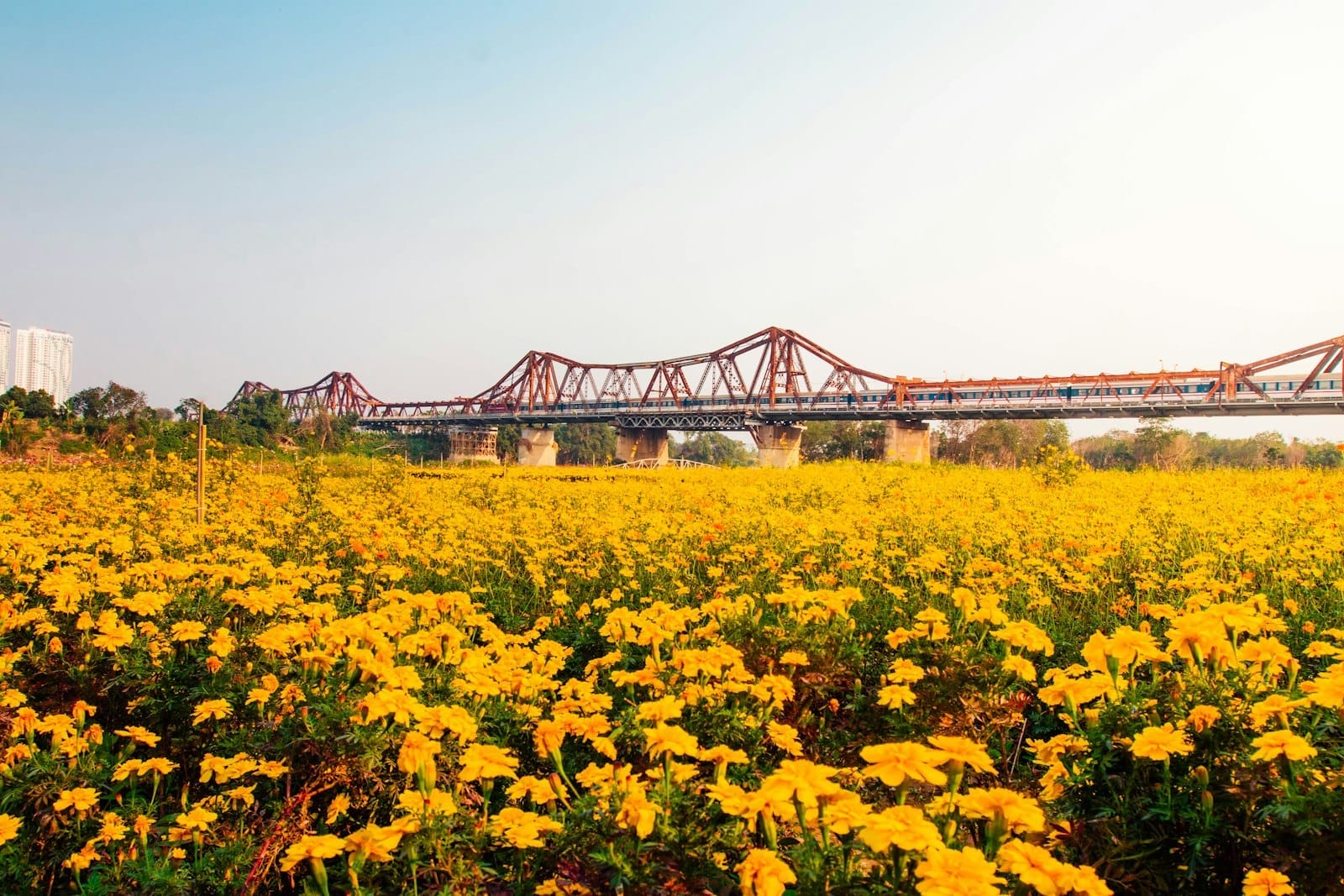
Long Bien Bridge is one of Hanoi's most historically loaded landmarks, a steel cantilever structure built by the French at the turn of the 20th century that has survived two wars, countless floods, and decades of daily use. Walking across it offers a perspective on Hanoi that few other spots can match: wide Red River views, the drone of motorbikes and bicycles, and a direct line into the city's layered past.
Discover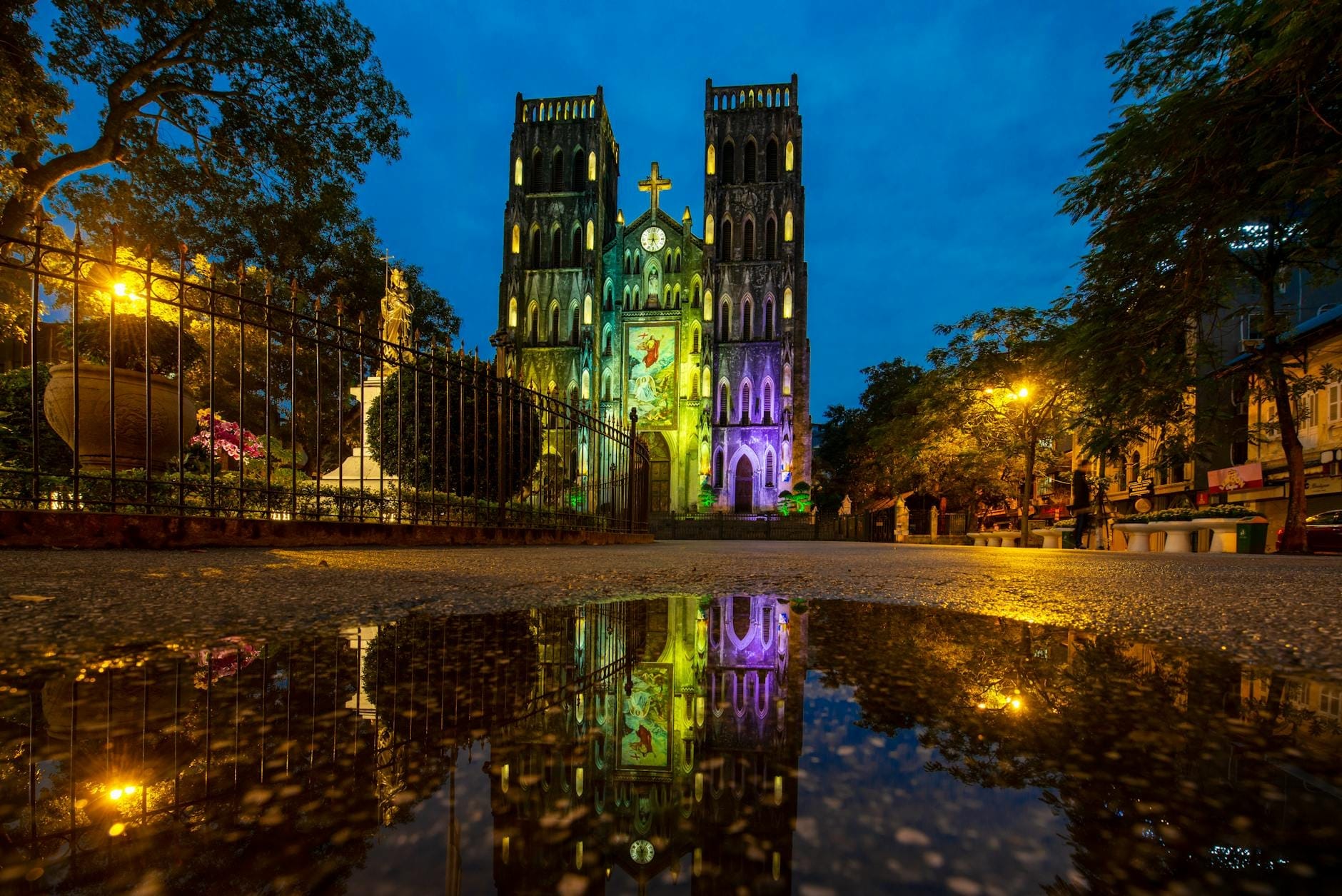
Saint Joseph's Cathedral is Hanoi's oldest Catholic church and one of the city's most striking pieces of colonial-era architecture. Built in the 1880s on the southern edge of the Old Quarter, it draws visitors with its twin bell towers, French Gothic detailing, and the lively square that surrounds it morning to night.
Discover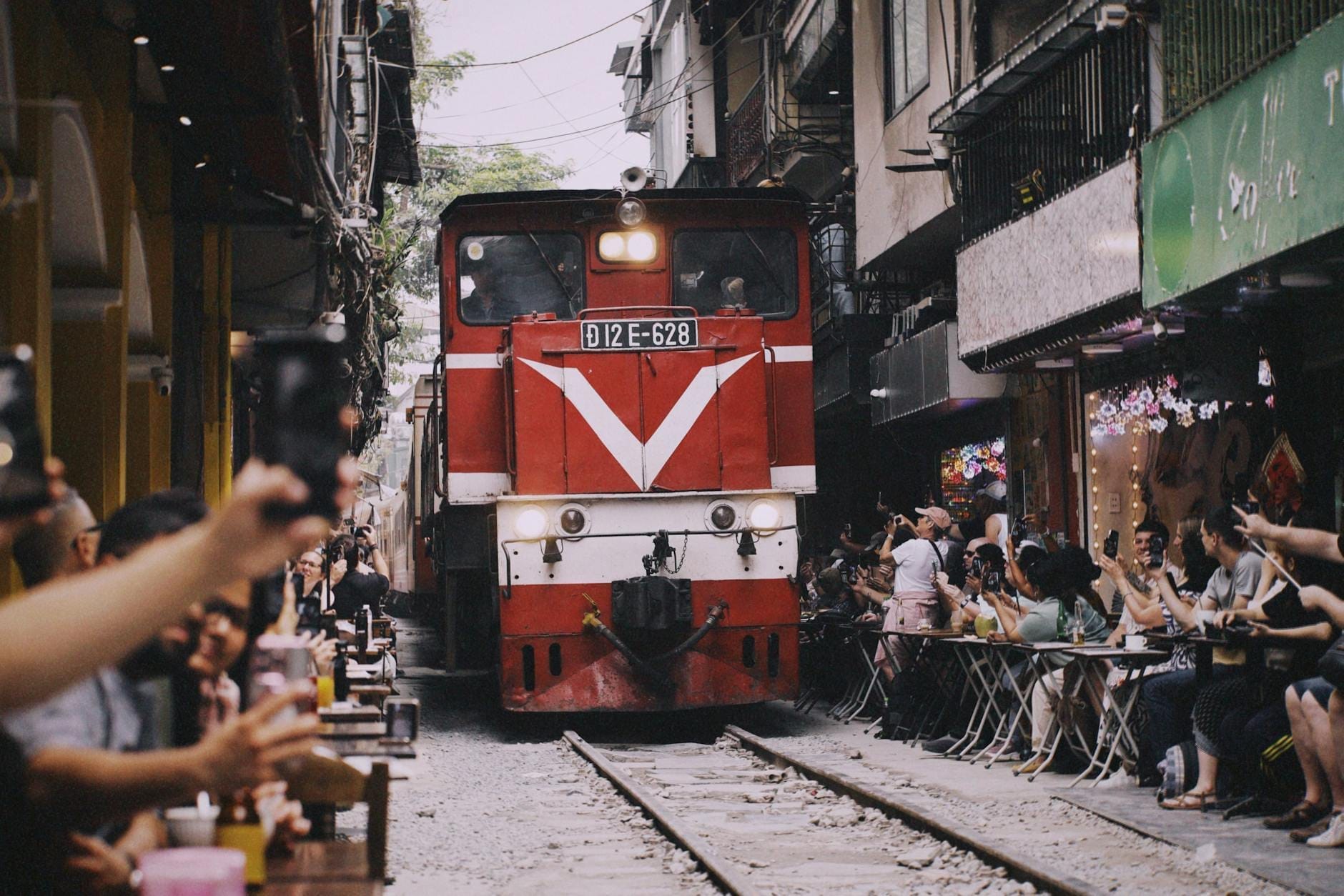
Train Street is a narrow residential alley in Hanoi's Old Quarter where an active railway line passes just centimetres from the doorsteps of local homes. It draws visitors for the spectacle of a train threading through tightly packed buildings, though the experience has changed significantly in recent years.
DiscoverHanoi's climate is more complex than most Southeast Asian cities, with four distinct seasons that genuinely change the experience. This guide breaks down the weather, crowds, and what to expect each month so you can plan a trip that matches your priorities.
Hanoi is an exceptional base for exploring northern Vietnam. Within a few hours you can reach UNESCO World Heritage sites, ancient capitals, sacred pilgrimage caves, and centuries-old craft villages. This guide covers the best day trips from Hanoi, with honest advice on what to prioritize.
Hanoi's streets are chaotic, fast-moving, and genuinely fun to navigate once you understand the rules. This guide breaks down every transport option — from airport transfers to Old Quarter cyclos — with honest pricing, practical advice, and clear recommendations for different budgets and itineraries.
Ha Long Bay is the most iconic day trip and overnight excursion from Hanoi, but the sheer number of cruise options makes planning overwhelming. This guide cuts through the noise with practical advice on getting there, choosing the right cruise tier, what to budget, and when to go.
From the colonial lanes of the Old Quarter to the solemn monuments of Ba Dinh, Hanoi rewards travelers who plan carefully. This itinerary guide breaks down exactly how to spend 2, 3, or 5 days in the city, covering the essential sights, underrated neighborhoods, and the day trips worth taking.
The Old Quarter is the beating heart of Hanoi, a dense grid of streets dating to the 14th century where silk sellers, pho vendors, and ancient temples coexist with craft workshops and rooftop bars. This guide gives you the practical depth to explore it properly.
Ninh Bình is the most rewarding escape from Hanoi for travelers who want karst scenery, ancient history, and boat rides through rice paddies without flying anywhere. This guide covers transport options, the best sites to prioritize, where to stay overnight, and honest advice on how long you actually need.
Hanoi rewards travelers who go beyond the obvious. This guide covers the city's top experiences across history, food, culture, and day trips — with honest assessments, practical details, and local context that most guides skip.
Hanoi's food scene is one of the most distinctive in Southeast Asia, built on centuries of culinary tradition and a firm belief that the best meals come from small, specialized stalls. This guide breaks down where to eat in Hanoi by neighborhood, dish type, and budget so you spend less time guessing and more time eating.
Choosing where to stay in Hanoi shapes your entire trip. This guide breaks down every major neighborhood by character, convenience, and cost, so you can book with confidence rather than luck.