Thang Long Water Puppet Theatre: Hanoi's Most Enduring Cultural Performance
Thang Long Water Puppet Theatre brings a folk art tradition dating back over 1,000 years to life on a waist-deep pool beside Hoan Kiem Lake. Performances run multiple times daily and combine puppetry, live traditional music, and Vietnamese mythology into a 50-minute show unlike anything else in the country.
Quick Facts
- Location
- 57B Dinh Tien Hoang, Hoan Kiem District, Hanoi
- Getting There
- 10-minute walk from the Old Quarter; Grab taxis widely available; public transit limited
- Time Needed
- 90 minutes including queuing, seating, and the 50-minute performance
- Cost
- Tickets typically range from 100,000 to 200,000 VND depending on seat tier; verify current prices at the box office
- Best for
- Families, first-time visitors to Vietnam, cultural enthusiasts, and anyone curious about traditional performing arts
- Official website
- nhahatmuaroithanglong.vn/en/
What Is Thang Long Water Puppet Theatre?
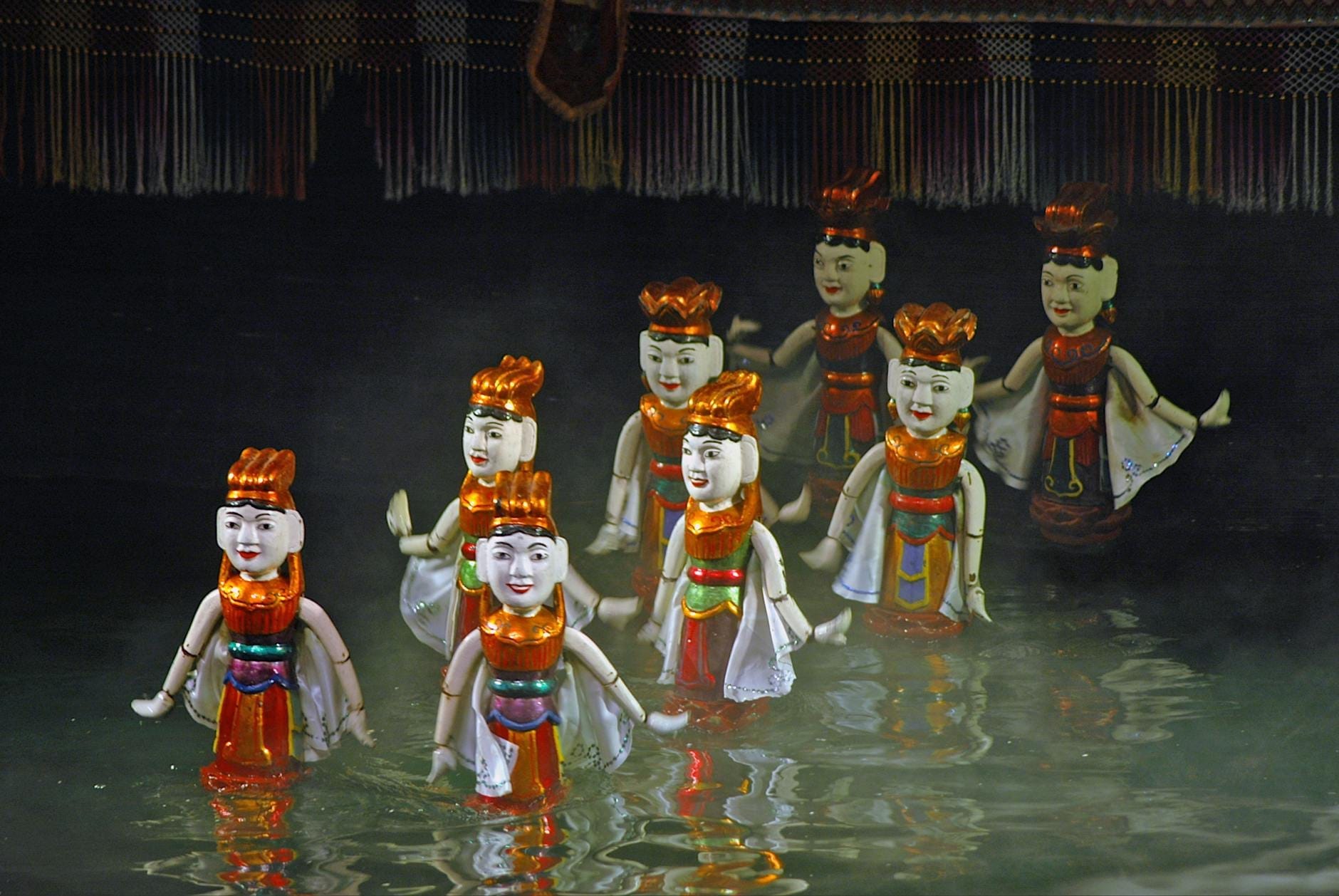
Thang Long Water Puppet Theatre is Hanoi's flagship venue for mua roi nuoc, the Vietnamese art of water puppetry that originated in the Red River Delta more than a thousand years ago. The form developed in flooded rice paddies over 1,000 years ago in the Red River Delta, when villagers created performances using water as both stage and backdrop. Today, the theatre on the southwestern bank of Hoan Kiem Lake preserves that tradition with considerable skill, staging up to five performances a day for an audience that is, in practice, majority international tourists.
The building itself is purpose-built for the art form: a covered auditorium that faces a large waist-deep pool, behind which a curtained pavilion hides the puppeteers who operate their carved lacquered figures using bamboo rods and wire mechanisms submerged beneath the water's surface. The mechanics involved are closely guarded guild secrets passed through generations of performers from Dao Thon village in Nam Dinh province, the spiritual home of the craft.
💡 Local tip
Book tickets at least a few hours in advance, especially for evening performances. Evening slots sell out regularly. The box office opens about 30 minutes before each show, and online booking through the official website is available.
The Performance: What to Expect Inside
The show runs approximately 50 minutes and cycles through around 17 scenes depicting Vietnamese rural life, folklore, and mythology. You'll see golden dragons thrashing across the pool surface, phoenixes gliding above lotus flowers, and farmers planting rice in scenes that carry real agricultural humor. The infamous fish-catching sequence draws genuine laughter from audiences who speak no Vietnamese at all, which says something meaningful about the universality of the form.
The live orchestra positioned to the left of the stage is not incidental background music. It is the performance's backbone. Musicians play trong (drums), trong dat (clay drums), dan bau (single-string instrument), trong cai (large drum), and various wind instruments. The synchronization between the musicians and the hidden puppeteers below water is what separates a competent performance from a compelling one, and Thang Long's troupe has been doing this long enough that the coordination is seamless.
Subtitles are displayed above the stage in Vietnamese and English, though the action is generally self-explanatory. If you sit in the front two rows, expect occasional light splashing from the more energetic scenes, particularly the dragon sequences. It is not enough to damage a camera, but worth knowing if you brought a good lens.
Tickets & tours
Live prices and dates from our booking partner. If you book, we may earn a commission at no extra cost to you.
Visiting by Time of Day
Thang Long typically offers performances throughout the day, with the first show in mid-morning and the final performance in the evening (exact schedule varies by season, so verify at the box office or official website). The midday shows tend to attract smaller crowds and a higher proportion of Vietnamese school groups, which gives the atmosphere a different energy: louder, more reactive, and oddly more fun. Evening performances fill with international tourists and have a more formal, concert-like feel.
The 8 PM show pairs naturally with a walk around Hoan Kiem Lake at dusk. The lake's pedestrian promenade draws evening crowds of Hanoians doing aerobics and socializing, and the short walk between the theatre and the lakeside gives you a genuine glimpse of the neighborhood at its most social. The theatre building itself is lit at night and photographs well from across the street.
ℹ️ Good to know
The theatre sits directly across from the eastern shore of Hoan Kiem Lake, steps from Ngoc Son Temple's entrance causeway. Combining both in an afternoon or evening is easy and logical.
Cultural and Historical Context
Water puppetry is not merely entertainment. Historically, performances were staged during harvest festivals and royal ceremonies to invoke prosperity and honor deities. The craft requires puppeteers to stand in waist-deep water for the duration of the show, manipulating figures that can weigh several kilograms, often through 90-minute rehearsals in winter months when the water temperature drops significantly. Understanding that dimension changes how you watch the show. Thang Long's troupe is one of Vietnam's best-known, and the theatre's proximity to Hoan Kiem Lake is not accidental: the lake has been a sacred center of Hanoi's cultural life since the 15th century.
The art form very nearly disappeared during the 20th century's upheavals. Its revival and institutionalization was partly a deliberate government effort in the 1990s to anchor Vietnamese cultural identity as international tourism began to grow. That context matters: what you see at Thang Long is a preserved and professionally staged tradition, not an organic village performance. That does not make it less worth watching. It makes it the best possible access point to something that genuinely would not exist at this level of quality without institutional support. For travelers interested in the broader cultural landscape of Hanoi, the Vietnam Museum of Ethnology provides an excellent complementary perspective on the country's diverse folk traditions.
Practical Walkthrough: Getting There and Seating
The theatre is at 57B Dinh Tien Hoang Street, on the eastern edge of Hoan Kiem Lake. From the Old Quarter, it is a 10-minute walk south along the lake's eastern shore. Grab rides from anywhere in central Hanoi should cost under 50,000 VND. There is no dedicated parking lot for private vehicles, and the street in front gets congested before evening shows.
Seating is tiered. The front rows offer the most immersive view and the closest look at the puppets' carved lacquer faces, but you sit lower and may have the orchestra slightly blocking your sightline on the far right. The middle rows offer the clearest unobstructed sight lines. Premium seats at the back are elevated slightly and work well for photography if you have a good zoom lens. Bring the lens cap: humidity inside the auditorium is noticeable.
Photography is permitted without flash. Video recording is generally allowed. The light inside the auditorium is deliberately low and atmospheric, which means handheld shots during the performance require either a fast lens (f/2.8 or wider) or acceptance that you will get some motion blur on the puppets, which actually looks quite good given the subject matter.
Honest Assessment: Is It Worth It?
For most first-time visitors to Hanoi, yes, clearly. The performance is short enough not to overstay its welcome, the ticket price is low relative to the experience, and water puppetry exists nowhere else in the world in this form. If you are on a five-day itinerary in northern Vietnam, this sits comfortably in the first two days alongside a Hoan Kiem Lake walk.
For repeat visitors to Vietnam or anyone who has already seen water puppetry at other venues in the country, the programme at Thang Long is largely consistent across Vietnamese water puppet theatres. It is well-executed but not dramatically different from what you might see in Ho Chi Minh City or Hue. Travelers focused on deeper historical immersion may find a half-day at the Imperial Citadel of Thang Long or the Temple of Literature more rewarding. Both offer layers of context that a 50-minute performance cannot.
Travelers who struggle with enclosed, humid spaces and low lighting may find the auditorium uncomfortable, particularly in the summer months of June through August when Hanoi's heat and humidity peak. The air conditioning is functional but modest.
⚠️ What to skip
Ticket prices and performance schedules change seasonally and are updated without much advance notice online. Always confirm current times at the box office or official website before building your day around a specific slot.
After the Show: What's Nearby
The theatre's location on Dinh Tien Hoang puts you within easy reach of several of Hoan Kiem's highlights. Ngoc Son Temple sits on a small island in the lake a short walk north, connected to the shore by the iconic red Huc Bridge. The Old Quarter's maze of specialty streets begins just northwest of the lake. If you are visiting on a weekend evening, the pedestrian zone around Hoan Kiem is closed to traffic and fills with street food vendors, local families, and impromptu performances.
For dinner after the show, the streets immediately west of Hoan Kiem offer everything from pho stalls to rooftop bars. The best places to eat in Hanoi near this area include bun cha spots on Hang Manh and the bun bo nam bo vendors who set up around Hoan Kiem's southern shore by early evening.
Insider Tips
- The front-row seats labeled 'VIP' at some ticket tiers are genuinely wet-risk seats during the dragon and fish sequences. Sit two or three rows back if you have electronics on your lap.
- Arrive 20 minutes before the show starts. The troupe brings the puppets to the front of the pool before the performance and you can photograph them up close, in good light, without a crowd between you and the stage.
- The orchestra musicians take a brief bow at the end of the show. Staying through the curtain call gives you a clear look at the full ensemble and is one of the better photo moments of the visit.
- If you are visiting with children under eight, the 3 PM or 4 PM shows tend to have more school-age Vietnamese children in the audience, which creates a livelier, more welcoming atmosphere for young visitors than the quieter evening slots.
- The gift shop sells small lacquered water puppets made by affiliated craftspeople. Quality varies significantly: look for puppets with smooth lacquer, clean line details on the face, and flexible bamboo rods rather than brittle ones. The dragons are the most popular souvenir and tend to sell out by late afternoon.
Who Is Thang Long Water Puppet Theatre For?
- First-time visitors to Vietnam looking for a genuine introduction to the country's folk arts
- Families with children aged 6 and up who will follow the action without needing language explanation
- Photography enthusiasts interested in low-light performance subjects and traditional craft detail
- Travelers on short Hanoi itineraries who want cultural depth without committing a full day
- Couples looking for an early-evening activity before dinner in the Old Quarter
Nearby Attractions
Other things to see while in Hoàn Kiếm:
- Hoa Lo Prison
Hoa Lo Prison is one of Hanoi's most historically layered sites, built by French colonial authorities in the 1880s and later used to hold American prisoners of war during the Vietnam War. A visit here is not comfortable — it is not supposed to be. But for travelers serious about understanding Vietnam's 20th century, it is essential.
- Hoàn Kiếm Lake
Hoàn Kiếm Lake sits at the geographical and spiritual heart of Hanoi, framed by willow trees, red-painted bridges, and centuries of legend. Free to visit any time, the lake rewards early risers with morning exercise rituals and evening walkers with lantern-lit reflections.
- Ngoc Son Temple
Ngoc Son Temple occupies a small island at the northern end of Hoan Kiem Lake, connected to the shore by the iconic red The Huc Bridge. One of Hanoi's most visited religious sites, it blends Taoist and Confucian traditions in a setting that feels genuinely calm despite its central location. This guide covers what to expect inside, when crowds thin out, and how to make the visit count.
Planning a trip? Discover personalized activities with the Nomado app.