Imperial Citadel of Thang Long: Hanoi's Royal Heart Across 13 Centuries
The Imperial Citadel of Thang Long is Hanoi's most historically layered site, a UNESCO World Heritage complex where Vietnamese dynasties built, destroyed, and rebuilt their capitals across more than a millennium. From the brick foundations of the Ly dynasty to a Cold War-era military command bunker, few attractions in Southeast Asia compress so much history into a single walkable area.
Quick Facts
- Location
- 19 Hoang Dieu Street, Ba Dinh District, Hanoi
- Getting There
- Bus routes 9, 22, 45 stop nearby; short taxi or Grab ride from Hoan Kiem Lake (approx. 15 min)
- Time Needed
- 2 to 3 hours for main complex; add 1 hour for the D67 bunker section
- Cost
- 30,000 VND for adults; verify current pricing at the gate
- Best for
- History enthusiasts, archaeology fans, architecture admirers, and anyone tracing Vietnam's pre-colonial identity
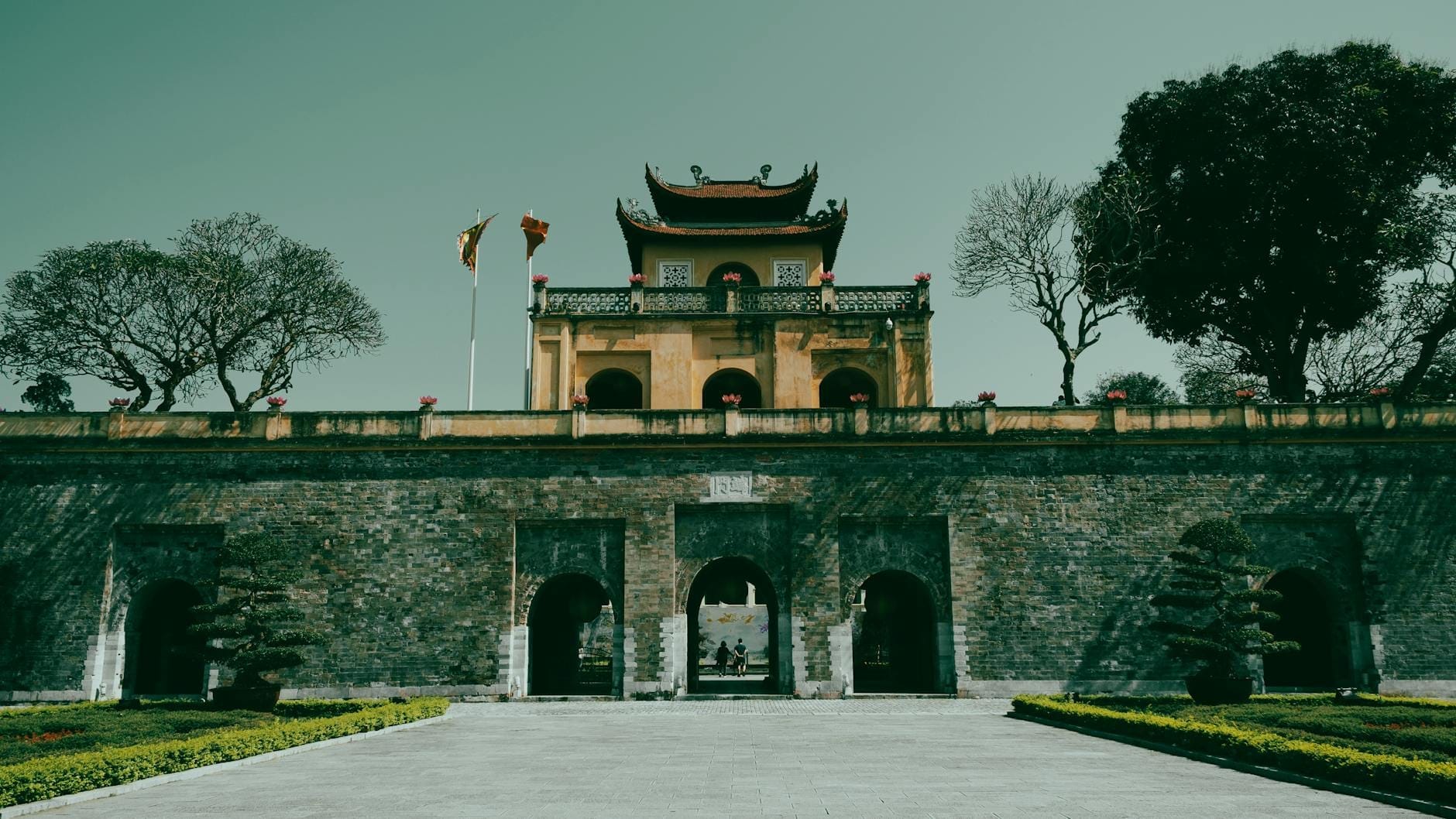
What the Imperial Citadel of Thang Long Actually Is
The Imperial Citadel of Thang Long is not a single building. It is a stratified archaeological and architectural complex in Hanoi's Ba Dinh District that served as the political and military center of Vietnam for roughly 13 continuous centuries. The name Thang Long, meaning 'Ascending Dragon,' was given to the site by Emperor Ly Thai To when he relocated the capital here in 1010. What visitors walk through today is the compressed result of Ly, Tran, Le, Mac, and Nguyen dynasty construction layered on top of each other, followed by French colonial demolition, and finally a decades-long role as the headquarters of the Vietnam People's Army.
UNESCO inscribed the site on the World Heritage List in 2010, recognizing both its outstanding historical significance and the continuous nature of human occupation stretching back to the 6th century, when a Chinese governor built an earlier citadel here. The combination of dynastic monuments above ground and the rich archaeological deposits uncovered after 2002 make this unlike almost any comparable site in the region.
ℹ️ Good to know
The 18 Hoang Dieu Archaeological Site, a separate but adjacent zone, displays excavated foundations and artifacts from multiple dynasties in open pits under protective roofing. It is included with the main citadel ticket and should not be skipped.
Moving Through the Complex: What You See and In What Order
Most visitors enter from the main Doan Mon gate on Hoang Dieu Street. This three-arched southern gatehouse, built during the Le dynasty in the 15th century and partially reconstructed since, sets the tone immediately: the brickwork is dense and old, the proportions imposing without being grandiose. Pass through and you face the long central axis of the imperial precinct, originally lined with ceremonial buildings, most of which no longer stand.
Walking north along this axis, you reach the Kinh Thien Palace foundation, the most emotionally resonant space in the complex. The palace itself is gone, dismantled by the French in the 19th century, but the grand stone staircase survives with its carved dragon balustrades. These dragons, dating to the 15th century Le dynasty, are regarded as among the finest examples of Vietnamese stone carving from any era. Standing on the platform where emperors received court, surrounded by open sky where halls once stood, gives a clarity about loss and continuity that a fully intact monument sometimes cannot.
Continue north to the Hau Lau tower, sometimes called the Princess Tower, a French-era reconstruction of an earlier structure that now houses rotating archaeological exhibitions. The collection includes glazed ceramic tiles, roof ornaments, coins, and bronze artifacts excavated from the site since 2002, many displayed with clear multilingual labeling.
💡 Local tip
Wear comfortable shoes with grip. The stone pathways, particularly near the Doan Mon gate and Kinh Thien staircase, can be slippery in humid or wet conditions, which describes much of Hanoi from May through October.
Tickets & tours
Live prices and dates from our booking partner. If you book, we may earn a commission at no extra cost to you.
Private full-day trip from Hanoi to Halong Bay with boat cruise
From 59 €Instant confirmationFree cancellationHalong Bay 3 days and 2 nights on boat cruise from Hanoi
From 438 €Instant confirmationFree cancellationHa Long Bay 1-day luxury cruise
From 62 €Instant confirmationFree cancellationHa Long Bay Luxury Day Cruise with Buffet Lunch From Hanoi
From 59 €Instant confirmationFree cancellation
The D67 Bunker: Vietnam's Most Unusual Annex
The complex includes something no amount of dynastic history could predict: a network of underground military command rooms used by the Vietnam People's Army during the American War period. The D67 bunker complex, accessible from within the citadel grounds, served as the operational nerve center where General Vo Nguyen Giap and other senior commanders directed military campaigns. The rooms retain their original maps, radio equipment, and furniture, preserved almost exactly as they were left.
This section operates on a slightly different ticketing and access schedule than the main grounds, so confirm availability at the entrance. The bunker is cool, quiet, and genuinely atmospheric in a way that differs entirely from the open-air dynastic ruins above it. The layering of a Cold War military facility directly beneath a UNESCO-listed imperial complex is strange and fascinating, and it says something specific about how Vietnam relates to all of its history simultaneously rather than sequentially.
How the Experience Changes by Time of Day
Early morning visits, around 8:00 to 9:00 a.m., offer the citadel at its quietest. The grounds smell of cut grass and stone, and the light through the old trees on the northern end of the precinct is notably soft. School groups begin arriving from mid-morning onward, particularly on weekdays, and the Kinh Thien area can become crowded with Vietnamese student tours accompanied by enthusiastic guides.
Midday heat from June through September is significant. The archaeological site at 18 Hoang Dieu is partly shaded by its protective roof structure and provides relief. Late afternoon, from around 3:30 p.m., the light is warmer and the crowds thin again, making it the second-best window for photography. The carved dragons on the Kinh Thien staircase photograph particularly well in directional afternoon light that reveals the relief depth.
⚠️ What to skip
The citadel is closed on Mondays. Plan around this, especially if you have limited days in Hanoi. Also note that the site can close for state events given its location adjacent to Ba Dinh Square; check locally before visiting on national holidays.
Historical and Cultural Context Worth Knowing
Understanding why this site matters requires brief context on Vietnamese dynastic history. When Ly Thai To chose Thang Long in 1010, he was establishing an independent Vietnamese capital after more than a thousand years of Chinese rule. The act was political as much as practical: siting the capital here, in the fertile Red River delta with its natural defenses, was a statement of autonomous Vietnamese statehood. The site remained the capital through the Tran dynasty (13th to 14th century), including during two successful repulsions of Mongol invasions, and through most of the Le dynasty (15th to 18th century), which produced the finest surviving architecture at the site.
The French colonial demolition of the Kinh Thien Palace in the late 19th century to build military barracks is a painful chapter in the site's history, and you notice it as an absence. The open expanse where the palace stood, framed only by the surviving staircase and two flanking structures, registers as a deliberate erasure. The barracks the French built have themselves since been partly removed, restoring some sense of the original layout.
The citadel sits in Ba Dinh, Hanoi's political district, placing it in close proximity to other sites that define Vietnamese political identity. Ho Chi Minh's Mausoleum stands just a few hundred meters to the west, and Ba Dinh Square occupies the ground where Vietnamese independence was declared in 1945. Visiting these sites together on a single day creates a coherent arc through Vietnamese history from the 11th century to the 20th.
Practical Walkthrough: Getting There, Getting In, Getting Around
The citadel's main entrance is at 19 Hoang Dieu Street. From the Old Quarter, a Grab car or motorbike taxi takes roughly 15 minutes depending on traffic. Bus routes 9, 22, and 45 pass through Ba Dinh District. Walking from Hoan Kiem Lake is possible (approximately 25 to 30 minutes on foot) and passes through pleasant tree-lined streets worth seeing.
Ticket prices are modest by international standards, though they are updated periodically, so verify the current rate at the gate rather than relying on older sources. A combined ticket typically covers both the main citadel grounds and the 18 Hoang Dieu archaeological site. Audio guides and guided tours in English are available and genuinely add value here given the complexity of the layered history. If you plan to combine this visit with other Ba Dinh sites, consider reading the Hanoi itinerary guide for sequencing suggestions.
Accessibility across the main grounds is reasonable, with paved paths connecting the major structures. The archaeological site at 18 Hoang Dieu involves some uneven ground. The D67 bunker requires descending stairs with no elevator alternative. Photography is permitted throughout the site without a dedicated photography ticket, though flash use near artifacts should be avoided.
The citadel is within walking distance of the One Pillar Pagoda and the Ho Chi Minh Stilt House, making the entire Ba Dinh cluster walkable in a single half-day.
Who Will Get the Most From This Site, and Who Might Not
Travelers with a genuine interest in Vietnamese history, pre-colonial Southeast Asian civilization, or military history will find the citadel deeply rewarding. The combination of dynastic archaeology, standing architecture, and the Cold War bunker creates an experience that is intellectually dense and chronologically unusual. Architecture enthusiasts will particularly appreciate the Kinh Thien stone carving.
Travelers looking for a visually spectacular, Instagram-ready monument may find it underwhelming. Much of what made the citadel grand is gone, and the experience asks you to engage imaginatively with foundations, staircases, and fragments rather than intact palaces. The site rewards curiosity and patience more than it rewards a quick walk-through. If you arrive with low historical context and limited time, you risk leaving with a vague impression of an empty field and some old stones, which would be a genuine shame.
💡 Local tip
Spend 10 minutes reading about the Ly and Le dynasties before your visit. Even a basic timeline transforms what the ruins communicate. The on-site information panels are good but cannot compensate for arriving with zero background.
Insider Tips
- The carved dragon balustrades on the Kinh Thien staircase are often photographed from the front, but a closer look at the side profile reveals the full serpentine detail of the stone carving. Get low and shoot from the side for the most compelling image.
- The 18 Hoang Dieu Archaeological Site is included in your ticket and is quieter than the main precinct. The glass-floored walkway over the excavated foundations is one of the more unusual sensory experiences the complex offers.
- Visit the D67 bunker section early in your visit before the heat builds. The underground rooms stay cool, but access is sometimes limited to timed entry if a guide is required. Confirm the schedule at the main ticket desk when you arrive.
- The northern end of the complex, near the Flag Tower (Cot Co), is often less crowded than the central axis and offers cleaner sightlines for photography of the tower and surrounding walls.
- If you are visiting multiple Ba Dinh sites in one day, start with the citadel when it opens and work westward toward the Ho Chi Minh complex. By the time you finish the citadel, the mausoleum crowds thin slightly from their morning peak.
Who Is Imperial Citadel of Thang Long For?
- History and archaeology travelers who want to understand Vietnamese civilization before French colonialism
- Architecture enthusiasts drawn to Le dynasty stone carving and surviving citadel gate structures
- Military history visitors interested in the Cold War-era D67 command bunker
- Travelers building a full Ba Dinh political and historical itinerary across a single day
- Repeat Hanoi visitors who have done the standard sites and want to go deeper into the city's layered past
Nearby Attractions
Other things to see while in Ba Đình:
- Ba Đình Square
Ba Dinh Square is the largest public square in Vietnam and the site where Ho Chi Minh read the Declaration of Independence on September 2, 1945. Flanked by the Ho Chi Minh Mausoleum, the Presidential Palace, and One Pillar Pagoda, it remains the symbolic and political core of the nation. For visitors, it is a place of solemn atmosphere, grand scale, and layered history that rewards those who understand what they are looking at.
- Hanoi Botanical Garden
Tucked inside the Ba Dinh district, the Hanoi Botanical Garden is one of the city's oldest green spaces, offering a calm counterpoint to the surrounding monuments and government buildings. It draws early-morning joggers, families on weekends, and travelers who want a breather between major sights.
- Ho Chi Minh Mausoleum
The Ho Chi Minh Mausoleum in Hanoi's Ba Dinh district is one of the most significant political and historical sites in Vietnam. This guide covers the full visitor experience: the solemn atmosphere, strict entry rules, best visiting times, and the broader complex of monuments surrounding it.
- Ho Chi Minh Museum
The Ho Chi Minh Museum in Hanoi's Ba Dinh district is one of Vietnam's most significant political and cultural institutions, dedicated to the life and legacy of the country's founding leader. Housed in a striking modernist building near the Ho Chi Minh Mausoleum complex, it offers a dense, sometimes challenging, but genuinely illuminating window into 20th-century Vietnamese history. If you approach it with patience and curiosity, it rewards both.
Planning a trip? Discover personalized activities with the Nomado app.