Hanoi Botanical Garden: A Quiet Green Retreat in Ba Dinh
Tucked inside the Ba Dinh district, the Hanoi Botanical Garden is one of the city's oldest green spaces, offering a calm counterpoint to the surrounding monuments and government buildings. It draws early-morning joggers, families on weekends, and travelers who want a breather between major sights.
Quick Facts
- Location
- Ba Dinh District, Hanoi, Vietnam
- Getting There
- Accessible by Grab, taxi, or city bus from central Hanoi; roughly 4–5 km from the Old Quarter
- Time Needed
- 45 minutes to 1.5 hours
- Cost
- VND 2,000–4,000; verify current rate on arrival (fees subject to change)
- Best for
- Families, joggers, travelers needing a quiet pause between Ba Dinh monuments
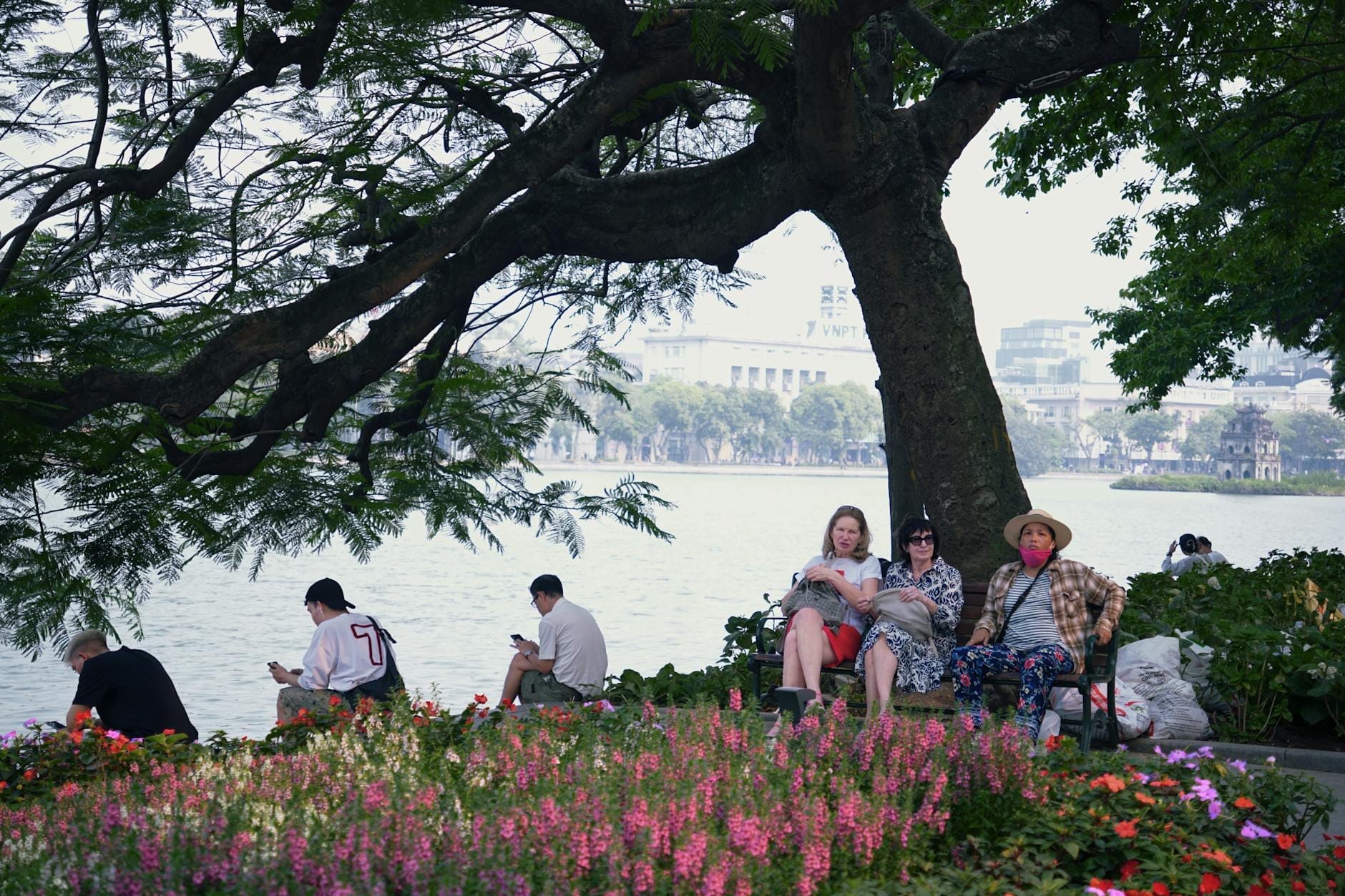
What the Hanoi Botanical Garden Actually Is
The Hanoi Botanical Garden, known locally as Vuon Bach Thao, sits in the northwestern corner of Ba Dinh district, not far from the dense cluster of monuments and museums that define this part of the city. It is one of Hanoi's oldest public parks, with origins dating to the French colonial period in the late 19th and early 20th century, when the colonial administration developed a network of tree-lined avenues and formal gardens across the city.
Unlike the manicured lakeside feel of Hoan Kiem or the ceremonial grandeur of Ba Dinh Square, the Botanical Garden has a slightly wilder, less curated character. Trees here are genuinely old and tall, providing dense canopy cover that makes the space feel cooler than the surrounding streets by several degrees. There are areas with labeled specimen trees, ponds, and walking paths, though the signage and upkeep can be uneven depending on when you visit.
ℹ️ Good to know
The garden is often listed as a secondary stop rather than a headline attraction. That underestimation works in your favor: crowds are thin on weekday mornings, and the atmosphere is distinctly local rather than tourist-oriented.
How the Garden Changes Through the Day
Early mornings, from around 6 to 8 a.m., belong to Hanoi residents. You will find joggers on the main paths, older visitors doing tai chi or slow stretching under the large trees, and groups chatting on benches. The light at this hour filters through the canopy in a way that makes the older trees especially striking. The air carries the smell of damp soil and fallen leaves, mixed with faint traces of incense from a small shrine inside the grounds.
By mid-morning, the park transitions. Families with young children arrive, and vendors near the entrance sell snacks and drinks. Midday in summer can be uncomfortably hot even with the shade, and the garden feels subdued. Late afternoon, particularly between 4 and 6 p.m., is arguably the most pleasant window: the temperature drops slightly, the light softens, and the garden fills again with locals finishing their day.
Weekend mornings attract noticeably larger crowds than weekdays, with families treating the space as a genuine destination rather than a transit point. If you want the garden at its quietest, a weekday morning, particularly Tuesday through Thursday, is ideal.
Tickets & tours
Live prices and dates from our booking partner. If you book, we may earn a commission at no extra cost to you.
Private full-day trip from Hanoi to Halong Bay with boat cruise
From 59 €Instant confirmationFree cancellationNinh Binh day tour with Hoa Lu, Trang An and Hang Mua from Hanoi
From 39 €Instant confirmationFree cancellationHalong Bay 3 days and 2 nights on boat cruise from Hanoi
From 438 €Instant confirmationFree cancellationHanoi Walking Street Food Tour with Train-Street Visit
From 28 €Instant confirmationFree cancellation
Historical and Cultural Context
Hanoi's colonial-era planners shaped much of the green infrastructure that still defines the city's older districts. The Botanical Garden was developed as part of that broader project, serving both scientific and recreational purposes during the French administration. The specimen collection was intended to catalog tropical and subtropical flora relevant to the region, and some of the oldest trees on the grounds reflect that original planting mission.
The garden sits within walking distance of several of Ba Dinh's most significant landmarks, including the Ho Chi Minh Mausoleum, the One Pillar Pagoda, and the Ho Chi Minh Stilt House. Grouping these into a single Ba Dinh morning makes logistical sense and avoids unnecessary backtracking.
Culturally, the garden functions as a neighborhood lung: a place where Hanoi residents escape noise and heat, where children play, and where elderly locals gather in the way that parks do in many Vietnamese cities. It is not a heritage site in the way the adjacent monuments are, but it carries its own quiet value as urban social infrastructure.
Walking Through the Garden: What to Expect
The main entrance opens onto a central pathway flanked by mature trees. The paths are paved but can be uneven in places, with roots pushing through the surface, so comfortable flat shoes are more practical than sandals. The garden has several interconnected loops, and a relaxed circuit of the main areas takes around 45 minutes to an hour.
There are ponds within the garden, some with turtles visible near the banks. Small bridges cross between sections. In spring, particularly April and May, flowering trees add color to the canopy, and the combination of old trees, water, and relative quiet makes the space noticeably more photogenic than it appears in most standard travel coverage.
💡 Local tip
Bring water. The vendors near the entrance sell cold drinks, but deeper in the garden there are no refreshment points. In summer months (June through August), the humidity under the canopy can feel intense by mid-morning.
Photography is generally unrestricted. The tall trees and dappled light create good conditions for portrait and nature photography in the early morning. A wide-angle lens or phone camera works well for capturing canopy height. Avoid midday shooting in summer; the contrast between bright sky and dark shade is difficult to expose correctly.
Getting There and Practical Logistics
The garden is located in Ba Dinh district, roughly 2 to 3 kilometers from the Old Quarter. The most direct option from central Hanoi is a Grab ride, which takes 10 to 15 minutes depending on traffic and costs a modest fare in Vietnamese Dong. City buses also serve the area, though route familiarity helps. Cyclos and motorbike taxis are alternatives for those comfortable with them.
If you are already exploring Ba Dinh for the day, the garden slots naturally into a route that might include Ba Dinh Square and the Imperial Citadel of Thang Long. The Quan Thanh Temple near the West Lake is also nearby and pairs well as part of a morning itinerary.
There is no metro serving this area directly. Hanoi's public bus network reaches Ba Dinh, but route numbering and stop locations can confuse first-time visitors. For a single trip, Grab is the most reliable and cost-effective option.
⚠️ What to skip
Opening hours and entry fees for the Hanoi Botanical Garden can change. Verify the current situation on arrival or check with your accommodation before making a dedicated trip, particularly outside peak travel months.
Accessibility and Who Should Reconsider
The main paths are paved, but the surface is uneven in several sections due to tree root intrusion. Wheelchair access is limited, and visitors with significant mobility challenges may find parts of the garden difficult to navigate. Strollers can generally manage the main central paths, though secondary routes may require lifting.
Travelers who arrive expecting a highly curated botanical experience with detailed labeling, formal displays, and café facilities will likely find the garden underwhelming. It is a public park with botanical origins, not a contemporary botanical institution. If your expectations are calibrated accordingly, it delivers genuine value. If you are short on time and prioritizing Hanoi's headline attractions, it is reasonable to skip unless you specifically want a quiet outdoor stop in Ba Dinh.
For context on planning your time across the district and the city, the Hanoi itinerary guide outlines how to sequence Ba Dinh with other neighborhoods efficiently.
Insider Tips
- Visit on a weekday between 6:30 and 8:30 a.m. to experience the garden as Hanoi residents do: quiet, local, and unhurried. This window also offers the best light for photography.
- The small shrine inside the garden grounds is easy to miss. Look for it along the secondary paths rather than the main central route; it adds an unexpected layer of texture to the visit.
- In April and May, the flowering trees inside the garden are at their best. This aligns with one of Hanoi's more comfortable weather windows, making a spring visit doubly worthwhile.
- Combine the garden with the nearby One Pillar Pagoda and Ho Chi Minh Stilt House on the same morning to avoid retracing steps across Ba Dinh. All three can comfortably fit within a three-hour window.
- The vendors near the entrance sell banh mi and cold drinks in the morning. Grab something before entering; there are no food options once you are deeper into the grounds.
Who Is Hanoi Botanical Garden For?
- Families with young children who need open space and shade between monument visits
- Joggers and walkers looking for a shaded route away from traffic
- Photographers interested in colonial-era tree canopy and early morning light
- Travelers who want a genuinely local, non-tourist experience in Ba Dinh
- Anyone building a full Ba Dinh day who needs a calm midpoint between major sights
Nearby Attractions
Other things to see while in Ba Đình:
- Ba Đình Square
Ba Dinh Square is the largest public square in Vietnam and the site where Ho Chi Minh read the Declaration of Independence on September 2, 1945. Flanked by the Ho Chi Minh Mausoleum, the Presidential Palace, and One Pillar Pagoda, it remains the symbolic and political core of the nation. For visitors, it is a place of solemn atmosphere, grand scale, and layered history that rewards those who understand what they are looking at.
- Ho Chi Minh Mausoleum
The Ho Chi Minh Mausoleum in Hanoi's Ba Dinh district is one of the most significant political and historical sites in Vietnam. This guide covers the full visitor experience: the solemn atmosphere, strict entry rules, best visiting times, and the broader complex of monuments surrounding it.
- Ho Chi Minh Museum
The Ho Chi Minh Museum in Hanoi's Ba Dinh district is one of Vietnam's most significant political and cultural institutions, dedicated to the life and legacy of the country's founding leader. Housed in a striking modernist building near the Ho Chi Minh Mausoleum complex, it offers a dense, sometimes challenging, but genuinely illuminating window into 20th-century Vietnamese history. If you approach it with patience and curiosity, it rewards both.
- Ho Chi Minh's Stilt House
Tucked within the Presidential Palace compound in Hanoi's Ba Dinh district, Ho Chi Minh's Stilt House is a two-story wooden structure where Vietnam's founding leader chose to live and work from 1958 until his death in 1969. Deliberately modest against the backdrop of a French colonial palace, it offers a rare, intimate look at the man behind the nation.
Planning a trip? Discover personalized activities with the Nomado app.