Ho Chi Minh Mausoleum: What to Expect Before You Visit
The Ho Chi Minh Mausoleum in Hanoi's Ba Dinh district is one of the most significant political and historical sites in Vietnam. This guide covers the full visitor experience: the solemn atmosphere, strict entry rules, best visiting times, and the broader complex of monuments surrounding it.
Quick Facts
- Location
- Ba Dinh Square, Ba Dinh District, Hanoi
- Getting There
- Several city bus routes stop near Ba Dinh Square; Grab taxi from Old Quarter takes 10-15 min
- Time Needed
- 1.5 to 2.5 hours including the full complex
- Cost
- Free entry to the mausoleum; small fees may apply for some adjacent museums
- Best for
- History travelers, those interested in Vietnamese politics and culture, first-time Hanoi visitors
What the Ho Chi Minh Mausoleum Actually Is
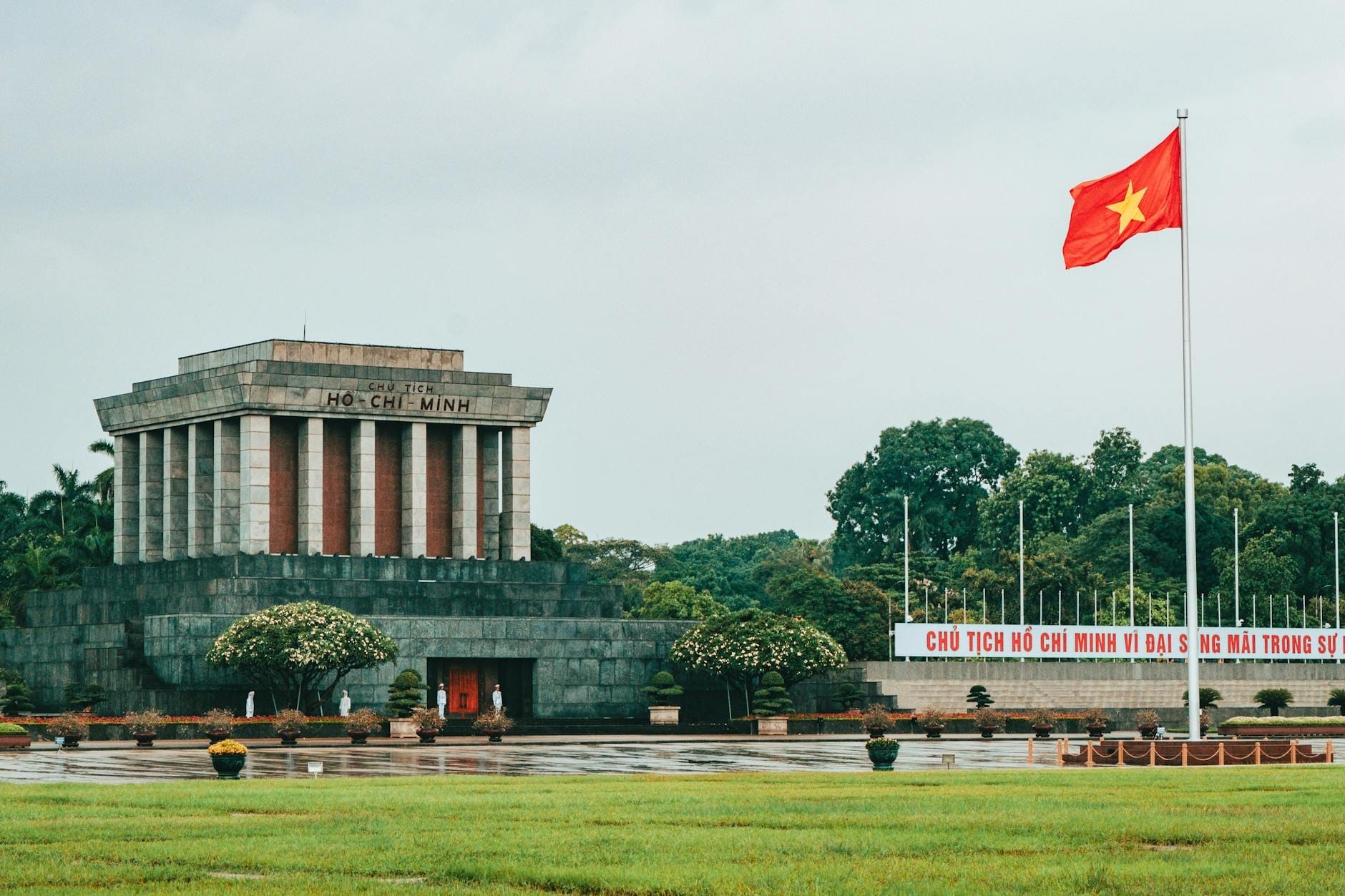
The Ho Chi Minh Mausoleum is a monumental granite structure in Ba Dinh Square where the embalmed body of Ho Chi Minh, the founding president of the Democratic Republic of Vietnam, is preserved and displayed. Ho Chi Minh died on September 3, 1969, and his preserved remains have been on public display since 1975. The mausoleum was completed in 1975, modeled in part on Lenin's Mausoleum in Moscow, and sits on the exact site where Ho Chi Minh read Vietnam's Declaration of Independence on September 2, 1945.
This is not a museum or a memorial in the conventional sense. You walk past the actual body. For many Vietnamese visitors, this is a deeply emotional act of national reverence. For international travelers, it is one of the most striking and unusual experiences available in Southeast Asia, regardless of personal political views.
ℹ️ Good to know
The mausoleum is typically open Tuesday-Thursday and Saturday-Sunday, in the mornings only (approximately 7:30 AM to 10:30 AM). It closes for several months each year, usually from early September to mid-November, when Ho Chi Minh's remains are taken to Russia for preservation maintenance. Always verify current hours and closure dates before your visit, as schedules change.
The Architecture and the Square
Ba Dinh Square itself is an immense open plaza, large enough to have held the hundreds of thousands of people who gathered for the 1945 independence declaration. Today it feels deliberately austere. The mausoleum sits at the western edge, a severe block of grey polished granite rising in three tiers, flanked by two symmetrical wings. Red flags and military guards are a constant presence.
The building draws on Soviet monumental architecture, but the materials are distinctly Vietnamese. The granite facing was sourced from quarries across Vietnam, a detail that carries symbolic weight. Four large columns mark the entrance, and the inscription on the facade reads, in Vietnamese: 'Chu Tich Ho Chi Minh' (President Ho Chi Minh).
The square itself connects visually and historically to the broader Ba Dinh district, which concentrates Vietnam's key government institutions. The Imperial Citadel of Thang Long is a short walk to the south, while the Presidential Palace complex and Ho Chi Minh's Stilt House are immediately adjacent to the mausoleum grounds, making the whole area a self-contained historical precinct worth at least half a day.
Tickets & tours
Live prices and dates from our booking partner. If you book, we may earn a commission at no extra cost to you.
Noi Bai International Airport Fast Track Service with SIM Card Option
From 25 €Instant confirmationFree cancellationPrivate full-day trip from Hanoi to Halong Bay with boat cruise
From 59 €Instant confirmationFree cancellationNinh Binh day tour with Hoa Lu, Trang An and Hang Mua from Hanoi
From 39 €Instant confirmationFree cancellationHalong Bay 3 days and 2 nights on boat cruise from Hanoi
From 438 €Instant confirmationFree cancellation
The Entry Process: What Happens Step by Step
Visitors queue along the northern edge of Ba Dinh Square. The line moves steadily but can stretch considerably on weekends and national holidays, particularly around September 2 (National Day) and May 19 (Ho Chi Minh's birthday). On a weekday morning in the off-peak season, the wait might be 15 to 20 minutes. On a busy holiday weekend, expect 45 minutes or more.
Before entering, bags and cameras must be deposited at the left-luggage facility. Photography is strictly prohibited inside the mausoleum. Mobile phones must be pocketed. Once inside, visitors walk in a slow, silent double file through the dimly lit interior. The body lies in a sealed glass sarcophagus under carefully controlled cool light. You do not stop. You walk past, make a circuit of the chamber, and exit. The entire interior passage takes roughly three minutes.
The silence inside is genuine and complete. Guides who joke or speak loudly have been escorted out. Most visitors, regardless of where they are from, tend to fall quiet naturally in the space.
⚠️ What to skip
Dress code is strictly enforced. Shoulders and knees must be covered for all visitors. Hats must be removed before entering. Shorts, sleeveless tops, and torn clothing are grounds for refusal at the gate. Lightweight trousers and a light shirt are the sensible choice, especially in Hanoi's humid summer months.
How the Experience Changes by Time of Day
The mausoleum opens at approximately 7:30 AM, and arriving close to opening time gives you the quietest possible experience. The early light across Ba Dinh Square is flat and grey in winter, golden in the dry season months of October through April, and the plaza has a stillness that does not last once tour groups begin arriving around 8:30 AM.
By 9:30 AM on any day during peak tourist months (November through April), the queue can stretch significantly and the grounds fill with school groups, domestic tour groups, and international visitors. The atmosphere shifts from solemn to logistically complex. If you are visiting primarily to see the mausoleum interior, 7:30 AM is the right call. If you plan to spend time in the surrounding complex, arriving slightly later and starting with the Stilt House or the One Pillar Pagoda before joining the mausoleum queue can work well.
💡 Local tip
The Ho Chi Minh Museum, located immediately to the west of the mausoleum, opens at 8:00 AM. Pairing both sites in one morning visit is efficient and adds substantial context to what you see inside the mausoleum.
The Surrounding Complex: Beyond the Mausoleum Itself
The mausoleum is the centerpiece, but the surrounding grounds contain several sites that reward the extra time. Ho Chi Minh's Stilt House, where he lived and worked from 1958 until his death, sits in a carefully maintained garden and offers a genuinely intimate counterpoint to the mausoleum's grandeur. The wooden house on stilts is modest, almost minimalist, and the contrast with the massive granite structure nearby is striking.
The One Pillar Pagoda stands just south of the mausoleum complex. It is one of Hanoi's oldest structures, originally built in 1049 during the reign of Emperor Ly Thai Tong. The current structure is a 1955 reconstruction after French forces destroyed the original before withdrawing, but the symbolic and architectural significance remains. It takes only a few minutes to see, but it is worth including on any visit to this precinct.
The Ho Chi Minh Museum covers Ho Chi Minh's life, the Vietnamese independence movement, and the country's 20th-century history through an extensive, if ideologically framed, series of exhibits. Allow 45 to 60 minutes if you plan to read the displays carefully.
Practical Considerations and Getting There
The Ba Dinh district is west of Hoan Kiem and about 3 km from the heart of the Old Quarter. A Grab car from the Old Quarter typically costs under 50,000 VND and takes 10 to 15 minutes depending on traffic. Several city bus routes pass close to the square, making it accessible without a taxi. Walking from Hoan Kiem Lake takes approximately 30 to 40 minutes and passes through pleasant residential streets, though Hanoi's traffic makes it worth checking the route in advance.
The grounds are largely flat and the main pathways are paved, making the complex accessible for most mobility levels. The interior of the mausoleum involves a slow-moving queue on flat ground. Some of the garden paths around the Stilt House are on uneven terrain.
Hanoi's weather significantly affects comfort here. The square offers almost no shade. In June through August, temperatures frequently exceed 35 degrees Celsius with high humidity. Carrying water, wearing a hat (to be removed before entering the mausoleum), and arriving early are practical necessities rather than suggestions during summer. October through March brings far more manageable conditions, though January and February can be overcast and damp.
💡 Local tip
Left-luggage storage near the mausoleum entrance is free or very low cost. Leave your main bag there and carry only essentials. The process of retrieving luggage is smooth and takes only a few minutes.
Who Should Skip This Attraction
Travelers with no interest in 20th-century Vietnamese history or political history more broadly may find the experience underwhelming. The interior passage lasts only a few minutes, and without historical context, the visit can feel bewildering rather than meaningful. Reading at least a brief account of Ho Chi Minh's life and the Vietnamese independence movement before arriving will transform the visit.
Those with significant mobility limitations should note that the queue involves standing for an extended period with limited options to step aside. Very young children may find the strict silence requirements and long queue difficult. The dress code requirements can be a practical obstacle for travelers arriving directly from beach destinations with limited clothing options.
Insider Tips
- The mausoleum closes for approximately two months every autumn (usually September to mid-November) while the remains are sent to Russia for preservation work. Check the current schedule before building your itinerary around this visit.
- Arrive at 7:30 AM on a Tuesday, Wednesday, or Thursday for the smallest crowds. Weekends and national holidays, particularly September 2 and May 19, draw very large queues.
- The left-luggage facility is located to the left of the main entrance queue. Deposit your bag early to avoid fumbling with belongings when you reach the gate.
- The Ho Chi Minh Stilt House garden is uncrowded compared to the mausoleum queue and is genuinely worth 20 to 30 minutes. The fish pond and garden layout reflect Ho Chi Minh's stated preference for simple surroundings.
- Wear slip-on shoes if possible. The combination of bag deposit, removing hats, and moving through security is smoother without laces to manage.
Who Is Ho Chi Minh Mausoleum For?
- First-time visitors to Hanoi who want to understand Vietnam's modern national identity
- History and politics travelers with an interest in 20th-century Asian independence movements
- Travelers combining the visit with the Imperial Citadel, One Pillar Pagoda, and Ho Chi Minh Museum in a single Ba Dinh morning
- Those seeking to understand how contemporary Vietnam relates to its revolutionary past
- Visitors interested in Soviet-influenced monumental architecture and its context in post-colonial nations
Nearby Attractions
Other things to see while in Ba Đình:
- Ba Đình Square
Ba Dinh Square is the largest public square in Vietnam and the site where Ho Chi Minh read the Declaration of Independence on September 2, 1945. Flanked by the Ho Chi Minh Mausoleum, the Presidential Palace, and One Pillar Pagoda, it remains the symbolic and political core of the nation. For visitors, it is a place of solemn atmosphere, grand scale, and layered history that rewards those who understand what they are looking at.
- Hanoi Botanical Garden
Tucked inside the Ba Dinh district, the Hanoi Botanical Garden is one of the city's oldest green spaces, offering a calm counterpoint to the surrounding monuments and government buildings. It draws early-morning joggers, families on weekends, and travelers who want a breather between major sights.
- Ho Chi Minh Museum
The Ho Chi Minh Museum in Hanoi's Ba Dinh district is one of Vietnam's most significant political and cultural institutions, dedicated to the life and legacy of the country's founding leader. Housed in a striking modernist building near the Ho Chi Minh Mausoleum complex, it offers a dense, sometimes challenging, but genuinely illuminating window into 20th-century Vietnamese history. If you approach it with patience and curiosity, it rewards both.
- Ho Chi Minh's Stilt House
Tucked within the Presidential Palace compound in Hanoi's Ba Dinh district, Ho Chi Minh's Stilt House is a two-story wooden structure where Vietnam's founding leader chose to live and work from 1958 until his death in 1969. Deliberately modest against the backdrop of a French colonial palace, it offers a rare, intimate look at the man behind the nation.
Planning a trip? Discover personalized activities with the Nomado app.