Ho Chi Minh's Stilt House: Inside the Simple Home of a Revolutionary Leader
Tucked within the Presidential Palace compound in Hanoi's Ba Dinh district, Ho Chi Minh's Stilt House is a two-story wooden structure where Vietnam's founding leader chose to live and work from 1958 until his death in 1969. Deliberately modest against the backdrop of a French colonial palace, it offers a rare, intimate look at the man behind the nation.
Quick Facts
- Location
- Presidential Palace Compound, Ba Dinh district, Hanoi
- Getting There
- No metro line nearby; take city buses to Ba Dinh Square area, or use Grab to reach the compound entrance
- Time Needed
- 1 to 2 hours, or up to half a day if combining with the Ho Chi Minh Mausoleum and Ho Chi Minh Museum nearby
- Cost
- Entry fees apply to the Presidential Palace compound; verify current rates before visiting as prices are subject to change
- Best for
- History enthusiasts, architecture lovers, and travelers interested in 20th-century Vietnamese politics
What Is Ho Chi Minh's Stilt House?
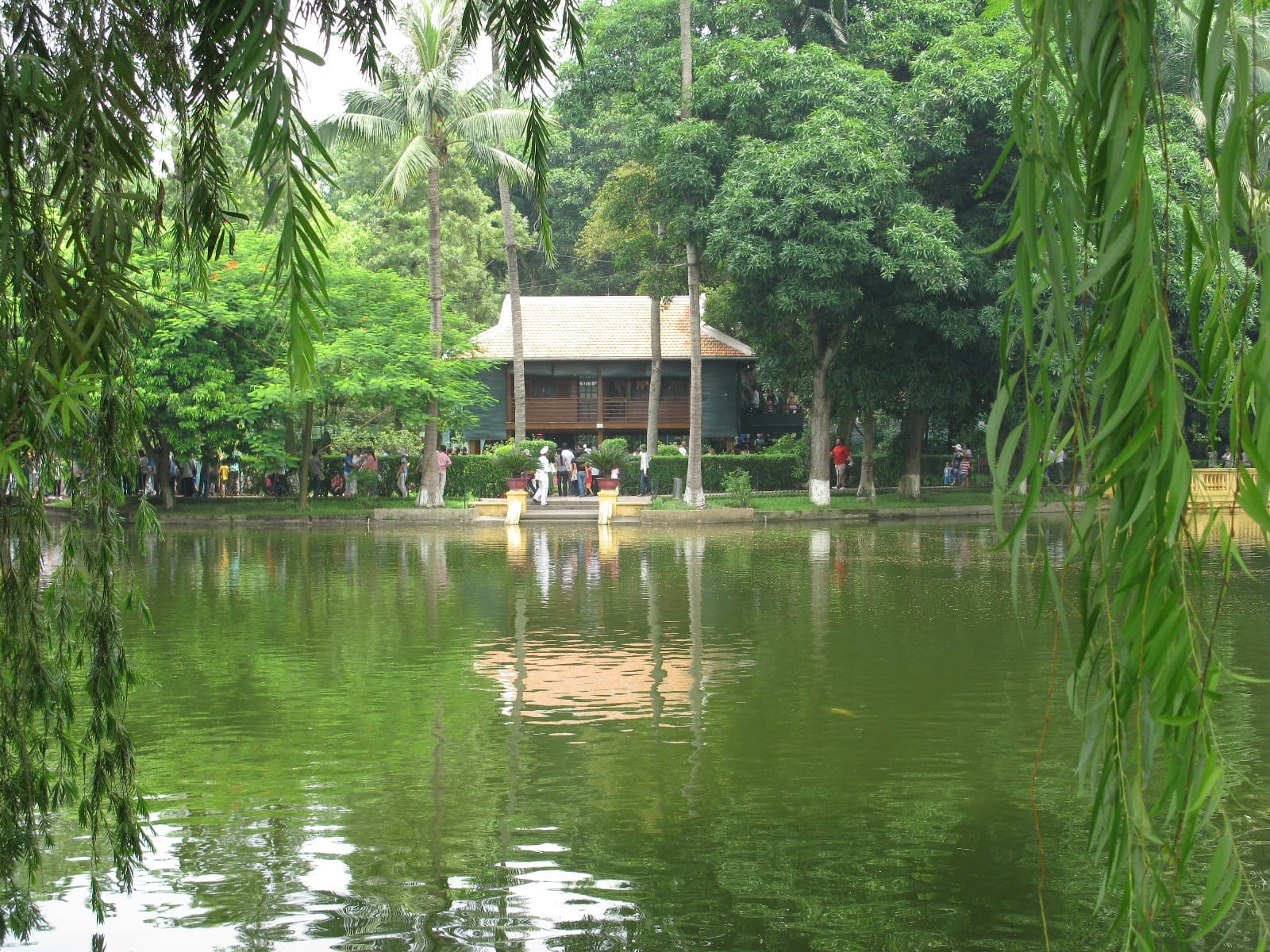
Ho Chi Minh's Stilt House is a two-story wooden dwelling built in 1958 on the grounds of the Presidential Palace compound in Hanoi's Ba Dinh district. Ho Chi Minh, who led Vietnam's independence movement and served as the country's first president, chose to live here rather than in the grand French colonial palace already standing on the property. That deliberate choice is the story the stilt house tells best.
The house is elevated on wooden pillars above a carp pond, a design borrowed from the traditional architecture of Vietnam's ethnic minority communities in the northern highlands. The lower level, open to the breeze, served as an outdoor meeting and working space. The upper level holds two small rooms: a bedroom and a study, both preserved with their original furnishings. What strikes most visitors is how little is there. A narrow bed, a modest desk, a few books. No ornament for its own sake.
ℹ️ Good to know
The stilt house sits within a larger compound that includes the Ho Chi Minh Mausoleum, the Presidential Palace, the Ho Chi Minh Museum, and the One Pillar Pagoda. Most visitors combine several of these in one morning visit. Plan to arrive early: the mausoleum has stricter and more limited opening hours than the stilt house grounds.
The Architecture and Its Meaning
The stilt house design is not accidental. Ho Chi Minh reportedly chose the style as a reference to the stilt-house architecture common among Vietnam's ethnic minority communities, particularly in the mountainous north. The structure uses hardwoods throughout, with simple joinery and no decorative excess. The form is functional: the raised floor keeps the interior cool, allows air to circulate beneath, and historically would have protected against flooding and wildlife.
Standing next to the Presidential Palace, a yellow-rendered French colonial building constructed in 1906 during the French protectorate period, the contrast is visually sharp. The palace is symmetrical, imposing, and European in every line. The stilt house, set back among mature trees beside a rectangular carp pond, reads as its deliberate opposite. Whether that contrast was a political statement or simply personal preference has been debated by historians, but the visual effect on visitors is immediate.
If you have an interest in colonial-era architecture more broadly, the Ba Dinh district rewards a longer walk. The Presidential Palace compound sits near Ba Dinh Square, and the wider neighborhood holds several significant buildings from the French period as well as the landmark Ho Chi Minh Mausoleum.
Tickets & tours
Live prices and dates from our booking partner. If you book, we may earn a commission at no extra cost to you.
Noi Bai International Airport Fast Track Service with SIM Card Option
From 25 €Instant confirmationFree cancellationPrivate full-day trip from Hanoi to Halong Bay with boat cruise
From 59 €Instant confirmationFree cancellationNinh Binh day tour with Hoa Lu, Trang An and Hang Mua from Hanoi
From 39 €Instant confirmationFree cancellationHalong Bay 3 days and 2 nights on boat cruise from Hanoi
From 438 €Instant confirmationFree cancellation
How the Visit Actually Unfolds
Visitors enter the compound through a gatehouse and follow a path through well-kept gardens. The grounds are genuinely pleasant: mature trees, trimmed hedges, and the kind of quiet that feels deliberate in a city as loud as Hanoi. The carp pond in front of the stilt house is one of the first things you see on approach, and the fish are visible and large, gathering near the surface when visitors stop at the railing.
You cannot enter the stilt house itself. Visitors view the interior of the upper rooms through open windows and doors from the outside walkway, which circles the structure at the upper level via a raised platform and staircase. The rooms are preserved as they were during Ho Chi Minh's lifetime, and the access restrictions keep the space intimate rather than crowded. Guides are available on-site, and context boards provide English-language information at key points.
After the stilt house, most visitors continue along the garden path to the Presidential Palace exterior, the fish pond area, and then exit toward the Ho Chi Minh Museum or One Pillar Pagoda depending on how much time remains. The flow through the compound is logical and well-signposted.
💡 Local tip
Wear shoes you can walk in comfortably on stone paths and garden walkways. The compound does not require you to remove footwear, but modest dress is expected at this national memorial site. Shoulders and knees should be covered.
Time of Day and Crowd Patterns
Morning is the best window for visiting the entire Ba Dinh compound. The Ho Chi Minh Mausoleum only opens in the morning on specific days and has a separate queue, so travelers planning to visit both should prioritize arriving by 8:00 a.m. The stilt house itself is less rigidly timed, but the gardens are significantly more pleasant before midday heat sets in, particularly between April and October when temperatures in Hanoi can climb steeply.
On weekends and Vietnamese public holidays, the compound draws larger crowds, particularly domestic visitors and school groups. Weekday mornings outside of Vietnamese national holidays offer the quietest experience. If you arrive mid-morning on a clear day, the light filters through the tree canopy around the pond well for photography without being harsh.
For context on the best months to be in Hanoi overall, the guide to the best time to visit Hanoi covers seasonal weather patterns in detail. October and November are widely considered optimal for sightseeing in the city.
Historical and Cultural Context
Ho Chi Minh lived in the stilt house from 1958 until his death on September 2, 1969. The years he spent here were among the most turbulent in Vietnamese history, covering the escalation of the conflict with the United States and the intensification of the war in the south. The study where he worked during this period is preserved with his personal effects, including the desk where he reportedly continued receiving visitors and drafting documents even in his final years.
The compound as a whole functions as a major site of national remembrance in Vietnam. The Ho Chi Minh Mausoleum, where Ho Chi Minh's embalmed body lies in state, stands a short walk away at Ba Dinh Square, the site where he read the Declaration of Independence on September 2, 1945. The stilt house offers a different register from the mausoleum: less ceremonial, more personal.
Visitors interested in the broader sweep of Vietnamese history in this period will find the Hoa Lo Prison in central Hanoi a compelling counterpoint. It documents the colonial period and the later American POW experience from a Vietnamese perspective.
Practical Information for Getting Here
The Presidential Palace compound entrance is located in Ba Dinh district, west of Hoan Kiem Lake. From the Old Quarter, a Grab ride takes approximately 10 to 15 minutes depending on traffic. Several city bus routes serve the Ba Dinh Square area, which is walkable from the compound entrance. If you are traveling independently and want to understand Hanoi's bus network before arriving, it is worth doing some advance research as route information changes periodically.
The Ba Dinh compound is a natural anchor for a half-day itinerary that also takes in the Ho Chi Minh Mausoleum, the One Pillar Pagoda, and the Ho Chi Minh Museum without requiring any additional transport between sites.
⚠️ What to skip
The Ho Chi Minh Mausoleum is closed for maintenance for several weeks each year, typically in September and October. If visiting the mausoleum is a priority, confirm it is open before planning your trip around it. The stilt house and museum operate on a different schedule and are generally accessible when the mausoleum is closed.
Photography and Accessibility
Photography is permitted in the garden and around the stilt house exterior. The carp pond and the stilt house together make for a straightforward and satisfying composition, especially from the far side of the pond where the full elevation of the structure is visible with its reflection in the water. Morning light from the east catches the wooden facade well in the first two hours after opening.
The garden paths are paved and generally accessible, though some sections involve steps and uneven surfaces. The raised walkway around the stilt house upper level involves a staircase and is not wheelchair accessible. Visitors with mobility limitations can view the exterior and pond area from ground level without difficulty, but access to the upper viewing platform is limited.
Who Should Skip This Attraction
If your interest in Vietnamese history is minimal and you are in Hanoi primarily for food, nightlife, or the energy of the Old Quarter, the Ba Dinh compound is unlikely to be a priority for your limited time. The experience is reflective and slow-paced, not stimulating in a sensory or social way. Similarly, travelers with very young children may find the restrictions on movement and the low-interactivity format frustrating compared to options like the Vietnam Museum of Ethnology, which has more engaging exhibits.
Travelers who want a richer introduction to Vietnamese culture and history before visiting this site might benefit from spending time at the Vietnam Museum of Ethnology first. Its coverage of northern highland communities, including stilt-house architecture, adds real depth to the stilt house visit.
Insider Tips
- Arrive at the compound entrance no later than 8:30 a.m. if you want to join the mausoleum queue and visit the stilt house in the same morning without feeling rushed. The mausoleum queue moves at its own pace and can absorb significant time.
- The carp pond is one of the most photographed spots in the compound. For a cleaner shot without other visitors in frame, position yourself at the far end of the pond shortly after opening, before the first tour groups arrive.
- A local guide, hired through your accommodation or a registered tour operator, adds significant value here. The rooms are viewed from a distance, and without context about Ho Chi Minh's daily routines and working habits, the preserved interior can feel sparse rather than meaningful.
- Combine this visit with the One Pillar Pagoda, which is a three-minute walk from the stilt house garden. It is one of Hanoi's oldest structures and takes only 15 minutes to see, making it an efficient addition to any Ba Dinh morning.
- Dress for the weather as well as the dress code. The garden walk can be warm and humid in summer. Lightweight, breathable fabrics that also cover shoulders and knees keep you comfortable and compliant with site expectations.
Who Is Ho Chi Minh's Stilt House For?
- Travelers with a serious interest in 20th-century Vietnamese history and politics
- Architecture enthusiasts curious about the contrast between colonial-era French design and traditional Vietnamese stilt-house construction
- Visitors combining a wider Ba Dinh morning itinerary covering the mausoleum, pagoda, and museum
- Photographers looking for reflective pond compositions with historic wooden architecture
- Travelers who appreciate quiet, contemplative sites away from the commercial intensity of the Old Quarter
Nearby Attractions
Other things to see while in Ba Đình:
- Ba Đình Square
Ba Dinh Square is the largest public square in Vietnam and the site where Ho Chi Minh read the Declaration of Independence on September 2, 1945. Flanked by the Ho Chi Minh Mausoleum, the Presidential Palace, and One Pillar Pagoda, it remains the symbolic and political core of the nation. For visitors, it is a place of solemn atmosphere, grand scale, and layered history that rewards those who understand what they are looking at.
- Hanoi Botanical Garden
Tucked inside the Ba Dinh district, the Hanoi Botanical Garden is one of the city's oldest green spaces, offering a calm counterpoint to the surrounding monuments and government buildings. It draws early-morning joggers, families on weekends, and travelers who want a breather between major sights.
- Ho Chi Minh Mausoleum
The Ho Chi Minh Mausoleum in Hanoi's Ba Dinh district is one of the most significant political and historical sites in Vietnam. This guide covers the full visitor experience: the solemn atmosphere, strict entry rules, best visiting times, and the broader complex of monuments surrounding it.
- Ho Chi Minh Museum
The Ho Chi Minh Museum in Hanoi's Ba Dinh district is one of Vietnam's most significant political and cultural institutions, dedicated to the life and legacy of the country's founding leader. Housed in a striking modernist building near the Ho Chi Minh Mausoleum complex, it offers a dense, sometimes challenging, but genuinely illuminating window into 20th-century Vietnamese history. If you approach it with patience and curiosity, it rewards both.
Planning a trip? Discover personalized activities with the Nomado app.