Ho Chi Minh Museum, Hanoi: What to Expect, How to Visit, and Whether It's Worth Your Time
The Ho Chi Minh Museum in Hanoi's Ba Dinh district is one of Vietnam's most significant political and cultural institutions, dedicated to the life and legacy of the country's founding leader. Housed in a striking modernist building near the Ho Chi Minh Mausoleum complex, it offers a dense, sometimes challenging, but genuinely illuminating window into 20th-century Vietnamese history. If you approach it with patience and curiosity, it rewards both.
Quick Facts
- Location
- 19 Ngoc Ha Street, Ba Dinh District, Hanoi
- Getting There
- Grab or taxi from Hoan Kiem in ~15 min; public buses 9, 22, 33 stop nearby on Hung Vuong Street
- Time Needed
- 1.5 to 2.5 hours
- Cost
- Approximately 40,000 VND for adults; verify current prices at the museum entrance
- Best for
- History enthusiasts, students of Southeast Asian politics, visitors touring the wider Ba Dinh complex
What the Ho Chi Minh Museum Actually Is
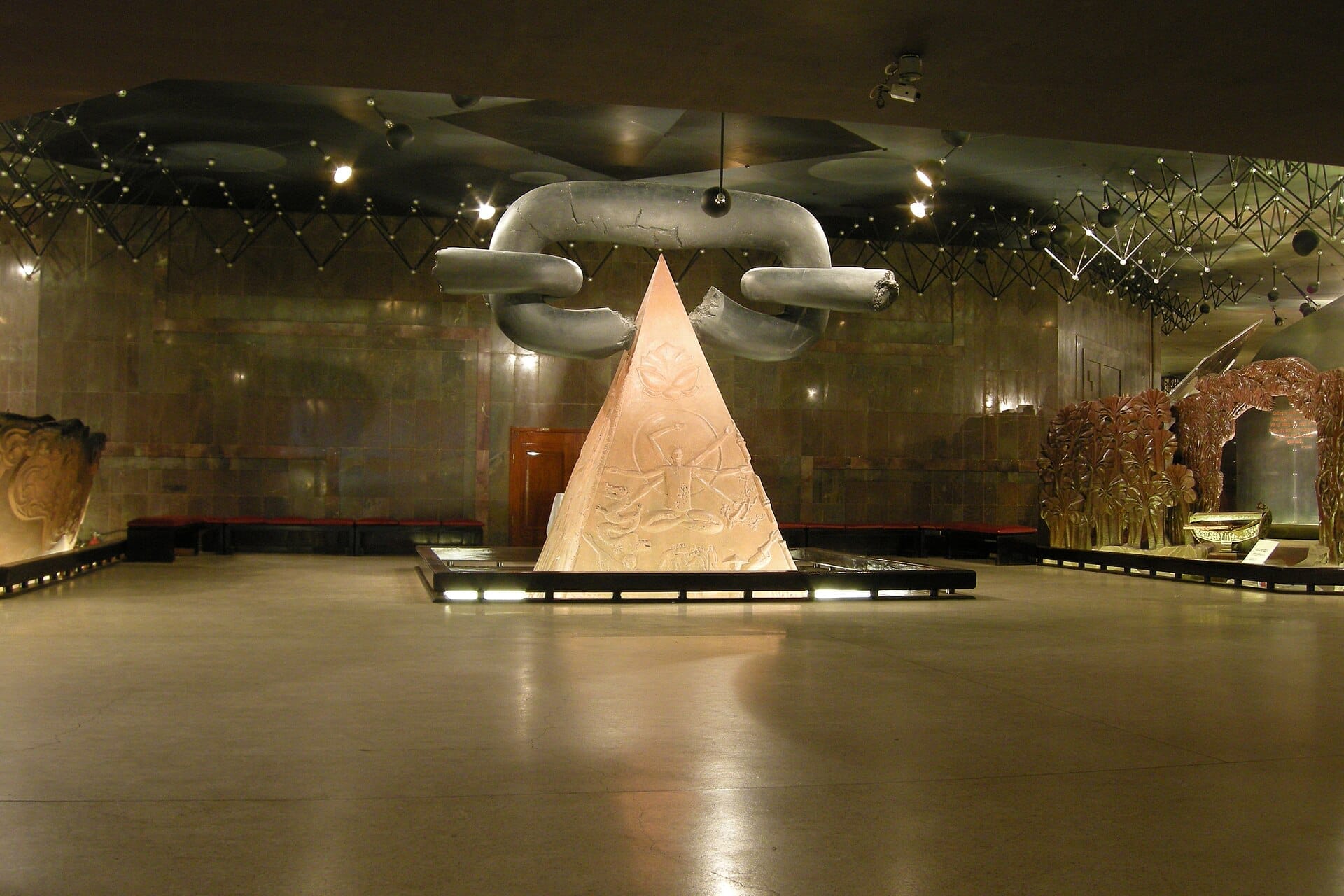
The Ho Chi Minh Museum (Bảo tàng Hồ Chí Minh) was inaugurated on May 19, 1990 to mark the centenary of Ho Chi Minh's birth. It is not a conventional biography museum. Instead, it takes an experimental, at times surrealist, approach to historical narrative, combining documents, photographs, replica rooms, and abstract sculptural displays to trace the arc of Ho Chi Minh's life alongside the broader story of Vietnamese resistance and independence. The building itself, a large Soviet-influenced modernist structure sometimes compared to a lotus flower in form, is part of the statement.
It sits within the broader Ba Dinh complex, which includes the Ho Chi Minh Mausoleum, the Presidential Palace grounds, the Ho Chi Minh Stilt House, and the One Pillar Pagoda. Most visitors combine at least two or three of these sites in a single morning. The museum is typically the final stop in that sequence, and it is not a bad order: having already seen where Ho Chi Minh lived and where he now rests, the museum's more abstract storytelling lands with more weight.
💡 Local tip
The Ba Dinh complex sites keep different hours and the Mausoleum closes on Monday and Friday afternoons. Confirm current schedules before arriving, particularly if you plan to visit the Mausoleum on the same day.
The Building and the Approach
From the street, the museum presents a wide, low-slung concrete facade with monumental proportions. It does not shout for your attention the way some civic buildings do. The forecourt is large and often quiet midweek, with a few vendors at the perimeter and tour buses parked along the access road. In the early morning, the light falls at a flat angle across the white exterior and the surrounding gardens are at their tidiest.
Inside, you pass through a ground floor lobby before ascending to the main exhibition on the upper levels. The interior is cool, well-maintained, and deliberately atmospheric. Air conditioning makes the museum a genuine relief on a Hanoi summer afternoon, when temperatures outside regularly exceed 35°C between June and August.
The museum is a short walk from the Ho Chi Minh Mausoleum and the Ho Chi Minh Stilt House, both of which sit within the same walled complex. If you are visiting Ba Dinh for the first time, budget at least half a day to cover all three sites without feeling rushed.
Tickets & tours
Live prices and dates from our booking partner. If you book, we may earn a commission at no extra cost to you.
Noi Bai International Airport Fast Track Service with SIM Card Option
From 25 €Instant confirmationFree cancellationPrivate full-day trip from Hanoi to Halong Bay with boat cruise
From 59 €Instant confirmationFree cancellationNinh Binh day tour with Hoa Lu, Trang An and Hang Mua from Hanoi
From 39 €Instant confirmationFree cancellationHalong Bay 3 days and 2 nights on boat cruise from Hanoi
From 438 €Instant confirmationFree cancellation
What You'll See Inside: The Exhibition Rooms
The permanent exhibition is organized into thematic sections rather than strict chronological order, which can be disorienting on a first pass. Displays cover Ho Chi Minh's early years in Nghe An province, his travels through France, the Soviet Union, China, and the United States in the early 20th century, his role in founding the Indochinese Communist Party in 1930, and his leadership during the wars against French colonialism and later American intervention.
The documentary material is genuinely substantial. There are original letters, colonial-era arrest warrants, photographs taken by foreign correspondents, and personal objects including clothing, sandals made from tire rubber, and writing tools. These small personal artifacts tend to hold attention longer than the larger installations because they are specific and legible.
Several rooms use symbolic and conceptual display techniques that require some patience to decode. One well-known installation juxtaposes images of French Impressionist paintings with symbols of colonial exploitation, while another arranges global revolutionary imagery in a way that links Vietnam's independence struggle to wider 20th-century movements. These rooms are deliberately constructed and somewhat didactic, but they reflect the curatorial ambition of the original Soviet-Vietnamese design team and are worth engaging with rather than skipping.
ℹ️ Good to know
English captions exist throughout the museum but vary in detail and clarity. Renting an audio guide or hiring a guide at the entrance significantly improves the experience, particularly for the more conceptual display sections.
Crowds, Timing, and the Best Hours to Visit
The museum receives a steady flow of Vietnamese school groups, particularly on weekday mornings between roughly 8:30 and 11:00. Groups tend to move through quickly and with energy, and their presence does not disrupt the experience in the quieter rooms, but in the main galleries the noise level rises noticeably. International visitors are generally fewer in number than at the Mausoleum itself.
The best window for a calm visit is mid-morning on a Tuesday, Wednesday, or Thursday, ideally arriving by 9:00. Late afternoon, in the hour before closing, is also reliably quiet. Weekends bring more family visitors and are pleasant but busier. Avoid national holidays and the weeks around Ho Chi Minh's birthday on May 19, when attendance spikes significantly and the wider complex becomes very crowded.
If you are building an itinerary around Ba Dinh, the One Pillar Pagoda is a five-minute walk away and takes under 30 minutes to visit. The Temple of Literature is a 10-minute taxi ride south and makes a logical second stop if you want to stay in the historic monument circuit.
Photography, Accessibility, and Practical Details
Photography is generally permitted in most areas of the museum. Flash is discouraged in rooms with original documents and photographs. The lighting in several sections is deliberately low for atmospheric effect, so a smartphone with a decent low-light camera will serve better than a compact point-and-shoot.
The museum is largely accessible on foot across flat or ramped surfaces, though some older sections have shallow steps with no alternative route. Visitors with mobility limitations should check current accessibility provisions at the entrance. There are toilets on the ground floor. A small gift shop near the exit sells books, reproductions, and souvenir items; the Vietnamese-language publications on Ho Chi Minh's writings are more substantial than the standard tourist keepsakes.
Dress modestly for the visit. While the museum does not enforce a strict dress code in the way that active religious sites do, the Ba Dinh complex as a whole has a solemn character, and bare shoulders or very short clothing can draw disapproving attention from staff at some points in the complex, particularly near the Mausoleum. Light layers are sensible in any season because the interior air conditioning runs cold.
Historical Context: Why This Museum Exists Here
Ba Dinh Square, directly in front of the Mausoleum, is where Ho Chi Minh read the Declaration of Independence on September 2, 1945, proclaiming the Democratic Republic of Vietnam. The entire district became a ceremonial and administrative center by design, and the museum's placement within it is deliberate. Visiting the museum is, in part, an act of reading the landscape: this is a district built to embody a particular version of national history. For more context on this neighborhood, see our overview of Ba Dinh district and the nearby Ba Dinh Square.
That framing matters for how you read the exhibition. The museum is unambiguously a state institution presenting an official narrative. It does not include dissenting perspectives or acknowledge the complexity of some historical decisions. For visitors who approach it as a curated national monument rather than a neutral history lesson, it is an informative and sometimes moving experience. Those expecting a balanced academic account may find its ideological coherence frustrating.
Who Should Consider Skipping This
If you have very limited time in Hanoi and must choose between the museum and the Mausoleum or Stilt House, the Stilt House typically offers more immediate sensory and human detail for the time invested. The museum's conceptual installations require patience and some background knowledge to engage with meaningfully. Visitors with no prior interest in Vietnamese political history or the independence movements of the 20th century may find large sections of the exhibition difficult to connect with, and the abstract display style can feel alienating without context.
Travelers who are primarily focused on street food, the Old Quarter, or lake-side Hanoi will likely find their time better spent elsewhere. For ideas on structuring a broader Hanoi visit, the Hanoi itinerary guide covers how to balance the Ba Dinh monuments with the rest of the city.
Insider Tips
- Pick up the printed English floor guide at the ticket desk rather than relying solely on wall captions. It provides room-by-room context that the signage alone does not fully convey.
- The rooftop terrace area, accessible from the upper floor, offers an unusual aerial view of the surrounding Ba Dinh grounds and the Mausoleum forecourt. It is not heavily signed, so ask staff for access.
- Visit on a weekday after 14:00 if you want the fewest school groups. Morning visits offer fresher air and better light in the garden courtyard, but the crowds peak before noon.
- The gift shop near the exit stocks a small selection of English-language books on Ho Chi Minh and Vietnamese history that are difficult to find elsewhere in the city at reasonable prices.
- Combine this visit with the Imperial Citadel of Thang Long, a 10-minute taxi ride away, for a full day covering Vietnam's political history across very different eras.
Who Is Ho Chi Minh Museum For?
- History and politics travelers with a specific interest in 20th-century Southeast Asia
- First-time visitors doing a full Ba Dinh complex day alongside the Mausoleum and Stilt House
- Students and researchers looking for primary source material and official historical framing
- Travelers visiting during Hanoi's hot summer months who want a substantial indoor attraction with air conditioning
- Anyone curious about how Vietnam officially constructs and presents its national identity
Nearby Attractions
Other things to see while in Ba Đình:
- Ba Đình Square
Ba Dinh Square is the largest public square in Vietnam and the site where Ho Chi Minh read the Declaration of Independence on September 2, 1945. Flanked by the Ho Chi Minh Mausoleum, the Presidential Palace, and One Pillar Pagoda, it remains the symbolic and political core of the nation. For visitors, it is a place of solemn atmosphere, grand scale, and layered history that rewards those who understand what they are looking at.
- Hanoi Botanical Garden
Tucked inside the Ba Dinh district, the Hanoi Botanical Garden is one of the city's oldest green spaces, offering a calm counterpoint to the surrounding monuments and government buildings. It draws early-morning joggers, families on weekends, and travelers who want a breather between major sights.
- Ho Chi Minh Mausoleum
The Ho Chi Minh Mausoleum in Hanoi's Ba Dinh district is one of the most significant political and historical sites in Vietnam. This guide covers the full visitor experience: the solemn atmosphere, strict entry rules, best visiting times, and the broader complex of monuments surrounding it.
- Ho Chi Minh's Stilt House
Tucked within the Presidential Palace compound in Hanoi's Ba Dinh district, Ho Chi Minh's Stilt House is a two-story wooden structure where Vietnam's founding leader chose to live and work from 1958 until his death in 1969. Deliberately modest against the backdrop of a French colonial palace, it offers a rare, intimate look at the man behind the nation.
Planning a trip? Discover personalized activities with the Nomado app.