One Pillar Pagoda: Hanoi's Most Iconic Buddhist Shrine
Rising from the center of a small square lotus pond on a single stone pillar, the One Pillar Pagoda is one of Vietnam's most recognizable structures. Built in the 11th century by Emperor Ly Thai Tong, this petite wooden shrine carries outsized historical and spiritual weight in the heart of the Ba Dinh District.
Quick Facts
- Location
- Chua Mot Cot Street, Ba Dinh District, Hanoi
- Getting There
- Grab or taxi from Old Quarter (~15 min); local buses stop near Ba Dinh Square
- Time Needed
- 20–40 minutes for the pagoda itself; 1.5–2 hours if combined with the Ho Chi Minh complex
- Cost
- Free entry to the grounds; small donation box inside the pagoda
- Best for
- History enthusiasts, Buddhist architecture lovers, photography
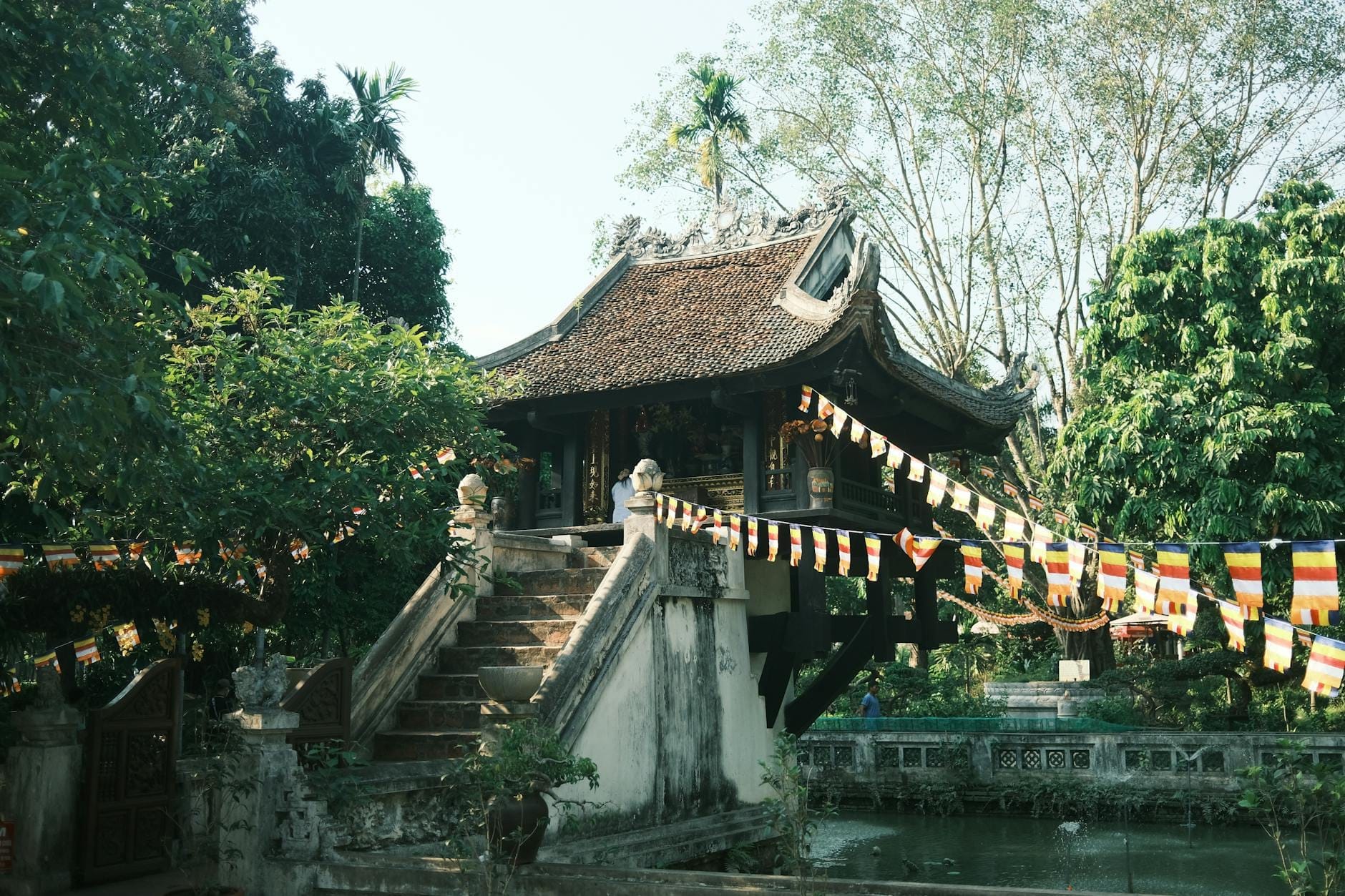
What the One Pillar Pagoda Actually Is
The One Pillar Pagoda, known in Vietnamese as Chua Mot Cot, is a single-room wooden shrine elevated on a stone pillar above a small square lotus pond. It is compact by any measure: the structure itself is only a few meters across. But the proportions are deliberate and elegant, designed to evoke a lotus flower rising from the water, a symbol of purity in Buddhist tradition. When the pond is full and the lotuses are in bloom roughly from June through August, the visual effect is particularly striking.
The pagoda sits in a small landscaped garden on Chua Mot Cot Street in the Ba Dinh District, directly adjacent to the Ho Chi Minh Mausoleum complex. In practice, most visitors encounter it as part of a broader circuit of the Ba Dinh area rather than as a standalone destination, though it is freely accessible without entering the paid mausoleum grounds.
💡 Local tip
Entry to the One Pillar Pagoda grounds is free. You do not need to purchase a ticket for the Ho Chi Minh Mausoleum complex to visit it. The pagoda has its own entrance on Chua Mot Cot Street.
History: Over a Thousand Years in a Small Pond
The pagoda was originally built in 1049 CE by Emperor Ly Thai Tong of the Ly Dynasty, one of the formative periods of Vietnamese statehood. According to historical accounts, the emperor had a dream in which Guan Yin (the Goddess of Mercy) appeared to him seated on a lotus flower and invited him to join her, and subsequently a son was born. When a male heir was indeed born, the emperor commissioned this structure as an act of gratitude and devotion. The design, a shrine on a single pillar rising from water, was intended to replicate the lotus throne in his vision.
The pagoda has been destroyed and rebuilt multiple times over the centuries. The most recent reconstruction came in 1955, following its demolition in 1954 during the First Indochina War by French Union forces. The current structure is therefore a 20th-century reconstruction built to replicate the historical form, which is worth knowing before you visit. It is not the original 11th-century masonry. That said, the design faithfully follows traditional specifications, and the symbolic and cultural significance of the site has not diminished.
The Ba Dinh District that surrounds it today is a district defined by its relationship to Vietnamese political and cultural history. The Ho Chi Minh Mausoleum, the Ho Chi Minh Stilt House, and Ba Dinh Square are all within a short walk, making this corner of Hanoi unusually dense with historical significance.
Tickets & tours
Live prices and dates from our booking partner. If you book, we may earn a commission at no extra cost to you.
Bai Dinh Pagoda and Trang an Eco-Tourism Full Day Tour
From 31 €Instant confirmationFree cancellationFull-Day Tour to Hanoi Perfume Pagoda with Lunch and Boat Ride
From 59 €Instant confirmationBai Dinh Pagoda, Mua Cave and Trang An Guided Tour with Buffet Lunch
From 36 €Instant confirmationFree cancellationBoat trip to Perfume Pagoda and cable car to Huong Tich Cave from Ha Noi
From 88 €Instant confirmationFree cancellation
What You'll See When You Arrive
The approach is low-key. You walk down a short path past a small gate, and the pagoda appears ahead of you, reflected in the square pond below. The pillar is made of stone, and a staircase with a wooden railing leads up to the shrine room, which is open on all sides except for a small altar at the back. A statue of Bodhisattva Avalokitesvara (Quan Am) occupies the center of the altar, flanked by incense burners and offerings left by worshippers.
The smell of incense is constant and quite strong when the shrine is actively in use, which tends to be in the early morning hours when local devotees visit before the tourist crowds arrive. The smoke hangs in the air around the pagoda and drifts across the pond. Underfoot, the wooden stairs are worn smooth from decades of foot traffic. The railing is simple and there is no elaborate ornamentation, which is part of what makes the structure feel so spare and meditative compared to larger temple complexes elsewhere in the city.
The surrounding garden is maintained and pleasant, with benches and shade trees. A small building to the side houses a bell and further religious artifacts. The garden is quiet enough for reflection even when a modest crowd is present.
ℹ️ Good to know
Dress modestly when visiting. Covered shoulders and knees are respectful at any active religious site in Hanoi. The One Pillar Pagoda is a functioning place of worship, not just a tourist landmark.
Time of Day and Crowd Patterns
Early mornings, roughly between 7 and 9 AM, offer the most atmospheric experience. Vietnamese worshippers come to pray, incense is freshly lit, and the light is soft. The pond surface is calm and undisturbed, giving the cleanest reflections for photography. The air is cooler, which matters significantly in Hanoi's humid summers when midday temperatures can make outdoor sightseeing genuinely uncomfortable.
By mid-morning, tour groups begin arriving as part of the standard Ba Dinh circuit. The site is small enough that even a single large group changes the atmosphere considerably. The space in front of the pond, which is the prime photography position, gets crowded quickly. If you are visiting as part of the Ho Chi Minh Mausoleum complex tour (which has its own strict hours and queues), you may find yourself at the One Pillar Pagoda between 9 and 11 AM when it is at its most congested.
Late afternoon, after 4 PM, is the second-best window. The light becomes warmer and more directional, which works well photographically, and tour groups have largely moved on. The pagoda stays accessible into the early evening.
Photography: Angles, Timing, and Practicalities
The classic shot is from directly in front of the pond, with the pagoda centered above its reflection in the water. A wide-angle lens or even a smartphone works well from this position. For a less predictable composition, try shooting from the side or from the elevated walkway above the pond, looking down at the pillar's base where it meets the water.
Lotus flowers bloom in the pond roughly from June through August. This is the most photogenic period for the site, though it coincides with Hanoi's hot and rainy season. During the dry winter months (November through February), the pond may have little to no lotus cover, leaving the water surface plain but often clearer for reflections on still mornings.
⚠️ What to skip
The pond surround is narrow and can be slippery after rain. Watch your footing, especially when moving around the edges for alternative angles.
Combining It with the Rest of Ba Dinh
The One Pillar Pagoda makes the most sense as part of a half-day itinerary through the Ba Dinh area. The Ho Chi Minh Museum is immediately adjacent, and the full mausoleum complex with its Presidential Palace grounds and stilt house is a short walk away. Together, these sites take two to three hours and provide a coherent picture of both Ly Dynasty Buddhism and 20th-century Vietnamese political history in the same district.
From Ba Dinh, it is easy to continue west toward the Quan Thanh Temple and the western shore of West Lake, where the Tran Quoc Pagoda offers a very different but equally historic Buddhist experience on a lakeside peninsula. This extended route makes for a full morning of temple and lake exploration without needing to return to the Old Quarter until lunch.
For broader context on planning your time in the city, the Hanoi itinerary guide outlines how to sequence the Ba Dinh sights efficiently against the rest of what Hanoi offers.
Honest Assessment: Worth Your Time?
The One Pillar Pagoda is genuinely worth seeing, but it is important to arrive with calibrated expectations. This is a small structure. You can take it in fully in ten minutes. Travelers who come expecting an elaborate temple complex comparable to the Temple of Literature or the Perfume Pagoda will feel underwhelmed. The power of this site is in its concept, its history, and its setting: a thousand-year-old architectural idea expressed in the most minimal possible form.
If you are not interested in Buddhist iconography or Vietnamese dynastic history, and you are visiting only for the visual spectacle, the pagoda may feel anticlimactic. It photographs beautifully but it is not a large or immersive experience. Travelers on a tight one-day schedule who have already committed to the Ba Dinh area for the mausoleum visit will find the detour effortless and worthwhile. Those building a day entirely around it will need to pair it with other nearby sights.
Insider Tips
- Arrive before 8 AM on weekdays to find the pagoda largely to yourself, with incense freshly lit and no tour groups in sight. The surrounding garden is particularly calm at this hour.
- The Ho Chi Minh Mausoleum is closed on Mondays, Fridays, and for several weeks each year for preservation maintenance, but the One Pillar Pagoda remains accessible independently on those days.
- For the cleanest pond reflection, visit on a calm, windless morning. Even a light breeze from passing motorbikes or visitors walking the edge disturbs the water surface enough to break the mirror effect.
- A small donation box is present inside the shrine. Contributing a modest amount (5,000–10,000 VND) is appropriate, as the site is actively maintained by the local Buddhist community.
- The pagoda is most interesting photographed from low to the ground at pond level rather than from standing height. Crouching down brings the pillar base, the water surface, and the shrine into a single vertical frame.
Who Is One Pillar Pagoda For?
- History and culture travelers interested in Vietnamese dynastic architecture
- Buddhist studies visitors and those exploring Hanoi's religious landscape
- Photographers looking for a distinctive reflection shot in soft morning light
- Travelers combining a Ba Dinh half-day with the Ho Chi Minh complex
- Anyone on a short Hanoi visit who wants a quick but meaningful cultural stop
Nearby Attractions
Other things to see while in Ba Đình:
- Ba Đình Square
Ba Dinh Square is the largest public square in Vietnam and the site where Ho Chi Minh read the Declaration of Independence on September 2, 1945. Flanked by the Ho Chi Minh Mausoleum, the Presidential Palace, and One Pillar Pagoda, it remains the symbolic and political core of the nation. For visitors, it is a place of solemn atmosphere, grand scale, and layered history that rewards those who understand what they are looking at.
- Hanoi Botanical Garden
Tucked inside the Ba Dinh district, the Hanoi Botanical Garden is one of the city's oldest green spaces, offering a calm counterpoint to the surrounding monuments and government buildings. It draws early-morning joggers, families on weekends, and travelers who want a breather between major sights.
- Ho Chi Minh Mausoleum
The Ho Chi Minh Mausoleum in Hanoi's Ba Dinh district is one of the most significant political and historical sites in Vietnam. This guide covers the full visitor experience: the solemn atmosphere, strict entry rules, best visiting times, and the broader complex of monuments surrounding it.
- Ho Chi Minh Museum
The Ho Chi Minh Museum in Hanoi's Ba Dinh district is one of Vietnam's most significant political and cultural institutions, dedicated to the life and legacy of the country's founding leader. Housed in a striking modernist building near the Ho Chi Minh Mausoleum complex, it offers a dense, sometimes challenging, but genuinely illuminating window into 20th-century Vietnamese history. If you approach it with patience and curiosity, it rewards both.
Planning a trip? Discover personalized activities with the Nomado app.