West Lake (Hồ Tây): Hanoi's Quiet Anchor in the North
West Lake, known locally as Hồ Tây, is Hanoi's largest lake and the spiritual and social heart of the Tây Hồ district. Stretching across roughly 500 hectares, it draws early-morning joggers, weekend cyclists, temple-goers, and travelers seeking a calmer counterpoint to the Old Quarter's noise.
Quick Facts
- Location
- Tây Hồ District, Hanoi — approximately 4 km northwest of Hoan Kiem Lake
- Getting There
- Grab bike or taxi from the Old Quarter (15-20 min); city buses 45 and 86 serve the lakeside road. No direct metro stop.
- Time Needed
- 2-4 hours for a partial circuit; half a day if visiting Trấn Quốc Pagoda, Quan Thánh Temple, and lakeside cafes
- Cost
- Free to walk or cycle the perimeter. Quan Thánh Temple charges 10,000 VND entry (approx. $0.40); Trấn Quốc Pagoda is free.
- Best for
- Sunrise cycling, temple photography, escape from city noise, romantic evening dining
What West Lake Actually Is
West Lake (Hồ Tây) is the largest natural freshwater lake in Hanoi, covering approximately 500 hectares in the city's northwestern Tây Hồ District. It sits on what was once an old branch of the Red River, gradually cut off by sediment over centuries. Today it functions as a natural boundary between the historic city and quieter residential neighborhoods, its 17-kilometer perimeter lined with restaurants, coffee shops, lotus gardens, and some of Hanoi's oldest religious sites.
This is not a manicured tourist attraction with a ticket booth and a queue. It is a working part of Hanoi life. Fishermen cast nets before dawn. Older residents walk laps in the early morning mist. Teenagers sit on parked motorbikes along the embankment at dusk. That texture is exactly what makes West Lake worth your time.
💡 Local tip
The full perimeter circuit by bicycle takes roughly 1.5 to 2 hours at a relaxed pace. Rental bikes are available from shops near the southern tip of the lake, around the Trấn Quốc Pagoda area. Bring water — shade is limited on the western bank.
How the Experience Changes by Time of Day
Before 7am, West Lake is at its best. The light is soft and low, reflecting off the water in long gold strips. The air smells of lake water and occasional incense drifting from a nearby pagoda. Joggers and speed-walkers claim the embankment road in numbers, and the sound of cicadas and birdsong briefly overtakes the usual city traffic. This is the time to visit Trấn Quốc Pagoda if you want photographs without other tourists filling the frame.
By midmorning, the pace shifts. Coffee shops along Đặng Thai Mai Street and the western bank start filling with young Hanoians who treat the lakeside as an office-away-from-office, laptops open, iced coffee in hand. The light becomes harsher and less photogenic on the water. Between 10am and 3pm in the warmer months (April through August), the sun is intense and there is little natural shade on the exposed embankment paths.
Evenings bring a different crowd. Couples walk slowly along the lit path near the southern shore. Restaurants fill up, and several floating seafood establishments on the eastern bank do brisk trade. The lake surface at dusk, with the pagoda's reflection and the fading orange sky, is one of Hanoi's more quietly dramatic views. If you are only visiting once, sunset is the strongest argument for timing your visit.
⚠️ What to skip
On weekends, the lakeside roads get heavily congested with motorbikes, especially on Sunday afternoons. If you plan to cycle, go on a weekday morning or arrive before 8am on weekends.
Tickets & tours
Live prices and dates from our booking partner. If you book, we may earn a commission at no extra cost to you.
Self-guided Hanoi exploration tours with downloadable app
From 7 €Instant confirmationNoi Bai International Airport Fast Track Service with SIM Card Option
From 25 €Instant confirmationFree cancellationPrivate full-day trip from Hanoi to Halong Bay with boat cruise
From 59 €Instant confirmationFree cancellationNinh Binh day tour with Hoa Lu, Trang An and Hang Mua from Hanoi
From 39 €Instant confirmationFree cancellation
The Religious Sites on the Lakeshore
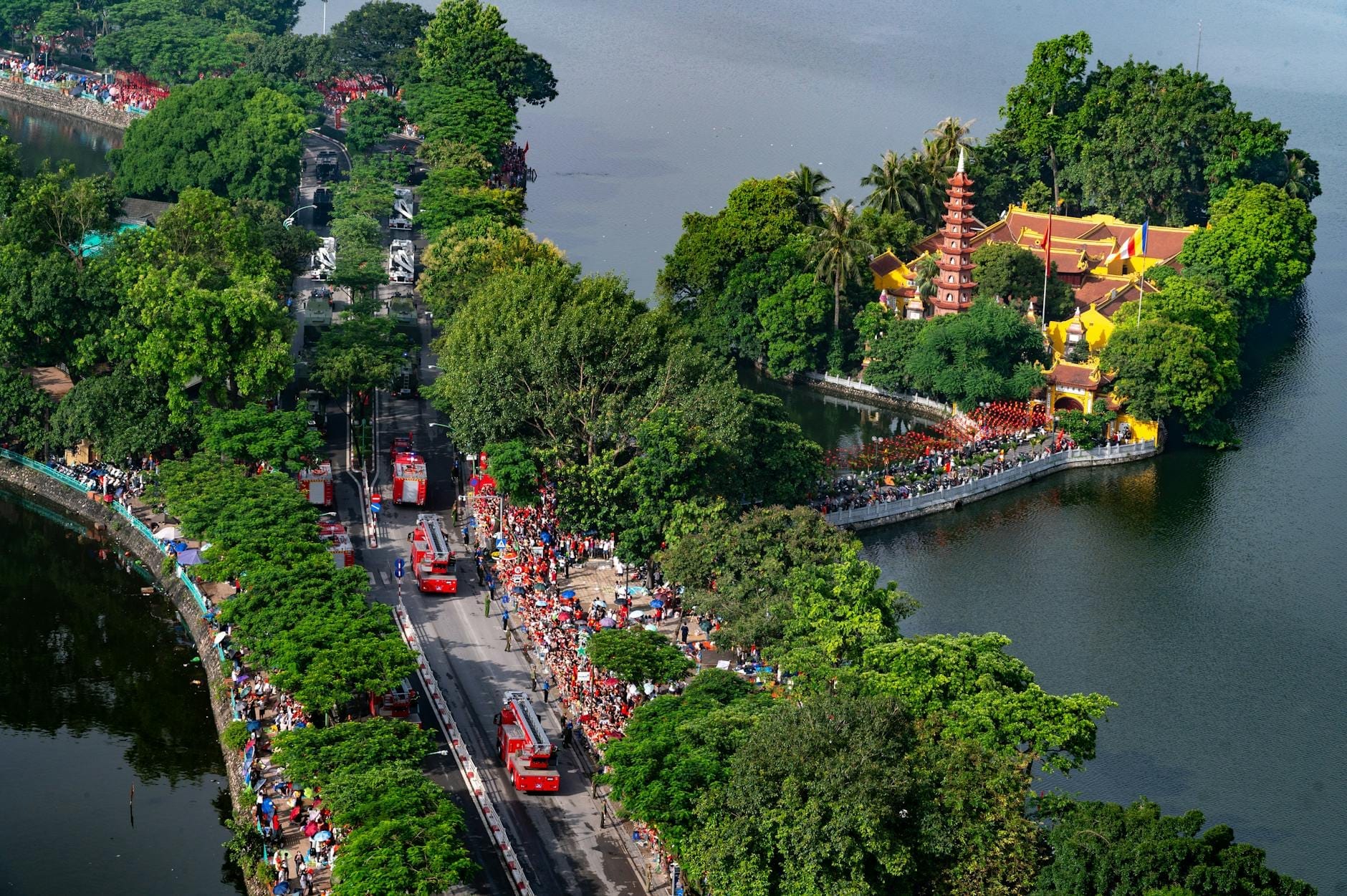
Two of Hanoi's most historically significant temples sit directly on the West Lake shore. Trấn Quốc Pagoda, located on a small island connected to the western shore by a causeway, is considered the oldest Buddhist pagoda in Hanoi, with origins attributed to the 6th century. Its 15-tiered tower, built of red brick and painted a soft terracotta, is the visual anchor of any West Lake photograph. The pagoda remains an active place of worship, and the scent of incense is constant inside the compound.
On the southeastern edge of the lake, near where West Lake meets Trúc Bạch Lake, stands Quan Thánh Temple, a Taoist shrine dedicated to the deity Trấn Vũ and believed to date to the early 11th century under the Lý dynasty. The temple houses a massive bronze statue of the deity, cast in 1677, standing nearly four meters tall and weighing over four tonnes. It is one of the finest examples of Vietnamese bronze casting from the Lê period.
Both sites are within easy walking distance of each other and can be combined into a focused 90-minute visit. Dress modestly at both: shoulders and knees covered. Shoes must be removed before entering the inner sanctuaries. Photography is generally permitted in the courtyards but check signage before photographing altars or monks.
Cycling the Perimeter: What You Will Actually See
The road circling West Lake is roughly 17 kilometers and passable by bicycle, motorbike, or on foot in sections. Starting from the Trấn Quốc Pagoda area and heading counterclockwise (north and then west), the route passes lotus fields in the shallower northern bays, small fishing communities, upscale villas behind walls, and stretches of open lake with unobstructed views.
The western bank, particularly around Tây Hồ Street, is the least developed section and retains a quieter, more residential feel. You will pass small food stalls selling bánh tôm (shrimp cakes), a snack that has been a West Lake specialty for generations. The eastern bank, closer to the Tây Hồ Westlake complex, is more developed with upscale hotels and restaurants.
The southern tip, where the narrow causeway between West Lake and Trúc Bạch Lake runs, is the most photographed stretch. This is also where traffic concentrates, and the footpath here is narrow. Cyclists need to be comfortable sharing space with motorbikes on this section.
Eating and Drinking Along the Lake
The lakeside dining scene is split between two distinct registers. On Đặng Thai Mai Street, which runs along the northern shore, a concentration of specialty food streets and local restaurants serves ingredients from the lake and surrounding farms. This is where Hanoians come for weekend meals, not tourists. Prices are reasonable, and the fish dishes in particular are strong.
The café culture around West Lake is well developed and represents a different side of Hanoi from the packed lanes of the Old Quarter. Several rooftop cafes on the eastern bank offer lake views over coffee or fresh fruit drinks. These spots attract a younger local crowd and are genuinely good places to spend an hour in the late afternoon before the sunset light hits the water.
ℹ️ Good to know
Bánh tôm Hồ Tây, the West Lake shrimp cake, is one of Hanoi's local food identities. Look for stalls near the northern causeway that have been frying these for decades. The batter is made with sweet potato and pressed around a whole freshwater shrimp before frying. Eat with herbs and a dipping sauce.
Practical Considerations and Who Should Skip It
West Lake fits naturally into a broader itinerary of Hanoi's northern sights. Combine it with a visit to the Ho Chi Minh Mausoleum and the Temple of Literature for a full day covering Hanoi's historic and spiritual landmarks. The lake itself requires no booking, no tickets, and no set schedule, making it easy to fit around more structured visits.
Weather matters here more than at most Hanoi attractions. On overcast or drizzly days, the lake loses much of its visual appeal, and the embankment paths become slippery. In the rainy season (roughly May through September), expect afternoon downpours. Mornings are usually clear even in wet months. Winter months (November to March) bring cool damp weather, and the lake can feel flat and cold.
Travelers with limited time in Hanoi who are prioritizing cultural density, street food, and temple visits will likely find more reward in the Old Quarter and Hoan Kiem area. West Lake rewards a slow approach. If you are passing through Hanoi on a single overnight, skip it in favor of the city center. If you have two or more full days, it earns a morning.
Accessibility around the lake is mixed. The southern causeway and several embankment sections have flat, paved paths suitable for wheelchairs. However, the full circuit includes uneven pavement and sections without curb cuts. The temple interiors require steps.
Insider Tips
- The causeway between West Lake and Trúc Bạch Lake (Thanh Niên Road) is technically a narrow strip with the lake on both sides. At sunrise, with mist still on the water and few people around, this stretch offers some of the most atmospheric photography in Hanoi.
- Most visitors only see the southern and eastern shores. The quietest section of the lake is the northwestern bank, away from the main tourist circuit. Local fishermen work here early in the morning and the landscape feels removed from the city.
- For rooftop lake views without expensive food or drinks, several mid-range hotels on the eastern bank allow walk-in guests to use their rooftop areas if you purchase a single coffee or beer. Ask at the front desk.
- Bánh tôm stalls tend to close by mid-afternoon. If you want to try West Lake's signature snack, plan to arrive before 2pm.
- The lotus flowers in the northern bays bloom from late May through July. If your visit coincides with this window, the northern embankment offers views of dense lotus fields that are genuinely striking and rarely photographed well because visitors stick to the main southern circuit.
Who Is West Lake For?
- Travelers who want a break from Old Quarter intensity and need space to breathe
- Morning joggers, cyclists, and anyone who wants physical activity built into sightseeing
- Temple and religious architecture enthusiasts covering Trấn Quốc Pagoda and Quan Thánh Temple
- Food-focused visitors hunting for Hanoi's local specialties in a non-tourist setting
- Couples and photographers looking for golden-hour lakeside light
Nearby Attractions
Other things to see while in Tây Hồ (West Lake):
- Quan Thánh Temple
One of Hanoi's four sacred guardian temples, Quan Thanh Temple stands at the southern tip of West Lake with roots stretching back to the 11th century. Inside, a massive bronze statue of the deity Tran Vu dominates the prayer hall, surrounded by incense smoke and the low sound of ritual bells. It is a working place of worship that happens to be one of the city's most photogenic historic sites.
- Tran Quoc Pagoda
Tran Quoc Pagoda stands on a small island in West Lake, making it one of Hanoi's most photographed religious sites. Dating back over 1,500 years, it combines active Buddhist worship with striking lakeside scenery. This guide covers everything you need to plan a worthwhile visit.
Planning a trip? Discover personalized activities with the Nomado app.