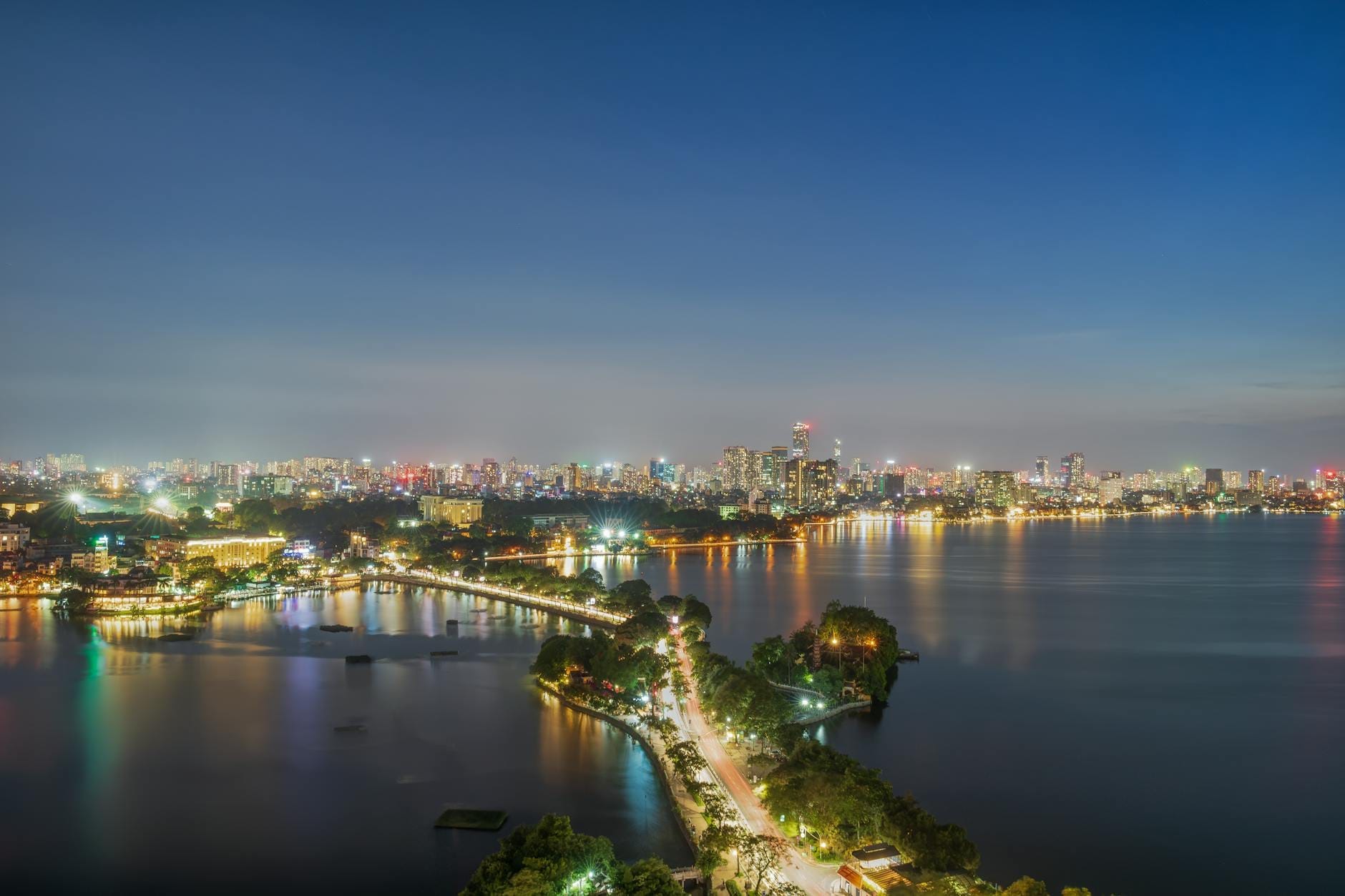
Tây Hồ is Hanoi's largest and most serene district, built around the 500-hectare West Lake. It trades the Old Quarter's density for wide boulevards, century-old temples, and a thriving international food scene that draws both long-term expats and Vietnamese families seeking space to breathe.
Tây Hồ wraps around West Lake, Hanoi's largest body of water, in a long arc of tree-lined streets that feel nothing like the capital's more chaotic core. The district is where Hanoians with disposable income choose to live, where diplomats rent villas, and where the city's most interesting cafés and restaurants have quietly concentrated over the past two decades. It is calmer, greener, and considerably more spacious than anything you will find south of the lake.
Orientation
Tây Hồ district sits in the northwestern part of Hanoi, roughly 5 to 7 kilometres north of Hoan Kiem Lake. The district is defined almost entirely by water: West Lake (Hồ Tây) dominates its centre, a vast expanse of water that was once a meander of the Red River. The lake is approximately 13 kilometres in circumference, and the streets that follow its edge form the neighbourhood's main arteries.
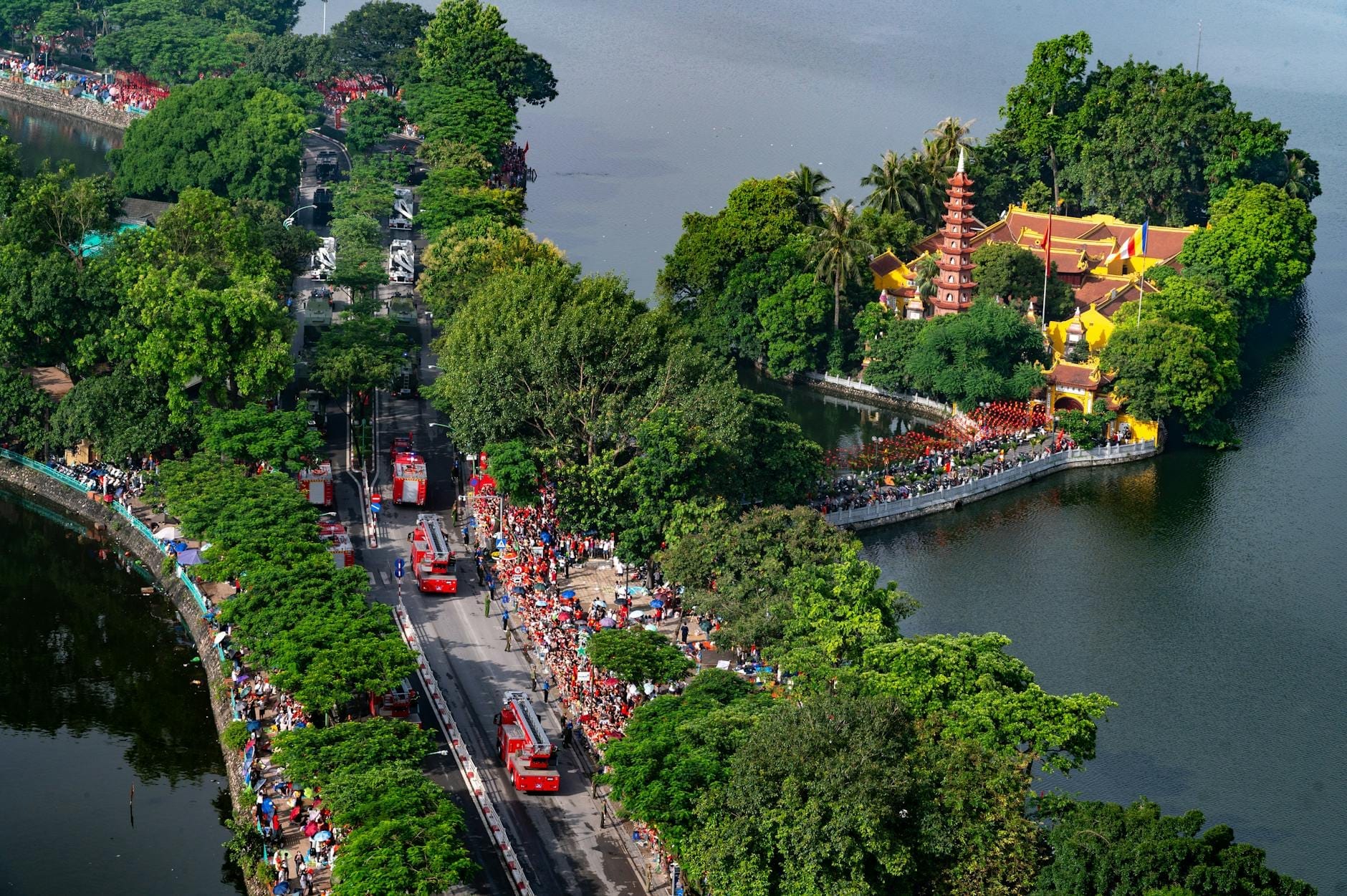
Trúc Bạch Lake lies immediately to the east, separated from West Lake by the narrow causeway of Thanh Niên Road, which is one of the most photogenic stretches of road in the city. South of Trúc Bạch, the district transitions into Ba Đình, home to the government complex and the mausoleum. To the north and west, Tây Hồ gives way to quieter residential suburbs. Âu Cơ Street runs along the western lakeshore, while Xuân Diệu Street on the northeastern shore has become the district's social and gastronomic spine.
Travelers already familiar with the Old Quarter will notice immediately that Tây Hồ operates on a completely different urban scale. Blocks are longer, streets are wider, and the general density drops away. For those planning a broader Hanoi visit, the Hanoi accommodation guide breaks down how Tây Hồ compares to other districts for base camp decisions.
Character & Atmosphere
Early mornings at West Lake have a meditative quality. By 5:30 AM, locals are already circling the lake on foot and bicycle, and the flat water catches whatever light is breaking through the haze. Small outdoor exercise stations along the lakeshore fill with older residents doing tai chi or stretching routines. Street vendors push carts loaded with bánh mì and xôi, selling breakfast to joggers and commuters before the day properly begins. The air smells of lake water and charcoal.
By mid-morning, the streets around Xuân Diệu take on the character of a prosperous residential neighbourhood that also happens to have excellent coffee. Cafés open their doors wide, and the clientele shifts between Vietnamese professionals working on laptops, expat families from nearby embassy compounds, and tourists who have deliberately escaped the Old Quarter for a few hours. The pace is unhurried in a way that feels earned rather than sleepy.
Afternoons in summer can be brutally hot, and the lack of shade on some lakeside stretches makes midday walks uncomfortable between June and August. The lake itself takes on a silvery, almost bleached quality under direct sun. Late afternoon is when the district comes back to life: families arrive at lakeside parks, restaurants begin setting up terrace tables, and the golden light across the water makes the pagoda silhouettes genuinely striking. Weekends bring larger crowds of Vietnamese day-trippers, particularly around Trấn Quốc Pagoda and the western lakeshore promenade.
After dark, Tây Hồ is calm rather than quiet. The restaurant strips on Xuân Diệu and Quảng An stay busy until 10 PM or later, but this is not a nightlife district in the way that the Old Quarter is. There are no throbbing beer streets here. The atmosphere is more wine-and-dinner than shots-and-karaoke, which suits plenty of travellers very well.
💡 Local tip
Rent a bicycle for half a day and circumnavigate the lake. The full circuit is around 17 kilometres, takes two to three hours at a comfortable pace, and passes all the major landmarks. Bicycle rental shops cluster near the southern end of Xuân Diệu Street.
What to See & Do
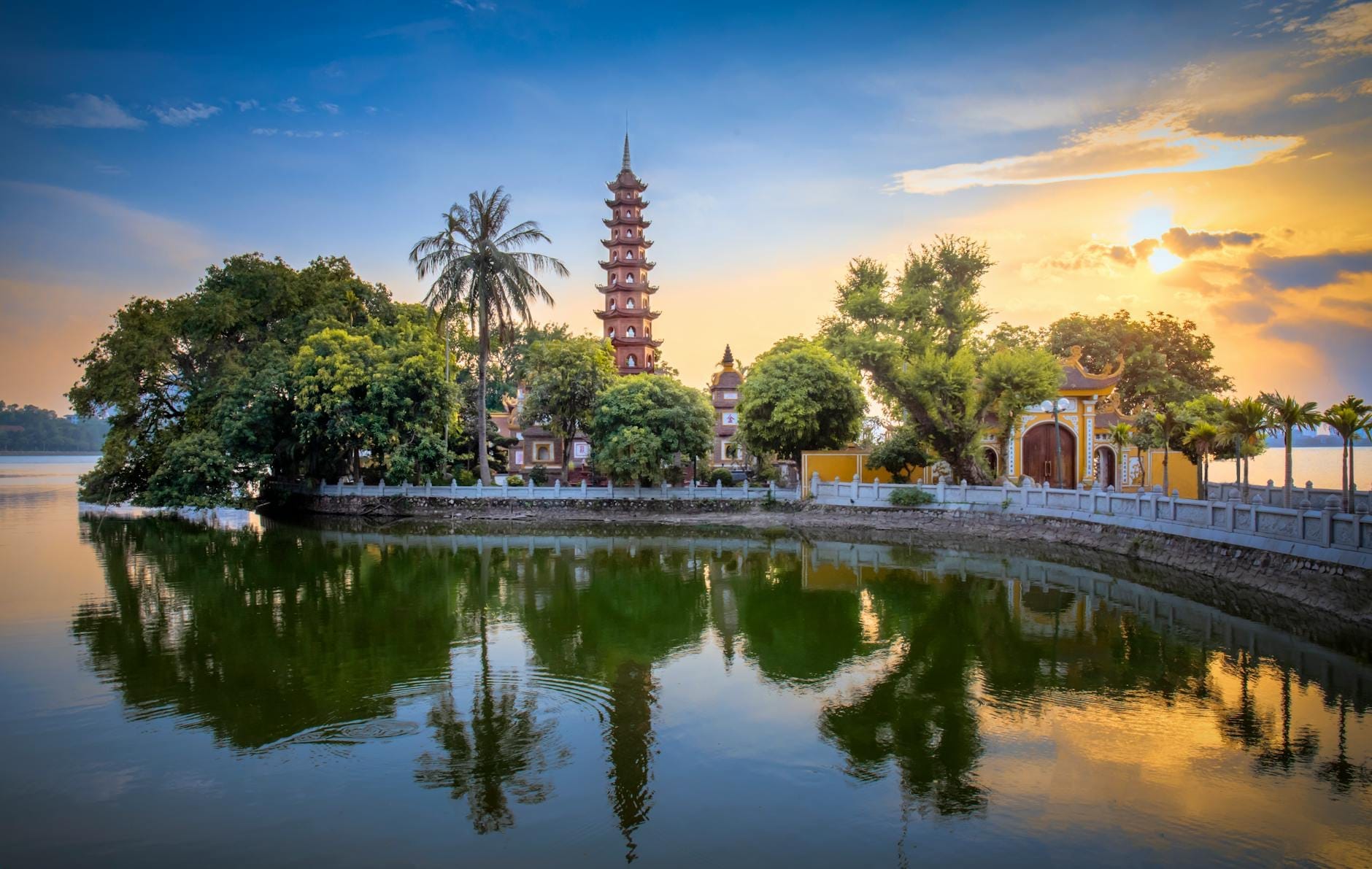
The single most important landmark in Tây Hồ is Trấn Quốc Pagoda, which sits on a small island connected to the eastern lakeshore by a narrow causeway. It is widely considered the oldest Buddhist pagoda in Hanoi, with origins traced back to the sixth century. The eleven-tiered tower that rises from its compound is one of the most reproduced images of the city. Visit early in the morning or late in the afternoon to avoid the tour bus rush, and dress modestly: shoulders and knees should be covered.
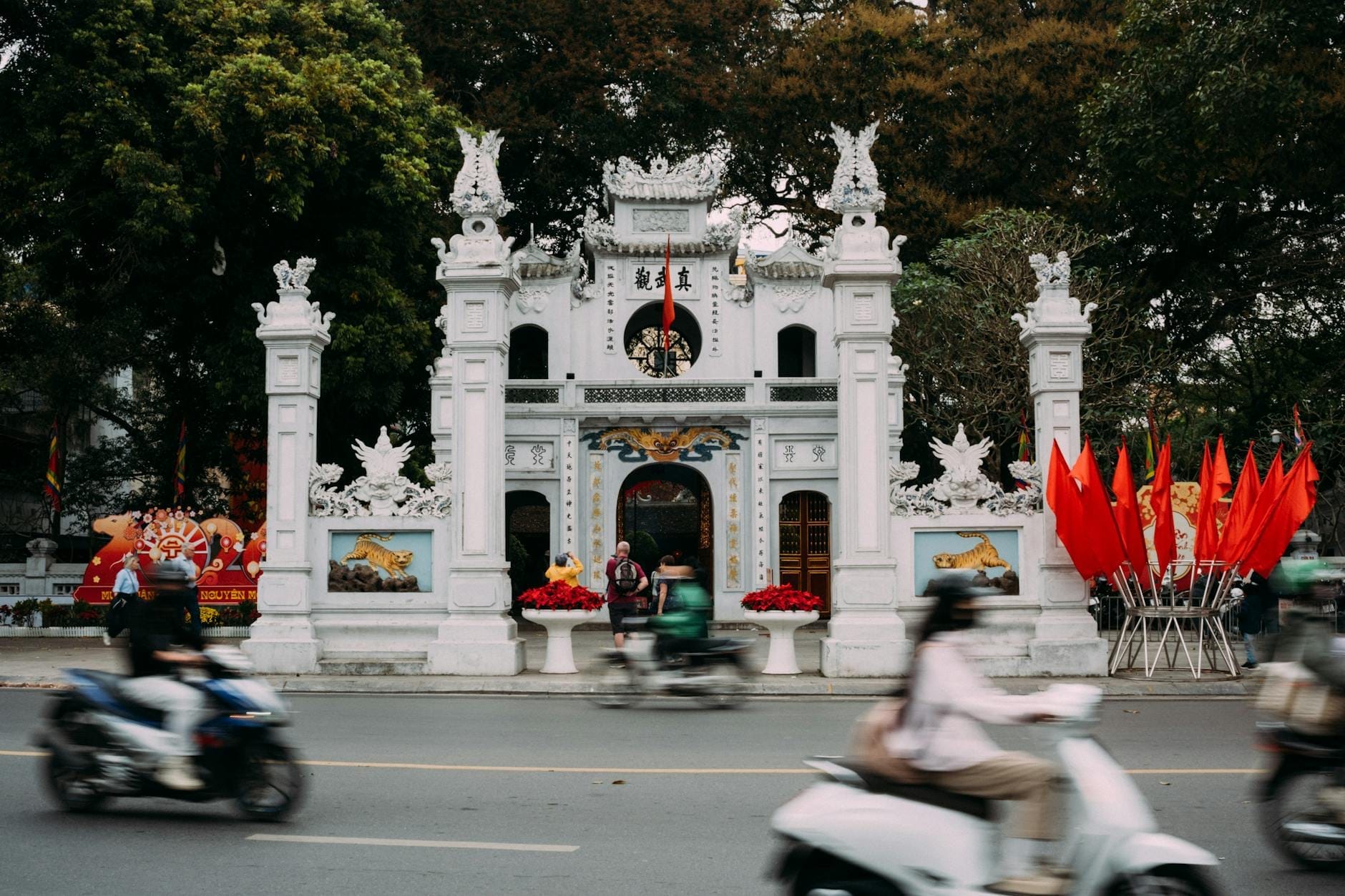
On the causeway road of Thanh Niên, facing Trúc Bạch Lake, stands Quan Thánh Temple, a Taoist temple dedicated to the deity Xuân Vũ. The temple compound contains a striking bronze bell and a four-tonne bronze statue that dates to the eighteenth century. It is a working religious site with incense burning throughout the day, and its courtyard offers a rare moment of quiet contemplation within easy walking distance of the city centre.
The West Lake itself deserves to be treated as an attraction rather than just a backdrop. The western shore around Âu Cơ Street is less developed and more local in character: small floating restaurants, fishing spots, and neighbourhood street food stalls that cater almost entirely to Vietnamese families. The northeastern shore around Quảng An is home to lotus fields that bloom spectacularly in June and early July, drawing photographers and Vietnamese tourists in large numbers.
Trấn Quốc Pagoda: sixth-century Buddhist pagoda on a lake island, best visited at dawn
Quan Thánh Temple: Taoist temple with an enormous bronze statue on Thanh Niên Road
Lotus fields at Quảng An: seasonal spectacle in June and July, northwest of the lake
Tây Hồ Pagoda (Phủ Tây Hồ): popular temple for Vietnamese worshippers on a western peninsula, especially busy on the first and fifteenth of each lunar month
Lakeside cycling route: 17 kilometres around the full perimeter, passing temples, parks, and village streets
Trúc Bạch Lake: smaller and quieter than West Lake, pleasant for an evening walk along its eastern bank
Visitors planning a full day of sightseeing across the city can use the Hanoi things-to-do guide to understand how Tây Hồ attractions fit into a broader itinerary alongside sites in Ba Đình and Hoan Kiem.
Eating & Drinking
Tây Hồ has the most internationally diverse food scene of any Hanoi neighbourhood. Xuân Diệu Street alone contains Vietnamese seafood restaurants, Japanese izakayas, Italian trattorias, Indian curry houses, and high-end cocktail bars within a stretch of about one kilometre. The concentration reflects the long-term expat population: enough foreign residents live here that international food businesses are genuinely commercially viable rather than tourist novelties.
For Vietnamese food specifically, the district has a few signatures worth knowing. Bánh tôm hồ Tây, crispy shrimp cakes made from West Lake shrimp, is the local specialty and has been made along the southwestern lakeshore for generations. Several modest restaurants on Thanh Niên Road serve them with rice paper, fresh herbs, and a nuoc cham dipping sauce. The dish is inexpensive, filling, and genuinely tied to this place in a way that most tourist-facing food is not.
The café culture in Tây Hồ has developed its own distinct flavour over the years. Many of the most interesting independent coffee shops in Hanoi are here rather than in the Old Quarter, partly because rents allow for larger spaces and partly because the clientele expects quality over novelty. Several cafés are set in converted villas or open onto private gardens overlooking the lake. Egg coffee, Hanoi's famous cà phê trứng, is served across the district alongside more standard espresso menus.
ℹ️ Good to know
Seafood prices along Xuân Diệu Street vary enormously between restaurants. Establishments with picture menus and multilingual staff aimed at tourists will charge significantly more than the Vietnamese family restaurants set slightly back from the main strip. A meal at the latter, with beer, typically costs 100,000 to 250,000 VND per person.
For a broader picture of where to eat across Hanoi by district and cuisine type, the Hanoi dining guide covers street food circuits, mid-range restaurants, and fine dining options city-wide.
Getting There & Around
There is no metro station serving Tây Hồ at the time of writing. The most practical ways to reach the district from the city centre are by Grab (Vietnam's dominant ride-hailing app), taxi, or bicycle. A Grab car from Hoan Kiem Lake to Xuân Diệu Street typically takes 15 to 25 minutes depending on traffic and costs approximately 60,000 to 120,000 VND. A Grab Bike (motorbike) is faster and costs around half that amount.
Public buses serve the district, with routes connecting Tây Hồ to the Old Quarter and Ba Đình. Route 50 and several other lines stop along Âu Cơ Street and Xuân Diệu. Bus fares are extremely low (around 9,000 VND flat) but journey times are unpredictable during peak hours. Bus stops are marked but not always easy to identify for first-time visitors unfamiliar with the Vietnamese-language signage.
Within the district, cycling is by far the best way to move around. The lake road is mostly flat, traffic is manageable compared to central Hanoi, and the scale of the area rewards slow exploration rather than point-to-point transit. Several guesthouses and hotels in the area rent bicycles to guests; standalone rental shops are also common near the southern end of the lake.
For broader transit planning across the city, including bus routes, Grab tips, and getting between major districts, the getting around Hanoi guide covers all practical options in detail.
⚠️ What to skip
Traffic on Âu Cơ Street and the main access roads into Tây Hồ is heavy during morning and evening rush hours, roughly 7:30 to 9:00 AM and 5:00 to 7:00 PM. If you are heading to or from the airport via taxi, factor in significant delays during these windows, especially on weekday mornings.
Where to Stay
Tây Hồ is the preferred base for travellers who want space, greenery, and a calmer pace without sacrificing access to good restaurants and cultural sites. The district suits couples on longer stays, families, digital workers, and anyone who finds the Old Quarter's noise and density hard to sustain for more than a few nights.
The concentration of accommodation runs along Xuân Diệu Street and the streets between it and the lake, broadly between Quảng An in the north and Từ Hoa in the south. This stretch has the best access to restaurants and cafés while remaining walkable to Trấn Quốc Pagoda and Quan Thánh Temple. Boutique hotels and serviced apartments dominate; large international chain hotels are less common here than in Ba Đình or the Old Quarter.
The tradeoff for staying in Tây Hồ is distance from the Old Quarter's night market, Hoan Kiem Lake, and the French Quarter's main attractions. You will need a taxi or motorbike for most evening outings to the city centre, which adds cost and transit time. That said, for travellers spending five or more nights in Hanoi, basing yourself here and treating the city centre as a day-trip destination is a legitimate and increasingly popular approach.
Tây Hồ shares a boundary with Ba Đình district to its south, which means that several of Hanoi's most significant historical monuments are within a 15 to 20 minute walk or short taxi ride. The Ho Chi Minh Mausoleum, the One Pillar Pagoda, and the Imperial Citadel of Thang Long are all easily combined with a West Lake morning.
The Vietnam Museum of Ethnology is located southwest of West Lake in Cầu Giấy district and makes an excellent half-day pairing with a Tây Hồ lunch. It is one of the most well-curated museums in Southeast Asia and deserves at least two hours of your time.
If you are planning day trips out of the city, the day trips from Hanoi guide covers options like Ninh Bình and Ha Long Bay, both of which can be arranged from accommodation in Tây Hồ with any reputable tour operator.
TL;DR
Tây Hồ is Hanoi's most liveable district: calm, green, and built around the 17-kilometare West Lake circuit, but it sits 5 to 7 kilometres north of the city centre.
Best for: couples, families, longer-stay travellers, digital workers, and anyone who prioritises space and food quality over proximity to the Old Quarter.
Key sights: Trấn Quốc Pagoda (Vietnam's oldest Buddhist temple), Quan Thánh Temple, Phủ Tây Hồ, and the lotus fields at Quảng An in June-July.
Not ideal for: budget backpackers who want to walk everywhere, first-timers with only two nights who need to maximise sightseeing, or travellers dependent on late-night street food culture.
Getting around: Grab is the practical default; cycling the lake perimeter is a genuine highlight of any stay here.
Hanoi's climate is more complex than most Southeast Asian cities, with four distinct seasons that genuinely change the experience. This guide breaks down the weather, crowds, and what to expect each month so you can plan a trip that matches your priorities.
Hanoi is an exceptional base for exploring northern Vietnam. Within a few hours you can reach UNESCO World Heritage sites, ancient capitals, sacred pilgrimage caves, and centuries-old craft villages. This guide covers the best day trips from Hanoi, with honest advice on what to prioritize.
Hanoi's streets are chaotic, fast-moving, and genuinely fun to navigate once you understand the rules. This guide breaks down every transport option — from airport transfers to Old Quarter cyclos — with honest pricing, practical advice, and clear recommendations for different budgets and itineraries.
Ha Long Bay is the most iconic day trip and overnight excursion from Hanoi, but the sheer number of cruise options makes planning overwhelming. This guide cuts through the noise with practical advice on getting there, choosing the right cruise tier, what to budget, and when to go.
From the colonial lanes of the Old Quarter to the solemn monuments of Ba Dinh, Hanoi rewards travelers who plan carefully. This itinerary guide breaks down exactly how to spend 2, 3, or 5 days in the city, covering the essential sights, underrated neighborhoods, and the day trips worth taking.
The Old Quarter is the beating heart of Hanoi, a dense grid of streets dating to the 14th century where silk sellers, pho vendors, and ancient temples coexist with craft workshops and rooftop bars. This guide gives you the practical depth to explore it properly.
Ninh Bình is the most rewarding escape from Hanoi for travelers who want karst scenery, ancient history, and boat rides through rice paddies without flying anywhere. This guide covers transport options, the best sites to prioritize, where to stay overnight, and honest advice on how long you actually need.
Hanoi rewards travelers who go beyond the obvious. This guide covers the city's top experiences across history, food, culture, and day trips — with honest assessments, practical details, and local context that most guides skip.
Hanoi's food scene is one of the most distinctive in Southeast Asia, built on centuries of culinary tradition and a firm belief that the best meals come from small, specialized stalls. This guide breaks down where to eat in Hanoi by neighborhood, dish type, and budget so you spend less time guessing and more time eating.
Choosing where to stay in Hanoi shapes your entire trip. This guide breaks down every major neighborhood by character, convenience, and cost, so you can book with confidence rather than luck.