Ninh Bình from Hanoi: The Complete Day Trip & Overnight Guide
Ninh Bình is the most rewarding escape from Hanoi for travelers who want karst scenery, ancient history, and boat rides through rice paddies without flying anywhere. This guide covers transport options, the best sites to prioritize, where to stay overnight, and honest advice on how long you actually need.

Tickets & tours
Live prices and dates from our booking partner. If you book, we may earn a commission at no extra cost to you.
TL;DR
- Ninh Bình is roughly 95 km south of Hanoi, about 2 hours by train or bus.
- A day trip is possible but tight. An overnight stay lets you hit Tràng An, Hoa Lư, and Tam Cốc without rushing.
- The best time to visit is October to April, overlapping with Hanoi's dry season for cleaner skies and lower humidity.
- Skip the over-organized group tours if you can. Self-guided travel by taxi or rented bike from Ninh Bình town gives you far more flexibility.
- Ninh Bình pairs naturally with a broader day trip itinerary from Hanoi if you're planning multiple excursions.
Why Ninh Bình Deserves More Than a Glance

Ninh Bình province sits at the southern edge of the Red River Delta, where limestone karst formations rise sharply from flat paddy fields and river channels. The landscape is dramatic in a way that photographs struggle to capture: boats glide silently through narrow cave passages, water buffalo stand in flooded fields at the base of 200-metre cliffs, and ancient temple complexes sit wedged between rock faces that have barely changed in a thousand years.
The area contains several distinct sites worth understanding separately. Tràng An Landscape Complex is a UNESCO World Heritage site covering boat caves, temples, and river valleys spread across 6,000 hectares. Tam Cốc is the older, more commercialized boat route, smaller in scale but closer to town. Hoa Lư Ancient Capital was Vietnam's royal capital from 968-1009, now a quiet temple complex surrounded by mountains. And Mua Cave offers the province's best panoramic viewpoint, reached by a 500-step stone staircase.
ℹ️ Good to know
Tràng An and Tam Cốc are often confused or used interchangeably. They are different experiences. Tràng An is larger, wilder, and officially protected as a UNESCO site. Tam Cốc is more touristy, closer to the town center, and better for those short on time. If you can only do one boat trip, Tràng An is the better choice.
Getting from Hanoi to Ninh Bình
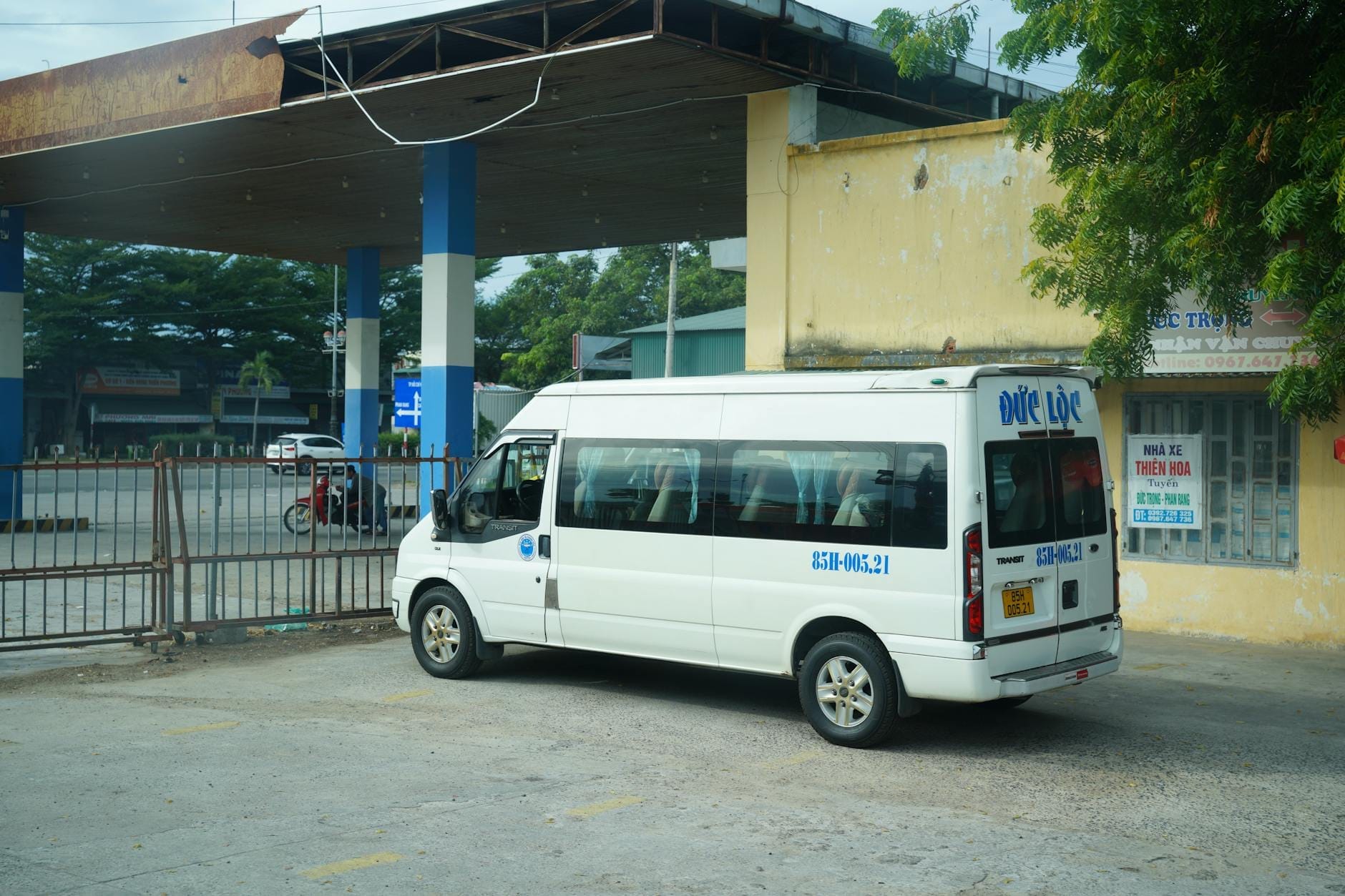
The distance from central Hanoi to Ninh Bình town is approximately 95 km. Travel time varies between 1.5 and 2.5 hours depending on your mode of transport and traffic.
- Train (recommended) Vietnam Railways runs regular services from Hanoi's Ga Hà Nội (main station) to Ninh Bình station. Journey time is around 2 hours. Tickets cost roughly 80,000–130,000 VND (about $3–5 USD) in hard seat class. Book in advance through the Vietnam Railways website or at the station. The train drops you directly in Ninh Bình town, which is the best base for the area.
- Sleeper/express bus Multiple operators (including Hung Thanh and Queen Cafe) run direct buses from Hanoi's Giap Bat or My Dinh terminals to Ninh Bình. Fares are around 100,000–150,000 VND. Journey time is 2–2.5 hours. Buses drop passengers in Ninh Bình town or near the Tam Cốc area, depending on the operator.
- Private car or taxi A private car from central Hanoi to Ninh Bình costs approximately 800,000–1,200,000 VND each way. This is the fastest and most flexible option, especially for groups of 3 or more splitting the cost. Book through Grab or a trusted local travel agent.
- Organized day tour Many Hanoi-based operators run Ninh Bình day tours for around $25–45 USD per person. These are convenient but often feel rushed, with fixed boat times and group sizes that limit spontaneity. Avoid tours that combine Ninh Bình with other distant sites in a single day.
⚠️ What to skip
If you're booking an organized tour, check whether the boat ticket to Tràng An or Tam Cốc is included. Many budget tours advertise a 'full day' but charge separately for the boat ride (around 200,000 VND per person). Read the itinerary line by line before paying.
Day Trip vs. Overnight Stay: Which Is Right for You?

A day trip from Hanoi to Ninh Bình is doable, but only if you're selective. The Tràng An boat route alone takes 2.5 to 3 hours on the water. Add travel time from Hanoi, a visit to Hoa Lư, and lunch, and you've already filled a full day before even seeing Mua Cave. Trying to squeeze everything into one day means doing nothing properly.
An overnight stay in Ninh Bình town or the Tam Cốc area solves the problem entirely. Accommodation ranges from basic guesthouses at around 200,000–300,000 VND per night to mid-range hotels and ecolodges at 500,000–1,500,000 VND. Staying overnight also lets you experience the landscape in early morning light before the tour groups arrive, which makes a significant difference at Tam Cốc and Mua Cave.
- Day trip: Best if you only have one free day. Focus on Tràng An boat route and Hoa Lư. Skip Mua Cave unless you're an early riser who takes a 5am train.
- One night: Ideal balance. Tràng An on day one, Mua Cave at sunrise and Tam Cốc on day two before returning to Hanoi.
- Two nights: Allows time for the Bích Động Pagoda complex, cycling through Van Lam village, and a more relaxed pace overall. Worth it for anyone who responds strongly to natural landscapes.
The Key Sites: What to Prioritize

The Tràng An boat trip is the centerpiece of any Ninh Bình visit. You board a small rowboat — typically rowed by a local boatwoman using her feet — and travel through a series of cave passages, lakes, and river channels, stopping at three or four pagodas along the way. The route covers around 9 km and takes 2.5–3 hours. Boat tickets cost around 200,000 VND per person. It's worth pairing this with a visit to the Bích Động Pagoda if you have extra time in the Tam Cốc area.
Hoa Lư Ancient Capital is a 15-minute drive from Tam Cốc and takes about an hour to explore properly. The two surviving temple complexes — Đinh Tiên Hoàng and Lê Đại Hành — honor the kings of Vietnam's first independent dynasties (Đinh and Early Lê) from 968-1009. The architecture is modest, but the setting among vertical limestone cliffs is striking. Entrance is around 20,000–30,000 VND.
Mua Cave (Hang Mua) is not actually a cave experience in the traditional sense. It is primarily a viewpoint reached via roughly 500 stone steps carved into a karst hill. The view from the top of the surrounding paddy fields and river bends is one of the best in northern Vietnam. Go before 8am to beat tour groups. Entrance is around 100,000 VND. Bring water and wear shoes with grip.
✨ Pro tip
Rent a bicycle from your guesthouse or hotel in Ninh Bình town (around 50,000–80,000 VND per day) and cycle between Tam Cốc, Hoa Lư, and Mua Cave. The roads are flat, mostly quiet, and the paddy field scenery between sites is as good as the sites themselves. It also lets you stop anywhere without relying on a driver.
When to Go: Seasons and Timing
Ninh Bình is worth visiting year-round, but the experience changes significantly with the season. October to April is the most comfortable period. Temperatures are cooler (15–25°C), the sky tends to be clearer, and the humidity drops to manageable levels. The rice harvest in September and October turns the paddies a vivid gold, which is particularly photogenic around Tam Cốc.
May through August is hot and wet. Afternoon thunderstorms are common, and boat trips on the Tràng An river can occasionally be disrupted by high water. That said, the rains keep the landscape intensely green and most sites remain open. If you visit during the rainy season, go early in the day before the weather builds. Weekends and Vietnamese public holidays should be avoided regardless of season — the cave boat queues at Tràng An can stretch to 90 minutes at peak times.
Practical Details: Getting Around, Eating, and Where to Stay

Ninh Bình town itself is the most practical base. It has a real train station, a good selection of budget and mid-range accommodation, and local restaurants where you can eat bún bò Nam Bộ or dê núi (mountain goat, a Ninh Bình specialty) for well under 100,000 VND a dish. The Tam Cốc area is more scenic but slightly more expensive and less well-connected to transport.
For context on broader trip planning, the Hanoi itinerary guide covers how to slot Ninh Bình into a multi-day northern Vietnam schedule. If you're also considering a longer excursion, Hạ Long Bay from Hanoi is the other major overnight trip from the capital and appeals to similar tastes for dramatic natural landscapes.
- Getting around locally: Bicycle rental (50,000–80,000 VND/day), xe ôm (motorbike taxi) negotiated by trip, or a half-day car hire (around 400,000–600,000 VND) through your guesthouse.
- Where to eat: Ninh Bình town has a cluster of local restaurants near the market area. Dê núi (mountain goat) is the local specialty, served grilled or hotpot-style. Budget 80,000–150,000 VND for a full meal.
- Where to stay: Tam Cốc area has the most scenic guesthouses. Ninh Bình town is better for transport links. Mid-range ecolodges near Tràng An cost $30–60 per night and offer the most immersive setting.
- Currency: Vietnamese Dong (VND) is the only practical currency. ATMs are available in Ninh Bình town. Most guesthouses and restaurants do not accept cards.
- Mobile connectivity: Local SIM cards bought in Hanoi work fine throughout Ninh Bình. Most accommodation offers WiFi.
💡 Local tip
Book your return train from Ninh Bình to Hanoi before you leave, especially on Sunday afternoons and around Vietnamese public holidays. Seats sell out. The Vietnam Railways website accepts international cards, or ask your guesthouse to book on your behalf for a small fee.
FAQ
Is Ninh Bình worth visiting from Hanoi?
Yes, and it is consistently one of the most rewarding excursions available from Hanoi. The combination of UNESCO-listed karst scenery at Tràng An, the ancient royal capital at Hoa Lư, and the viewpoint at Mua Cave makes it genuinely substantial. Unlike some day trips that feel padded, Ninh Bình has enough to fill two full days without repetition.
How long does it take to get from Hanoi to Ninh Bình?
By train, the journey takes approximately 2 hours from Hanoi's main station (Ga Hà Nội) to Ninh Bình station. By bus, expect 2 to 2.5 hours depending on traffic. A private car is fastest at around 1.5 to 2 hours.
Can you do Ninh Bình as a day trip from Hanoi?
Technically yes, but it's a compromised experience. The Tràng An boat route alone takes nearly 3 hours on the water. Combining it with Hoa Lư and Mua Cave in a single day means long queues, rushed timings, and no time to enjoy the quieter moments the area is known for. An overnight stay is strongly recommended if your schedule allows it.
What is the best boat trip in Ninh Bình: Tràng An or Tam Cốc?
Tràng An is the better experience for most travelers. It covers more cave passages, visits more temple stops, and feels significantly less commercialized than Tam Cốc. Tam Cốc is shorter and more convenient but has a dense concentration of souvenir sellers at the turnaround point. If your time is very limited, Tam Cốc is adequate. Otherwise, prioritize Tràng An.
What should I wear for Ninh Bình's caves and temples?
Dress modestly for temple visits: covered shoulders and knees are expected. The boat caves at Tràng An and Tam Cốc involve low overhanging rocks, so remove hats when entering cave sections and keep your head down. Waterproof sandals or shoes with grip are useful on the Mua Cave staircase, which gets slippery in wet weather.
Tickets & tours
Live prices and dates from our booking partner. If you book, we may earn a commission at no extra cost to you.
Planning a trip? Discover personalized activities with the Nomado app.