Vietnam Museum of Ethnology: Hanoi's Most Rewarding Cultural Institution
The Vietnam Museum of Ethnology in Hanoi offers an unusually thorough look at the country's 54 officially recognized ethnic groups, combining indoor galleries with full-scale outdoor village reconstructions. It rewards curiosity and patience in equal measure.
Quick Facts
- Location
- Nguyen Van Huyen Road, Cau Giay District, Hanoi
- Getting There
- Grab or taxi recommended (20-30 min from Old Quarter). City bus routes 16 and 45 stop nearby.
- Time Needed
- 2 to 3.5 hours for indoor galleries; add 45 minutes for outdoor grounds
- Cost
- 40,000–50,000 VND for adults; reduced rates for children. Verify current pricing at the ticket office.
- Best for
- Culture-focused travelers, families with curious children, photographers, and anyone wanting context beyond temple-hopping
- Official website
- vme.org.vn/en/
What the Vietnam Museum of Ethnology Actually Is
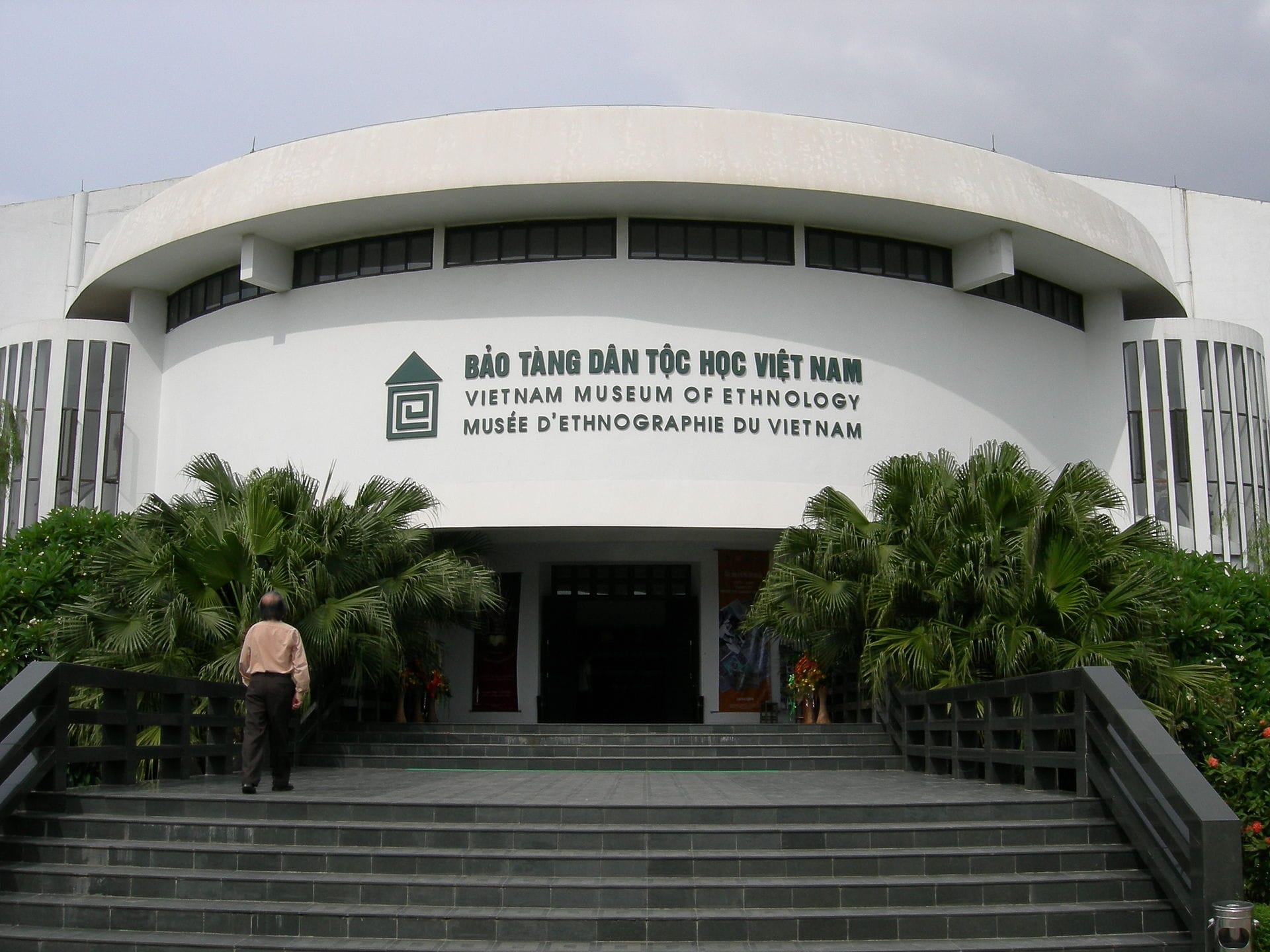
Most visitors arrive expecting another dry government museum with glass cases and laminated labels. The Vietnam Museum of Ethnology, located in Hanoi's Cau Giay District, is something considerably more ambitious. Opened in 1997 and developed in collaboration with the Musée de l'Homme in Paris, it documents the daily life, ritual objects, clothing, tools, and architecture of Vietnam's 54 officially recognized ethnic groups. The Kinh majority receives no more space than minority groups like the Hmong, Dao, Tay, or Cham, which is a deliberate and refreshing editorial choice.
The museum occupies two distinct zones. The main building, shaped to evoke a traditional Dong Son drum when viewed from above, contains over 10,000 artifacts arranged across three floors. Behind it, a two-hectare outdoor park holds life-size reconstructions of traditional communal houses, stilt homes, water wheels, and a working Gia Rai funeral site. Very few ethnographic museums in Southeast Asia have pulled off the outdoor component this convincingly.
💡 Local tip
Pick up the printed floor map at the entrance before heading in. The indoor layout is not immediately intuitive, and knowing which wing covers which ethnic region saves significant backtracking.
The Indoor Galleries: What to Prioritize
The ground floor is the most popular section, featuring displays on the Kinh people that contextualize Vietnamese culture for newcomers. Lacquerware, ceremonial costumes, agricultural tools, and domestic items are displayed with bilingual (Vietnamese and English) labels that are generally clear and informative. The English translations were updated in later years, so the text reads more naturally than in many Hanoi institutions.
The upper floors cover highland and coastal minority groups in depth. The textiles section is particularly strong: hand-woven Hmong fabric panels, indigo-dyed Dao ceremonial wear, and brocade Tay jackets are displayed under proper conservation lighting. Unlike many markets where you might see these items for sale without context, here you understand the symbolic meaning behind specific patterns and colors. Some panels explain which geometric motifs indicate a woman's marital status or village of origin.
The funeral and ritual objects section, covering practices from several highland groups, is among the most substantive in the museum. It handles beliefs around death and ancestor veneration with ethnographic precision rather than sensationalism. Visitors with a genuine interest in how Vietnamese society works beyond Hanoi's streets will find this section rewarding.
Tickets & tours
Live prices and dates from our booking partner. If you book, we may earn a commission at no extra cost to you.
8-day all-inclusive trip in Vietnam from Hanoi
From 904 €Instant confirmationFree cancellation5 days-4 nights all-inclusive trip in Vietnam
From 493 €Instant confirmationFree cancellation12-day all-inclusive trip in Vietnam and Cambodia from Hanoi
From 1.195 €Instant confirmationFree cancellationHa Noi Vietnamese water puppet show and buffet dinner
From 72 €Instant confirmationFree cancellation
The Outdoor Grounds: The Real Reason to Come
The outdoor area is where the museum separates itself from anything comparable in the city. Full-scale reconstructions of a Tay stilt house, a Cham tower, a Gia Rai communal house, and a Viet water wheel are spread across landscaped grounds. These are not decorative reproductions. They were built using traditional construction methods and materials sourced from the regions they represent, in some cases with craftspeople from those communities doing the construction work.
The Gia Rai funeral house is particularly striking. It includes carved wooden funerary statues arranged around a tomb structure, representing the Central Highlands tradition of creating elaborate grave goods for the deceased. Visiting it on a quiet morning, when light filters through the surrounding trees, gives it a quality that no indoor display could replicate.
On weekends and some weekday mornings, traditional craft demonstrations take place in the outdoor area, including water puppet performances in the small pond near the Viet house. This is a smaller-scale, more intimate version of what you will see at the Thang Long Water Puppet Theatre, and the informal setting makes it easier to observe the puppeteers' technique. Check the museum's schedule board near the entrance on the day you visit.
ℹ️ Good to know
The outdoor grounds are unshaded for significant stretches. In summer months (June through August), visiting in the morning or late afternoon makes a real difference in comfort. Bring water and sun protection.
How the Experience Changes by Time of Day
Arriving shortly after opening (Tuesday through Sunday, typically from 8:30 AM) gives you the indoor galleries largely to yourself. School groups tend to arrive mid-morning, between 9:30 and 11 AM, and the ground floor can become genuinely crowded during these windows. The noise level changes the indoor experience considerably.
By early afternoon, the school groups have usually departed, and the museum enters a quieter stretch that runs through to around 3 PM. The outdoor grounds are most pleasant in the softer light of mid-afternoon when the tropical glare eases. The grounds also have benches and shaded rest areas, making it an easier experience for older visitors or families with young children.
The museum closes on Mondays. This trips up a meaningful number of visitors who do not check in advance. If your Hanoi itinerary includes only one or two free days, confirm the operating day before making the trip across the city.
⚠️ What to skip
The museum is closed every Monday. It is located roughly 8 km west of the Old Quarter, so a wasted trip is a meaningful time loss. Always confirm hours before visiting.
Historical and Cultural Context
Vietnam is often perceived internationally as a largely homogeneous country, partly because the Kinh ethnic group makes up approximately 85 to 86 percent of the population. The remaining 14 to 15 percent represents 53 other groups, many of them concentrated in the northern highlands, the Central Highlands, and the Mekong Delta. The museum was established in part to counter the narrative that Vietnamese culture is singular, and to document traditions that were at risk of disappearing as modernization reshaped rural life.
The museum's approach reflects a broader intellectual honesty about cultural complexity that is genuinely unusual in state-funded institutions. If you are planning to visit northern regions where minority communities live, such as on a day trip that ventures beyond Hanoi, the museum provides essential context. It pairs well with reading about how to organize your time in Hanoi if you want to understand the city's place within a broader Vietnamese cultural landscape.
Practical Information for Visitors
The museum is located on Nguyen Van Huyen Road in Cau Giay District, about 7 kilometers from Hoan Kiem Lake. A Grab ride from the Old Quarter typically takes 20 to 30 minutes depending on traffic, and costs a relatively modest fare. City buses (routes 16 and 45) stop nearby for those comfortable navigating Hanoi's bus network, though most international visitors find the app-based ride options more straightforward.
There is a small on-site cafe and a gift shop near the entrance. The gift shop stocks reasonably priced ethnic minority crafts and textiles, some produced by the communities represented in the museum. Quality varies, but it is generally more reliable than what you will find in tourist market stalls. Items include hand-embroidered bags, indigo-dyed fabric, and miniature instruments.
Photography is permitted throughout the museum, including in the outdoor grounds. Indoor lighting varies by section, so a camera that handles low light performs better in the textile and ritual object galleries. If you are planning a full cultural day in Hanoi, the museum pairs naturally with a visit to the Temple of Literature, which is roughly 20 to 25 minutes away by taxi and covers a complementary dimension of Vietnamese heritage.
Accessibility across the main building is reasonable, with ramps and elevators available. The outdoor grounds involve uneven paths in some areas, which may be difficult for visitors using wheelchairs or those with limited mobility on rough terrain.
Who This Museum Is Not For
Visitors with very limited time in Hanoi and a primary focus on iconic sights may find the journey to Cau Giay less justifiable than spending equivalent time in the Old Quarter or around Hoan Kiem Lake. The museum also does not deliver a quick, photogenic experience. If you are assembling a social media-driven itinerary of landmark shots, the outdoor reconstructions are photogenic but require context to appreciate. The payoff here is understanding, not spectacle.
Children under the age of ten may find the indoor galleries slow. The outdoor grounds work better for younger visitors, particularly if a craft demonstration is running. For a more structured family experience combining culture and activity, pairing the museum with nearby West Lake in the afternoon gives younger travelers some open space after a few hours of exhibits.
Insider Tips
- The gift shop near the entrance stocks textiles and crafts directly sourced from minority communities. Prices are fixed and generally fair, making it a more trustworthy purchase than open-air market bargaining for equivalent items.
- Ask at the information desk about the schedule for traditional craft demonstrations and water puppet performances in the outdoor area. These are not heavily advertised at the entrance but can be the most memorable part of a visit.
- The museum's research library is accessible to serious researchers and students by arrangement. If you have a deep interest in Vietnamese ethnography, this is worth knowing about before your trip.
- Lighting in the textile galleries is deliberately kept low to protect the fabrics. If you plan to photograph these sections, shoot in RAW format or use a camera body with strong high-ISO performance.
- The Gia Rai funeral house in the outdoor grounds receives far less foot traffic than the main building. Visiting it first thing after arriving gives you a genuinely quiet experience before tour groups reach that section of the grounds.
Who Is Vietnam Museum of Ethnology For?
- Culture-focused travelers who want depth over landmark-checking
- Families with children aged 8 and above who respond to hands-on and large-scale exhibits
- Photographers interested in traditional textiles, architecture, and craft detail
- First-time visitors to Vietnam who want cultural context before heading to rural or highland areas
- Travelers with a half-day to spare and a genuine curiosity about how Vietnam's ethnic diversity actually works
Nearby Attractions
Combine your visit with:
- Bát Tràng Ceramic Village
Just 13 kilometers southeast of central Hanoi, Bát Tràng Ceramic Village has been producing distinctive blue-and-white stoneware for over six centuries. It remains a working craft community where visitors can watch artisans at the wheel, decorate their own pieces, and buy direct from the families who fire them.
- Ha Long Bay
Ha Long Bay is one of Southeast Asia's most recognizable seascapes, a UNESCO World Heritage Site where nearly 2,000 limestone islands rise from the Gulf of Tonkin. But the experience depends almost entirely on which cruise you book, when you go, and what you're hoping to feel.
- Perfume Pagoda
The Perfume Pagoda is a sprawling complex of Buddhist shrines, limestone caves, and riverside temples carved into the Huong Tich mountain range, about 60 km (37 miles) southwest of Hanoi. Getting there is half the experience: a rowing boat along the Yen River, followed by a hike or cable car through forested cliffs to the main cave shrine. It is one of Vietnam's most important pilgrimage sites, drawing millions of devotees, particularly during the annual spring festival.
Planning a trip? Discover personalized activities with the Nomado app.