Hanoi Old Quarter: The Complete Visitor's Guide
The Old Quarter is the beating heart of Hanoi, a dense grid of streets dating to the 14th century where silk sellers, pho vendors, and ancient temples coexist with craft workshops and rooftop bars. This guide gives you the practical depth to explore it properly.
Tickets & tours
Live prices and dates from our booking partner. If you book, we may earn a commission at no extra cost to you.
TL;DR
- The Old Quarter (Phố Cổ) covers roughly 36 named streets around Hoan Kiem Lake, each historically dedicated to a specific trade.
- Walk it: the area is compact enough to cover on foot, but streets are narrow and traffic is relentless — read our guide to getting around Hanoi before you arrive.
- Best time to visit is October to April — cooler temperatures, less rain, and clearer skies make street walking far more comfortable.
- The pedestrian zone around Hoan Kiem Lake opens Friday to Sunday evenings, transforming the area into an outdoor social space.
- Skip overpriced sit-down restaurants on the main tourist strip — the best food in Hanoi is found on side streets and at plastic-stool joints.
What the Old Quarter Actually Is
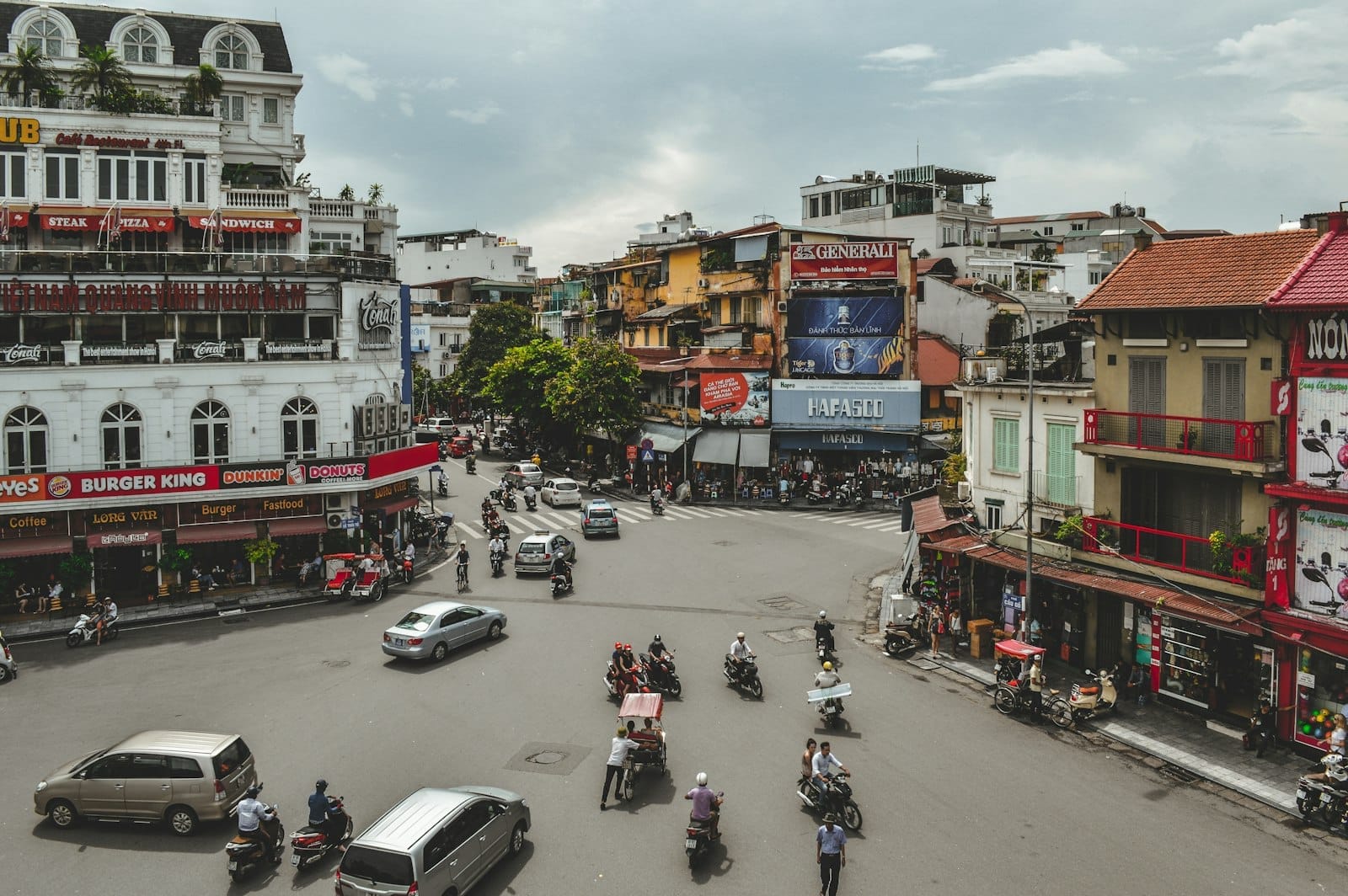
The Hanoi Old Quarter (Phố Cổ Hà Nội) is a roughly 100-hectare neighborhood in Hoan Kiem District, bounded loosely by Hoan Kiem Lake to the south and the Long Bien Bridge area to the north. It developed as a commercial center during the Ly Dynasty in the 11th century, when guilds of craftsmen and merchants settled along individual streets. Each street took its name from the product sold there: Hang Bac (silver), Hang Gai (silk and hemp), Hang Tre (bamboo), Hang Thiec (tin goods). That 36-street system still forms the neighborhood's skeleton.
The colonial French arrived in the late 19th century and layered their own architecture over the existing Vietnamese tube houses, which explains why you'll see Baroque facades sitting directly above ground-floor shops selling lacquerware or incense. Many of those tube houses run 3-5 meters wide but extend 30-50 meters deep into the block, a design that minimized expensive street frontage while maximizing interior living and storage space. Walking through any of the old courtyards gives you a sense of how layered and dense this neighborhood truly is.
ℹ️ Good to know
The Old Quarter is officially part of Hoan Kiem District (Quận Hoàn Kiếm). When searching for addresses or using Grab, entering 'Hoàn Kiếm' will point you to the right area. The local name 'Phố Cổ' is widely understood by taxi and motorbike drivers.
Key Streets and What to Find on Each
Not all 36 streets are equally interesting for visitors. Some have evolved far from their original trade and now sell cheap tourist souvenirs. Others retain genuine character. Here is a practical breakdown of the streets worth prioritizing:
- Hang Gai (Silk Street) The most polished street in the Quarter. Custom ao dai (traditional dress), quality silk scarves, lacquerware, and embroidered goods. Prices are higher than markets but quality is generally reliable. Good for gifts.
- Hang Bac (Silver Street) Still has jewelry and silverware workshops, though it now mixes in travel agencies and cafes. Worth walking for the architecture and a handful of genuine silversmiths.
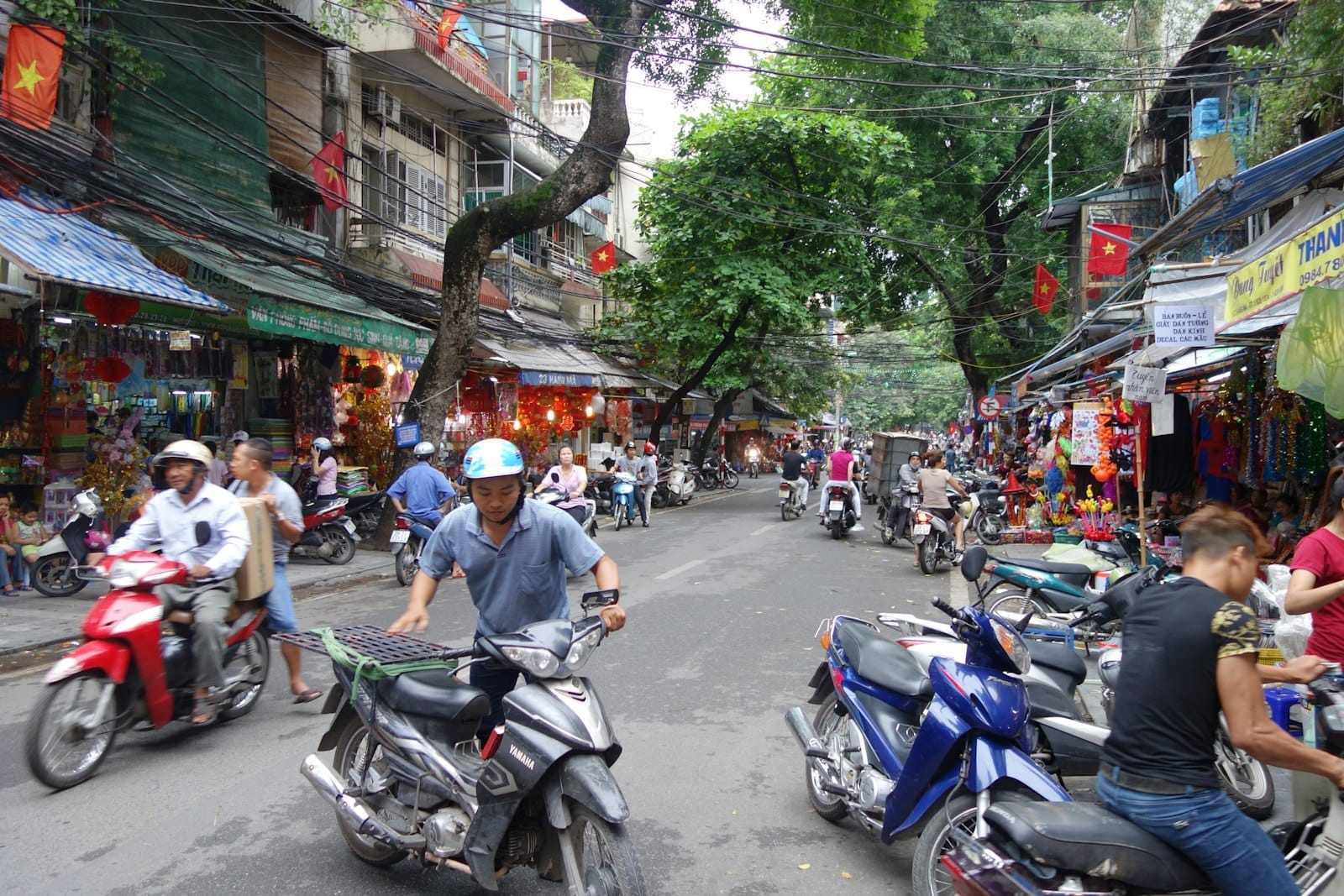
- Hang Ma (Paper Votive Street) One of the most photogenic streets, especially pre-Tet. Shops sell paper offerings burned at funerals and festivals: paper money, miniature houses, motorbikes, even iPhones. Not a tourist performance — this is an active part of Vietnamese ritual life.
- Hang Duong and Hang Chieu Closer to Dong Xuan Market. Hang Duong sells dried fruit and confectionery; Hang Chieu is famous for mats and rattan. Both feel more lived-in and less staged than the main tourist corridors.
- Ta Hien Street Nicknamed 'Beer Street' by locals and backpackers alike. Wall-to-wall bia hoi (fresh draft beer) joints and bars. Atmospheric in the evening, extremely crowded on weekends. The beer is genuinely cheap (around 10,000-15,000 VND per glass).
- Hang Thiec (Tin Street) One of the few streets where the original trade survives intact. Tin and sheet metal workers pound out ventilation ducts, signage, and tools right on the pavement. The noise alone signals you've found something real.
⚠️ What to skip
Avoid the stretch of Luong Ngoc Quyen and Dinh Liet closest to the lake on weekend evenings if you're looking for authenticity. These blocks have become almost entirely tourist bars with inflated prices and menus in English only. Move two streets deeper into the Quarter for better value and local atmosphere.
Top Attractions Inside and Around the Old Quarter
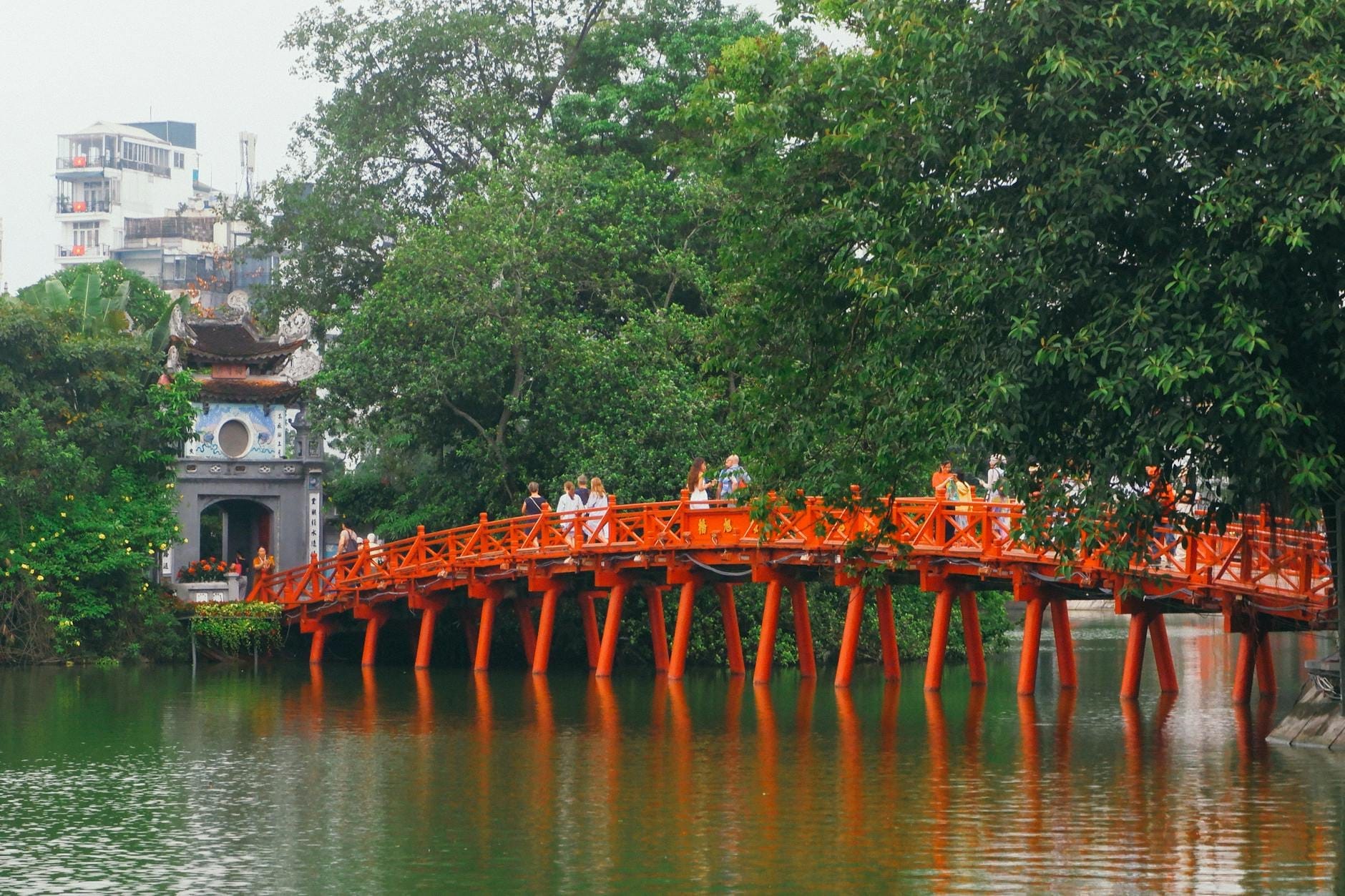
The Old Quarter's density means major sights are within a 10-15 minute walk of each other. Hoan Kiem Lake sits at the southern edge and is genuinely worth an early morning visit when locals use the lakeside path for tai chi and jogging. The island temple, Ngoc Son Temple, is accessible via the iconic red Huc Bridge and charges an admission fee of 30,000 VND. It is compact but historically significant.
Dong Xuan Market at the northern end of the Quarter is Hanoi's largest covered market. The ground floor handles wholesale fabric, clothing, and household goods. Upper floors have more retail options. It is functional rather than scenic, but gives an accurate picture of how the city actually shops. Arrive before 9am if you want to see it at full activity.
The Old Quarter Night Market runs along Hang Dao, Hang Giang, and nearby streets every Friday, Saturday, and Sunday evening from around 6pm to 11pm. It is heavily oriented toward clothing, accessories, and street food rather than handicrafts. Quality varies, and most items are mass-produced. Worth a walk for the atmosphere, but set expectations accordingly.
Just south of the Quarter, Hoa Lo Prison (the 'Hanoi Hilton') is one of the most historically significant sites in the city. The French colonial-era prison held Vietnamese independence fighters in the late 19th and early 20th centuries, and later held American prisoners of war. The exhibits are one-sided in places, but the physical space is sobering and the original cell blocks are well-preserved. Admission is 30,000 VND and it takes about 45-60 minutes.
✨ Pro tip
The Thang Long Water Puppet Theatre on Dinh Tien Hoang Street (facing Hoan Kiem Lake) is genuinely worth booking in advance. Performances run daily at multiple times, last about an hour, and tickets sell out during peak season. This is one of the few truly traditional performance arts forms still practiced regularly in Hanoi.
Food and Drink: What to Eat and Where
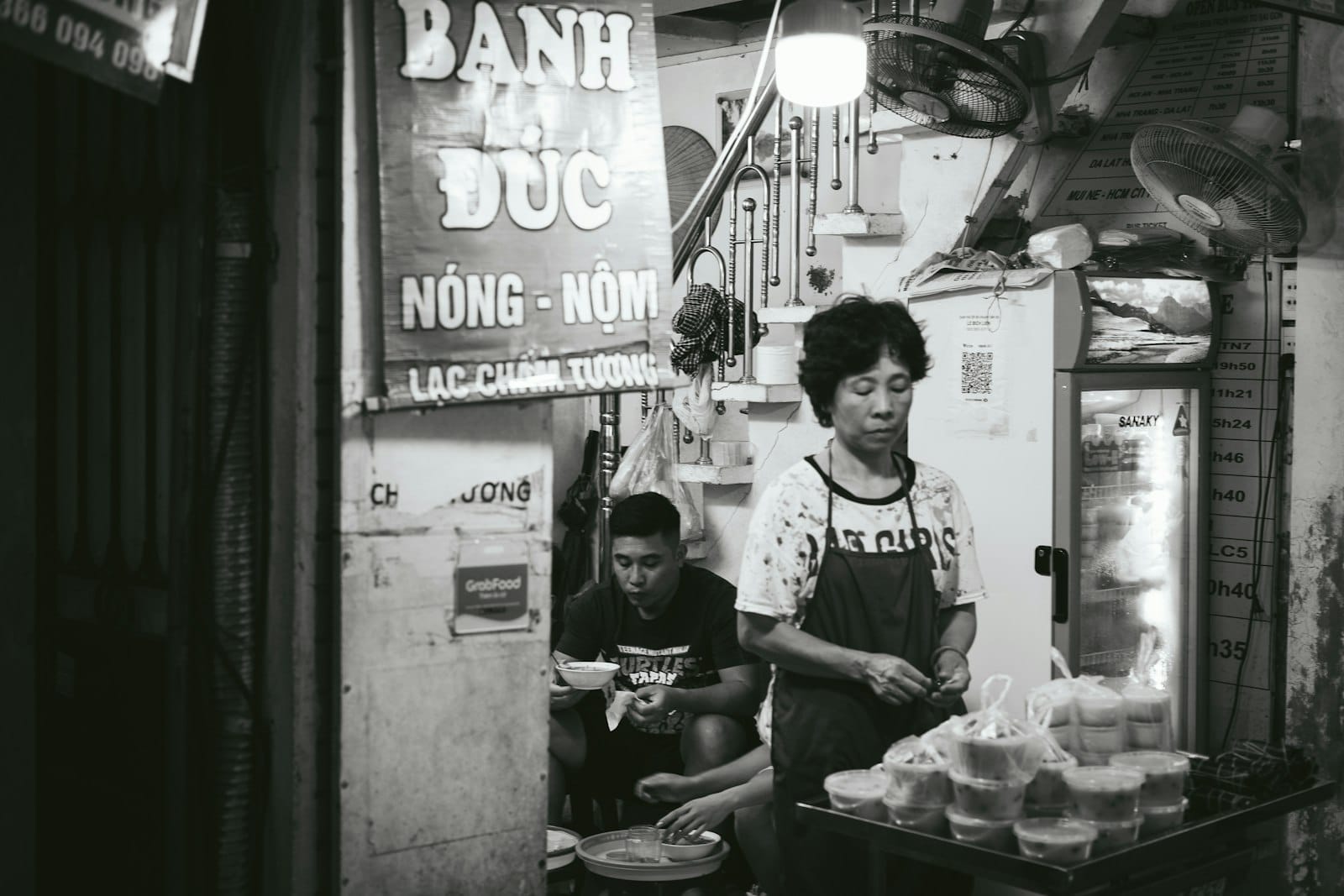
The Old Quarter is one of the best places in Vietnam to eat well at low prices, as long as you know where to look. Pho is the obvious starting point: Hanoi-style pho tends to be simpler and cleaner than the southern version, with a clear, deeply flavored broth and minimal garnishes. Pho Gia Truyen on Bat Dan Street is one of the city's most-referenced pho shops, typically open only until mid-morning when the broth runs out. Budget around 60,000-80,000 VND for a bowl.
Bun cha is arguably Hanoi's signature dish: grilled pork patties and sliced pork belly served in a light dipping broth with rice noodles and a plate of fresh herbs. Bun cha Huong Lien on Le Van Huu gained international attention after a well-known television visit, which has made it busier and slightly more expensive, but the food quality remains high. For something less touristed, ask your guesthouse for a neighborhood recommendation.
- Banh mi: Available from street carts throughout the Quarter for 25,000-40,000 VND. Look for carts with a queue.
- Egg coffee (ca phe trung): A Hanoi specialty. Cafe Giang on Nguyen Huu Huan Street is the most referenced original, though many cafes now serve it. Around 30,000-45,000 VND per cup.
- Bia hoi: Fresh-brewed draft beer sold from pavement joints, typically 10,000-20,000 VND per glass. Not a tourist invention — this is how Hanoians have drunk beer for generations.
- Xoi (sticky rice): Available from early morning street vendors. A filling breakfast for under 30,000 VND.
- Bun bo nam bo: Beef noodle salad, distinct from pho. Less well-known to tourists but popular with locals.
Navigation, Logistics, and Getting Around
The Old Quarter looks manageable on a map but disorients quickly on foot. Streets are short, often curve or dead-end, and signage is inconsistent. Download Google Maps offline before you go, and note that many addresses use the street number plus the street name without a district prefix. GPS is generally reliable enough to navigate the narrow lanes.
Traffic in the Old Quarter operates on a logic that can seem chaotic from outside but functions by its own rules. Motorbikes flow constantly and do not stop for pedestrians. The technique that works: move slowly and predictably, make eye contact with oncoming drivers, and cross at a steady pace rather than stopping or rushing. Drivers will flow around you if they can read your trajectory.
For reaching the Old Quarter from Noi Bai International Airport (about 30 km north), the most reliable options are metered taxis from reputable companies (Mai Linh, Taxi Group) or a pre-booked Grab car. Fares typically run 300,000-400,000 VND depending on traffic. The airport express Bus 86 is significantly cheaper at around 35,000 VND but takes 60-90 minutes and involves luggage on a crowded bus. See the full breakdown in the Hanoi transport guide.
💡 Local tip
Cyclo rides (three-wheeled bicycle rickshaws) are available throughout the Old Quarter and are legitimately enjoyable for a slow loop of the main streets. Negotiate the price before getting in: a 45-minute loop should cost around 150,000-200,000 VND. Drivers who approach you on the street sometimes quote inflated rates to tourists — the Hanoi Tourism Information Center at 28 Hang Dau can advise on fair prices.
When to Visit and Practical Basics
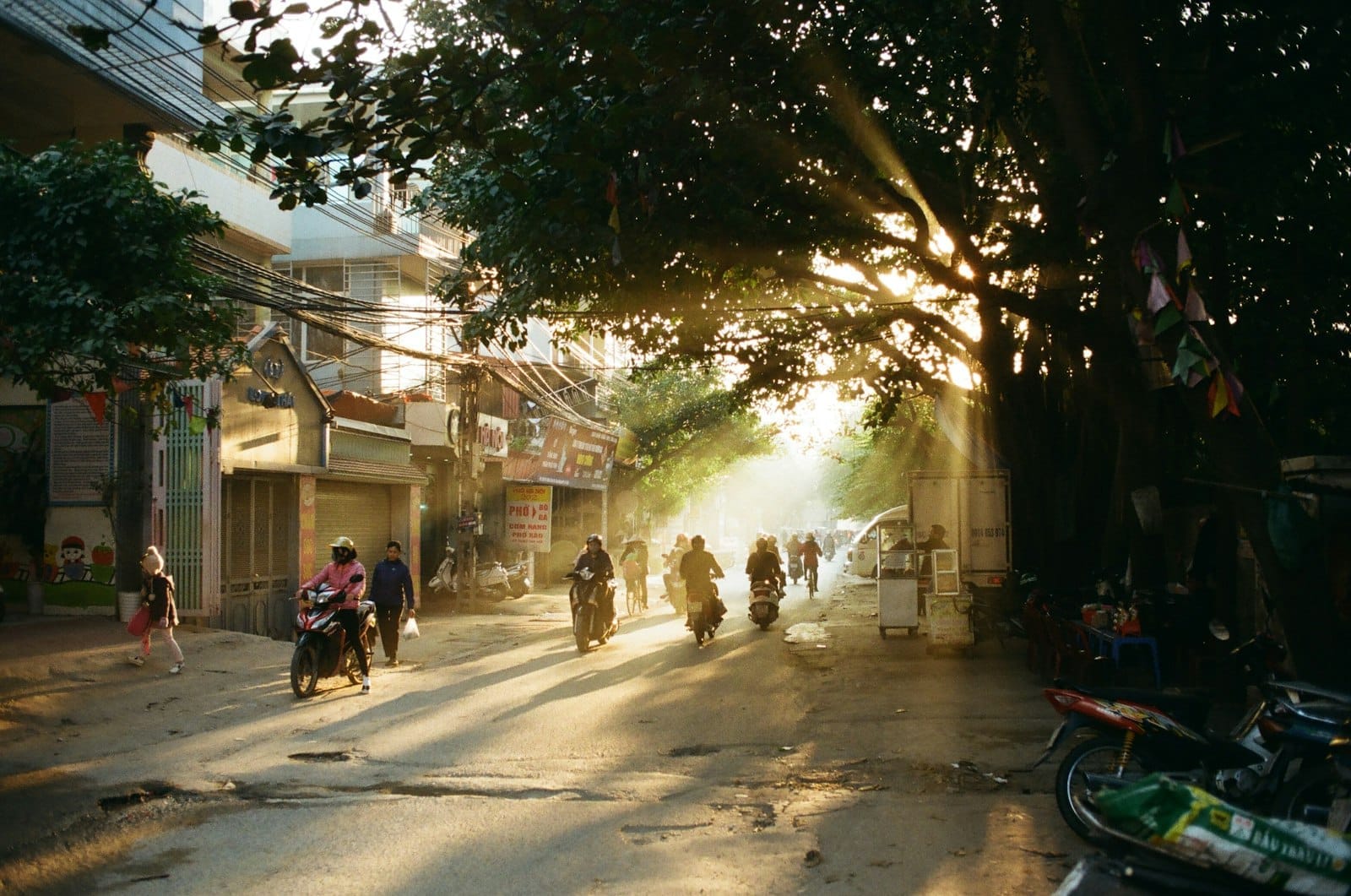
The best months to visit Hanoi are October through April. Temperatures in this window range from around 15-25°C, skies are generally clearer, and walking the Old Quarter's streets is actually pleasant. May through September brings heat (up to 38°C) and frequent heavy rain. The streets flood quickly during downpours. If visiting in summer, plan outdoor activity for early morning and late evening. For full seasonal detail, see the best time to visit Hanoi breakdown.
Tet (Vietnamese Lunar New Year) falls in late January or February and is the most significant holiday in the Vietnamese calendar. During the week around Tet, many Old Quarter shops and restaurants close, and the city empties as residents return to their home provinces. If you're visiting around this time, book accommodation well in advance and expect reduced services. In the days leading up to Tet, however, the Quarter becomes extraordinarily photogenic: streets decorated with kumquat trees, markets overflowing with flowers and traditional offerings.
Currency is Vietnamese Dong (VND). ATMs are plentiful throughout the Quarter, though some charge withdrawal fees of 30,000-50,000 VND. Some hotels and tour desks accept USD, but VND is the working currency everywhere else — street food, markets, and most shops operate in Dong only. Tap water is not safe to drink; bottled water costs 5,000-10,000 VND per 500ml from any convenience store. Carry cash for street food and small shops — card acceptance is improving but not universal. Emergency tourist hotline: +84 941 336 677.
The Old Quarter makes an excellent base for day trips. Ha Long Bay is accessible in about 3.5-4 hours by road. Ninh Binh is closer at around 2 hours, and the combination of Trang An and Hoa Lu makes it one of the most rewarding single-day excursions from Hanoi.
FAQ
Is the Hanoi Old Quarter safe for tourists?
Generally yes, including at night. Petty theft (bag snatching from motorbikes, pickpocketing in crowded markets) does occur, so keep bags on your body rather than hanging loosely, especially on the Night Market. Scams targeting tourists are more common than violent crime. Common ones include: cyclo drivers who agree to a price then demand more at the end, 'free' gifts from street sellers that come with aggressive sales pressure, and 'closed today, follow me to another place' redirections near major attractions. Politely and firmly declining works in most cases.
How many days do you need in the Old Quarter?
Two full days cover the main streets, key attractions, and food highlights without rushing. Three days allow for a slower pace, day trips to Ba Dinh District (Ho Chi Minh Mausoleum, Temple of Literature), and more time to explore side streets and markets. If you're using Hanoi as a base for regional trips to Ha Long Bay or Ninh Binh, budget extra nights accordingly.
What are the best hotels in the Hanoi Old Quarter?
The Old Quarter has accommodation at every price point, from dormitory beds under $10 to boutique hotels in the $60-120 range. Staying inside the Quarter puts you close to restaurants, markets, and attractions but means noisier streets, especially on weekends. Streets like Hang Be, Ma May, and Luong Ngoc Quyen have a high concentration of guesthouses and small hotels. For quieter options with similar access, the streets bordering Hoan Kiem Lake offer a slight remove from the densest crowds.
Can you walk the entire Old Quarter in one day?
The 36-street area is walkable in a single day if you focus on the streets rather than trying to enter every attraction. A practical route: start at Dong Xuan Market in the north, work south through Hang Ma, Hang Bac, and Hang Gai, finish at Hoan Kiem Lake. Add Ngoc Son Temple and a stop at Hoa Lo Prison for a fuller cultural picture. Total walking distance is around 5-7 km depending on diversions.
What should I buy in the Old Quarter?
The streets that still sell genuine craft goods are better value than souvenir shops. Hang Gai for silk, custom clothing, and embroidery. Hang Bac for silver jewelry. Hang Ma for paper goods and decorative items. Avoid buying mass-produced 'traditional' handicrafts from touts near major tourist sites — the same items are available at Dong Xuan Market at a fraction of the price. For high-quality ceramics, the Bat Trang ceramic village is worth a half-day trip from the Quarter.
Tickets & tours
Live prices and dates from our booking partner. If you book, we may earn a commission at no extra cost to you.
Planning a trip? Discover personalized activities with the Nomado app.