Getting Around Hanoi: Every Transport Option, Ranked and Explained
Hanoi's streets are chaotic, fast-moving, and genuinely fun to navigate once you understand the rules. This guide breaks down every transport option — from airport transfers to Old Quarter cyclos — with honest pricing, practical advice, and clear recommendations for different budgets and itineraries.

Tickets & tours
Live prices and dates from our booking partner. If you book, we may earn a commission at no extra cost to you.
TL;DR
- Grab (ride-hailing) is the most reliable and affordable option for most journeys inside the city.
- Getting from Noi Bai International Airport (HAN) to the city centre takes 45-60 minutes; the airport express Bus 86 costs around 35,000 VND.
- Crossing Hanoi on foot is realistic only in the Old Quarter and around Hoan Kiem Lake — the city is large.
- Motorbike taxis (xe om) are fast and cheap but require confident negotiation; settle the price before you get on.
- Avoid metered taxis from unmarked companies — stick with Mai Linh or Taxi Group to prevent fare scams.
Getting from Noi Bai Airport to the City Centre

Noi Bai International Airport (IATA: HAN) sits roughly 30 km north of Hanoi's centre, which translates to 45-60 minutes by road depending on traffic. This first leg is also where most new arrivals get overcharged, so it pays to know your options before you land.
- Airport Bus 86 The Vietnam Airlines airport bus runs between Noi Bai and Kinh Do Cinema on Trang Tien Street, near Hoan Kiem Lake. Fare is around 35,000 VND. It departs roughly every 30 minutes from 05:30 to 22:00. Slow but extremely cheap, and reliably air-conditioned.
- Grab Car Book via the Grab app before exiting arrivals. Typical fare runs 300,000-400,000 VND to the Old Quarter. You'll see the price upfront and can track your driver. This is the best option for most travellers arriving with luggage.
- Metered Taxi Mai Linh (green) and Taxi Group (white) are the trustworthy operators in Hanoi. Expect 350,000-400,000 VND with tolls. Avoid any driver who approaches you in arrivals hall and names a flat fee — those fares are almost always 2-3x the real cost.
- Private Transfer Pre-booked hotel transfers or private cars typically cost 350,000-500,000 VND. Worth considering if you arrive late at night or prefer simplicity over savings.
⚠️ What to skip
Never accept a ride from touts inside the terminal. Walk past arrivals, exit the building, and open Grab on your phone. The price difference between a legitimate Grab and a tout taxi can be 200,000-300,000 VND or more.
Ride-Hailing Apps: Grab and Its Competitors
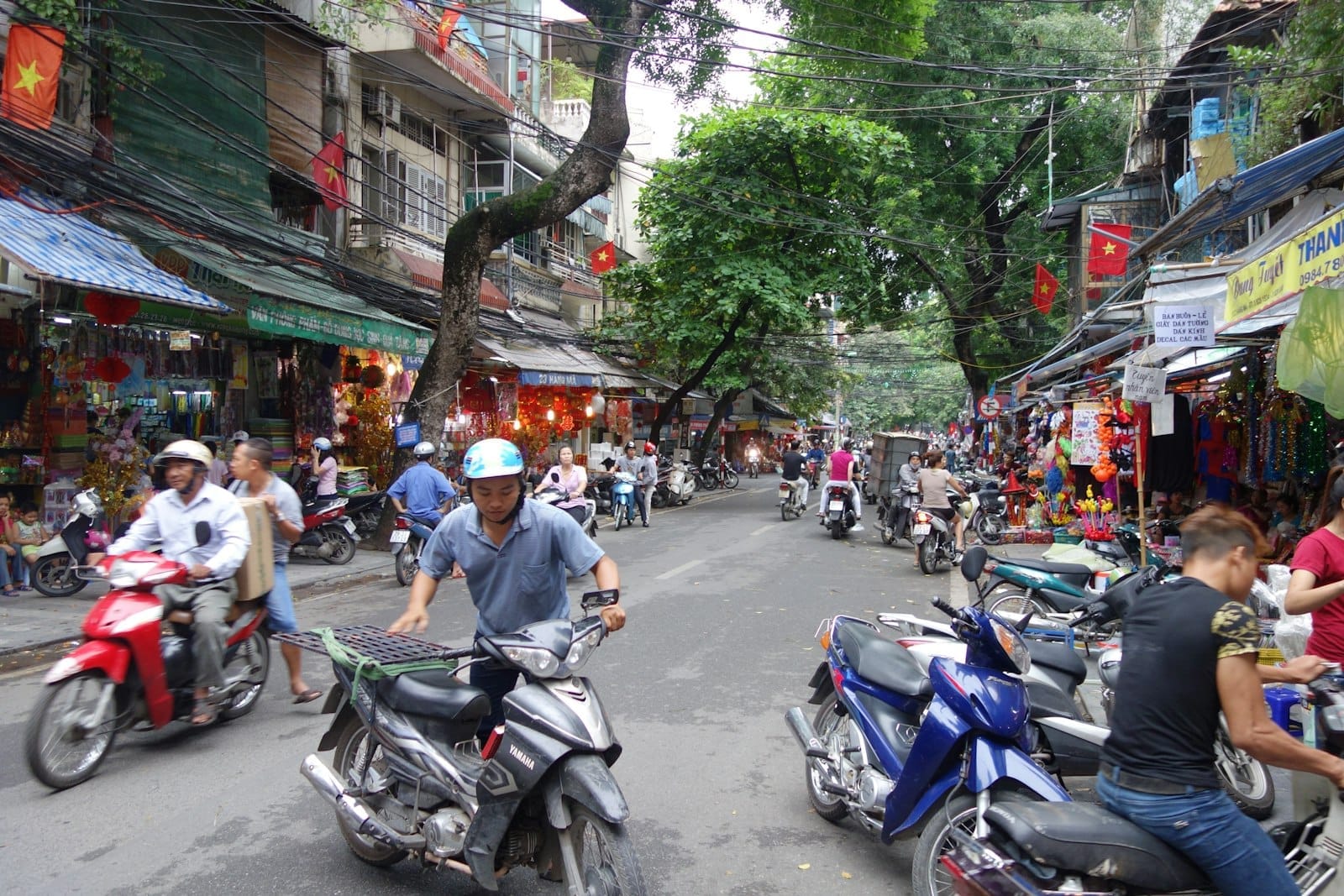
Grab is the dominant ride-hailing platform in Vietnam and easily the most practical way to get around Hanoi for most visitors. The app works in English, prices are fixed before you confirm, and payment can be made by card or cash. For short urban hops — say, from the Old Quarter to the Temple of Literature — a GrabCar typically costs 40,000-80,000 VND.
Grab also offers GrabBike, a motorbike taxi service that's significantly cheaper and faster in heavy traffic. A cross-city GrabBike ride rarely exceeds 30,000-50,000 VND. The trade-off is exposure to Hanoi's traffic, which can feel intense for first-timers. Be Delivery (formerly Gojek Vietnam) operates similarly and is worth comparing prices on busy days.
✨ Pro tip
Download Grab and add a payment method before you leave home. On arrival, connect to airport Wi-Fi and book your car from inside the terminal. You avoid the taxi queue entirely and your driver meets you at the designated pickup zone outside departures.
Getting Around by Motorbike and Cyclo

The traditional xe om (motorbike taxi) has existed in Hanoi for decades and remains a viable option, particularly in the Old Quarter where narrow lanes make cars impractical. The key rule: agree on a price before you get on the bike. Without a meter, the fare is whatever you negotiate. For short distances in the Old Quarter, 15,000-30,000 VND is reasonable. Longer trips across the city should cost no more than 50,000-80,000 VND.
Cyclos, the three-wheeled pedal-powered rickshaws, are slower but offer a ground-level view of the city that's genuinely worth experiencing once. They're concentrated around Hoan Kiem Lake and the Old Quarter streets. Agree on a price upfront (a 30-minute Old Quarter loop runs around 100,000-150,000 VND), and treat it as a sightseeing activity rather than efficient transport. It's not the fastest way to get anywhere, but it's a good way to see the Hanoi Ceramic Mosaic Mural or pass the market streets at a pace you can actually absorb.
💡 Local tip
Renting a motorbike yourself is possible if you're an experienced rider and hold an international driving permit. However, Hanoi's traffic patterns are unlike most cities — motorbikes move in dense waves and traffic lights are treated as suggestions by some. First-time visitors to Southeast Asia should leave this option until they're more comfortable with local road culture.
Hanoi's Public Bus Network
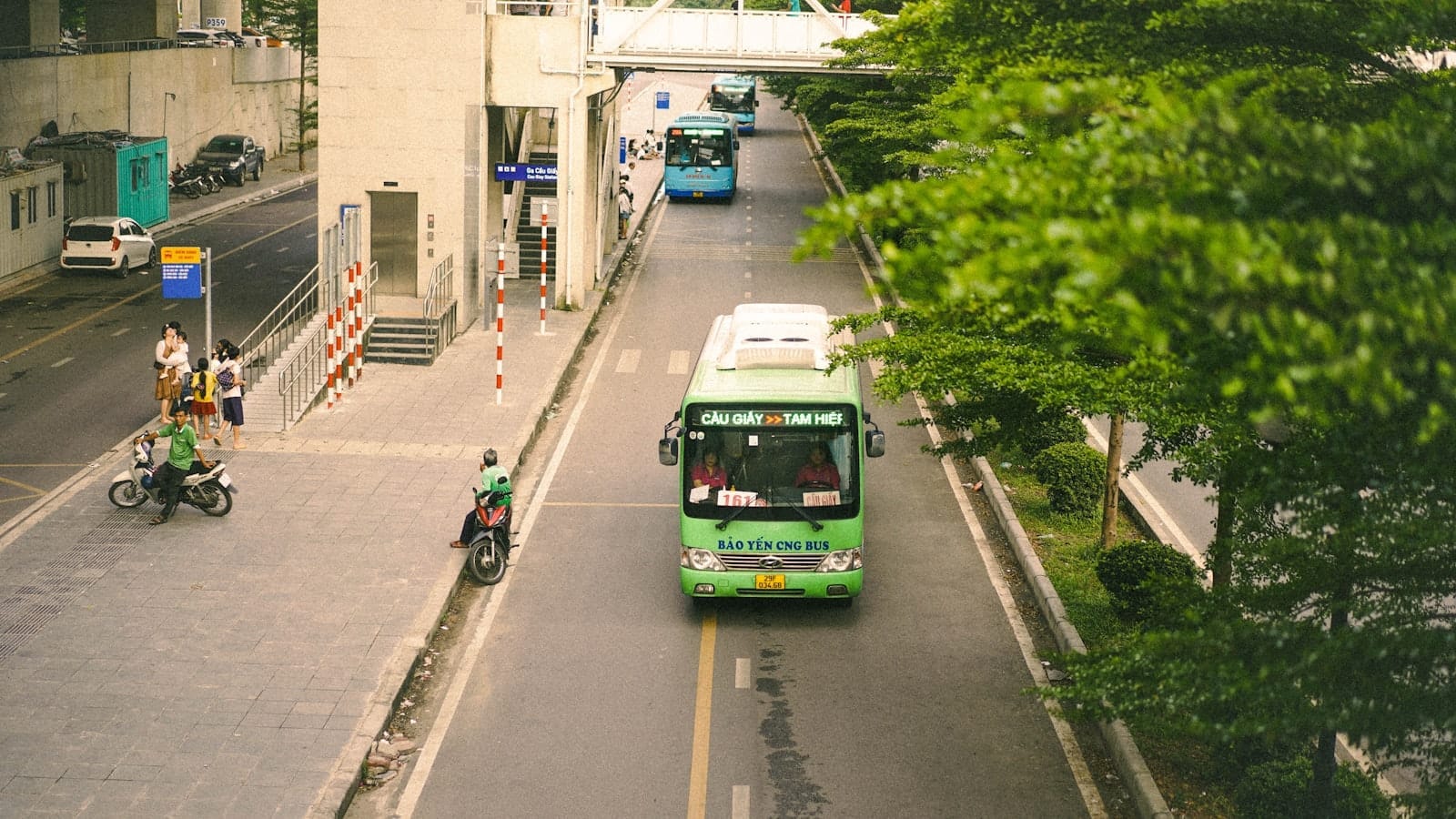
Hanoi operates an extensive public bus network covering most parts of the city and several suburban routes. Fares are extremely low, typically 7,000-9,000 VND per journey, and routes reach neighbourhoods that taxis sometimes treat as inconvenient. The downside is that navigating the system requires some patience: most signage is in Vietnamese, real-time tracking is unreliable, and buses can be overcrowded during peak hours (07:00-09:00 and 17:00-19:00).
For travellers staying longer than a few days, the bus is genuinely worth learning. Google Maps now covers most Hanoi bus routes with stop-by-stop directions in English. Route 86 (airport to city) is the most useful for visitors; Route 09 links West Lake to the Old Quarter; and routes along Dinh Tien Hoang and Trang Tien Streets pass the main tourist corridor. Buy tickets directly from the conductor onboard — no advance purchase needed.
Walking and Cycling in Hanoi

Walking works well in a few concentrated zones: the 36 streets of the Old Quarter, the path around Hoan Kiem Lake, and the French Quarter between the Opera House and the lake. These areas are compact enough to explore on foot in an afternoon, and walking lets you spot details — a temple gate, a street food cart, a colonial doorway — that you'd miss from a vehicle.
Crossing the street in Hanoi deserves a dedicated note. The standard advice is correct: walk slowly, steadily, and don't stop suddenly. Motorbikes will flow around you if you're predictable. Hesitating mid-crossing is more dangerous than committing to a pace. Near the Ngoc Son Temple on weekends, the surrounding streets around Hoan Kiem Lake are pedestrianised, making it significantly easier.
Bicycle rentals are available from several guesthouses and dedicated shops in the Old Quarter, typically at 50,000-80,000 VND per day for a basic city bike. Cycling works reasonably well for flat routes around West Lake (Tay Ho), which has a pleasant lakeside path and lighter traffic than the city centre. Avoid cycling on major arterial roads like Nguyen Trai or Giai Phong during peak hours — the traffic volume is genuinely dangerous for inexperienced cyclists.
Getting Between Hanoi's Districts and Neighbourhoods
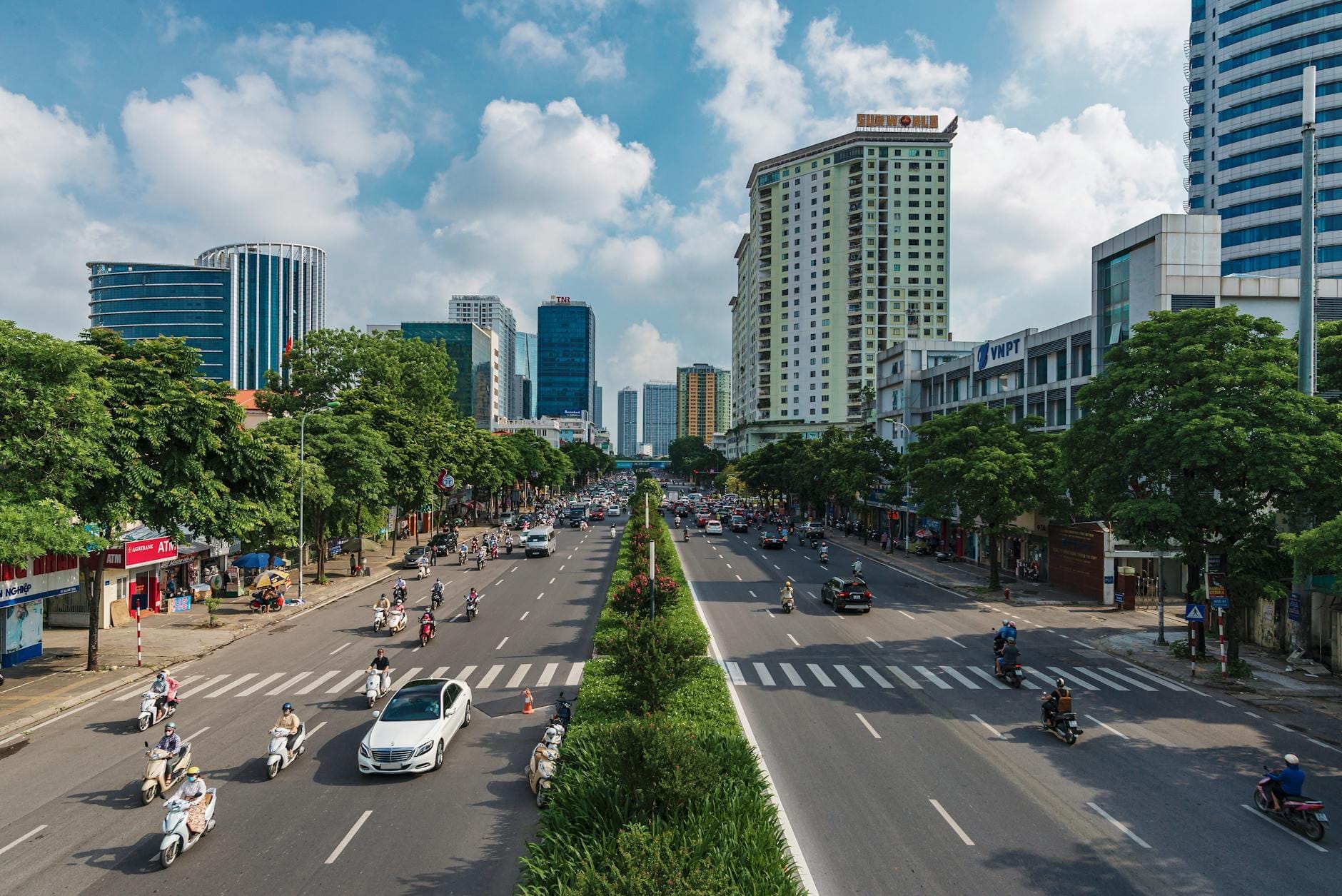
Hanoi's main tourist areas are spread across several districts. The Old Quarter (Hoan Kiem District) is the most central, but attractions like the Ho Chi Minh Mausoleum and the Imperial Citadel of Thang Long are in Ba Dinh District, roughly 3-4 km west. The Vietnam Museum of Ethnology is a further 2 km west in Cau Giay District. These aren't walkable from the Old Quarter, but a Grab ride between any of them costs 30,000-60,000 VND.
West Lake (Tay Ho) sits north of the Old Quarter, about 4-5 km away. It's home to the Tran Quoc Pagoda and the upmarket restaurant and café strip along Xuan Dieu Street. Many travellers staying in the Old Quarter visit West Lake as a half-day trip, best done by Grab or bicycle. If you're planning a full day in Ba Dinh — covering the mausoleum, One Pillar Pagoda, and the Ho Chi Minh Museum — consider taking a Grab there in the morning and walking back east through the Botanical Garden, which saves money and adds a pleasant route.
- Old Quarter to Ba Dinh Square: 3.5 km, about 10-15 minutes by Grab (25,000-40,000 VND)
- Old Quarter to West Lake (Tay Ho): 4-5 km, 15-20 minutes by Grab (30,000-50,000 VND)
- Old Quarter to Vietnam Museum of Ethnology: 5-6 km, 15-25 minutes by Grab (40,000-60,000 VND)
- Old Quarter to Long Bien Bridge: 1.5 km, walkable in 20 minutes via Hang Chieu Street
- Noi Bai Airport to Old Quarter: about 30 km, 45-60 minutes by car (300,000-400,000 VND via Grab)
Day Trips from Hanoi: Getting Out of the City
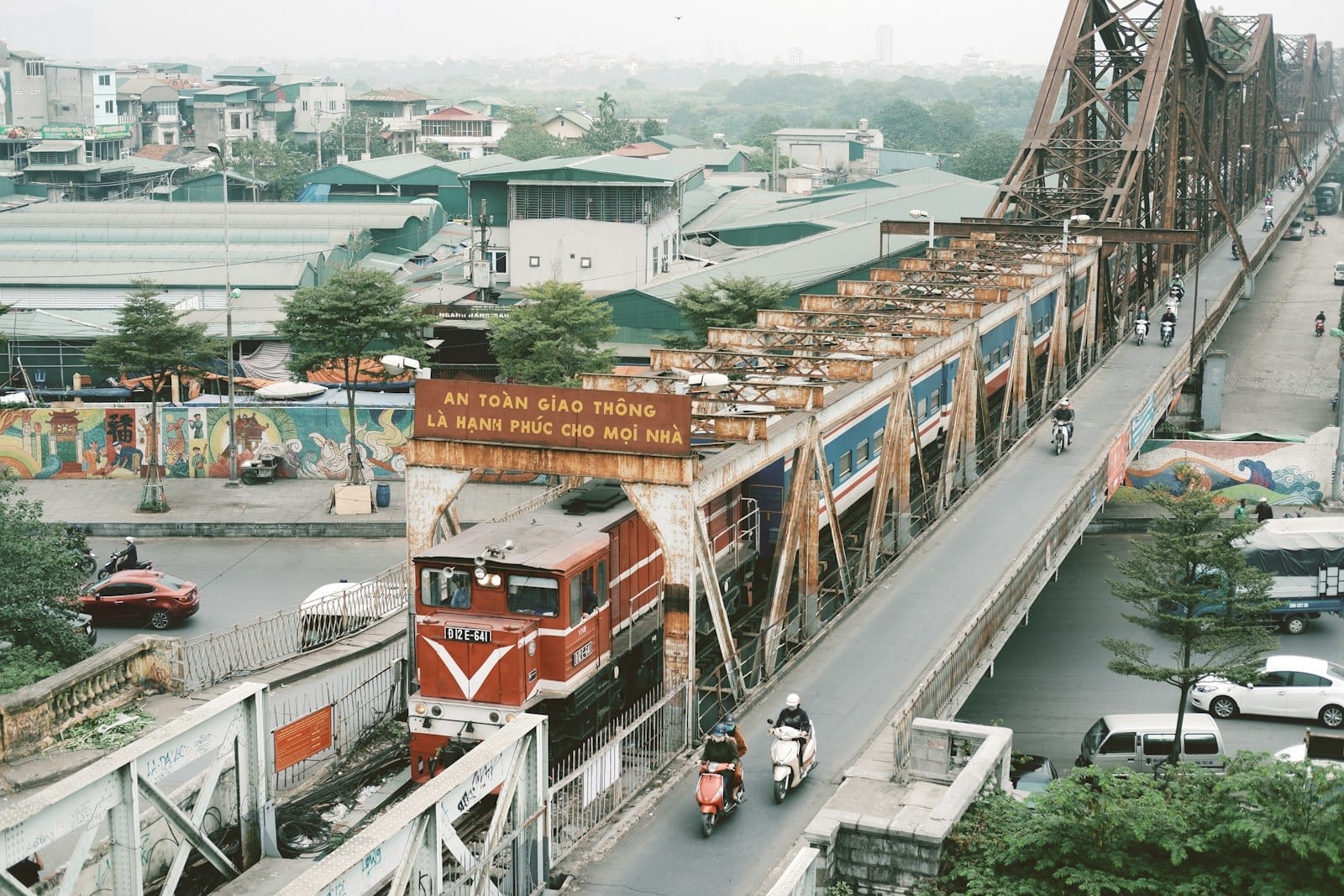
For day trips and overnight excursions, the options depend heavily on distance. Ninh Binh is around 95 km south, reachable in under 2 hours by train from Hanoi's Ga Ha Noi (main) station. The Reunification Express stops at Ninh Binh station, with tickets running 80,000-130,000 VND for a seat. Ha Long Bay, around 170 km east, is most efficiently reached by organised tour or shared shuttle — the road journey takes around 3.5 hours without traffic. Independent travel to Ha Long by public bus is possible but slower and involves multiple transfers.
Bat Trang Ceramic Village is one of the easier half-day trips, located about 13 km southeast. Take public bus Route 47 from Long Bien Bus Station or grab a taxi for around 100,000-150,000 VND one way. For organised day trips and multi-destination itineraries, see the best day trips from Hanoi for a full breakdown.
FAQ
Is Hanoi easy to get around without speaking Vietnamese?
Yes, for most tourist needs. Grab works entirely in English and removes the language barrier for most journeys. Major attractions have some English signage, and drivers using the app can follow GPS without verbal communication. Where you'll feel the gap is in negotiating xe om prices or buying bus tickets — have small VND notes ready and use Google Translate for anything complex.
How much does it cost to get from Noi Bai Airport to the Old Quarter?
A Grab car from Noi Bai to the Old Quarter typically runs 300,000-400,000 VND, including tolls. The public airport bus (Bus 86) costs around 35,000 VND but takes longer and drops you near Hoan Kiem Lake, not door-to-door. Metered taxis from Mai Linh or Taxi Group cost a similar amount but are reliable.
Is there a metro or subway in Hanoi?
Hanoi's metro system (Cat Linh–Hà Đông line) has been operational since November 2021, running southwest from Cat Linh station toward Ha Dong. However, this line doesn't connect the airport or the Old Quarter to most tourist sites, making it of limited use for most visitors in its current form. Further lines are under construction but not yet open.
What's the safest way to take a taxi in Hanoi?
Use Grab for a fixed, app-confirmed price, or flag a Mai Linh (green) or Taxi Group taxi on the street and ensure the meter is running. Never get into an unmarked taxi or accept a flat-fee offer from someone approaching you at the airport, train station, or tourist sites. These unofficial taxis routinely charge 3-5x the going rate.
Can I rent a bicycle in Hanoi and cycle around the city?
Yes. Bicycle rentals are widely available in the Old Quarter for 50,000-80,000 VND per day. Cycling around West Lake (Tay Ho) is particularly pleasant as the lakeside path is relatively flat and traffic is lighter than the city centre. Avoid major arterial roads during morning and evening rush hours — traffic is dense and fast-moving.
Tickets & tours
Live prices and dates from our booking partner. If you book, we may earn a commission at no extra cost to you.
Planning a trip? Discover personalized activities with the Nomado app.