Ninh Bình is the dramatic karst landscape that most travelers mean when they say they want to 'escape Hanoi for a day.' Ancient capitals, flooded rice paddies, limestone peaks, and pagodas carved into cliff faces sit within a two-hour train or bus ride of the city. It is not a neighborhood of Hanoi itself, but it functions as the city's most important short-break destination, and understanding how to reach it and what to prioritize makes the difference between a rewarding trip and a rushed disappointment.
Ninh Bình is where Hanoi's flat urban sprawl gives way to some of northern Vietnam's most striking scenery: vertical limestone karsts rising from flooded plains, rivers threading through cave systems, and the ruins of Vietnam's earliest royal capital. Located roughly 90 kilometers south of Hanoi, it is close enough for a long day trip but rewarding enough to justify one or two nights.
Orientation: Where Ninh Bình Sits Relative to Hanoi
Ninh Bình province lies at the southern edge of the Red River Delta, where the flat agricultural lowlands begin to crumple into the karst formations that continue south into Thanh Hoa province. The city of Ninh Bình itself is a small, unremarkable transit hub on the bank of the Day River, but it is the gateway to several distinct areas that most visitors come for: Tam Coc and Bich Dong to the west, Trang An to the northwest, and the ancient capital of Hoa Lu to the north of the city.
The distance from Hanoi's Hoan Kiem district to Ninh Bình city is approximately 90 to 95 kilometers via National Highway 1A or the parallel rail line. Travel time by express train runs between 1 hour 45 minutes and 2 hours 15 minutes depending on the service. By road, expect 2 to 2.5 hours by bus or private car, longer during the Hanoi morning rush. The key mental map to hold: Ninh Bình city is your arrival and logistics hub, but none of the major sights are in the city itself. Tam Coc is about 7 kilometers to the southwest, Trang An is around 8 kilometers to the northwest, and Hoa Lu sits roughly 12 kilometers north of the city center.
Travelers coming from Hoan Kiem district or the Old Quarter typically depart from Hanoi Railway Station on Le Duan Street or from My Dinh Bus Station in the west of the city. Ninh Bình is also a natural pairing with a broader northern Vietnam itinerary. For context on how it fits into a longer trip, the Hanoi itinerary guide outlines how to sequence Ninh Bình alongside other regional highlights.
Character & Atmosphere: What Ninh Bình Actually Feels Like
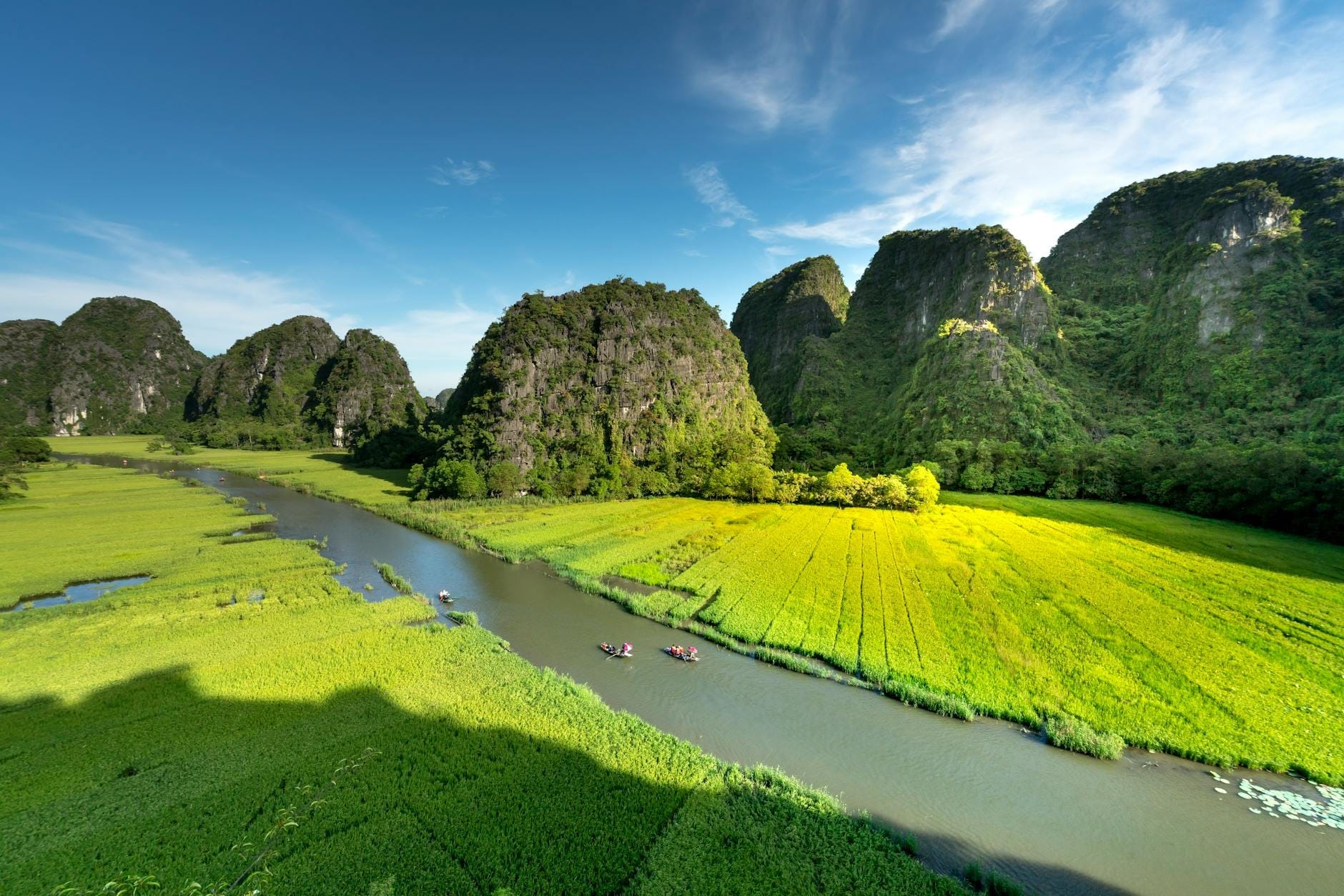
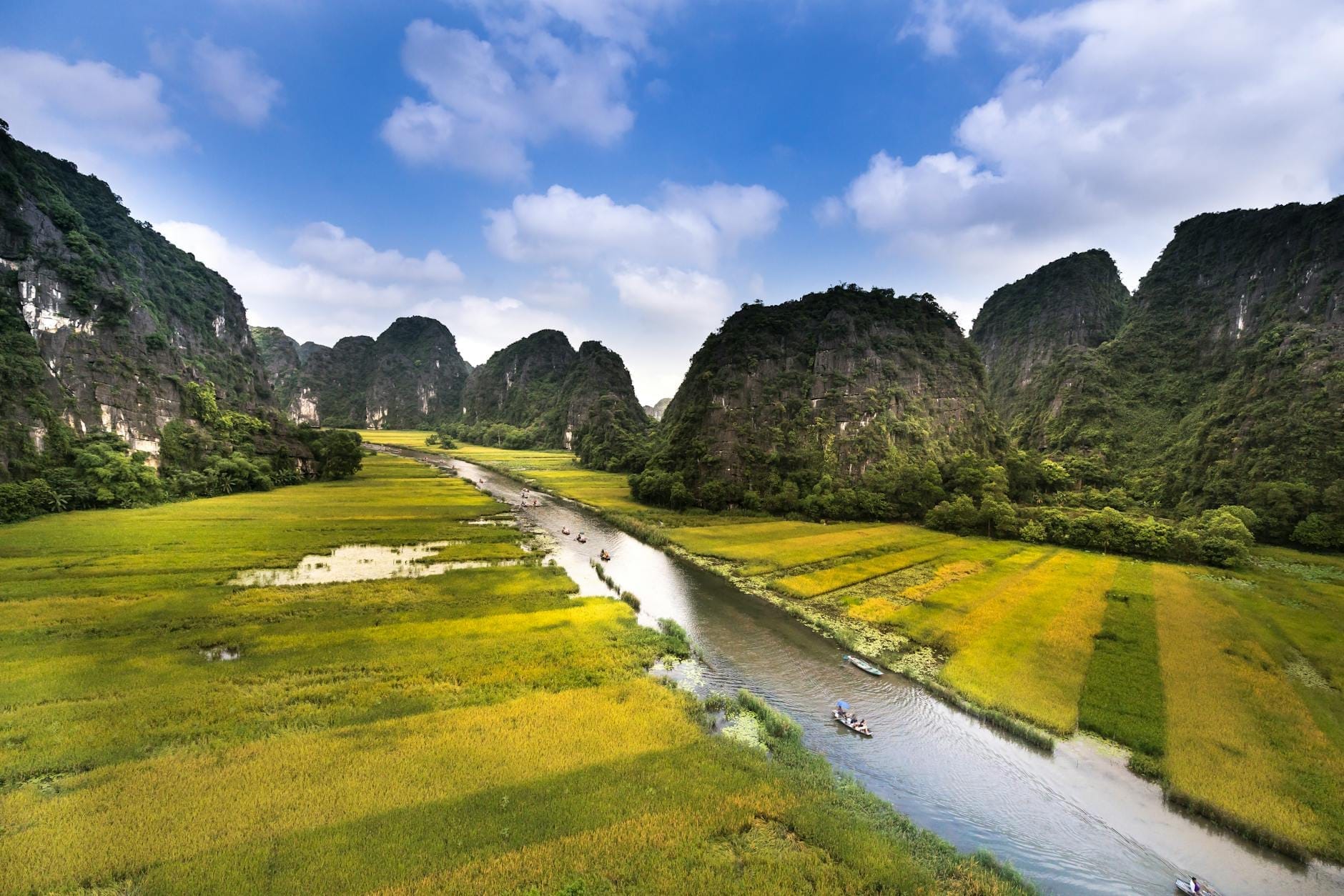
The experience of Ninh Bình shifts dramatically depending on the time of day and how far you get from the main tourist clusters. Arrive at Tam Coc by 7am on a weekday and the boat dock on Ngo Dong River is hushed. Morning light falls in long horizontal shafts across the water, and the rice paddies on either side of the river reflect a pale green that deepens as the sun climbs. The only sounds are the dip of oars and the occasional call of a water bird from the reed banks. By 9am, the scene changes completely: a steady convoy of flat-bottomed rowing boats has formed, most of them ferrying tour groups, and the dock fills with vendors and guides. By 10:30am in peak season, Tam Coc is genuinely crowded.
Trang An, the UNESCO-listed landscape complex to the northwest, manages its visitor flow somewhat better because its circuit is longer and the boat routes spread people across more terrain. The limestone peaks here are taller and more dramatic than at Tam Coc, and passing through the low cave tunnels on the water feels genuinely theatrical, especially when your boat emerges into a valley completely enclosed by cliffs. The downside of Trang An is that it has become heavily commercialized at the entrance zone, with a large resort, food courts, and souvenir markets that have little to do with the landscape you came to see.
The town of Ninh Bình city itself is functional rather than attractive. Its grid of streets serves the local population well but offers little for travelers beyond guesthouses, transport connections, and a few pho shops. Most visitors use it purely as a transit node and base, which is a reasonable approach.
💡 Local tip
If you're visiting in spring (April to May), the rice paddy cycle is at its most photogenic: fields are either flooded and mirror-flat or filled with bright green seedlings. September and October offer cooler temperatures and good visibility after the monsoon rains clear.
What to See & Do
The Tam Coc river valley is the experience most people picture when they think of Ninh Bình: a slow boat ride through three cave tunnels carved by the Ngo Dong River through limestone karsts. The full circuit takes around 2 hours by rowboat, and the scenery is genuinely dramatic, particularly in the first 30 minutes before the cave passages. The boats are rowed, often by local women using their feet to power the oars — a technique that takes a moment to register, then becomes mesmerizing to watch.
The Trang An Landscape Complex covers a larger area and offers several different boat circuit options ranging from 2 to 3.5 hours. It received UNESCO World Heritage status in 2014, both for its natural karst scenery and for archaeological evidence of human habitation dating back tens of thousands of years. The longer circuits take you past several pagodas and through valley chambers that feel genuinely remote, even if you know there are other boats nearby.
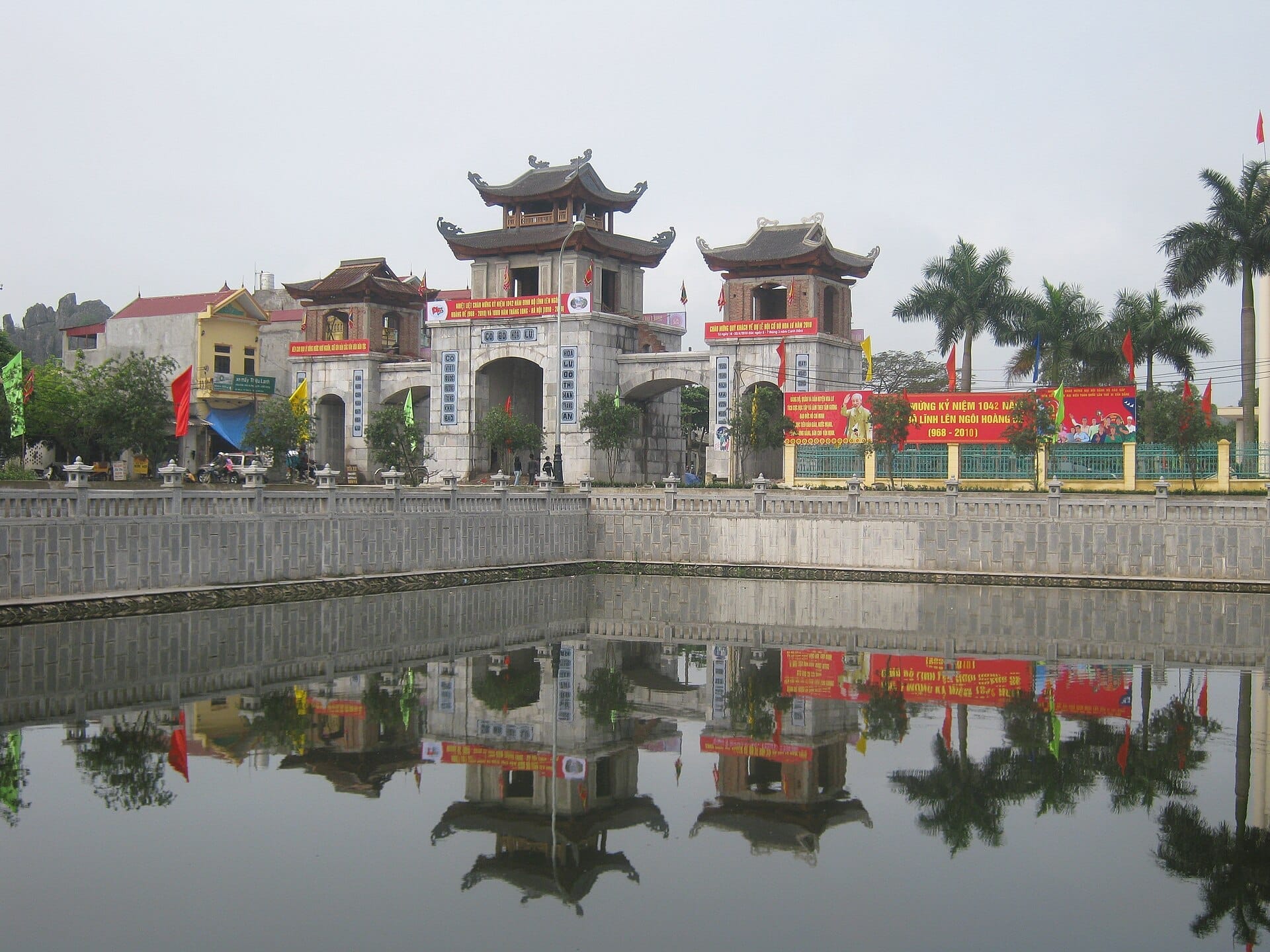
For historical depth, Hoa Lu Ancient Capital is the site of Vietnam's first independent royal capital, established in 968 CE under the Dinh dynasty and maintained through the early Le dynasty. The original city walls, many kilometers in extent, used the surrounding limestone mountains as natural fortifications. Two restored temple complexes — Dinh Tien Hoang and Le Dai Hanh — still stand on the site, their courtyards quiet and their incense smoke drifting through heavy timber interiors.
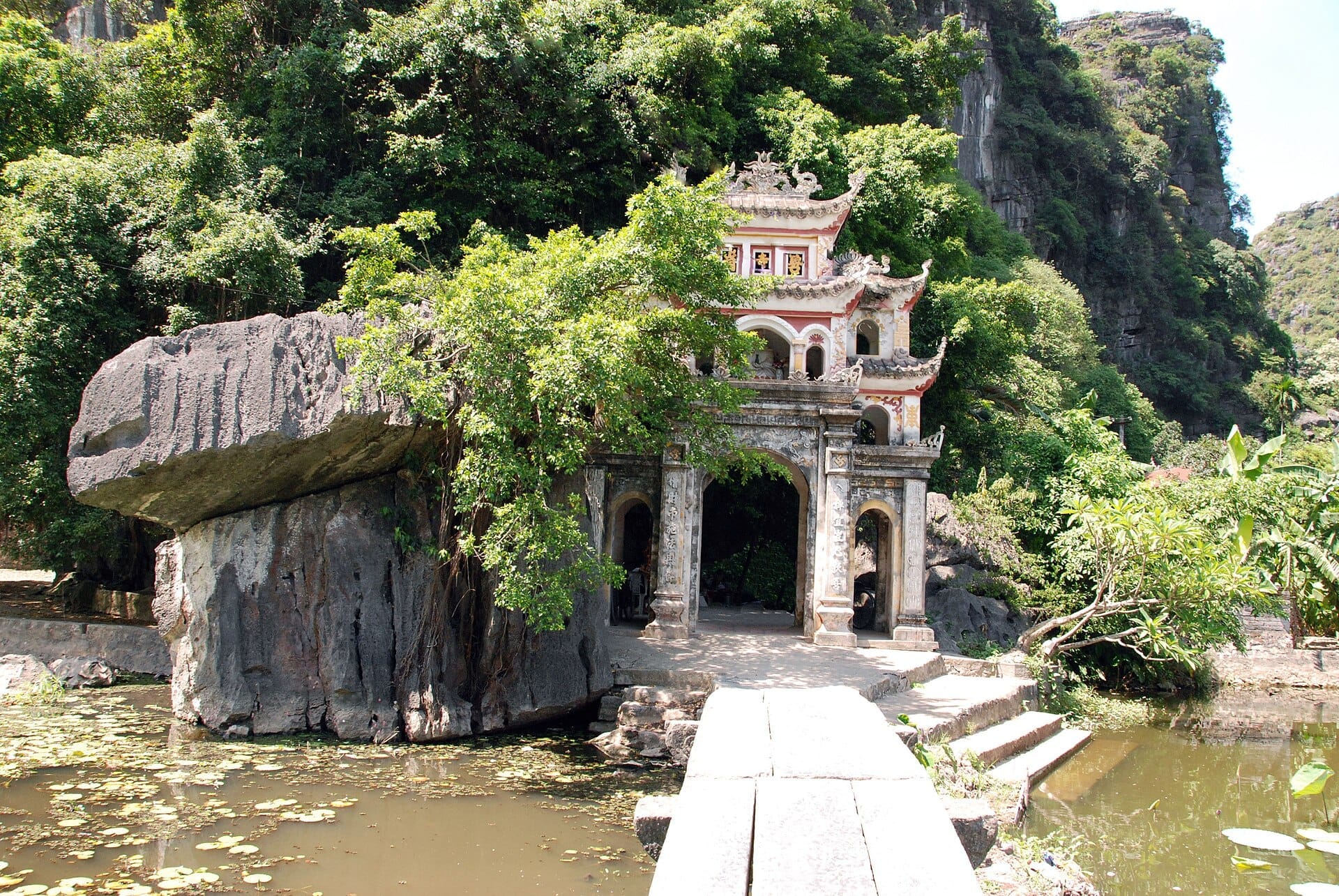
The Bich Dong Pagoda is a short bike ride from Tam Coc and worth the detour if crowds at the boat dock have you looking for somewhere quieter. Three separate temple structures are built at different elevations into the face of a karst cliff, connected by stone steps. The highest level gives a clear view over the surrounding paddy fields and the karst silhouettes beyond.
Mua Cave and its 500-step stone staircase, which rewards climbers with a panoramic view across the Tam Coc valley that has become one of northern Vietnam's most shared photographs
Cycling the flat roads between Tam Coc, Bich Dong, and the surrounding villages — the terrain is genuinely flat and bikes are cheap to rent near the boat dock
Visiting Van Long Nature Reserve for a quieter boat experience through wetland habitat, with a good chance of spotting Delacour's langur monkeys on the cliff faces
Cuc Phuong National Park, Vietnam's oldest, which lies about 50 km southwest of Ninh Binh city and is manageable as an add-on if you have a second day
⚠️ What to skip
Mua Cave viewpoint requires a steep climb of around 500 steps in direct sun for much of the ascent. Go early in the morning or late afternoon in summer. The entrance fee is separate from Tam Coc boat tickets, and the two are not adjacent — you will need a bike or motorbike to get between them.
Eating & Drinking
Ninh Bình province has its own distinct culinary identity, and the standout dish is com chay, literally 'burnt rice.' It is made by pressing rice against the bottom of a pot until a crisp, flat cake forms, then deep-frying it and serving it with a spiced goat meat stir-fry and a dipping sauce made from fermented shrimp paste. The combination sounds unlikely but the contrast between the crunchy rice, the pungent sauce, and the tender meat is one of those regional specialties that rewards the adventurous eater considerably.
De (goat) is the other local specialty, which appears in several forms: grilled over charcoal, simmered in coconut milk, or served as a hot pot. Goat farming suits the limestone terrain of the region, and local restaurants take genuine pride in sourcing from nearby herds. A meal of de nuong (grilled goat) at a table-side grill with cold bia hoi is one of the more satisfying ways to end a long day of cycling and boat rides.
Most restaurants cluster near the Tam Coc boat dock and along the main road between Tam Coc village and the city. Quality varies: the restaurants immediately at the dock entrance are geared for tour groups and priced accordingly, while the simpler places a few hundred meters down the road toward Ninh Bình city tend to serve more honest food at lower prices. A full meal with rice, a meat dish, and vegetables at a local restaurant typically runs between 60,000 and 150,000 VND per person. Beer is widely available and inexpensive.
For those wanting to plan their eating across the wider Hanoi region, the Hanoi food guide covers the city's own specialties, which are distinct from Ninh Bình's mountain and goat-focused cuisine.
Getting There & Around
Train is the most comfortable and reliable way to reach Ninh Bình from Hanoi. Multiple services per day run from Hanoi Railway Station (Ga Ha Noi) on Le Duan Street to Ninh Bình station, with journey times ranging from 1 hour 45 minutes on the faster SE services to just over 2 hours on slower trains. Seats are cheap by international standards and can be booked in advance through the Vietnam Railways website or at the station. The train deposits you in Ninh Bình city, from which you need onward transport to reach Tam Coc, Trang An, or Hoa Lu.
Buses and tourist minibuses depart from Hanoi's My Dinh Bus Station and several points in the Old Quarter, often as part of organized day tours. The advantage of organized tours is that transport between sites is handled; the disadvantage is that your schedule is fixed and you spend more time in the tourist clusters. If you prefer flexibility, arriving independently by train and renting a bicycle or motorbike in Ninh Bình city gives you far more control over your time.
Within the Ninh Bình area, bicycle rental is available near the Tam Coc boat dock and from most guesthouses for around 50,000 to 80,000 VND per day. The roads between Tam Coc, Bich Dong, and the surrounding villages are flat and well-surfaced. Motorbike taxis (xe om) and Grab ride-hailing can also cover longer distances to Hoa Lu or Trang An. Private car hire through your hotel or a reputable operator is the most comfortable option for covering multiple sites in one day, particularly if you are traveling as a small group.
ℹ️ Good to know
Ninh Bình can also be combined with a visit to Ha Long Bay if you're planning a longer northern Vietnam circuit. For routing and logistics, the day trips guide covers how to sequence these destinations without doubling back to Hanoi unnecessarily.
For the full picture on how to move around the Hanoi region efficiently, the getting around Hanoi guide covers bus routes, train booking, and ride-hailing options in detail. The day trips from Hanoi guide also compares Ninh Bình against other nearby options like Hoa Lu and the coast.
Where to Stay
Staying overnight in Ninh Bình is worth considering if you want to experience the landscape at dawn before the day-trip crowds arrive, or if you want to visit both Tam Coc and Trang An without rushing. The practical choice is between staying in Ninh Bình city itself, staying near the Tam Coc boat dock village, or staying at one of the rural homestays or eco-lodges scattered through the surrounding paddy fields.
Ninh Bình city has the widest range of options from budget guesthouses to mid-range hotels, and it is the most convenient base if you're arriving by train and planning to move on by rail. The area around Tam Coc village has proliferated with small guesthouses and homestays over the past decade, many of them in traditional single-story houses surrounded by fields. These offer the most atmospheric setting and put you closest to the morning light on the paddy fields, but the village road can be noisy with tour traffic during the day.
At the higher end, a small number of boutique eco-lodges have opened in the countryside between Trang An and Hoa Lu, set among rice paddies with karst backdrops. These offer a markedly different experience from the budget guesthouse scene, with the tradeoff that you are more dependent on resort transport to reach the sights. For travelers planning their accommodation across the wider trip, the Hanoi accommodation guide covers options in the city itself, which remains the more practical base for most itineraries.
If you're still deciding whether to stay in Hanoi or make Ninh Bình an overnight stop, the where to stay in Hanoi guide outlines the city's neighborhoods in detail and can help you judge how much time to allocate outside the capital.
Honest Drawbacks: What Ninh Bình Gets Wrong
Tam Coc is overrun between 9am and 3pm in peak season, which runs from late March through October. The boat journey itself remains scenic, but the dock atmosphere at peak hours is more chaotic market than tranquil river valley. Vendors on small boats will paddle alongside your craft mid-river attempting to sell drinks and snacks; declining firmly but politely is the standard approach.
Trang An's entrance complex has been developed in a way that prioritizes revenue over experience: the resort, food courts, and parking infrastructure at the gate are large and difficult to move through quickly. Budget an extra 30 minutes for the entrance process in peak season. The boat trip itself, once you're on the water, is a different story.
The roads between sites are pleasant by bike in good weather, but Ninh Bình receives significant rainfall between May and September, and navigating flooded or muddy paths after heavy rain is genuinely unpleasant. Check the weather forecast before booking a cycling-focused day. Finally, the souvenir infrastructure around all the major sites is aggressive by Vietnamese standards: firm, cheerful refusals are enough, but visitors who find this kind of pressure wearing should know it is more pronounced here than in many other parts of the country.
TL;DR
Ninh Bình is the most scenically rewarding short trip from Hanoi, combining karst river valleys, cave-carved pagodas, and Vietnam's first royal capital within a 2-hour journey of the city.
Best visited as an overnight stop rather than a rushed day trip — dawn on the paddy fields near Tam Coc is a fundamentally different experience from the midday crowds.
Tam Coc suits travelers wanting classic karst river scenery; Trang An suits those who want a longer, more varied boat circuit with UNESCO-listed landscapes.
Hoa Lu is for history-focused travelers who want to understand Vietnam before Hanoi existed — it sees far fewer visitors than the boat valleys and rewards curiosity.
Not ideal for travelers who strongly dislike tourist infrastructure, vendor pressure, or large crowds at peak hours — if that describes you, Van Long Nature Reserve is a quieter alternative within the same region.
Hanoi's climate is more complex than most Southeast Asian cities, with four distinct seasons that genuinely change the experience. This guide breaks down the weather, crowds, and what to expect each month so you can plan a trip that matches your priorities.
Hanoi is an exceptional base for exploring northern Vietnam. Within a few hours you can reach UNESCO World Heritage sites, ancient capitals, sacred pilgrimage caves, and centuries-old craft villages. This guide covers the best day trips from Hanoi, with honest advice on what to prioritize.
Hanoi's streets are chaotic, fast-moving, and genuinely fun to navigate once you understand the rules. This guide breaks down every transport option — from airport transfers to Old Quarter cyclos — with honest pricing, practical advice, and clear recommendations for different budgets and itineraries.
Ha Long Bay is the most iconic day trip and overnight excursion from Hanoi, but the sheer number of cruise options makes planning overwhelming. This guide cuts through the noise with practical advice on getting there, choosing the right cruise tier, what to budget, and when to go.
From the colonial lanes of the Old Quarter to the solemn monuments of Ba Dinh, Hanoi rewards travelers who plan carefully. This itinerary guide breaks down exactly how to spend 2, 3, or 5 days in the city, covering the essential sights, underrated neighborhoods, and the day trips worth taking.
The Old Quarter is the beating heart of Hanoi, a dense grid of streets dating to the 14th century where silk sellers, pho vendors, and ancient temples coexist with craft workshops and rooftop bars. This guide gives you the practical depth to explore it properly.
Ninh Bình is the most rewarding escape from Hanoi for travelers who want karst scenery, ancient history, and boat rides through rice paddies without flying anywhere. This guide covers transport options, the best sites to prioritize, where to stay overnight, and honest advice on how long you actually need.
Hanoi rewards travelers who go beyond the obvious. This guide covers the city's top experiences across history, food, culture, and day trips — with honest assessments, practical details, and local context that most guides skip.
Hanoi's food scene is one of the most distinctive in Southeast Asia, built on centuries of culinary tradition and a firm belief that the best meals come from small, specialized stalls. This guide breaks down where to eat in Hanoi by neighborhood, dish type, and budget so you spend less time guessing and more time eating.
Choosing where to stay in Hanoi shapes your entire trip. This guide breaks down every major neighborhood by character, convenience, and cost, so you can book with confidence rather than luck.