Hoàn Kiếm is the geographic and cultural center of Hanoi, wrapping around the city's most iconic lake and stretching north into the ancient merchant streets of the Old Quarter. It is where colonial architecture faces temple gates, where morning tai chi shares the same pavement as evening beer stalls, and where the city's past and present are most visibly layered on top of each other.
Hoàn Kiếm is the district that most people picture when they think of Hanoi: a lake ringed by trees and legend, streets that have sold the same goods for six centuries, and a daily rhythm that shifts dramatically from pre-dawn calm to late-night noise. It is simultaneously the most tourist-heavy and most authentically local part of the city, and understanding how to read both layers is what separates a good visit from a great one.
Orientation
Hoàn Kiếm district sits at the very center of Hanoi's urban core. The district takes its name from Hoan Kiem Lake (Ho Hoan Kiem), the small but symbolically significant lake that anchors the southern end of the Old Quarter. The lake functions as a compass point for the entire city: the French Quarter lies directly to the south and east, Ba Dinh district extends westward, and the dense residential and commercial streets of the Old Quarter fan out to the north.
The district's boundaries are roughly defined by the Long Bien Bridge approach to the northeast, the rail corridor to the west, and Tran Quang Khai street along the Red River embankment to the east. For practical purposes, most travelers divide Hoan Kiem into two zones: the Old Quarter to the north of the lake, with its famous 36 guild streets, and the calmer, wider streets south of the lake that transition into the French Quarter.
The lake itself is a 12-minute walk from one end to the other, which gives you a useful sense of scale. Almost everything a first-time visitor wants to see in Hanoi is within 20 minutes on foot from the lake's northern shore. That walkability is one of the district's strongest practical assets, though it also explains why it draws so much foot traffic.
Character & Atmosphere
Hoan Kiem changes character almost by the hour. Before 7am, the lake promenade belongs to locals: retirees doing slow laps, groups performing aerobics to tinny speakers, vendors arranging bánh mì carts, and the occasional fisherman watching the still water. The light at this hour is soft and grey, the air carrying something between incense and exhaust. These early mornings are the least-photographed and most rewarding version of the district.
By mid-morning, tour groups begin arriving and the streets north of the lake shift into full commercial mode. Hang Dao, Hang Ngang, and Hang Bac fill with motorbikes and shoppers. The narrow streets of the Old Quarter were originally organized by trade guild — one street for paper, another for silver, another for bamboo — and while the mapping has blurred over centuries, the pattern of specialization still exists in pockets. You can still find streets dominated by specific goods: lacquerware on one block, religious offerings on another.
Afternoons in the summer months (May through September) are genuinely hot and humid, and the district slows accordingly. Cafés fill with locals avoiding the midday heat. The streets around Hang Gai and the lanes feeding south toward the lake become quieter than you might expect for such a central location. This is a good time to visit indoor attractions or duck into one of the many iced coffee shops that are as much social institution as refreshment stop.
After dark, the northern end of the lake and the streets nearest the Old Quarter Night Market transform completely. On Friday, Saturday, and Sunday evenings, traffic is banned from a large section of the Old Quarter and the lake perimeter becomes a pedestrian zone, filling with street food carts, children on rental toy cars, and enormous crowds. It is loud, chaotic, and genuinely exciting — but it is also exactly as tourist-oriented as it sounds. If you want the city rather than a performance of the city, weekday evenings in the quieter residential lanes off Hang Be or Ma May offer a more honest version.
💡 Local tip
Visit Hoan Kiem Lake between 5:30am and 7am on a weekend for the best experience: the pedestrian zone is still in effect from the night before, locals outnumber tourists by a wide margin, and the light on the lake is exceptional.
What to See & Do
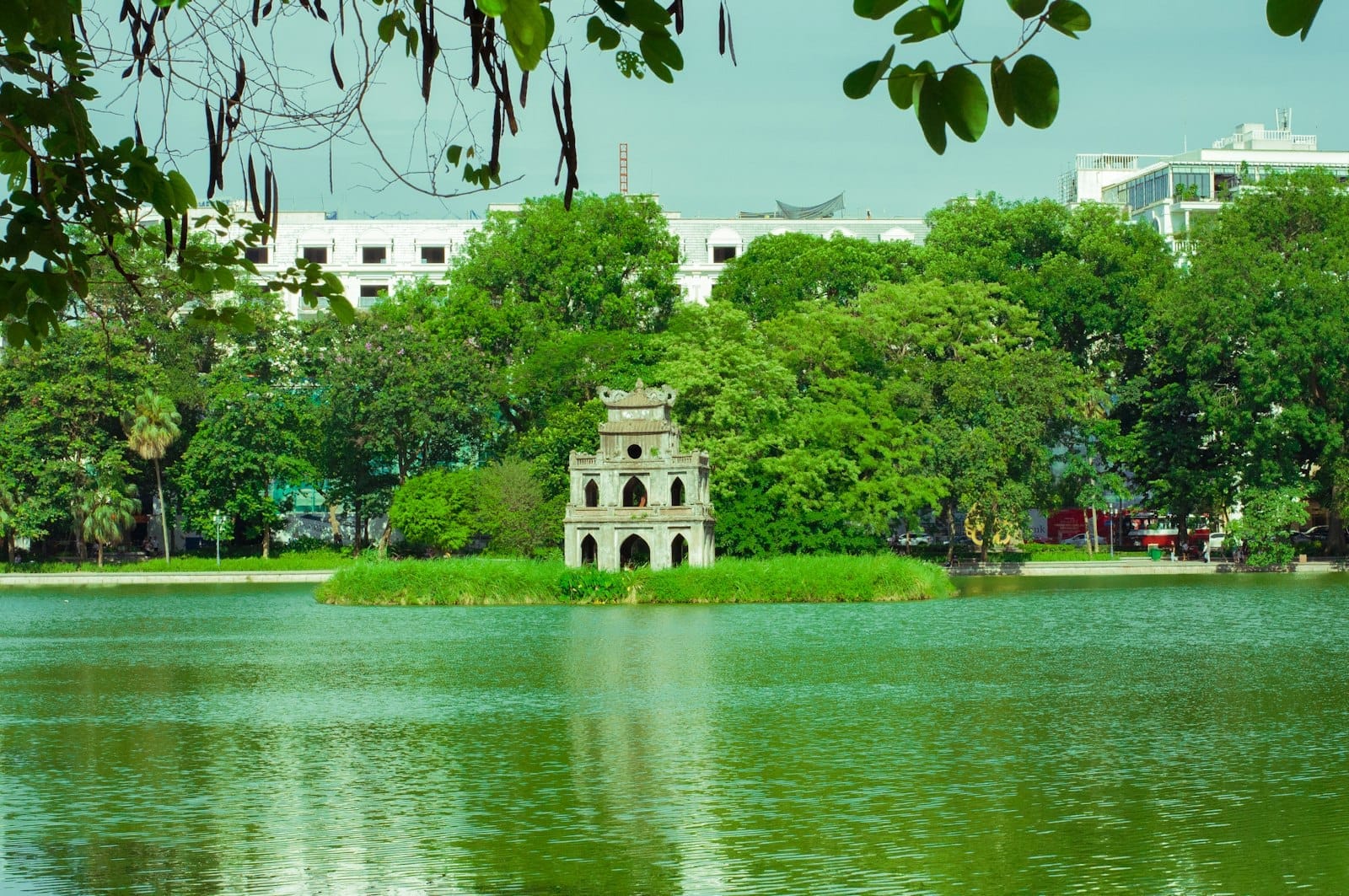
The geographic and spiritual center of the district is Hoan Kiem Lake, whose name translates as 'Lake of the Restored Sword', referencing the 15th-century legend of Emperor Le Loi returning a magical sword to a divine turtle. A walk around the full perimeter takes about 30 minutes at a relaxed pace and reveals a cross-section of Hanoi daily life impossible to replicate elsewhere.
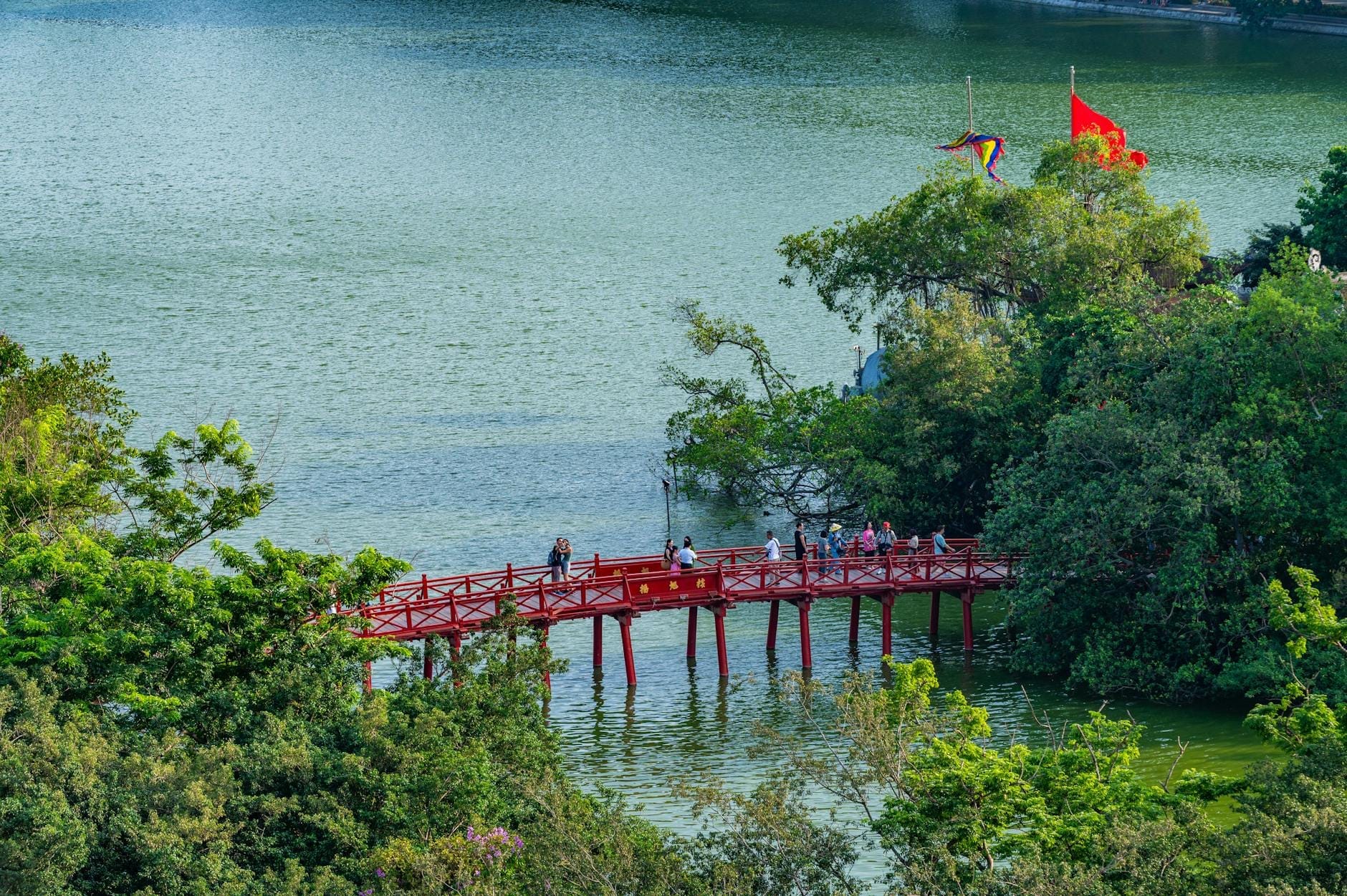
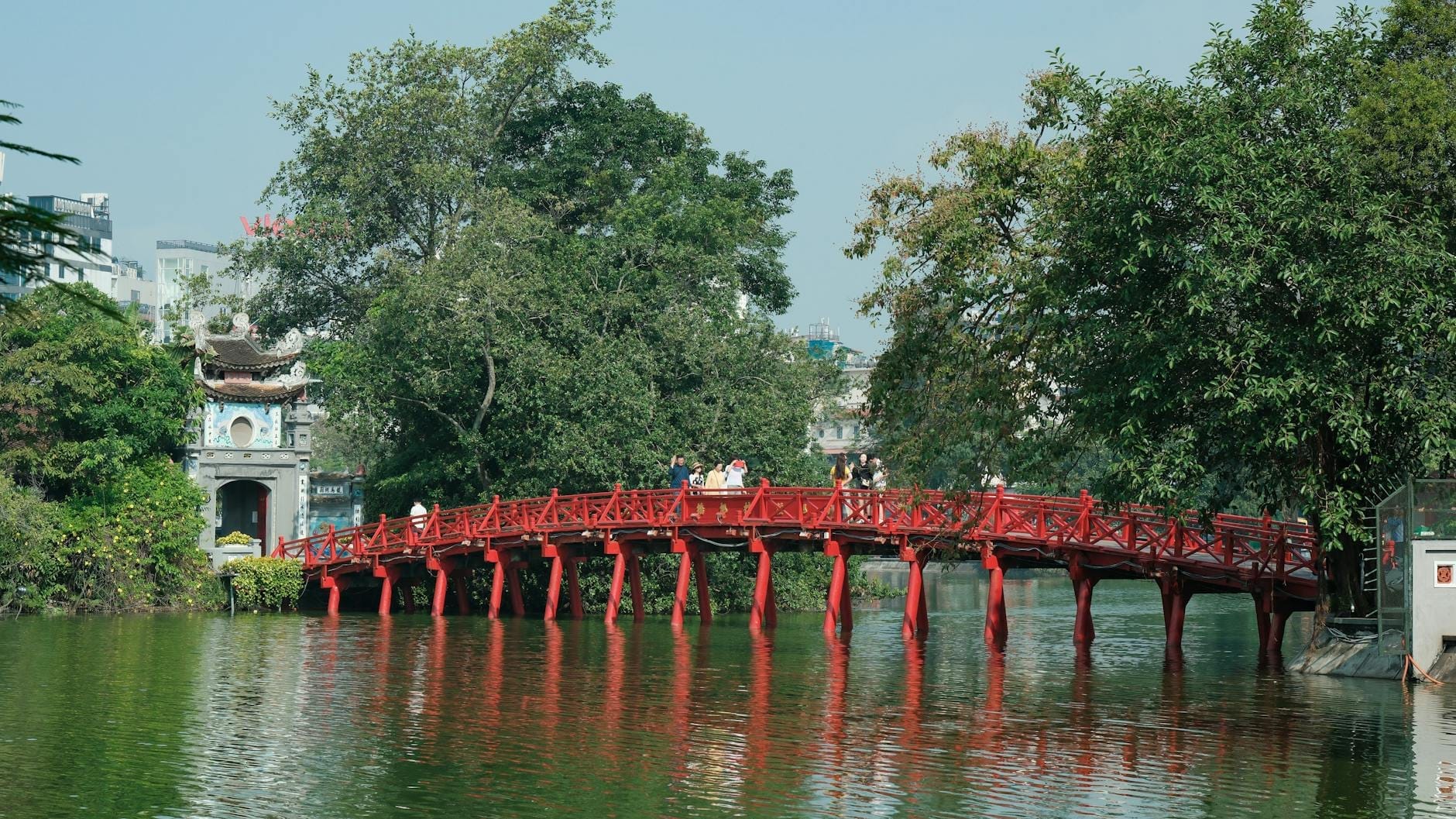
On a small island near the northern shore of the lake sits Ngoc Son Temple, reached by the red-painted Huc Bridge. The temple dates to the 18th century and houses a preserved specimen of the Yangtze softshell turtle, the species associated with the lake's legend. Entrance requires a small fee and modest dress. Early mornings see incense smoke drifting across the bridge; late afternoons are significantly more crowded.
A short walk north of the lake, the Old Quarter Night Market operates Thursday through Sunday evenings along Hang Dao and connecting streets. Quality varies widely and prices are negotiable, but the atmosphere is worth experiencing at least once. For more utilitarian shopping, Dong Xuan Market at the northern end of the Old Quarter is Hanoi's largest covered market and operates daily, selling everything from wholesale clothing to fresh produce.
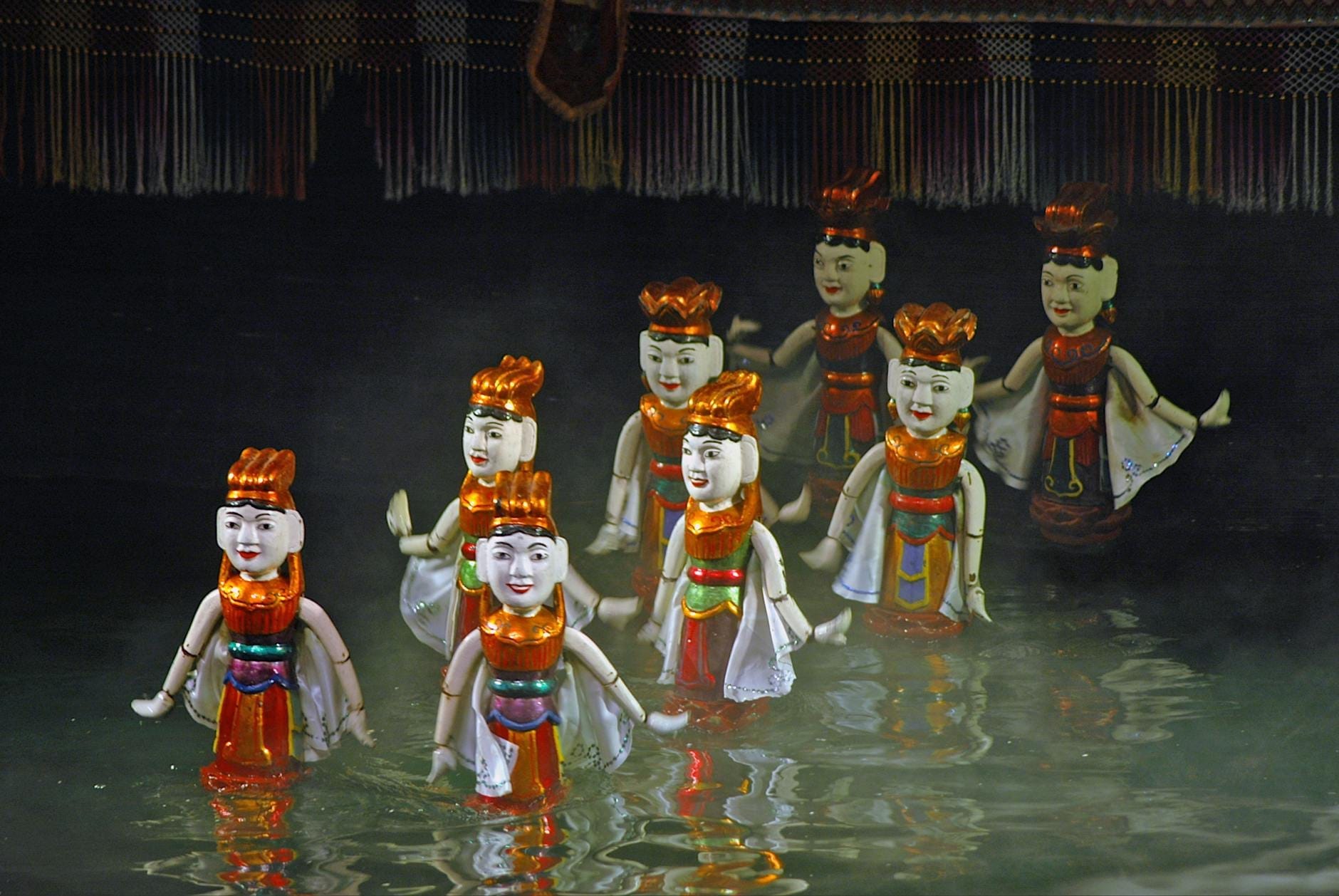
Just south of the lake, the Thang Long Water Puppet Theatre on Dinh Tien Hoang Street stages performances of the traditional art form that originated in the Red River Delta rice paddies over a thousand years ago. Shows run multiple times daily and last around 45 minutes. Booking ahead is strongly advised, especially between October and April.
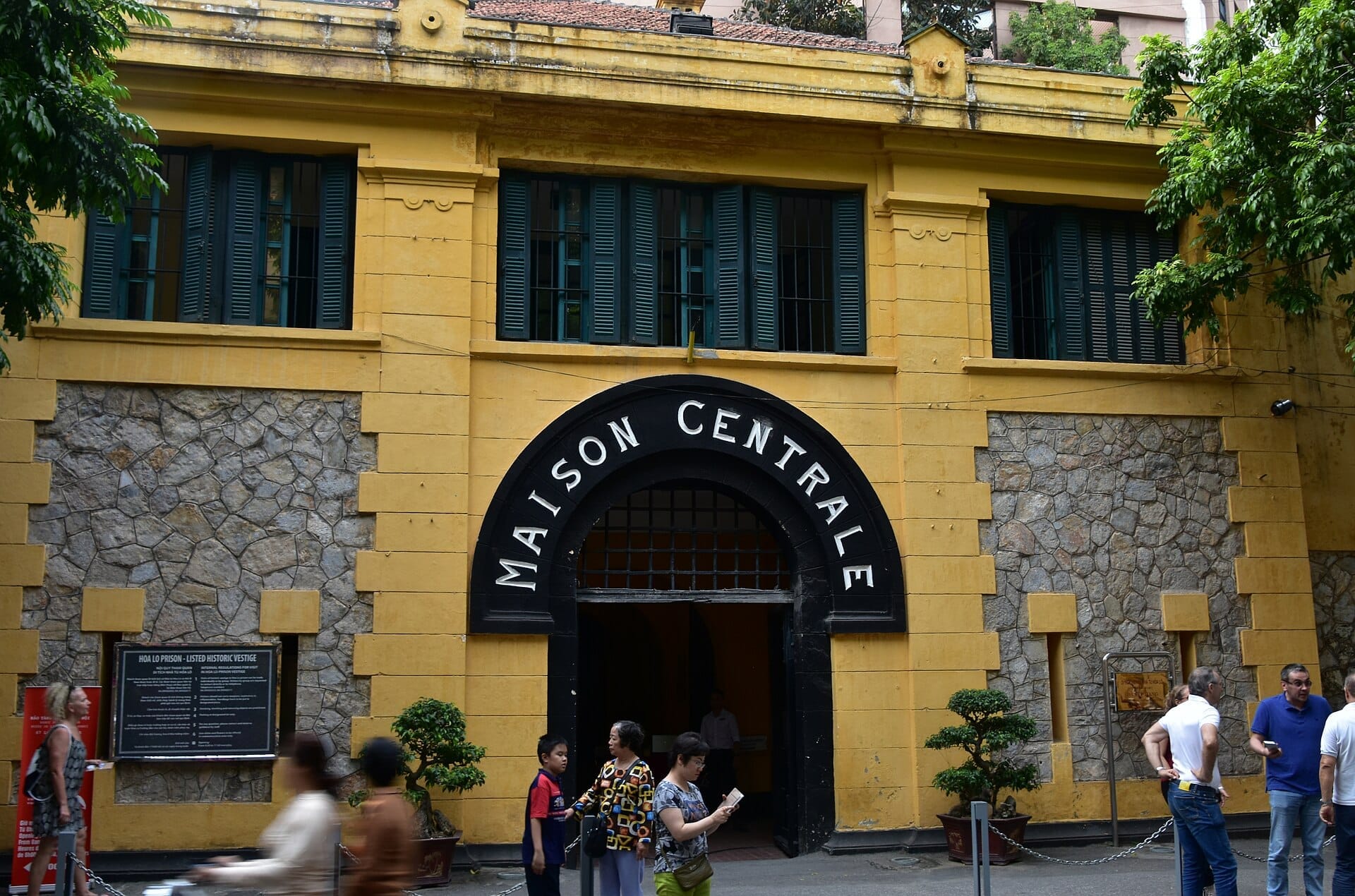
History-focused visitors should note that Hoa Lo Prison, known grimly to American veterans as the 'Hanoi Hilton', sits just west of the district's edge on Hoa Lo Street. The museum inside covers both the French colonial use of the prison and the Vietnam War period, and it is one of the more thought-provoking sites in the city. The museum's presentation has a clear perspective, which is worth keeping in mind as you move through it.
Ngoc Son Temple: accessible via the Huc Bridge, best early morning
Dong Xuan Market: wholesale and retail, daily from around 6am
Old Quarter Night Market: Thursday to Sunday, pedestrian-only streets
Thang Long Water Puppet Theatre: traditional performances, multiple daily shows
St. Joseph's Cathedral: French Gothic church at the end of Nha Tho Street, atmospheric at dusk
Hoa Lo Prison Museum: essential for understanding 20th-century Vietnamese history
Train Street: the narrow lane near Hang Bong where trains pass at close range
One attraction that has generated considerable social media attention is Train Street, a residential lane so narrow that train carriages pass within arm's reach of the houses on either side. The experience is genuinely striking, though local authorities have periodically restricted café access to the area for safety reasons. Check current status before making a special trip.
ℹ️ Good to know
St. Joseph's Cathedral at the end of Nha Tho Street is free to enter during Mass times (typically early morning and late afternoon). The surrounding streets have some of the city's best independent cafés and are noticeably calmer than the Old Quarter lanes.
Eating & Drinking
Hoan Kiem is one of the best districts in Hanoi for eating across every price point. For the full street food picture, a dedicated exploration is worth doing — the Hanoi street food guide covers the city's specialties in detail. Within the district itself, the northern Old Quarter streets around Hang Chieu and Ta Hien are the densest concentration, while the streets immediately south of the lake offer a slightly more relaxed environment.
Breakfast in this district means pho, bun bo, or banh mi from street carts that set up before 6am and often sell out by 9am. The Vietnamese approach to breakfast is non-negotiable on timing: the best bowls of pho in Hoan Kiem are served from narrow doorways on streets like Bat Dan and Hang Trong, ladled from pots that have been simmering since before dawn. Show up late and you will find a closed shutter.
For lunch and dinner, the streets around Hang Be market offer the kind of local Vietnamese cooking that has almost no tourist markup: bun cha (grilled pork patties with noodles and fresh herbs), com binh dan (Vietnamese set-plate lunch), and che dessert shops serving layered sweet soups. Prices here are often a third of what you pay on the tourist strips of Ma May or Hang Bac.
The café culture in Hoan Kiem deserves specific mention. Vietnamese iced coffee (ca phe sua da) is the dominant drink, served in countless variations. The streets around Dinh Le, Nha Tho, and Tho Xuong have developed a concentration of independent coffee shops with serious espresso machines alongside the traditional filter-drip setups. Egg coffee (ca phe trung), a Hanoi specialty made with whipped egg yolk and condensed milk, originated in the city and several of its oldest purveyors are in this district.
Bar street Ta Hien, a short lane just north of the lake, is ground zero for backpacker drinking culture in Hanoi. Cheap beer (bia hoi, fresh-brewed beer served from kegs at street-side plastic stools) is available here for prices that remain genuinely low. It is social, unpretentious, and chaotic in equal measure. For something quieter, the craft beer bars along Luong Ngoc Quyen offer imported and local craft options at mid-range prices in a slightly less frenetic atmosphere.
⚠️ What to skip
Be cautious with restaurants directly facing the lake on Dinh Tien Hoang Street. Many charge significantly above average for mediocre food based purely on location. Walk one street back for better value in almost every category.
Getting There & Around
Hoan Kiem is the most accessible district in Hanoi for visitors. From Noi Bai International Airport (HAN), located approximately 45 km north of the city center, most travelers arrive by taxi or Grab (Vietnam's dominant ride-hailing app). The journey takes 40 to 60 minutes depending on traffic and typically costs significantly less via Grab than through unmetered taxis. City buses from the airport also serve the Old Quarter area at a fraction of the cost. For a full breakdown of transit options across the city, the getting around Hanoi guide covers all modes in detail.
Within the district, walking is the most practical and rewarding option. The Old Quarter streets are often too congested for vehicles to move faster than a pedestrian, and many are one-way or functionally inaccessible by car. Hoan Kiem Lake's full perimeter is walkable in under 30 minutes. For longer trips to Ba Dinh or West Lake to the northwest, Grab motorbike (Grab Bike) is the fastest option during peak hours.
Cyclos (three-wheeled bicycle rickshaws) operate in the Old Quarter and are atmospheric but slow. Agree on a price before departing and expect the quoted price to be negotiable downward — there is no standard meter. They work well for a single sightseeing loop and poorly for point-to-point travel if you are in any hurry.
Hoan Kiem connects easily to most other Hanoi sights by foot or short ride. The Temple of Literature is about 3 km to the west and a 15-minute Grab trip. Ba Dinh Square and the Ho Chi Minh Mausoleum complex are around 4 km northwest, best reached by Grab or bus. Tay Ho (West Lake) is approximately 5 km north and requires either a Grab or a bus along Thanh Nien road.
Where to Stay
Hoan Kiem is the most popular accommodation base in Hanoi, and for good reason: it puts you within walking distance of the city's most concentrated set of attractions. The Hanoi accommodation guide covers options across all districts, but Hoan Kiem is the default choice for most first-time visitors.
The Old Quarter section of the district offers the most options at the widest range of prices, from backpacker hostels on Hang Bac to polished boutique hotels on Hang Be and Hang Gai. These streets are central but can be extremely noisy until late: traffic, motorbikes, and music from nearby bars carry easily. If you are a light sleeper, request an interior room or choose a hotel on a side alley rather than a main commercial street.
For a quieter stay within the district, the streets south of the lake between Hang Khay and Trang Thi offer larger hotels and serviced apartments with better soundproofing and easier vehicle access. These locations sacrifice a little of the Old Quarter atmosphere but gain significantly in comfort and in proximity to the French Quarter's wider pavements and calmer streets. Business travelers and families often prefer this southern end of the district.
The sweet spot for most travelers is the eastern Old Quarter, in the streets around Ma May, Hang Buom, and Lo Su, which are close enough to the action to be convenient but set back enough from the main tourist strips to allow for reasonable sleep. Mid-range boutique hotels here tend to offer good value, and the surrounding streets have genuine local life mixed in with the tourist infrastructure.
Honest Assessment: Who Hoan Kiem Is For
Hoan Kiem is a remarkable place that earns its reputation, but it is also one of the most heavily touristed districts in Southeast Asia and it shows. The streets nearest the lake and in the Old Quarter core see extraordinary volumes of visitors, especially from October to April. Prices for accommodation, food, and services on the main tourist strips are calibrated for international visitors rather than local wallets.
That said, the district has a resilience to over-tourism that many comparable places lack. The residential streets are still genuinely residential. Morning markets on Hang Be and Cau Dong function for the people who live here. The lake is maintained as a public space rather than a ticketed attraction. Hoan Kiem works as a base for all types of travelers because it is genuinely central, genuinely walkable, and has enough layers that repeat visitors keep finding new corners.
If you are planning day trips to Ninh Binh or longer excursions to Ha Long Bay, Hoan Kiem's central location makes it the most logical base: the main bus terminals and tour pickup points are clustered in or adjacent to the district. The Hanoi itinerary guide uses Hoan Kiem as its starting point for exactly this reason.
TL;DR
Hoan Kiem is Hanoi's most central district, combining the Old Quarter's historic streets with the iconic lake, making it the natural base for first-time visitors.
The district is genuinely walkable: most major attractions in central Hanoi are within 20 minutes on foot from Hoan Kiem Lake.
Noise and tourist pricing are real drawbacks, especially on the main Old Quarter streets — choose accommodation on quieter side lanes and eat one street back from the lake for better value.
The district rewards early risers: the best street food, the lake at its most peaceful, and the most authentic local life all happen before 8am.
Best suited to: first-time Hanoi visitors, travelers using the city as a base for day trips, food-focused travelers, and anyone who wants to be within walking distance of the widest concentration of historical and cultural sites.
Hanoi's climate is more complex than most Southeast Asian cities, with four distinct seasons that genuinely change the experience. This guide breaks down the weather, crowds, and what to expect each month so you can plan a trip that matches your priorities.
Hanoi is an exceptional base for exploring northern Vietnam. Within a few hours you can reach UNESCO World Heritage sites, ancient capitals, sacred pilgrimage caves, and centuries-old craft villages. This guide covers the best day trips from Hanoi, with honest advice on what to prioritize.
Hanoi's streets are chaotic, fast-moving, and genuinely fun to navigate once you understand the rules. This guide breaks down every transport option — from airport transfers to Old Quarter cyclos — with honest pricing, practical advice, and clear recommendations for different budgets and itineraries.
Ha Long Bay is the most iconic day trip and overnight excursion from Hanoi, but the sheer number of cruise options makes planning overwhelming. This guide cuts through the noise with practical advice on getting there, choosing the right cruise tier, what to budget, and when to go.
From the colonial lanes of the Old Quarter to the solemn monuments of Ba Dinh, Hanoi rewards travelers who plan carefully. This itinerary guide breaks down exactly how to spend 2, 3, or 5 days in the city, covering the essential sights, underrated neighborhoods, and the day trips worth taking.
The Old Quarter is the beating heart of Hanoi, a dense grid of streets dating to the 14th century where silk sellers, pho vendors, and ancient temples coexist with craft workshops and rooftop bars. This guide gives you the practical depth to explore it properly.
Ninh Bình is the most rewarding escape from Hanoi for travelers who want karst scenery, ancient history, and boat rides through rice paddies without flying anywhere. This guide covers transport options, the best sites to prioritize, where to stay overnight, and honest advice on how long you actually need.
Hanoi rewards travelers who go beyond the obvious. This guide covers the city's top experiences across history, food, culture, and day trips — with honest assessments, practical details, and local context that most guides skip.
Hanoi's food scene is one of the most distinctive in Southeast Asia, built on centuries of culinary tradition and a firm belief that the best meals come from small, specialized stalls. This guide breaks down where to eat in Hanoi by neighborhood, dish type, and budget so you spend less time guessing and more time eating.
Choosing where to stay in Hanoi shapes your entire trip. This guide breaks down every major neighborhood by character, convenience, and cost, so you can book with confidence rather than luck.