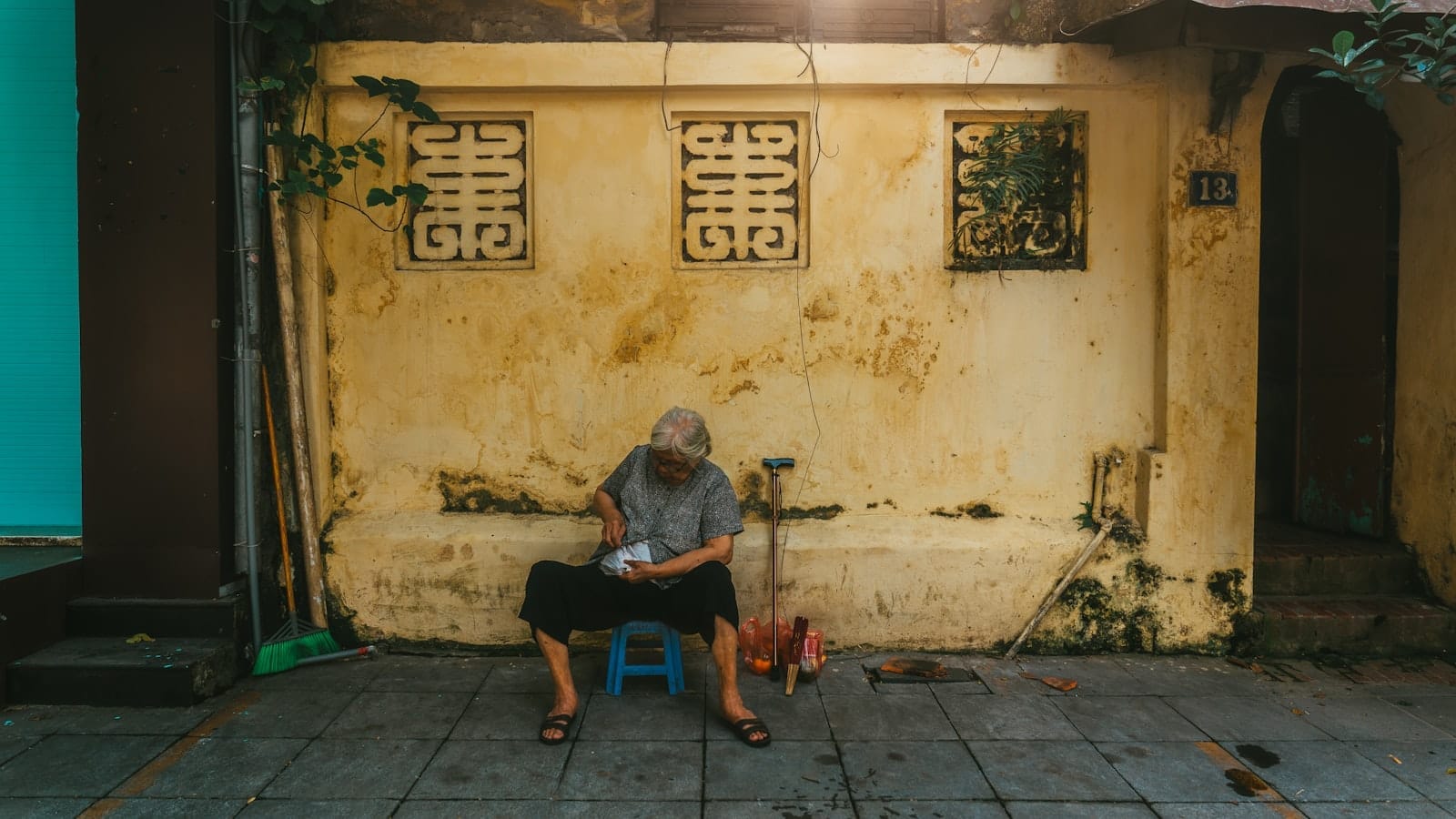
Hanoi's French Quarter occupies the southern fringe of the city center, where wide tree-lined boulevards, ochre-washed facades, and grand institutional buildings tell the story of a century of French colonial rule. It sits between the frenetic energy of the Old Quarter to the north and the political heart of Ba Dinh to the west, offering a quieter, more ordered counterpoint to both. For travelers who want proximity to the city's top museums and a calmer street experience, this is one of Hanoi's most rewarding areas to walk.
The French Quarter is where Hanoi slows down and straightens up. Broad avenues replace the Old Quarter's labyrinthine lanes, colonial-era buildings house world-class museums and the city's grandest hotel, and the streets feel planned rather than organic. It is not a neighborhood that performs for tourists so much as one that rewards the traveler who simply walks.
Orientation
The French Quarter sits in the Hoan Kiem district, directly south and southeast of Hoan Kiem Lake. Its rough boundaries run from the lake's southern shore down to Tran Hung Dao Street in the south, and from Pho Hue Street in the east across to Dinh Tien Hoang and the lake's eastern edge in the west. The streets here follow a grid that would feel almost European if not for the mopeds and tropical heat.
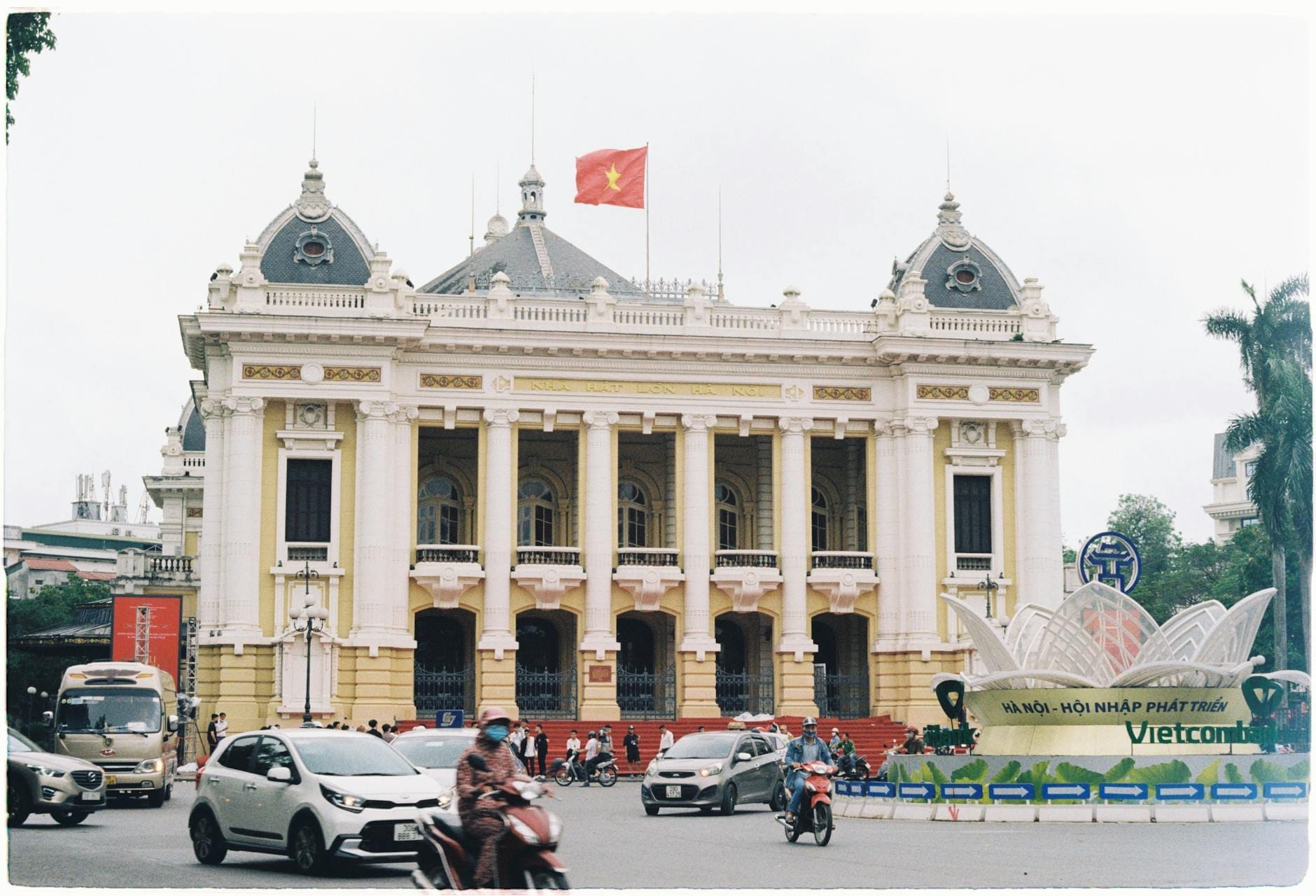
The neighborhood's axis is Trang Tien Street, which runs east-west from the lake toward the Hanoi Opera House. This single boulevard defines the quarter's character: wide, lined with mature trees, and anchored at its eastern end by one of Southeast Asia's most elegant pieces of Beaux-Arts architecture. Ngo Quyen Street runs parallel and connects the Opera House to the Sofitel Legend Metropole, Hanoi's most storied hotel.
To the north, the French Quarter bleeds into the Old Quarter, and the transition is immediate and striking: cross Hang Bai Street heading north and the orderly colonial grid dissolves into a tangle of narrow trading streets. To the west, the neighborhood connects to the Hoan Kiem Lake district, while further west still lies Ba Dinh, Hanoi's political and administrative heart.
Character & Atmosphere
Mornings in the French Quarter begin quietly. The city-government buildings and embassies that line streets like Ngo Quyen and Ly Thuong Kiet don't generate the dawn foot traffic of a market district, and the relative width of the boulevards means the area never feels choked in the way that parts of the Old Quarter do. Residents do their morning exercises in the small parks and squares, but the streets are calm enough to hear birdsong in the larger trees.
By midday, the quarter takes on the role of a business district. Office workers fill the cafes along Trang Tien and around the Opera House plaza. The architecture does its best work in this light: the pale yellow facades of colonial-era buildings glow against the deep green of the tamarind trees, and the Opera House's white stone looks appropriately theatrical. The heat by early afternoon is significant, and the shade of the tree canopy on streets like Ngo Quyen becomes genuinely valued rather than merely scenic.
After dark, the French Quarter transforms into one of Hanoi's most pleasant evening districts. The Opera House is illuminated and draws well-dressed crowds on performance nights. The restaurants and bars around Ngo Quyen and the streets near the Metropole hotel fill with a mix of expats, business travelers, and Vietnamese diners who want a quieter setting than the Old Quarter's beer street scene. It is not a party neighborhood, and anyone looking for late-night noise should head elsewhere.
💡 Local tip
Walk Trang Tien Street in the early evening when the heat eases and the Opera House is lit. The boulevard is at its most atmospheric between 6pm and 8pm, and you can time it to coincide with a pre-show drink at the Metropole's bamboo bar.
What to See & Do
The Hanoi Opera House is the neighborhood's landmark and the single best piece of French colonial architecture in the city. Completed in 1911 and modeled loosely on the Paris Opera Garnier, it still functions as a working venue hosting everything from classical concerts to traditional Vietnamese performance. Even if you don't attend a show, the exterior plaza is worth visiting at night, and guided tours of the interior are sometimes available.
A short walk south along Trang Tien brings you to the Vietnam History Museum and, adjacent to it, the Vietnam Revolution Museum, both housed in distinctive colonial-era buildings. Further south, on Nguyen Thai Hoc Street, the Vietnam Fine Arts Museum occupies a French-built complex that is architecturally interesting in its own right. Its collection covers lacquerware, silk painting, and sculpture from prehistoric times through to contemporary Vietnamese artists.
The Hoa Lo Prison, known to American veterans as the 'Hanoi Hilton,' sits on Hoa Lo Street on the western edge of the French Quarter. Built by the French colonial administration in the late 19th century to house Vietnamese political prisoners, it later held American prisoners of war during the Vietnam War. The museum presents both chapters of its history, and it is one of the most thought-provoking sites in the city.
Hanoi Opera House: attend a performance or visit the exterior plaza after dark
Vietnam Fine Arts Museum: three floors of Vietnamese art across multiple media
Hoa Lo Prison Museum: colonial-era prison with layered, complex history
Trang Tien Street: the main boulevard for architecture and window-shopping
Hoan Kiem Lake southern shore: a short walk north, best at dawn or early evening
ℹ️ Good to know
Museum hours in Hanoi generally run from around 8am to 5pm, with many closing for a midday break between 11:30am and 1:30pm. Check current hours before visiting, as schedules shift on public holidays.
Eating & Drinking
The French Quarter's food scene is more restaurant-forward than street-food-heavy, which reflects its demographics: government workers, embassy staff, hotel guests, and Vietnamese middle-class diners who prefer a table. That said, the Hanoi dining scene spills into this neighborhood in interesting ways, and you don't have to walk far to find both ends of the price spectrum.
Around the Opera House and along Ngo Quyen Street, the restaurants skew toward upscale Vietnamese and international cuisine. The Sofitel Metropole's Spices Garden restaurant serves refined Vietnamese dishes in a courtyard setting, and is worth the splurge for a special dinner. Several French-Vietnamese fusion spots have taken up residence nearby, a nod to the neighborhood's colonial legacy, and while some cater aggressively to tour groups, others maintain genuine kitchen standards.
Walk a few blocks south toward Tran Hung Dao and the price points drop considerably. Pho shops, banh mi stands, and bun cha spots line the side streets, and the quality is high precisely because the clientele is local. Mornings in this part of the quarter mean bowls of pho or bun bo Nam Bo at pavement stalls, eaten standing or on low plastic stools. Iced ca phe den (black iced coffee) is available from almost any street-corner vendor and costs a fraction of what a cafe charges.
For drinks, the area around the Metropole hotel has Hanoi's most polished bar scene: quiet, air-conditioned, and priced accordingly. The bamboo bar at the Metropole is a landmark in its own right and worth one drink for the atmosphere. Craft beer has also arrived in the French Quarter, with several small bars on the streets south of Trang Tien offering Vietnamese microbrews at mid-range prices.
Getting There & Around
The French Quarter is walkable from both Hoan Kiem Lake and the southern fringe of the Old Quarter. From the lake's Dinh Tien Hoang Street, it is a five-minute walk south along Trang Tien to the Opera House. From the heart of the Old Quarter, allow ten to fifteen minutes on foot. A full guide to getting around Hanoi covers city-wide transit, but within the French Quarter itself, walking is almost always the right choice.
Grab (the dominant ride-hailing app in Vietnam) works reliably throughout the neighborhood and is the easiest way to arrive from Noi Bai International Airport, which is approximately 45 kilometers north of the city center. A metered taxi or pre-booked Grab car from the airport takes 45 to 60 minutes depending on traffic. Bus routes also connect the airport to central Hanoi at a fraction of the cost, with stops near the Opera House area, though they take longer and require a luggage transfer.
Within the French Quarter, the streets are wide enough for comfortable walking even during peak hours, and the grid layout makes navigation straightforward. Trang Tien Street runs east-west, Ngo Quyen and Ly Thuong Kiet run roughly north-south. Most of the key sites sit within a fifteen-minute walk of each other. Cyclos (cycle rickshaws) still operate in the area and are a slow, pleasant way to cover the main boulevard, though always agree on a price before departing.
⚠️ What to skip
Crossing roads in Hanoi requires patience and a steady pace. The French Quarter's wider boulevards carry faster-moving traffic than the Old Quarter's lanes. Cross at designated points where possible, and move at a consistent speed so motorbike drivers can anticipate your path. Do not run or stop suddenly mid-crossing.
Where to Stay
The French Quarter is one of Hanoi's best areas to base yourself if you prioritize easy access to the city's major museums and a quieter nighttime environment. It suits business travelers, couples, and anyone who finds the Old Quarter's noise level difficult to sleep through. For a broader comparison of the city's accommodation zones, the Hanoi accommodation guide covers all the main options.
At the top end, the Sofitel Legend Metropole on Ngo Quyen Street is in a category of its own: a 1901 colonial-era property with a genuine history (Graham Greene wrote part of 'The Quiet American' in residence here) and the most polished service in the city. It is expensive by Hanoi standards, but the rates are modest compared to equivalent luxury properties in other Asian capitals.
Below the luxury tier, the streets around Trang Tien and southward toward Tran Hung Dao have a solid spread of boutique hotels and mid-range properties in restored colonial buildings. These tend to be significantly quieter than Old Quarter guesthouses, with fewer tour-group bookings and more reliable room insulation. Budget travelers will find better value in the Old Quarter, but the French Quarter mid-range bracket offers a genuine step up in space and quiet for a modest premium.
Honest Assessment: Who This Neighborhood Is For
The French Quarter is not the right base for travelers whose priority is cheap street food at every corner, all-night bar energy, or maximum proximity to the Old Quarter's trading-street spectacle. It also lacks the political gravitas of Ba Dinh, where the mausoleum and major monuments cluster. What it does offer is a coherent, walkable city district with genuine architectural character, Hanoi's best museums within easy reach, and an evening atmosphere that feels like a city living its own life rather than performing for visitors.
For first-time visitors trying to balance sightseeing efficiency with comfort, the French Quarter makes strong practical sense. The Hanoi itinerary guide pairs the French Quarter with Ba Dinh for a full day of monuments and museums, and it sits close enough to Hoan Kiem Lake to include the lake's evening circuit without a taxi. Travelers doing day trips from Hanoi to Ha Long Bay or Ninh Binh will find the logistics easier from this part of the city, with tour pick-up points nearby and the area quiet enough for an early departure.
TL;DR
Best for: museum-goers, couples, business travelers, and anyone who wants colonial architecture and a quieter base than the Old Quarter
Key sites: Hanoi Opera House, Hoa Lo Prison Museum, Vietnam Fine Arts Museum, the Sofitel Metropole
Food scene: skews toward sit-down restaurants and cafes, with local pho and banh mi available on side streets heading south
Getting around: walkable grid layout, easy Grab access, fifteen minutes on foot from Hoan Kiem Lake
Not ideal for: budget backpackers, travelers who want late-night street energy, or those focused primarily on Old Quarter trading-street culture
Hanoi's climate is more complex than most Southeast Asian cities, with four distinct seasons that genuinely change the experience. This guide breaks down the weather, crowds, and what to expect each month so you can plan a trip that matches your priorities.
Hanoi is an exceptional base for exploring northern Vietnam. Within a few hours you can reach UNESCO World Heritage sites, ancient capitals, sacred pilgrimage caves, and centuries-old craft villages. This guide covers the best day trips from Hanoi, with honest advice on what to prioritize.
Hanoi's streets are chaotic, fast-moving, and genuinely fun to navigate once you understand the rules. This guide breaks down every transport option — from airport transfers to Old Quarter cyclos — with honest pricing, practical advice, and clear recommendations for different budgets and itineraries.
Ha Long Bay is the most iconic day trip and overnight excursion from Hanoi, but the sheer number of cruise options makes planning overwhelming. This guide cuts through the noise with practical advice on getting there, choosing the right cruise tier, what to budget, and when to go.
From the colonial lanes of the Old Quarter to the solemn monuments of Ba Dinh, Hanoi rewards travelers who plan carefully. This itinerary guide breaks down exactly how to spend 2, 3, or 5 days in the city, covering the essential sights, underrated neighborhoods, and the day trips worth taking.
The Old Quarter is the beating heart of Hanoi, a dense grid of streets dating to the 14th century where silk sellers, pho vendors, and ancient temples coexist with craft workshops and rooftop bars. This guide gives you the practical depth to explore it properly.
Ninh Bình is the most rewarding escape from Hanoi for travelers who want karst scenery, ancient history, and boat rides through rice paddies without flying anywhere. This guide covers transport options, the best sites to prioritize, where to stay overnight, and honest advice on how long you actually need.
Hanoi rewards travelers who go beyond the obvious. This guide covers the city's top experiences across history, food, culture, and day trips — with honest assessments, practical details, and local context that most guides skip.
Hanoi's food scene is one of the most distinctive in Southeast Asia, built on centuries of culinary tradition and a firm belief that the best meals come from small, specialized stalls. This guide breaks down where to eat in Hanoi by neighborhood, dish type, and budget so you spend less time guessing and more time eating.
Choosing where to stay in Hanoi shapes your entire trip. This guide breaks down every major neighborhood by character, convenience, and cost, so you can book with confidence rather than luck.