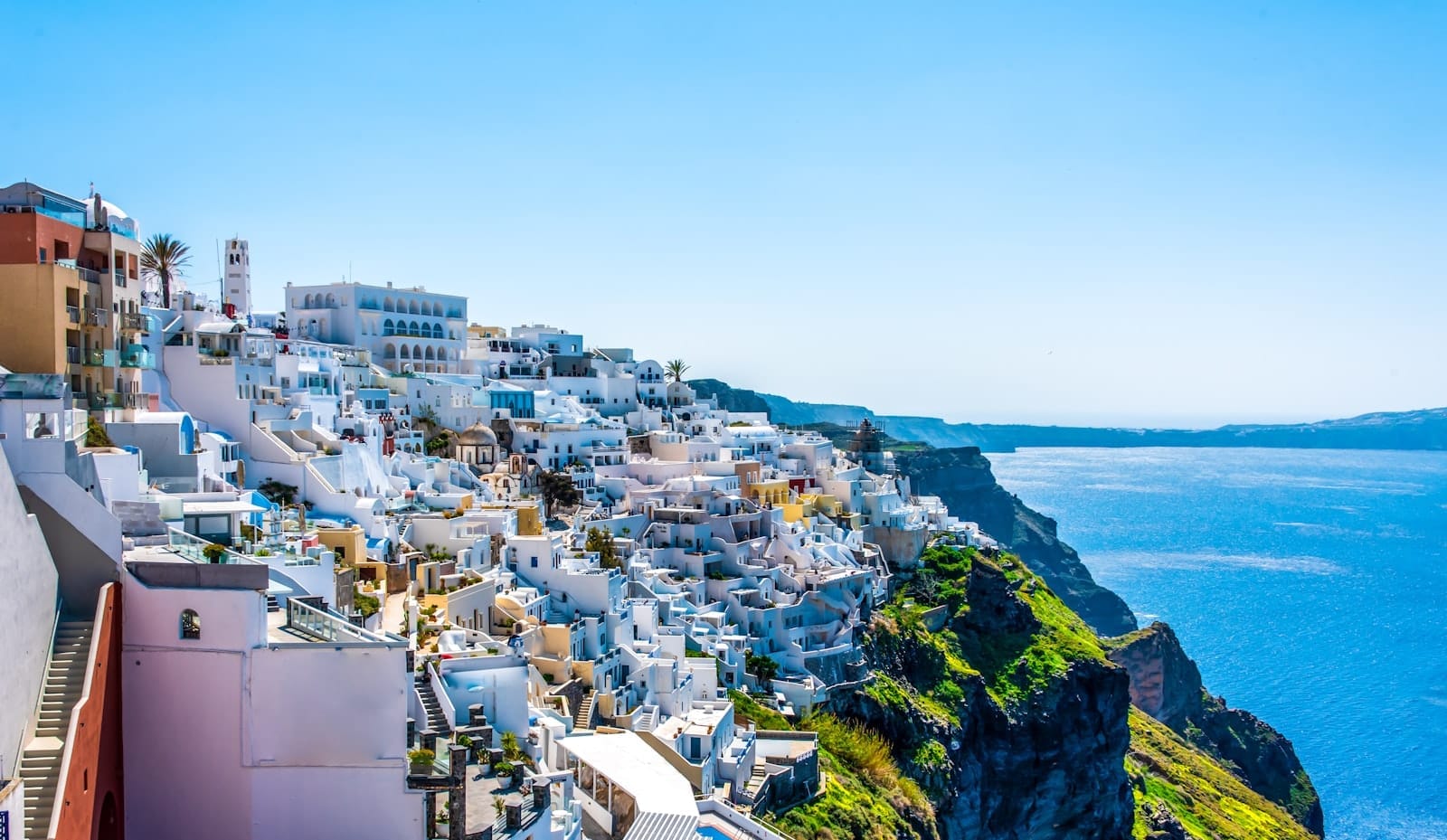
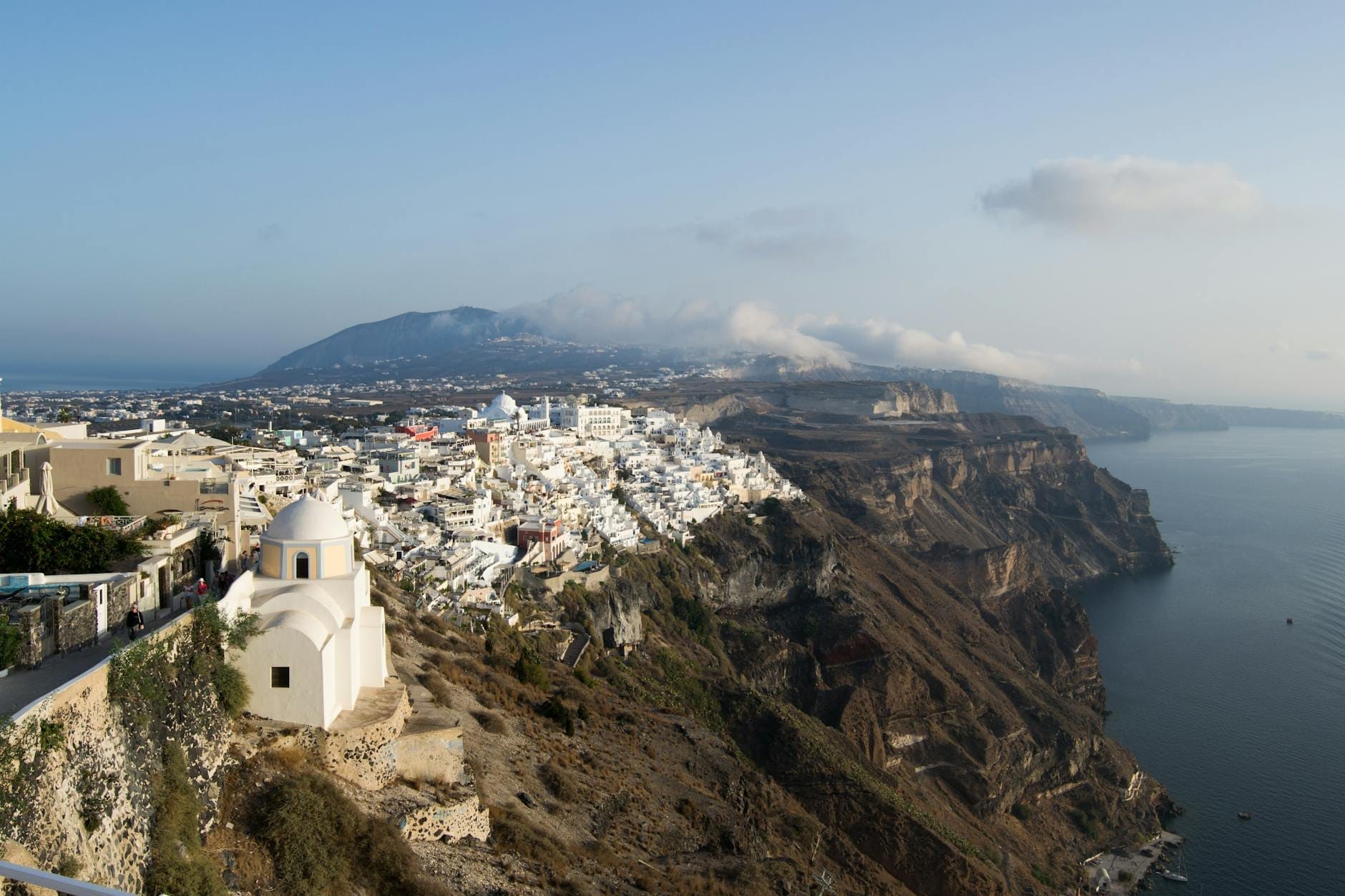
Fira is the capital of Santorini, perched on the western caldera rim at roughly 260 meters above sea level. It serves as the island's commercial and transport center, combining sweeping volcanic views with a dense concentration of accommodation, restaurants, museums, and shops. It is the most connected and logistically practical base on the island.
Fira sits at the edge of one of the most dramatic geological formations in the Mediterranean, a clifftop capital where whitewashed cubic buildings stack down toward the caldera and cruise ships dock hundreds of meters below. It is simultaneously Santorini's most practical address and its most visually arresting, the place where the island's daily life, transit connections, and tourist energy converge.
Orientation
Fira occupies the central-western edge of Santorini's main island (Thira), positioned directly above the caldera at an elevation of approximately 260 meters. To the north, Fira blends seamlessly into Firostefani within a ten-minute walk along the caldera path, and beyond that into Imerovigli. To the south, the town trails off toward the residential neighborhoods below the main strip. The caldera edge forms the western boundary; to the east, the terrain drops away toward the flat interior of the island and the road network connecting to the airport and beach villages.
The main pedestrian artery through Fira runs roughly north-south along the caldera rim, passing the Orthodox Metropolitan Cathedral, the Catholic cathedral, and the town's main commercial streets. Parallel to this is the busier vehicle road where the KTEL bus terminal is located, marking the eastern boundary of the tourist core. The cable car station sits at the southern edge of the caldera walkway, providing the main descent to the Old Port below.
Santorini's main airport (JTR) sits roughly 6 kilometers to the southeast, making Fira the closest major settlement to arrivals. The ferry port at Athinios is about 10 kilometers to the south by road, though it is significantly closer as the crow flies. Fira's position at the geographic and infrastructural center of the island means that virtually every destination — from Oia in the north to Perissa in the southeast — is reachable by bus from the town's central terminal.
Character & Atmosphere
Fira operates in distinct registers depending on the time of day. Early mornings, before nine o'clock, belong to locals: shop owners pulling up shutters, delivery vehicles navigating narrow lanes, and a handful of early walkers catching the caldera in low golden light. The volcanic rock glows amber at sunrise, and the stillness on the rim path at this hour is sharp enough to make the midday crowds feel like a different town entirely.
By mid-morning, the cruise passengers arrive. Santorini receives large volumes of day-trippers during peak season (June through August), and Fira absorbs much of this pressure. The central commercial streets fill quickly with souvenir shops, jewelry stores, and cafés competing loudly for attention. This is the most tourist-saturated stretch of Fira, and it is worth navigating deliberately: the main shopping lane can feel relentlessly commercial, but one or two streets back, the density drops considerably.
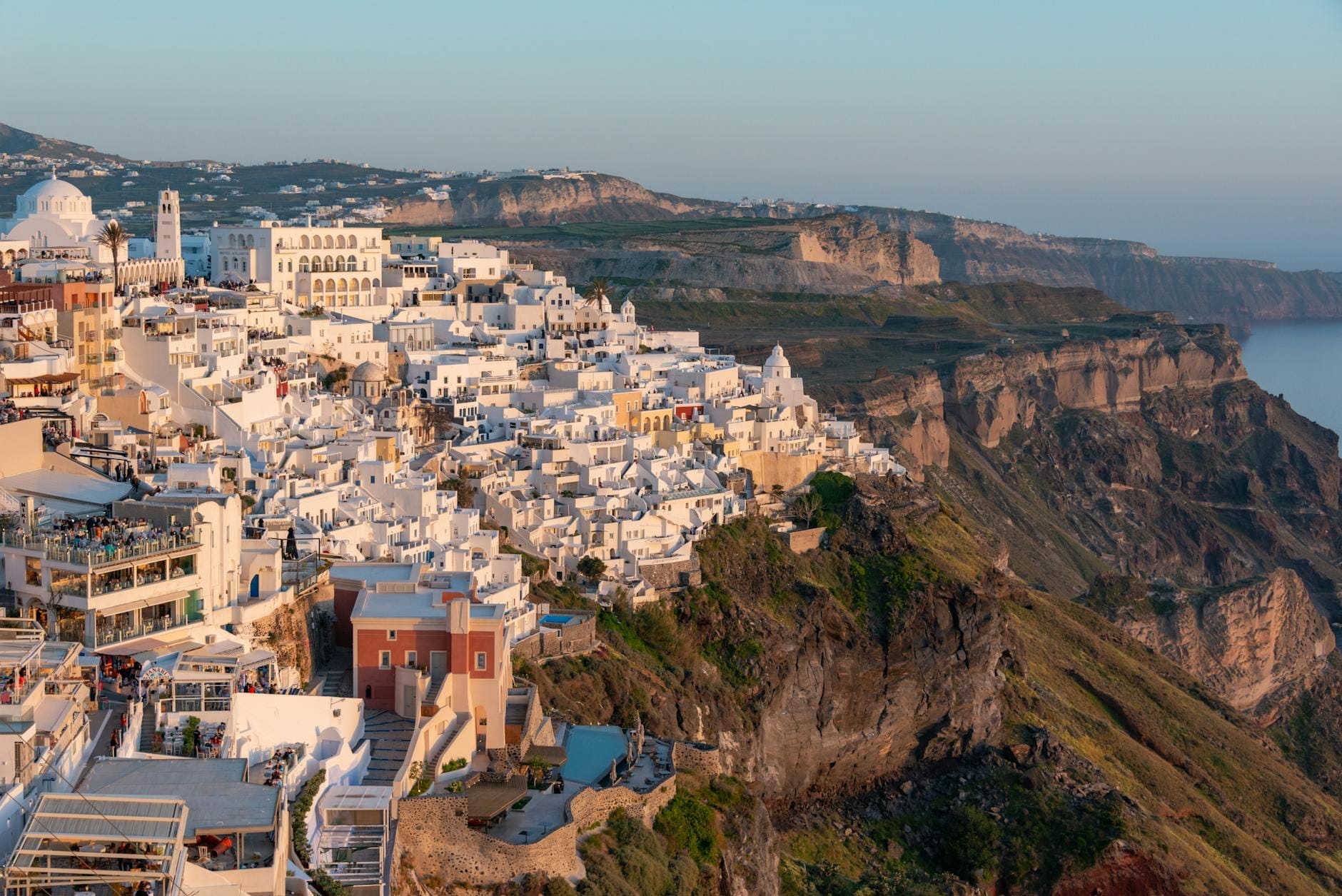
Afternoons in July and August are hot and crowded, with temperatures often around 30°C or higher and direct sun bouncing off white walls. The caldera-facing terraces fill with visitors photographing the view. By late afternoon the light softens and turns the whitewash a warm cream, which is when Fira looks most like its postcard version. The town genuinely comes alive after dark: restaurants fill up, bars open onto the caldera edge, and the pedestrian streets become a slow, sociable promenade that continues well past midnight in high season.
⚠️ What to skip
Fira is the most crowded settlement on Santorini during peak season. If you are visiting between July and mid-August, expect significant congestion on the main caldera walkway from around 10am to 6pm, particularly on days when multiple cruise ships are docked simultaneously. Early mornings and evenings are substantially more pleasant.
Outside of high season, particularly in April, May, September, and October, Fira finds a more balanced rhythm. The weather remains warm and clear, the caldera views are unchanged, and the town feels closer to a functioning Greek capital than a theme park. Restaurants are easier to book, accommodation prices drop, and the streets are genuinely walkable at any hour.
What to See & Do
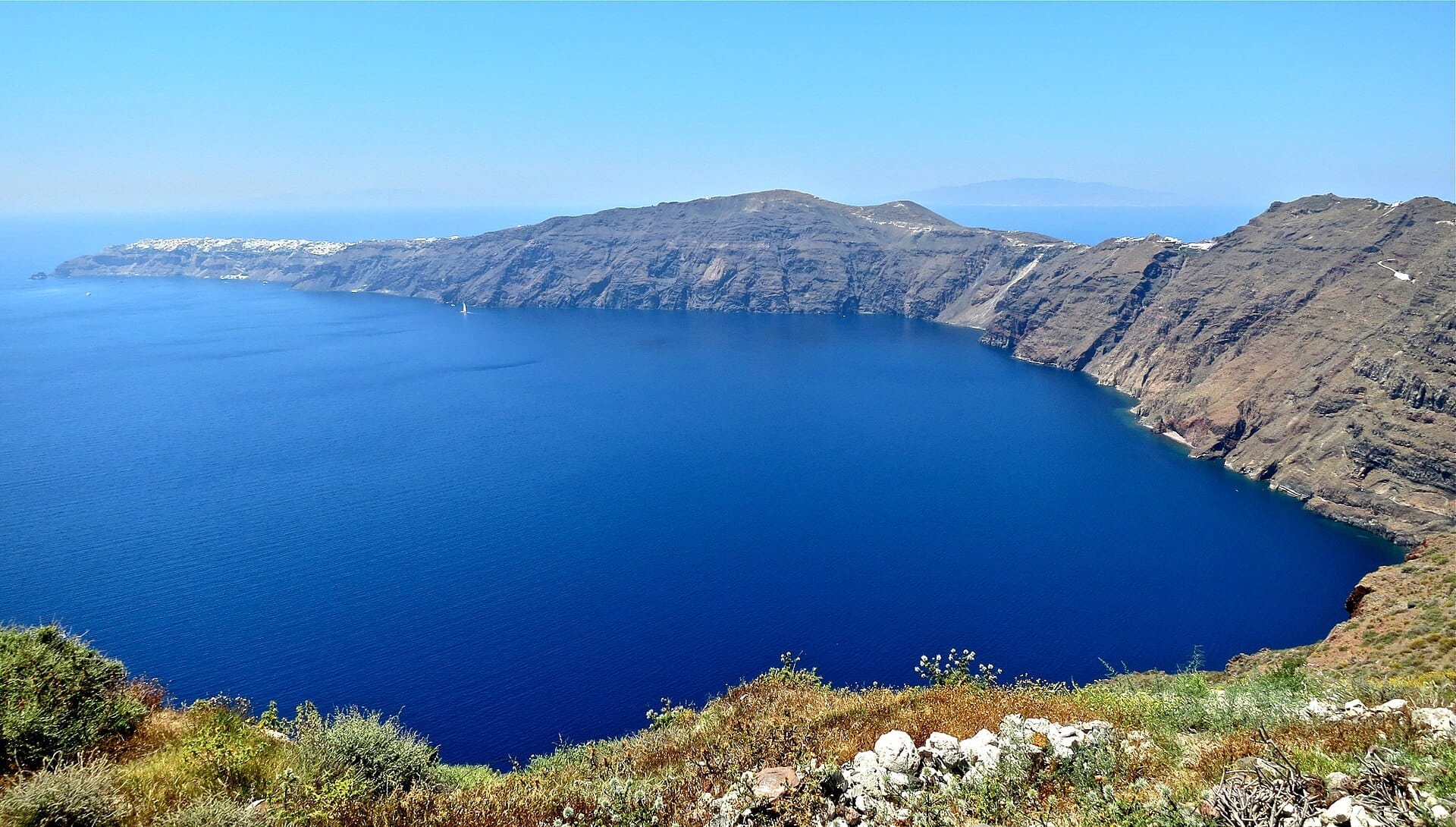
The caldera itself is the anchor attraction. The Santorini caldera is visible from dozens of points along Fira's western edge, and the rim path offers an uninterrupted panorama across the flooded volcanic crater to the islands of Nea Kameni and Palea Kameni. You do not need to find a specific viewpoint — simply walking the caldera-edge path between Fira and Firostefani provides continuous, open views.
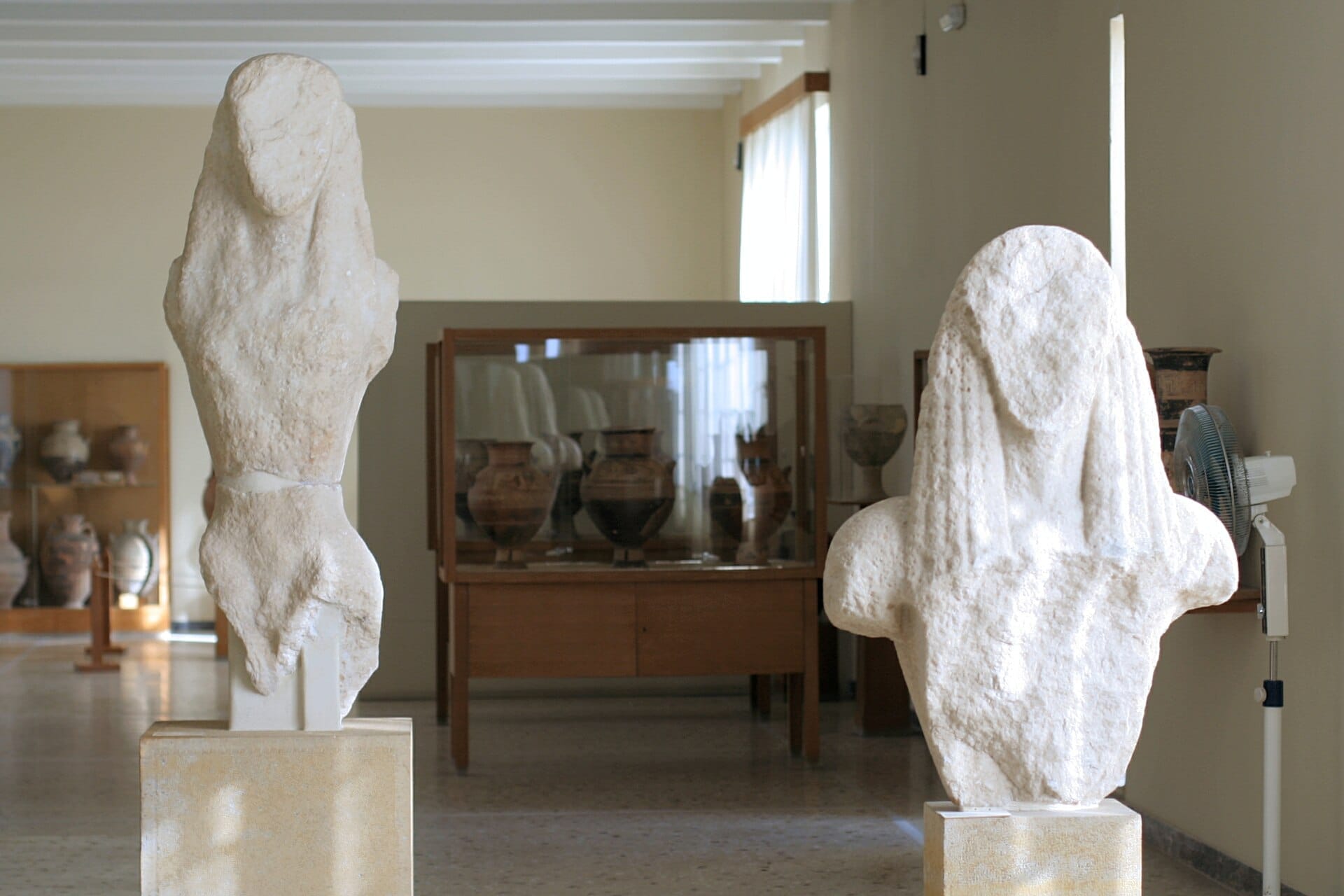
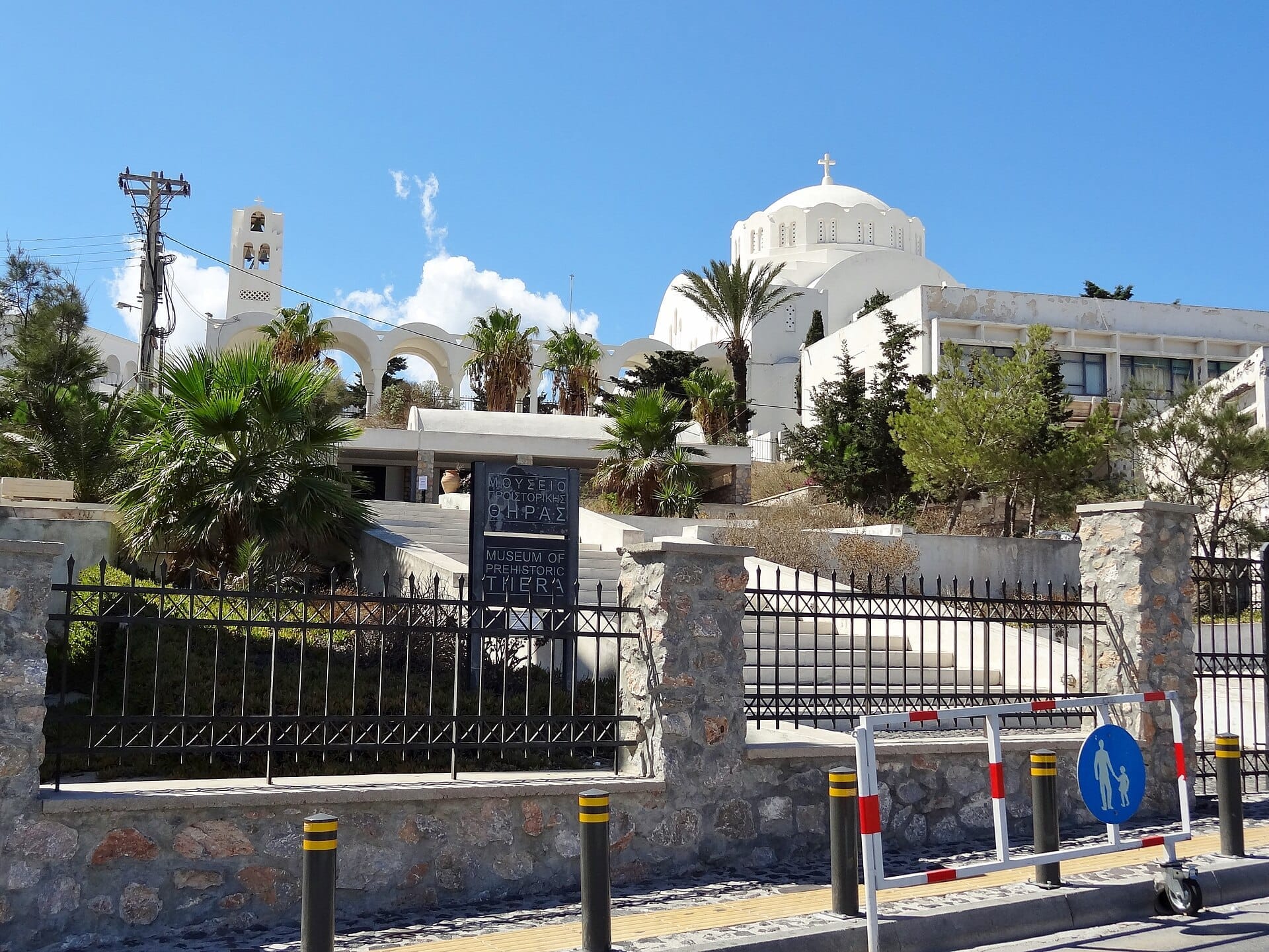
Fira contains two of the island's more serious museums. The Museum of Prehistoric Thera holds artifacts from the Bronze Age settlement at Akrotiri, including some of the most striking pre-eruption objects found anywhere in the Aegean. A short walk away, the Archaeological Museum of Thera covers the island's history from archaic through Roman periods. Neither museum is enormous, but both are genuinely worth an hour of your time, particularly if you plan to visit the ancient site at Akrotiri.
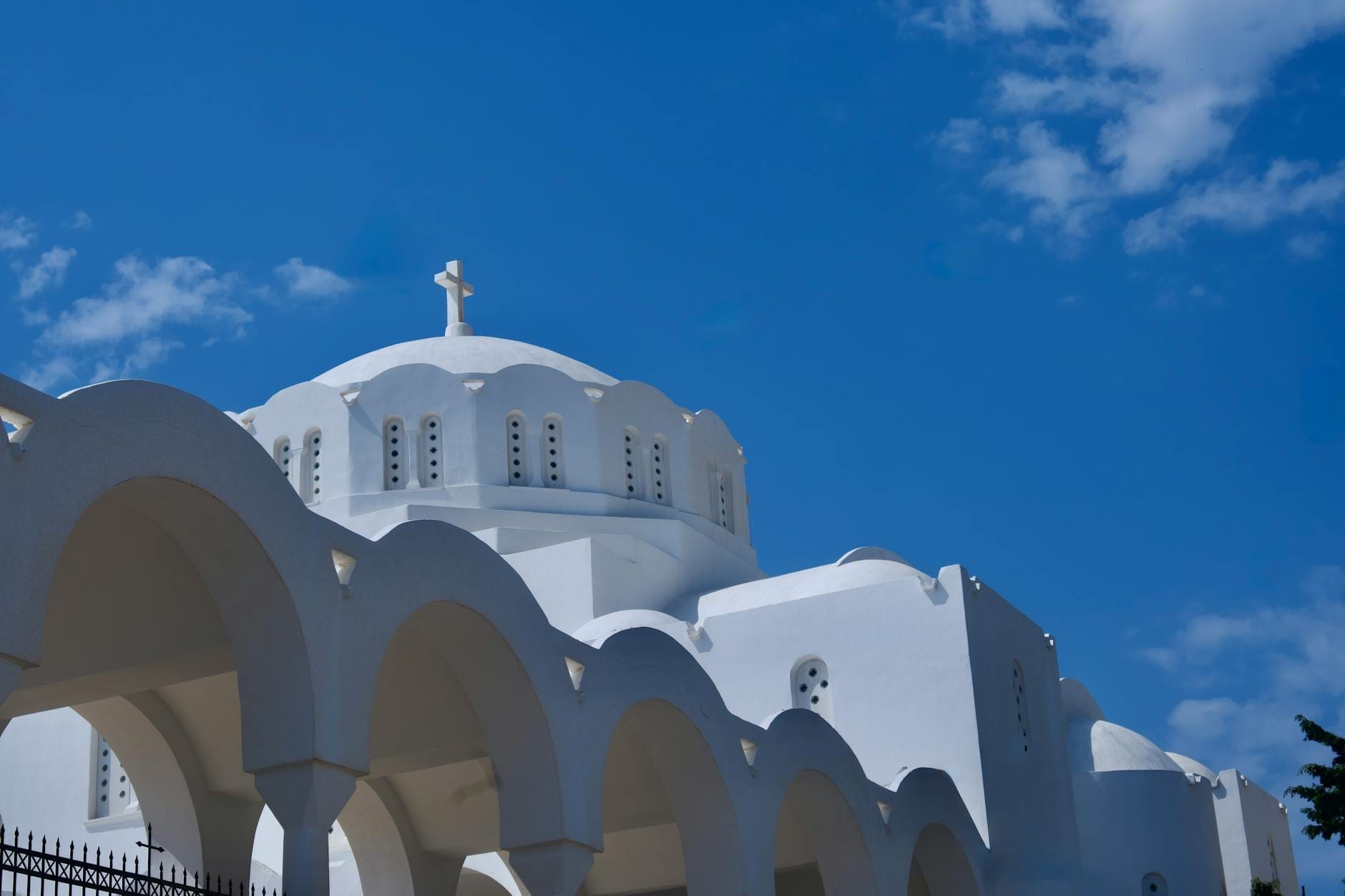
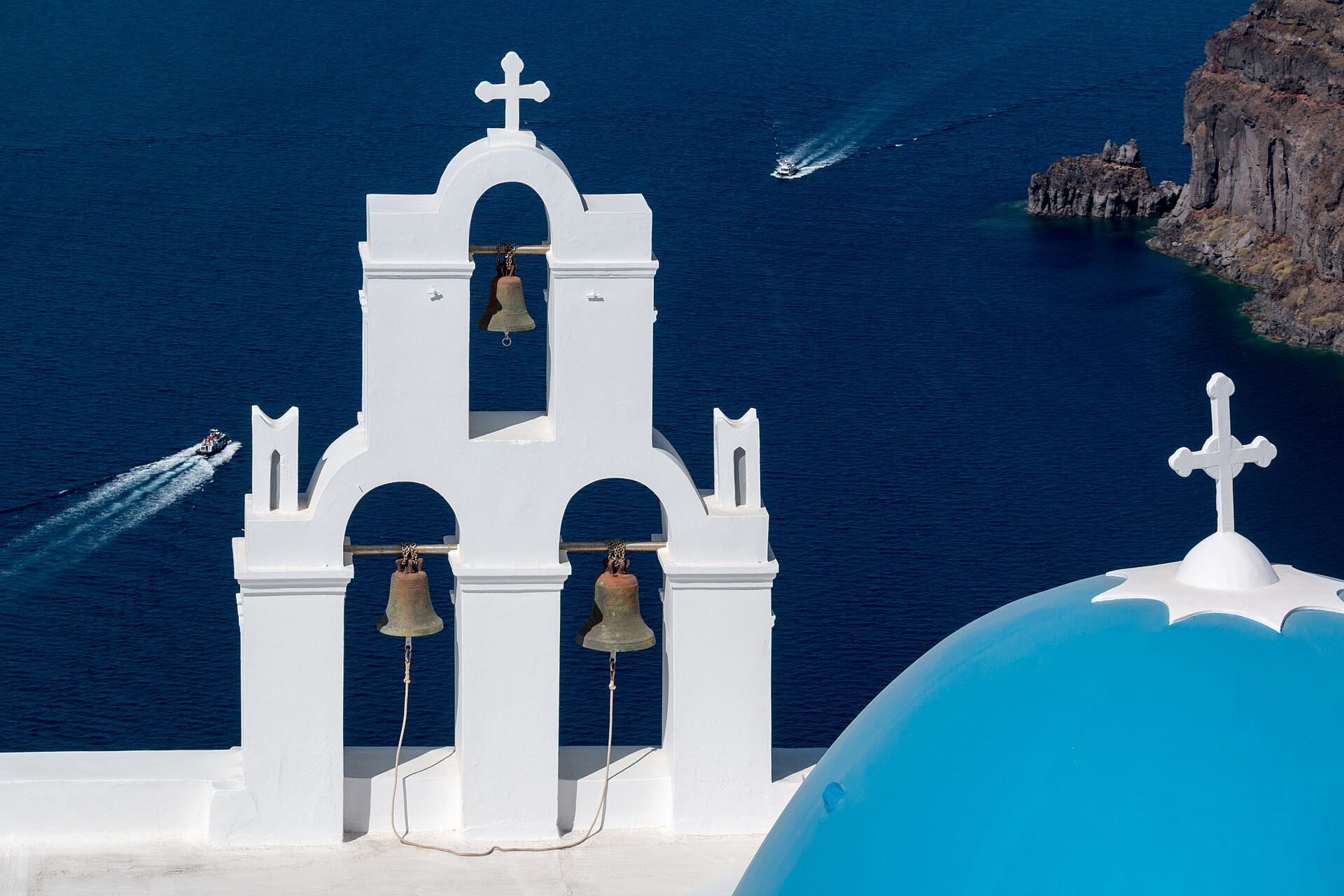
The Three Bells of Fira, the white-washed Catholic church with its stacked bell towers, is the most-photographed structure in town and one of the most recognizable images of Santorini. It sits directly on the caldera rim just north of the main square. The Orthodox Metropolitan Cathedral, with its salmon-pink facade and blue dome, anchors the central commercial area and remains an active place of worship.
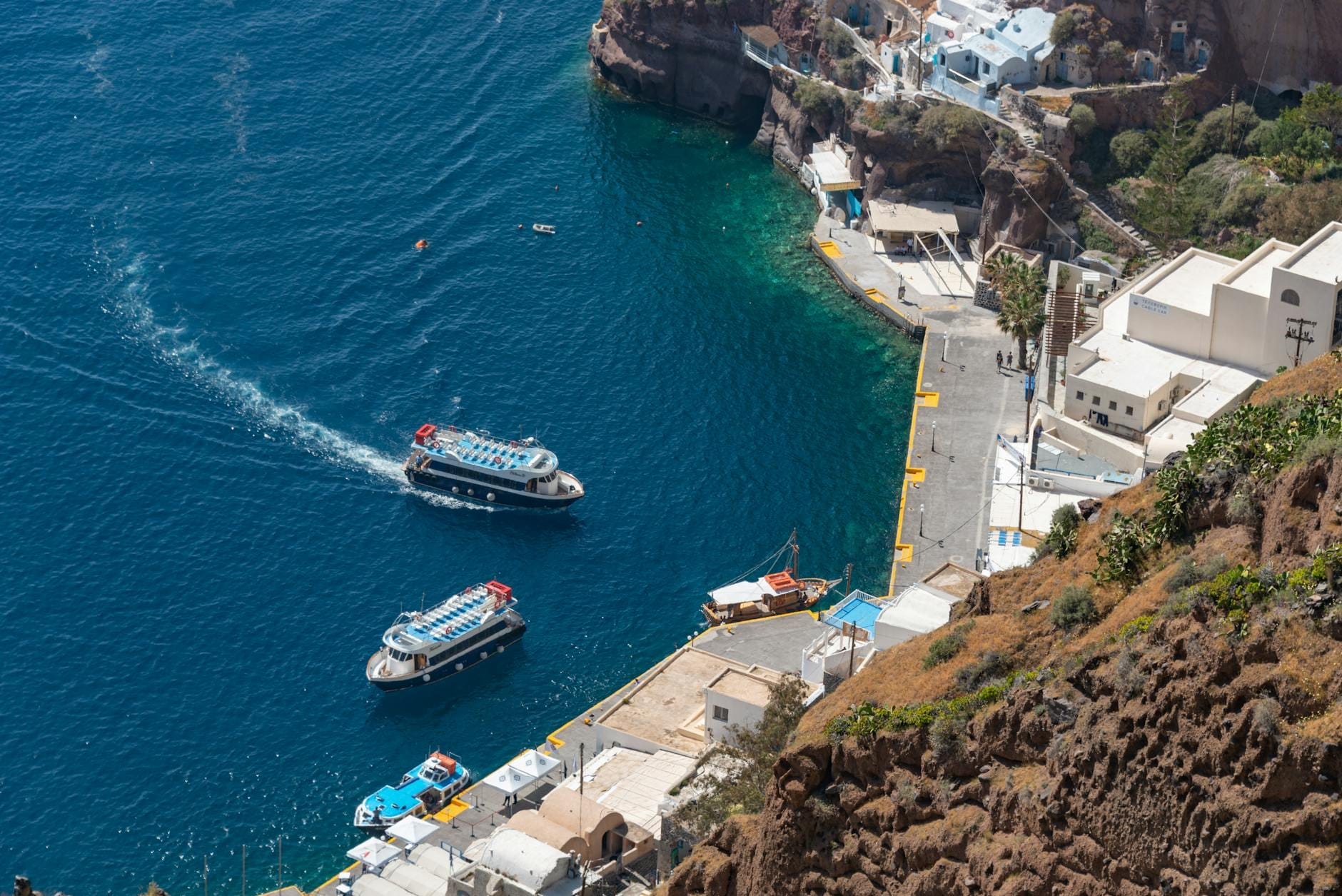
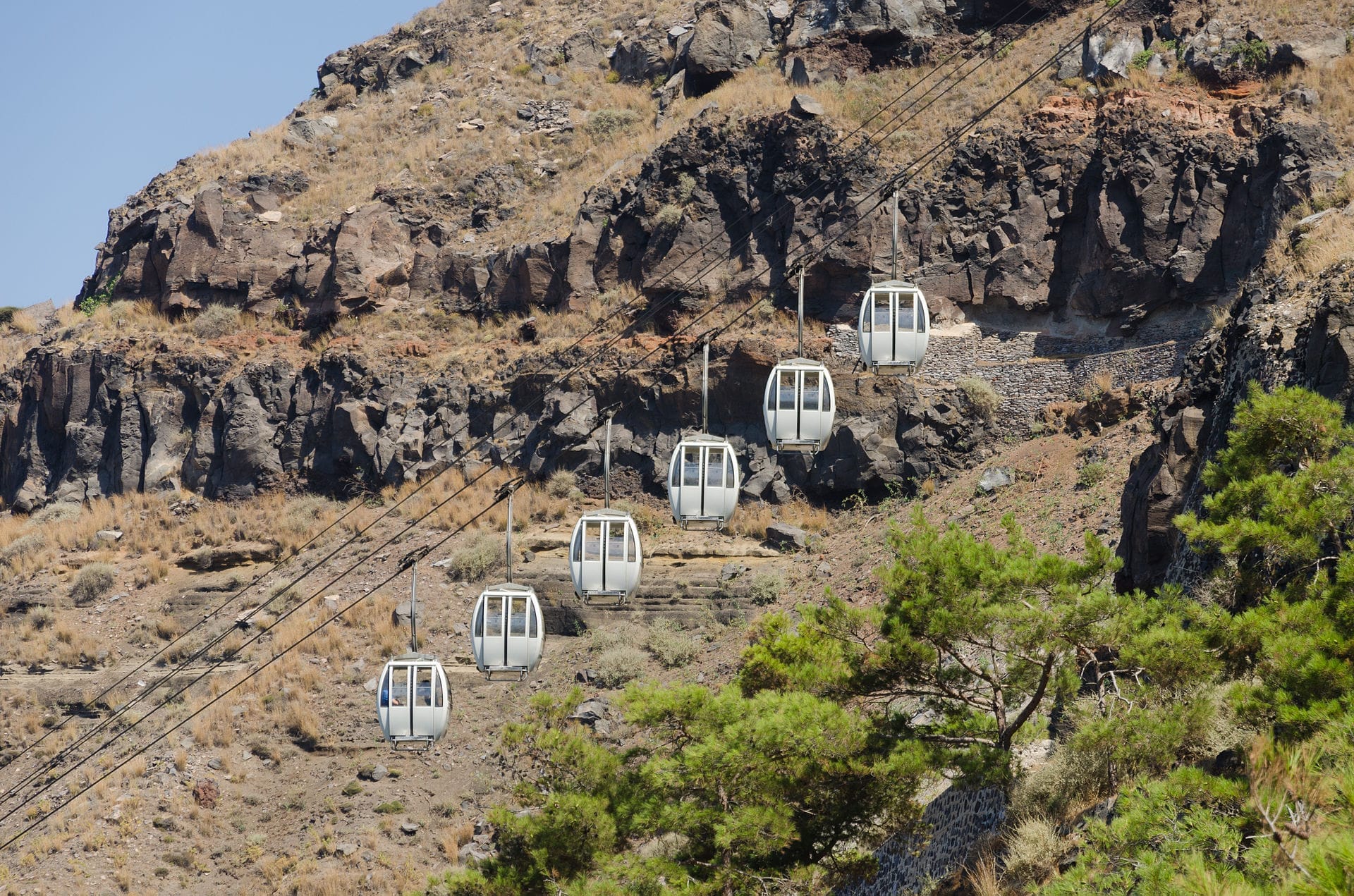
From the southern end of the caldera walkway, the Santorini cable car descends to the Old Port of Fira below. The cable car runs frequently and takes about two to three minutes. Alternatively, you can walk down (and up) the 588 steps of the zigzag path, which is also the route used by the famous donkeys. From the port, boat tours to the volcanic islands depart regularly.
Walk the caldera rim path north toward Firostefani for the best photography angles on Fira's own townscape
Visit the Museum of Prehistoric Thera to contextualize a trip to the Akrotiri archaeological site
Take the cable car down to the Old Port early morning before crowds build
Browse the Megaro Gyzi Museum for local historical archives and art
Walk south along the caldera path at dusk for views back toward Fira's lit-up clifftop
💡 Local tip
For the classic photograph of Fira's white buildings cascading down the caldera cliff, position yourself on the rim path just north of town, in Firostefani, and shoot back south. This angle captures the full depth of the settlement against the caldera — far more dramatic than any shot taken from within Fira itself.
Eating & Drinking
Fira's food scene spans a wide range, from genuinely good Greek cooking to aggressively tourist-facing restaurants with inflated prices and unremarkable food. The rule of thumb is consistent: the closer to the caldera-rim terrace, the higher the premium you are paying for the view rather than the plate. This does not mean caldera-facing restaurants are bad — several are excellent — but go in knowing that a meal with that view will cost significantly more than the same food served two streets back. For guidance on what dishes to look for across Santorini, the Santorini food guide covers local specialties worth seeking out.
The streets east of the main caldera walkway, particularly in the area around the bus terminal and the central market, hold more practical, locally oriented eating options: small tavernas, gyros spots, and bakeries selling tiropita (cheese pie) and koulouri (sesame bread rings) from early morning. If you are eating breakfast or a quick lunch, this is where to look. Coffee culture is strong in Fira; Greek-style frappe and freddo espresso are available at cafés throughout town, and quality has improved substantially in recent years.
For wine, Fira is well-positioned. Santorini produces distinctive wines from the Assyrtiko grape — dry whites with high acidity and a mineral character tied to the volcanic soil. Several wine bars in Fira offer local producers by the glass. For a more structured wine experience, the Santo Wines cooperative and the Venetsanos Winery are short drives or taxi rides south of town and offer tastings with caldera views.
After dinner, Fira has the most active bar scene on the island. A cluster of bars along the caldera rim stay open late, playing music at escalating volumes as the night goes on. If you are staying in Fira and want quiet after midnight, choose accommodation on the eastern side of the ridge, away from the main nightlife strip.
Getting There & Around
Fira is the hub of Santorini's public bus network, operated by KTEL. The main bus terminal sits in the center of town, just east of the main pedestrian zone, and routes radiate from here to virtually every settlement and beach on the island: Oia, Kamari, Perissa, Akrotiri, the airport, and the ferry port at Athinios. Bus fares are low and represent by far the most economical way to travel the island. Schedules vary by season and should be verified with KTEL directly before travel, as timetables change between shoulder season and peak summer.
Taxis are available in Fira but are limited in number relative to demand in high season. It is common to wait, particularly during the evening rush when restaurants are filling and visitors are moving between attractions. Pre-booking a transfer for airport or port arrivals is advisable in July and August. Rental cars, ATVs, and scooters are widely available in Fira and give the most flexibility for independent exploration, though the island's roads can be narrow and traffic is heavy near major beaches in summer.
Fira is also the starting point for one of the island's best walks: the caldera-rim trail north to Oia. The full Fira to Oia hiking trail covers approximately 10 kilometers and passes through Firostefani and Imerovigli, with the caldera visible virtually the entire way. It takes between 3 and 4 hours at a moderate pace. Start early to avoid midday heat and arrive in Oia in time for the late afternoon light. For more on walking routes across the island, see the Santorini hiking guide.
ℹ️ Good to know
The airport (JTR) is approximately 6 kilometers from Fira by road. KTEL buses connect the airport to Fira's central terminal, making public transit a viable and inexpensive option for arrivals without heavy luggage. Check current KTEL schedules before your trip, as off-season frequency is reduced.
Where to Stay
Fira is the most practical base on Santorini for travelers who want to move around the island freely. Being at the bus hub means you can reach the beaches, the archaeological sites, and the northern villages without needing a rental vehicle. For a full comparison of the island's main areas and which suits different travel styles, see the where to stay in Santorini guide.
Accommodation in Fira divides fairly cleanly by location and price. Caldera-facing rooms and suites, particularly those with private terraces or infinity pools overlooking the volcano, are at the top end of the island's pricing. They are genuinely spectacular and worth considering for a honeymoon or special occasion stay. The views from a caldera-edge room at dawn, when the light is soft and the cruise ships have not yet arrived, are among the more extraordinary hotel experiences the island offers.
Mid-range and budget options are concentrated on the eastern side of town, away from the caldera rim, and represent significantly better value. These properties tend to be quieter, cooler in summer (the white clifftop buildings absorb and radiate heat), and closer to the bus terminal. For travelers using Fira primarily as a base for island-wide exploration rather than for the caldera-view experience itself, staying on the eastern side makes practical and financial sense.
One consideration worth making explicitly: Fira's main nightlife strip generates real noise well past midnight in summer. If you are a light sleeper or traveling with young children, confirm the specific location of your accommodation relative to the bar district before booking. Properties at the northern end of town, toward Firostefani, or on the quieter eastern streets will have a more peaceful atmosphere after dark.
💡 Local tip
If a caldera-view room is your priority but Oia prices are out of reach, Fira and Firostefani often offer comparable views at lower rates. The caldera is the same width wherever you stand on the rim — the view does not materially improve as you move north toward Oia.
Is Fira Worth Visiting?
Fira is not optional for most visitors to Santorini. Even if you choose to base yourself elsewhere on the island, you will almost certainly pass through it for transport connections, museum visits, or the caldera walk north. The question is less whether to visit and more how much time to spend here, and whether staying here suits your priorities.
It is a better base than its reputation for crowds suggests, provided you time your days right: mornings and evenings in Fira are genuinely rewarding, while the midday hours in high season are best spent at a beach or inland site. Combined with the island's broader appeal, Fira functions as a reliable anchor for any Santorini itinerary. For help structuring your time, the 3-day Santorini itinerary offers a practical framework built around Fira as a base.
TL;DR
Fira is Santorini's capital and transport hub: the most practical base for exploring the whole island, with the KTEL bus network radiating from its central terminal to all major villages, beaches, the airport, and the ferry port.
The caldera views from Fira's western rim are among the island's most dramatic, and the town holds the two best archaeology museums on Santorini, both worth visiting before or after a trip to the Akrotiri site.
Peak season (July to mid-August) brings significant crowds and noise, particularly on cruise ship days. Shoulder months — April to June and September to October — offer the same landscape with a more manageable atmosphere.
Accommodation ranges from top-end caldera-view suites to budget guesthouses on the quieter eastern streets; choose your location based on your priorities for views versus value and quiet.
Fira suits: first-time visitors to Santorini, travelers without a rental car who need transit access, couples looking for caldera-view dining and nightlife, and anyone using the island's museums as part of their itinerary. It is less suited to travelers seeking a quiet, village-scale experience — for that, consider Imerovigli or Pyrgos.
Santorini's beaches are unlike anywhere else in Greece. Volcanic geology means most are black or dark-pebbled, with a handful of dramatic color exceptions. This guide covers every beach worth visiting, from the popular to the genuinely quiet.
Santorini rewards visitors differently depending on when they arrive. This guide breaks down every season by weather, crowd levels, prices, and what's actually open so you can pick the timing that matches your priorities.
Santorini rewards visitors who look beyond the caldera rim. This guide covers the best day trips from Santorini, from hiking to Oia and cruising the volcanic islets to hopping across to Folegandros, with full logistics, seasonal notes, and practical booking advice.
Santorini has no metro, no trains, and surprisingly limited taxis. This guide breaks down every transport option on the island — KTEL buses, rentals, taxis, rideshare, and ferries — with real fares, route details, and practical advice on what works best by season.
Santorini polarises travellers. The caldera views are genuinely spectacular, the volcanic landscape is unlike anywhere else in Greece, and the archaeology rivals anything in the Aegean. But the crowds are real, the prices are steep, and the hype can outpace the reality. Here is what you actually need to know before you book.
Santorini's black sand beaches are unlike anything else in the Aegean. Formed by volcanic eruptions and shaped by centuries of erosion, they come with their own rules, quirks, and logistics. This guide covers the main beaches, practical access, seasonal timing, and what first-timers always get wrong.
Santorini is far more than the famous blue domes and caldera selfies. This guide takes you beyond Oia and Fira to the island's medieval villages, wild volcanic beaches, serious wine caves, and ancient ruins that most visitors walk straight past.
Santorini rewards hikers with caldera rim panoramas, ancient ruins, volcanic craters, and medieval villages. This guide covers the island's best trails, from the classic Fira–Oia walk to off-the-beaten-path routes most visitors never find.
Santorini's history stretches back more than 3,600 years, from a sophisticated Bronze Age city buried by volcanic ash to Hellenistic temples, Venetian fortresses, and Byzantine monasteries. This guide covers every significant historical site on the island, with practical advice on when to visit and what to expect.
Santorini's caldera views, volcanic beaches, and world-class sunsets make it one of the most sought-after honeymoon destinations in Europe. This guide breaks down exactly where to stay, what to do, and what to skip so you can plan a trip that lives up to the hype.
September is arguably the smartest month to visit Santorini. The sea is warm, the light is golden, the harvest is underway, and the worst of the summer crowds have thinned. This guide covers everything from weather and pricing to what actually changes as the month progresses.
Three days is enough to cover Santorini's essentials without burning out. This itinerary balances the iconic caldera villages, the volcanic south, ancient ruins, and the island's wine country — with specific timing, realistic costs, and straight talk on where the crowds aren't worth it.
Santorini's luxury scene runs deep, from cliffside suites with direct caldera views in Oia and Imerovigli to upscale beach resorts along the black-sand coast. This guide breaks down where to stay, when to book, what to expect across price tiers, and which high-end experiences are actually worth it.
Santorini has a reputation for luxury prices, and that reputation is partly earned. But with the right timing, accommodation choices, and a few practical strategies, the island is far more accessible than most people expect. This guide breaks down real costs and shows you where to cut spending without sacrificing the experience.
Santorini is one of the world's most photographed destinations, but knowing exactly where to stand, when to arrive, and which lesser-known angles to seek out separates good photos from great ones. This guide covers 23 of the island's best photography locations, from the iconic caldera rim to wild volcanic beaches and medieval hilltop villages.
From semi-private catamaran cruises to full-day private charters, Santorini's boat tour market is crowded and easy to overpay on. This guide breaks down every major format, what each actually includes, real price ranges for 2025-2026, and the questions to ask before you book.
Santorini's sunsets are legendary, but not all viewpoints are equal. This guide covers the best spots across the island, from the famous to the overlooked, with practical advice on when to arrive, how to avoid the worst crowds, and which locations suit different styles of traveler.
Santorini's caldera is one of the most dramatic natural amphitheaters on the planet, and knowing where to stand makes all the difference. This guide covers the island's finest vantage points, from iconic sunset spots to quiet hilltops most visitors never find.
The Santorini caldera holds one of the Mediterranean's most dramatic geological stories. This guide covers the volcano's history, how to visit Nea Kameni and the Palea Kameni hot springs, how to choose a boat tour, and what most visitors get wrong before they arrive.
Two of Greece's most iconic Cycladic islands, but they deliver very different trips. This guide breaks down the real differences between Santorini and Mykonos across beaches, atmosphere, costs, food, and logistics, so you can choose the one that fits your travel style.
Santorini's Mediterranean climate shifts dramatically across the year, from bone-dry summers with 12 hours of daily sunshine to mild, stormy winters. This guide breaks down Santorini weather by month, covering temperatures, rainfall, sea conditions, and crowd patterns so you can choose exactly the right time to visit.
Santorini produces some of Greece's most distinctive wines, shaped by volcanic soils, searing heat, and ancient vines trained in basket shapes against the Aegean wind. This guide covers every wine style, the best wineries to visit, how to book tastings, and what to order with your food.
Santorini is famous for romantic sunsets and honeymoon hotels, but it genuinely works for families too. This guide covers the best beaches for kids, family-friendly activities, where to base yourself, and the practical details that actually matter when you're traveling with children.
Santorini rewards visitors who go beyond the postcard shots. This guide covers the best things to do in Santorini across every interest and budget, from ancient ruins and caldera hikes to sailing tours and wine tasting, with candid assessments of what is actually worth your time.
Santorini's cuisine is shaped by volcanic soil, Bronze Age agriculture, and a seafaring tradition. This guide covers every local dish worth ordering, the ingredients that make them unique, how much to expect to pay, and when to visit for the freshest seasonal produce.
Santorini's accommodation landscape splits cleanly between cliffside caldera villages and laid-back beach towns on the east coast. This guide breaks down every major area by cost, crowd level, and practicality so you can match your base to your actual travel style.