Santorini Weather by Month: A Practical Month-by-Month Climate Breakdown
Santorini's Mediterranean climate shifts dramatically across the year, from bone-dry summers with 12 hours of daily sunshine to mild, stormy winters. This guide breaks down Santorini weather by month, covering temperatures, rainfall, sea conditions, and crowd patterns so you can choose exactly the right time to visit.
Plan and book this trip
Tools from our partner Travelpayouts help you compare flights and hotels. If you book through them, we may earn a commission at no extra cost to you.
Flights
Hotels map
TL;DR
- Santorini has a true Mediterranean climate: hot and dry from June to September, mild and wetter from November to March.
- July is the hottest month, averaging daytime highs of 29-30°C, but the Meltemi wind keeps it feeling more bearable than those numbers suggest.
- The best all-round months for weather and fewer crowds are May, June, and September.
- Winter visits (December-February) are viable for sightseeing and photography, but swimming is off the table and some tourist services close. See our best time to visit Santorini guide for a full breakdown.
- Sea temperatures peak at around 24-24.5°C in August; the comfortable swimming window runs from late May to early October.
Understanding Santorini's Climate
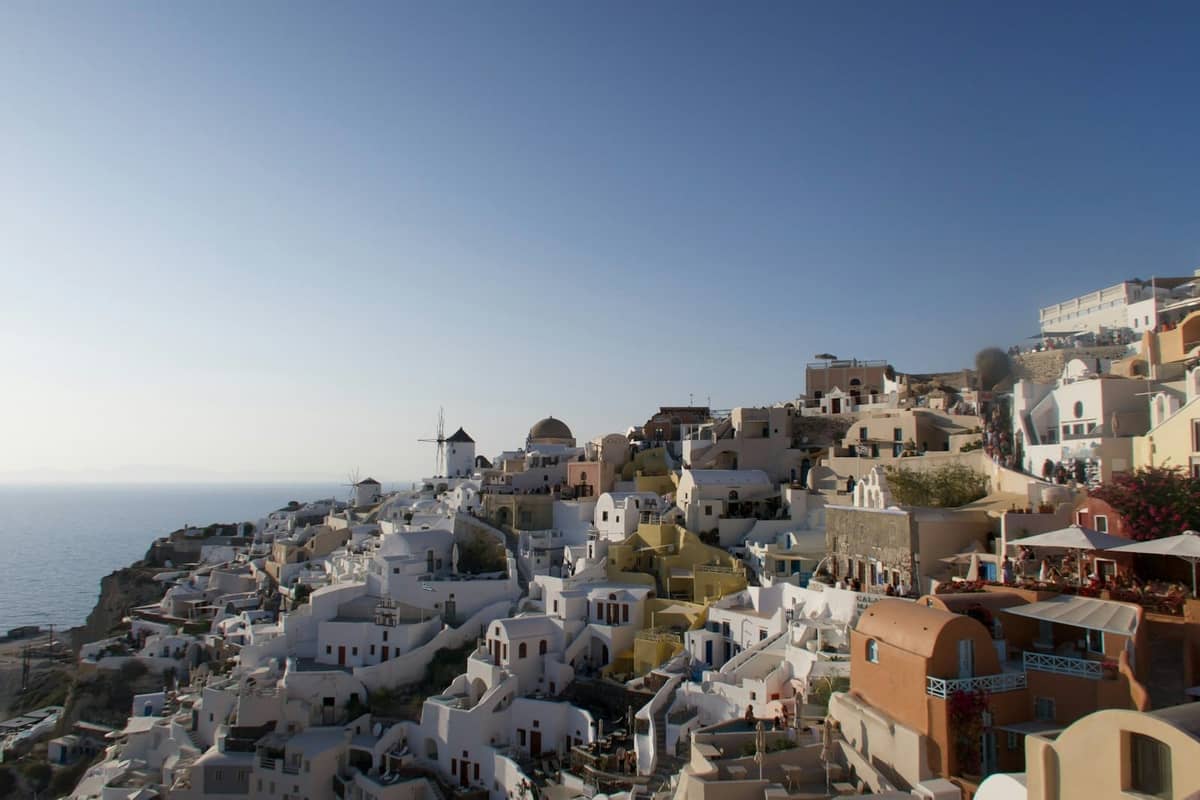
Santorini sits in the southern Cyclades at roughly 36°N latitude, which gives it a textbook Mediterranean climate: long, dry, sunny summers and short, mild winters with most of the year's rain concentrated between November and March. The island records around 2,900 sunshine hours per year, which puts it comfortably among the sunniest destinations in Europe.
One detail that catches visitors off-guard: the island is genuinely windy. The Meltemi, a strong northerly wind that sweeps the Aegean each summer, can gust hard enough in July and August to make beach days challenging and to create choppy sea conditions for boat tours. On caldera-edge villages like Fira and Oia, sitting at around 120–160 metres above sea level, that wind can feel refreshingly cool in the midday heat or bitterly cold on a January evening.
ℹ️ Good to know
Annual temperature extremes: Santorini rarely exceeds 33–34°C or drops much below 4–5°C. Typical overnight lows range from about 9-10°C in winter to 23-24°C on warm summer nights. It is not a place that sees snow, frost, or genuinely extreme heat.
Month-by-Month Weather Breakdown
January and February are the coldest, wettest months. Daytime highs hover around 13-15°C, overnight lows can dip to 9-10°C, and January typically sees around 110–120 mm of rainfall spread across roughly nine rain days. Crucially, most of that rain arrives as short, sharp storms rather than week-long drizzle, so you can still get stretches of clear, pleasant days. Sea temperatures sit around 16-17°C, which rules out swimming for almost everyone. Many hotels, restaurants, and tour operators are either closed or running on skeleton schedules. If you go in January or February, you will find Santorini in its quietest, most local state, which has genuine appeal for photography, archaeology, and anyone who finds peak-season crowds intolerable.
March and April mark the transition into spring. Temperatures climb quickly into the high teens and low 20s°C by April, rainfall drops significantly, and the sea begins warming from around 16°C toward about 17-18°C. More businesses reopen from mid-March onward. By April, the landscape is green and the light is excellent for photography at attractions like the Akrotiri archaeological site or along the Fira to Oia hiking trail. Expect cool evenings: a light jacket is still necessary after dark.
May is arguably the single best month for combining good weather with manageable crowds. Average daytime temperatures reach 22-24°C, rain is rare, the sea crosses the 20°C threshold by late May, and the island is fully operational without the summer crush. Accommodation prices are noticeably lower than July and August. It is the month most consistently recommended by experienced Santorini travelers.
June through August is the hot season proper. Daytime highs run 26-30°C, with July peaking at an average of around 29-30°C. Rain is essentially non-existent: June through August collectively sees as little as 0–10 mm per month and often zero rain days. The sea peaks around 24-24.5°C in August, making it excellent for swimming. The downside is significant: these are the three most crowded and expensive months of the year. Oia at sunset in July or August can mean hundreds of people jostling for the same position. The Meltemi wind intensifies during this period, which can disrupt sailing tours and creates challenging conditions on exposed beaches like the volcanic black sand at Perissa.
⚠️ What to skip
The Meltemi wind peaks in July and August. While it keeps temperatures feeling tolerable, it can make some boat tours uncomfortable or cause cancellations, particularly around the caldera and volcano excursions. If a sailing tour is a priority for your trip, May, June, or September offer more reliable conditions.
September is the month that serious Santorini visitors point to as the sweet spot. Temperatures remain warm at about 24–26°C during the day, the sea stays around 23-24°C and is excellent for swimming, rainfall is still minimal, and the crowds begin thinning noticeably after the first week. Accommodation prices start to drop from their August peaks. Sunsets from the Oia sunset viewpoint are slightly less frantic. For a full picture of what to expect, see our dedicated guide to Santorini in September.
October brings a genuine shift. Average highs drop to around 22°C, the first rain showers of autumn begin appearing, and the sea temperature sits around 22-23°C, still warm enough for swimming in the first half of the month. By late October, evenings are noticeably cooler and some smaller businesses start reducing hours or closing for the season. It is a good month for hiking, wine touring, and exploring villages without crowds, but not reliable beach weather.
November through December sees a sharp increase in rainfall, dropping temperatures, and a significant drawdown in tourist services. By December, average highs are around 15-16°C with lows near 10-11°C. The caldera and the whitewashed architecture look striking in low winter light, and accommodation rates are at their lowest. Flights and ferries operate at reduced frequency. This works for visitors who want to explore cultural sites and are not chasing the sun.
Sea Temperatures and Swimming Windows
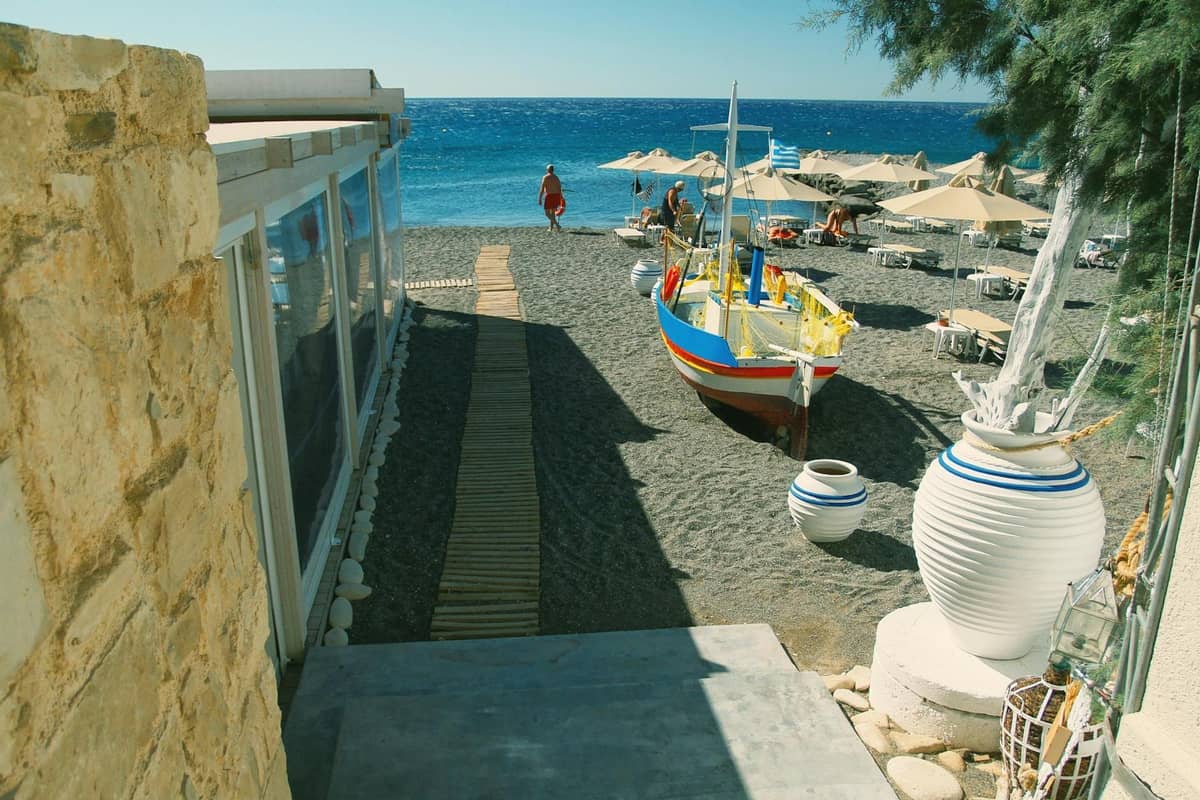
The Aegean Sea around Santorini takes a long time to warm up. In March and April, sea temperatures are around 15.5–17°C, which is cold by any beach standard. By June, the water reaches 22°C and is comfortable for most swimmers. It peaks around 24-24.5°C in August and stays warm through September before dropping back toward 20–21°C in October and into the mid-teens by November-December.
- Too cold to swim (for most visitors) November through April, sea temps 15-18°C
- Warm enough for confident swimmers May and October, sea temps around 19-22°C
- Comfortable for most visitors June through September, sea temps 22-24.5°C
- Peak swimming conditions July through September, sea temps around 23-24.5°C with calm mornings
The black and red volcanic beaches each have slightly different conditions. Kamari and Perissa on the east coast are more sheltered from the Meltemi than west-facing areas, making them better choices during windy July and August days. The Red Beach near Akrotiri is visually dramatic but can be affected by rockfall closures; always check access before making a special trip.
Weather by Season: Practical Takeaways for Visitors
- Spring (March-May) Best for hikers, history lovers, and budget travelers. May is ideal. Evenings still cool; pack a layer.
- Summer (June-August) Peak beach season with maximum sunshine and warmth. Expect crowds, higher prices, and Meltemi winds. Book accommodation months in advance.
- Autumn (September-October) The most balanced window overall. September delivers summer conditions with noticeably fewer crowds and more reasonable prices.
- Winter (November-February) Quiet, affordable, and occasionally atmospheric. Not suited for beaches or anyone wanting a full tourist infrastructure. Some of the best rates on caldera-view accommodation.
✨ Pro tip
If you want to combine hiking and swimming in the same trip, target the last week of May or the first two weeks of September. Temperatures are mild enough for multi-hour hikes but the sea is warm enough for a proper swim afterward. The Fira to Oia trail in these conditions is excellent.
Crowd Patterns and How They Connect to the Weather
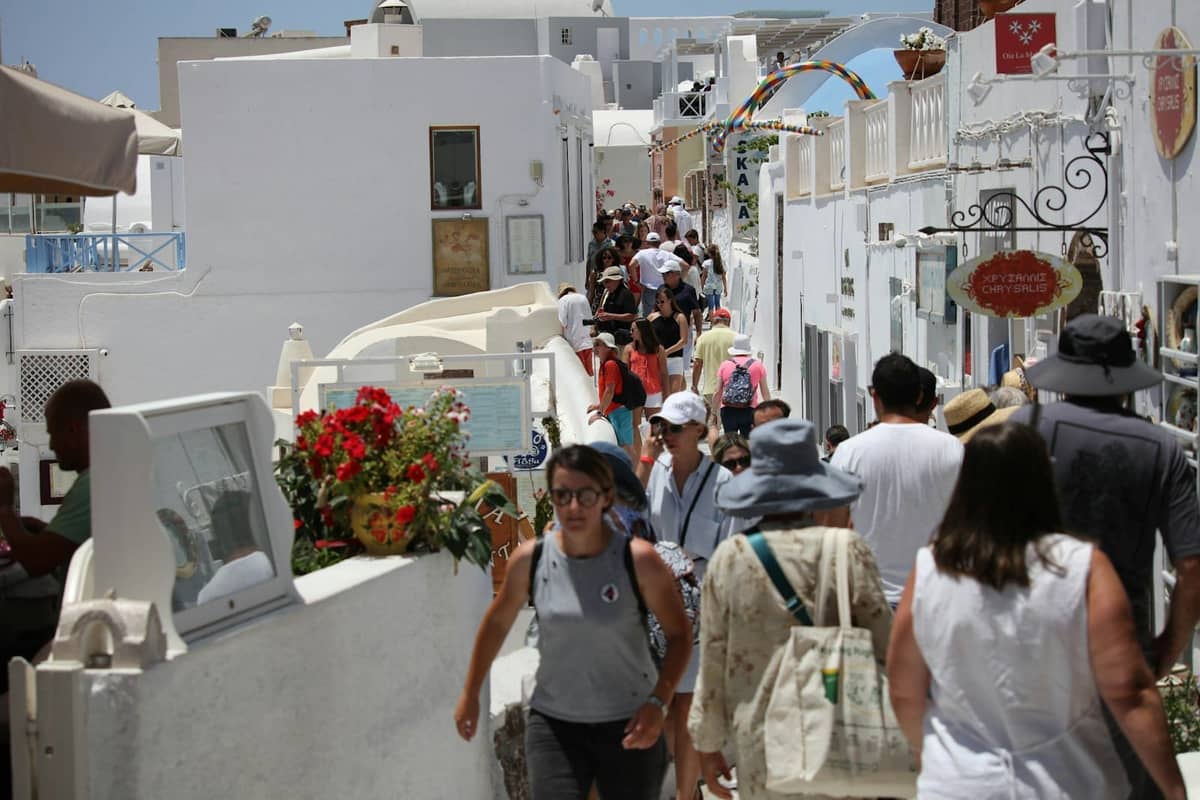
Santorini's visitor patterns track its weather almost exactly. The main tourist season runs from April through October, with July and August representing the absolute peak. During these two months, Fira's main streets can feel genuinely overwhelming in the middle of the day, and cruise ship arrivals can add thousands of day visitors to the caldera rim. If you are visiting in this window specifically to experience the scenery and architecture, mornings before 10:00 and evenings after 19:00 are consistently better.
The shoulder months of May and October offer a noticeably more relaxed experience while still benefiting from reliable weather. For visitors interested in exploring Pyrgos or the Profitis Ilias Monastery, or tasting through the island's wineries at places like Santo Wines, the shoulder season is genuinely superior: fewer people, the same landscape, and better service.
Winter is not for everyone, and it is worth being honest about that. Between November and March, multiple restaurants and hotels in Oia close entirely, ferry frequencies drop, and the island operates primarily for residents. But for photographers or anyone chasing dramatic Santorini photography without other tourists in the frame, this period has obvious advantages. The caldera views do not disappear in winter; they just require more effort to reach and more flexibility around weather.
What to Pack by Season
- Summer (June-August): lightweight clothing, high-SPF sunscreen, a hat, sunglasses, sandals. Bring a light layer for Meltemi evenings on the caldera rim, which can feel much cooler than the forecast temperature.
- Spring and Autumn (April-May, September-October): layer up. T-shirts and shorts during the day, a medium-weight jacket and trousers for evenings. Comfortable walking shoes for the cobblestone paths.
- Winter (November-March): a proper coat, waterproof layer, and warm footwear. The caldera paths can be slippery after rain. Umbrella is practical but wind often makes it useless; a waterproof jacket is more reliable.
- Year-round: comfortable shoes with grip. Santorini's paths, particularly in Oia and on the caldera steps, are uneven stone and steep in places.
FAQ
What is the best month to visit Santorini for weather?
May and September consistently offer the best combination of warm temperatures (22-27°C), low rainfall, warm sea, and manageable crowds. June is excellent too but marks the start of the busy season. July and August have the best beach weather on paper but the highest crowds and Meltemi wind to contend with.
Does it rain a lot in Santorini in October?
October sees a gradual increase in rainfall compared to the bone-dry summer months, but it is generally not a rainy month by European standards. Early October is still quite dry; by late October, short rain events become more frequent. Average temperatures around 21-22°C keep it pleasant for sightseeing, even if beach days become less reliable.
Is Santorini worth visiting in winter?
It depends entirely on your priorities. Winter (December-February) offers dramatically lower prices, almost no crowds, and genuinely atmospheric caldera views. However, swimming is not possible (sea temps around 15-16°C, air temps 13-15°C), some hotels and restaurants close, and ferries run less frequently. It works well for cultural tourism and photography, but not for a beach holiday.
How hot does Santorini get in summer?
July is typically the hottest month, with average daytime highs of 29-30°C and overnight lows around 23-24°C. The temperature rarely exceeds 33°C. The Meltemi wind, which peaks in July and August, usually keeps the heat from feeling oppressive during the day, though it can make exposed beaches and boat trips uncomfortable.
When is Santorini sea temperature warm enough to swim?
Most visitors find the sea comfortable from late May onward, when it crosses around 20-21°C. It peaks at around 24-24.5°C in August, stays warm through September (around 23-24°C), and begins cooling below 21°C in October. By November it is too cold for most people.