Pyrgos is a hilltop village in central Santorini, sitting higher than any other settlement on the island and retaining the kind of unhurried, local character that the caldera towns largely abandoned decades ago. It was once Santorini's capital, and its medieval layout — concentric stone lanes climbing toward a Venetian castle — still reflects that former status. For travelers looking to step away from the crowds without sacrificing dramatic island views, Pyrgos offers a compelling alternative.
Pyrgos is Santorini's highest and most historically layered village: a former capital with a Venetian castle at its crown, narrow stone lanes that spiral inward like a fortified shell, and panoramic views that stretch across the island without the shoulder-to-shoulder crowds of the caldera rim. It sits inland, slightly apart from the tourism machine, and that distance is exactly its appeal.
Orientation
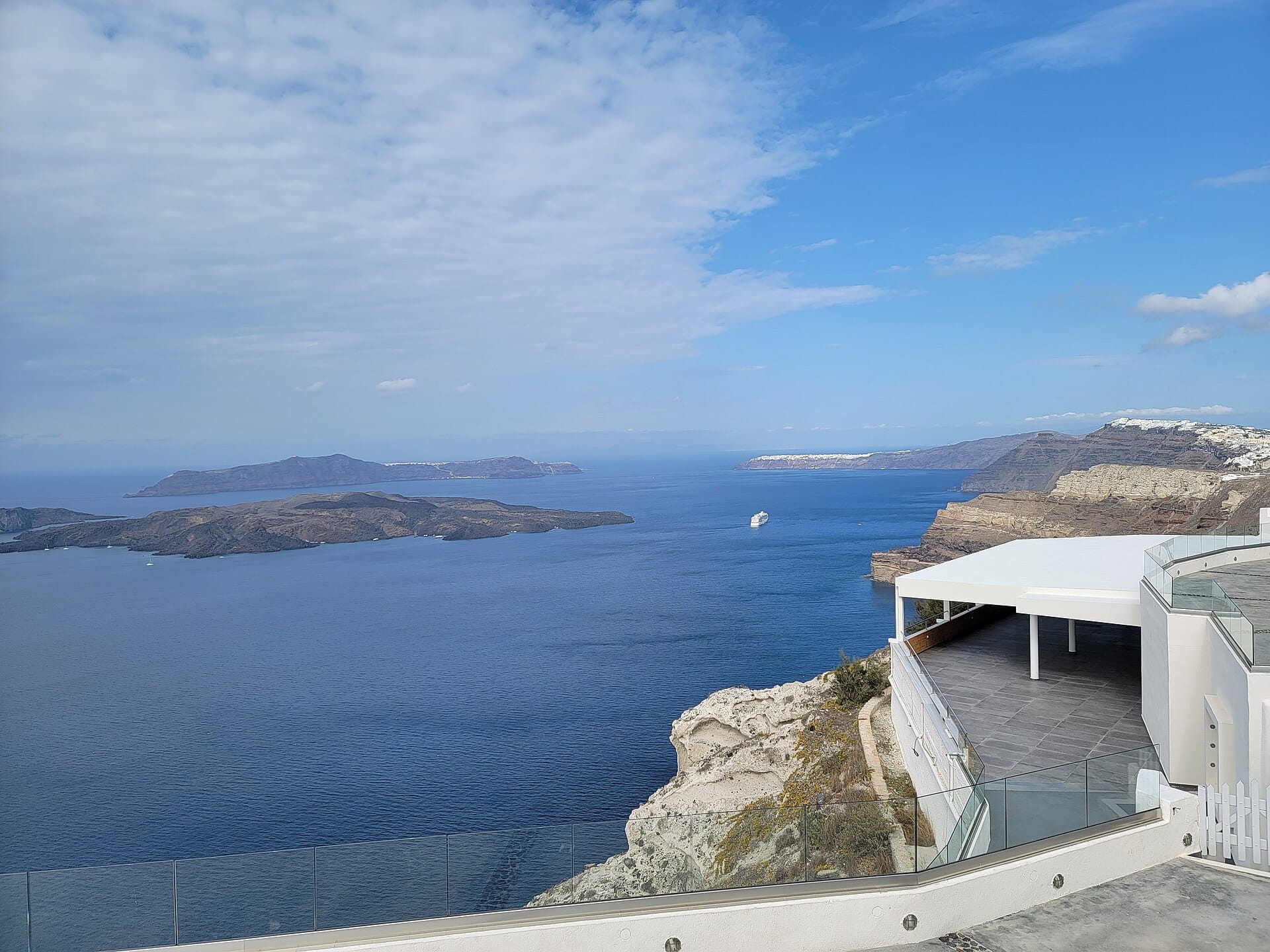
Pyrgos occupies the highest point of central Santorini, rising to roughly 300 meters above sea level on the island's interior ridge. Unlike Fira, Oia, or Imerovigli, it does not sit directly on the caldera rim — it faces inward and outward simultaneously, with views extending east toward Kamari, southeast toward Perissa and Ancient Thera, and west toward the caldera on clear days.
The village sits approximately 5 kilometers from Fira, the island's capital and main transport hub, and roughly the same distance from Athinios Port where most ferries arrive. This central position means Pyrgos is genuinely well-placed for exploring the whole island — closer to the southern beaches and archaeological sites than Oia is, and without Fira's congestion.
The greater Pyrgos area informally includes the nearby settlements of Episkopi Gonias and Exo Gonia, both small and quiet, sitting just below and to the east of the main village. The road approaching Pyrgos from Fira winds through agricultural land planted with the low-trained vines characteristic of Santorini, giving the approach a markedly different feel from the coastal routes.
Character & Atmosphere
Early morning in Pyrgos sounds like a different island. Church bells, the occasional cat moving across warm stone, a coffee cup on a terrace somewhere out of sight. The lanes are narrow enough that two people walking abreast have to turn sideways in places, and the architecture follows a defensive medieval logic: buildings leaning inward, walls continuous, the whole structure designed to confuse an attacker rather than welcome a tourist.
By mid-morning, a handful of visitors arrive — usually day-trippers from Fira who have heard about the castle views — but the village absorbs them easily. There are no cruise-ship crowds here, no souvenir strip, no neon signs. The central square functions as an actual gathering place for locals, not a stage set.
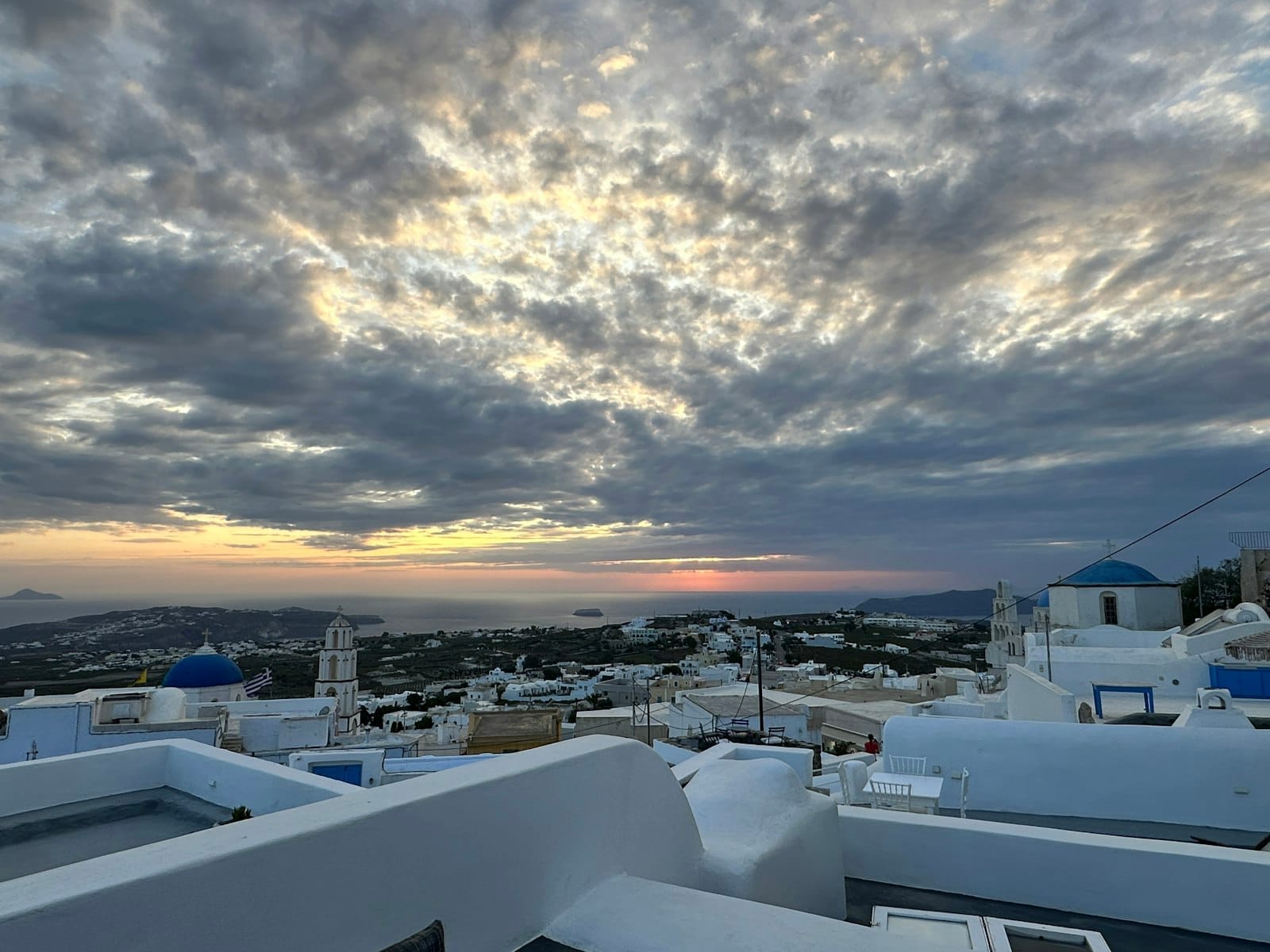
Afternoons in Pyrgos have a particular quality of stillness. The light turns golden and direct across the stone facades around 4pm, and the views from the upper lanes toward the western caldera become genuinely arresting. This is also when the village starts to feel like a good choice: the caldera towns are packed and loud at this hour, while Pyrgos is quiet enough to hear the wind.
After dark, Pyrgos is low-key. A few restaurants and bars serve guests into the evening, and some position themselves specifically for the island-wide sunset view from the castle area — a perspective that differs meaningfully from the caldera-facing viewpoints at Oia or Imerovigli. It is not a nightlife destination, and travelers expecting late bars or a social scene will be disappointed. What it offers instead is genuine quiet in a place that has earned it.
ℹ️ Good to know
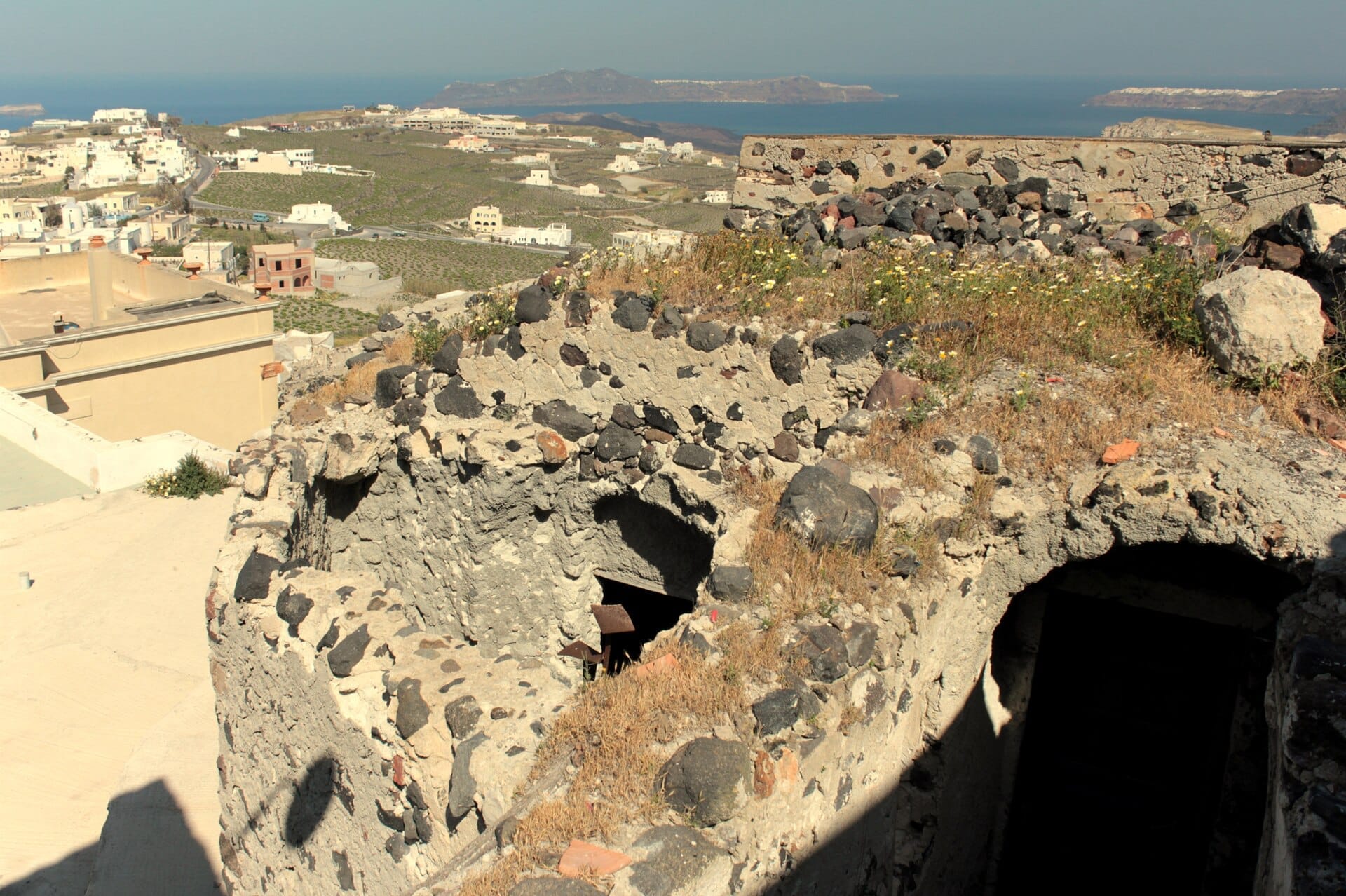
Pyrgos was once Santorini's capital before that status shifted to Fira in the 19th century. The village's fortified structure, with the Kasteli at its highest point, reflects its historical importance as a defended administrative center during the Venetian and Ottoman periods.
What to See & Do
The primary reason to come to Pyrgos is to walk it. The settlement spirals upward in concentric rings, and the best approach is simply to start at the lower village square and keep climbing. The lanes narrow progressively as you ascend, occasionally passing through low stone archways or opening onto unexpected terraces with views over the rooftops.
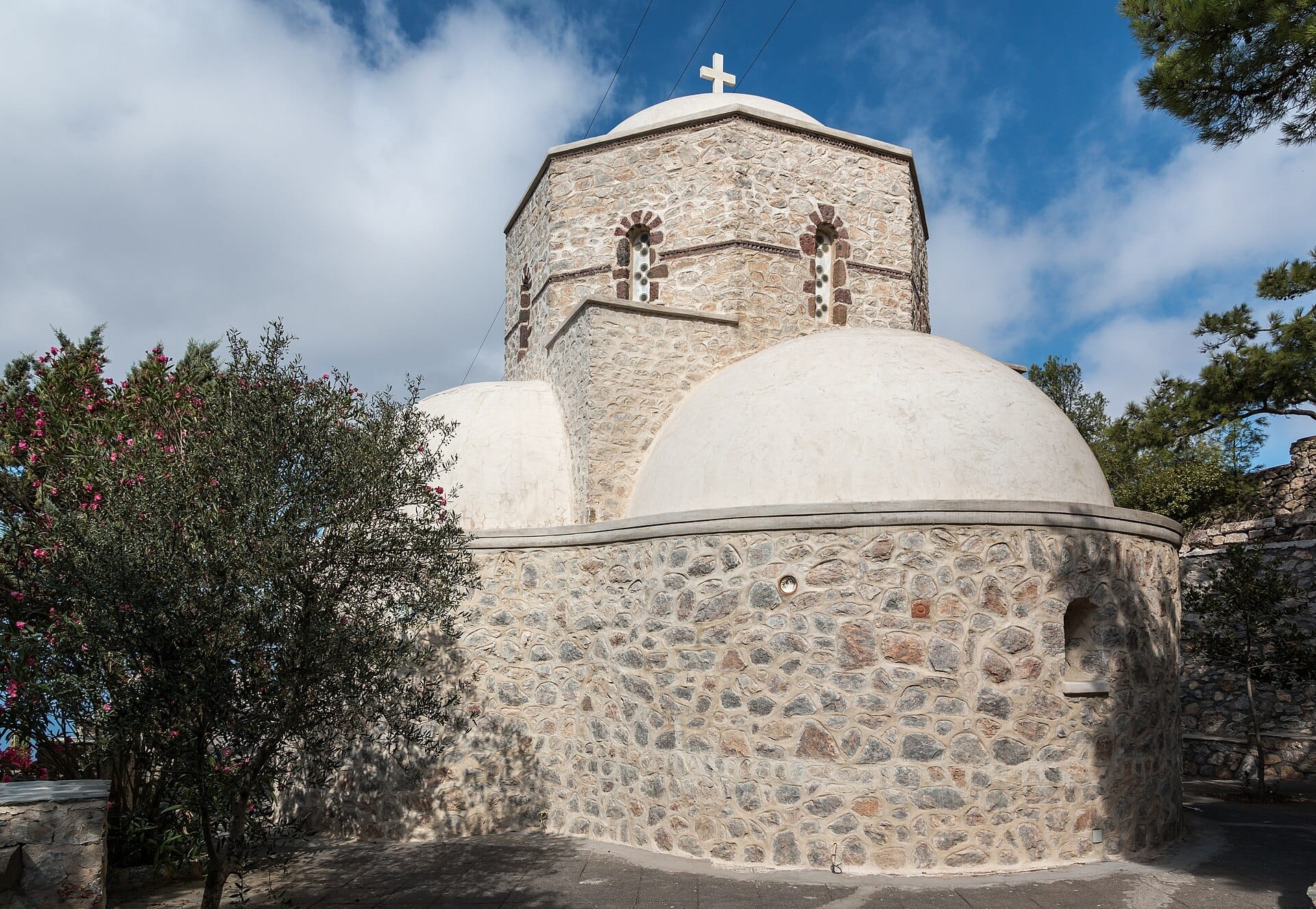
At the summit sits Kasteli, Pyrgos's Venetian-era castle — one of five such fortified settlements on Santorini. It functions less as a formal attraction and more as a physical place to reach: the highest point of the village, where the views open in all directions. From here, you can see the caldera to the west, the airport and east coast to the right, and on clear days, the outline of the Profitis Ilias Monastery rising on the ridge slightly to the southeast. Several churches are embedded in the fabric of the old settlement, including Agia Theodosia and the Orthodox Church of the Assumption of Mary, both worth pausing at even if you don't enter.
The Profitis Ilias ridge, accessible by road from Pyrgos, is the island's absolute highest point and home to a monastery that has stood since the early 18th century, around 1711–1712. The area around it is also the starting point for some of the island's more serious walking routes. If you're interested in hiking, check the Santorini hiking guide for trail conditions and route options from this part of the island.
Pyrgos sits within easy reach of the island's wine country. The volcanic soil around the village produces some of Santorini's most distinctive wines, particularly Assyrtiko. The Santo Wines cooperative and the Venetsanos Winery are both accessible from this part of the island. For a deeper understanding of local wine culture, the Santorini wine guide covers the key producers and grape varieties in detail.
Kasteli (Pyrgos Castle): the medieval fortified summit of the village, free to explore
Agia Theodosia and Church of the Assumption of Mary: historic churches within the old settlement
Profitis Ilias Monastery: accessible by road from Pyrgos, with the island's highest panoramic views
Village walking: the lanes themselves are the main event — no map needed, just walk upward
Sunset from the castle area: a less-crowded alternative to the Oia viewpoints
💡 Local tip
The views from Pyrgos's upper lanes are best in the late afternoon light. If you're visiting for sunset, arrive at least an hour before to walk the village while it's still bright enough to see properly — the narrow upper lanes become quite dark quickly after the sun drops.
Eating & Drinking
Pyrgos has a small but carefully maintained food scene. There are no tourist-trap restaurants here, partly because the tourist footfall doesn't support them, and partly because the village's character tends to attract a different kind of visitor. What you find instead are a handful of restaurants and cafes that take the setting seriously.
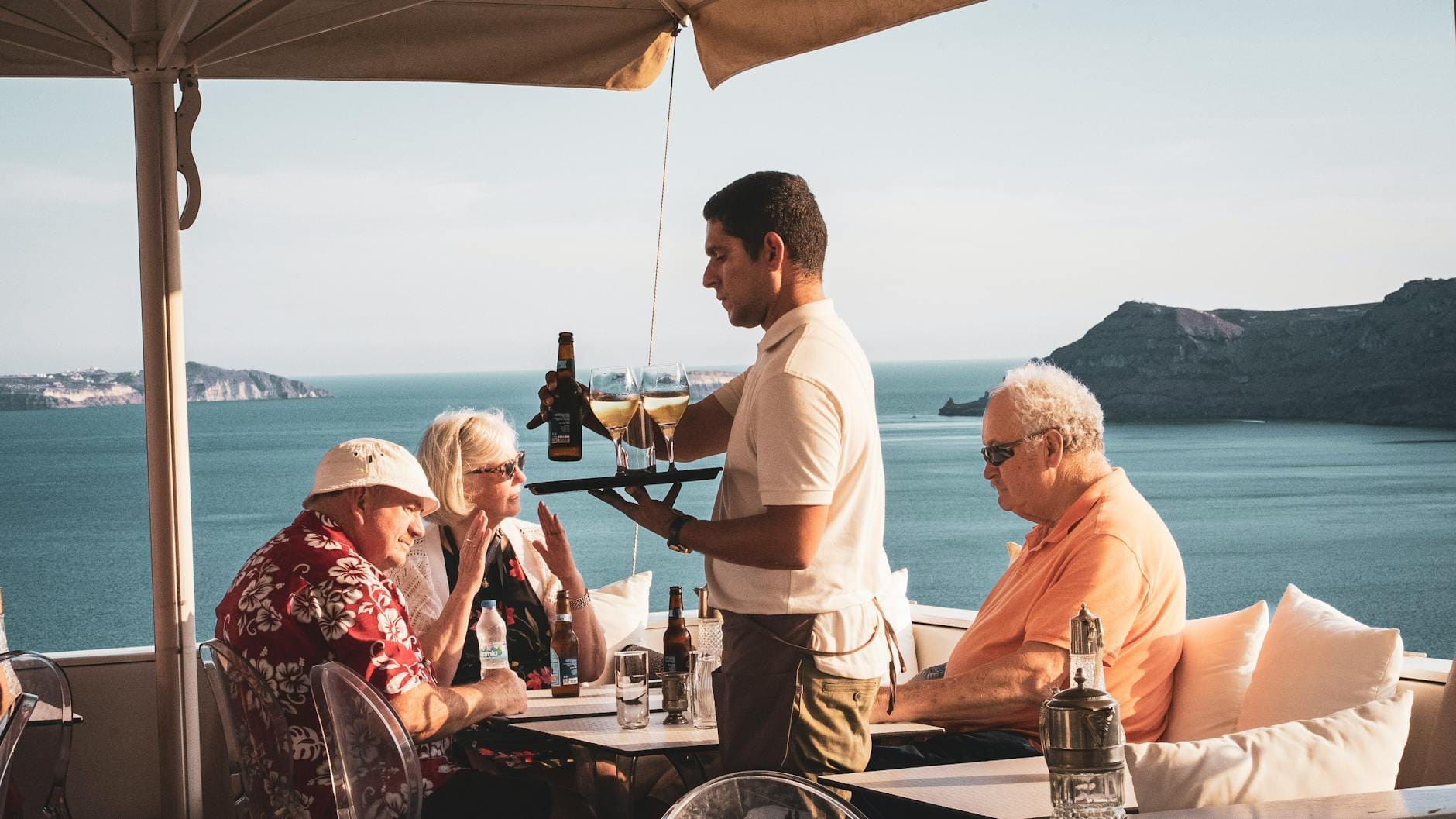
Several restaurants in and around the village are known for positioning their terraces to capture the island-wide views rather than the caldera specifically. This means you can eat dinner looking out across the entirety of Santorini rather than crowding onto the western rim. Prices at Pyrgos restaurants are generally more moderate than equivalent establishments in Oia or Imerovigli, though the quality can be comparable.
Local cooking here leans on Cycladic traditions: fresh seafood, slow-cooked meats, fava bean dishes made with the local split peas that grow in Santorini's volcanic soil, and tomato fritters made from the small, intensely flavored tomatoes the island is known for. For a broader look at what to order across Santorini, the Santorini food guide covers the island's signature dishes in detail.
Coffee culture exists here in a functional rather than performative way. The square at the lower village has a cafe or two where locals actually sit, which is a meaningful distinction from the staged cafe terraces of the caldera villages. In summer, a few bars serve wine and cocktails in the evening, some with deliberate sunset orientations toward the western sky.
⚠️ What to skip
Pyrgos has limited dining options and no supermarket infrastructure to speak of. If you're staying overnight or for an extended period, stock up in Fira before arriving. Most restaurants operate seasonal hours and may be closed entirely between November and March — always confirm in advance during the shoulder season.
Getting There & Around
From Fira, Pyrgos is approximately 5 kilometers by road — about a 10-minute drive depending on traffic. The KTEL bus network, Santorini's main public transport system, connects Fira with Pyrgos on a route that also serves the south of the island. Bus frequency varies significantly by season; check getting around Santorini for current timetable guidance. The bus stop in Pyrgos is at the lower edge of the village.
Taxis from Fira to Pyrgos are available and relatively affordable given the short distance, though fares should be confirmed with the driver before departure. Pre-booked transfers are a reliable option, particularly for arrival days when you want predictability.
Renting a car or quad bike in Fira gives you the most flexibility for Pyrgos, especially if you plan to combine the village with visits to nearby wineries, the Profitis Ilias ridge, or the southern beaches at Perissa or Kamari. The road between Pyrgos and these coastal destinations is well-paved and straightforward.
Within Pyrgos itself, everything is on foot. The lanes of the old village are too narrow for vehicles in most sections, and the experience of the place depends on walking. Sturdy footwear is advisable — the stone lanes are irregular and can be slippery after rain. There is no cable car, no port transfer required, and no complex logistics. You arrive at the lower village, park or exit the bus, and walk upward.
Where to Stay
Pyrgos is a genuinely good base for travelers who want to explore Santorini without paying caldera-rim prices. Accommodation here tends toward smaller guesthouses, cave houses adapted from the traditional local architecture, and a handful of boutique hotels, most of them oriented toward the panoramic island view rather than the caldera specifically. For a comprehensive overview of accommodation across the island, the Santorini accommodation guide compares all the main neighborhoods.
The best position within Pyrgos for accommodation is in the upper village, where terrace views are widest and the sense of being inside the old fortified settlement is strongest. Cave houses here have thick stone walls that keep interiors cool in summer without air conditioning, which is both a historic feature and a practical advantage.
Pyrgos suits couples looking for quiet and character, travelers who want a central island location for day trips to both the north and south, and anyone interested in Santorini's history and wine culture. It is less suited to first-time visitors who want the classic caldera experience within walking distance of their hotel, or to travelers who want nightlife and social options. For that, Fira or Oia are better fits.
Honeymoon travelers sometimes choose Pyrgos specifically for its privacy and the less commodified version of romance it offers compared to Oia's well-worn script. The Santorini honeymoon guide includes a section on quieter village alternatives for couples who want intimacy over Instagram backdrops.
Nearby Attractions Worth Combining
Pyrgos's central position makes it a logical base for day trips across the island. The Ancient Thera archaeological site sits on the Mesa Vouno ridge above Kamari, accessible from Pyrgos by road in under 15 minutes. The site preserves ruins from the Hellenistic, Roman, and Byzantine periods and is far less visited than Akrotiri.
To the southwest, the Akrotiri Archaeological Site — a Minoan-era settlement preserved under volcanic ash — is reachable in 20 minutes. The Santorini history guide covers both sites in context and explains what makes Akrotiri one of the Aegean's most significant Bronze Age discoveries.
Ancient Thera: Hellenistic and Roman ruins above Kamari, ~15 minutes by car
Akrotiri Archaeological Site: preserved Minoan city, ~20 minutes by car
Kamari Beach: black-sand east coast beach, ~10 minutes by car
Perissa and Perivolos: southeastern beaches with beach bars and calmer atmosphere
Profitis Ilias Monastery: visible from Pyrgos, accessible by the road above the village
TL;DR
Pyrgos is Santorini's highest and most historically intact village, built around a Venetian castle and offering panoramic island views without caldera-rim crowds.
Best suited to travelers who prioritize character, quiet, and a genuine local atmosphere over proximity to the famous sunset viewpoints.
Central island location makes it practical for day trips to both the northern caldera villages and the southern beaches and archaeological sites.
Accommodation tends toward smaller guesthouses and cave houses at more moderate prices than Oia or Imerovigli — a good option for couples and slow-travel visitors.
Not the right base for travelers who want nightlife, easy caldera access on foot, or the classic Santorini visual experience directly from their hotel terrace.
Santorini's beaches are unlike anywhere else in Greece. Volcanic geology means most are black or dark-pebbled, with a handful of dramatic color exceptions. This guide covers every beach worth visiting, from the popular to the genuinely quiet.
Santorini rewards visitors differently depending on when they arrive. This guide breaks down every season by weather, crowd levels, prices, and what's actually open so you can pick the timing that matches your priorities.
Santorini rewards visitors who look beyond the caldera rim. This guide covers the best day trips from Santorini, from hiking to Oia and cruising the volcanic islets to hopping across to Folegandros, with full logistics, seasonal notes, and practical booking advice.
Santorini has no metro, no trains, and surprisingly limited taxis. This guide breaks down every transport option on the island — KTEL buses, rentals, taxis, rideshare, and ferries — with real fares, route details, and practical advice on what works best by season.
Santorini polarises travellers. The caldera views are genuinely spectacular, the volcanic landscape is unlike anywhere else in Greece, and the archaeology rivals anything in the Aegean. But the crowds are real, the prices are steep, and the hype can outpace the reality. Here is what you actually need to know before you book.
Santorini's black sand beaches are unlike anything else in the Aegean. Formed by volcanic eruptions and shaped by centuries of erosion, they come with their own rules, quirks, and logistics. This guide covers the main beaches, practical access, seasonal timing, and what first-timers always get wrong.
Santorini is far more than the famous blue domes and caldera selfies. This guide takes you beyond Oia and Fira to the island's medieval villages, wild volcanic beaches, serious wine caves, and ancient ruins that most visitors walk straight past.
Santorini rewards hikers with caldera rim panoramas, ancient ruins, volcanic craters, and medieval villages. This guide covers the island's best trails, from the classic Fira–Oia walk to off-the-beaten-path routes most visitors never find.
Santorini's history stretches back more than 3,600 years, from a sophisticated Bronze Age city buried by volcanic ash to Hellenistic temples, Venetian fortresses, and Byzantine monasteries. This guide covers every significant historical site on the island, with practical advice on when to visit and what to expect.
Santorini's caldera views, volcanic beaches, and world-class sunsets make it one of the most sought-after honeymoon destinations in Europe. This guide breaks down exactly where to stay, what to do, and what to skip so you can plan a trip that lives up to the hype.
September is arguably the smartest month to visit Santorini. The sea is warm, the light is golden, the harvest is underway, and the worst of the summer crowds have thinned. This guide covers everything from weather and pricing to what actually changes as the month progresses.
Three days is enough to cover Santorini's essentials without burning out. This itinerary balances the iconic caldera villages, the volcanic south, ancient ruins, and the island's wine country — with specific timing, realistic costs, and straight talk on where the crowds aren't worth it.
Santorini's luxury scene runs deep, from cliffside suites with direct caldera views in Oia and Imerovigli to upscale beach resorts along the black-sand coast. This guide breaks down where to stay, when to book, what to expect across price tiers, and which high-end experiences are actually worth it.
Santorini has a reputation for luxury prices, and that reputation is partly earned. But with the right timing, accommodation choices, and a few practical strategies, the island is far more accessible than most people expect. This guide breaks down real costs and shows you where to cut spending without sacrificing the experience.
Santorini is one of the world's most photographed destinations, but knowing exactly where to stand, when to arrive, and which lesser-known angles to seek out separates good photos from great ones. This guide covers 23 of the island's best photography locations, from the iconic caldera rim to wild volcanic beaches and medieval hilltop villages.
From semi-private catamaran cruises to full-day private charters, Santorini's boat tour market is crowded and easy to overpay on. This guide breaks down every major format, what each actually includes, real price ranges for 2025-2026, and the questions to ask before you book.
Santorini's sunsets are legendary, but not all viewpoints are equal. This guide covers the best spots across the island, from the famous to the overlooked, with practical advice on when to arrive, how to avoid the worst crowds, and which locations suit different styles of traveler.
Santorini's caldera is one of the most dramatic natural amphitheaters on the planet, and knowing where to stand makes all the difference. This guide covers the island's finest vantage points, from iconic sunset spots to quiet hilltops most visitors never find.
The Santorini caldera holds one of the Mediterranean's most dramatic geological stories. This guide covers the volcano's history, how to visit Nea Kameni and the Palea Kameni hot springs, how to choose a boat tour, and what most visitors get wrong before they arrive.
Two of Greece's most iconic Cycladic islands, but they deliver very different trips. This guide breaks down the real differences between Santorini and Mykonos across beaches, atmosphere, costs, food, and logistics, so you can choose the one that fits your travel style.
Santorini's Mediterranean climate shifts dramatically across the year, from bone-dry summers with 12 hours of daily sunshine to mild, stormy winters. This guide breaks down Santorini weather by month, covering temperatures, rainfall, sea conditions, and crowd patterns so you can choose exactly the right time to visit.
Santorini produces some of Greece's most distinctive wines, shaped by volcanic soils, searing heat, and ancient vines trained in basket shapes against the Aegean wind. This guide covers every wine style, the best wineries to visit, how to book tastings, and what to order with your food.
Santorini is famous for romantic sunsets and honeymoon hotels, but it genuinely works for families too. This guide covers the best beaches for kids, family-friendly activities, where to base yourself, and the practical details that actually matter when you're traveling with children.
Santorini rewards visitors who go beyond the postcard shots. This guide covers the best things to do in Santorini across every interest and budget, from ancient ruins and caldera hikes to sailing tours and wine tasting, with candid assessments of what is actually worth your time.
Santorini's cuisine is shaped by volcanic soil, Bronze Age agriculture, and a seafaring tradition. This guide covers every local dish worth ordering, the ingredients that make them unique, how much to expect to pay, and when to visit for the freshest seasonal produce.
Santorini's accommodation landscape splits cleanly between cliffside caldera villages and laid-back beach towns on the east coast. This guide breaks down every major area by cost, crowd level, and practicality so you can match your base to your actual travel style.