Is Santorini Worth Visiting? An Honest Assessment
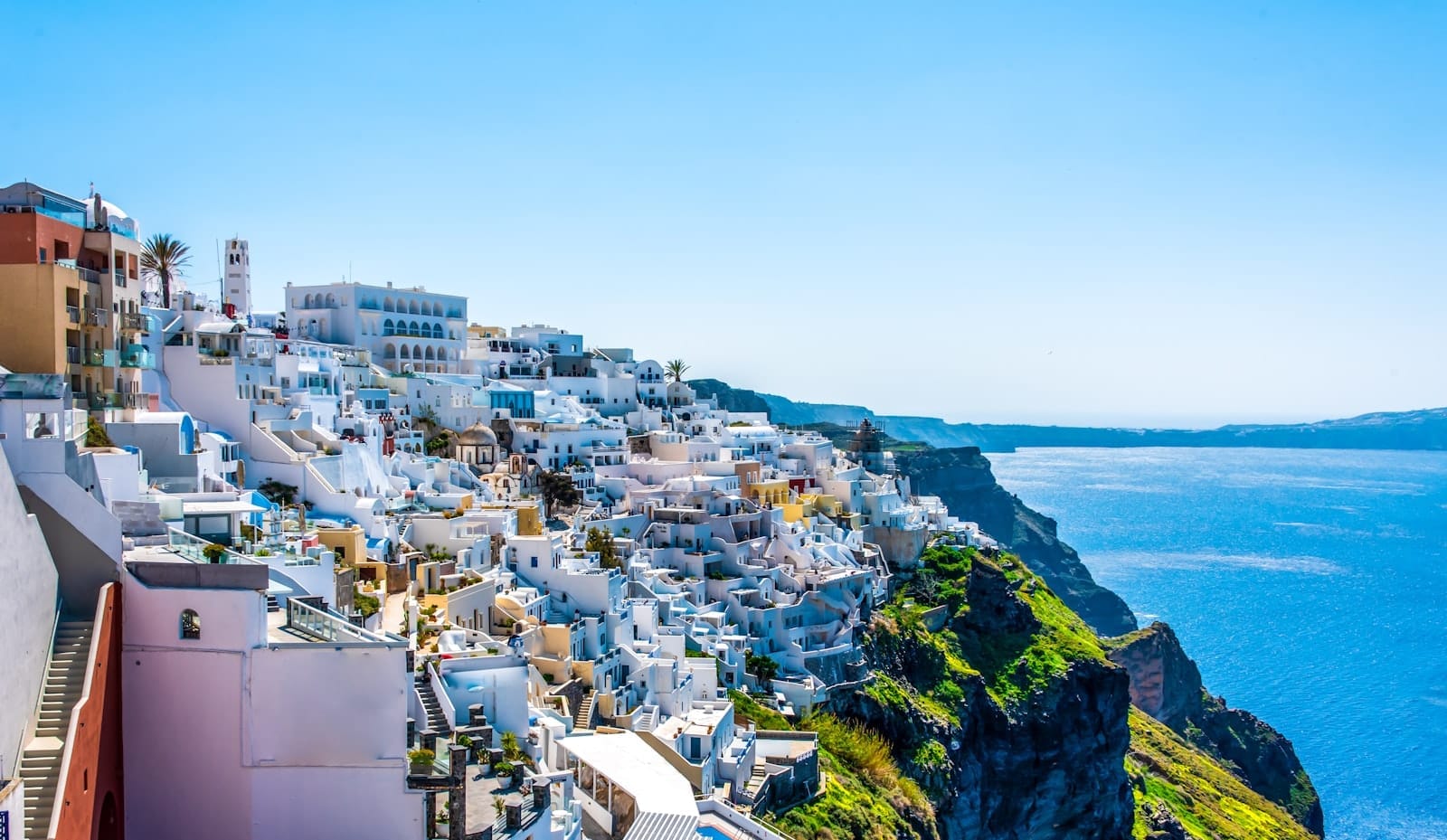
Santorini polarises travellers. The caldera views are genuinely spectacular, the volcanic landscape is unlike anywhere else in Greece, and the archaeology rivals anything in the Aegean. But the crowds are real, the prices are steep, and the hype can outpace the reality. Here is what you actually need to know before you book.
Plan and book this trip
Tools from our partner Travelpayouts help you compare flights and hotels. If you book through them, we may earn a commission at no extra cost to you.
Flights
Hotels map
TL;DR
- Santorini is worth visiting, but the experience depends almost entirely on when you go and where you stay.
- Peak season (July–August) means extreme heat on the caldera rim, heavy crowds in Oia, and hotel prices that can double compared to shoulder season.
- April–June and September–October offer the best balance of weather, manageable crowds, and value — see the full breakdown in our best time to visit Santorini guide.
- The island is genuinely expensive by Greek standards. Budget travellers can make it work, but it requires planning.
- Beyond the sunsets, there is serious depth: a Bronze Age archaeological site, active volcano boat trips, distinct volcanic wines, and coastal hiking. The island rewards those who look past the postcard shots.
What Makes Santorini Different From Other Greek Islands
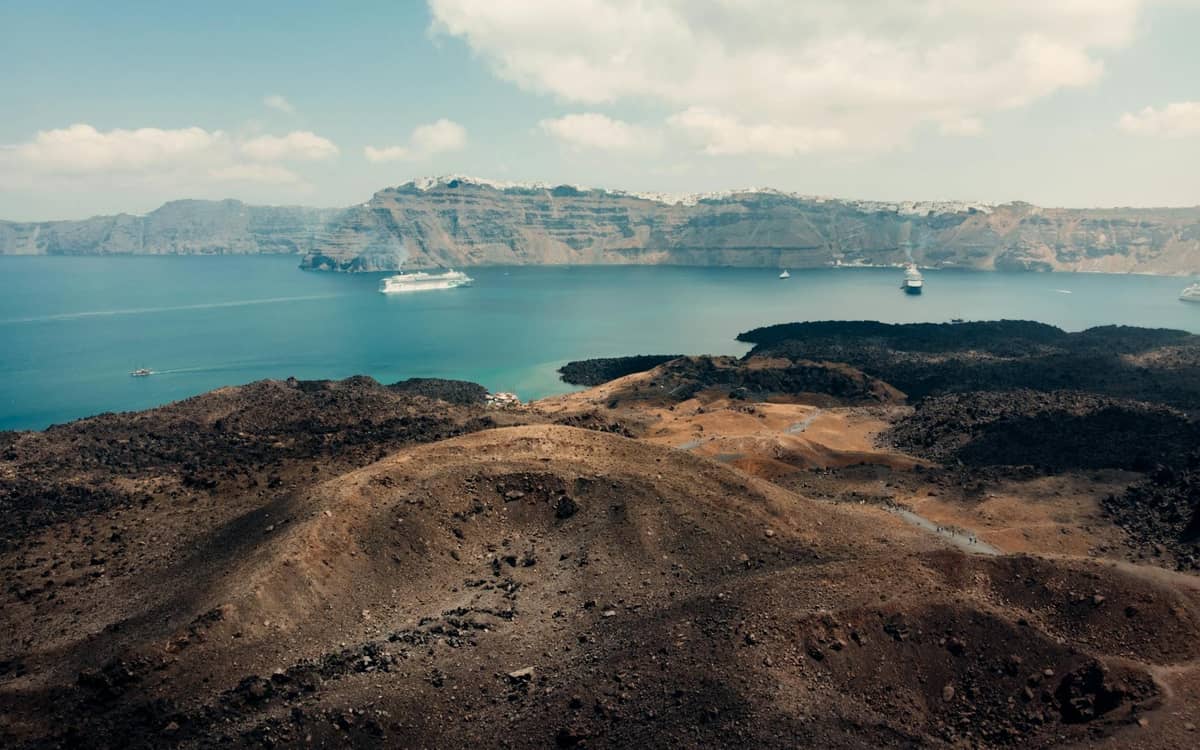
Santorini, officially called Thira (or Thera), is not your typical Cycladic island. The landscape was shaped roughly 3,600 years ago by the Minoan eruption, one of the largest volcanic events in recorded human history. That explosion collapsed the central landmass inward, creating the enormous caldera that now forms the island's western edge. The result is a crescent of cliffs rising up to around 300 metres above sea level, with the sea filling the void below. No other island in the Aegean looks like this.
The island group technically includes five landmasses: Thira (the main island), Thirassia, Aspronissi, Palea Kameni, and Nea Kameni. The last two are the volcano's active cones, and you can visit both on a caldera boat trip. The volcano last erupted in 1950–51 and is still considered active. For those interested in geology, this is a destination with genuine scientific significance, not just scenic value. If you want to understand the volcanic history in depth, the Santorini volcano and hot springs guide covers the logistics of visiting Nea Kameni and the thermal waters at Palea Kameni.
The whitewashed architecture, blue-domed churches, and cave houses carved into the caldera cliffs are a direct response to this volcanic geology, not simply an aesthetic choice. Buildings were cut into the pumice and ignimbrite deposits that blanketed the island after the eruption. The island's famous black, red, and white volcanic beaches are another product of that same geology. If you are expecting Mediterranean white-sand beaches, Santorini will surprise you.
The Honest Case For Visiting Santorini
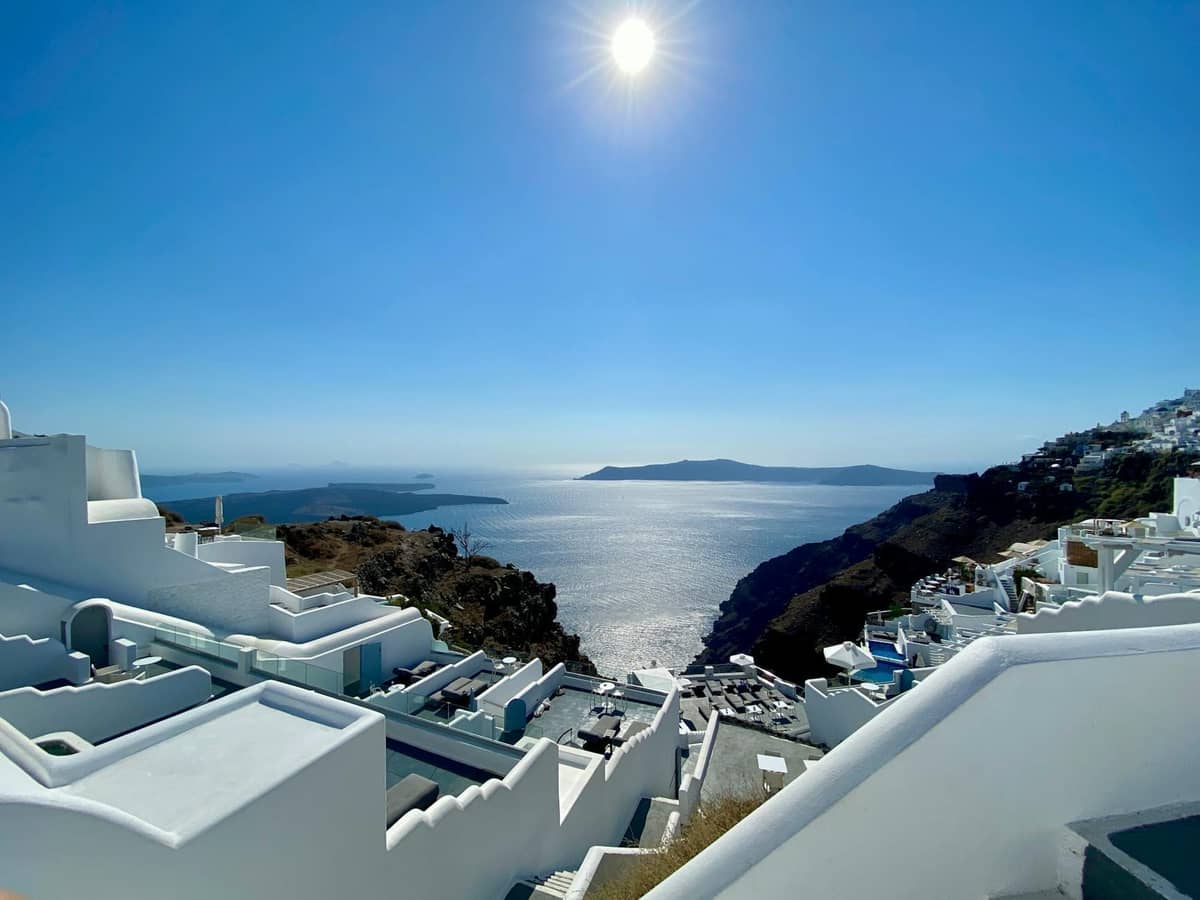
The caldera view from the rim villages is legitimately one of the most dramatic landscapes in Europe. Whether you are watching the light change over the water from Imerovigli at dawn, or sitting with a glass of Assyrtiko wine above Fira as the sun drops, there are moments here that are hard to replicate elsewhere. That reputation is not entirely manufactured by Instagram.
Beyond the views, Santorini has real archaeological depth. The Bronze Age settlement at Akrotiri is sometimes called the Minoan Pompeii, and that comparison holds. The site preserves multi-storey buildings, sophisticated drainage systems, and vivid frescoes from a civilisation that predates classical Greece by over a thousand years. The Museum of Prehistoric Thera in Fira houses many of the original artefacts and is one of the most underrated museums in Greece.
- Caldera scenery The cliff villages and sea views are as dramatic as advertised. Fira, Firostefani, Imerovigli, and Oia each offer distinct perspectives along the 14-kilometre rim.
- Volcanic beaches Red Beach near Akrotiri, black-sand Perissa and Kamari, and the remote White Beach are unlike any beach landscape in the Mediterranean.
- Wine culture Santorini produces distinctive white wines from the Assyrtiko grape, grown in low basket-shaped vines that protect against the wind. The island's wine history stretches back thousands of years.
- Archaeology Akrotiri is one of the most significant Bronze Age sites in Europe. The Museum of Prehistoric Thera and the Archaeological Museum of Thera in Fira provide essential context.
- Hiking The Fira-to-Oia trail along the caldera rim is one of the most scenic coastal walks in Greece, covering around 10 kilometres with almost continuous views.
- Boat trips Sailing or cruising into the caldera, with stops at the volcano and hot springs, is an experience that no other Greek island can offer.
✨ Pro tip
Santorini's Assyrtiko wine is one of the most distinctive whites in Europe: high acidity, mineral-driven, and shaped by volcanic soil. A visit to Santo Wines or Venetsanos Winery on the caldera rim costs very little and provides context that improves every glass you drink for the rest of your trip.
The Honest Case Against Visiting Santorini
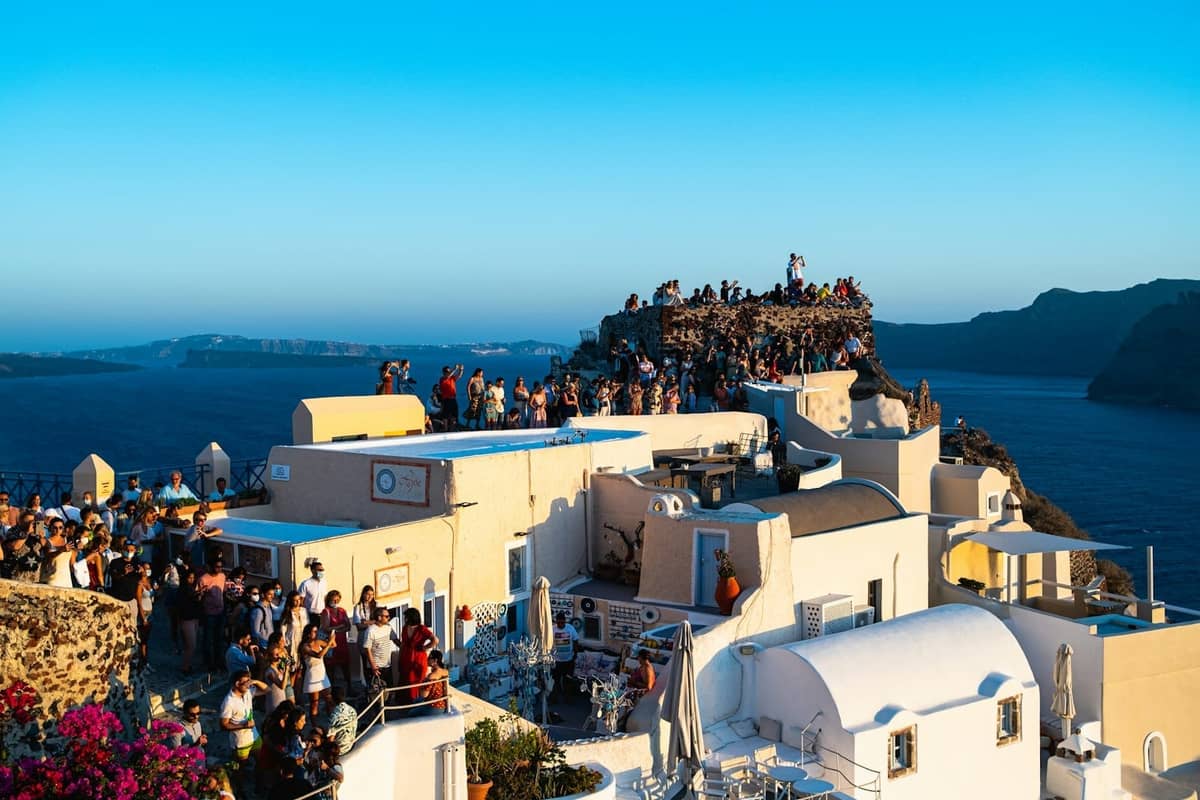
Here is where many guides go quiet. Santorini in July and August is genuinely overwhelming. The caldera rim villages become clogged with day-trippers from cruise ships, some of which dock multiple vessels simultaneously in summer. Oia's sunset viewpoint regularly draws hundreds of people, making it feel less like a natural spectacle and more like an outdoor ticketed event. If you are planning a quiet, romantic escape in peak season without significant advance planning and budget, the reality may not match your expectations.
The heat compounds the crowd issue. The caldera rim is largely exposed, with limited shade, and temperatures on the cliffs regularly exceed 30°C in summer. The paved surfaces and stone steps absorb heat throughout the day. Walking from Fira to Oia in August midday is inadvisable for most people. Add the famous approximately 600 steps up from the Old Port (or the cable car queue of 45 minutes or more on cruise ship days), and summer Santorini is a logistically demanding destination.
Cost is the other honest conversation. Accommodation with a caldera view commands a significant premium, with many cliffside hotels charging rates that rival major European capitals during peak weeks. Restaurants on the caldera rim price accordingly. It is possible to visit on a tighter budget by staying in Kamari or Perissa on the east coast and visiting the caldera rim during the day, but that is a different trip than what most visitors picture when they book Santorini.
⚠️ What to skip
On days when multiple large cruise ships dock simultaneously, the narrow lanes of Oia and Fira can become genuinely difficult to navigate. Check the cruise ship schedule for your travel dates (publicly available through port authority listings) and plan your caldera visits accordingly — early morning before 9am is consistently the most manageable window.
When to Visit: Timing Changes Everything
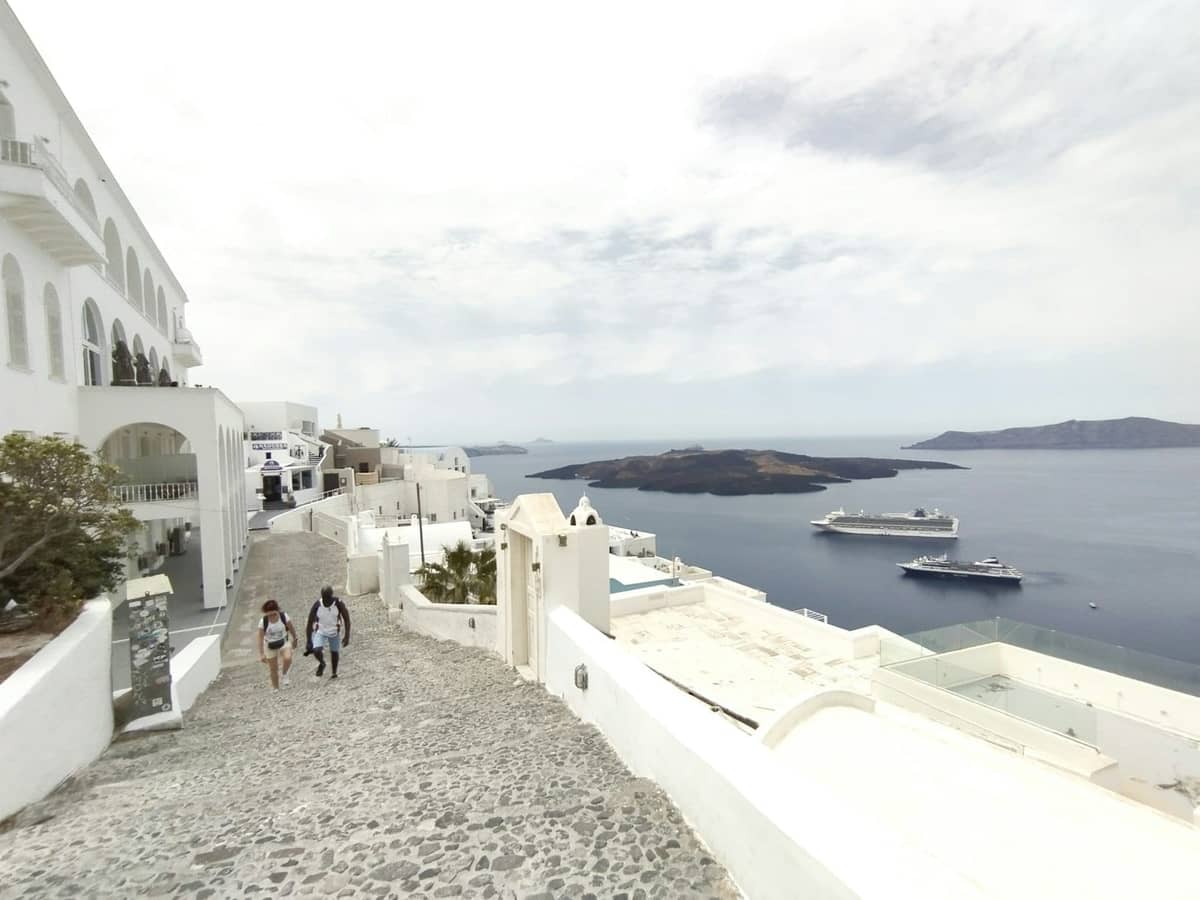
The single factor that most determines whether Santorini is worth it for any individual traveller is timing. April and May offer mild to warm temperatures (typically reaching the high teens to low‑20s°C), low rainfall, and crowds that are present but manageable. Most attractions and restaurants are open, accommodation prices are noticeably lower than peak season, and the landscape is at its clearest. September and October offer similar advantages with the added benefit of warm sea temperatures — the Aegean holds its summer heat well into autumn. For a deeper breakdown of conditions across the calendar, the Santorini weather by month guide gives month-by-month specifics.
November through March is a different Santorini entirely. Many hotels, restaurants, and tour operators close for the season. The island population drops back to its approximately 15,000 permanent residents. Rainfall increases, particularly December through February. For travellers who want to see the island without the tourist infrastructure, this period has appeal, but verify what is open before booking. Winter is best suited to those who prioritise archaeology and history over beaches and sunsets — sites like Akrotiri and the museums remain accessible, while the caldera villages are peaceful in a way that is simply not possible in summer.
- April–June: best overall balance of weather, crowds, and cost. Ideal for first-time visitors.
- July–August: hottest weather, maximum crowds, peak prices. Best suited to those who book months ahead and have flexible budgets.
- September–October: warm sea, thinning crowds after mid-September, good value. Arguably the sweet spot for most travellers.
- November–March: quiet but limited. Many businesses close. Best for archaeology-focused visits or those who want the island largely to themselves.
What to Actually Do in Santorini
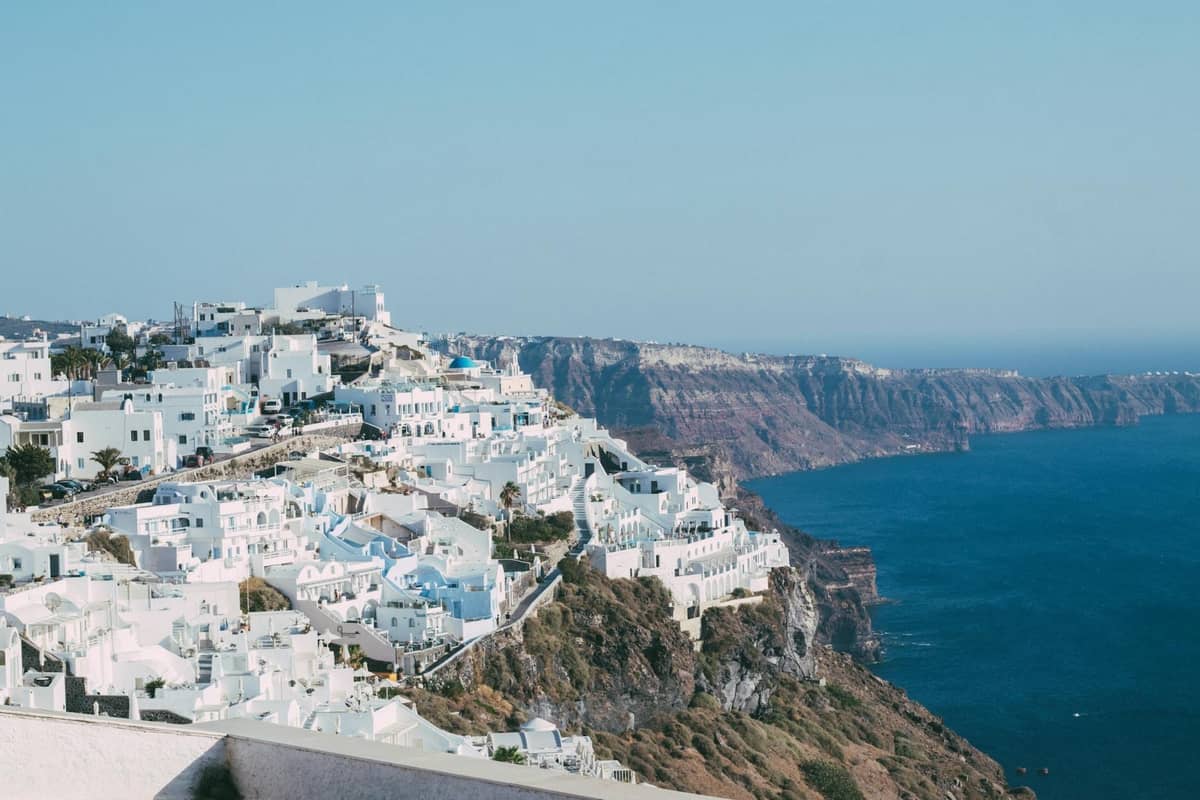
The caldera sunset is the signature experience, and yes, it is worth seeing once. But choosing where to watch it matters. Oia's main sunset viewpoint is the most photographed but also the most crowded. Imerovigli and Firostefani offer equally dramatic westward views with a fraction of the audience. For a genuinely personal perspective on where to position yourself for the best light and the fewest crowds, the Santorini sunset guide is worth reading before your first evening on the island.
The Fira-to-Oia hiking trail is the most rewarding half-day activity on the island for active travellers. The path runs approximately 10–11 kilometres along the caldera rim, passing through Firostefani and Imerovigli, with views across the water to the volcano throughout. Start from Fira and walk north to Oia rather than the reverse, as the gradient is more forgiving in that direction. Allow 3 to 4 hours depending on pace and stops. The Santorini hiking guide has the full route breakdown, including the section around Skaros Rock that most visitors skip.
For beaches, the east coast offers the most accessible options. Kamari and Perissa are both well-developed black-sand beach resorts with bars, restaurants, and water sports. Red Beach, near Akrotiri, is the most visually distinctive, with its rust-coloured cliffs dropping to dark pebbles, though it is small and gets crowded. For those interested in the full range of Santorini's coastal landscape, the best beaches in Santorini guide covers each option in detail.
Practical Considerations Before You Book
Santorini is a Schengen Area destination, meaning entry requirements depend on your nationality. EU citizens travel freely; many other nationalities are visa-exempt for short stays, while others require a Schengen visa. Verify your specific situation well before travelling, as rules can change. The island uses the Euro, and card payments are widely accepted in tourist areas, though smaller establishments in inland villages may prefer cash.
Getting around requires some planning. The KTEL bus network connects Fira with the major villages, beaches, and the port, and is the cheapest option. Taxis are available but limited in number, and during peak season the wait can be significant. Many visitors rent ATVs or cars, though the roads near Oia and Fira can be narrow and busy in summer. For a complete overview of transport options, the getting around Santorini guide covers the practicalities in full. The airport (IATA: JTR) is about 6 kilometres from Fira, and the ferry port at Athinios is roughly 10 kilometres south of the capital.
💡 Local tip
Tap water in Santorini is generally not used for drinking due to the island's limited freshwater resources. Bottled water is inexpensive and widely available. Pack a refillable bottle to reduce plastic waste and keep it filled from shop purchases rather than relying on taps when out walking.
Accommodation choices significantly shape the trip. Staying on the caldera rim in Fira, Firostefani, Imerovigli, or Oia puts you closest to the views but at the highest cost. The east coast villages of Kamari and Perissa offer far better value and direct beach access, at the trade-off of needing transport to reach the caldera. The inland village of Pyrgos is a genuinely underrated base, with its own caldera views, fewer tourists, and accommodation that costs a fraction of the cliff hotels. The where to stay in Santorini guide breaks down each area honestly, including which village suits which type of trip.
FAQ
Is Santorini worth visiting for a first-time traveller to Greece?
Yes, but manage expectations carefully. The caldera landscape is genuinely unlike anywhere else in Europe, and the archaeology and volcano make for a rich trip beyond the scenery. That said, if your budget is limited or you are visiting in July or August without pre-booked accommodation, consider Athens plus another Cycladic island first and save Santorini for when you can do it properly.
Is Santorini worth the cost compared to other Greek islands?
It depends entirely on what you value. Caldera-view hotels in Oia can cost several hundred euros per night in peak season. The same money on Naxos, Paros, or Crete buys a far more spacious and relaxed experience. However, no other Greek island offers the specific combination of caldera scenery, active volcano access, and the Akrotiri archaeological site that Santorini does. If those are priorities, the premium is justified.
How many days do you actually need in Santorini?
Three to four days is the practical minimum to see the main sights without feeling rushed: one full day for the caldera villages and sunset, one day for Akrotiri and the volcanic beaches, one day for a caldera boat trip or volcano hike, and a day to explore wine country or simply decompress. A full week allows you to cover the island at a relaxed pace and include a day trip to Thirassia.
Is Santorini worth visiting in September?
September is one of the best months to visit. Temperatures are warm (typically low-to-mid 20s°C), the sea is at its warmest after a full summer of heating, and crowds begin to thin meaningfully after the first week. Prices drop noticeably from their August peak. Most restaurants and tour operators are still fully operational. It is a strong choice for those who want summer conditions without the July-August intensity.
Is Santorini worth visiting if you are not interested in sunsets and romance?
Genuinely, yes. The volcanic geology, Bronze Age archaeology at Akrotiri, and hiking on the caldera rim have nothing to do with romance. The island's wine production from ancient Assyrtiko vines, the boat trips to an active volcano, and the distinct black and red volcanic beaches all offer experiences with real substance. Santorini's reputation as purely a honeymoon destination undersells how much the island offers to history, nature, and food-focused travellers.