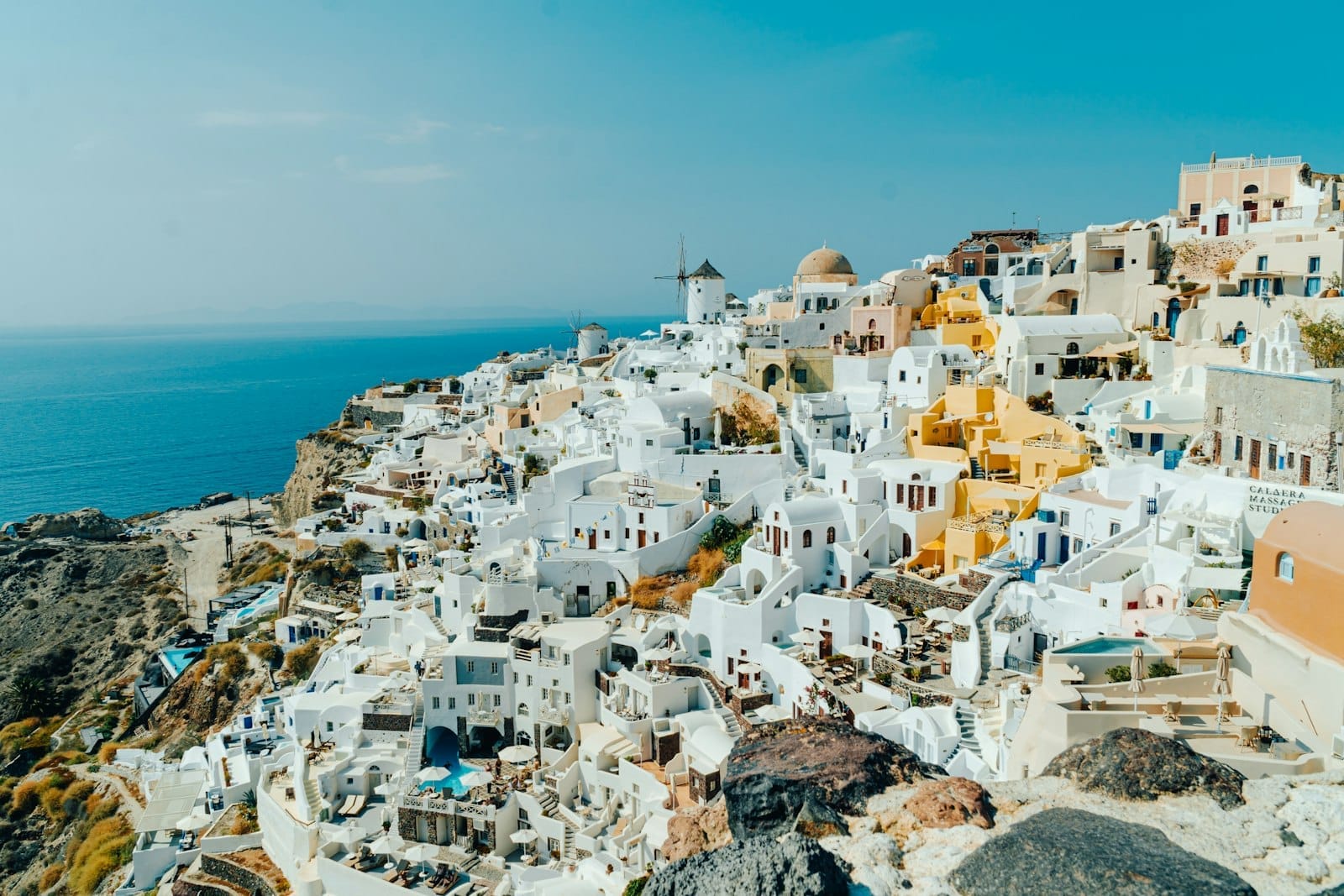
Oia is Santorini's northernmost caldera village, a stretch of whitewashed cave houses and blue-domed churches perched above the Aegean on the volcanic rim. It draws visitors from across the island for its views and architecture, but rewards those who stay longer with quieter mornings, excellent restaurants, and direct access to Ammoudi Bay below.
Oia sits at the northern tip of Santorini's caldera rim, roughly 11 to 12 kilometers from the island capital of Fira, and it is the village most people picture when they think of Greece. The whitewashed houses stacked into the volcanic cliff, the blue domes catching the afternoon light, the windmills silhouetted against the sky: all of it is real, and all of it is genuinely as striking as the photographs suggest. The trade-off is that everyone else knows this too.
Orientation: Where Oia Sits on the Island
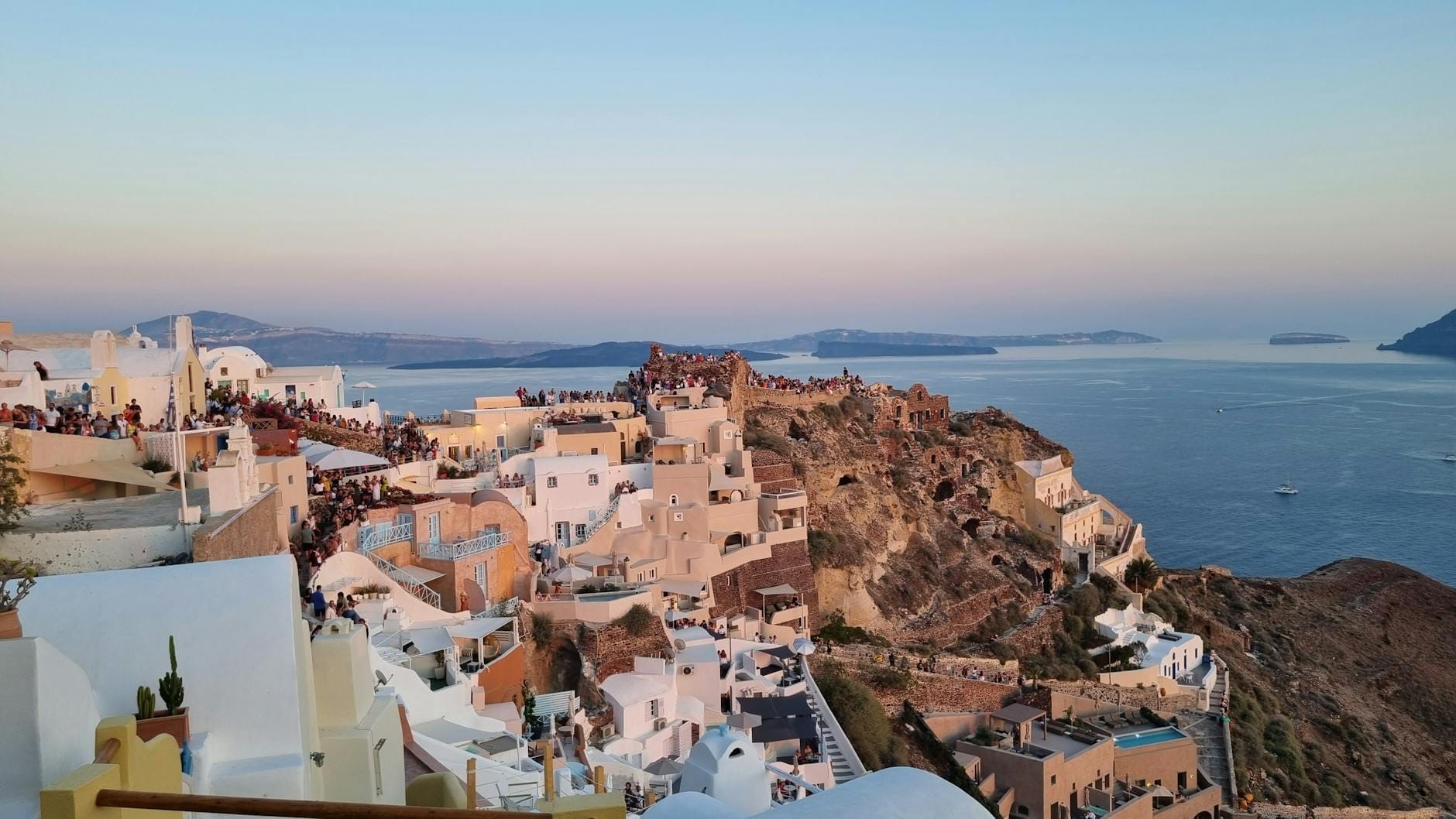
Oia occupies the far northern tip of Santorini, positioned on the narrow ridge where the caldera rim tapers toward the sea. To the west, the land drops sharply into the caldera, a flooded volcanic crater roughly 10 to 12 kilometers wide. To the northeast, the ridge falls away toward the Aegean coast and the small fishing port of Ammoudi Bay, which sits roughly 250 to 300 steps directly below the village center.
The main inhabited caldera-rim corridor runs southeast from Oia through Imerovigli and Firostefani before reaching Fira. This entire stretch is sometimes called the caldera trail, and the hiking route connecting these villages is one of the island's great walks. Oia is the northern terminus of that path.
The village itself is organized around a single pedestrian spine running east to west along the caldera rim. Narrow alleys branch off both sides: toward the cliff edge on the west, where the cave houses and infinity pools are carved into the rock face, and inland to the east, where the architecture is more modest and the crowds thin considerably. The car road that serves Oia runs along the eastern, inland edge of the village, so vehicles never penetrate the core.
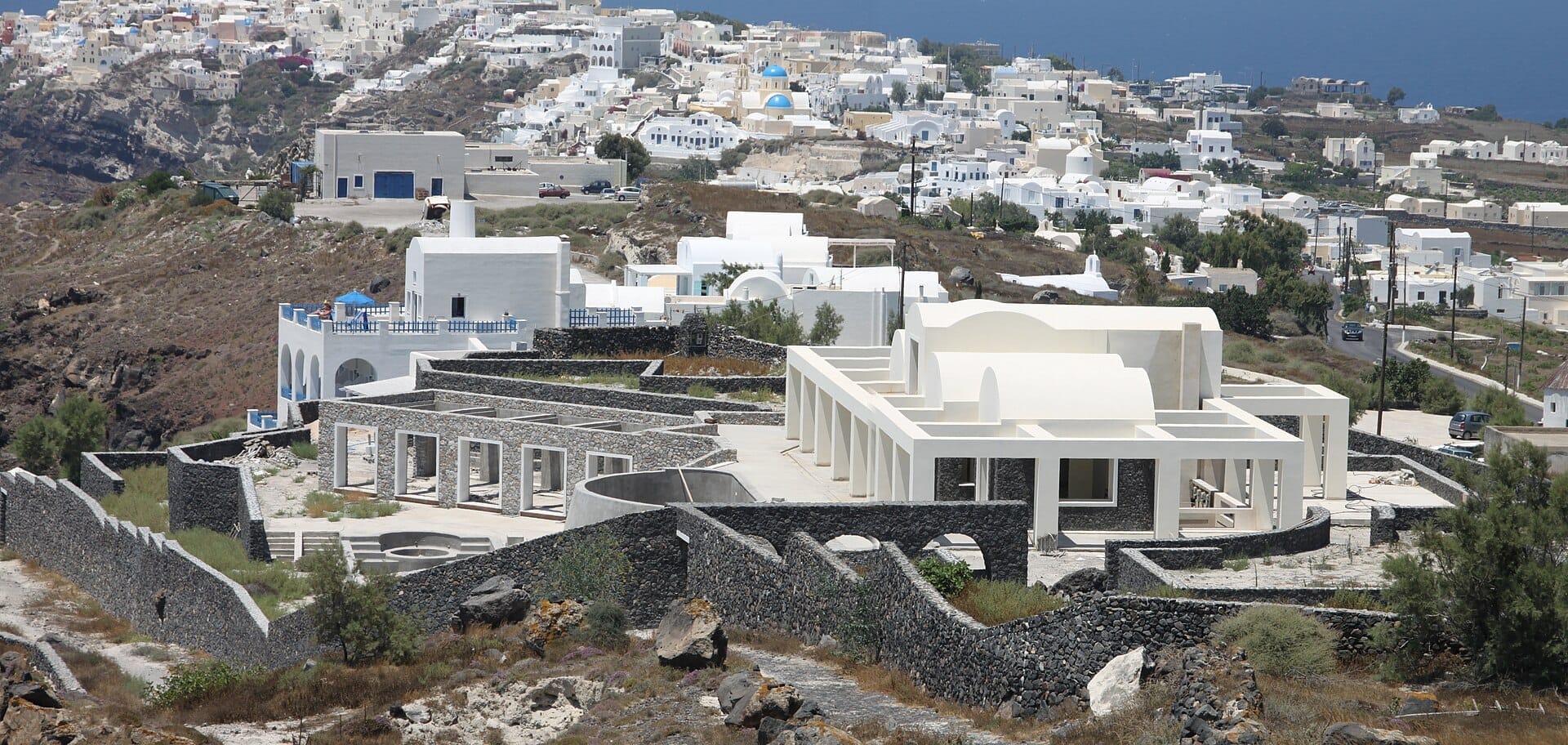
The nearest neighboring settlement is Finikia, a small, quiet village about a kilometer to the east along the inland road. It functions as Oia's calmer, less-visited counterpart and is worth knowing about if you're staying in the area and want a morning walk without tour groups.
Character and Atmosphere
Oia in the early morning is a completely different place from Oia at sunset. Before 8am, the main street is mostly quiet: a few café owners setting out chairs, cats stretched across warm stone steps, the smell of coffee and sea air. The light at this hour falls flat and golden across the caldera, and the whitewash glows without the competing noise of camera shutters. This is when the village actually feels like somewhere people live.
By mid-morning, the day-trippers begin arriving, most of them bused up from Fira or delivered by private transfer from the port. The main pedestrian street fills steadily through the afternoon. Shops selling jewelry, ceramics, and prints open around 10am. Restaurants begin service for lunch around noon, though many visitors are already circling the blue-domed church viewpoints with phones raised by 11am.
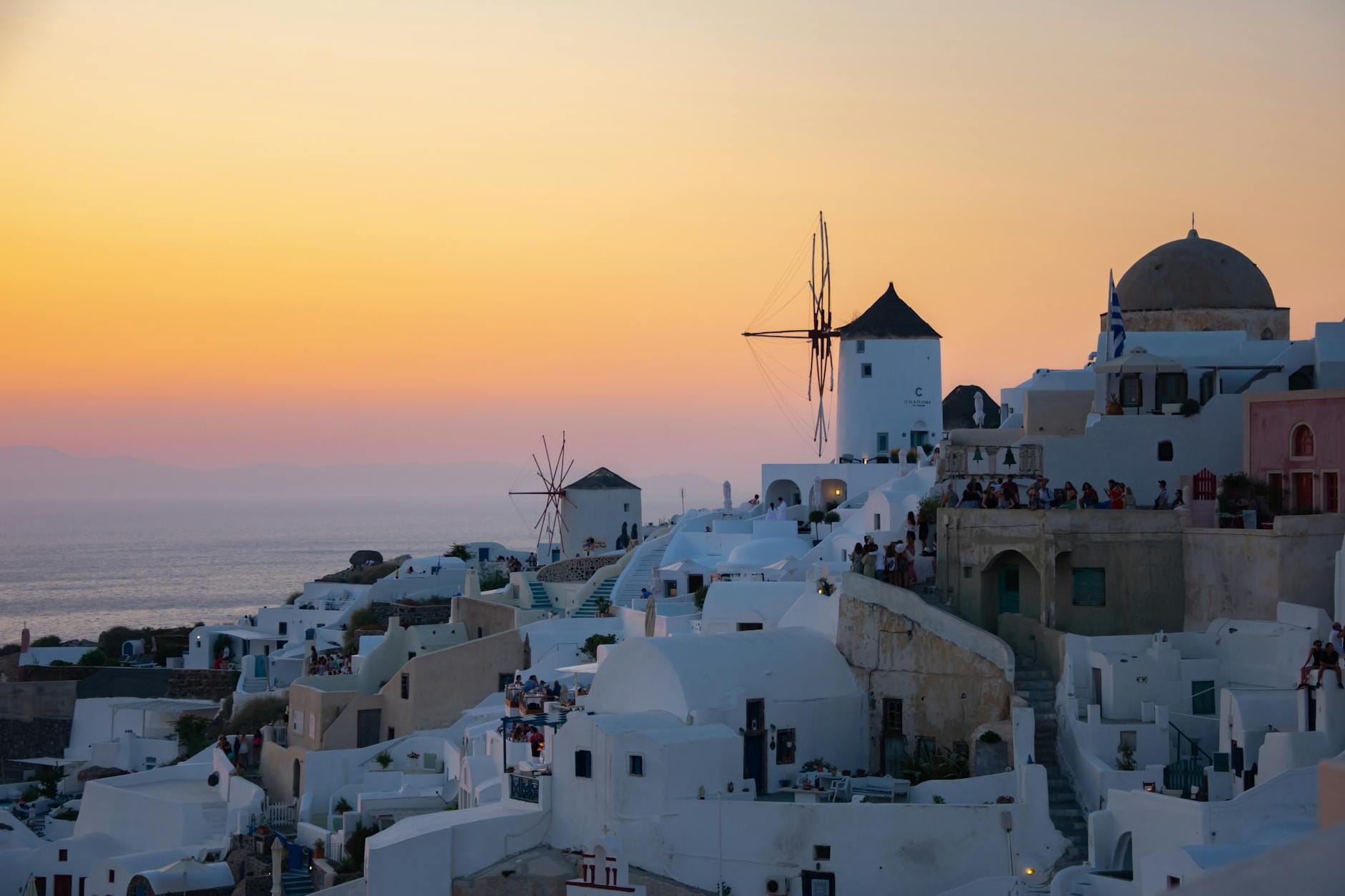
The pre-sunset hour, roughly from 6pm onward in summer, is the most crowded period Oia experiences. The area around the ruined Venetian Castle of Agios Nikolaos at the western end of the village fills with hundreds of people jostling for position. The crowd is international, enthusiastic, and genuinely large. It is a spectacle in itself, though not a peaceful one.
After sunset, many day-trippers leave quickly to return to Fira or to cruise ships in the port. The village then shifts again: restaurants fill, the lighting turns warm, and the pace slows. For those staying overnight, this post-sunset window is when Oia becomes most enjoyable as a place to actually spend time in.
⚠️ What to skip
Oia's streets are steep, uneven, and made of polished stone. They can be slippery even when dry. Comfortable shoes with grip are essential, particularly for the paths that descend toward Ammoudi Bay. Flip-flops are a genuine safety risk on the steeper sections.
What to See and Do
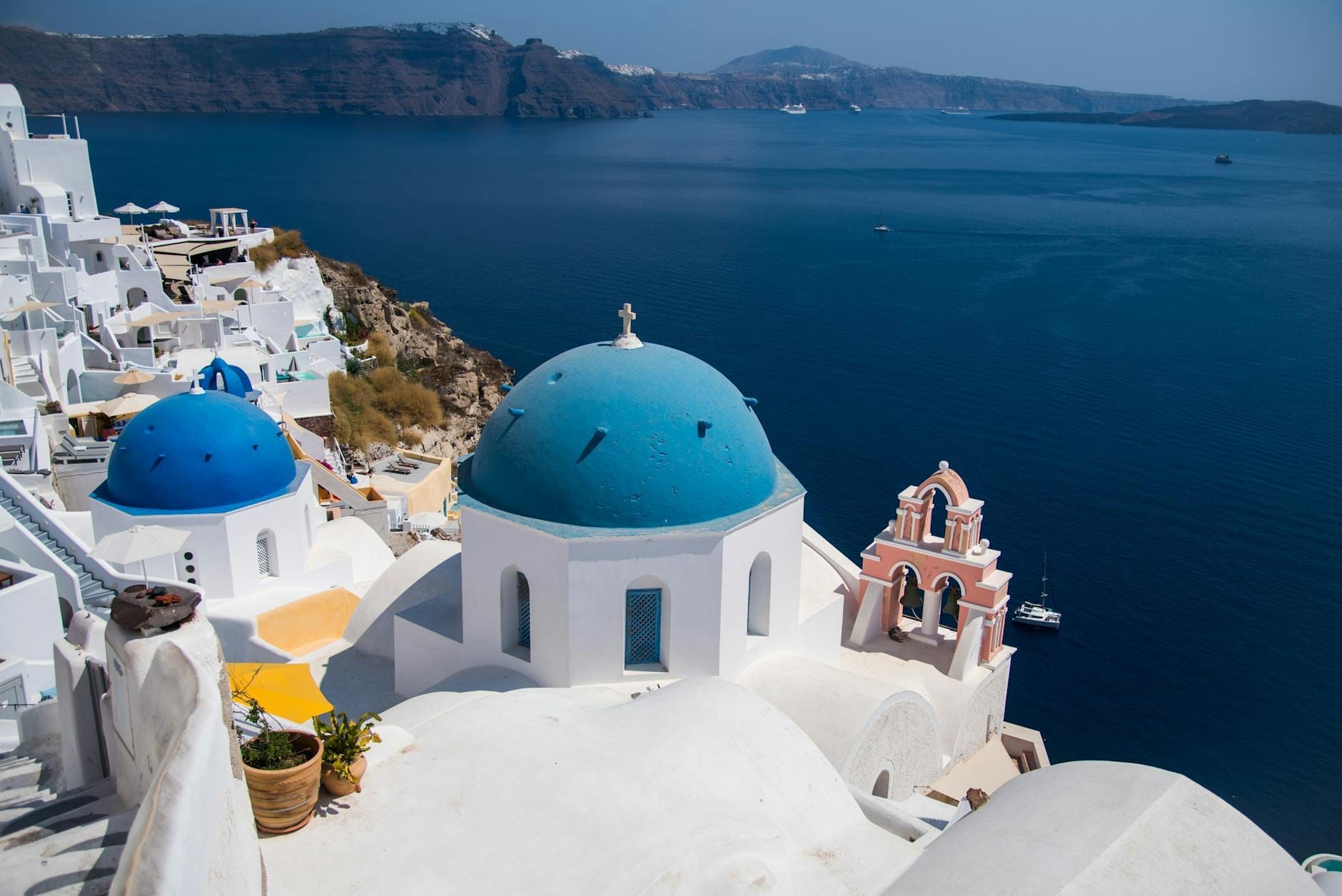
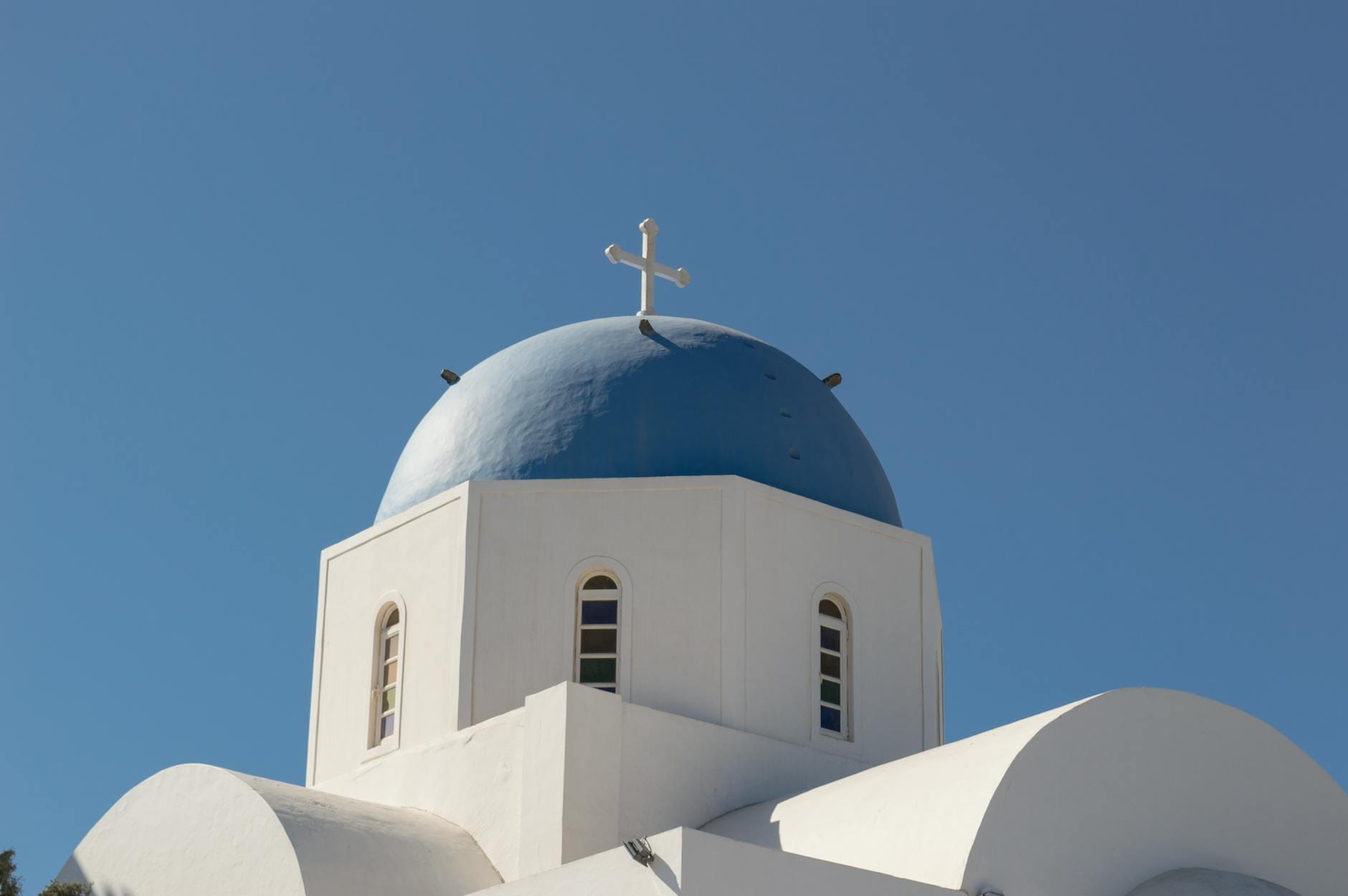
The most photographed single image in Oia is the cluster of blue-domed churches visible from multiple points along the caldera rim. The blue-domed churches of Oia are best photographed in the morning before crowds arrive, and from the main path rather than from within them, as the churches themselves are small functioning Orthodox chapels rather than tourist monuments.
The ruined castle at the western tip of the village is the most popular spot for watching the sun descend over the caldera. The Oia sunset viewpoint gets crowded at least an hour before sunset during peak season (June through September). Arriving early and finding a wall or step to sit on is the practical approach. The view is undeniably striking, but keep expectations realistic: you will not be watching it alone.
The Oia windmills stand near the eastern approach to the village and offer a good framing point for the caldera behind them. They are no longer operational but serve as an orienting landmark and a slightly less crowded photography spot than the castle.
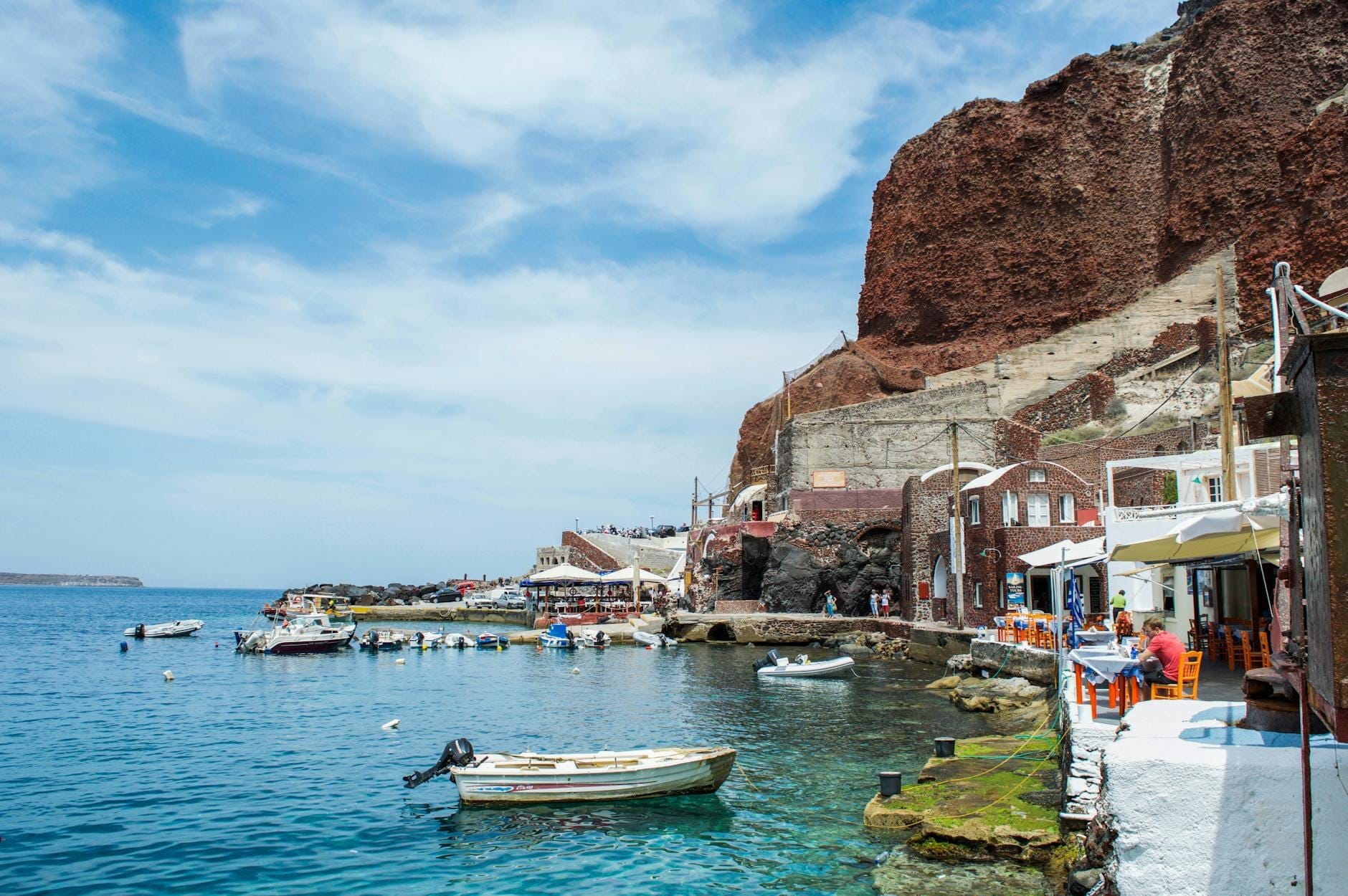
Below the village, Ammoudi Bay is a tiny harbor at the base of the cliff, reached by a steep descent of around 250 to 300 steps from the main street (or by road from the eastern edge of Oia). It has a handful of seafood tavernas built right at the water's edge, and several flat rocks from which people swim directly into the Aegean. The water here is clear and relatively calm. It is a very different atmosphere from the village above: quieter, more practical, less posed.
Walk the caldera path toward Imerovigli for the best wide-angle views back toward Oia
Visit the Naval Maritime Museum, located in a restored neoclassical mansion on the main street
Explore the Finikia village loop for an easy walk through a less-visited settlement
Take the descent to Ammoudi Bay for a swim and seafood lunch away from the main crowds
Visit the blue-domed churches in early morning for photographs without crowds
For those interested in connecting Oia to the wider island, the Fira to Oia hiking trail is the most rewarding way to understand how the caldera villages relate to one another spatially. The full route takes roughly 2.5 to 3 hours at a steady pace and passes through Firostefani and Imerovigli along the way. Starting from Fira and ending in Oia means you finish with dinner options and a place to stay rather than a long walk back.
💡 Local tip
If you want the sunset view without the castle crowd, walk east along the main path for about 5 minutes after the crowd cluster. The view is nearly identical from the caldera rim further along, and you will have significantly more space.
Eating and Drinking
Oia's food scene sits at the upper end of Santorini's price range. Caldera-view restaurants with terrace seating charge premium prices, and the most prominent spots on the main pedestrian street are aware of their position. That said, the quality at the better restaurants is genuinely high, and an evening meal on a caldera terrace in Oia is one of the classic Santorini experiences for a reason.
The main pedestrian street has a full range of options: gelato and crepe stands for casual snacking during the day, cafés serving Greek coffee and pastries in the morning, mid-range mezze restaurants for lunch, and upscale dinner venues for the evening. The restaurants on the caldera side of the street typically require reservations at least a day in advance during July and August.
For a more relaxed and affordable meal, the tavernas at Ammoudi Bay below the village specialize in fresh fish and grilled octopus. Prices are still not cheap by Greek standards, given the location, but they are noticeably lower than the cliff-top options above. The setting, with fishing boats tied up a few meters away, has an authenticity that the main village restaurants cannot replicate.
Santorini's local wine tradition is worth engaging with during a stay in Oia. The island's distinctive assyrtiko grape produces dry white wines with a mineral edge from the volcanic soil. Several restaurants along the main street stock local producers, and Santorini's wine heritage is one of the more interesting things to learn about while eating well. The wine list at the better Oia restaurants reflects this seriously.
Caldera-view dinner restaurants: book at least 1-2 days ahead in peak season
Ammoudi Bay tavernas: best for fresh fish, grilled seafood, and a more relaxed atmosphere
Main street cafés: good for Greek coffee, breakfast pastries, and watching the morning pedestrian flow
Gelato and snack stands: scattered along the main street, useful for afternoon breaks between viewpoints
ℹ️ Good to know
Most restaurants in Oia accept credit cards, but some smaller cafés and shops operate cash-only. Carrying a small amount of euros is useful. The nearest ATM is on the main street near the village entrance from the Fira road side.
Getting There and Around
Oia is about 11 kilometers north of Fira by road, which takes roughly 20 to 25 minutes by taxi or private transfer depending on traffic. The road into the village arrives from the east and deposits visitors at a small parking and drop-off area at the village entrance. From there, the main pedestrian street is immediately walkable.
From Santorini Airport (JTR), Oia is approximately 16 kilometers by road. A taxi typically takes 25 to 30 minutes. There is no direct bus from the airport to Oia; the practical route by public transport involves taking the KTEL bus from the airport to Fira first, then a separate bus from Fira to Oia. Verify current schedules with KTEL Santorini before travel, as timetables vary significantly by season.
The KTEL bus service runs between Fira and Oia regularly during the tourist season, with the journey taking approximately 20 to 25 minutes. Buses stop at the main road on the eastern edge of the village. The service is inexpensive and functional, though buses can be very crowded around sunset as day visitors return south.
The most rewarding way to arrive in Oia, if you are already on the island and reasonably fit, is on foot from the south. The Fira to Oia caldera trail passes through Firostefani and Imerovigli before completing at Oia, covering about 10 kilometers. The path is well-marked but requires solid footwear and enough water for a few hours of walking, particularly in summer heat.
Within Oia, everything is on foot. The central village is entirely pedestrian, with steep steps and narrow paths connecting the caldera rim to the lower levels of cave houses. There are no taxis, buses, or vehicles permitted in the core. Allow more time than you think you need to move between points, especially in the afternoon when foot traffic is at its heaviest.
Where to Stay
Oia is one of the most in-demand accommodation addresses on the island and among the most expensive in Greece during peak season. For a full breakdown of how Oia compares to other base options across Santorini, the where to stay in Santorini guide covers each village in practical terms.
Caldera-side properties, which include the cliff-carved cave houses and suites with private plunge pools and direct caldera views, represent the luxury tier. These are the kinds of rooms that photographers and honeymoon planners target. They book out months in advance for July and August, and prices reflect both the scarcity and the views. If this experience is the point of your trip, book as early as possible.
The inland side of Oia and the nearby village of Finikia offer more modest options: small guesthouses, studios, and family-run properties without caldera views but within easy walking distance of everything. For couples looking for a romantic base without the highest price bracket, Santorini's honeymoon accommodation options include alternatives in Imerovigli and Firostefani that offer similar cliff-edge drama at lower prices.
Staying in Oia rather than day-tripping from Fira changes the experience substantially. The village before 9am and after the sunset crowd disperses is quieter and more genuinely atmospheric than anything you encounter in the middle of the day. Overnight guests also have easy access to Ammoudi Bay for early morning or late-evening swims, which day visitors almost never manage.
⚠️ What to skip
Oia is not a suitable base if your main priority is beach access. There is no beach within the village itself. Ammoudi Bay has swimming off the rocks, but the nearest proper sand or black-pebble beaches require a car or taxi ride. If beach time is central to your trip, consider basing yourself in Kamari, Perissa, or Akrotiri instead.
Honest Assessment: Who Oia Is For
Oia is worth visiting for almost everyone who comes to Santorini. The architecture and caldera setting are genuinely extraordinary, and the village rewards time spent properly rather than a rushed 90-minute walk between a bus drop-off and the sunset viewing point. The question is not really whether to visit, but whether to stay.
The case for staying in Oia: the before-and-after-crowd atmosphere, the quality of the restaurants, the ease of watching the sunset from your own terrace rather than fighting for space at the castle viewpoint, and the access to Ammoudi Bay. The case against: it is expensive, the streets are crowded during prime hours, there is no beach, and if your Santorini priorities are beaches, wine tours, or the archaeological site at Akrotiri, Fira is a more practical base.
If you are visiting Santorini for the first time and want the full picture of the island before committing to a neighborhood, the 3-day Santorini itinerary includes Oia as a half-day or full-day destination within a broader island circuit, which is also a valid approach.
TL;DR
Oia sits at Santorini's northern caldera rim, about 11 km from Fira, and is the island's most architecturally concentrated village with direct access to Ammoudi Bay below.
Best visited in the early morning or after sunset: midday and pre-sunset hours bring the largest crowds to a village that is pedestrian-only and has limited space.
Accommodation ranges from top-tier cave-house suites with caldera views to modest inland guesthouses; all categories book up early in July and August.
No beach within the village: Ammoudi Bay offers rock swimming below the cliff, but sand beaches require a taxi or car ride to the east or south coast.
Ideal for couples, architecture enthusiasts, food and wine travelers, and photographers; less suited to those prioritizing beach access or lower accommodation budgets.
Santorini's beaches are unlike anywhere else in Greece. Volcanic geology means most are black or dark-pebbled, with a handful of dramatic color exceptions. This guide covers every beach worth visiting, from the popular to the genuinely quiet.
Santorini rewards visitors differently depending on when they arrive. This guide breaks down every season by weather, crowd levels, prices, and what's actually open so you can pick the timing that matches your priorities.
Santorini rewards visitors who look beyond the caldera rim. This guide covers the best day trips from Santorini, from hiking to Oia and cruising the volcanic islets to hopping across to Folegandros, with full logistics, seasonal notes, and practical booking advice.
Santorini has no metro, no trains, and surprisingly limited taxis. This guide breaks down every transport option on the island — KTEL buses, rentals, taxis, rideshare, and ferries — with real fares, route details, and practical advice on what works best by season.
Santorini polarises travellers. The caldera views are genuinely spectacular, the volcanic landscape is unlike anywhere else in Greece, and the archaeology rivals anything in the Aegean. But the crowds are real, the prices are steep, and the hype can outpace the reality. Here is what you actually need to know before you book.
Santorini's black sand beaches are unlike anything else in the Aegean. Formed by volcanic eruptions and shaped by centuries of erosion, they come with their own rules, quirks, and logistics. This guide covers the main beaches, practical access, seasonal timing, and what first-timers always get wrong.
Santorini is far more than the famous blue domes and caldera selfies. This guide takes you beyond Oia and Fira to the island's medieval villages, wild volcanic beaches, serious wine caves, and ancient ruins that most visitors walk straight past.
Santorini rewards hikers with caldera rim panoramas, ancient ruins, volcanic craters, and medieval villages. This guide covers the island's best trails, from the classic Fira–Oia walk to off-the-beaten-path routes most visitors never find.
Santorini's history stretches back more than 3,600 years, from a sophisticated Bronze Age city buried by volcanic ash to Hellenistic temples, Venetian fortresses, and Byzantine monasteries. This guide covers every significant historical site on the island, with practical advice on when to visit and what to expect.
Santorini's caldera views, volcanic beaches, and world-class sunsets make it one of the most sought-after honeymoon destinations in Europe. This guide breaks down exactly where to stay, what to do, and what to skip so you can plan a trip that lives up to the hype.
September is arguably the smartest month to visit Santorini. The sea is warm, the light is golden, the harvest is underway, and the worst of the summer crowds have thinned. This guide covers everything from weather and pricing to what actually changes as the month progresses.
Three days is enough to cover Santorini's essentials without burning out. This itinerary balances the iconic caldera villages, the volcanic south, ancient ruins, and the island's wine country — with specific timing, realistic costs, and straight talk on where the crowds aren't worth it.
Santorini's luxury scene runs deep, from cliffside suites with direct caldera views in Oia and Imerovigli to upscale beach resorts along the black-sand coast. This guide breaks down where to stay, when to book, what to expect across price tiers, and which high-end experiences are actually worth it.
Santorini has a reputation for luxury prices, and that reputation is partly earned. But with the right timing, accommodation choices, and a few practical strategies, the island is far more accessible than most people expect. This guide breaks down real costs and shows you where to cut spending without sacrificing the experience.
Santorini is one of the world's most photographed destinations, but knowing exactly where to stand, when to arrive, and which lesser-known angles to seek out separates good photos from great ones. This guide covers 23 of the island's best photography locations, from the iconic caldera rim to wild volcanic beaches and medieval hilltop villages.
From semi-private catamaran cruises to full-day private charters, Santorini's boat tour market is crowded and easy to overpay on. This guide breaks down every major format, what each actually includes, real price ranges for 2025-2026, and the questions to ask before you book.
Santorini's sunsets are legendary, but not all viewpoints are equal. This guide covers the best spots across the island, from the famous to the overlooked, with practical advice on when to arrive, how to avoid the worst crowds, and which locations suit different styles of traveler.
Santorini's caldera is one of the most dramatic natural amphitheaters on the planet, and knowing where to stand makes all the difference. This guide covers the island's finest vantage points, from iconic sunset spots to quiet hilltops most visitors never find.
The Santorini caldera holds one of the Mediterranean's most dramatic geological stories. This guide covers the volcano's history, how to visit Nea Kameni and the Palea Kameni hot springs, how to choose a boat tour, and what most visitors get wrong before they arrive.
Two of Greece's most iconic Cycladic islands, but they deliver very different trips. This guide breaks down the real differences between Santorini and Mykonos across beaches, atmosphere, costs, food, and logistics, so you can choose the one that fits your travel style.
Santorini's Mediterranean climate shifts dramatically across the year, from bone-dry summers with 12 hours of daily sunshine to mild, stormy winters. This guide breaks down Santorini weather by month, covering temperatures, rainfall, sea conditions, and crowd patterns so you can choose exactly the right time to visit.
Santorini produces some of Greece's most distinctive wines, shaped by volcanic soils, searing heat, and ancient vines trained in basket shapes against the Aegean wind. This guide covers every wine style, the best wineries to visit, how to book tastings, and what to order with your food.
Santorini is famous for romantic sunsets and honeymoon hotels, but it genuinely works for families too. This guide covers the best beaches for kids, family-friendly activities, where to base yourself, and the practical details that actually matter when you're traveling with children.
Santorini rewards visitors who go beyond the postcard shots. This guide covers the best things to do in Santorini across every interest and budget, from ancient ruins and caldera hikes to sailing tours and wine tasting, with candid assessments of what is actually worth your time.
Santorini's cuisine is shaped by volcanic soil, Bronze Age agriculture, and a seafaring tradition. This guide covers every local dish worth ordering, the ingredients that make them unique, how much to expect to pay, and when to visit for the freshest seasonal produce.
Santorini's accommodation landscape splits cleanly between cliffside caldera villages and laid-back beach towns on the east coast. This guide breaks down every major area by cost, crowd level, and practicality so you can match your base to your actual travel style.