Santorini vs Mykonos: Which Greek Island Should You Visit?
Two of Greece's most iconic Cycladic islands, but they deliver very different trips. This guide breaks down the real differences between Santorini and Mykonos across beaches, atmosphere, costs, food, and logistics, so you can choose the one that fits your travel style.
Plan and book this trip
Tools from our partner Travelpayouts help you compare flights and hotels. If you book through them, we may earn a commission at no extra cost to you.
Flights
Hotels map
TL;DR
- Santorini wins on scenery, archaeology, wine, and caldera views — it is a sightseeing island first, a beach island second.
- Mykonos wins on beaches, nightlife, and international dining — it suits those who want sun, sea, and a lively social scene.
- Both islands are expensive; budget carefully and check our Santorini on a budget guide if costs concern you.
- Shoulder season (May–June or September–October) is the sweet spot for both islands: fewer crowds, lower prices, still warm.
- If you only have one week in Greece, you do not need to choose — ferries connect both islands, and combining them is very common.
The Core Difference: Scenery vs. Social Scene
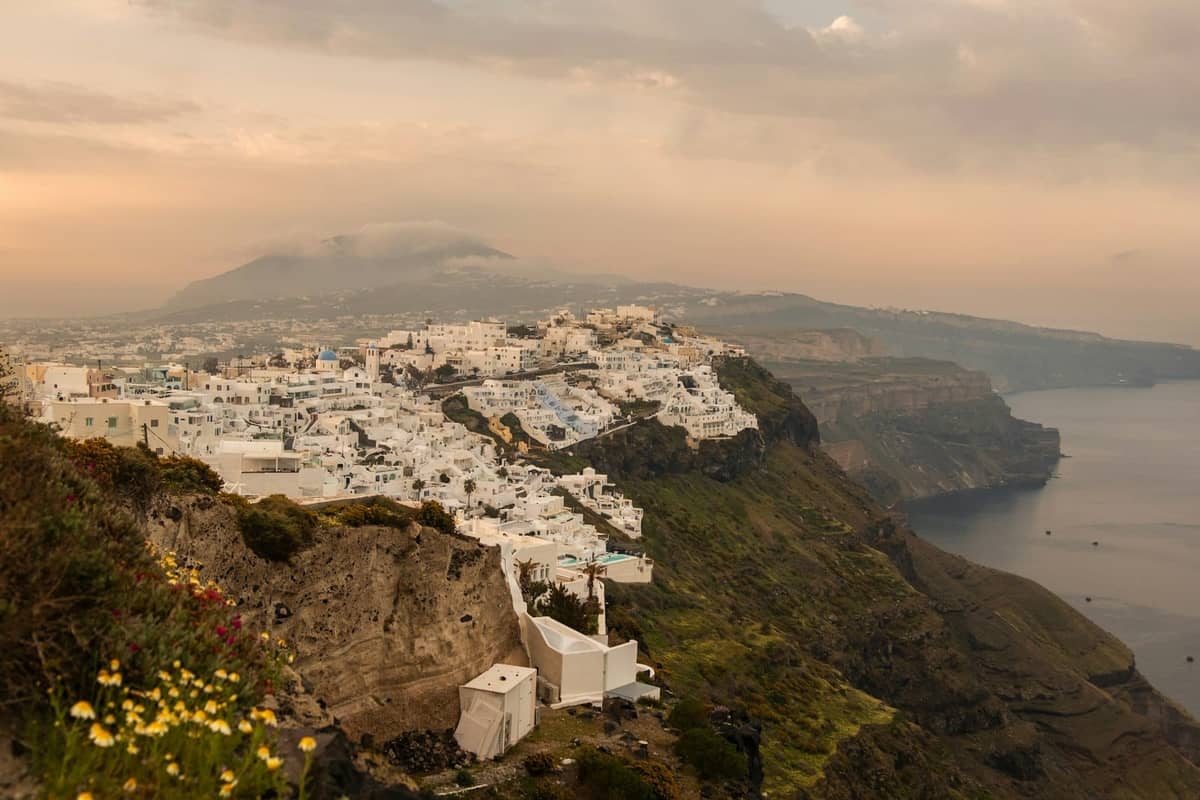
Before comparing specific features, understand the fundamental split. Santorini (officially Thira) is a volcanic caldera island: its most famous villages, Fira, Oia, and Imerovigli, sit on clifftops up to about 260–300 metres above sea level. The views across the caldera are genuinely dramatic. The island rewards slow travel, long dinners with a view, winery visits, and exploring ancient ruins. It is not primarily a party island or a beach island.
Mykonos, by contrast, is a flatter island built around Chora (Mykonos Town), a compact maze of whitewashed alleys at sea level. It became famous for its cosmopolitan nightlife and beach club culture, and that reputation is still accurate. That said, Mykonos is not one-dimensional: quieter beaches, excellent food, and a genuinely charming old town exist alongside the louder side. Understanding this distinction is the first step to picking the right island. For more on what Santorini actually offers day to day, see our guide to things to do in Santorini.
Beaches: A Clear Winner
This category goes to Mykonos without much debate. Mykonos has over 20 popular, swimmable beaches, most with fine golden sand, organized sunbeds, and calm water. Ornos, Platis Gialos, and Elia are family-friendly options. Paradise and Super Paradise are the famous party beaches. There is genuine variety, and the water is clean and swimmable across the board.
Santorini's beaches are visually striking but physically different. They are mostly volcanic black sand or pebble — Perissa and Kamari are the main organized black-sand beaches on the east coast. The Red Beach near Akrotiri is genuinely spectacular to look at, but it is pebbly and frequently affected by rockfall closures. Black sand gets extremely hot underfoot in July and August, which limits beach time midday. If lying on a comfortable, sandy beach for hours is a core part of your holiday, Mykonos is the better choice.
⚠️ What to skip
Do not go to Santorini expecting a Mykonos-style beach holiday. The beaches are worth visiting, but they are a secondary attraction. Tourists who arrive expecting Mediterranean sand-and-swim beaches are often disappointed.
Views, Architecture, and Sightseeing
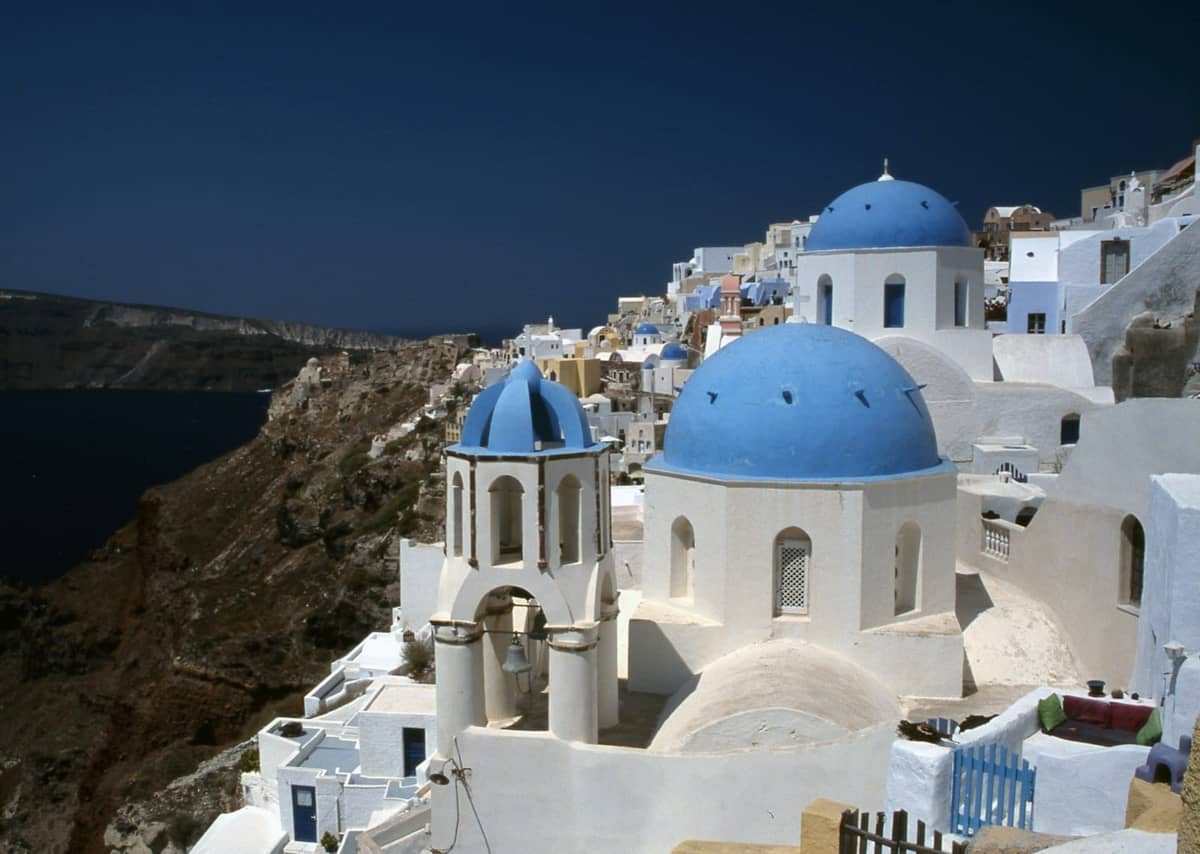
Santorini dominates here. The caldera views from Oia and Imerovigli are genuinely world-class, and no amount of crowds can completely diminish them. The classic image of white cubic houses, blue-domed churches, and an impossibly blue sea below is real — it just requires timing. Visit Oia before 9am or after 7pm to experience it without the midday crush. The Fira to Oia hiking trail along the caldera rim is one of the finest walks in the entire Aegean.
Santorini also has genuine archaeological depth. The Akrotiri archaeological site preserves a Bronze Age settlement buried by volcanic eruption around 1600 BCE — it is one of the most significant prehistoric sites in Europe. The Museum of Prehistoric Thera in Fira houses finds from the site. Neither has a direct equivalent on Mykonos. For visitors with an interest in history and landscape, Santorini offers a richer itinerary.
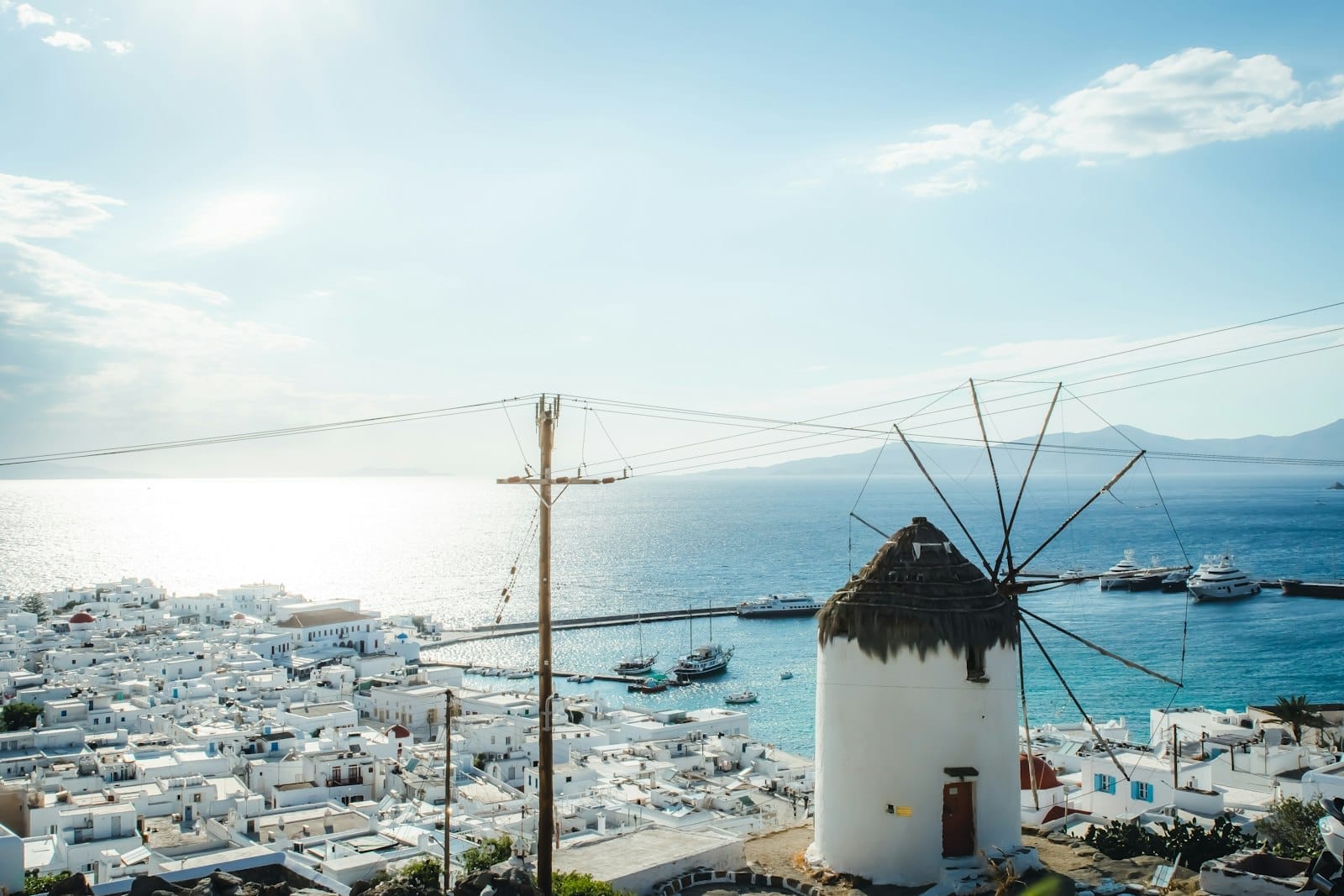
Mykonos has a genuinely beautiful old town — the windmills, Little Venice, and the Paraportiani church are all photogenic — but sightseeing exhausts itself faster. After a day or two exploring Chora, most visitors shift to beach and restaurant mode. That is not a criticism; it is simply a different kind of holiday.
Nightlife and Social Atmosphere
Mykonos has the stronger nightlife, and the gap is significant. Beach clubs like those at Paradise Beach operate from afternoon into the early hours. Chora has bars and clubs concentrated enough that you can walk between them. International DJs play summer residencies. This is a genuine draw for groups in their 20s and 30s who want a party-focused trip.
Santorini's nightlife is more low-key and caldera-facing: cocktail bars with views, rooftop sunset drinks, and wine tastings at cliffside wineries. Fira has a strip of bars and some late-night venues, but the island does not compete with Mykonos on that front. Honeymooners and couples consistently rate Santorini above Mykonos for romance; groups looking for a big night out consistently prefer Mykonos.
💡 Local tip
If you want the best of both worlds, travel between the islands. High-speed ferries (operated by companies like Seajets) connect Santorini and Mykonos in roughly 2 to 3 hours depending on the service. Many travelers do 3 to 4 nights on each.
Food, Wine, and Local Produce
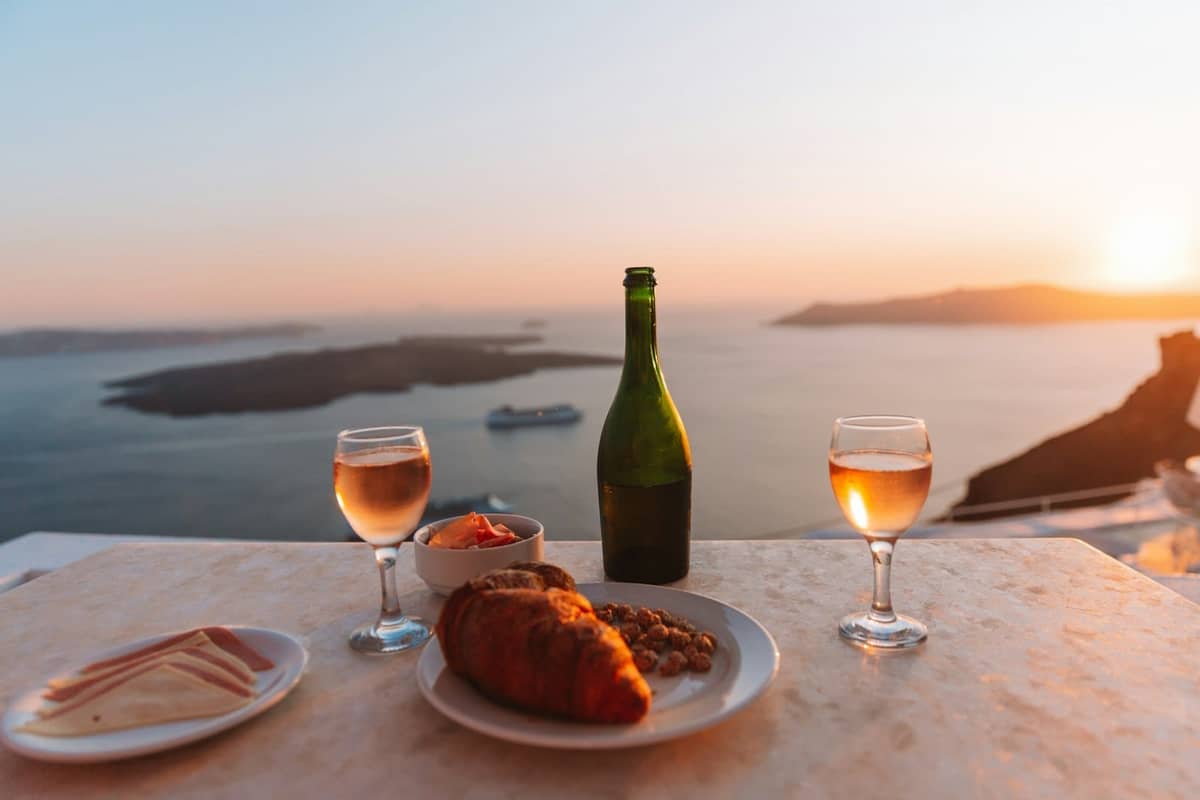
Santorini's food identity is tied directly to its volcanic soil. The island produces distinctive ingredients: small, intensely flavored cherry tomatoes (used in sauces and salads), split yellow fava (a puree made from local yellow split peas/lathouri grown on the island), and white eggplant. These are not just tourist talking points — they genuinely taste different from mainland equivalents, a result of the mineral-rich, low-rainfall growing conditions. Santorini's wine scene is equally distinctive: Assyrtiko, the island's signature white grape grown in basket-trained vines, produces dry, mineral whites unlike anything from mainland Greece. The wineries at Santo Wines and Venetsanos Winery offer tastings with caldera views.
Mykonos competes more on international fine dining and glamour than on local produce. Its restaurant scene leans cosmopolitan: sushi, high-end Italian, and Greek-fusion menus reflect the island's jet-set clientele. Both islands will drain your food budget faster than almost anywhere else in Greece, but Mykonos tilts more toward the experience-as-performance style of dining, while Santorini offers more places where the food itself is the point.
Costs, Logistics, and Getting Around
Both islands are among the most expensive in Greece, particularly in peak season (July to August). Accommodation on the caldera rim in Santorini and in Mykonos Town will both stretch a budget significantly. Where they differ is in the nature of additional spending.
- Mykonos extra costs Beach club entry and sunbed rental can run €30–80 per person per day at the more famous venues. Cocktail prices at beach clubs frequently exceed €20. Budget travelers can avoid these costs by using free public beaches.
- Santorini extra costs Getting around the island costs more than expected. Santorini's bus network (KTEL) is affordable but requires routing through Fira for most connections. Taxis are limited and in high demand in peak season. Caldera-view restaurants and hotels carry a significant premium over their inland equivalents.
- Ferry and flight access Both islands have direct flights from Athens (around 45 minutes). Ferry from Piraeus to Santorini can take up to 8 hours on slower routes; high-speed options cut this to around 4–5 hours. Verify current schedules with operators like Blue Star Ferries or Seajets before booking.
On Santorini, where you stay matters more than on Mykonos. A caldera-view hotel in Oia and a beach hotel near Kamari are almost two different islands in terms of experience and price. Our guide to where to stay in Santorini breaks down neighborhoods honestly, including the trade-offs between caldera access and value.
✨ Pro tip
On Santorini, renting an ATV or small car is often more practical than relying on taxis or buses, especially if you want to reach the southern beaches, Akrotiri, or the wineries without long waits. Book in advance during peak season as rental availability is limited.
Who Should Go Where: A Direct Comparison
- Choose Santorini if: You want dramatic scenery, caldera sunsets, archaeological sites, wine tasting, hiking, and a quieter romantic atmosphere. Honeymoon couples, photographers, history enthusiasts, and food-focused travelers consistently rate Santorini highly.
- Choose Mykonos if: You prioritize sandy beaches, beach clubs, international nightlife, and a high-energy social scene. Groups of friends, solo travelers seeking nightlife, and those who want classic Mediterranean beach days will be happier on Mykonos.
- Do both if: You have 10 or more days in Greece and want genuine variety. Most travelers who combine both spend more time on whichever island matches their primary preference, and use the other as a 2–3 day contrast.
- Consider neither if: Budget is a serious constraint. Both islands price at the premium end of the Greek archipelago. Destinations like Naxos, Paros, or Crete deliver comparable Greek island experiences at considerably lower cost.
If timing flexibility is possible, the shoulder season case for either island is strong. April through early June and September through October offer lower accommodation prices, shorter queues at attractions, and more tolerable daytime temperatures. For a full breakdown of when Santorini works best by month, see the best time to visit Santorini guide.
FAQ
Is Santorini or Mykonos better for couples?
Santorini has the stronger reputation for romance, driven by its caldera views, intimate cliff-top hotels, and quieter overall atmosphere. Mykonos can absolutely work for couples who enjoy a livelier scene, but Santorini is the more common choice for honeymoons and anniversary trips.
Which island is more expensive, Santorini or Mykonos?
Both are among the priciest islands in Greece and costs are comparable overall. Mykonos tends to cost more in nightlife and beach club spending; Santorini's caldera-view accommodation and taxis can add up quickly. Budget roughly the same for either, and expect to pay a premium relative to mainland Greece.
Can you visit Santorini and Mykonos in the same trip?
Yes, and it is a popular combination. High-speed ferries connect the two islands in roughly 2 to 3 hours, depending on the operator and route. Most visitors allocate 3 to 4 nights on each and fly home from whichever island has the better connection for their destination.
Which island has better beaches, Santorini or Mykonos?
Mykonos has more comfortable, swimmable beaches with fine sand. Santorini's beaches are volcanic black or red pebble and sand, visually dramatic but physically less comfortable, especially in peak heat. For a classic beach holiday, Mykonos is the better choice.
Is Santorini worth visiting if you are not interested in sunsets and views?
Yes, though the experience changes. Santorini also offers serious archaeology at the Akrotiri site, distinctive local food and wine, volcano boat tours, and good hiking. That said, the caldera landscape is the island's defining feature. If scenery genuinely holds no interest for you, Mykonos may be a better fit.