Best Things to Do in Santorini: The Definitive Guide
Santorini rewards visitors who go beyond the postcard shots. This guide covers the best things to do in Santorini across every interest and budget, from ancient ruins and caldera hikes to sailing tours and wine tasting, with candid assessments of what is actually worth your time.
Plan and book this trip
Tools from our partner Travelpayouts help you compare flights and hotels. If you book through them, we may earn a commission at no extra cost to you.
Flights
Hotels map
TL;DR
- The Fira to Oia caldera hike (roughly 10 km, 2.5 to 5 hours) is one of the best free experiences on the island, but go early in summer to avoid the heat.
- Catamaran sunset cruises sell out weeks in advance in July and August; book as soon as you have confirmed dates.
- The Akrotiri archaeological site is underrated and covered, making it a smart midday activity when the sun is at its worst.
- April to June and September to October are the best months for most activities; peak summer brings heat and crowds but each season has real trade-offs.
- Santorini's 'hot springs' near Palea Kameni are warm, not hot. Adjust your expectations and you will enjoy them more.
Explore the Caldera: Views, Villages, and the Famous Hike
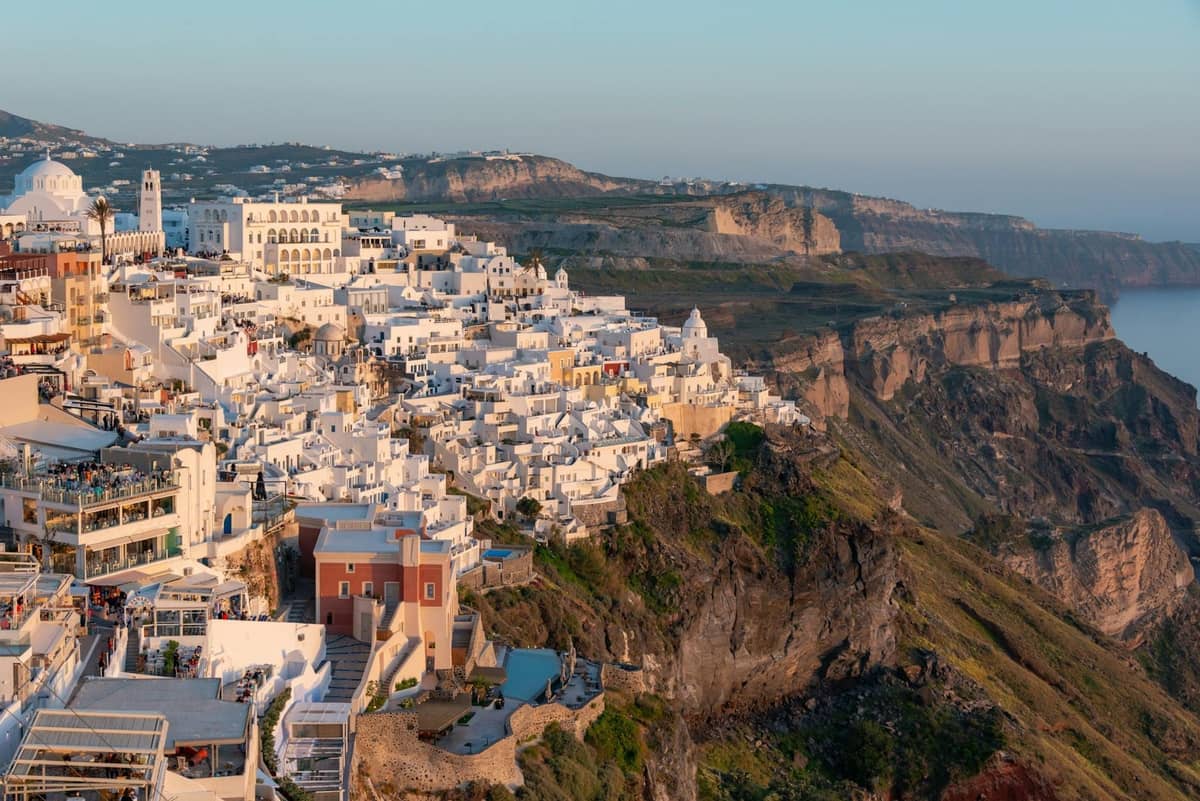
The caldera is the geological and visual centerpiece of Santorini, a flooded volcanic crater that drops roughly 400 meters to the sea. Almost every activity on the island orbits it in some way. The caldera-rim villages of Fira, Imerovigli, and Oia are strung along the western cliff edge and offer wildly different atmospheres despite being on the same ridge.
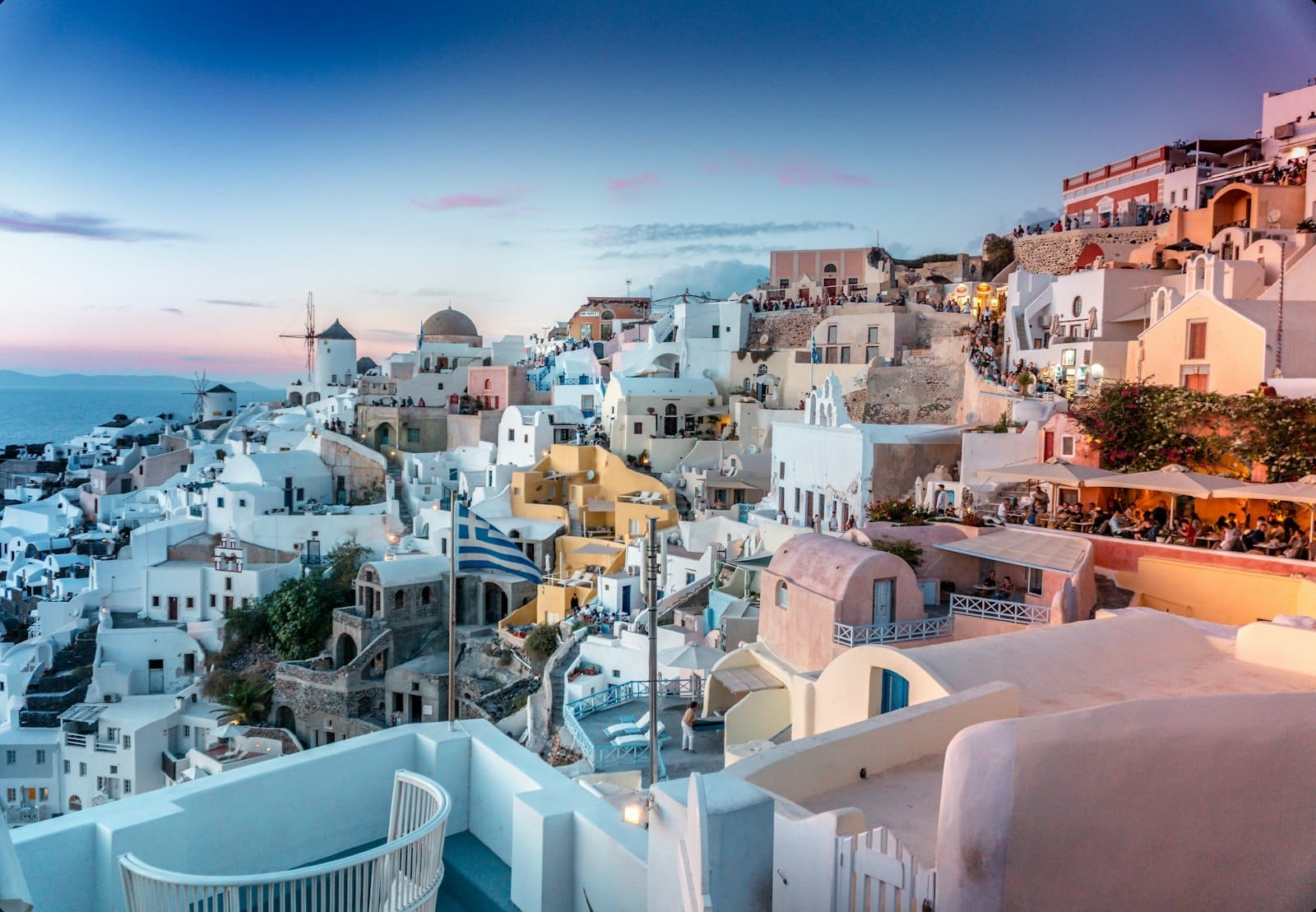
Fira is the island's capital and main transport hub, packed with shops, bars, and tour agencies. It is useful but noisy. Oia, about 11 km north, is quieter and far more photogenic, with narrow lanes of whitewashed houses and blue-domed churches that have become globally iconic. Imerovigli sits between them and is often overlooked, which makes it worth the detour.
The trail connecting Fira and Oia along the caldera rim is approximately 10 km and takes between 2.5 and 5 hours depending on your pace and how long you linger at viewpoints. It passes through Firostefani and Imerovigli, and the views across the caldera to Nea Kameni volcano are exceptional. The path is well-marked but uneven in places, with some steep sections near Skaros Rock. It is not technical, but it is not a stroll either.
💡 Local tip
Start the Fira-Oia hike before 8:00 am in July and August. The trail has almost no shade, temperatures regularly exceed 30°C by midday, and you will share the path with hundreds of other hikers by 10:00 am. Carry at least 1.5 liters of water per person.
Volcano Tours, Boat Trips, and the Hot Springs
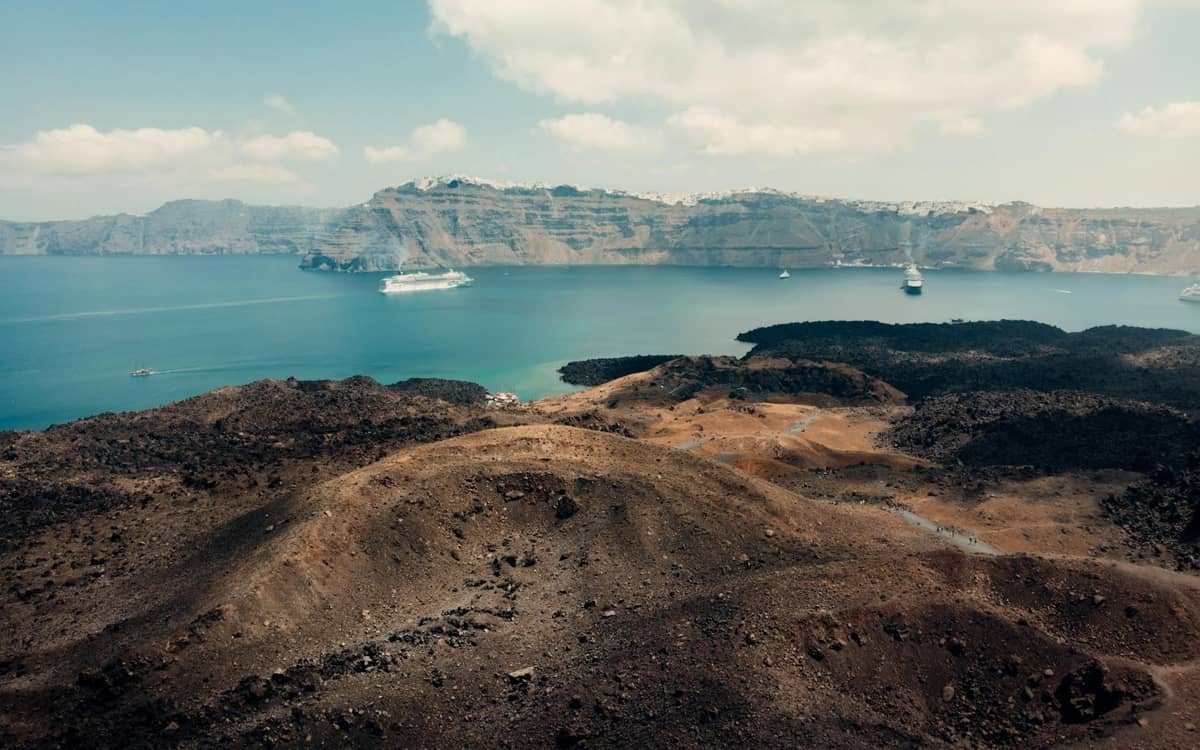
Getting out onto the caldera waters is one of the most rewarding things to do in Santorini and the options range from budget wooden-boat tours to premium catamaran sunset cruises. The two are quite different experiences, so it helps to know what you are actually paying for.
- Classic volcano boat tour Departs from Fira Old Port or Athinios Port. Covers Nea Kameni volcano (short hike on the crater rim, around €5 extra paid locally) and a swim stop at Palea Kameni's warm springs. Budget around €30 to €50 per adult. Good for seeing the geology up close without spending a lot.
- Shared catamaran day cruise Typically 5 to 6 hours, with 2 to 3 swim stops including Red Beach, White Beach, and the hot springs area. Includes a cooked meal and open bar. Prices generally range from €95 to €150 per adult depending on boat class and group size. Departs from Vlychada Marina or Ammoudi Bay.
- Sunset catamaran cruise Shorter (3 to 4 hours), timed to finish as the sun drops behind the caldera. Popular for couples and honeymoons. Often sells out 2 to 4 weeks ahead in peak season. Budget roughly €100 to €160 per person. Check the exact departure point when booking since piers vary.
⚠️ What to skip
The 'hot springs' near Palea Kameni are warm, not hot. Water temperature is typically around 24 to 35°C and the water has a reddish tint from iron-rich sediment. Wear an old swimsuit or one you do not mind staining. Do not book a tour specifically for a hot-spring soak and expect a spa-like experience.
For a fuller picture of what different sailing options involve, including what separates a good tour from a disappointing one, the Santorini sailing and boat tours guide breaks it down in detail. If the volcano itself interests you beyond the boat trip, the volcano and hot springs guide covers the geology and what to expect on the crater hike.
Ancient History: Akrotiri, Thera, and the Museums
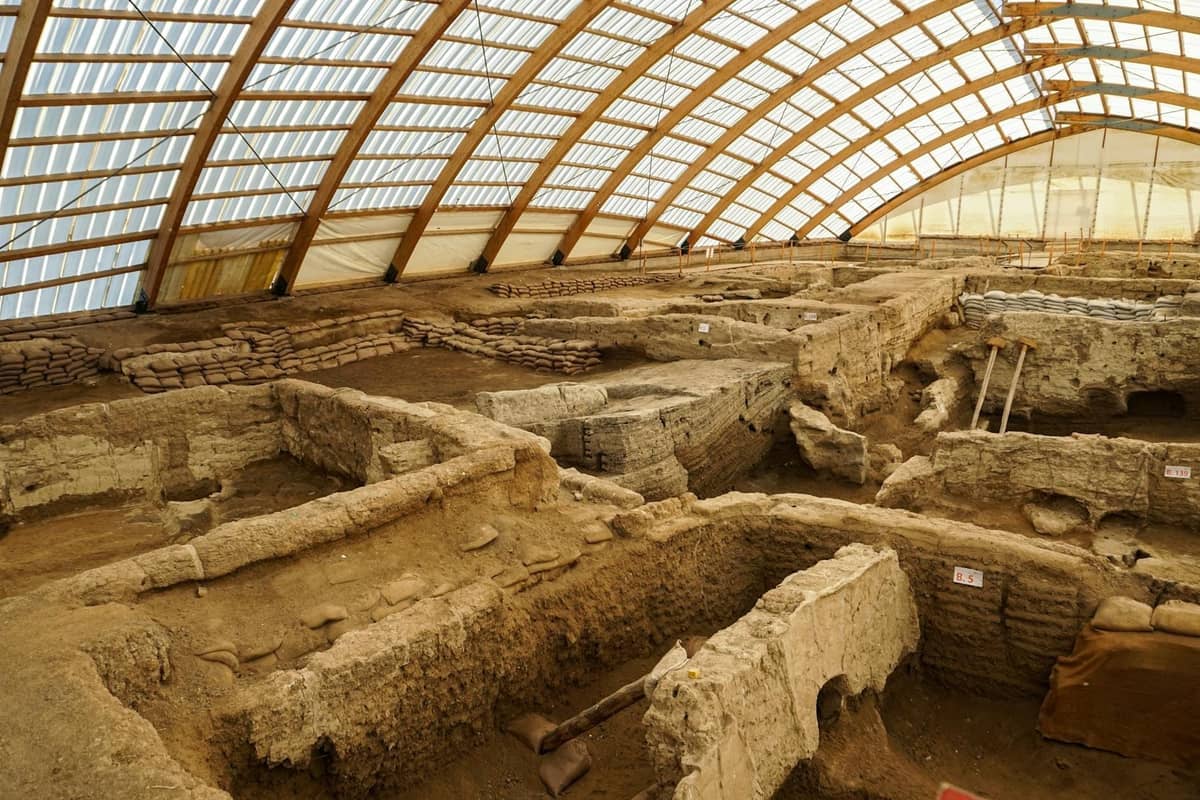
Santorini's historical depth is frequently underestimated by visitors focused only on sunsets and beaches. The island, officially known as Thira, sits on the remnants of a volcanic eruption that reshaped the Aegean around 1600 BCE. The preserved Bronze Age city at Akrotiri is one of the most significant archaeological sites in the Aegean, comparable in ambition to Pompeii.
The site is covered by a large protective roof, which has two practical advantages: it is one of the few places on Santorini you can visit comfortably at midday in summer, and the ruins are genuinely well-preserved. Multi-story buildings, drainage systems, and vivid frescoes survived the volcanic destruction. Note that the original frescoes are now housed in the National Archaeological Museum in Athens, but the on-site displays and the Museum of Prehistoric Thera in Fira offer strong context.
- Akrotiri Archaeological Site Southwest of the island, near the village of Akrotiri. Budget 1.5 to 2 hours. Check official opening hours before visiting as they vary by season. Combination tickets with other sites are sometimes available.
- Museum of Prehistoric Thera (Fira) Houses original Akrotiri frescoes and finds. Small but well-curated. A 30 to 45 minute visit is usually enough. Located in central Fira, easy to combine with exploring the town.
- Ancient Thera A Greco-Roman city on the ridge of Mesa Vouno, accessible by road from Kamari or Perissa. Fewer crowds than Akrotiri and excellent views. The ruins span several centuries of occupation.
Beaches Worth Your Time (and a Few to Skip)
Santorini is not a typical beach destination. The volcanic origin means most beaches are dark grey or black volcanic sand and pebble rather than fine white sand, and the water can be deeper faster than you might expect. That said, several beaches are genuinely impressive. For a full breakdown of options and rankings, the best beaches in Santorini guide covers every major stretch of coastline.
Red Beach near Akrotiri is striking for its ochre and rust-colored volcanic cliffs but the beach itself is rocky and gets crowded by 10:00 am. It is better appreciated as a quick stop from a boat tour than as a full beach day. Kamari and Perissa on the east coast are longer, more organized, and better suited to a full day of sunbathing, with a wide range of tavernas behind the beach. Perissa also has good budget accommodation nearby, which matters if you are traveling Santorini on a budget.
✨ Pro tip
If you want a quieter beach experience, head to Vlichada on the south coast or Cape Columbo on the north. Both attract far fewer visitors than Red Beach or Perissa, and Cape Columbo is technically a nude beach but is used by all types of visitors. Neither has much infrastructure, so bring water and food.
Wine, Food, and Experiences That Actually Reveal the Island
Santorini grows grapes in a way found almost nowhere else in the world. Because of the island's strong Meltemi winds, vines are trained into low, basket-shaped coils called kouloures or kouloura that protect the grapes. The volcanic soil produces wines, particularly the dry white Assyrtiko, that have a distinctive minerality. Santo Wines has the most dramatic caldera-view tasting terrace on the island, but the crowds match the views. Venetsanos Winery offers a similar caldera position with a slightly more relaxed atmosphere.
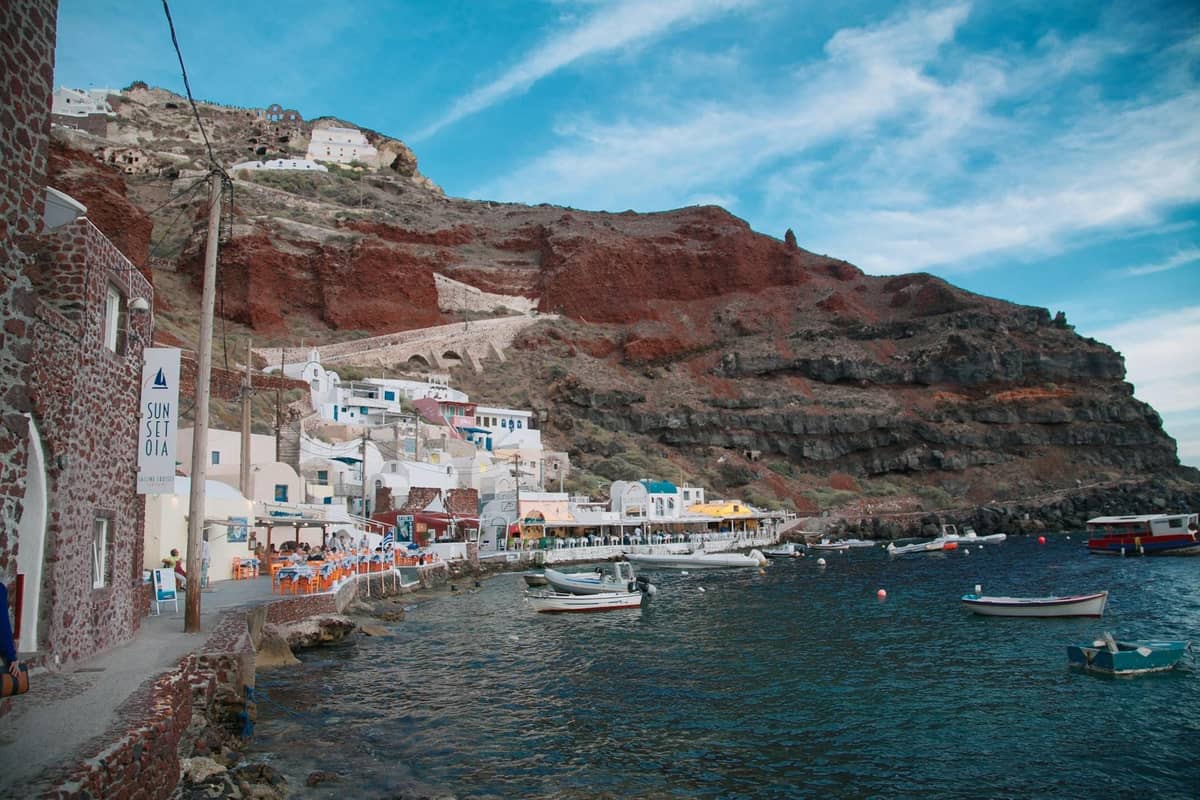
For food beyond tourist-strip restaurants, the island has genuinely good local dishes worth seeking out: fava (split pea puree from locally grown legumes), tomatokeftedes (tomato fritters using Santorini's small, intensely sweet cherry tomatoes), and fresh seafood at Ammoudi Bay below Oia. The seafood restaurants at Ammoudi are expensive but the setting, with fishing boats tied up a few meters away, justifies a meal there at least once. The what to eat in Santorini guide covers local dishes and where to find the best versions.
Wine tourism goes deeper than the big wineries. The Koutsoyannopoulos Wine Museum in Vothonas is an unusual underground cave museum that traces 500 years of Santorini winemaking. It is quirky and informative, and rarely crowded. The Santorini wine guide is the best place to start if you want to plan a proper tasting circuit.
Practical Advice: Timing, Getting Around, and Common Mistakes
Santorini covers about 76 km² and has no rail or metro system. Getting around relies on the KTEL bus network, taxis, rented ATVs or cars, and organized transfers. KTEL buses connect Fira with Oia, Kamari, Perissa, Akrotiri, and the airport on regular schedules, and fares are low. The downside is frequency: in peak summer buses on popular routes can be overcrowded. Taxis are limited in number and can be hard to find during rush periods, particularly after the Oia sunset.
The single most common logistical mistake visitors make is underestimating how long it takes to get from Oia back to Fira or to the port after the famous sunset. Everyone leaves at the same time. Taxis, buses, and the road all get completely jammed. Book your post-sunset transport in advance or build in at least 90 minutes of buffer. For a full breakdown of transport options, distances, and costs, the getting around Santorini guide is essential reading before you plan your daily logistics.
- Book caldera-view restaurants and sunset catamaran tours at least 2 to 3 weeks ahead in July and August.
- The cable car from Fira Old Port up to Fira town has long queues in peak season; the roughly 587 steps of the zig-zag path are faster if you are able-bodied and not carrying luggage.
- ATVs and scooters are popular but Santorini's roads are narrow and traffic is heavy in summer; accidents involving tourists are not uncommon. Drive carefully or opt for a car instead.
- Dress codes apply at churches and monasteries: covered shoulders and knees are expected. Profitis Ilias Monastery at the island's high point is worth the trip but requires appropriate clothing.
- Most businesses in caldera villages price at a premium. The same meal costs noticeably less in Kamari, Perissa, or Pyrgos than in Oia.
ℹ️ Good to know
Santorini follows Greece's Schengen area entry rules. Visitors from outside the EU and Schengen zone should verify visa requirements for their nationality before travel. The currency is the Euro. Tap water is not generally recommended for drinking; bottled water is widely available and inexpensive.
FAQ
How many days do you need in Santorini to see the main attractions?
Three to four full days is enough to cover the caldera hike, a boat tour, the main beaches, Akrotiri, and Oia without feeling rushed. A week allows you to go deeper: wine tours, quieter beaches, day trips, and more relaxed meals. Two days is possible but you will have to make hard choices about what to skip.
Is the Fira to Oia hike difficult?
It is moderate rather than difficult. The trail is about 10 km with some uneven terrain and a few steeper sections, particularly near Skaros Rock. The real challenge in summer is the heat and sun exposure rather than the gradient. Starting early (before 8:00 am), carrying plenty of water, and wearing sun protection makes it manageable for most reasonably fit adults.
What is the best way to see the Santorini sunset?
Oia's castle area is the most famous viewpoint but crowds arrive up to two hours early in peak season. Imerovigli and the stretch of caldera path between Firostefani and Imerovigli offer comparable views with far fewer people. A sunset catamaran cruise is a different experience entirely and worth considering if you prefer being on the water. Check our dedicated sunset guide for specific spots and timing.
When is the best time to visit Santorini?
Late April through June and September through October offer the best balance of warm weather, manageable crowds, and competitive prices. July and August are the hottest months and the most crowded, particularly around Oia and on caldera-view terraces. October is an excellent choice: sea temperatures are still warm enough for swimming, tour availability is good, and the island is noticeably quieter.
Are there good things to do in Santorini beyond the caldera area?
Yes. The east coast beaches at Kamari and Perissa, the inland village of Pyrgos with its castle views, the Ancient Thera ruins above Kamari, the Akrotiri archaeological site in the south, and the quieter northern beaches near Cape Columbo all sit outside the caldera rim. If you only stay in Fira and Oia, you miss a significant portion of what the island offers.