Perissa Beach: Santorini's Black Sand Shore Explained
Perissa Beach stretches for roughly 2.5–3 kilometres of black volcanic sand along Santorini's southeast coast, continuing into Perivolos for a combined shoreline of about 7 kilometres. Backed by the dramatic Mesa Vouno rock, it is free to access, well-organised, and calmer than the caldera crowds.
Quick Facts
- Location
- Southeast coast of Santorini, at the foot of Mesa Vouno rock, Perissa village
- Getting There
- KTEL bus from Fira (approx. 25 min); taxi or rental car from anywhere on the island
- Time Needed
- 2–5 hours for a beach day; less if combining with nearby sites
- Cost
- Free beach access; sunbeds and umbrellas charged separately by private vendors
- Best for
- Families, budget travellers, archaeology enthusiasts, swimmers wanting calm water
- Official website
- www.santorini.com/villages/perissabeach.htm
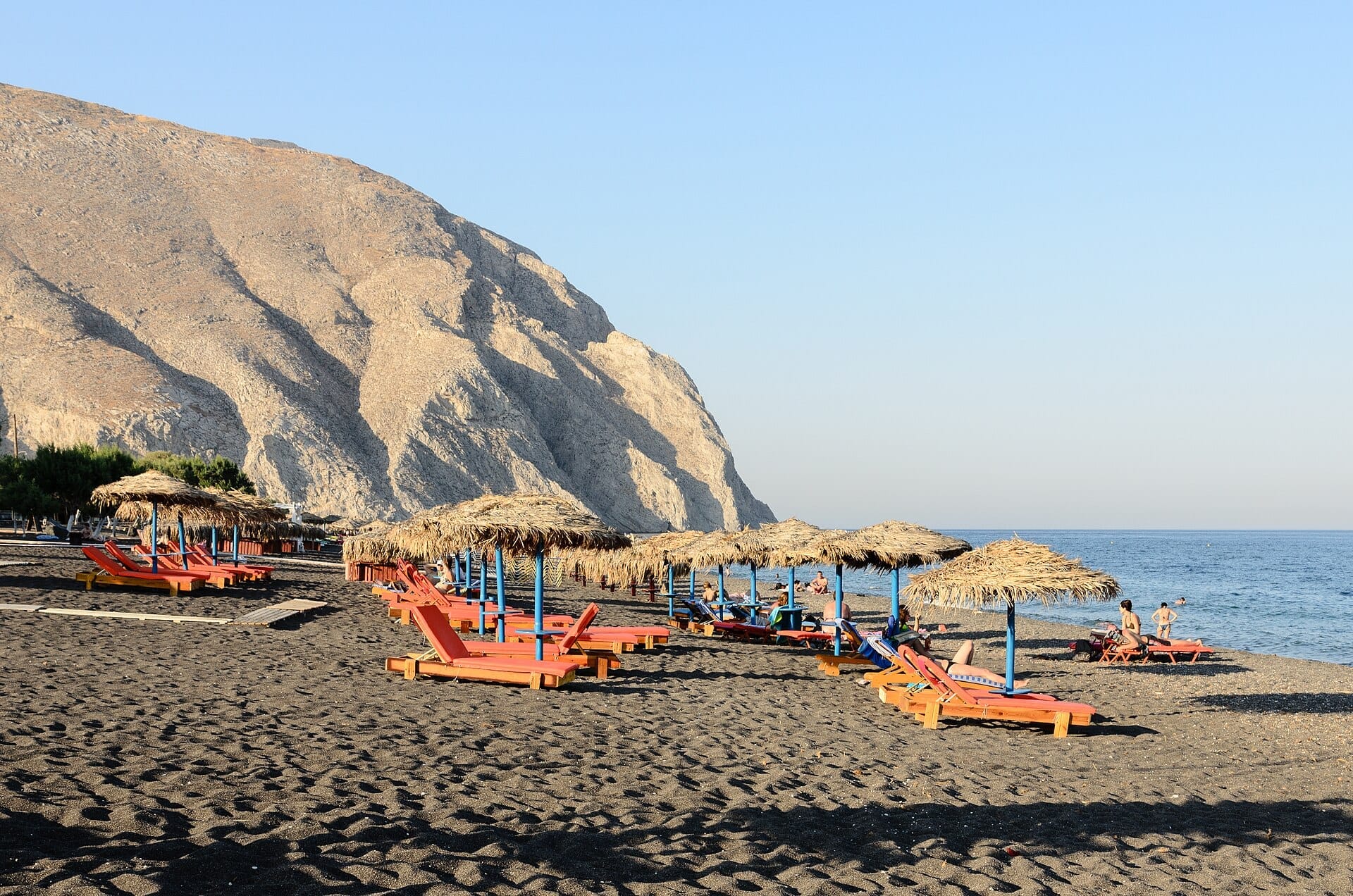
What Perissa Beach Actually Is
Perissa Beach is a free public beach on the southeast coast of Santorini, spreading roughly 7 kilometres of black volcanic sand and polished pebbles along the southeastern coast when considered together with the adjoining Perivolos section. There are no gates, no admission fees, and no single operator in charge — just a long, open shoreline backed by a parade of tavernas, beach bars, and sun-lounger outfits that compete for your euro.
The sand is a genuine deep charcoal-black, the direct result of Santorini's volcanic geology. It is not a gimmick. Up close the granules are fine in the Perissa section and coarsen slightly toward Perivolos, and on hot July and August afternoons the surface temperature climbs sharply — sandals are a practical necessity, not optional. The water, by contrast, is typically clear and calm, sheltered from the prevailing north winds by the bulk of Mesa Vouno. This combination of calmer seas and easy road access has helped Perissa maintain its Blue Flag beach status in recent certification cycles.
⚠️ What to skip
Black sand absorbs heat dramatically. In peak summer the surface can become painful underfoot within minutes of the sun being fully up. Bring sandals or water shoes — this is not an exaggeration.
The Physical Setting: Mesa Vouno and the Shore
The most striking thing about Perissa is not the sand — it is Mesa Vouno, the sheer volcanic rock that rises directly from the water at the northern end of the beach. This is the same massif that separates Perissa from Kamari on the other coast, and that shelters the ruins of Ancient Thera on its upper ridge. Standing on the beach at the foot of this cliff, with the black sand stretching south and the rock looming overhead, the setting has a raw, geological drama that the caldera villages cannot replicate.
For visitors interested in layering beach time with history, the proximity is useful. The archaeological site of Ancient Thera sits on the ridge above Perissa and is reachable by a winding road from the village. It is a separate visit requiring separate planning, but the combination of sea and ruins in a single day is genuinely achievable from a Perissa base.
Tickets & tours
Hand-picked options from our booking partner. Prices are indicative; availability and final rates are confirmed when you complete your booking.
Luxury Sunset Cruise in Santorini
From 120 €Free cancellationCruise of the volcanic islands around Santorini
From 45 €Instant confirmationFree cancellationGuided e-bike tour in Santorini
From 90 €Instant confirmationFree cancellationSantorini audio guide with TravelMate app
From 5 €Instant confirmation
How the Beach Changes Through the Day
Early morning, roughly before 9am, Perissa is a different place. The sun rises over the Aegean and hits the beach at a low angle, turning the black sand a deep grey-brown. The tavernas are not yet fully open. A few locals jog along the waterline, the sunbed rows are still stacked, and the water is usually glassy. This is the best window for photography and for swimming without competing for space.
By mid-morning in July and August, the organized sections fill quickly. Sun-lounger vendors typically offer sets of two beds plus an umbrella for a fee that varies by operator and season — always confirm the price before settling in. By noon, the central section of the beach near the main access road is genuinely crowded. The beach bars have music running, the water sports operators are active, and the smell of sunscreen and grilling fish drifts from the taverna terraces.
Late afternoon, from around 4pm onwards, is a second good window. The heat softens slightly, the water warms up, and the crowds thin as day-trippers leave. The light turns golden across the black sand, and if you walk south toward Perivolos the density drops considerably. Perissa does not face west, so there is no caldera-style sunset drama here — the sky turns colourful but Mesa Vouno blocks the direct view. Visitors chasing that experience should look elsewhere.
💡 Local tip
Walk south along the beach toward Perivolos if you find the Perissa village stretch too crowded. The further you go, the more space you find. The sand quality and water conditions remain largely the same across the full stretch.
Getting There and Getting Around
Perissa is approximately 13 kilometres from Fira, which translates to around 20–25 minutes by car or taxi on island roads. The KTEL public bus network operates routes between Fira bus station and Perissa, making this one of the more accessible beaches on the island without a rental vehicle. Bus schedules and frequency vary significantly by season, so check the current timetable at the KTEL Santorini website or at Fira bus station before planning a return journey.
From Santorini airport, Perissa is roughly 12–13 kilometres — slightly farther by road than Fira, though driving times are similar. Taxis are available at the airport, and the drive is straightforward. If you are basing yourself in Perissa village itself, the beach is a short walk from most accommodation options, which is a practical advantage over beaches that require transport to reach.
Perissa is also well connected by road to Perivolos, with the beach strip running continuously between the two. The Black Beach road runs parallel to the shore and provides easy walking or cycling access. Rental bicycles and scooters are available in the village for exploring further afield, though island roads can be narrow and steep away from the coast.
Facilities, Accessibility, and Safety
Perissa is among the better-equipped beaches on Santorini for practical facilities. The beachfront road is lined with tavernas, cafes, mini-markets, and equipment rental. Showers and changing areas are available at various points. The organized sections have dedicated umbrellas and sunbeds. For water sports, jet skis, paddleboards, and banana boats operate during the peak season, primarily from the central beach section.
Lifeguards are on duty during the summer season, typically June through September. The beach holds Blue Flag status, which requires meeting standards for water quality, safety equipment, and environmental management. For visitors with mobility requirements, Perissa has both boardwalk sections along the beach and a SEATRAC self-drive wheelchair sea-access system, which allows independent water access — a facility that is far from standard across Greek beaches.
The waters at Perissa are generally calm and considered safe for swimming, including for families with children. The shelter provided by Mesa Vouno reduces wave action on the northern end. Further south toward Perivolos, conditions can vary slightly. Always observe any flags posted by lifeguards, particularly after periods of wind from the south or southwest.
What to Eat and Drink Here
The beachfront at Perissa has no shortage of eating options, ranging from full tavernas serving grilled fish and Greek standards to beach bars where you can sit with a frappe and stay for hours. Quality varies, and the tavernas directly on the sand lean toward tourist pricing. A short walk back into the village typically reveals better value. Perissa and nearby Perivolos together form one of the main dining strips on this side of the island, with options that stay open well into the evening.
For visitors interested in Santorini's wine culture, the southeast coast has producers within reasonable reach. The island's volcanic soil produces distinctive Assyrtiko and other varieties, covered in detail in the Santorini wine guide. Some beach bars at Perissa stock local wine, though dedicated wine tourism is better pursued at a winery rather than a beach bar.
Photography and Practical Notes
Perissa photographs well in early morning and late afternoon light, when the angle of the sun accentuates the contrast between the black sand and the turquoise water. The Mesa Vouno cliff provides a natural anchor for wide compositions. For photography planning across the island, the Santorini photography guide covers timing and locations in detail.
One honest note: Perissa is not the most photogenic beach in Santorini if you are looking for dramatic cliffside compositions. The setting is wide and open rather than enclosed and intimate. The black sand is striking in photographs, but the surrounding landscape is flat and the village infrastructure — cars, sun-lounger rows, signage — is fully visible. Visitors who arrive expecting a pristine, isolated black sand cove may find the reality more practical and less cinematic.
For those who want to understand more about Santorini's beaches in context before choosing where to spend their time, the Santorini black sand beaches guide compares Perissa with Red Beach, Kamari, and other volcanic shore options across the island.
Insider Tips
- The northern end of Perissa, closest to Mesa Vouno, is often less crowded than the central strip despite being the most dramatic in terms of scenery. Most visitors cluster near the main road access point in the middle of the strip.
- Bring water shoes rather than sandals. The black sand gets extremely hot by mid-morning in summer, and the beach entry can involve polished pebbles near the waterline.
- If you are combining Perissa with Ancient Thera, go to the ruins first thing in the morning when the site is cooler and less crowded, then descend to the beach for the afternoon.
- Perissa's main beach bars stay open late in summer and the strip has a genuinely lively evening atmosphere. This makes the village a reasonable base for travellers who want both beach access and nightlife without the inflated prices of Fira or Oia.
- The walk south from Perissa to Perivolos takes around 20 minutes along the beach or the parallel road. It is worth doing at least once — the beach thins out, the venues become less dense, and the black sand stretches are longer and more open.
Who Is Perissa Beach For?
- Families with children who need calm, supervised swimming water and good facilities
- Budget travellers who want a full beach day without caldera-price drinks and dining
- Visitors combining beach time with the nearby Ancient Thera archaeological site
- Travellers with mobility requirements, given the SEATRAC system and accessible boardwalks
- Anyone who wants a longer, quieter stretch of beach without committing to the more remote and harder-to-reach options
Nearby Attractions
Other things to see while in Perissa:
- Perivolos Beach
Perivolos Beach stretches along Santorini's southeastern coast as part of a continuous band of black volcanic sand shared with Perissa and Agios Georgios. It combines organized facilities with genuine scale, making it one of the island's most practical and enjoyable beach days.