Best Photography Spots in Santorini: 23 Locations Worth Every Shot
Santorini is one of the world's most photographed destinations, but knowing exactly where to stand, when to arrive, and which lesser-known angles to seek out separates good photos from great ones. This guide covers 23 of the island's best photography locations, from the iconic caldera rim to wild volcanic beaches and medieval hilltop villages.
Plan and book this trip
Tools from our partner Travelpayouts help you compare flights and hotels. If you book through them, we may earn a commission at no extra cost to you.
Flights
Hotels map
Santorini rewards photographers at every turn, but the island's most famous views come with crowds to match. The key is timing: early mornings in Oia before the tour buses arrive, golden hour from Imerovigli's caldera rim, and the quiet volcanic landscapes of Akrotiri in the afternoon. For a deeper orientation of the island's viewpoints and what makes each one distinct, the Santorini viewpoints guide is a useful companion to this one. The 23 locations below cover the full photographic range of the island, from postcard icons to genuinely under-visited corners.
Caldera Rim Icons
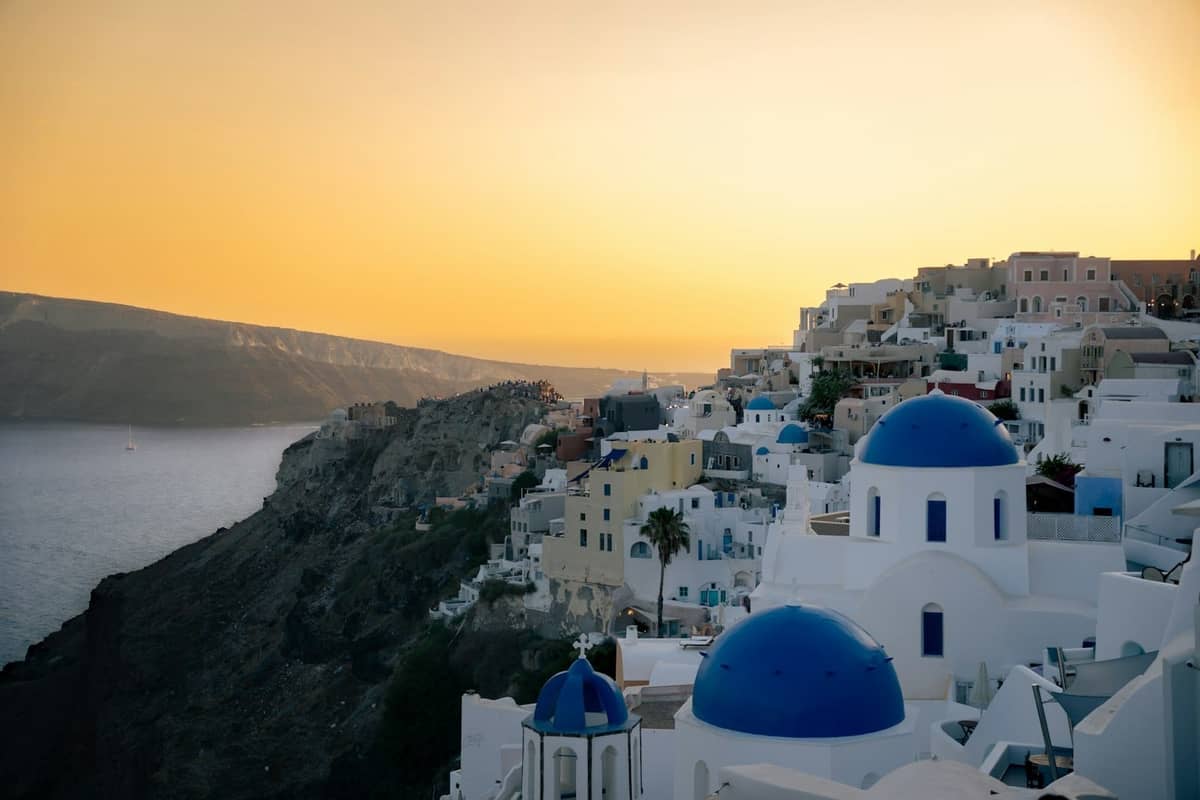
The caldera rim from Fira to Oia is the heart of Santorini photography. These are the shots that define the island, and shooting them well requires knowing exactly where to position yourself and when. For sunset planning, the Santorini sunset guide has precise timing and positioning advice for each village along the rim.
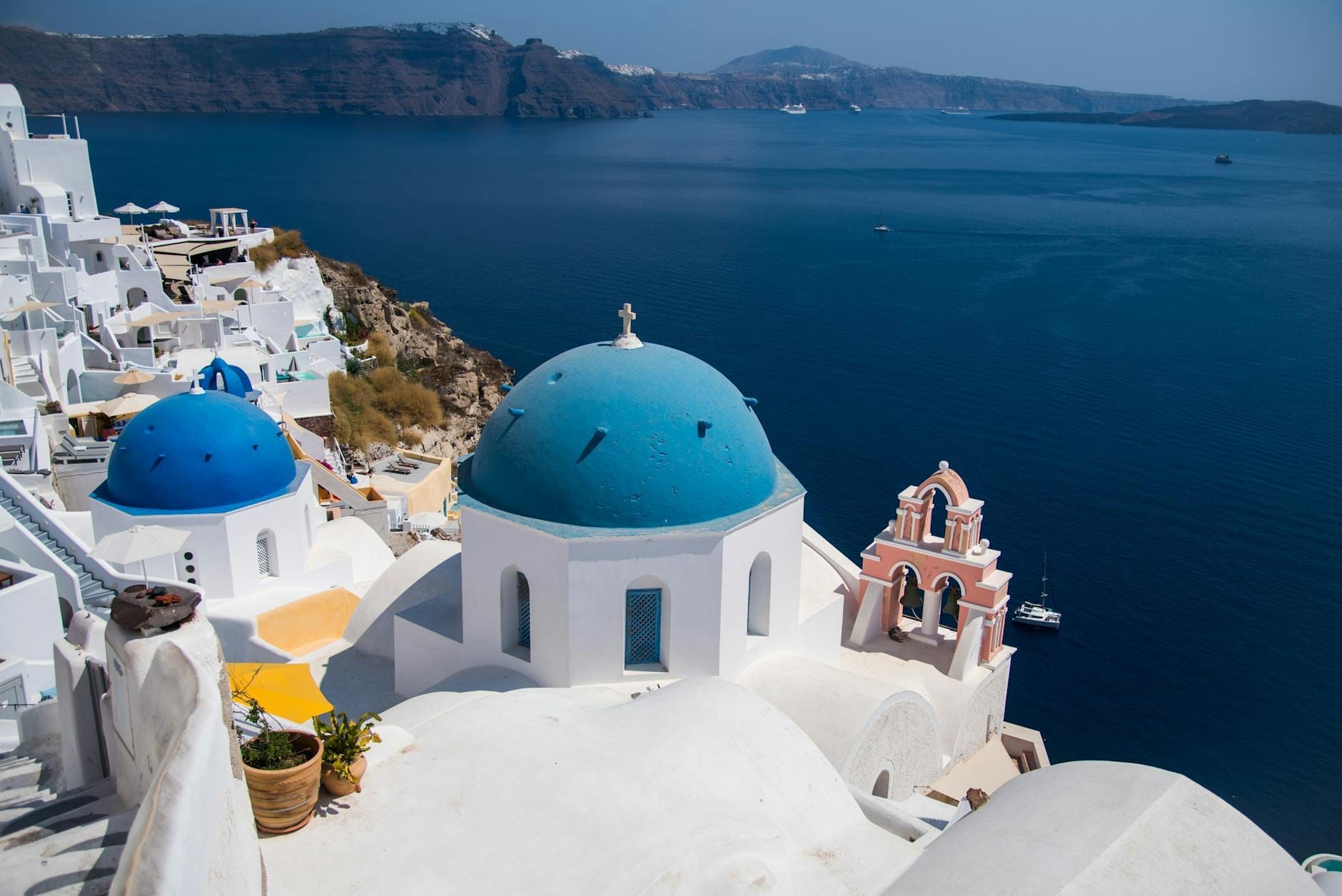
1. Frame the Three Blue Domes of Oia
Santorini's most reproduced image. Shoot from the public path above the cluster, not from church rooftops, which are private and off-limits. Early morning gives you clean shots before crowds gather. The domes face west, so afternoon light is best.
Explore1. Frame the Three Blue Domes of Oia
Santorini's most reproduced image. Shoot from the public path above the cluster, not from church rooftops, which are private and off-limits. Early morning gives you clean shots before crowds gather. The domes face west, so afternoon light is best.
Explore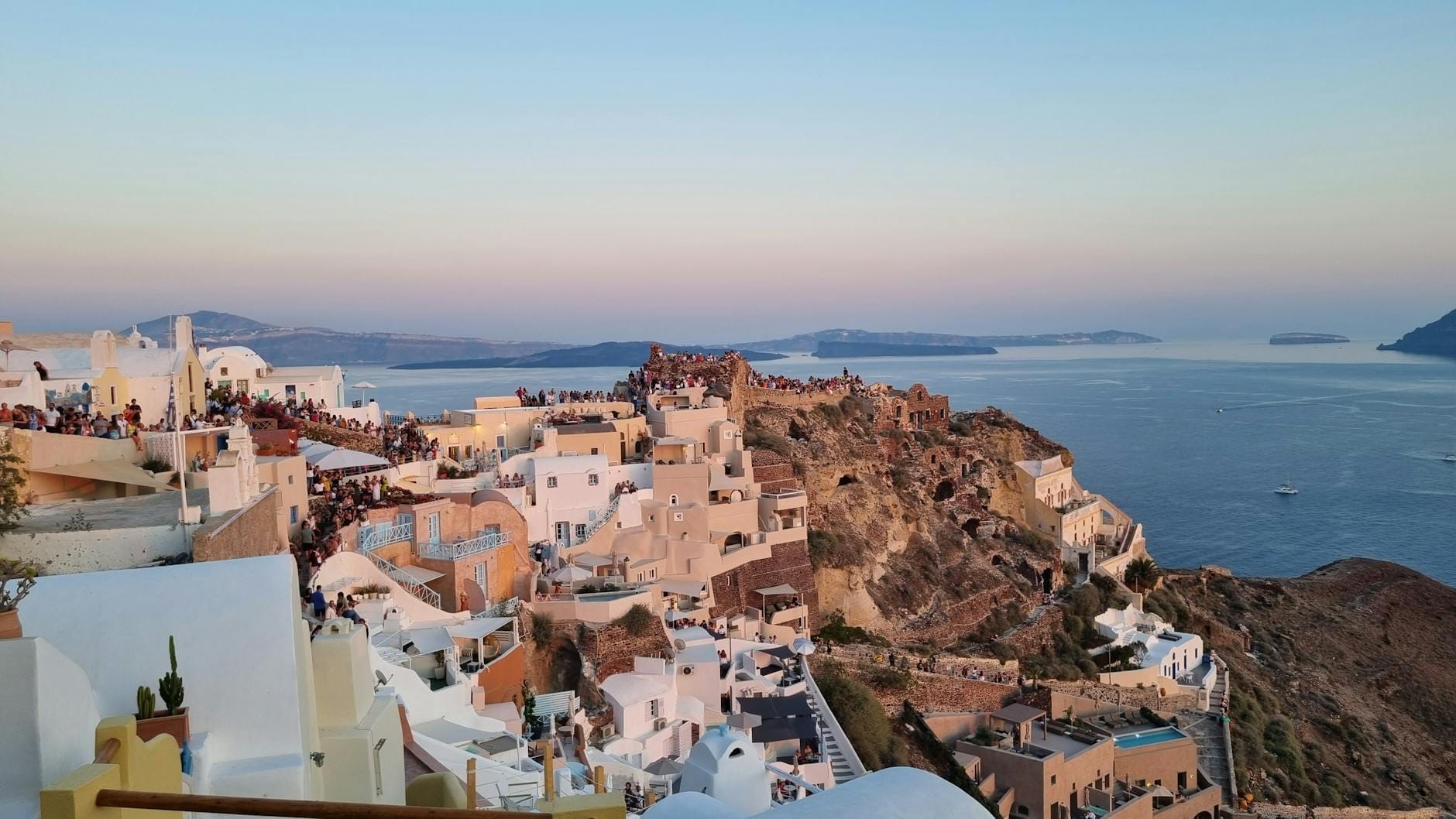
2. Photograph the Sunset from Oia's Castle Ruins
The Byzantine castle ruins at Oia's northern tip give you an unobstructed western horizon. In July and August, sunset falls around 8:30 pm. Arrive by 6 pm to claim a spot on the walls. The warm light on the white village behind you is as worth shooting as the sunset itself.
Explore2. Photograph the Sunset from Oia's Castle Ruins
The Byzantine castle ruins at Oia's northern tip give you an unobstructed western horizon. In July and August, sunset falls around 8:30 pm. Arrive by 6 pm to claim a spot on the walls. The warm light on the white village behind you is as worth shooting as the sunset itself.
Explore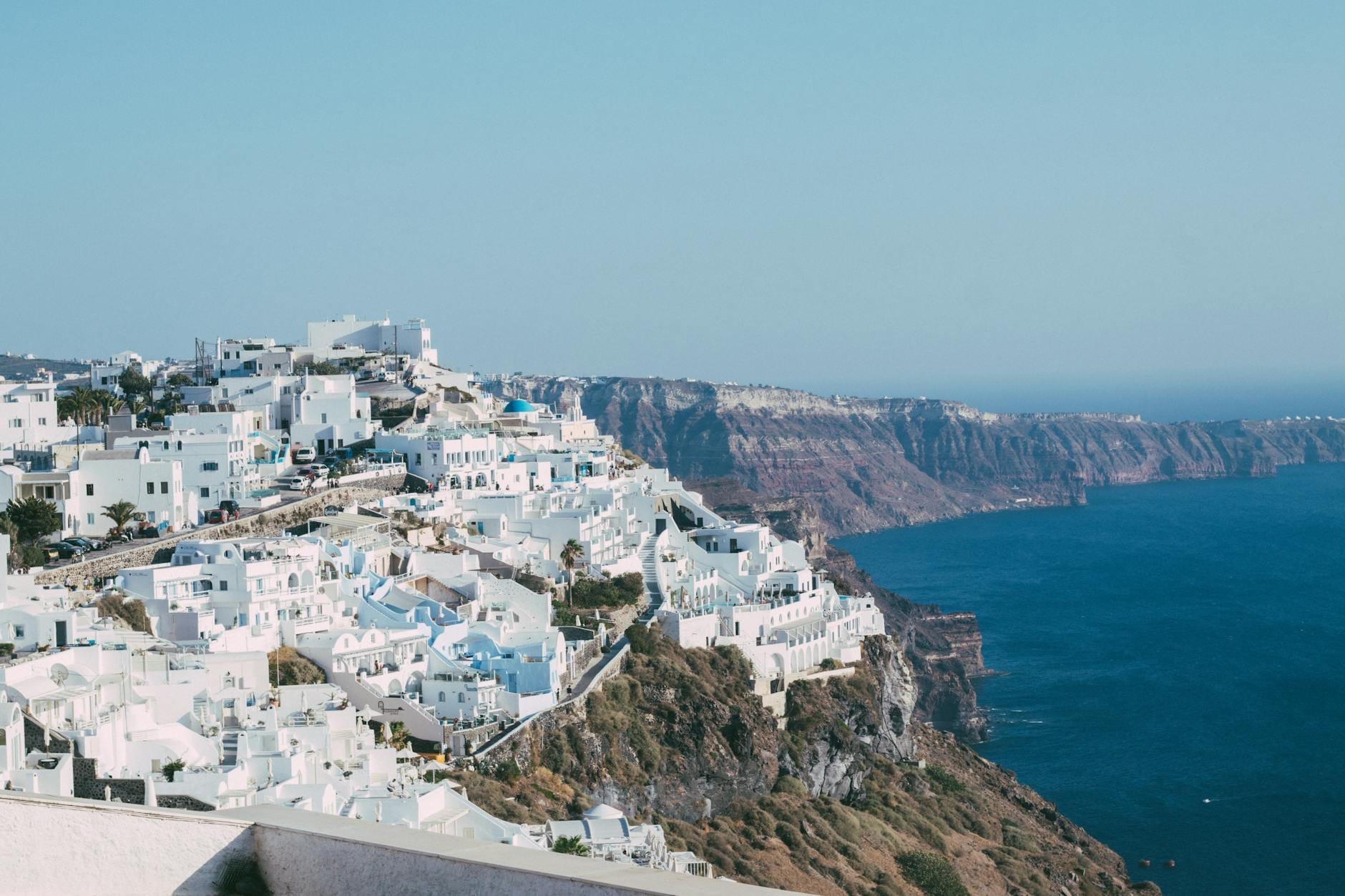
3. Shoot the Widest Caldera Panorama from Imerovigli
Sitting highest on the caldera rim, Imerovigli gives you the full arc of the caldera in a single frame, from Oia in the north to the volcanic islands below. Far less crowded than Oia at sunset, and terrace cafes here give you a stable platform to shoot from.
Explore3. Shoot the Widest Caldera Panorama from Imerovigli
Sitting highest on the caldera rim, Imerovigli gives you the full arc of the caldera in a single frame, from Oia in the north to the volcanic islands below. Far less crowded than Oia at sunset, and terrace cafes here give you a stable platform to shoot from.
Explore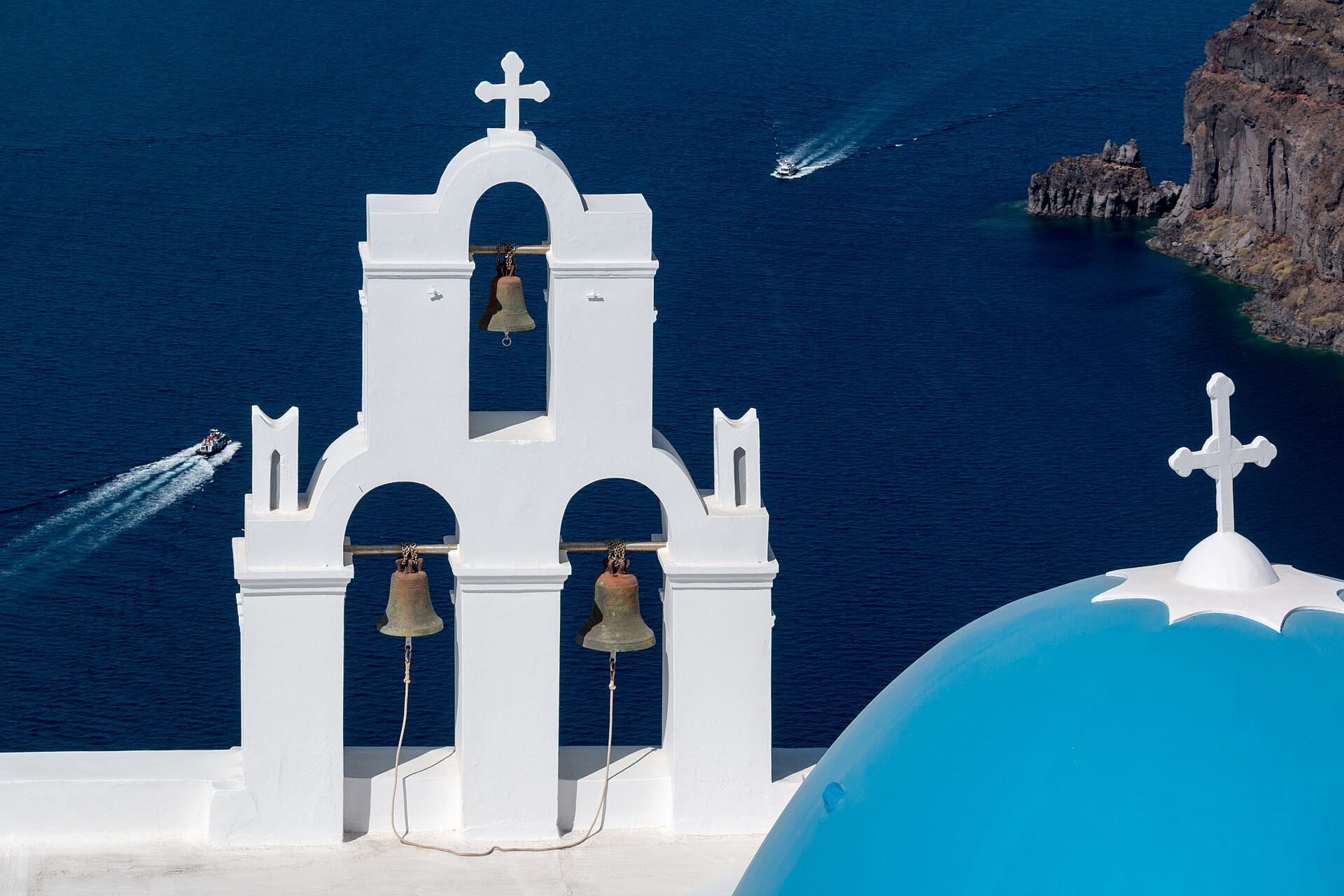
4. Capture the Three Bells of Fira Against the Caldera
The white bell tower, blue dome, and caldera backdrop at the Fira-Firostefani border create one of the island's most classic compositions. Shoot from the path above in the morning for front-lit bells with the caldera in soft shadow behind. Takes under 10 minutes to reach from central Fira.
Explore4. Capture the Three Bells of Fira Against the Caldera
The white bell tower, blue dome, and caldera backdrop at the Fira-Firostefani border create one of the island's most classic compositions. Shoot from the path above in the morning for front-lit bells with the caldera in soft shadow behind. Takes under 10 minutes to reach from central Fira.
Explore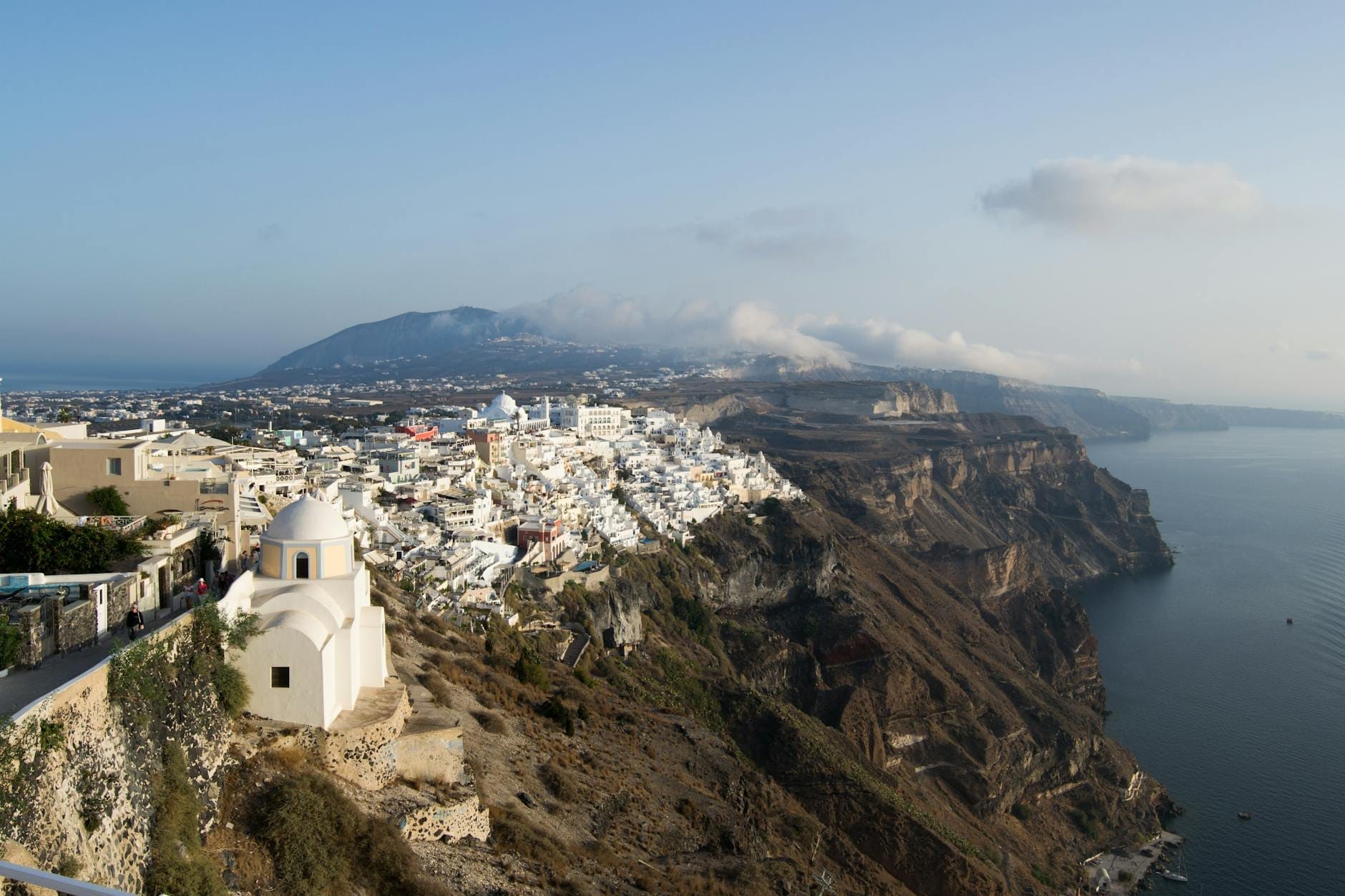
5. Walk the Cliff Path Through Firostefani
The caldera walking path through Firostefani is quieter than Fira and Oia, with whitewashed walls, flowering bougainvillea, and unobstructed cliff views. The section near the church offers tight architectural frames with the caldera as a blue backdrop. Best light: late afternoon.
Explore5. Walk the Cliff Path Through Firostefani
The caldera walking path through Firostefani is quieter than Fira and Oia, with whitewashed walls, flowering bougainvillea, and unobstructed cliff views. The section near the church offers tight architectural frames with the caldera as a blue backdrop. Best light: late afternoon.
Explore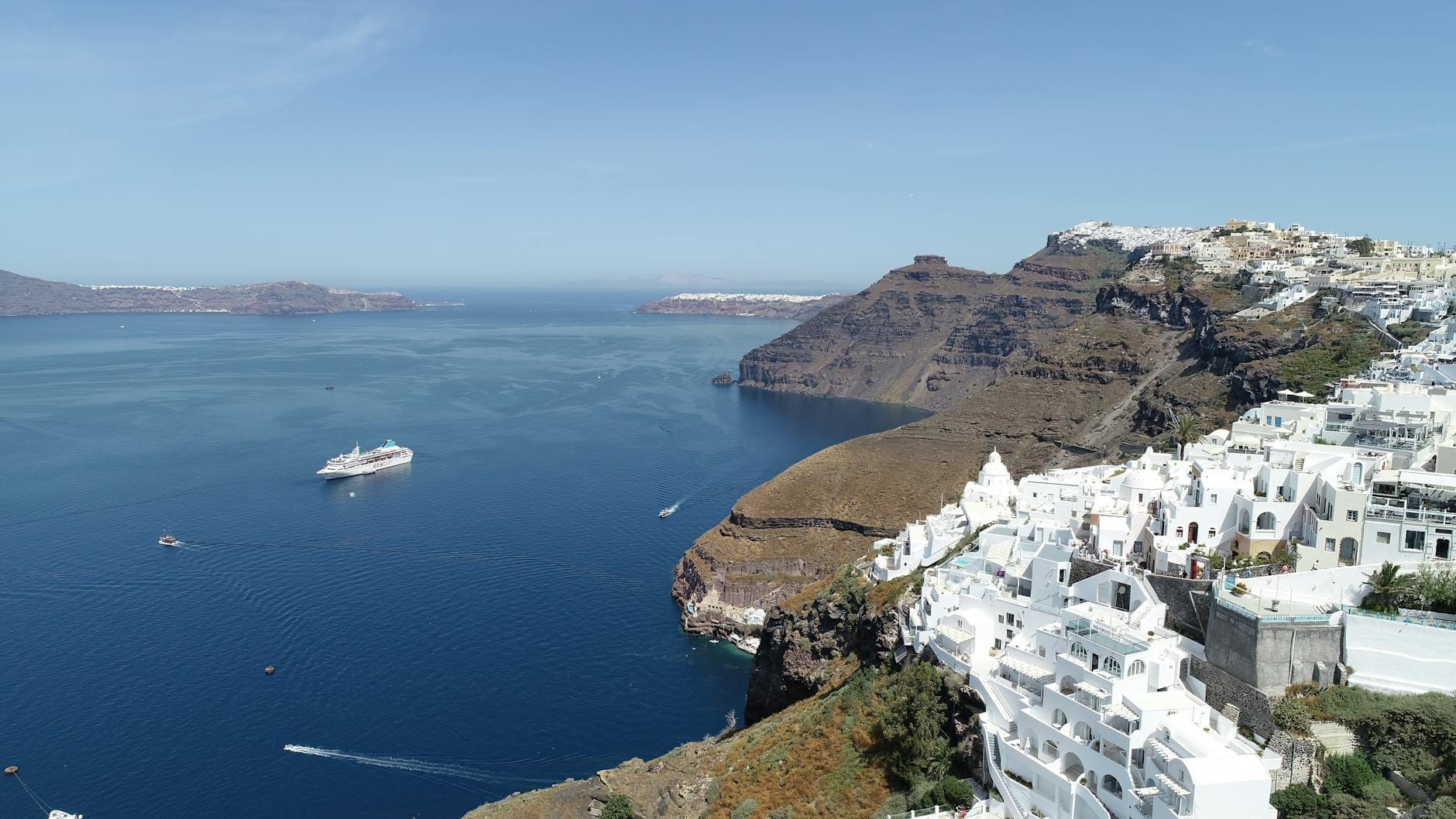
6. Photograph the Full Scale of the Caldera from the Water
The caldera's true scale only becomes clear from sea level. A boat tour gives you wide-angle views of the 300-meter cliffs with villages clinging to the top, especially dramatic in the warm light of late afternoon. No land-based viewpoint replicates this perspective.
Explore6. Photograph the Full Scale of the Caldera from the Water
The caldera's true scale only becomes clear from sea level. A boat tour gives you wide-angle views of the 300-meter cliffs with villages clinging to the top, especially dramatic in the warm light of late afternoon. No land-based viewpoint replicates this perspective.
Explore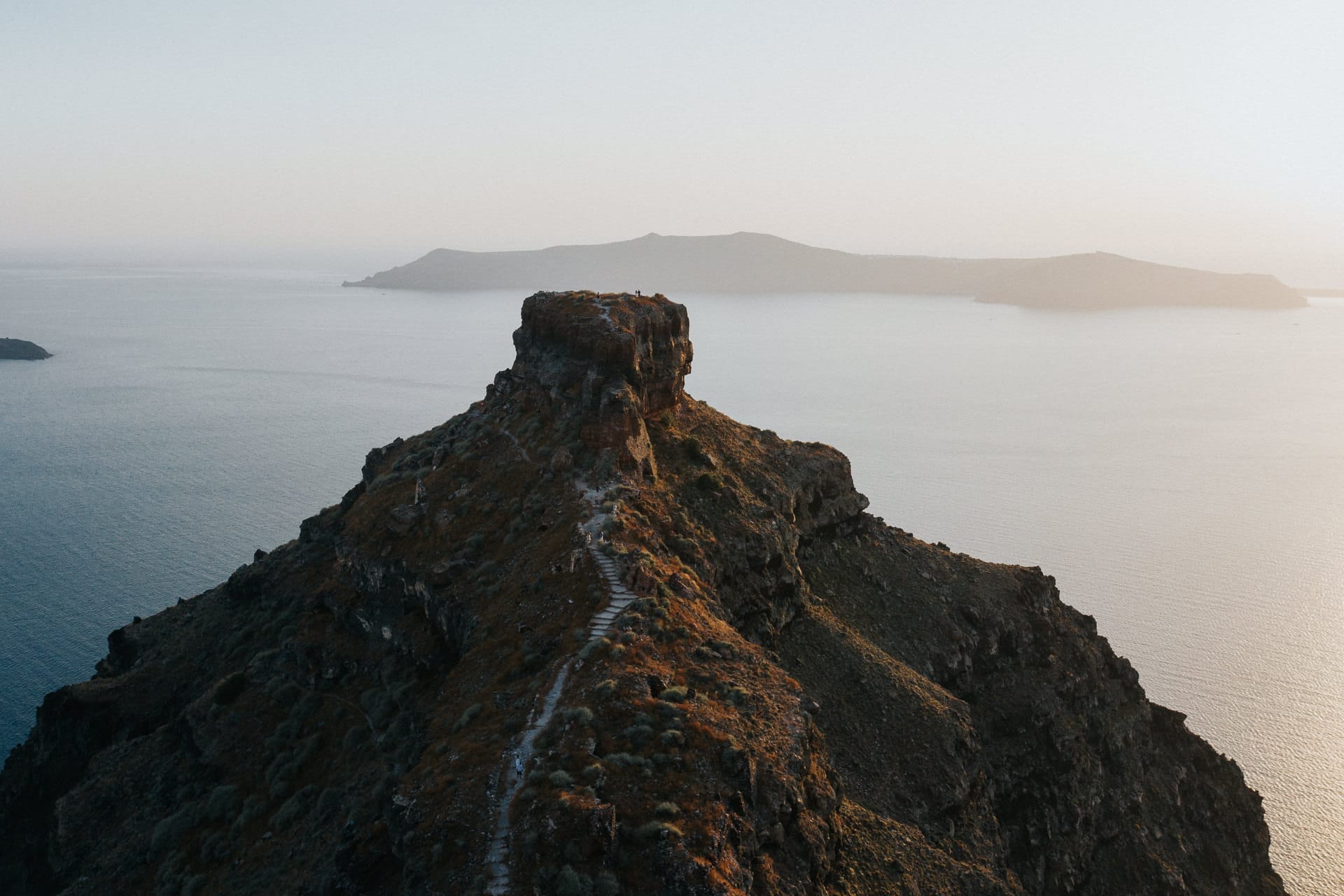
7. Hike Skaros Rock for Caldera Views No Crowd Reaches
The trail from Imerovigli winds around this volcanic promontory to medieval fortress ruins, with caldera views that put most hotel terraces to shame. The path takes about 30 minutes. Bring a wide-angle lens and wear shoes with grip; the final climb is on uneven volcanic rock.
Explore7. Hike Skaros Rock for Caldera Views No Crowd Reaches
The trail from Imerovigli winds around this volcanic promontory to medieval fortress ruins, with caldera views that put most hotel terraces to shame. The path takes about 30 minutes. Bring a wide-angle lens and wear shoes with grip; the final climb is on uneven volcanic rock.
Explore💡 Local tip
Church rooftops throughout Santorini are private property. Many popular angles involve standing on public paths above the churches, not on the domes themselves. Climbing on churches is prohibited and disrespectful — the best compositions are achievable from street level anyway.
Volcanic Beaches & Coastal Landscapes
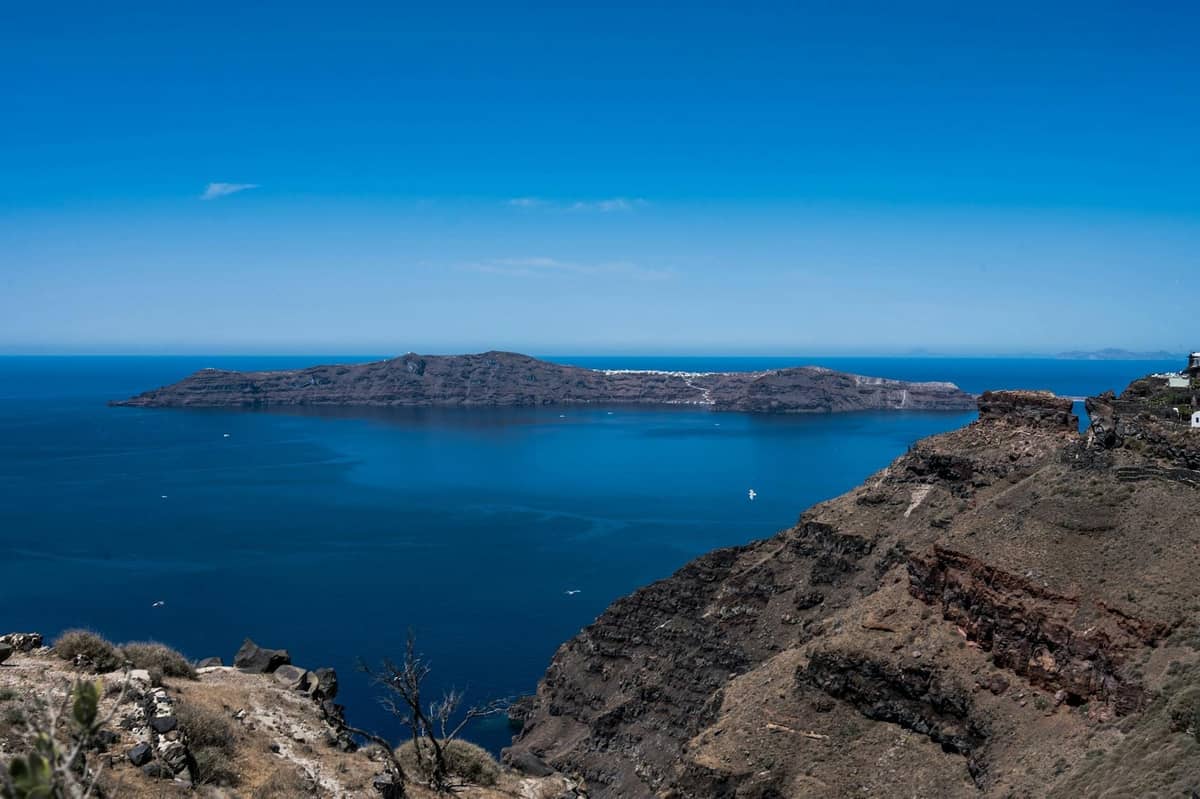
Santorini's beaches are among the most visually dramatic in Greece, shaped by millions of years of volcanic activity into red, black, and white formations that are rare in the Aegean. For a full overview of which beaches photograph best in which conditions, the black sand beaches guide covers the eastern and southern coastlines in detail.
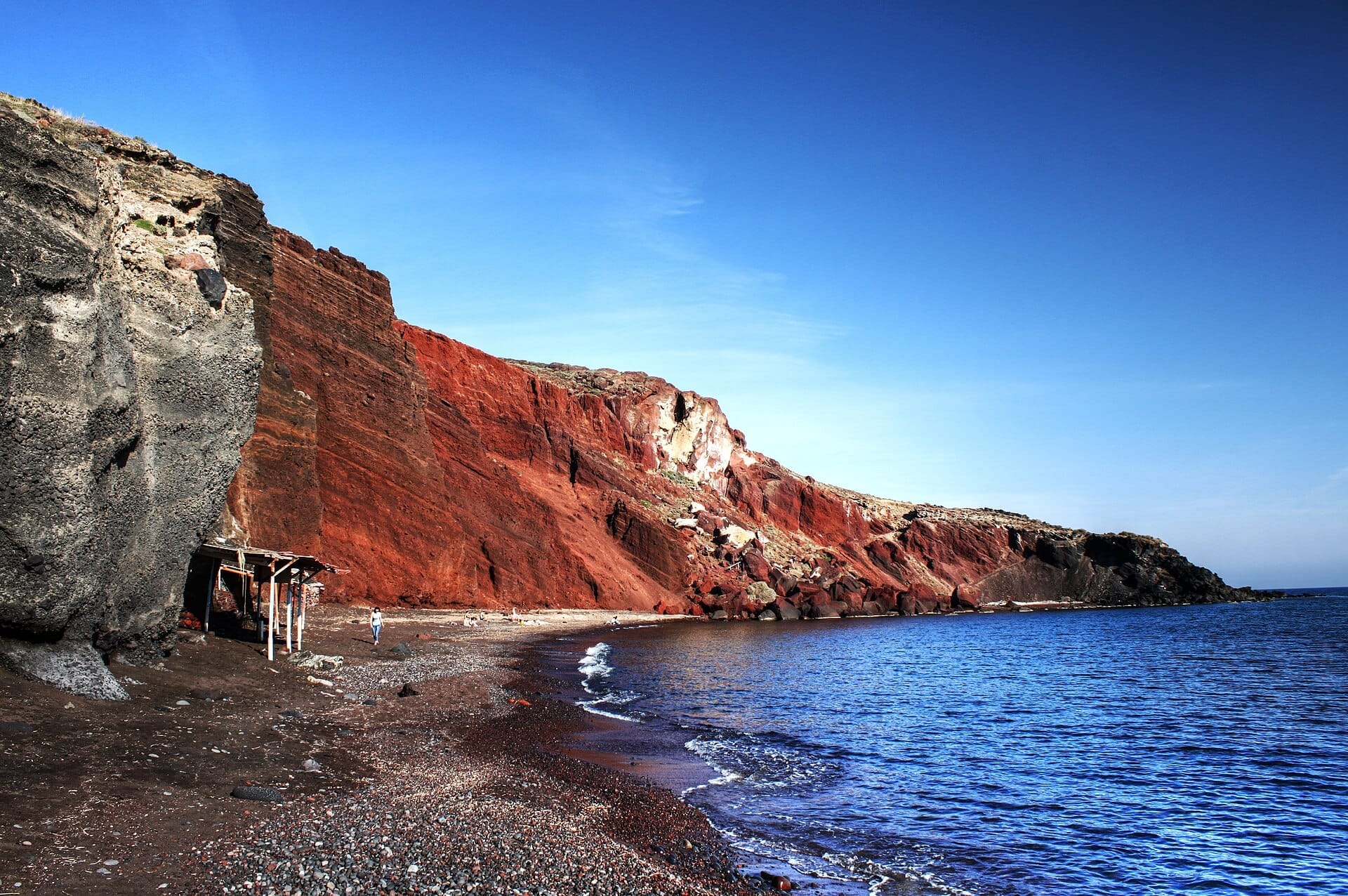
8. Shoot the Red Cliffs and Black Pebbles at Red Beach
The contrast between the 100-meter red volcanic cliffs and the dark pebbles below is extraordinary. Arrive early morning before the small cove fills up. The 10-minute cliff-side walk from the car park also offers elevated shooting angles looking down into the cove.
Explore8. Shoot the Red Cliffs and Black Pebbles at Red Beach
The contrast between the 100-meter red volcanic cliffs and the dark pebbles below is extraordinary. Arrive early morning before the small cove fills up. The 10-minute cliff-side walk from the car park also offers elevated shooting angles looking down into the cove.
Explore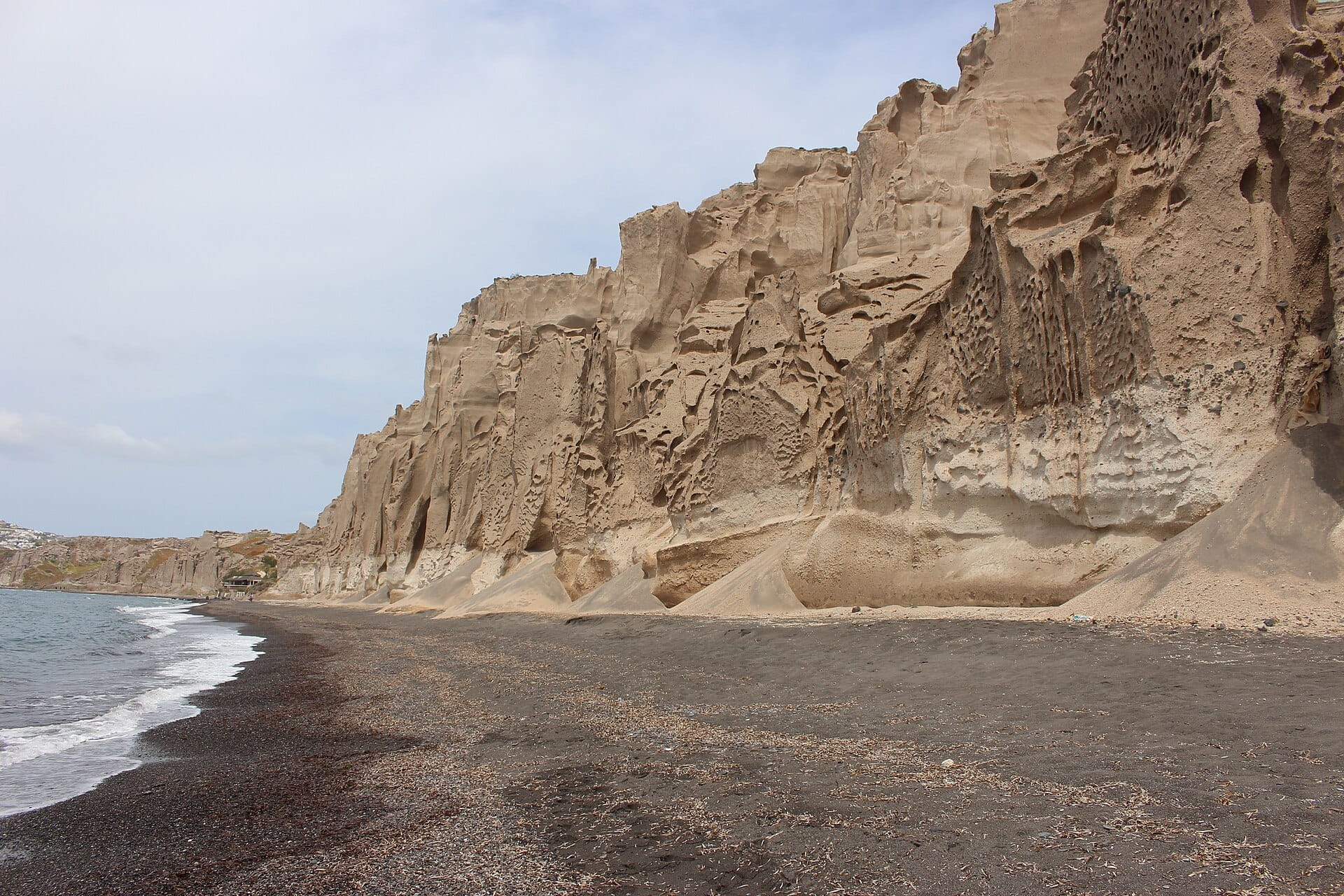
9. Photograph the Lunar Pumice Cliffs at Vlychada
White pumice cliffs eroded into abstract shapes frame a quiet black-sand beach on the south coast. The formations are best shot in the softer light of early morning or an overcast day, which eliminates harsh shadows in the rock's deep cavities. Far fewer visitors than the red and black beaches.
Explore9. Photograph the Lunar Pumice Cliffs at Vlychada
White pumice cliffs eroded into abstract shapes frame a quiet black-sand beach on the south coast. The formations are best shot in the softer light of early morning or an overcast day, which eliminates harsh shadows in the rock's deep cavities. Far fewer visitors than the red and black beaches.
Explore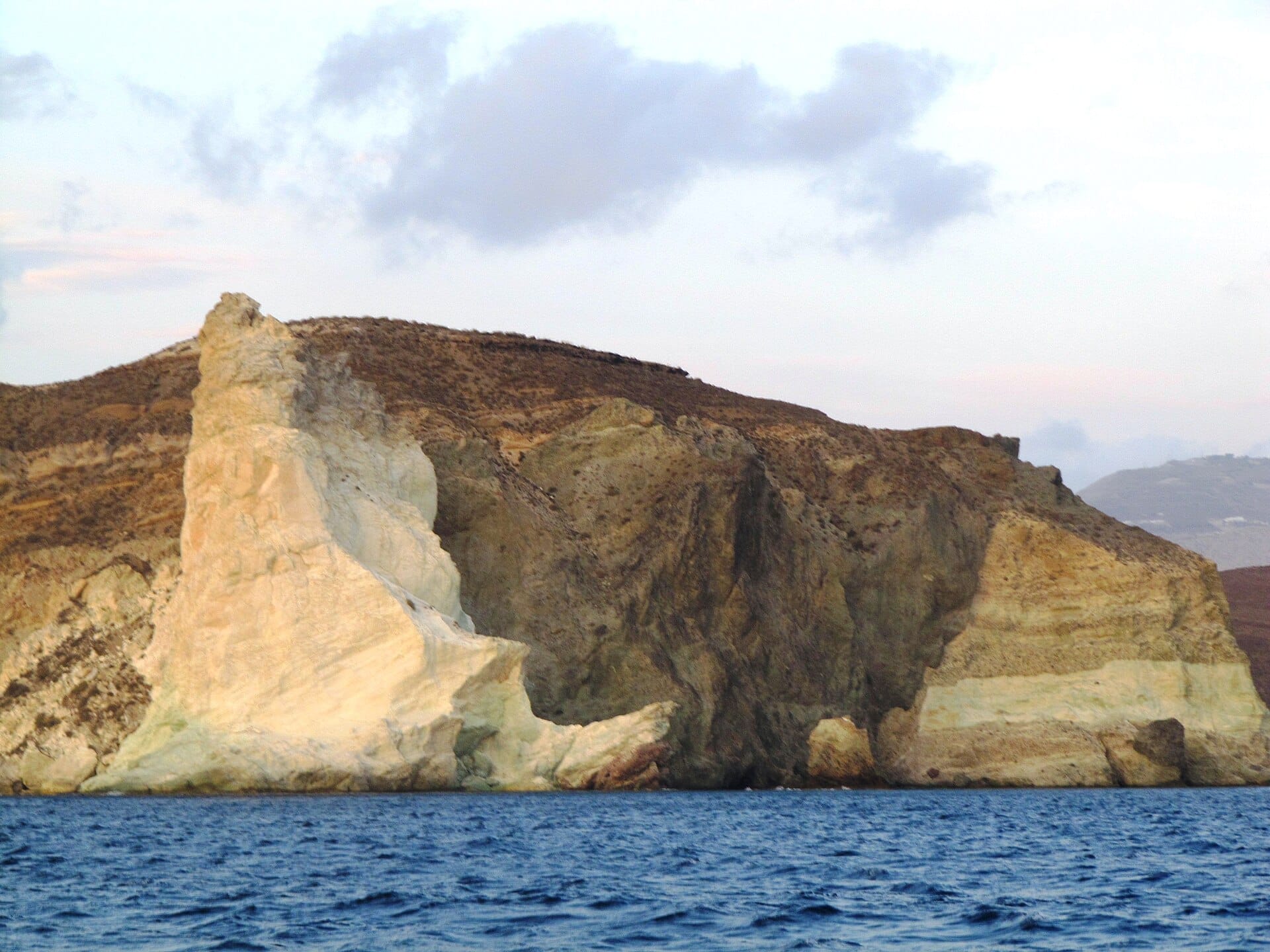
10. Reach the Secluded White Beach by Water Taxi
Accessible only by boat from Red Beach or water taxi from Akrotiri, this cove of white and grey pebbles backed by dramatic pumice cliffs stays quieter precisely because of the access hurdle. The boat approach itself gives you striking compositions of the cliffs from the water.
Explore10. Reach the Secluded White Beach by Water Taxi
Accessible only by boat from Red Beach or water taxi from Akrotiri, this cove of white and grey pebbles backed by dramatic pumice cliffs stays quieter precisely because of the access hurdle. The boat approach itself gives you striking compositions of the cliffs from the water.
Explore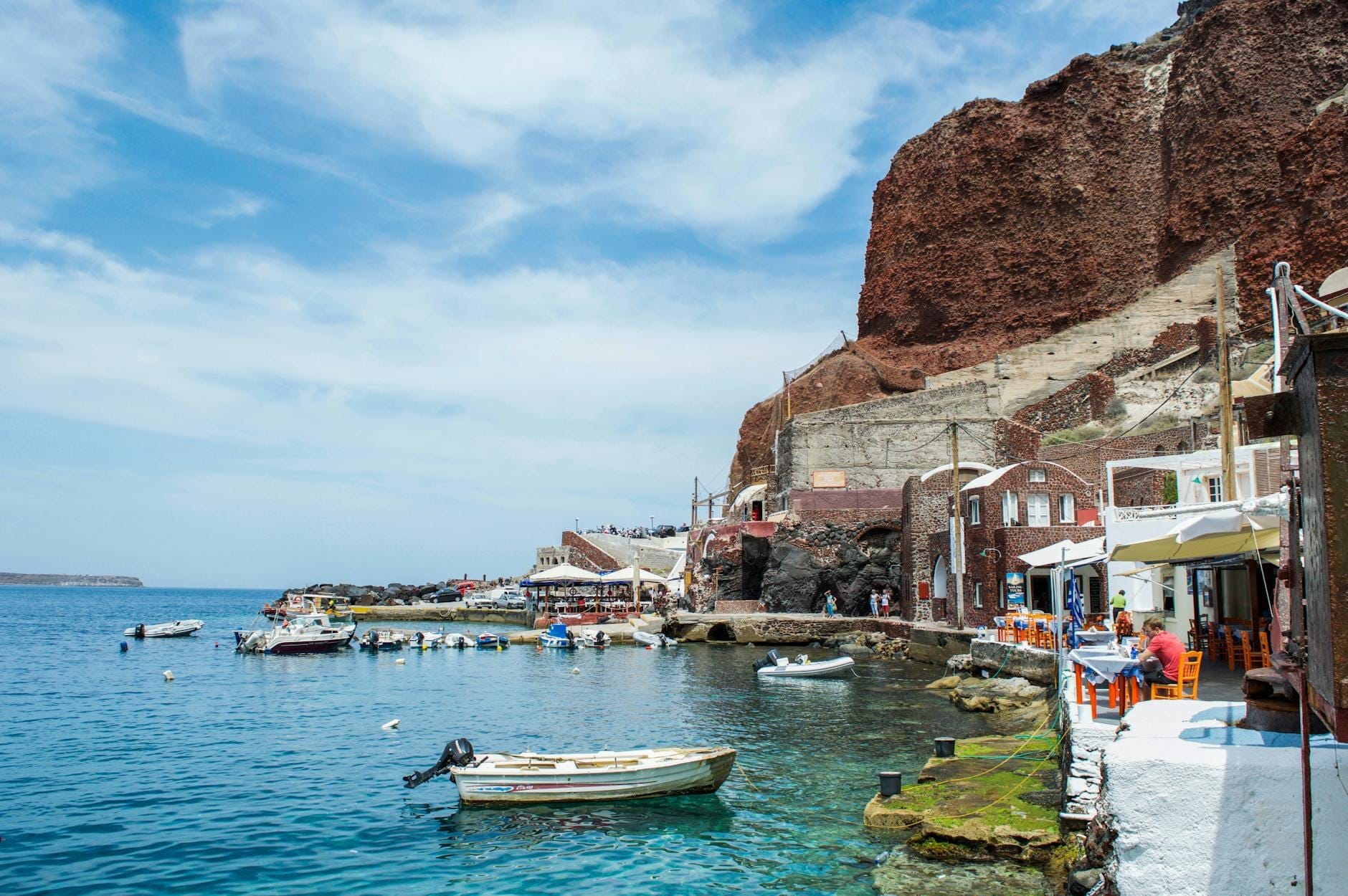
11. Shoot Oia's Cliffs from Below at Ammoudi Bay
Most photographers shoot Ammoudi Bay from above in Oia. Reverse it: descend the 300 steps and look back up at the terracotta and white buildings perched impossibly on the caldera edge. The fishing boats in the foreground add scale and color. Late afternoon light hits the cliffs directly.
Explore11. Shoot Oia's Cliffs from Below at Ammoudi Bay
Most photographers shoot Ammoudi Bay from above in Oia. Reverse it: descend the 300 steps and look back up at the terracotta and white buildings perched impossibly on the caldera edge. The fishing boats in the foreground add scale and color. Late afternoon light hits the cliffs directly.
Explore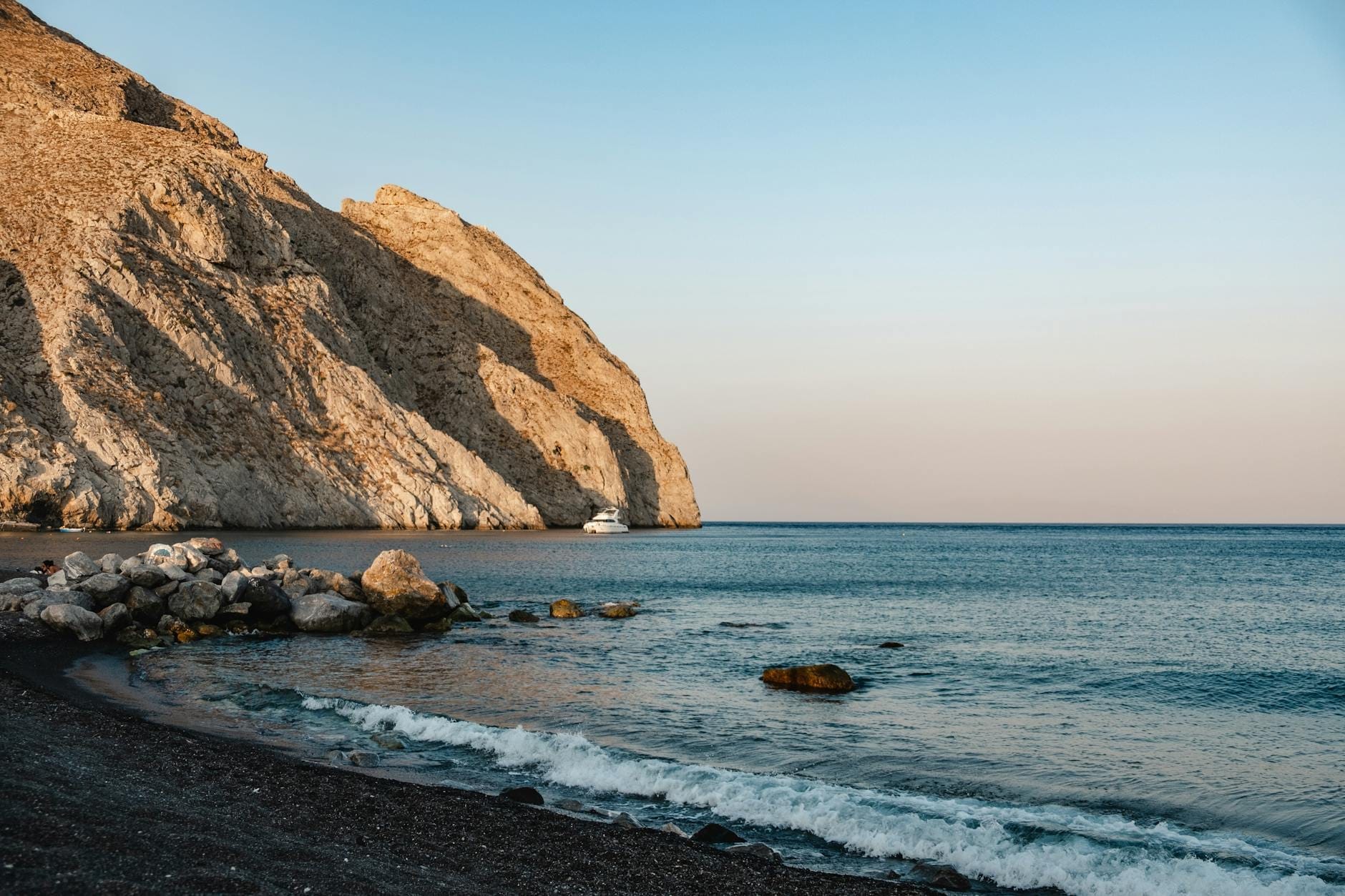
12. Find Raw Volcanic Isolation at Cape Columbo Beach
A 15-minute walk down a dirt path on the northeast coast leads to a wild, deserted cove with no amenities and no crowds. The raw volcanic landscape, layered rock strata, and crystal-clear water make for completely different images from the polished caldera-view shots. Best for landscape photographers.
Explore12. Find Raw Volcanic Isolation at Cape Columbo Beach
A 15-minute walk down a dirt path on the northeast coast leads to a wild, deserted cove with no amenities and no crowds. The raw volcanic landscape, layered rock strata, and crystal-clear water make for completely different images from the polished caldera-view shots. Best for landscape photographers.
ExploreVillages & Architecture
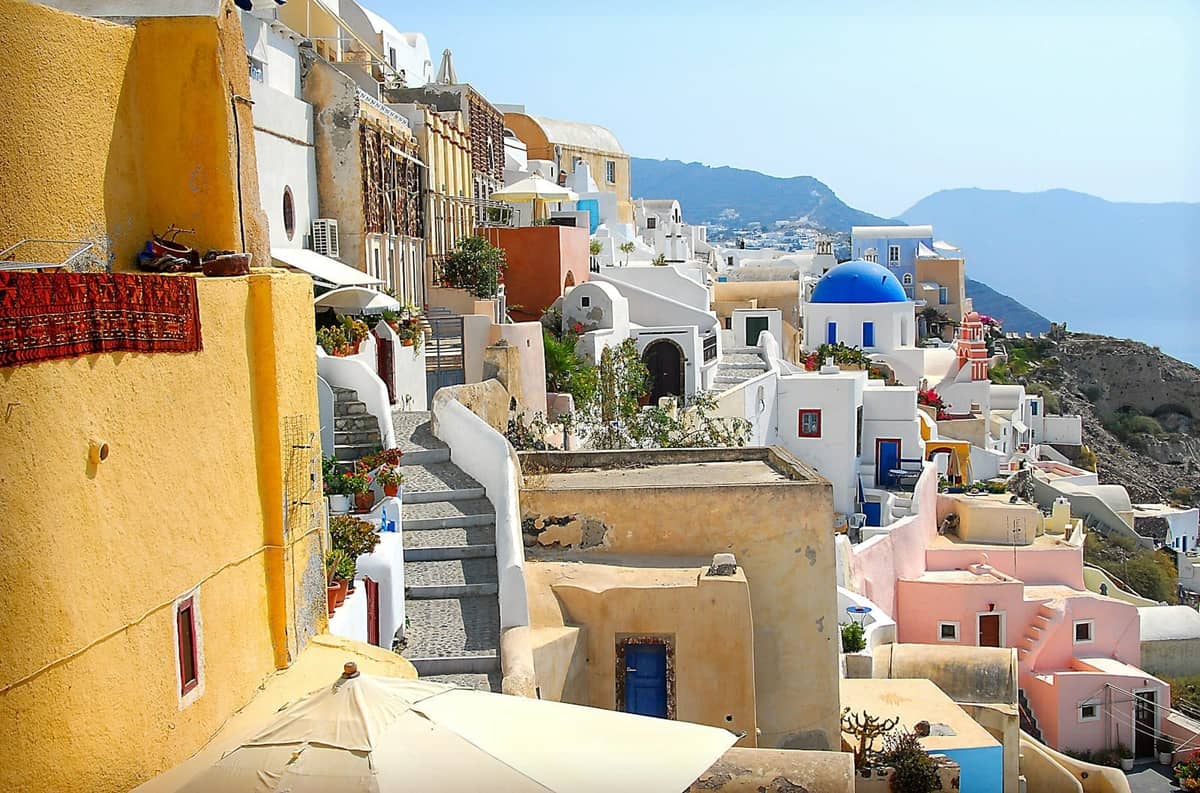
Beyond the caldera rim, Santorini's inland villages preserve a quieter, more authentic Cycladic visual language. Santorini's less-visited corners often yield the most compelling architectural photography, with weathered stone, flowering lanes, and Venetian fortifications that look entirely unchanged from decades ago.
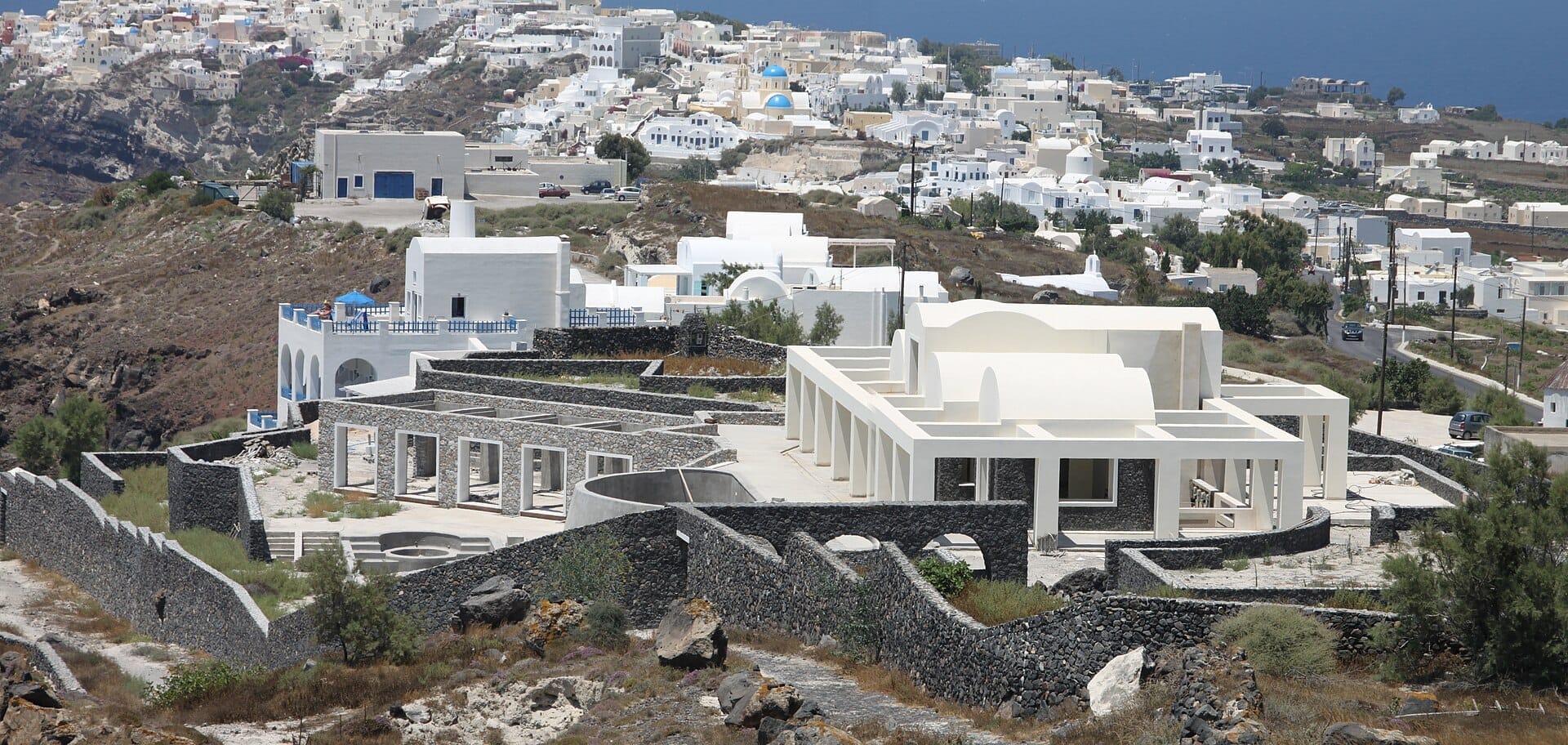
13. Photograph a Traditional Cycladic Village in Finikia
Just inland from Oia, Finikia gets a fraction of its neighbor's foot traffic despite offering the same whitewashed walls, bougainvillea-lined lanes, and Cycladic architecture. Walk it in the morning before the Oia crowds overflow. No caldera views, but the village texture is exceptional.
Explore13. Photograph a Traditional Cycladic Village in Finikia
Just inland from Oia, Finikia gets a fraction of its neighbor's foot traffic despite offering the same whitewashed walls, bougainvillea-lined lanes, and Cycladic architecture. Walk it in the morning before the Oia crowds overflow. No caldera views, but the village texture is exceptional.
Explore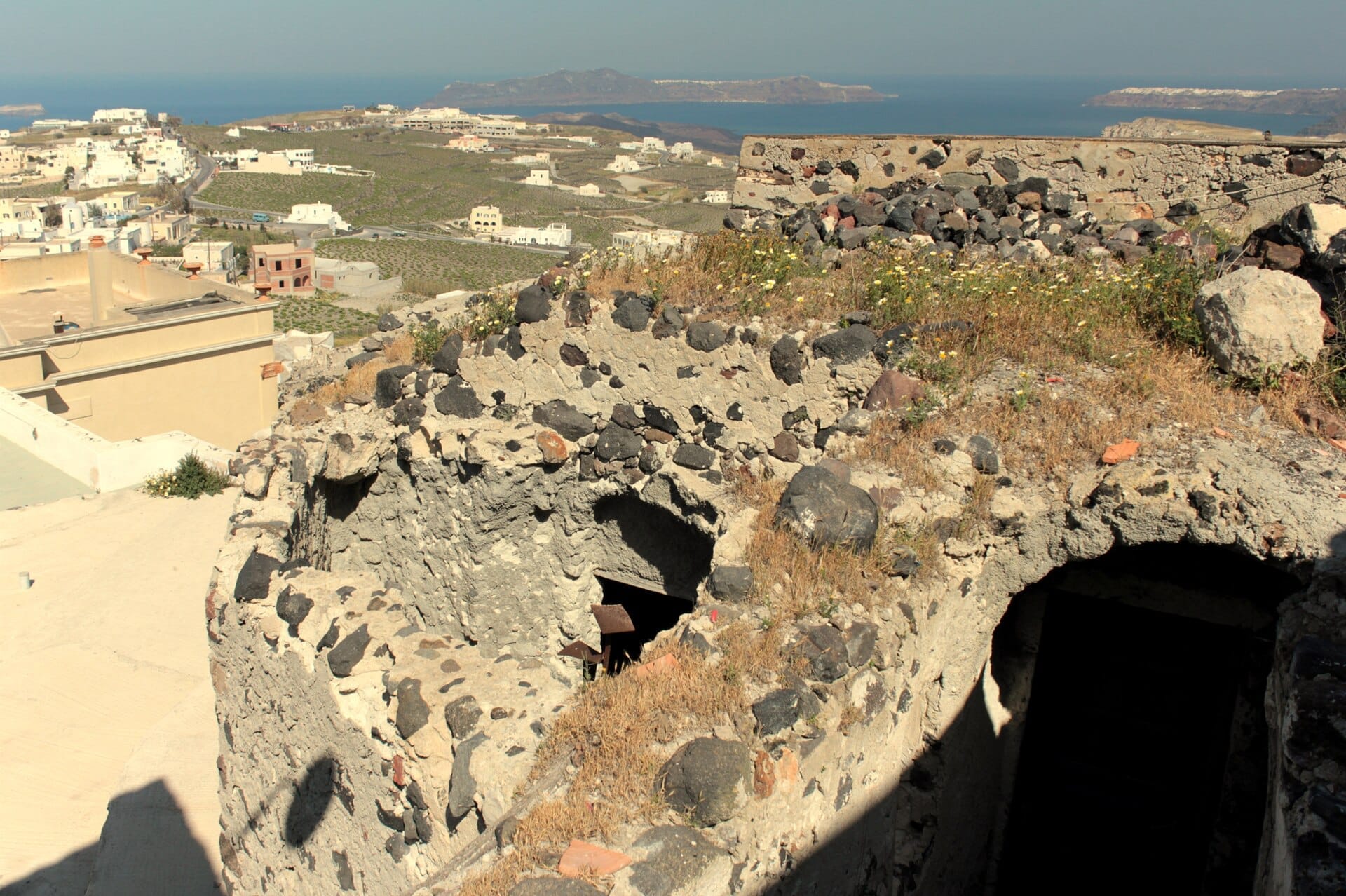
14. Climb to the Venetian Castle at Pyrgos for 360-Degree Views
Pyrgos's medieval castle sits at the island's highest inhabited point, with concentric rings of whitewashed houses built into its walls. The summit gives you a 360-degree panorama of the entire island: caldera, sea, and farmland. Quieter than the caldera rim and especially good for wide landscape shots.
Explore14. Climb to the Venetian Castle at Pyrgos for 360-Degree Views
Pyrgos's medieval castle sits at the island's highest inhabited point, with concentric rings of whitewashed houses built into its walls. The summit gives you a 360-degree panorama of the entire island: caldera, sea, and farmland. Quieter than the caldera rim and especially good for wide landscape shots.
Explore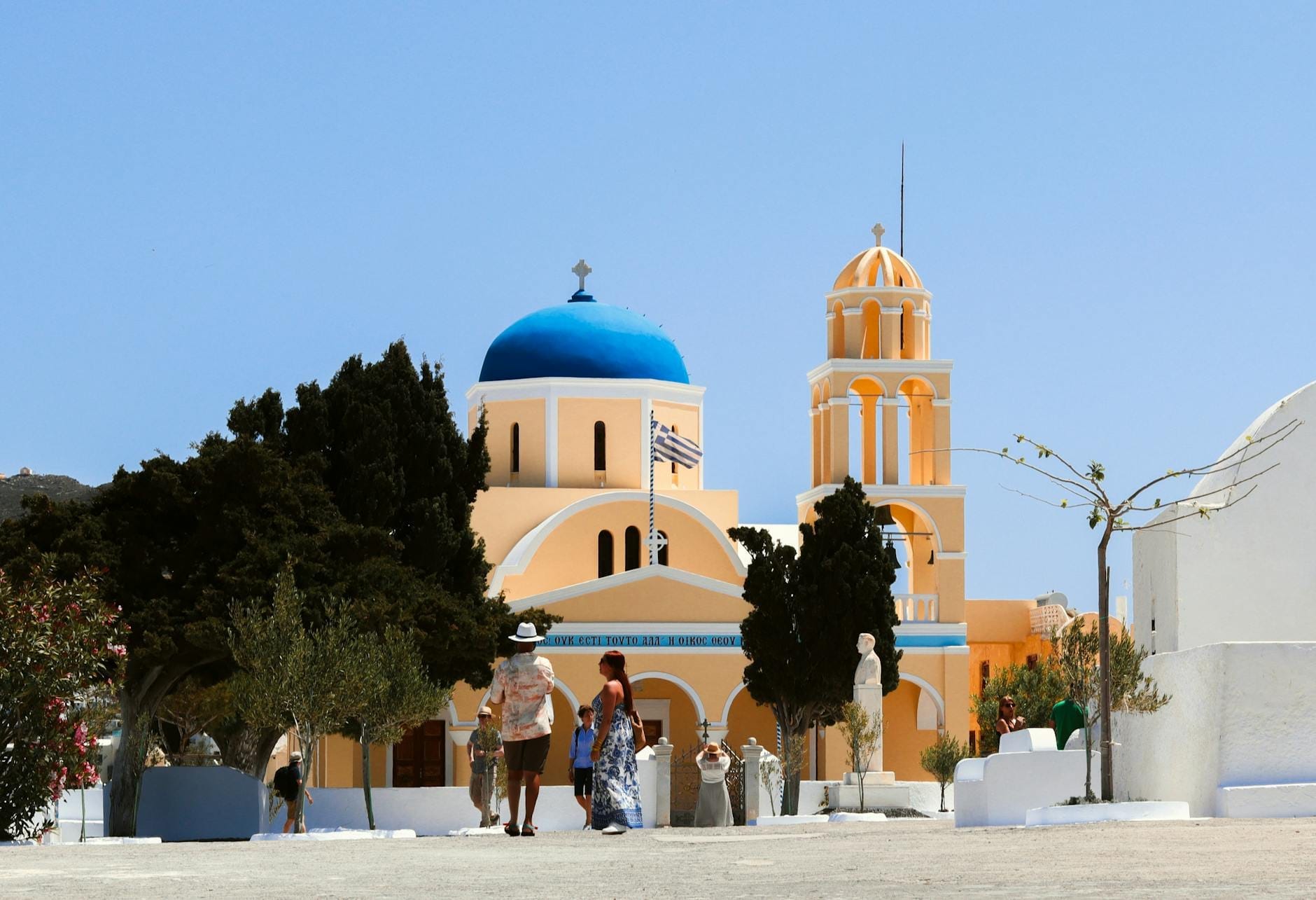
15. Frame Bell Towers and Bougainvillea in Megalochori
Megalochori's central square, with its elegant bell towers and flowering courtyard walls, is one of the island's most photogenic inland settings. The village sees almost no tourist traffic. Come late afternoon for warm directional light on the bell towers and deep color from the bougainvillea.
Explore15. Frame Bell Towers and Bougainvillea in Megalochori
Megalochori's central square, with its elegant bell towers and flowering courtyard walls, is one of the island's most photogenic inland settings. The village sees almost no tourist traffic. Come late afternoon for warm directional light on the bell towers and deep color from the bougainvillea.
Explore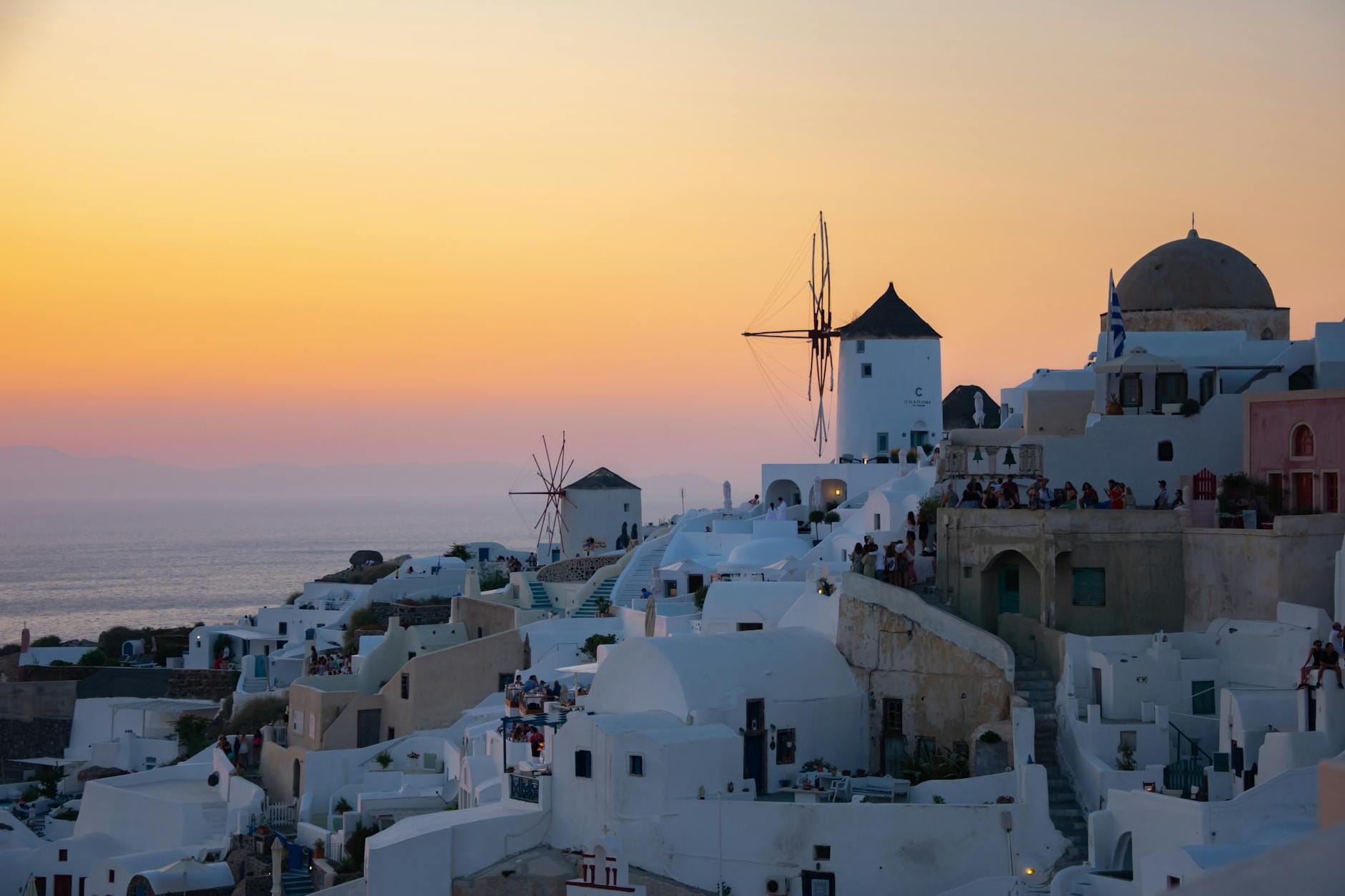
16. Use Oia's Windmills to Frame Caldera Compositions
The whitewashed windmills at Oia's western edge give photographers a strong foreground element for caldera compositions. Shoot from below and behind to frame the caldera through the windmill structures, or use them as anchors for wide-angle shots at golden hour. Less crowded than the castle ruins nearby.
Explore16. Use Oia's Windmills to Frame Caldera Compositions
The whitewashed windmills at Oia's western edge give photographers a strong foreground element for caldera compositions. Shoot from below and behind to frame the caldera through the windmill structures, or use them as anchors for wide-angle shots at golden hour. Less crowded than the castle ruins nearby.
Explore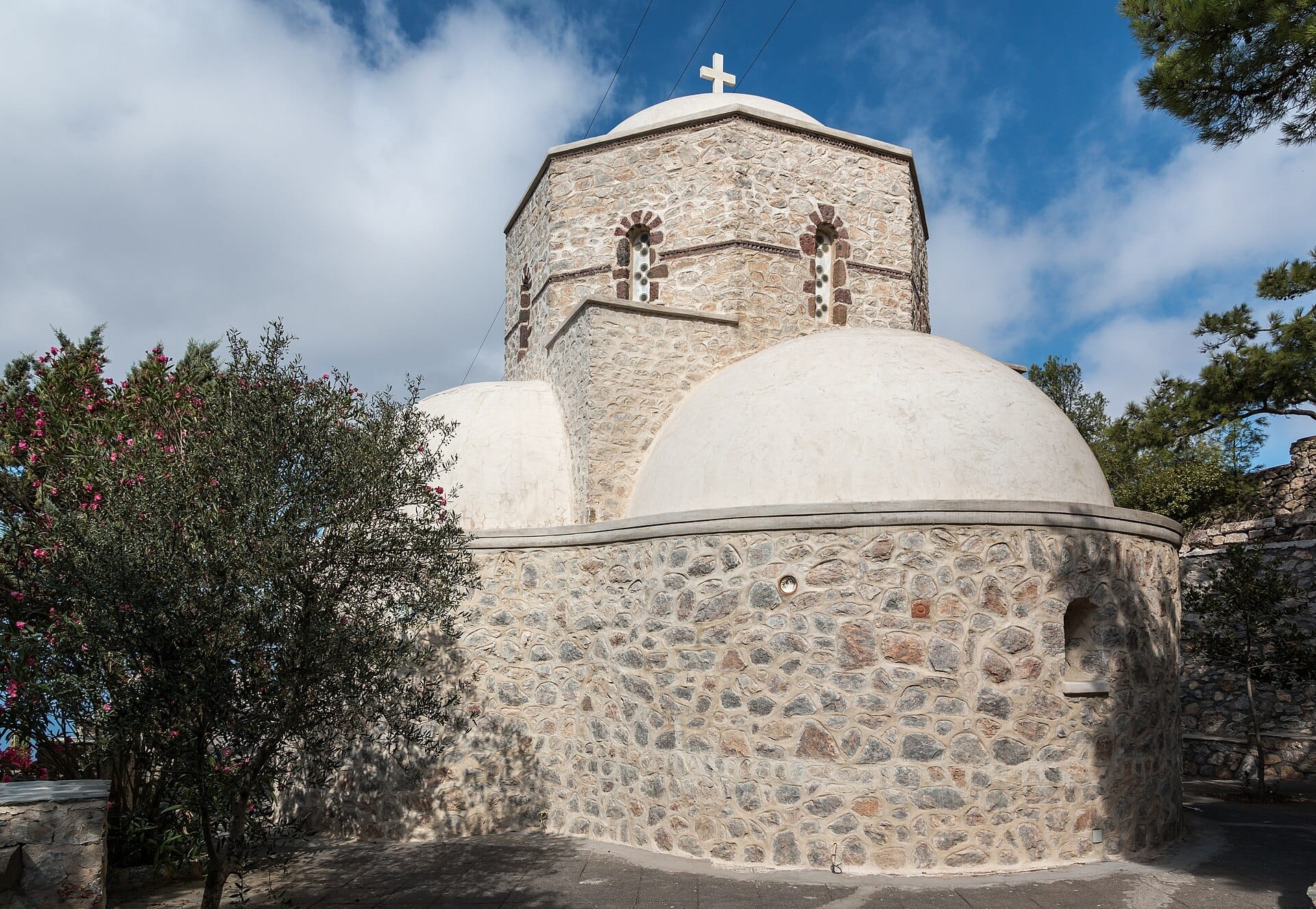
17. Shoot the Island's Widest View from Profitis Ilias Monastery
The 18th-century monastery on Santorini's highest peak at 567 meters gives you the broadest possible view of the island: both coastlines, the caldera, and the sea in every direction. The whitewashed monastery itself photographs well in the harsh midday light that washes out lower locations.
Explore17. Shoot the Island's Widest View from Profitis Ilias Monastery
The 18th-century monastery on Santorini's highest peak at 567 meters gives you the broadest possible view of the island: both coastlines, the caldera, and the sea in every direction. The whitewashed monastery itself photographs well in the harsh midday light that washes out lower locations.
ExploreCaldera Viewpoints with Wine & Sunset
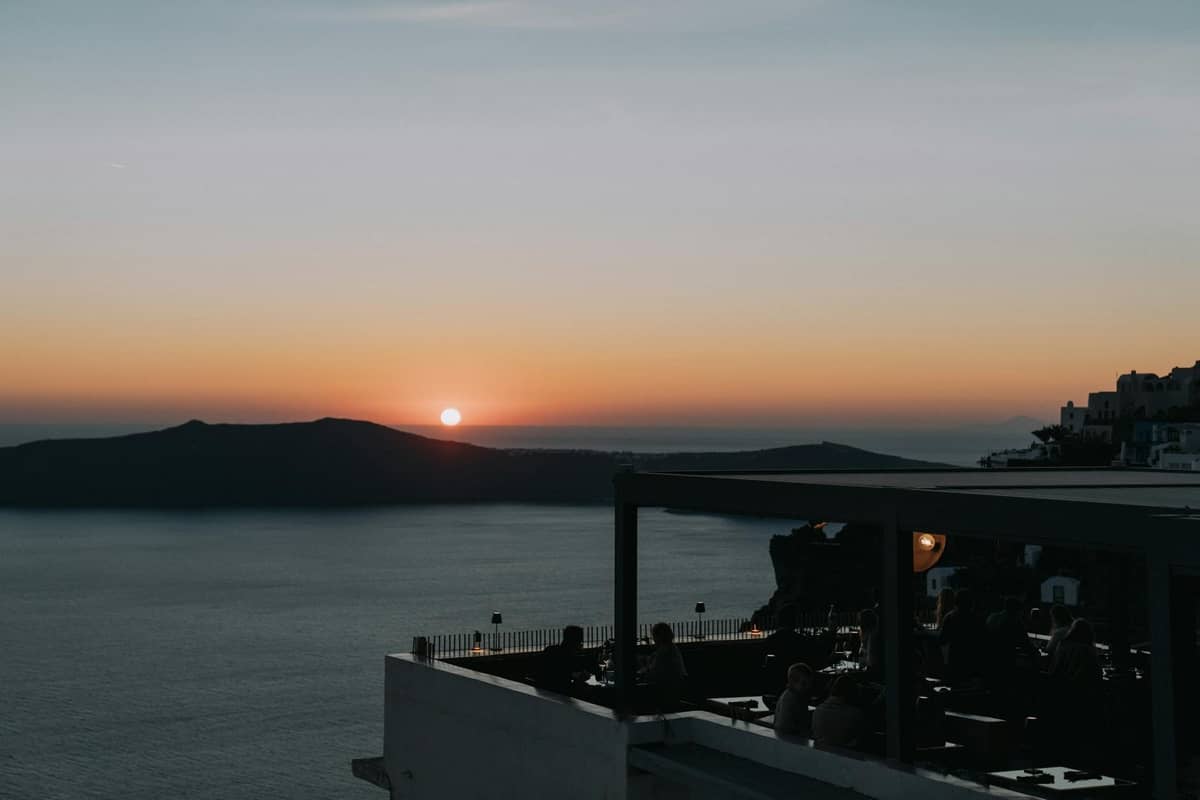
Some of Santorini's best photography positions happen to also be winery terraces, which gives you a legitimate reason to linger for the light. For context on what makes Santorini's wine culture so distinctive and which wineries have the best caldera positions, the Santorini wine guide covers the island's top producers and terroir.
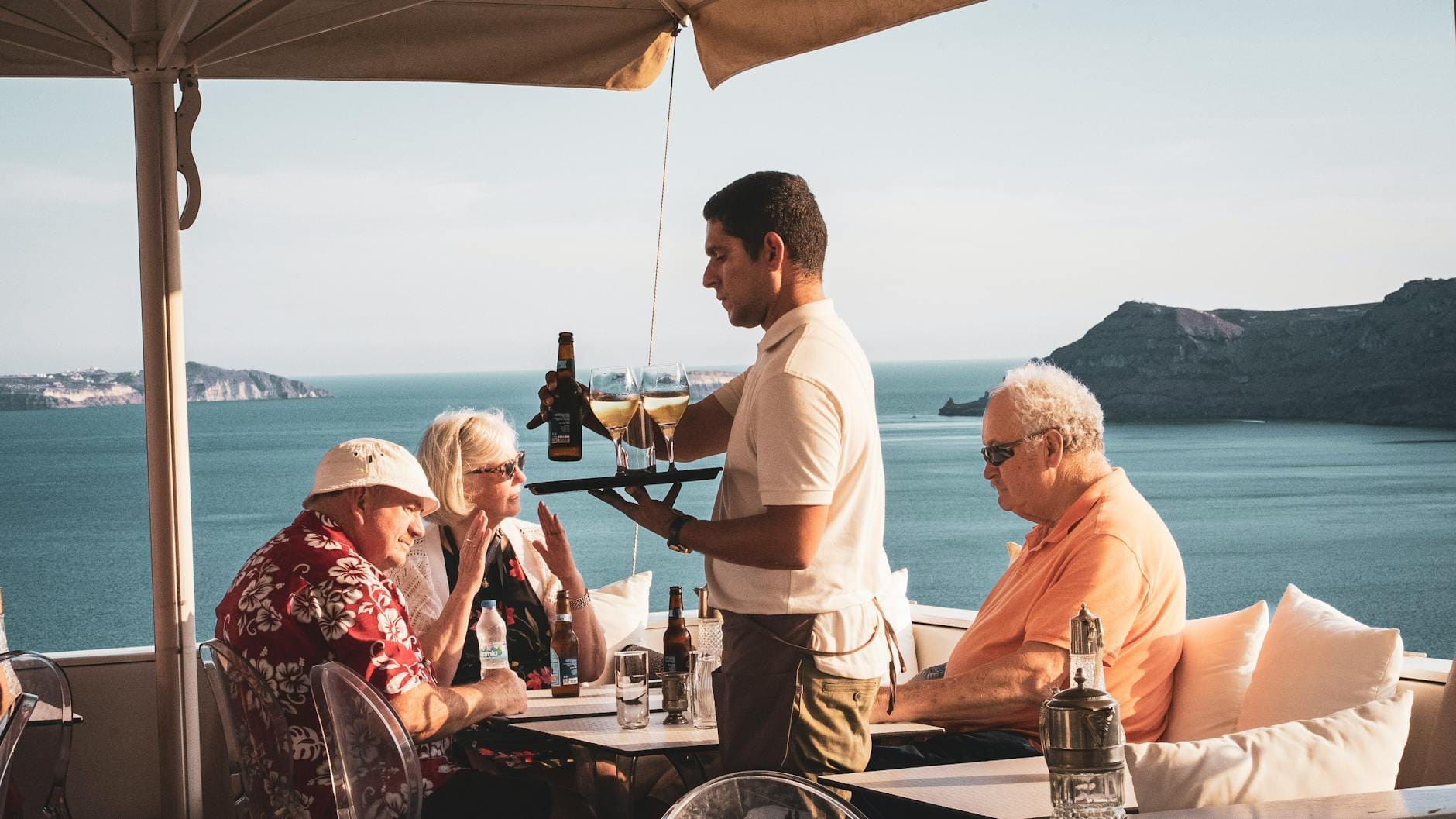
18. Photograph the Caldera from Santo Wines' Terrace
Santo Wines has one of the best-positioned terraces on the caldera rim, looking directly out over the volcanic islands. The combination of wine glasses, the caldera arc, and warm evening light makes this a reliable location for lifestyle and landscape photography. Reserve ahead in peak season.
Explore18. Photograph the Caldera from Santo Wines' Terrace
Santo Wines has one of the best-positioned terraces on the caldera rim, looking directly out over the volcanic islands. The combination of wine glasses, the caldera arc, and warm evening light makes this a reliable location for lifestyle and landscape photography. Reserve ahead in peak season.
Explore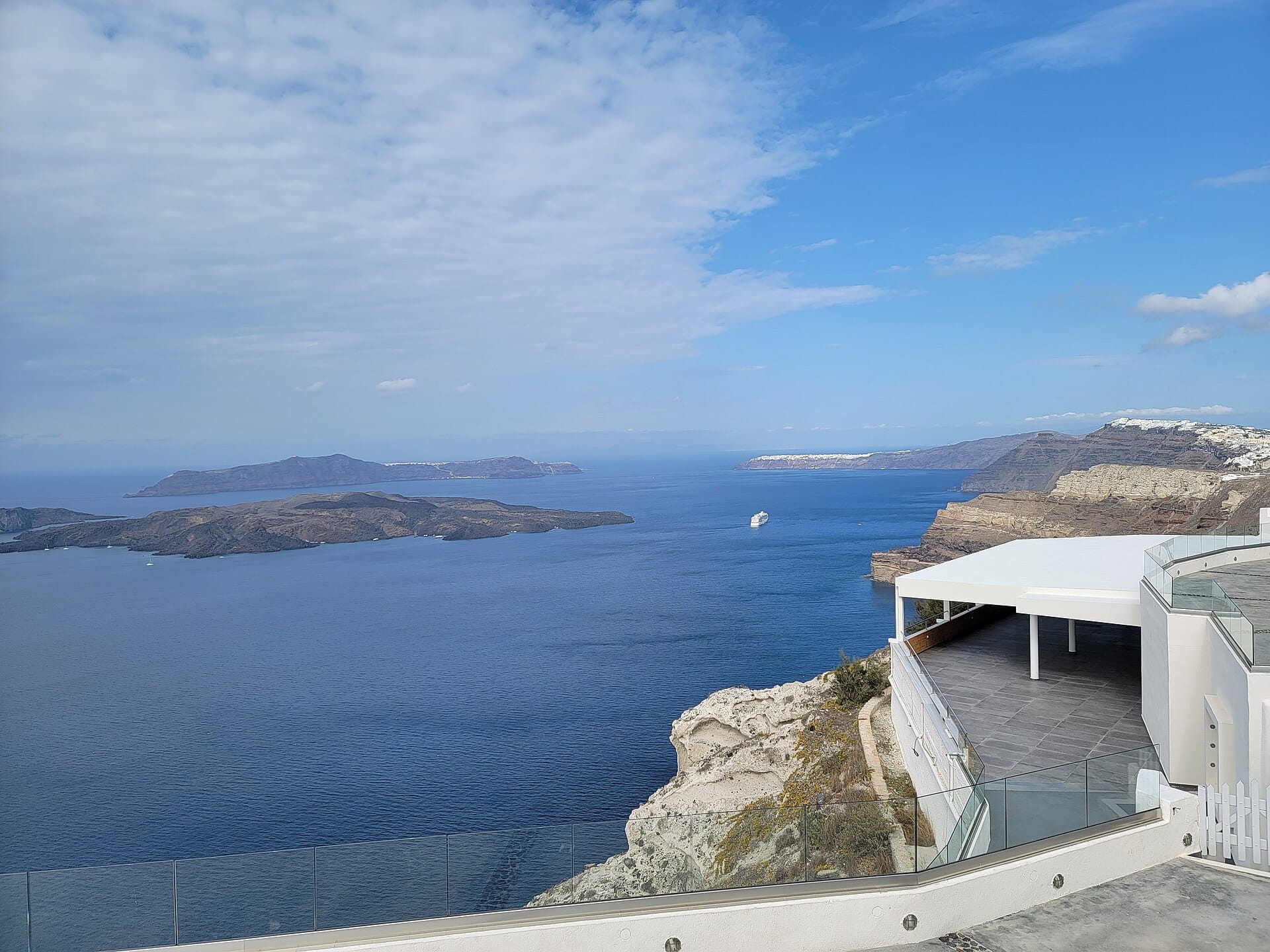
19. Shoot from the Cantilevered Terrace at Venetsanos Winery
Built into the caldera cliffs in 1947, Venetsanos has a terrace that juts over the caldera edge with a direct view toward the volcanic islands and Oia. The restored industrial architecture also photographs well in its own right. Come for the two hours before sunset for the best light angle.
Explore19. Shoot from the Cantilevered Terrace at Venetsanos Winery
Built into the caldera cliffs in 1947, Venetsanos has a terrace that juts over the caldera edge with a direct view toward the volcanic islands and Oia. The restored industrial architecture also photographs well in its own right. Come for the two hours before sunset for the best light angle.
ExploreDramatic Landscapes Beyond the Caldera
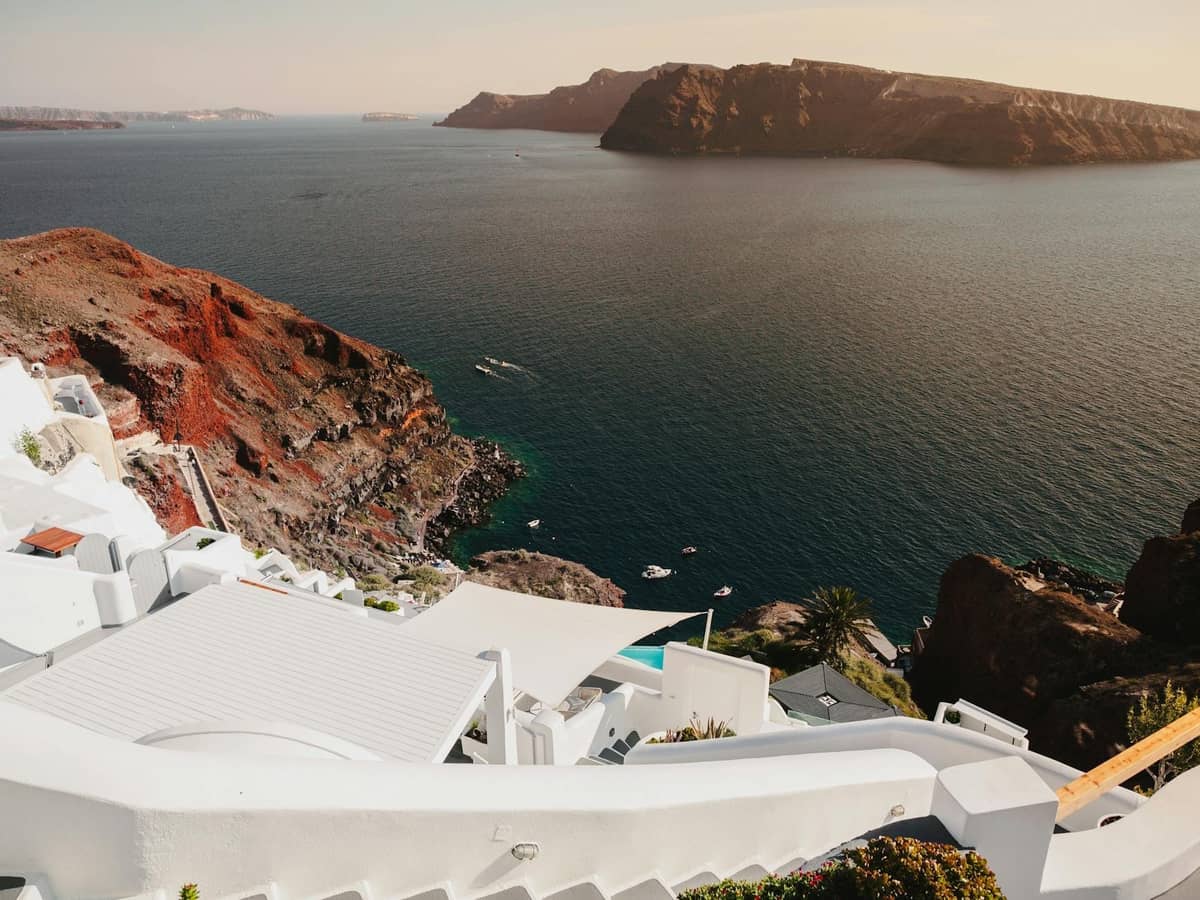
✨ Pro tip
For the Fira-Oia hiking trail and Skaros Rock hike, carry a telephoto lens to compress the caldera cliffs and pull in distant village details. A wide-angle is essential at Red Beach and Vlychada, where the full height of the cliffs only fits in frame from close range.
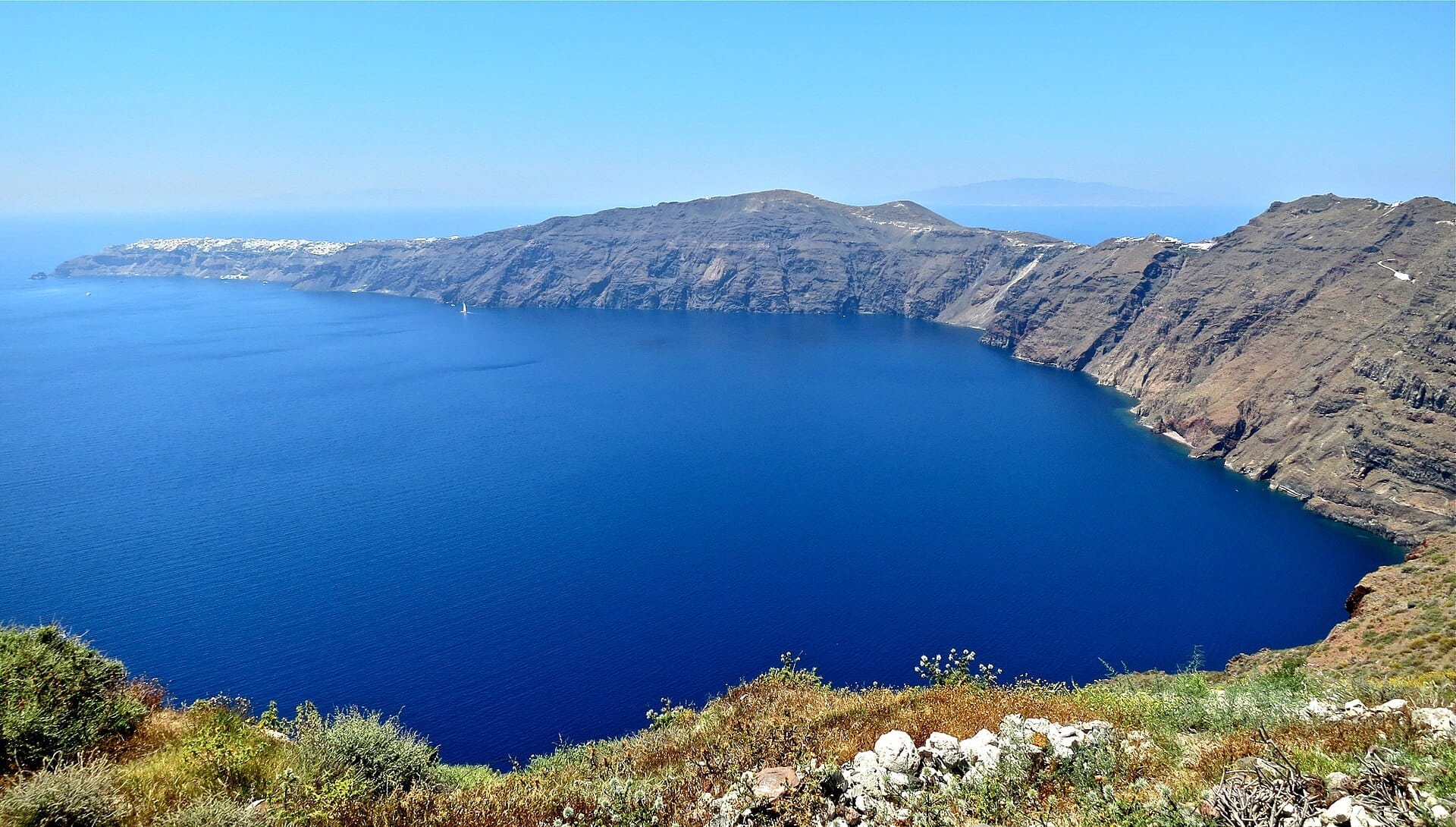
20. Walk the Caldera-Rim Trail from Fira to Oia
The 10-kilometer trail along the caldera edge delivers continuous changing compositions for 3 to 4 hours. The stretch through Firostefani and Imerovigli is quieter than either end and often overlooked. Start from Fira early morning to have the light behind you heading north toward Oia.
Explore20. Walk the Caldera-Rim Trail from Fira to Oia
The 10-kilometer trail along the caldera edge delivers continuous changing compositions for 3 to 4 hours. The stretch through Firostefani and Imerovigli is quieter than either end and often overlooked. Start from Fira early morning to have the light behind you heading north toward Oia.
Explore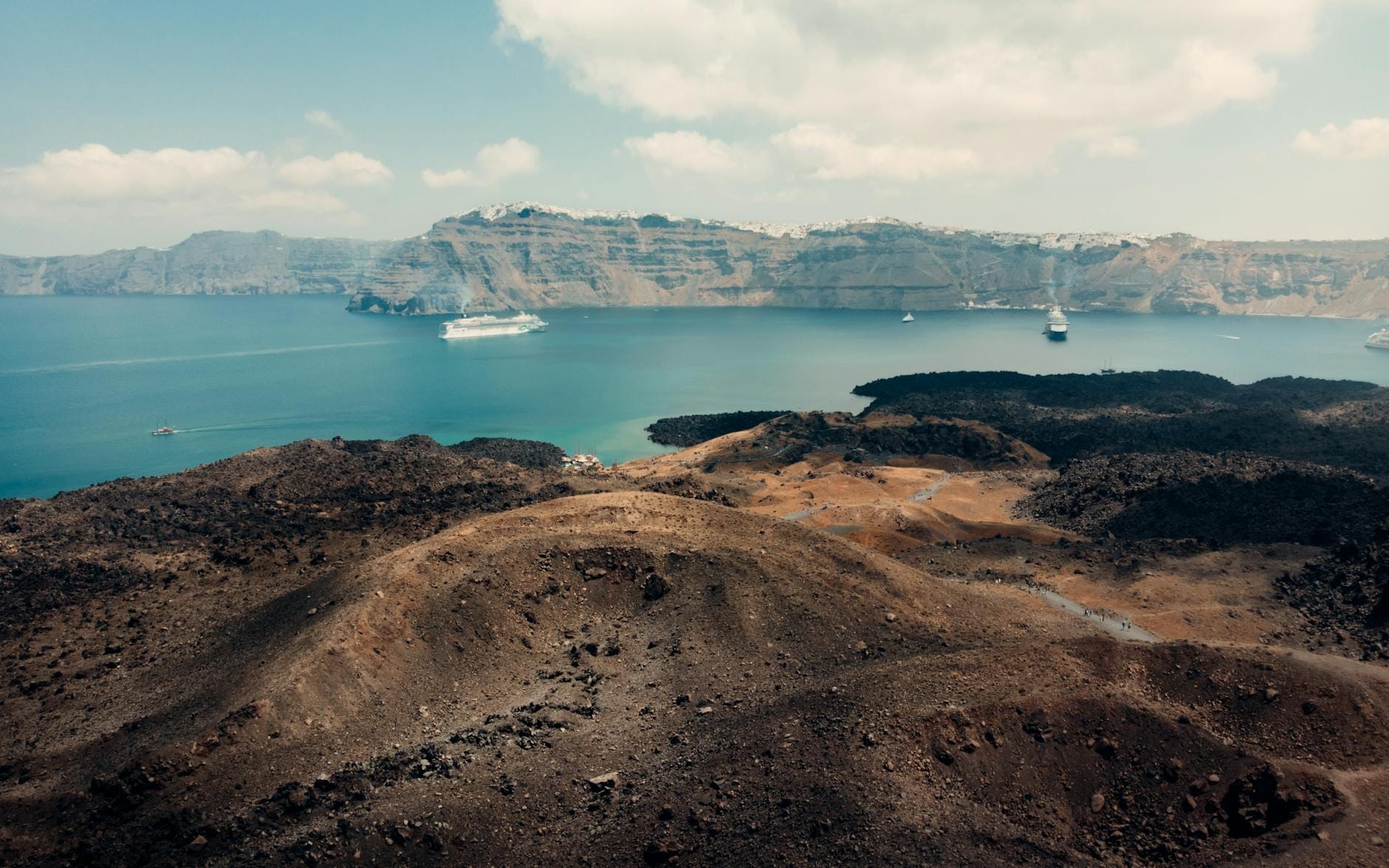
21. Photograph Active Lava Fields on Nea Kameni
A boat tour to the active volcanic island at the caldera's center puts you on a surreal landscape of hardened black and rust-colored lava, with the caldera cliffs and villages rising all around you. The view back toward the island from the crater rim is genuinely unlike anything from land.
Explore21. Photograph Active Lava Fields on Nea Kameni
A boat tour to the active volcanic island at the caldera's center puts you on a surreal landscape of hardened black and rust-colored lava, with the caldera cliffs and villages rising all around you. The view back toward the island from the crater rim is genuinely unlike anything from land.
Explore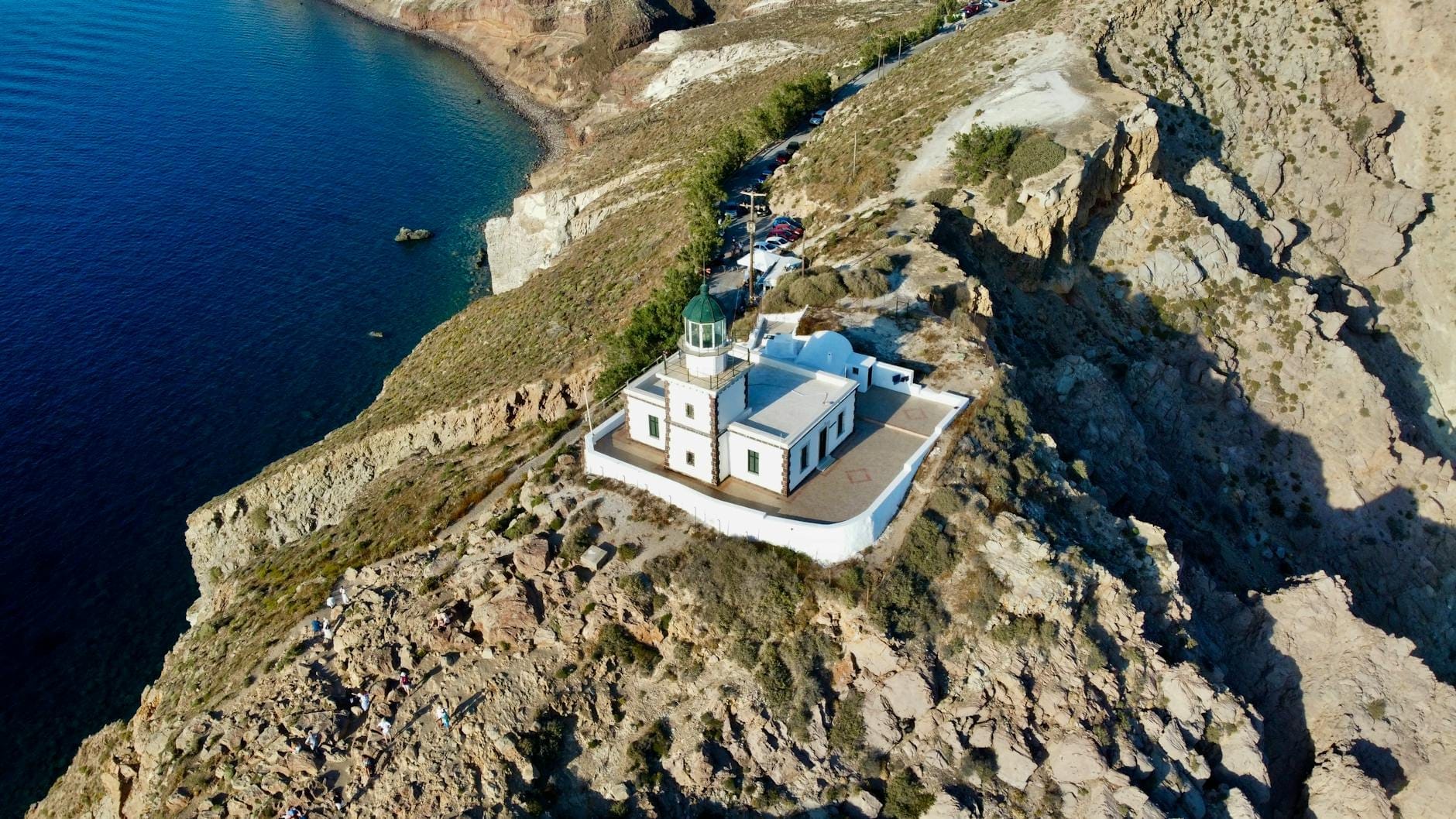
22. Catch the Southern Caldera Entrance from Akrotiri Lighthouse
The 19th-century lighthouse at the island's southern tip offers a completely different caldera angle, looking north into the volcanic basin from outside it. It also faces west for sunset views without Oia's crowds. The lighthouse building itself, in yellow-painted stone, photographs well against the blue Aegean.
Explore22. Catch the Southern Caldera Entrance from Akrotiri Lighthouse
The 19th-century lighthouse at the island's southern tip offers a completely different caldera angle, looking north into the volcanic basin from outside it. It also faces west for sunset views without Oia's crowds. The lighthouse building itself, in yellow-painted stone, photographs well against the blue Aegean.
Explore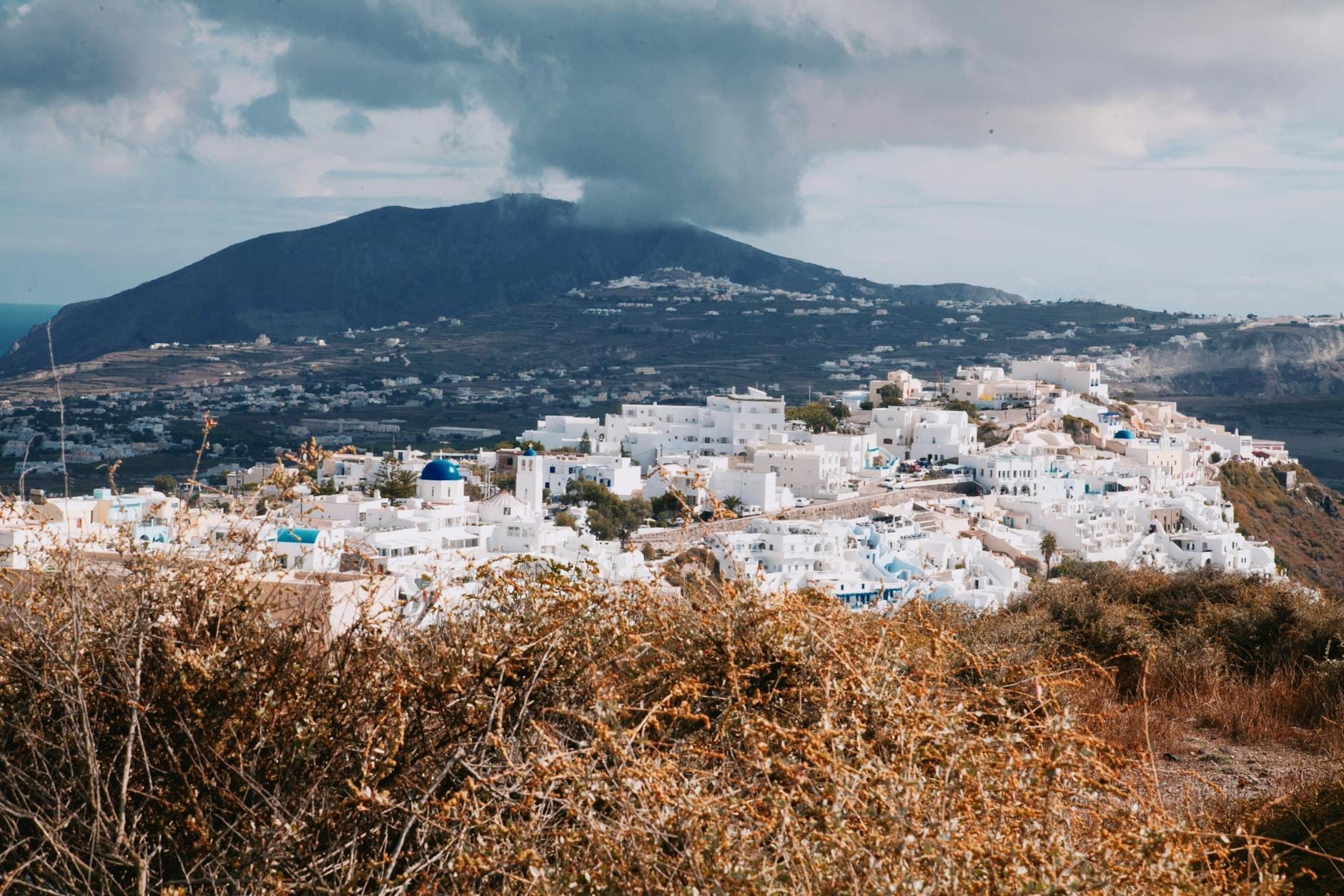
23. Cross to Thirasia for an Unobstructed View Back at Santorini
From Manolas village on the caldera rim of Thirasia, you look back across the water at Santorini's entire caldera wall with Oia, Imerovigli, and Fira all visible simultaneously. It is the only vantage point that puts the whole island in one frame. Take a morning boat to get front-lit cliffs.
Explore23. Cross to Thirasia for an Unobstructed View Back at Santorini
From Manolas village on the caldera rim of Thirasia, you look back across the water at Santorini's entire caldera wall with Oia, Imerovigli, and Fira all visible simultaneously. It is the only vantage point that puts the whole island in one frame. Take a morning boat to get front-lit cliffs.
ExploreFAQ
What is the best time of day to photograph Santorini?
Early morning from around 6 to 9 am is the most reliable time for photography across the island. You get soft directional light, no crowds at the blue domes or caldera viewpoints, and generally clear skies. Late afternoon from 4 pm until sunset is the second best window, particularly for the caldera's west-facing cliffs. Midday light is harsh and flattens the white architecture.
Which village is better for photography: Oia or Imerovigli?
Both are exceptional but serve different purposes. Oia has the iconic blue domes and the most dramatic sunset viewpoint, but it is significantly more crowded. Imerovigli sits higher on the caldera rim and offers wider, less obstructed caldera panoramas with far fewer people. For architecture close-ups, go to Oia in the early morning. For landscape and caldera panoramas, Imerovigli is often the better choice.
Is it allowed to climb on the blue-domed churches to photograph them?
No. The rooftops of all churches in Santorini, including the famous blue-domed churches in Oia, are private property. Climbing on them is prohibited and disrespectful. The best photographic angles of the three domes near Oia's castle are achieved from the public pedestrian path above the churches, which gives an elevated view without trespassing.
When should I visit Santorini to avoid crowds at photography spots?
May, early June, late September, and October offer significantly fewer crowds at major viewpoints compared to July and August. Shoulder season also brings softer, more flattering light than the harsh summer sun. Even in peak season, arriving at Oia's castle or the blue domes before 8 am will get you largely crowd-free shots that are impossible later in the day.
Can I photograph Santorini well without a drone?
Absolutely. Drone regulations in Santorini are strict, and flying near the caldera, villages, and archaeological sites is restricted or prohibited without official permits. Almost every image that defines Santorini, including the caldera panoramas, the blue domes, and the volcanic beaches, is achievable with a standard camera or smartphone from public viewpoints and hiking trails.