Cape Columbo Beach: Santorini's Most Remote Volcanic Shore
Cape Columbo Beach sits on Santorini's northeastern tip, backed by 10-metre volcanic ash cliffs and named after the Kolumbo submarine crater offshore. It is unorganized, free, and deliberately hard to reach — which is precisely the point. Bring everything you need and expect a beach that feels nothing like the island's famous caldera-side postcards.
Quick Facts
- Location
- Northeastern Santorini, ~4 km from Oia, ~12 km northeast of Fira
- Getting There
- Rental car, motorbike, or quad to Koloumpos village; roadside parking, then a steep dirt path to the beach. No direct public bus service.
- Time Needed
- 2 to 4 hours, including the walk down and back
- Cost
- Free — no entrance fee, no sunbeds, no facilities
- Best for
- Solitude seekers, geology enthusiasts, swimmers who want space, naturists
What Cape Columbo Beach Actually Is
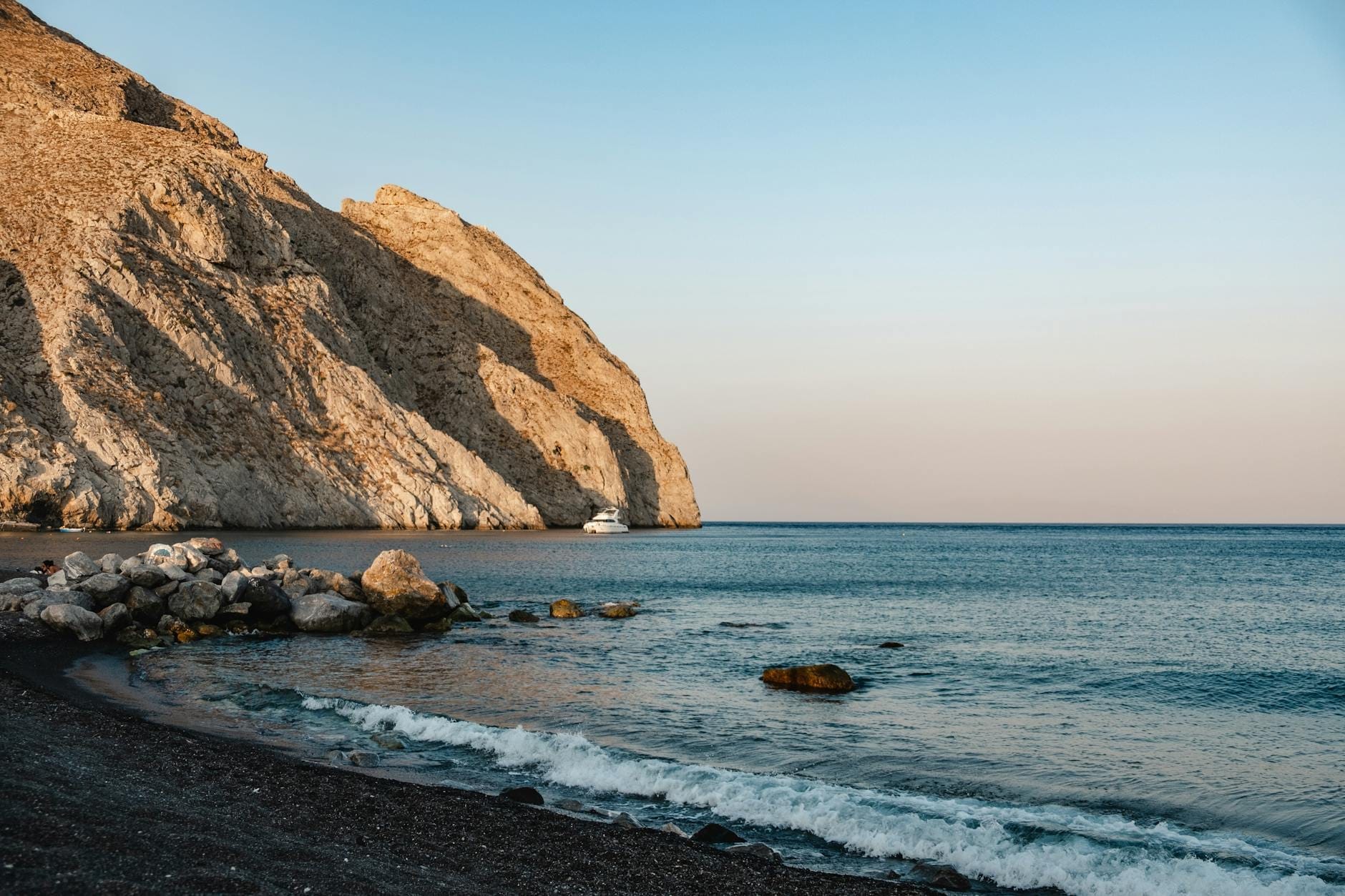
Cape Columbo Beach, also spelled Koloumbo or Colombo, occupies the northeastern coast of Santorini, where the island's caldera drama gives way to something quieter and more geological. There are no blue domes here, no cocktail bars carved into the cliff face, no rows of matching parasols. What you get instead is a dark-sand and pebble shoreline pressed against steep volcanic ash escarpments roughly 10 metres high, with open Aegean water stretching north and the rest of the island feeling very far away.
The beach takes its name from the Kolumbo submarine volcano, an active underwater crater sitting roughly 7 kilometres offshore. That crater last erupted in 1650 CE with devastating effect on the surrounding area. Its proximity is thought to contribute to water temperatures that many swimmers describe as noticeably warmer than other beaches on the island, though conditions vary by season and location along the shore.
For context on how this beach fits into Santorini's wider geology, the Santorini volcano and hot springs guide covers the full volcanic picture, including the related experience of visiting Nea Kameni volcano in the caldera.
Getting There: The Part Most Guides Understate
Cape Columbo is not the kind of place you stumble upon. There is no KTEL bus route directly to the beach, and taxis rarely make the trip without pre-arrangement. The practical way to reach it is by renting a car, motorbike, or quad from Fira or Oia and driving to the small settlement of Koloumpos on the northeastern coast. You park on the roadside near the top of the path, then walk down a narrow dirt track described by visitors as a steep decline that takes 10 to 15 minutes in each direction.
⚠️ What to skip
The path down to the beach is unpaved, uneven, and slopes sharply. It is not suitable for visitors with limited mobility, and sandals with grip are strongly preferable to flip-flops. Coming back up in midday heat is harder than it looks on the way down.
From Oia, the drive takes roughly 10 to 15 minutes. From Fira, allow 25 to 35 minutes depending on road conditions and traffic. The road approaching Koloumpos is narrow in sections, so larger rental vehicles require more care.
Tickets & tours
Hand-picked options from our booking partner. Prices are indicative; availability and final rates are confirmed when you complete your booking.
Luxury Sunset Cruise in Santorini
From 120 €Free cancellationCruise of the volcanic islands around Santorini
From 45 €Instant confirmationFree cancellationGuided e-bike tour in Santorini
From 90 €Instant confirmationFree cancellationSantorini audio guide with TravelMate app
From 5 €Instant confirmation
The Beach Itself: Geology Underfoot
The shoreline at Cape Columbo is a mix of dark volcanic sand and rounded pebbles, with the texture shifting depending on where you set down your towel. The cliffs behind rise in layers of compressed ash and pumice in shades of rust, grey, and ochre. Stand at the waterline and look back and those stripes in the rock read like a timeline of eruptions, each band a separate event compacted into the earth over thousands of years.
The water is typically clear and takes on a deep blue tone under direct sun. Because the beach faces northeast, it is more exposed to wind than Santorini's south and east-facing shores. On days when the meltemi wind picks up, waves can make swimming uncomfortable or inadvisable. Calm days, particularly in June and early September, offer some of the best swimming conditions.
ℹ️ Good to know
Cape Columbo is one of a small number of beaches on Santorini with a long-standing naturist tradition. This is informal and de facto rather than officially designated, but it is well-established and respected by regular visitors.
If you are comparing Santorini's beaches before deciding where to spend your time, the guide to the best beaches in Santorini offers a fuller overview of options across the island, from the organized resort strips at Kamari and Perissa to the harder-to-reach alternatives like this one.
How the Beach Changes Through the Day
Early morning at Cape Columbo has a particular quality. The ash cliffs catch the low eastern light and glow in warm tones that flatten out by noon. The sea at that hour is often glassy, and on a windless July morning the silence is almost complete apart from the water moving against the stones. This is the best time for photography, and genuinely one of the quieter corners of a heavily visited island.
By midday in peak season, the beach attracts a modest number of visitors, though numbers never approach what you see at Kamari or Perissa. The cliff backing the beach provides almost no shade, so the full heat of a July or August afternoon is unrelenting. Bring far more water than you think you need. The nearest place to buy anything is back up the path and a drive away.
Late afternoon brings the light back down to a warmer angle, and the north-facing orientation means the cliffs are lit differently than in the morning — more contrast, longer shadows across the rock layers. Crowds, such as they are, typically thin out by 5 or 6 PM.
Practical Preparation: What to Bring
Cape Columbo is entirely unorganized. There are no sunbeds for hire, no umbrellas, no food stalls, no fresh water tap, and no shower at the beach. Anything you want, you carry down yourself and carry back up. This is not a complaint — it is the nature of the place and why it stays quiet — but visitors who do not prepare often leave early and uncomfortable.
- Water: bring at least 1.5 litres per person, more in peak summer
- Food and snacks: stock up in Oia or Fira before driving out
- Sun protection: full SPF, hat, and ideally a windbreak or light cover for shade
- Footwear: shoes with grip for the path down and back up
- Beach mat or towel: no sunbeds, no furniture
- Cash: irrelevant on the beach itself, but useful for fuel and supplies in town
💡 Local tip
Visit in late May, early June, or September rather than July and August. The water is still warm, the meltemi wind is usually calmer, and the path down feels much less punishing without 34°C heat.
Photography and the Surrounding Landscape
Cape Columbo rewards photographers who are willing to arrive early or stay late. The layered cliff face behind the beach is the most distinctive compositional element: the compressed volcanic strata create horizontal lines that contrast sharply with the vertical drop to the water. Wide-angle lenses capture the scale of the cliffs relative to the beach below; a longer focal length isolates the cliff textures and the colour gradations in the rock.
Because the beach faces northeast, it does not offer caldera sunset views — that experience belongs to the western side of the island. For a comprehensive look at where the best vantage points are, the Santorini views and viewpoints guide and the dedicated Santorini photography guide cover the full range of options.
The water colour at Cape Columbo on a clear day with calm conditions is exceptionally photogenic — a deep Aegean blue that contrasts with the dark shore and pale cliff face. Drone photography captures the full extent of the cape and the cliffs, but local regulations around drone use should always be checked before flying.
Who Should Skip This Beach
Cape Columbo is not right for everyone, and being clear about that saves a wasted trip. If you want an organized beach day with a sunbed, an umbrella, cold drinks delivered to your towel, and a taverna for lunch, this is not your beach. The infrastructure simply does not exist here.
Visitors with mobility challenges will find the steep, unpaved descent genuinely difficult and potentially unsafe. Families with young children should weigh up whether the effort of the path, the lack of shade, and the absence of any facilities is manageable for a full beach day. And on high-wind days, the exposed northerly aspect makes the sea choppy enough that it would not be a comfortable swim for most people.
If you are travelling with children and want beach options that are better set up for families, the Santorini with kids guide covers beaches and activities that suit younger travellers more practically.
Insider Tips
- Check the wind forecast the night before. The beach faces northeast and catches the meltemi directly — a forecast above 4 Beaufort makes swimming uncomfortable and the path down feels worse with sand blowing in your face.
- Park carefully on the roadside near Koloumpos village. There is no formal car park, and the verge can be narrower than it looks on mapping apps. Arrive before 10 AM in peak season to find the most space.
- The water near the shore can feel warmer than you expect for a north-facing beach, attributed by local guides to geothermal influence from the nearby Kolumbo submarine crater. It is worth noting as a curiosity rather than a guarantee — conditions vary.
- Bring a bag to carry out any litter. Because the beach has no staff or regular cleaning service, it only stays unspoiled if visitors treat it that way. It is one of the few spots on the island that still feels genuinely undisturbed.
- If you are combining this with a day around Oia, the timing works well: drive to Columbo first thing in the morning while the village is quiet, then return to Oia for lunch and the afternoon before the main rush of sunset crowds builds up.
Who Is Cape Columbo Beach For?
- Travellers who actively want space and solitude on the beach
- Geology and volcano enthusiasts drawn to the Kolumbo crater connection and volcanic cliff formations
- Naturists looking for a long-established, low-key beach with that tradition
- Photographers seeking unusual cliff textures and unspoiled coastal compositions in early morning light
- Drivers or riders who want to explore the less-visited northeastern coast of the island
Nearby Attractions
Combine your visit with:
- Emporio Medieval Village
Emporio is Santorini's largest village and home to the Kastelli, a 15th-century fortified settlement widely regarded as the best-preserved medieval castle village on the island. Free to explore and far removed from the caldera crowds, it rewards visitors with labyrinthine alleys, stone watchtowers, and a genuine sense of lived-in history.
- Megalochori Village
Tucked into southwestern Santorini roughly 6–7 km from Fira, Megalochori is one of the island's oldest villages, with roots documented back to the 17th century. Its narrow whitewashed lanes, traditional wine canavas, and Cycladic mansions offer a noticeably different pace from the caldera-rim crowds.
- Nea Kameni Volcano
Nea Kameni is the youngest volcanic landform in the eastern Mediterranean, rising from the center of Santorini's caldera. Reached only by boat and requiring a steep hike across bare lava fields, it offers a stark, geological contrast to the whitewashed villages on the cliffs above.
- Palea Kameni Hot Springs
Reachable only by boat, the Palea Kameni Hot Springs sit in a shallow volcanic bay inside Santorini's caldera. Visitors swim from anchored tour boats into warm, sulfur-tinged waters heated by ongoing geothermal activity. It's a genuinely unusual experience, though one that requires realistic expectations.