Emporio Medieval Village: Santorini's Forgotten Fortress Town
Emporio is Santorini's largest village and home to the Kastelli, a 15th-century fortified settlement widely regarded as the best-preserved medieval castle village on the island. Free to explore and far removed from the caldera crowds, it rewards visitors with labyrinthine alleys, stone watchtowers, and a genuine sense of lived-in history.
Quick Facts
- Location
- Emporio village, southern Santorini, approx. 10–12 km from Fira
- Getting There
- KTEL bus on the Fira–Perissa route; alight at Emporio stop. Car rental also practical.
- Time Needed
- 1.5–2.5 hours to walk the Kastelli and surrounding village
- Cost
- Free — no ticket required to walk the medieval lanes
- Best for
- History lovers, architecture enthusiasts, photographers seeking un-touristed Santorini
- Official website
- emporiosantorini.com/about
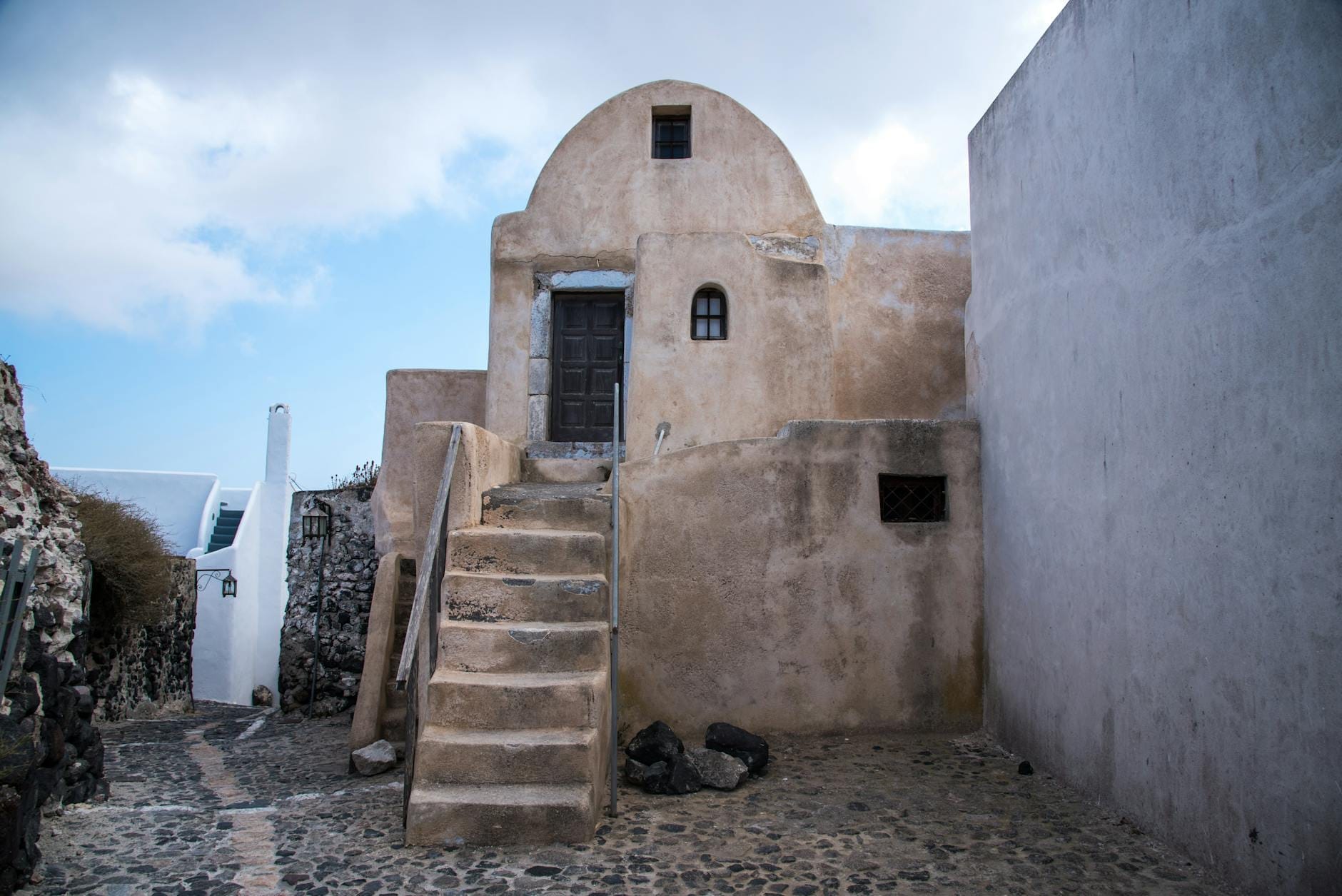
What Is the Emporio Medieval Village?
The Emporio Medieval Village, known locally as the Kastelli Emporiou (Καστέλλι Εμπορείου), is a fortified settlement at the heart of Emporio village in southern Santorini. Built in the mid-15th century, it was designed as one of five kastelli (castle-villages) constructed across the island to shelter residents from the relentless pirate raids that plagued the Aegean during the late medieval period. Of the five, Emporio's Kastelli is widely considered the best-preserved and remains inhabited today, meaning the lanes you walk are not a museum reconstruction but a genuinely lived neighborhood.
The village name itself is telling: Emporio derives from the Greek word for 'trade' (εμπόριο), and this was historically the island's main commercial center, the economic counterweight to the nobles who clustered closer to the caldera. That mercantile heritage gave it resources; those resources gave it fortifications; those fortifications have now given it roughly six centuries of continuous occupation. Most visitors to Santorini never make it here, which is either a reason to skip it or the most compelling reason to come, depending on what you want from the island.
💡 Local tip
Arrive before 10am or after 4pm in summer. The stone alleys trap heat by midday, and the light in the late afternoon turns the dark volcanic walls a warm amber that is far more photogenic than the flat midday brightness.
The Architecture: What You Are Actually Looking At
Walking into the Kastelli core feels different from anywhere else on Santorini. There are no caldera views, no infinity pools, no bright-white cube houses on a cliff edge. Instead, the architecture turns inward. The outer ring of houses in a kastelli functions as a defensive perimeter wall: their backs face outward, presenting blank stone facades to potential attackers, while the doors and windows open onto the enclosed internal alleyways. The effect is of stepping into a compressed, roofed-over world, with passages so narrow that two people pass each other sideways.
The stone used is dark volcanic rock, rough to the touch and warm after a morning of sun. Arched passages connect sections of the Kastelli, some low enough to require ducking, and stairways rise unexpectedly to roof terraces that were once used as communal escape routes if the ground level was breached. The Tower of Goulas, a fortified watchtower near the Kastelli, is historically connected to the settlement and was reportedly linked to it by an underground tunnel, though this passage is not publicly accessible.
For context on how Santorini's medieval past shaped its architecture more broadly, the Castle of Pyrgos in the inland village of Pyrgos offers a comparable but distinct kastelli experience, and comparing the two reveals how each settlement adapted the same defensive logic to its specific terrain.
Tickets & tours
Hand-picked options from our booking partner. Prices are indicative; availability and final rates are confirmed when you complete your booking.
Luxury Sunset Cruise in Santorini
From 120 €Free cancellationCruise of the volcanic islands around Santorini
From 45 €Instant confirmationFree cancellationGuided e-bike tour in Santorini
From 90 €Instant confirmationFree cancellationSantorini audio guide with TravelMate app
From 5 €Instant confirmation
How the Village Changes Through the Day
Early morning in Emporio is quiet in a way that feels earned rather than manufactured. The village is a working community, not a tourist installation. By 8am you may hear shutters opening, a moped starting somewhere in the lower lanes, the faint smell of bread from a kafeneion. The Kastelli alleys are cool and shadowed at this hour, which makes them physically comfortable and photographically interesting: sharp contrasts between lit archways and dark passages.
By late morning, especially in July and August, the stone radiates the previous day's heat back at you. The alleys provide shade but limit airflow. This is the one window in the day when spending more than an hour in the medieval core becomes uncomfortable. If you are visiting in peak summer, use the midday stretch to explore the lower, more open parts of Emporio village, have lunch at one of the small local tavernas, and return to the Kastelli in the afternoon.
Late afternoon and early evening are the most rewarding times. The quality of light shifts, locals begin to appear on doorsteps, and the village takes on the unhurried rhythm of a place that does not organize itself around tourist arrivals. If you have a rental car, combining an afternoon visit here with an evening at the nearby black-sand beaches takes no logistical effort and makes for a complete southern Santorini day.
Getting There and Getting Around
Emporio sits roughly 10 to 12 km from Fira and about 3 km from the black-sand beaches at Perissa and Perivolos. The KTEL bus network runs a route between Fira and Perissa that stops at Emporio; check current schedules at the KTEL Santorini website before you travel, as timetables vary significantly between high season and shoulder season.
A rental car or scooter gives you the most flexibility, particularly if you plan to combine Emporio with a visit to Perissa beach or the Profitis Ilias monastery, which sits above the village on the highest ridge of the island. Parking is generally available at the entrance to the village without difficulty, even in high summer, which is one of the practical advantages of visiting a place that does not yet appear on every tour itinerary.
Once inside the village, navigation is entirely on foot. Wheeled luggage, pushchairs, and wheelchairs will struggle seriously in the medieval Kastelli core: the surfaces are uneven volcanic cobblestone, the stairs are frequent and irregular, and several passages require bending under low stone arches. The lower, newer parts of Emporio are more accessible on flat ground, but the historic heart of the attraction is the Kastelli itself, and that requires sure footing and comfortable shoes.
⚠️ What to skip
The Kastelli is a residential neighborhood. Treat it accordingly: keep voices low, do not photograph into windows or private courtyards, and stay on the accessible lanes. Some passages lead into private homes and are not public rights of way.
Combining Emporio With the Surrounding Area
Emporio's position in southern Santorini makes it a natural anchor for a half-day or full-day itinerary that takes in multiple distinct experiences. The black-sand beach at Perissa is only a few kilometers away and offers a striking contrast to the stone enclosure of the Kastelli: open, loud, bright, and social. The two places share a geography but almost nothing else, which makes pairing them more interesting than repetitive.
From Emporio, the road that climbs toward Profitis Ilias Monastery at the island's highest point offers sweeping views over the southern half of Santorini. The monastery itself is an active religious site and requires modest dress to enter. It is worth the detour if you have transport, and the perspective from the ridge dramatically reframes the island's geography: you can see how the caldera, the southern tip, and the east coast beaches relate to each other spatially in a way that no map quite conveys.
For those interested in the island's prehistoric past, the Akrotiri Archaeological Site is roughly 20 minutes by car to the west. It is among the most significant Bronze Age excavations in the Aegean and pairs well with Emporio for a day oriented toward Santorini's deeper history rather than its caldera scenery.
Photography at the Kastelli
Emporio offers a photographic register almost entirely absent from the rest of Santorini. There is no blue and white here in the postcard sense; the palette is charcoal, ochre, weathered plaster, and shadow. The architectural interest is in compression and detail: the geometry of arched passageways, the texture of hand-laid stone, the contrast between a rusted iron gate and a white-painted door frame. If your Santorini photography has so far been dominated by caldera edges and windmills, a morning here will produce genuinely different images. For a broader sense of how to approach the island's photographic variety, the Santorini photography guide covers the full range of light conditions and locations across the island.
A wide-angle lens handles the narrow passages well; a 24mm equivalent on full frame will capture the full height of a lane without heavy distortion. Midday is the least useful light here because overhead sun bleaches the stone and kills shadow contrast. The golden hour before sunset, when low-angle light enters the alleys from the west, is the single best window for images that actually convey the atmosphere of the place.
Honest Assessment: Who This Suits and Who It Does Not
Emporio is not a dramatic attraction in the way that the Oia sunset or the Akrotiri ruins are dramatic. There is no single moment of revelation, no view that makes you stop and catch your breath. The reward is cumulative: a growing sense of what Santorini looked like and how it functioned before the tourism economy remade the caldera villages. That cumulative quality appeals strongly to some travelers and leaves others wondering what they came for.
If your primary interest in Santorini is the iconic caldera scenery, the blue-domed churches, or the sunset views, Emporio will feel like a detour rather than a destination. It does not compete on those terms and makes no effort to. But if you have already covered the headline attractions and want to understand the island at a different register, or if you are staying in the south near Perissa or Perivolos and want a non-beach afternoon option, Emporio delivers more than most alternatives in its vicinity.
Visitors with limited mobility should note honestly that the Kastelli core is not navigable in a wheelchair and is difficult with a walking frame. The medieval lanes were built for a different era and a different scale of human movement. The lower village is easier but contains less of what makes Emporio historically distinctive.
Insider Tips
- The village has a small plateia (central square) at its lower edge with a kafeneion that serves Greek coffee and local snacks. Sitting here for 20 minutes before entering the Kastelli gives you a feel for the pace of the place and occasionally produces a conversation with a local who can point out lanes not in any guidebook.
- If you are navigating by phone GPS, note that the medieval core is too dense for satellite positioning to be precise. Download an offline map of the area before you arrive, but also accept that getting slightly lost is part of how the Kastelli works.
- The outer wall of the Kastelli is most legible from the small road that loops around its northern perimeter. Walking this circuit before entering the interior helps you understand the defensive logic of the design: you can see exactly how the house backs merge into a continuous wall.
- Emporio has a noticeably different microclimate than the caldera villages. It sits inland and lower, which means it is more sheltered from the northerly Meltemi winds that can make outdoor activities uncomfortable in July and August. If the wind is strong on the caldera, Emporio may be considerably calmer.
- The village is still used as a filming location and occasionally hosts small cultural events in the summer. Checking the emporiosantorini.com website a day or two before your visit occasionally reveals local events that are not promoted elsewhere.
Who Is Emporio Medieval Village For?
- History and architecture enthusiasts who want to see medieval Santorini beyond the postcard image
- Photographers looking for textures, shadows, and a palette that differs completely from the caldera villages
- Travelers on a second or third visit to Santorini who have covered the headline attractions and want depth
- Those staying in the south of the island near Perissa or Perivolos seeking a half-day cultural excursion
- Independent travelers who prefer places that are not organized around tourist infrastructure
Nearby Attractions
Combine your visit with:
- Cape Columbo Beach
Cape Columbo Beach sits on Santorini's northeastern tip, backed by 10-metre volcanic ash cliffs and named after the Kolumbo submarine crater offshore. It is unorganized, free, and deliberately hard to reach — which is precisely the point. Bring everything you need and expect a beach that feels nothing like the island's famous caldera-side postcards.
- Megalochori Village
Tucked into southwestern Santorini roughly 6–7 km from Fira, Megalochori is one of the island's oldest villages, with roots documented back to the 17th century. Its narrow whitewashed lanes, traditional wine canavas, and Cycladic mansions offer a noticeably different pace from the caldera-rim crowds.
- Nea Kameni Volcano
Nea Kameni is the youngest volcanic landform in the eastern Mediterranean, rising from the center of Santorini's caldera. Reached only by boat and requiring a steep hike across bare lava fields, it offers a stark, geological contrast to the whitewashed villages on the cliffs above.
- Palea Kameni Hot Springs
Reachable only by boat, the Palea Kameni Hot Springs sit in a shallow volcanic bay inside Santorini's caldera. Visitors swim from anchored tour boats into warm, sulfur-tinged waters heated by ongoing geothermal activity. It's a genuinely unusual experience, though one that requires realistic expectations.