Getting Around Santorini: Your Complete Transport Guide
Santorini has no metro, no trains, and surprisingly limited taxis. This guide breaks down every transport option on the island — KTEL buses, rentals, taxis, rideshare, and ferries — with real fares, route details, and practical advice on what works best by season.
Plan and book this trip
Tools from our partner Travelpayouts help you compare flights and hotels. If you book through them, we may earn a commission at no extra cost to you.
Flights
Hotels map
TL;DR
- Santorini has no metro or train. The only public transport is the KTEL bus network, with Fira as the central hub for all routes.
- Bus fares are cheap at around €2.00–€2.50 per leg, but each journey segment requires a separate ticket — see the Fira bus station section for route details.
- Taxis and rideshare (Uber/Bolt) exist but are expensive and limited in number — pre-book during peak season.
- Renting a car, ATV, or scooter gives the most flexibility, especially for beaches and villages off the main bus routes.
- Winter visitors should plan carefully: many bus routes run only a few times per day. Check the best time to visit Santorini guide to match transport availability with your travel dates.
The Basics: What Santorini's Transport Network Actually Looks Like
Getting around Santorini requires a bit of planning, especially if you're expecting the kind of transport network common in larger Greek cities. There is no metro, no tram, and no train. The island covers roughly 76 km² and has a resident population of around 15,500, but during summer it absorbs hundreds of thousands of tourists, which puts real pressure on an already limited infrastructure.
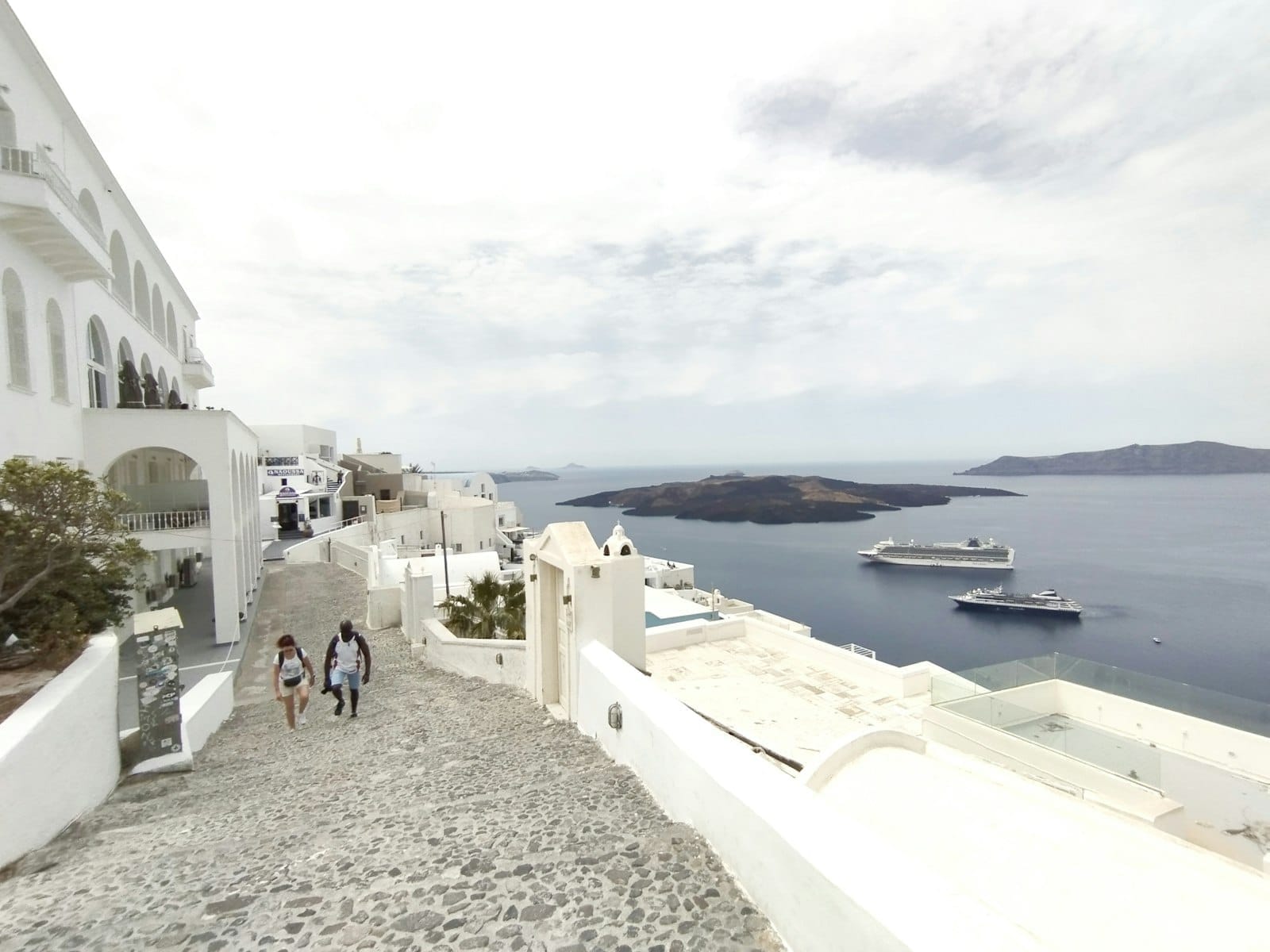
The backbone of public transport is the Fira-based KTEL bus network. All standard KTEL bus routes for visitors begin and end at the Fira Bus Station, which sits just below the main square. Think of it as a hub-and-spoke system: if you want to travel from Oia to Akrotiri, you will need to ride to Fira first, buy a new ticket, and catch a second bus. There is no direct cross-island service and no through-ticketing.
⚠️ What to skip
Walking between villages along main roads is not recommended. Most roads are narrow, winding, and lack proper sidewalks or verges. Stick to designated walking paths — like the caldera trail — rather than roadside walking.
KTEL Buses: Routes, Fares, and Frequencies
The KTEL buses are modern, air-conditioned coaches and represent by far the cheapest way to get around. Fares on main routes are typically around €2.20–€2.80 per leg, paid in cash on board. The key word is 'per leg': each bus segment you ride requires a fresh ticket. Keep small change handy.
- Fira to Oia One of the most-used routes. In high season (late June to early September), buses run roughly every 20–45 minutes from early morning until around 22:00 or later. In winter, expect 60–90 minute gaps. Fare: approximately €2.00–€2.50.
- Fira to Kamari Runs via Karterados, Mesaria, and Exo Gonia before reaching the beach. Fare: approximately €2.20. Frequency varies: every 30–60 minutes in high season.
- Fira to Akrotiri Passes through Megalochori and continues to the archaeological site and beach. Fare: approximately €2.20. Useful for reaching the Red Beach and Lighthouse areas, though you'll need to walk from the bus stop.
- Fira to Perissa / Perivolos Serves the southeastern black-sand beaches. Runs less frequently than the Oia and Kamari routes, especially outside peak season.
- Fira to Airport (JTR) A short, inexpensive ride of around €2–€3. The airport is only about 6 km from Fira, making this the budget-friendly option for arrivals and departures.
- Fira to Athinios Ferry Port Buses are timed to ferry arrivals and departures in high season, with extra services added during busy periods. Fare: approximately €2–€3. In low season, verify the schedule before counting on it.
💡 Local tip
The most reliable source for current timetables is the printed schedule posted at the Fira Bus Station itself. The KTEL website (ktel-santorini.gr) also publishes routes and fares, but always cross-check at the station on arrival as schedules shift between seasons.
In high season, the caldera-rim villages of Fira, Firostefani, and Imerovigli see buses every 20–30 minutes, and the route to Oia is well covered. Outside peak summer, frequencies drop across the board. In winter, some routes are suspended entirely or run only two or three times a day, operating on a schedule built for local residents rather than tourists.
Taxis, Rideshare, and Private Transfers
Taxis in Santorini are limited in number and can be genuinely difficult to find during peak hours — particularly after the famous Oia sunset, when hundreds of visitors all want a taxi at the same time. Pre-booking through your accommodation or a local taxi dispatcher is strongly advised if you have a fixed schedule to keep.
Typical fares for longer transfers: a taxi from Athinios Port or the airport to Oia typically runs around €40–€50 during daytime. Night fares are higher. Airport to Fira is considerably less given the 6 km distance, but always confirm the fare before getting in. Taxis operate on a zone/meter system, and drivers should use the meter or agree on a price upfront.
Uber and Bolt do operate on the island, though both are described by regular visitors as expensive relative to mainland Greece and not always available outside Fira. If budget matters, the KTEL bus remains the smarter call for most journeys. For group travel or airport transfers with luggage, a pre-booked private transfer from a licensed operator often works out cheaper per person than a taxi and removes any uncertainty about availability. This is especially worth considering if you're staying in Imerovigli or Oia, where the road access to some properties is complicated.
Car, ATV, and Scooter Rental: The Flexible Option
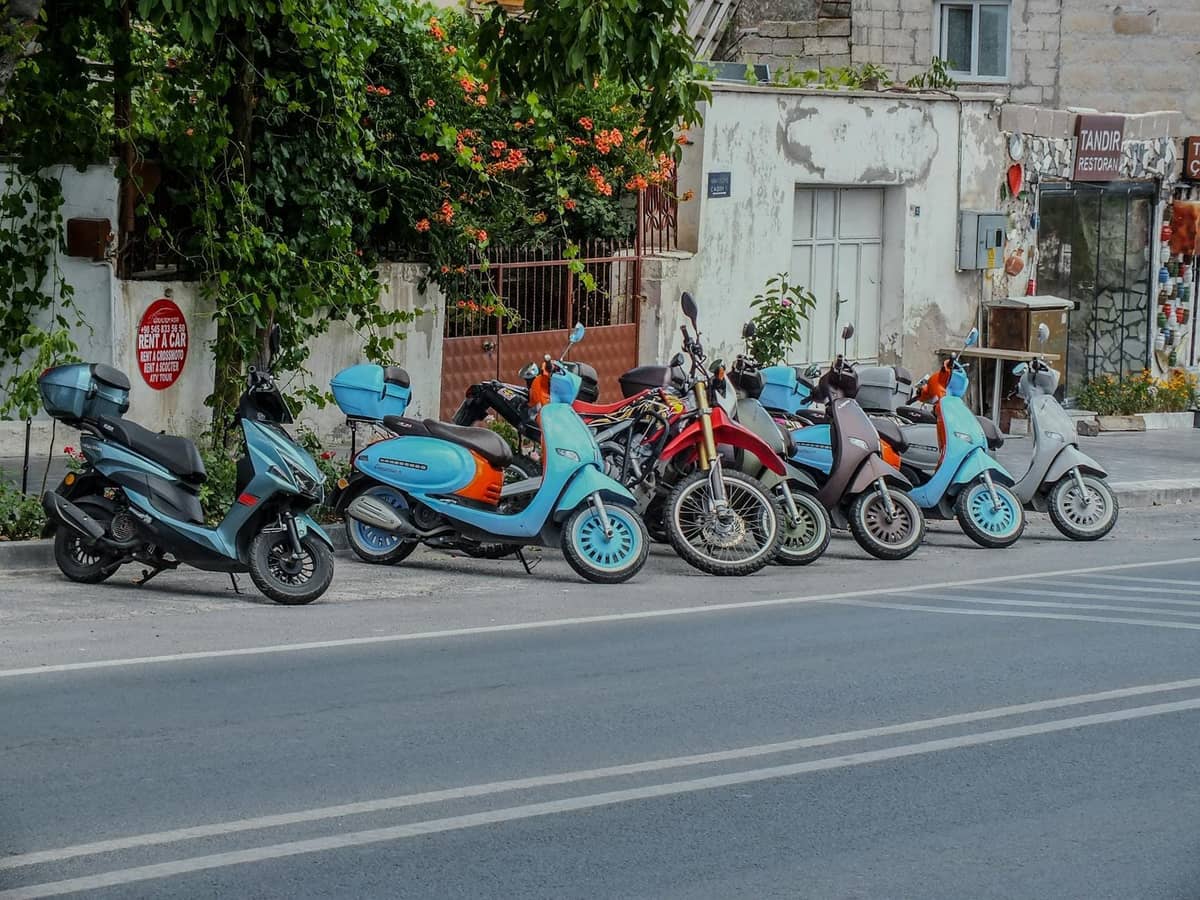
Renting a vehicle is the single most practical way to explore Santorini on your own schedule, especially if you want to reach beaches like Vlichada or Cape Columbo, or visit inland villages like Pyrgos and Megalochori that the bus network serves infrequently. Rental agencies are plentiful in Fira and at the airport, with options ranging from small cars to ATVs and scooters.
A few caveats worth knowing before you rent. Santorini's roads are narrow and many involve sharp switchbacks, particularly on descents toward the ports and beaches. ATV and scooter rentals are popular, but accidents are not uncommon — local clinics deal with ATV injuries throughout the summer. If you're not an experienced rider, a small car is safer and often similarly priced. Also worth noting: parking in Oia is limited and the main village streets are pedestrian-only, so you'll park at the edge and walk in.
✨ Pro tip
Book your rental car at least a few weeks in advance for July and August visits. Availability genuinely runs out during peak season, and last-minute rentals at the airport can be expensive or impossible. Arriving by ferry at Athinios? Several rental agencies will deliver a car to the port.
- Valid EU or UK driving licence is generally accepted; many rental agencies also require an International Driving Permit for non-EU/UK licences
- Most car rental agencies require drivers to be at least 21–23 years old; age policies vary by operator
- ATV rental in Greece legally requires the appropriate A or B licence category depending on engine size, but many local firms also insist on a motorcycle category for higher-powered ATVs — check requirements before assuming a car licence suffices
- Fill up when you can: petrol stations are limited outside Fira and Kamari
- Road surfaces are generally good on main routes, but some tracks to beaches and viewpoints are unpaved
Walking and Hiking Between Villages
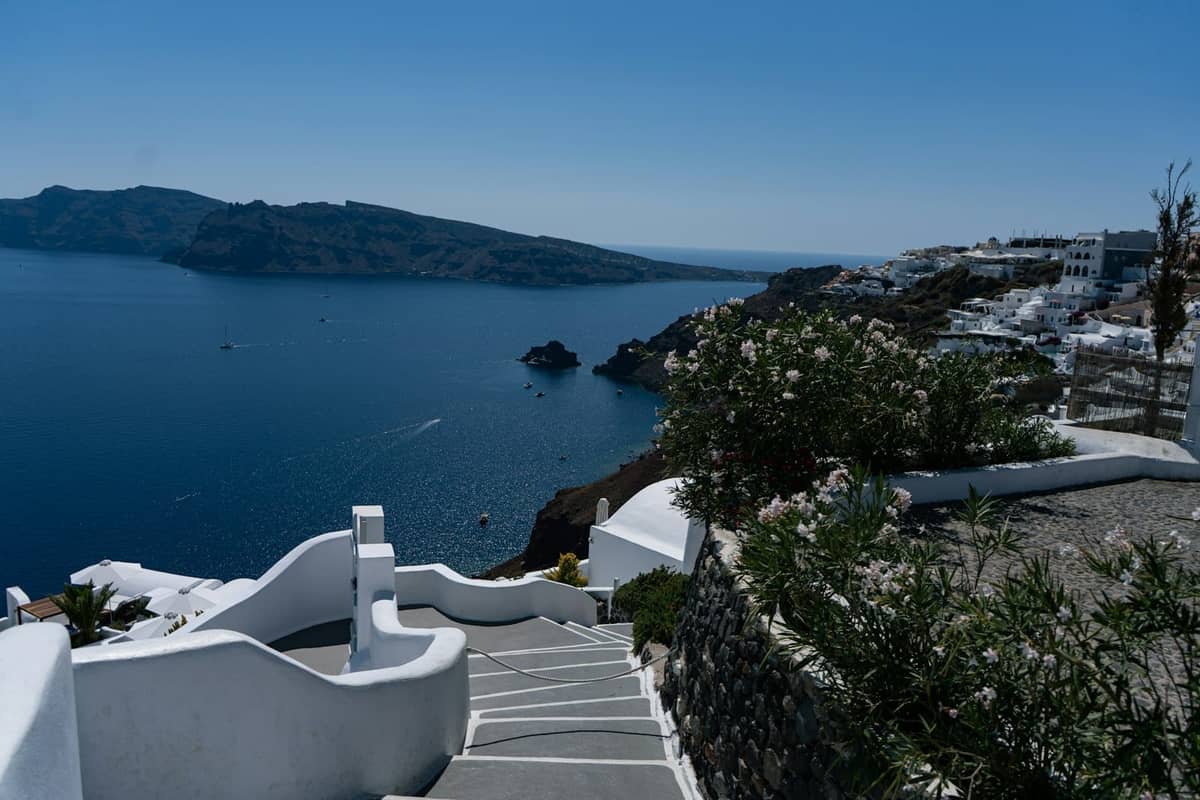
Santorini has a genuinely excellent network of footpaths along the caldera rim, and walking between villages is one of the best ways to experience the island. The most celebrated route is the Fira to Oia hiking trail, a roughly 10 km path that passes through Firostefani and Imerovigli before reaching Oia. It takes most walkers 3–4 hours and offers uninterrupted caldera views the entire way.
This is a genuine transport option in addition to being a memorable experience: walk one direction and take the bus back. Start early in summer (before 08:00) to avoid the midday heat, which regularly reaches the upper 20s °C between June and August. Bring water — there are few places to buy refreshments along the trail itself. For a more detailed breakdown of conditions and side paths, the Santorini hiking guide covers the full route with practical logistics.
Getting to Santorini: Ferries and Flights
Santorini (Thira) International Airport, IATA code JTR, handles direct flights from Athens (around 45 minutes) and seasonal international connections from across Europe. The airport sits about 6 km from Fira, making it one of the easier island airports to reach from a central base. Domestic flights operated by Olympic Air/Aegean and Sky Express connect Athens year-round, with Thessaloniki usually served on a seasonal basis, with significantly expanded schedules in summer.
Arriving by ferry is a completely different experience. Santorini's main ferry port, Athinios, is a working port cut into the cliffs about 10 km south of Fira. High-speed ferries from Piraeus (Athens) take roughly 5–8 hours depending on the service; slower overnight ferries take longer but save on accommodation costs. Blue Star Ferries and SeaJets operate regular services. The port itself is functional rather than picturesque: a narrow quay with a steep, winding road up to the island's main road, where KTEL buses and taxis wait for arrivals.
ℹ️ Good to know
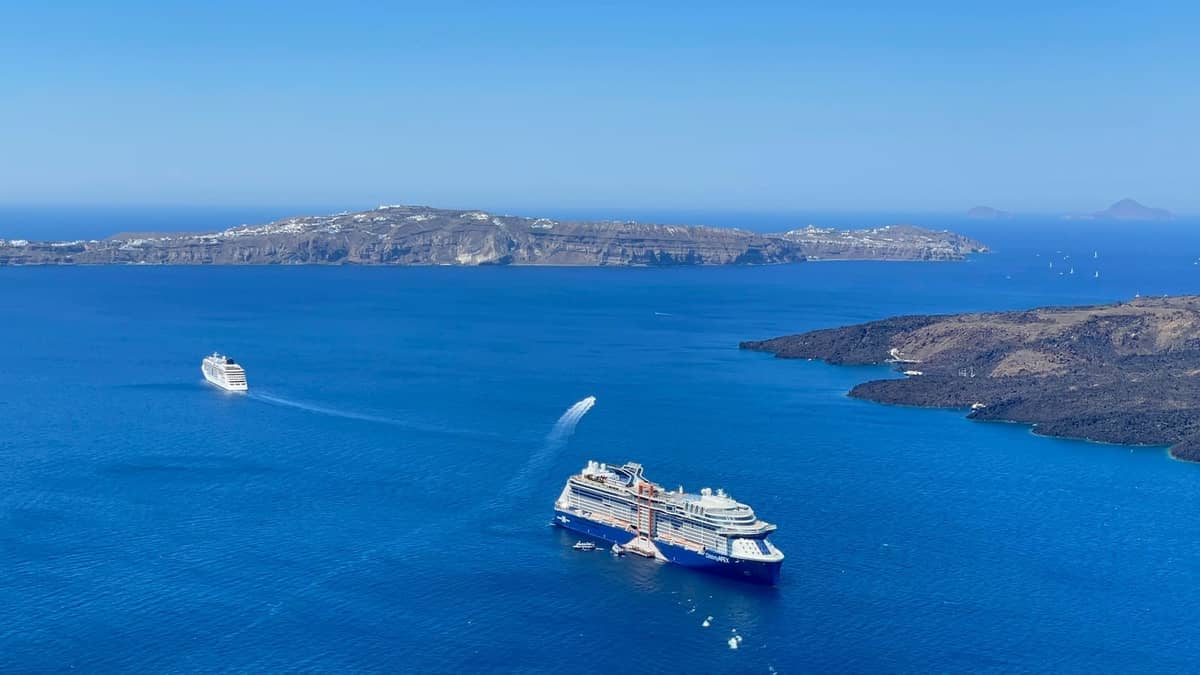
Note that the Old Port of Fira (Skala) below the caldera is used by cruise ships and small excursion boats, not by standard passenger ferries. If you're arriving on a cruise, you'll tender ashore here and either walk up the 588 steps, take a mule, or use the Santorini cable car — a separate operation from the main Athinios port entirely.
If you're planning day trips to other islands or want to visit the volcano and hot springs, boats depart from both Athinios and the Old Port. The Santorini sailing and boat tours guide covers excursion options in detail, including trips to Nea Kameni volcano and the nearby hot springs.
FAQ
How do you get around Santorini without a car?
The KTEL bus network covers all major villages, beaches, the airport, and the ferry port, with fares around €2.00–€2.50 per journey. Fira is the hub for all routes. Taxis and rideshare (Uber/Bolt) are also available, though expensive and sometimes scarce. The caldera-rim walking trail between Fira and Oia is a practical and scenic alternative for that specific route.
How much does a bus cost in Santorini?
Standard KTEL bus fares are around €2.20–€2.80 per single journey on most main routes, including Fira to Oia, Fira to Kamari, and Fira to Akrotiri. The airport and ferry port routes are similarly priced at €2–€3. Pay in cash on board and note that each leg of a multi-stop journey requires a new ticket.
Is Uber available in Santorini?
Yes, both Uber and Bolt operate in Santorini, but availability is limited compared to mainland cities and fares are on the higher side. During peak season and at popular times (such as after sunset in Oia), supply can be very limited. Pre-booked private transfers are often more reliable for fixed schedules.
How do you get from Santorini Airport to Fira?
The airport (JTR) is about 6 km from Fira. The cheapest option is the KTEL bus (around €2–€3). A taxi costs more but gets you there directly with luggage. Pre-booked private transfers are also available and useful for groups. Many hotels and villas offer airport pickup as well — worth asking when you book.
Can you get around Santorini by bus in winter?
You can, but the network operates on a significantly reduced schedule from roughly November to March, designed primarily for residents. Some routes run only a few times per day, and certain beach routes may be suspended entirely. If you're visiting in winter, renting a car gives you far more flexibility. Check the KTEL website or the Fira bus station notice board for current winter timetables.