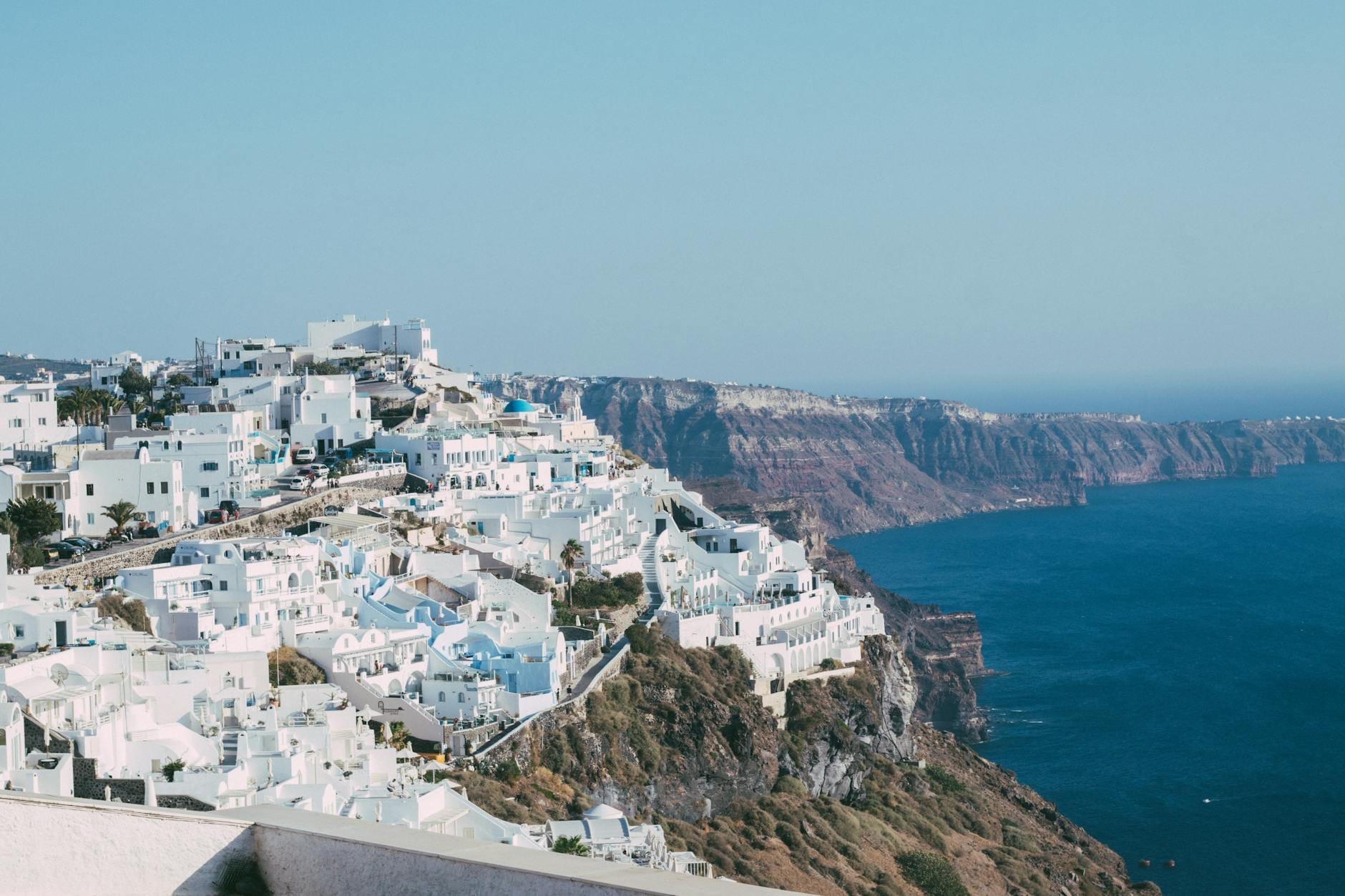
Perched at the highest point of Santorini's caldera rim, Imerovigli sits about 3 km north of Fira and offers some of the most sweeping views of the volcanic archipelago on the island. Quieter than Oia and less commercial than Fira, it draws travelers who want caldera-edge drama without the foot traffic — though its boutique hotel scene means it carries a premium price tag.
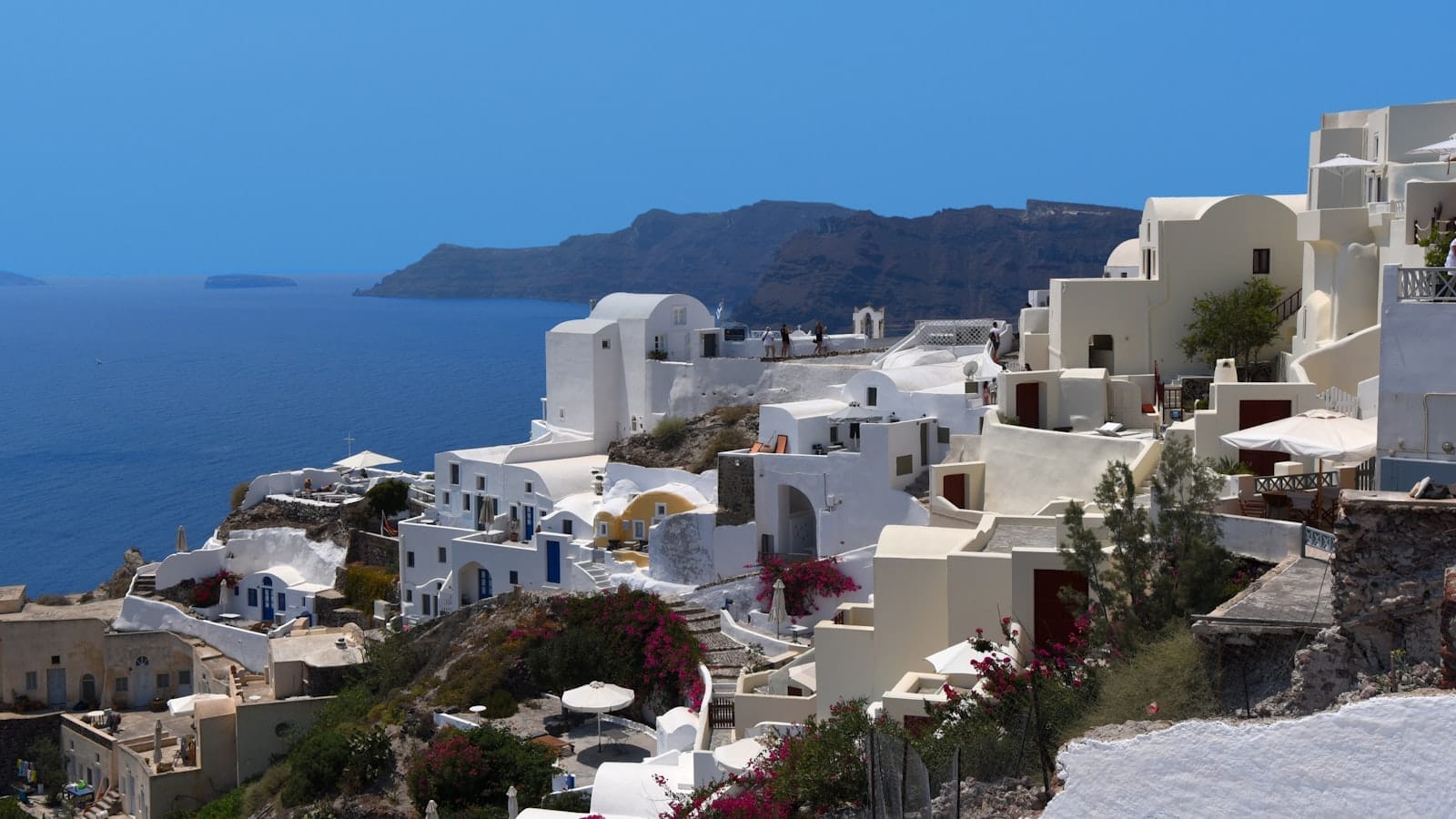
Imerovigli occupies the highest point on Santorini's caldera rim, earning its reputation as the 'balcony of the Aegean' through sheer elevation and unobstructed views across the volcanic islets below. It is smaller and considerably quieter than both Fira and Oia, built in the traditional Cycladic style that emerged after the devastating 1956 earthquake leveled much of the original settlement. The result is a village of whitewashed lanes, clifftop churches, and boutique hotels where the Aegean fills every available sightline.
Orientation
Imerovigli sits on the western caldera rim of Santorini, approximately 3 km north of Fira, the island's capital. Between them lies Firostefani, a smaller settlement that functions as a kind of transition zone — the three villages blur together along the caldera edge so gradually that walking north from Fira, you pass through Firostefani almost without noticing before the path opens up into Imerovigli's quieter, more elevated streets.
The village is 8 km from Santorini Airport (JTR) and 11 km from Athinios Port, where most ferries dock. Oia lies approximately 8 km further northwest along the caldera, reachable by road or, for serious walkers, on foot via the caldera path. Imerovigli itself is compact, defined by a cluster of streets and lanes running along the cliff edge rather than any clear administrative boundary. There is no central square in the conventional sense — orientation here is essentially caldera-side versus inland-side, and most of what matters is within a few minutes' walk of that rim.
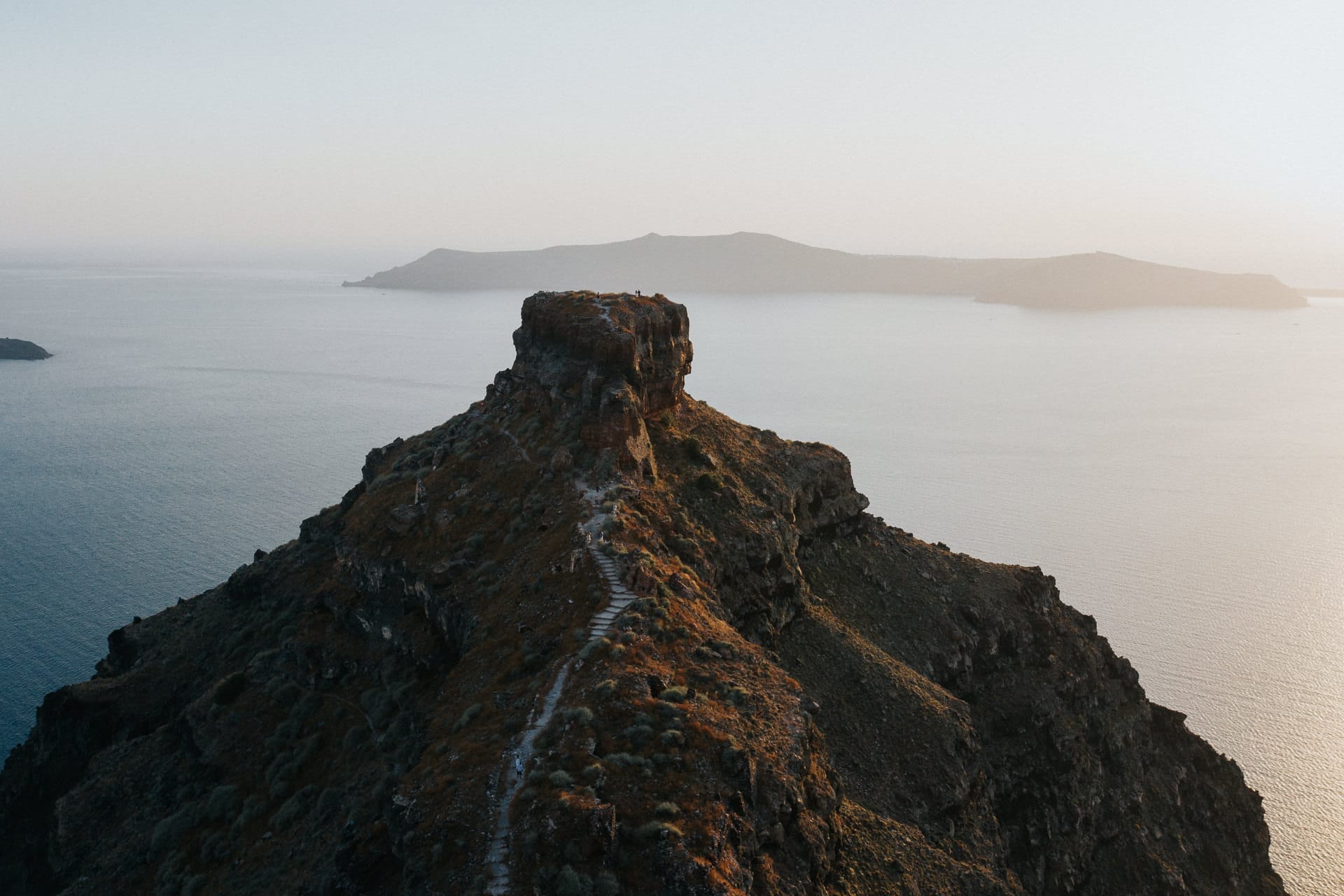
The most prominent geographic feature below the village is Skaros Rock, a dramatic rocky promontory that juts out into the caldera and holds the ruins of a medieval Venetian fortress. Steps from the village descend to it, making it both a landmark and a destination. Due to Imerovigli's elevation, it sits above neighboring Firostefani and commands wider caldera panoramas than almost any other inhabited point on the island.
Character & Atmosphere
What distinguishes Imerovigli from Oia or Fira is not what it has, but what it lacks: tour buses unloading in the lane, souvenir shops stacked three deep, or crowds gathering at a designated 'sunset spot' an hour before dusk. The village is small enough that even in peak July and August, its streets never feel truly overwhelmed. That said, this is still Santorini, and the caldera-view hotels attract a steady stream of guests who expect a certain level of quiet luxury.
In the early morning, Imerovigli is about as serene as Santorini gets. The light arrives from the east, casting long shadows across the whitewashed walls and illuminating the caldera face at low angles that turn the volcanic cliffs amber and rust. The few cafés that open early do so quietly, and the caldera path heading south toward Firostefani is populated mostly by walkers who left Fira an hour ago. Church bells carry clearly in the still air. By mid-morning, the village picks up slightly as hotel guests emerge onto their terraces, but the energy remains unhurried.
Afternoons bring the strongest heat and the most stillness. The lanes empty as people retreat to pools and shaded terraces. The caldera in full afternoon sun is a different experience entirely: the water deepens to a hard, almost metallic blue, and the whitewashed surfaces of the village become almost too bright to look at directly. This is the hour photographers look for, even if it means squinting. By late afternoon the light softens, and small groups of travelers begin positioning themselves along the cliffside for the evening show. Unlike Oia, there is no single crowded viewpoint — the sunset unfolds across the entire western sky, visible from almost anywhere in the village.
After dark, Imerovigli goes quiet in a way that Fira never does. There are bars, but no nightlife strip. The restaurants wind down at a reasonable hour. What remains is the caldera lit by a half-moon, the lights of Oia twinkling 8 km to the northwest, and the distant glow of Nea Kameni in the middle of the water. For travelers who find Fira too loud and Oia too performative, this is often the version of Santorini they were looking for.
ℹ️ Good to know
Imerovigli was largely destroyed in the 1956 earthquake that devastated much of Santorini. The village was rebuilt in traditional Cycladic whitewash-and-blue style, which is why the architecture appears so uniformly pristine compared to some older caldera settlements.
What to See & Do
The walk down to Skaros Rock is the defining activity in Imerovigli and one of the better short hikes on the island. Steps carved into the cliff lead from the village down to the rocky headland, where the ruins of a medieval fortress occupy the summit. The path is exposed and uneven in sections, and the return climb is steeper than it looks on the way down, but the reward is a vantage point that looks back up at Imerovigli from below and out across the caldera in all directions. Allow 45 minutes to an hour for the round trip.
The caldera hiking trail that connects Fira, Firostefani, and Imerovigli is one of the most rewarding short walks on the island. The Fira-to-Imerovigli section takes roughly 30 to 45 minutes at a comfortable pace, passing through Firostefani and offering continuously changing caldera views. Ambitious walkers continue further northwest on the Fira to Oia hiking trail, which extends the route all the way to Oia in around 3 to 5 hours total. Starting from Imerovigli cuts the full distance roughly in half.
The Imerovigli caldera viewpoints are distributed throughout the village rather than concentrated at a single spot. The church terraces, the path above Skaros, and the stretch of cliffside path heading north all offer distinct angles on the caldera. Photographers will want to work the village at multiple times of day, as the light changes character dramatically from dawn through sunset.
Hike down to Skaros Rock for caldera views from below the village level
Walk the caldera path south to Firostefani and Fira (30-45 minutes each way)
Photograph the blue-domed churches along the cliff lanes at golden hour
Continue north on the caldera trail toward Oia for a half-day walk
Watch the sunset from the open cliffside path rather than a designated viewpoint
⚠️ What to skip
The path to Skaros Rock involves uneven stone steps and exposed cliff sections with no guardrails in places. Wear proper footwear — sandals or flip-flops are not appropriate. The descent looks deceptively easy; the return climb is more demanding. Avoid in wet conditions.
Eating & Drinking
Imerovigli's dining scene is small but calibrated to its clientele: couples and honeymooners staying in cliff-edge suites who expect quality and atmosphere rather than volume or variety. Most restaurants in the village occupy terrace positions with caldera views, and the pricing reflects that real estate. You will not find budget tavernas or street food here.
The restaurants trend toward Mediterranean and Greek cuisine with upscale plating: grilled seafood, local Santorinian tomato-based dishes, and the island's distinctive white wines made from Assyrtiko grapes. Many of the better establishments are attached to boutique hotels, though they typically welcome non-guests for dinner reservations. Booking ahead is strongly recommended during peak season, particularly for sunset-hour tables.
For a wider range of options, the walk or short taxi ride to Fira opens up a much larger selection at varying price points. Fira has everything from casual gyros spots to mid-range tavernas. For context on what to eat across the island, the guide to Santorini's food scene covers local specialties worth seeking out, including fava, tomatokeftedes (tomato fritters), and the distinctive local capers.
Bars in Imerovigli are few and quiet. Drinks on a caldera-view terrace are an experience in themselves, and prices are accordingly elevated. The atmosphere is more cocktail-at-dusk than late-night revelry. If you want actual nightlife, Fira is the answer.
💡 Local tip
If you are staying in Imerovigli and want a sunset dinner with a caldera view, book your restaurant table at least 2 to 3 days in advance during July and August. The best terrace tables go early, and the village's limited restaurant count means competition is real.
Getting There & Around
Santorini has no metro or rail system. Getting to Imerovigli from the airport (8 km) takes 15 to 20 minutes by taxi or pre-booked private transfer, depending on traffic and season. From Athinios Port (11 km), expect 30 to 40 minutes by taxi. Fares should be confirmed locally as they change seasonally. Pre-booked transfers offer fixed pricing and are worth arranging in advance during peak summer months when taxis can be scarce.
The KTEL bus network, Santorini's public bus system, connects Fira with major villages and beaches around the island. From Fira's central bus terminal, buses run toward Oia and pass through Firostefani and, in some cases, stop near Imerovigli. Schedules vary significantly by season and should be verified at the bus station or on the KTEL Santorini website before travel. Bus fares are very low compared to taxis, making this the budget-conscious option for reaching Fira.
From Fira, it is 3 km to Imerovigli by road, about a 10-minute taxi ride. On foot via the caldera path, the same journey takes 30 to 45 minutes and is one of the most scenic walks on the island. The path runs along the caldera rim through Firostefani and is clearly defined, though it involves steps and uneven surfaces in sections. The stretch between Fira and Imerovigli is far easier than the full Fira-to-Oia trail and suitable for most walkers in appropriate footwear.
Within Imerovigli itself, walking is the only practical option. The lanes are too narrow for cars in most sections, and many of the caldera-facing properties are accessible only on foot. Hotels typically arrange luggage transfers for arriving guests, but it is worth confirming logistics when booking, particularly for larger bags.
Where to Stay
Imerovigli is firmly in the boutique hotel tier. The accommodation here is dominated by cave-style suites, clifftop villas, and small luxury properties with private plunge pools and caldera-facing terraces. This is one of the preferred bases for honeymooners on the island, alongside Oia, and the Santorini honeymoon guide covers both villages in detail. Prices are among the highest on the island, particularly for caldera-view rooms, and availability tightens considerably from June through August.
The practical advantage of staying in Imerovigli over Oia is the proximity to Fira: 3 km versus 11 km. Fira functions as the island's main service hub for transport, ATMs, pharmacies, and a broader range of restaurants. From Imerovigli, Fira is a 10-minute taxi ride or a 30 to 45-minute walk along the caldera path. Travelers who want caldera views and genuine quiet but also want to feel connected to the rest of the island will find Imerovigli a better balance than the more remote Oia. A broader comparison of bases across the island is available in the where to stay in Santorini guide.
There is essentially no budget accommodation in Imerovigli. Travelers looking for value should base themselves in Fira or on the east coast at Kamari or Perissa, where prices drop significantly. The caldera villages, Imerovigli included, charge a premium that is primarily for the view and the atmosphere, not for facilities that budget alternatives necessarily lack.
Practical Considerations
The cliffside terrain that makes Imerovigli beautiful also makes it physically demanding. Stairs are everywhere: between lanes, down to hotels, along the path to Skaros Rock. Travelers with mobility limitations should confirm access details directly with accommodations before booking, as 'caldera view' often means several flights of steps from the nearest road.
Santorini's nearest hospital is in Fira (tel. +30 22860 36111), approximately 3 km from Imerovigli. Police can be reached at +30 22860 22649. The EU-wide emergency number 112 works throughout Greece. Tap water across Santorini is generally not recommended for drinking; bottled water is the norm. For context on visiting the broader island, including seasonal crowds and what to expect by month, the best time to visit Santorini guide is worth reading before you book.
Imerovigli's position on the caldera gives it excellent access to the island's most scenic hiking and photography opportunities. The Santorini photography guide and the sunset guide both reference Imerovigli as one of the better vantage points on the island, with the advantage that it attracts far fewer people than the famous viewpoints in Oia.
TL;DR
Imerovigli sits at the highest point of Santorini's caldera rim, 3 km north of Fira, offering panoramic caldera views without the crowds of Oia.
Best for: couples, honeymooners, photographers, and anyone who wants cliff-edge drama with genuine quiet. Not for budget travelers or anyone who dislikes stairs.
The hike to Skaros Rock and the caldera walking path south toward Fira are the defining activities, both accessible directly from the village.
Accommodation is almost entirely boutique and luxury; prices are among the highest on the island, and availability is tight in peak summer.
Despite its quiet character, Imerovigli is well-positioned: Fira's transport links, restaurants, and services are a 10-minute taxi ride or a scenic 40-minute walk away.
Santorini's beaches are unlike anywhere else in Greece. Volcanic geology means most are black or dark-pebbled, with a handful of dramatic color exceptions. This guide covers every beach worth visiting, from the popular to the genuinely quiet.
Santorini rewards visitors differently depending on when they arrive. This guide breaks down every season by weather, crowd levels, prices, and what's actually open so you can pick the timing that matches your priorities.
Santorini rewards visitors who look beyond the caldera rim. This guide covers the best day trips from Santorini, from hiking to Oia and cruising the volcanic islets to hopping across to Folegandros, with full logistics, seasonal notes, and practical booking advice.
Santorini has no metro, no trains, and surprisingly limited taxis. This guide breaks down every transport option on the island — KTEL buses, rentals, taxis, rideshare, and ferries — with real fares, route details, and practical advice on what works best by season.
Santorini polarises travellers. The caldera views are genuinely spectacular, the volcanic landscape is unlike anywhere else in Greece, and the archaeology rivals anything in the Aegean. But the crowds are real, the prices are steep, and the hype can outpace the reality. Here is what you actually need to know before you book.
Santorini's black sand beaches are unlike anything else in the Aegean. Formed by volcanic eruptions and shaped by centuries of erosion, they come with their own rules, quirks, and logistics. This guide covers the main beaches, practical access, seasonal timing, and what first-timers always get wrong.
Santorini is far more than the famous blue domes and caldera selfies. This guide takes you beyond Oia and Fira to the island's medieval villages, wild volcanic beaches, serious wine caves, and ancient ruins that most visitors walk straight past.
Santorini rewards hikers with caldera rim panoramas, ancient ruins, volcanic craters, and medieval villages. This guide covers the island's best trails, from the classic Fira–Oia walk to off-the-beaten-path routes most visitors never find.
Santorini's history stretches back more than 3,600 years, from a sophisticated Bronze Age city buried by volcanic ash to Hellenistic temples, Venetian fortresses, and Byzantine monasteries. This guide covers every significant historical site on the island, with practical advice on when to visit and what to expect.
Santorini's caldera views, volcanic beaches, and world-class sunsets make it one of the most sought-after honeymoon destinations in Europe. This guide breaks down exactly where to stay, what to do, and what to skip so you can plan a trip that lives up to the hype.
September is arguably the smartest month to visit Santorini. The sea is warm, the light is golden, the harvest is underway, and the worst of the summer crowds have thinned. This guide covers everything from weather and pricing to what actually changes as the month progresses.
Three days is enough to cover Santorini's essentials without burning out. This itinerary balances the iconic caldera villages, the volcanic south, ancient ruins, and the island's wine country — with specific timing, realistic costs, and straight talk on where the crowds aren't worth it.
Santorini's luxury scene runs deep, from cliffside suites with direct caldera views in Oia and Imerovigli to upscale beach resorts along the black-sand coast. This guide breaks down where to stay, when to book, what to expect across price tiers, and which high-end experiences are actually worth it.
Santorini has a reputation for luxury prices, and that reputation is partly earned. But with the right timing, accommodation choices, and a few practical strategies, the island is far more accessible than most people expect. This guide breaks down real costs and shows you where to cut spending without sacrificing the experience.
Santorini is one of the world's most photographed destinations, but knowing exactly where to stand, when to arrive, and which lesser-known angles to seek out separates good photos from great ones. This guide covers 23 of the island's best photography locations, from the iconic caldera rim to wild volcanic beaches and medieval hilltop villages.
From semi-private catamaran cruises to full-day private charters, Santorini's boat tour market is crowded and easy to overpay on. This guide breaks down every major format, what each actually includes, real price ranges for 2025-2026, and the questions to ask before you book.
Santorini's sunsets are legendary, but not all viewpoints are equal. This guide covers the best spots across the island, from the famous to the overlooked, with practical advice on when to arrive, how to avoid the worst crowds, and which locations suit different styles of traveler.
Santorini's caldera is one of the most dramatic natural amphitheaters on the planet, and knowing where to stand makes all the difference. This guide covers the island's finest vantage points, from iconic sunset spots to quiet hilltops most visitors never find.
The Santorini caldera holds one of the Mediterranean's most dramatic geological stories. This guide covers the volcano's history, how to visit Nea Kameni and the Palea Kameni hot springs, how to choose a boat tour, and what most visitors get wrong before they arrive.
Two of Greece's most iconic Cycladic islands, but they deliver very different trips. This guide breaks down the real differences between Santorini and Mykonos across beaches, atmosphere, costs, food, and logistics, so you can choose the one that fits your travel style.
Santorini's Mediterranean climate shifts dramatically across the year, from bone-dry summers with 12 hours of daily sunshine to mild, stormy winters. This guide breaks down Santorini weather by month, covering temperatures, rainfall, sea conditions, and crowd patterns so you can choose exactly the right time to visit.
Santorini produces some of Greece's most distinctive wines, shaped by volcanic soils, searing heat, and ancient vines trained in basket shapes against the Aegean wind. This guide covers every wine style, the best wineries to visit, how to book tastings, and what to order with your food.
Santorini is famous for romantic sunsets and honeymoon hotels, but it genuinely works for families too. This guide covers the best beaches for kids, family-friendly activities, where to base yourself, and the practical details that actually matter when you're traveling with children.
Santorini rewards visitors who go beyond the postcard shots. This guide covers the best things to do in Santorini across every interest and budget, from ancient ruins and caldera hikes to sailing tours and wine tasting, with candid assessments of what is actually worth your time.
Santorini's cuisine is shaped by volcanic soil, Bronze Age agriculture, and a seafaring tradition. This guide covers every local dish worth ordering, the ingredients that make them unique, how much to expect to pay, and when to visit for the freshest seasonal produce.
Santorini's accommodation landscape splits cleanly between cliffside caldera villages and laid-back beach towns on the east coast. This guide breaks down every major area by cost, crowd level, and practicality so you can match your base to your actual travel style.