Imerovigli Caldera Viewpoints: One of Santorini's Highest Caldera Perches
Perched at one of the highest points on Santorini's caldera rim, Imerovigli offers some of the most expansive volcanic panoramas on the island. Access is free, the paths are walkable from Fira, and the views shift dramatically from dawn through sunset. Here is what to actually expect when you arrive.
Quick Facts
- Location
- Imerovigli, northwestern caldera rim, Santorini
- Getting There
- KTEL bus from Fira to Imerovigli stop; or on foot via the Fira–Oia caldera trail (approx. 3 km from Fira)
- Time Needed
- 1–2 hours for the viewpoints alone; half a day if combining with the caldera trail
- Cost
- Free. No entry fee for public viewpoints
- Best for
- Caldera panoramas, sunrise and sunset photography, caldera trail walking
What the Imerovigli Caldera Viewpoints Actually Are
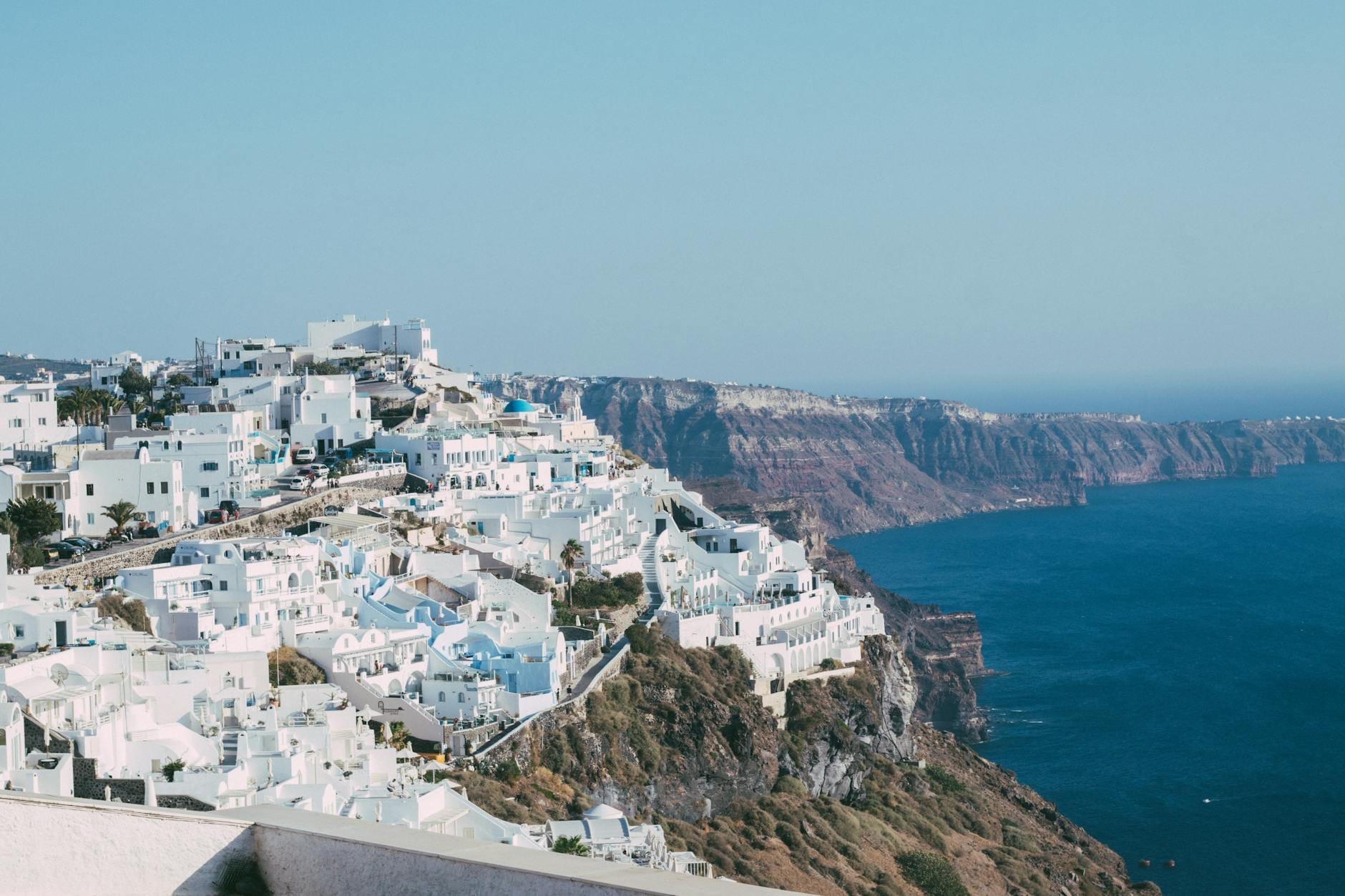
Imerovigli is not a ticketed attraction. It is a small village built directly on the caldera rim at roughly its highest accessible point, and the viewpoints here are simply the open terraces, low-walled paths, and cliff-edge lanes that run along that rim. There is no entrance gate, no audio guide, and no formal viewing platform with railings and plaques. What you get instead is direct, unobstructed exposure to one of the most geologically dramatic seascapes in the Mediterranean.
From the main viewing areas, the entire caldera basin opens up below. On a clear day you can identify the islands of Thirasia to the northwest, Aspronisi to the south, and the dark volcanic islets of Palea Kameni and Nea Kameni sitting in the center of the flooded crater. That middle basin is not simply a deep bay. It is the collapsed heart of an ancient volcano whose Minoan eruption, dated by researchers to around 1600 BCE, reshaped the entire island complex and created the caldera you are looking into.
ℹ️ Good to know
The viewpoints are outdoor public spaces with no opening hours and no admission charge. They are accessible at any time of day or night, though cliff-edge paths should be walked cautiously after dark.
The Geological Stage You Are Standing On
Understanding the geology makes the view considerably richer. The caldera you overlook from Imerovigli is roughly 12 km across and drops to depths of around 400 meters. The two central islets visible from the viewpoints formed long after the main collapse: Palea Kameni emerged from eruptions beginning around 46–47 AD, while Nea Kameni began forming in the early 18th century, roughly 1,600–1,700 years later, continuing to build through volcanic activity into the 20th century. These are not passive rocks. The Santorini volcanic system remains geologically active, which is why the water in the caldera carries a faint sulphurous trace near the islets.
Imerovigli itself occupies what was historically the most strategically elevated point on the caldera cliff, which is reflected in its Greek name: roughly translated, Imerovigli means 'day watch' or 'day lookout,' referring to its function as a watchtower position. That historical role as a surveillance point makes it an apt place to observe the wider landscape. For more on the volcanic geology visible from here, the Santorini volcano and hot springs guide explains what is happening beneath the caldera surface.
Tickets & tours
Hand-picked options from our booking partner. Prices are indicative; availability and final rates are confirmed when you complete your booking.
Luxury Sunset Cruise in Santorini
From 120 €Free cancellationCruise of the volcanic islands around Santorini
From 45 €Instant confirmationFree cancellationGuided e-bike tour in Santorini
From 90 €Instant confirmationFree cancellationSantorini audio guide with TravelMate app
From 5 €Instant confirmation
How the View Changes Through the Day
The experience at these viewpoints is not static. Early morning, before 8am, the caldera is often glassy and the light is cool and directional. Shadows from the opposite rim cut across the water at low angles, and the volcanic islets stand out sharply against the surface. This is when the colours are most varied: navy water, rust-orange cliffs, the white geometry of Oia visible at the far northern tip of the rim. Crowds are minimal at this hour, which means the narrow caldera paths feel entirely different from the afternoon experience.
By late morning the light flattens and the water shifts to a uniform deep blue. This is useful for photography that emphasises the width and scale of the caldera, but loses the early drama. The midday heat in summer is serious, with temperatures regularly in the upper 20s Celsius and very little shade on the exposed cliff paths. If you are visiting between June and August, plan your viewpoint time before 10am or after 5pm.
The late afternoon brings the most visitors, particularly those walking up from Fira to watch the sun set from somewhere quieter than Oia. The light becomes warmer and the caldera walls take on a reddish tone. Imerovigli offers a clear sightline westward toward the caldera opening and Thirasia, meaning sunset colours are visible and unobstructed. It is less crowded than the Oia sunset viewpoint, though it draws its own steady crowd from around 6pm onward during peak season. For practical guidance on where and when to position yourself across the island at sunset, the Santorini sunset guide compares the main options.
Getting to Imerovigli and Walking the Caldera Path
The easiest approach by public transport is the KTEL bus service that connects Fira with Oia, stopping at Imerovigli along the way. The journey from Fira takes only a few minutes. Buses run regularly during the tourist season, though schedules vary, so check the current timetable at ktel-santorini.gr before relying on a specific time. Taxis and pre-booked transfers from Fira are also straightforward for this short distance.
Alternatively, the caldera footpath from Fira to Imerovigli is approximately 3 km of well-established trail. It passes through Firostefani and arrives at Imerovigli's main viewpoint area in roughly 45 to 60 minutes at a comfortable pace. The path is the first section of the longer Fira to Oia hiking trail, one of the most rewarding walks on the island. The surface is a mix of cobblestone and compacted stone; it is uneven in places and involves short flights of steps. It is not suitable for pushchairs or wheelchairs, and anyone with significant knee or balance difficulties should take the bus instead.
💡 Local tip
If you plan to walk from Fira, go early. The path is exposed with no shade, and the midday heat in summer makes it genuinely uncomfortable. Wear closed shoes with grip — the stone paths can be slippery in places — and carry water.
What to Bring and Practical Photography Notes
The caldera viewpoints face roughly west-northwest, which means they receive direct afternoon and evening light. For photography, the golden hour before sunset gives the caldera walls their richest colour. A wide-angle lens captures the full scale of the basin, including both the near cliff edge and the distant Thirasia. A longer focal length lets you isolate Nea Kameni and Palea Kameni against the water, or pick out architectural details on the Oia clifftop in the distance.
For a structured approach to the island's photography spots, including specific positions and times, see the Santorini photography guide. Imerovigli appears there as a distinct location separate from Fira and Oia, with its own advantages for telephoto compression shots across the caldera.
Sun protection is essential from April through October. There is almost no shade on the open cliff paths, and the reflected light off whitewashed walls intensifies UV exposure. A hat, sunglasses, and sunscreen are not optional in summer. Comfortable walking shoes matter more than most visitors anticipate: the village lanes are polished stone and can be slick, particularly after the rare rain in shoulder season.
The Village Itself: What Surrounds the Viewpoints
Imerovigli is a small, relatively quiet settlement compared to Fira and Oia. Its permanent population is modest, and the village retains a degree of calm that the larger centres have largely lost during peak season. The main lane running through the village has a handful of cafes, small restaurants, and hotel terraces, most of them oriented toward the caldera. Several of these offer outdoor seating directly above the cliff edge, which makes a coffee or a glass of local wine alongside the view a straightforward proposition.
The large rock promontory visible below the village, jutting into the caldera, is Skaros Rock, a former medieval fortification site. A path leads down to it from the village and the walk out to the tip provides a different perspective: instead of looking out across the caldera from the rim, you are standing inside it, surrounded by water on three sides. The descent involves significant steps and should only be attempted by those comfortable on uneven terrain.
For context on how Imerovigli fits within the broader caldera rim villages, the Imerovigli neighborhood guide covers accommodation, dining, and the character of the village in more detail.
Who Should Temper Their Expectations
Travelers who arrive expecting a formal viewpoint with infrastructure — a designated platform, information boards, seating, shade structures — will find nothing of the sort. The experience here is essentially walking a cliff-edge village and finding your own spot at the rim. That is part of the appeal, but it is also a genuine constraint for anyone with mobility limitations or those visiting with young children who need guardrails and level ground.
In peak July and August the caldera path and village lanes are noticeably busier, particularly in the two hours before sunset. The narrow paths were not designed for large groups moving in both directions. If complete solitude is the priority, shoulder months, specifically May or late September, deliver a meaningfully different and quieter version of the same view.
⚠️ What to skip
The cliff paths have low or no barriers in some sections. Keep children close and exercise care near the edge, particularly in the dark or on wet stone after rain.
Insider Tips
- The viewpoints directly north of the village bus stop, along the path toward Skaros Rock, are generally less occupied than the spots closest to the main road. Walking an extra five minutes in that direction usually means having the caldera edge largely to yourself.
- Imerovigli sits higher on the caldera rim than either Fira or Firostefani. This extra elevation means you look down slightly onto the rooftops and terraces of those villages when photographing along the rim, which gives a sense of vertical scale absent from ground-level shots.
- If you plan to walk the full Fira to Oia trail, starting from Fira in the early morning means you arrive at Imerovigli when the light is ideal and the path is cool. You can rest at a caldera-view cafe before continuing north.
- The viewpoints face the caldera opening to the west-northwest. On evenings with cloud on the horizon, the light can be more dramatic than on cloudless days, as the setting sun catches the undersides of the cloud and reflects colour back onto the water.
- Most tour groups that visit Imerovigli arrive by bus or minivan in the late afternoon and spend 20 to 30 minutes at the main stopping point before moving on. Arriving just after a tour group leaves, or before 9am, gives you a noticeably more peaceful experience.
Who Is Imerovigli Caldera Viewpoints For?
- Photographers looking for caldera panoramas beyond the standard Oia framing
- Hikers walking the Fira to Oia caldera trail who want to break the route at its highest point
- Travelers seeking quieter caldera views than those found in Fira or Oia's main squares
- Those interested in the volcanic geology of the Santorini caldera, with Nea Kameni and Palea Kameni clearly visible
- Couples or solo travelers who prefer an unstructured, self-directed outdoor experience over ticketed attractions
Nearby Attractions
Other things to see while in Imerovigli:
- Skaros Rock
Skaros Rock is a dramatic volcanic promontory jutting out from the caldera cliff at Imerovigli, once the medieval capital of Santorini and a Venetian fortress. The free, signposted hike rewards visitors with unobstructed 360-degree caldera views, far fewer crowds than Oia, and a tangible sense of the island's layered history.