Santorini Volcano & Hot Springs: Complete Guide
The Santorini caldera holds one of the Mediterranean's most dramatic geological stories. This guide covers the volcano's history, how to visit Nea Kameni and the Palea Kameni hot springs, how to choose a boat tour, and what most visitors get wrong before they arrive.
Plan and book this trip
Tools from our partner Travelpayouts help you compare flights and hotels. If you book through them, we may earn a commission at no extra cost to you.
Flights
Hotels map
TL;DR
- The Santorini volcano sits on two dark islets in the caldera center: Nea Kameni (crater hike) and Palea Kameni (hot springs bay).
- Most visits are done by boat tour departing from the Old Port of Fira or Athinios Port, typically running from April through October.
- The hot springs are not a spa: they are a shallow, sulfur-tinged bay with iron-rich water. Adjust your expectations accordingly, and read our Santorini sailing and boat tours guide before booking.
- Santorini is dormant but not extinct. The volcano entered a phase of elevated unrest in early 2025, with increased seismicity and ground uplift. Access has resumed but always check current conditions before your visit.
- For context on how the volcano shaped the island's culture and landscape, the Santorini history and ancient ruins guide is worth reading alongside this one.
Understanding the Santorini Volcano: What You're Actually Looking At
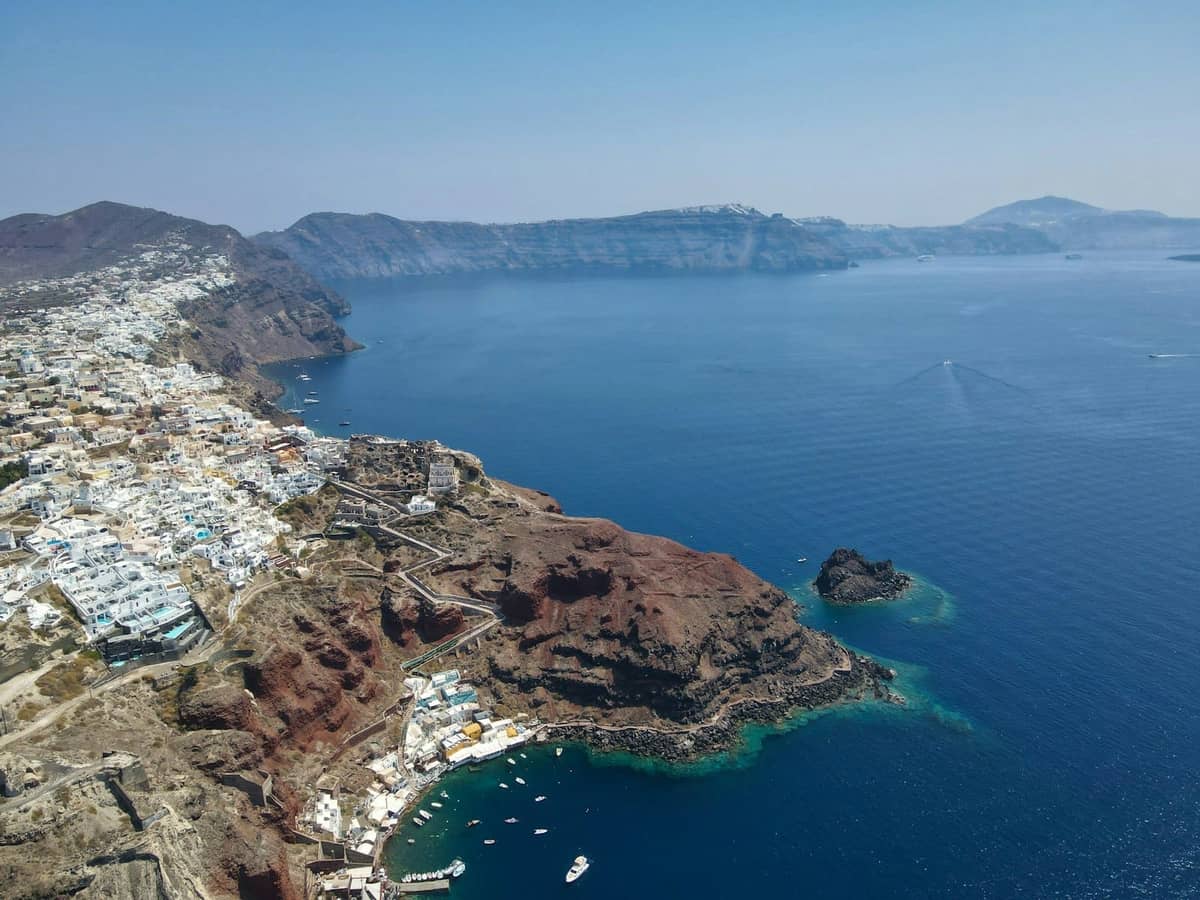
Santorini is not a single volcano with a neat cone. It is a volcanic complex, a system of overlapping calderas and eruptive centers that formed over hundreds of thousands of years. The dramatic crescent shape of the main island, the sheer caldera cliffs rising up to 300 meters, and the deep flooded bay in the center are all products of successive eruptions and collapses. What looks like a picturesque harbor is actually a caldera several hundred meters deep, open to the sea.
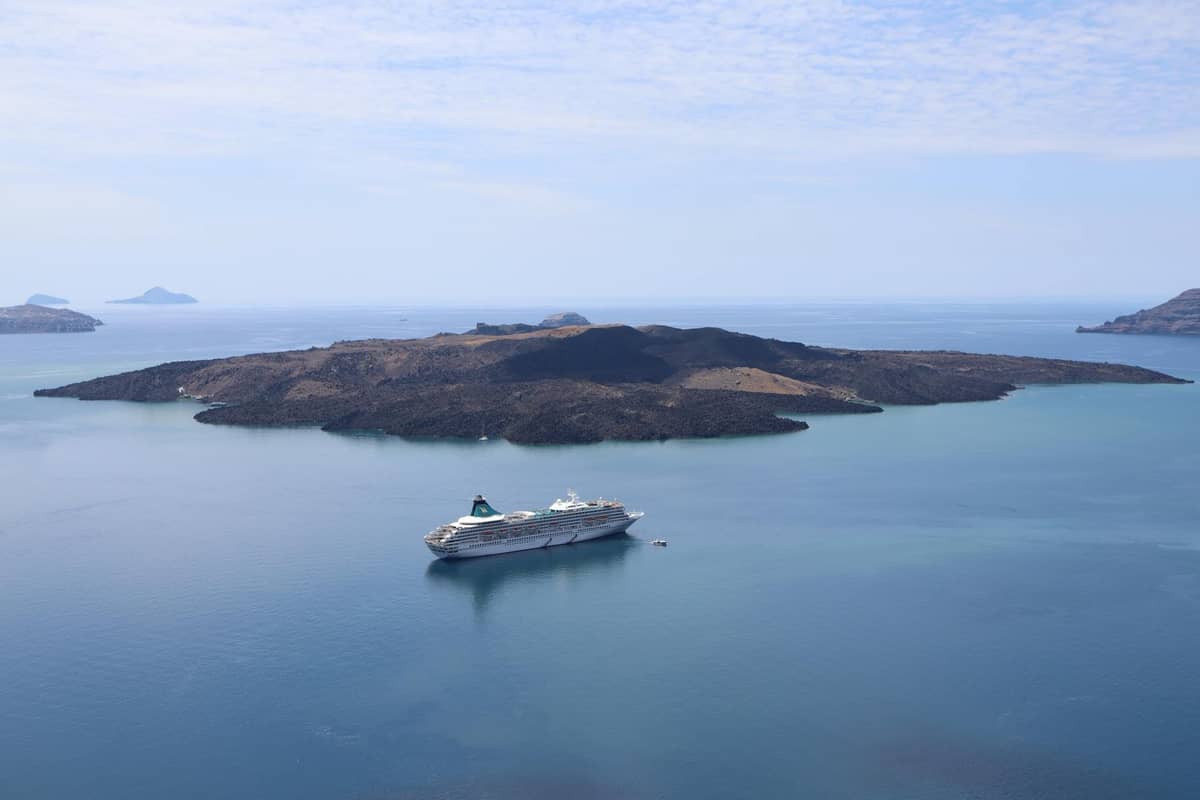
The two dark islands floating in the middle of the caldera are Nea Kameni and Palea Kameni. Nea Kameni, meaning 'new burnt island', is the younger and more volcanically active of the two. It emerged from the sea in eruptions documented from the early 18th century onward and grew substantially through further eruptions into the 20th century. The last eruptive phase ended in 1950. Palea Kameni, 'old burnt island', is older and less dramatic in appearance but is where hydrothermal activity produces the warm, mineral-rich waters visitors come to soak in.
ℹ️ Good to know
Santorini is NOT a supervolcano. Its most powerful eruption, the Minoan eruption around 1600 BC, is estimated at VEI 6 to 7, which is extraordinarily powerful, but it does not meet the standard scientific threshold for a supervolcano designation. Recent drilling data also revealed a much older eruption approximately 520,000 years ago that was roughly 10 times larger than the Minoan event, but even that does not qualify.
The Minoan eruption is the geological event most visitors have heard of, and it genuinely warrants the attention. An eruption of this magnitude produces caldera collapse, pyroclastic flows, and megatsunamis, and the Santorini event is linked to the decline of Minoan civilization on Crete. The buried Bronze Age city at Akrotiri, preserved under volcanic ash, gives a remarkably vivid picture of life immediately before that catastrophe.
If you want to connect the volcanic geology to the archaeology, the Akrotiri archaeological site is the most tangible way to do it. The site's preservation is a direct result of the eruption, and standing inside it, you understand the scale of what happened in a way that no museum exhibit fully replicates.
Volcanic Monitoring: What Travelers Should Know
Santorini's caldera is continuously monitored by Greek and international geological agencies. The most recent notable unrest episode occurred in 2011–2012, when increased seismicity and measurable ground uplift were detected beneath Nea Kameni. The episode subsided without eruption, but it served as a reminder that the volcano remains active. Monitoring infrastructure has been expanded since then, and authorities have clear protocols in place should activity increase again.
⚠️ What to skip
Boat tours to Nea Kameni and Palea Kameni run regularly throughout the tourist season. Volcanic monitoring in the Santorini caldera is ongoing, and conditions can change. Before booking any volcano excursion, check current advisories from Greek authorities or your tour operator. Same-day cancellations due to seismic activity or rough sea conditions are a real possibility, especially in shoulder seasons.
The unrest did not produce an eruption, but it served as a reminder that this is a live volcanic system. Greek authorities and international geological institutions maintain continuous monitoring of the caldera. For travelers, the practical implication is straightforward: book flexible tours where possible, and always verify current conditions with your operator in the days before your excursion.
Visiting Nea Kameni: The Crater Hike
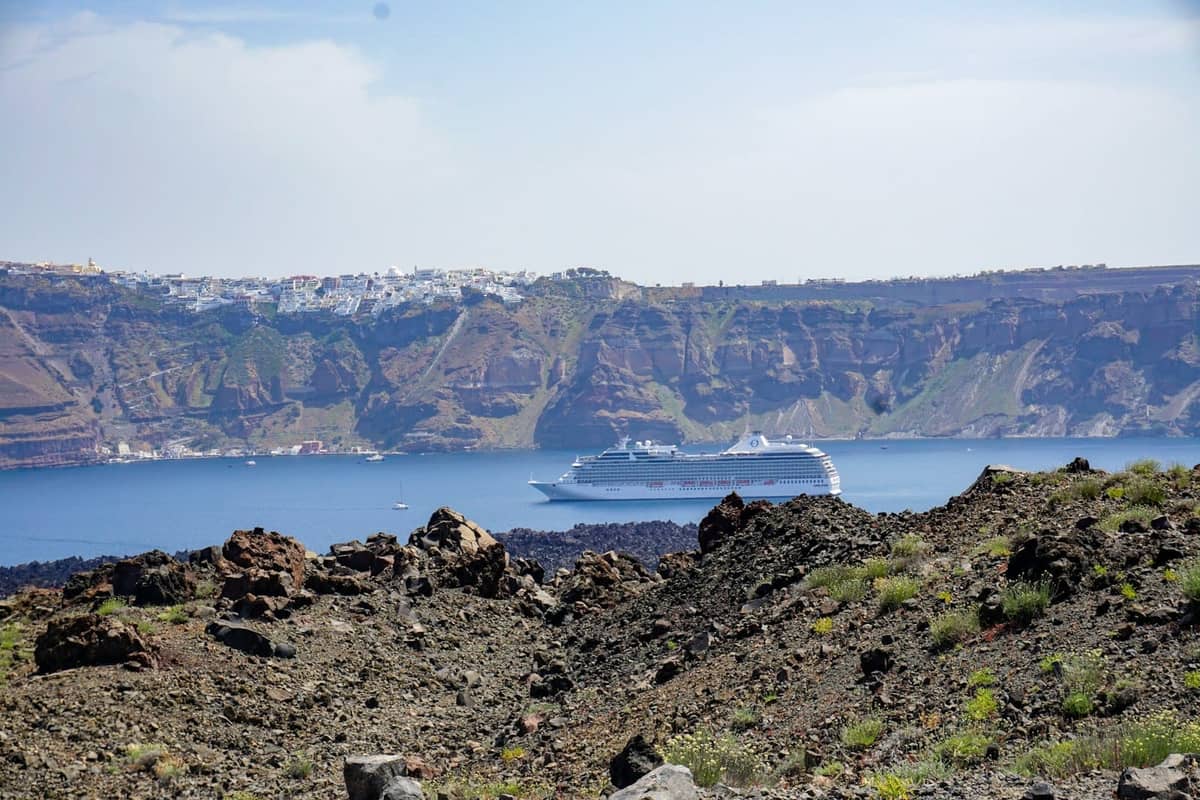
Most boat tours make Nea Kameni their first stop. The island is small, dark-rocked, and almost entirely barren, which is part of what makes it arresting. The hike to the main crater takes around 20-30 minutes at a moderate pace. The trail is loose volcanic rock and uneven terrain, so proper footwear matters. The crater itself is wide and impressive, with visible fumarolic activity producing sulfurous gas and heat at certain vents. The smell is unmistakable.
- Footwear Closed-toe shoes with grip are essential. Sandals or flip-flops are genuinely risky on the loose lava rock. This is one of those warnings that sounds obvious until you watch someone in flip-flops struggle on the descent.
- Sun exposure The island has almost no shade. In July and August, the heat reflected off dark lava rock is intense. Bring water, sunscreen, and a hat regardless of how short the tour sounds in the brochure.
- Fitness level The hike is moderate, not strenuous, but it involves an uphill ascent on uneven ground. It is not suitable for people with significant mobility issues.
- Time on island Most tours allow 30-45 minutes on Nea Kameni. That is enough to reach the crater and return if you keep a steady pace. Linger too long at the base and you may feel rushed on the ascent.
The Palea Kameni Hot Springs: Honest Expectations
The hot springs at Palea Kameni are one of the most misunderstood attractions in Santorini. Visitors expecting a warm, clear thermal pool are often surprised by what they find. The 'hot springs' are a shallow coastal bay where hydrothermal activity below the seabed creates a zone of warmer, sulfur-rich water. The water has a distinct yellow-orange color around the active seepage areas, and the smell of sulfur is present.
Because boats cannot pull directly into the bay, swimmers must jump from the boat and swim to the warm zone, typically a distance of a few dozen to about 100 meters depending on where the boat anchors. The water temperature in the spring zone is noticeably warmer than the surrounding Aegean, but it is not hot-tub warm. On a cool day it is pleasant; on a scorching July afternoon, the appeal is less obvious. The iron content also stains swimwear, a fact that is rarely mentioned in tour descriptions but frequently complained about in reviews afterward.
💡 Local tip
Wear an old swimsuit to the hot springs. The iron-rich water at Palea Kameni leaves orange-brown stains that do not wash out easily. This is a consistent complaint from visitors who were not warned in advance. Also bring goggles if you plan to swim; the water is murky near the hydrothermal vents.
Despite all these caveats, the experience is genuinely unusual. Swimming in a geothermally active bay inside a volcanic caldera, surrounded by cliffs, is not something available in many places on earth. If you approach it as a geological curiosity rather than a luxury spa experience, it delivers. If you approach it as the latter, you will be disappointed.
How to Book a Santorini Volcano Boat Tour
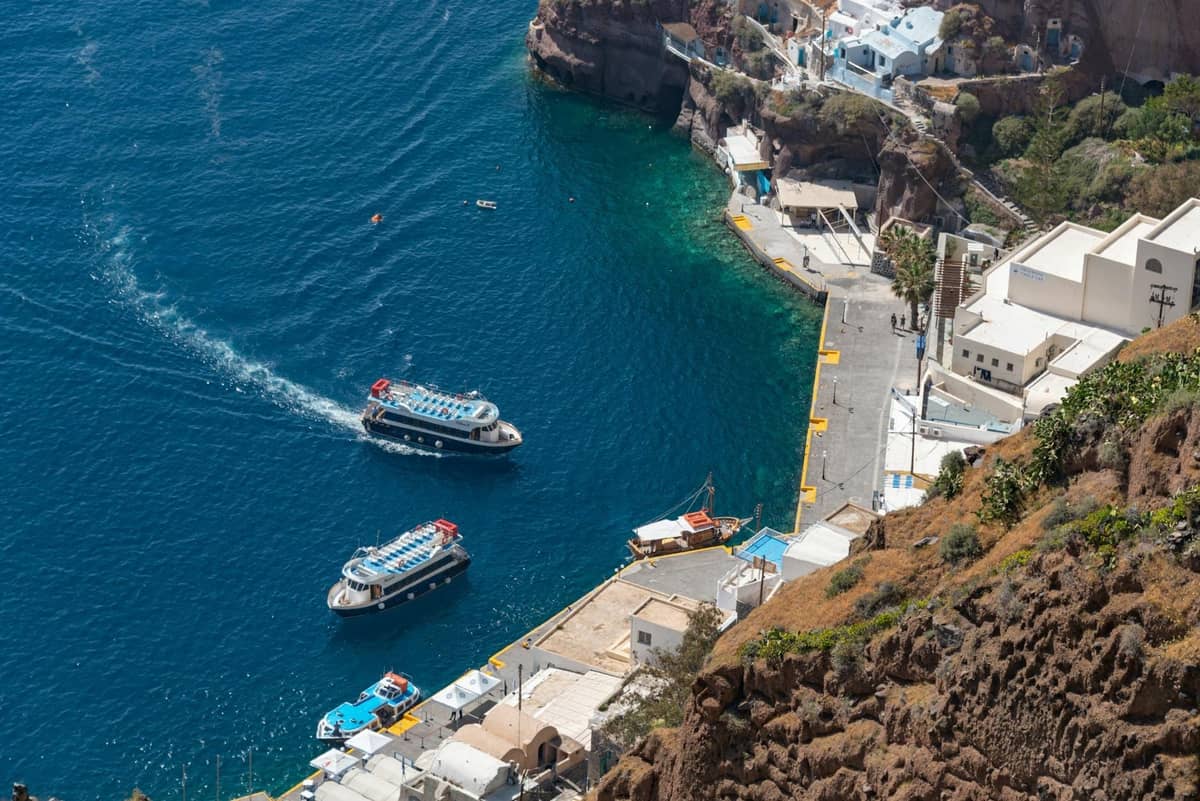
Most volcano and hot springs tours depart from the Old Port of Fira (reached via the cable car or the famous donkey path from Fira town) or from Athinios Port further south. Departures from the Old Port are more convenient for visitors staying in Fira, Imerovigli, or Oia, while Athinios is more practical if you are arriving directly from a ferry.
Tours run regularly from April through October, with peak frequency in June, July, and August. Winter service is limited and heavily weather-dependent. There are three broad tour formats to choose between, and the right choice depends on your priorities.
- Small group catamaran or sailing tours Typically 6-12 people, often including lunch, snorkeling stops, and wine. More expensive (roughly €80-150 per person, though prices vary significantly by operator and season), but a genuinely different experience from the standard excursion boat. These often combine the volcano with other caldera stops.
- Standard group excursion boats Larger ferries or motorboats carrying 20-100 passengers. These typically visit Nea Kameni, the hot springs, and often Thirasia. More affordable (roughly €15-40 per person depending on route length and operator), and a perfectly reasonable way to see the sites. Expect a more regimented schedule and less flexibility.
- Private boat charter The most expensive option, but offers full schedule flexibility. Worth considering for honeymooners or groups of 6 or more where the per-person cost becomes more reasonable.
If you want to combine the volcano excursion with a broader day on the water, the Santorini sailing and boat tours guide breaks down the full range of caldera sailing options, including tours that add stops at Ammoudi Bay or the more remote parts of the caldera.
Practical Planning: Timing, Logistics, and What to Bring
The best months to visit the volcano are May, June, and September. In May and June, tour boats are operating at full frequency but the island has not yet reached peak-summer crowding. September is arguably the best overall: temperatures are still warm (upper 20s Celsius), the crowds thin noticeably after mid-August, and the sea is calm. July and August work fine logistically but the heat on the Nea Kameni crater hike is significant, and the most popular departure times fill up quickly.
Morning departures generally have calmer seas and better light for photographs. If the caldera photography is important to you, morning light also works better for shots from the water. The Santorini photography guide has specific advice on shooting from boats and the caldera rim at different times of day.
- Closed-toe shoes with grip for the Nea Kameni crater hike
- An old swimsuit you do not mind staining at the hot springs
- Sunscreen, a hat, and water (limited shade on Nea Kameni)
- Goggles if you plan to swim near the hydrothermal vents
- A waterproof bag or dry sack for your phone and valuables when swimming
- A light layer for the boat if you are sailing in morning or evening hours in shoulder season
If you are spending multiple days on the island and want to structure your time efficiently, the 3-day Santorini itinerary places the volcano excursion in context alongside other highlights like the Nea Kameni volcano and the Palea Kameni hot springs to help you avoid doubling back across the island unnecessarily.
FAQ
Is it safe to visit the Santorini volcano?
Boat tours to Nea Kameni and Palea Kameni run regularly throughout the tourist season. Greek authorities and international agencies continuously monitor the caldera. Before booking, confirm current access status with your operator and check for any updated advisories from local authorities or your embassy. Conditions can change, but the volcano has not erupted since 1950.
Are the Santorini hot springs actually hot?
They are warmer than the surrounding Aegean, but they are not hot-tub temperature. The hydrothermal activity at Palea Kameni produces a localized zone of warm, sulfur-rich, iron-tinged water. The water has a noticeable yellow-orange discoloration and a sulfur smell. It is an interesting geological experience, but it is not a developed spa facility.
How long does a standard volcano and hot springs boat tour take?
Most standard group tours run 4-6 hours depending on the route. Tours that include Nea Kameni (crater hike), Palea Kameni (hot springs), and sometimes Thirasia or Oia from the water tend to be at the longer end. Catamaran sailing tours that add lunch and snorkeling stops may run 5-8 hours. Check the specific itinerary before booking.
Can I visit the volcano independently without a tour?
It is possible to take a local ferry from the Old Port of Fira to Nea Kameni without booking a full guided tour, but options are limited and seasonal. The vast majority of visitors go through an organized excursion, which handles the boat logistics and typically includes a guide for the crater walk. Independent access to the hot springs at Palea Kameni requires a separate boat stop.
What is the best time of year for a Santorini boat tour to the volcano?
May, June, and September offer the best combination of reliable tour availability, manageable temperatures, and calmer seas. July and August are peak season with the most frequent departures, but the heat on the Nea Kameni crater hike is intense and popular tours book out well in advance. October is viable but sea conditions become less predictable.