Palea Kameni Hot Springs: Swimming in a Volcanic Caldera
Reachable only by boat, the Palea Kameni Hot Springs sit in a shallow volcanic bay inside Santorini's caldera. Visitors swim from anchored tour boats into warm, sulfur-tinged waters heated by ongoing geothermal activity. It's a genuinely unusual experience, though one that requires realistic expectations.
Quick Facts
- Location
- Palea Kameni islet, Santorini caldera (boat access only)
- Getting There
- Caldera cruise departing from Old Port of Fira or Athinios Port. No road or ferry access.
- Time Needed
- 20–40 min at the springs; usually part of a 3–6 hour caldera boat tour
- Cost
- No standalone fee. Access included in caldera cruise pricing. Nea Kameni (a separate island on the same tours) charges a €5 park entry fee.
- Best for
- Geology enthusiasts, open-water swimmers, caldera day-trip visitors
What Palea Kameni Actually Is
The Palea Kameni Hot Springs are a geothermal bathing area in the shallow volcanic bay of Agios Nikolaos, on the small islet of Palea Kameni inside Santorini's caldera. The name translates roughly to 'Old Burnt Island', and it earns that name: Palea Kameni is a volcanic landmass that built up through a series of eruptions over roughly 2,000 years. What you see today is raw, dark rock sitting at water level, with no beach, no pier, and no infrastructure of any kind.
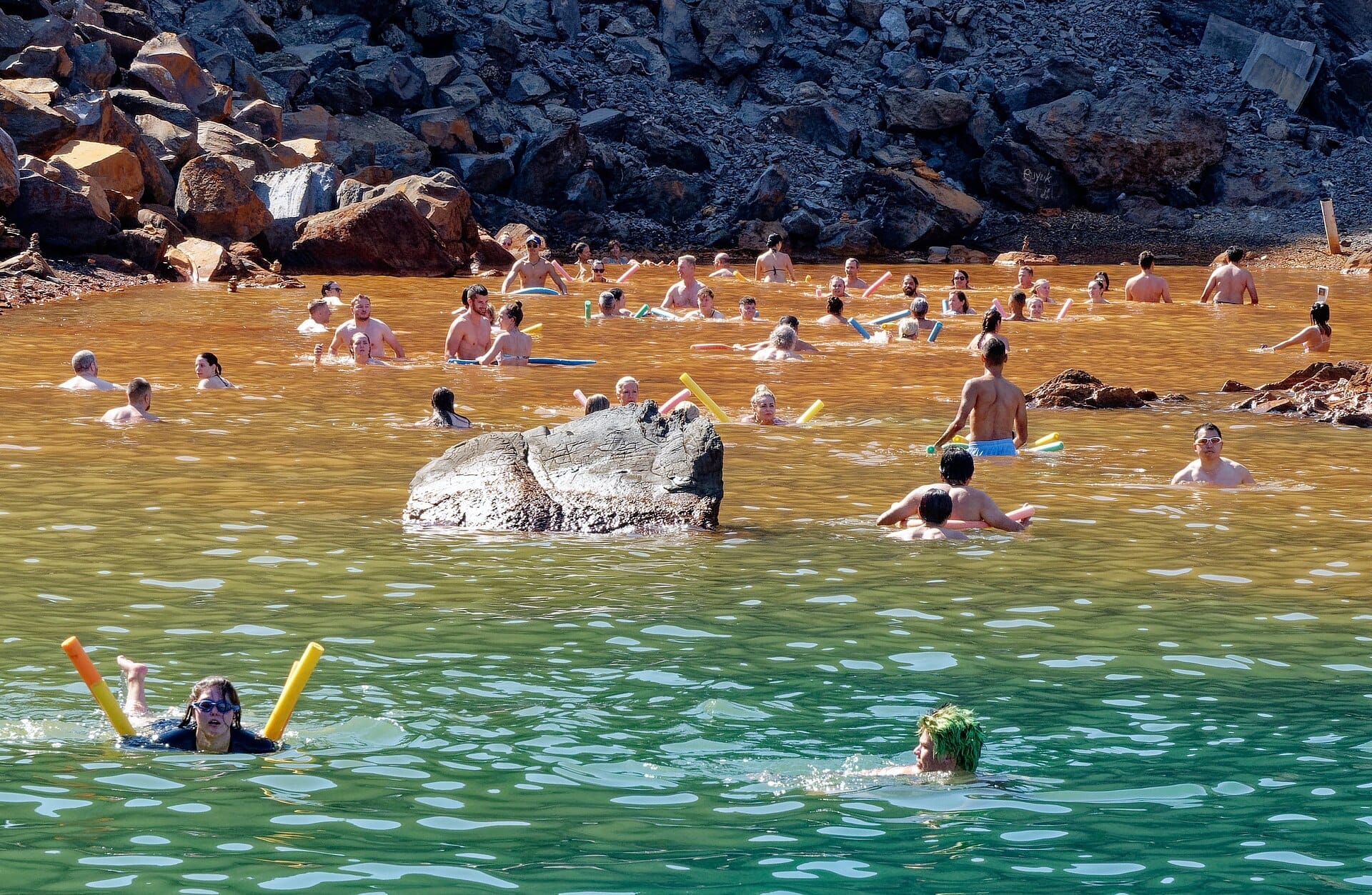
The hot springs themselves are not a pool or a spa. They are a section of shallow coastal water where geothermal vents beneath the seabed push warm water upward, reportedly reaching temperatures around 25–35°C, noticeably warmer than the surrounding Aegean. The water is rich in sulfur and iron, which turns the sea floor a distinctive rust-orange and stains the rocks a yellow-brown. The sulfur smell is real and present, though most visitors find it manageable rather than overwhelming.
⚠️ What to skip
Wear a dark or old swimsuit. The iron and sulfur content in the water will permanently stain light-colored swimwear. This is not a rumor — it is consistently reported by almost every tour operator and visitor who swims here.
Palea Kameni is almost always visited as part of a caldera cruise, typically alongside a stop at the neighboring Nea Kameni volcano. The two islets together form the heart of what most operators market as a 'volcanic islands tour'. Understanding what each island offers separately helps you decide whether the full tour is worth your time. For the full geological and historical context of the caldera, the Santorini volcano and hot springs guide covers the science and touring logistics in more depth.
How the Visit Actually Works
Boats anchor roughly 30 to 50 meters from the rocky shoreline. There is no dock or ladder to shore — visitors enter the water directly from the boat and swim toward the warm shallows near the rock face. The swimming distance is manageable for most adults, but it is open sea, not a pool. If you are not a confident open-water swimmer, this is an important detail.
Most operators provide foam floats or pool noodles for guests who want support. The water in the warm zone is shallow enough to stand in places, and some visitors simply float in the heated area rather than actively swim. As boats can carry dozens of passengers and multiple boats often arrive simultaneously, the area around the springs can get crowded in the middle of the day in peak season. You may find yourself sharing a relatively small warm patch with a large number of people.
The islet itself has no facilities whatsoever: no restrooms, no changing rooms, no food or water. Everything you need must be on the boat. Operators typically allow 20 to 40 minutes at the springs before moving on to the next stop. This is not a long, leisurely soak. It is more of a supervised dip in a geologically unusual location.
💡 Local tip
Book morning departures if you want a quieter experience at the springs. By midday, multiple tour boats converge on the same small bay. Earlier slots, departing around 9–10am, typically arrive before the midday rush.
Tickets & tours
Hand-picked options from our booking partner. Prices are indicative; availability and final rates are confirmed when you complete your booking.
Small-Group Sunset Sailing Cruise with BBQ, Drinks and Hotel Transfers
From 195 €Instant confirmationFree cancellationSmall-Group Morning Sailing Cruise with BBQ, Drinks and Hotel Transfers
From 195 €Instant confirmationFree cancellationSantorini flying dress photo shoot with a pro photographer
From 399 €Instant confirmationFree cancellationSantorini photo shoot with a pro photographer
From 299 €Instant confirmationFree cancellation
The Sensory Experience: What You Notice in the Water
Approaching the island by boat, the first thing you register is the color change. The sea around Palea Kameni shifts from deep Aegean blue to a murky, rust-tinged green-brown near the rocks. This is the iron content at work, and it is a reliable signal that you are approaching the geothermal zone. The rock face itself is streaked with orange and yellow sulfur deposits, and the water closest to the shoreline carries a faint egg-like sulfur smell.
Once in the water, the temperature difference is immediately perceptible. The surrounding caldera sea runs cool, and swimming through the gradient from cooler open water into the warm shallows near the rocks is one of the more genuinely strange physical sensations the island offers. The warmth is not uniform — there are distinct pockets where the temperature rises, and areas just a few meters away that remain cool. Finding the warmest spots requires a little exploration.
The seabed is rocky and uneven, and visibility in the spring zone is often limited due to the mineral content of the water. This is not a snorkeling destination. What you are here for is the thermal experience, not underwater scenery.
Geology and History in Brief
Palea Kameni emerged from the caldera through volcanic eruptions, with documented activity dating back roughly 2,000 years. Unlike the larger, older calderas that form the main island arc of Santorini, Palea Kameni and its neighbor Nea Kameni are relatively young geological formations, still considered part of an active volcanic system. The geothermal springs are a direct expression of that ongoing activity — heat from below continues to escape through fissures in the seabed.
The broader Santorini caldera was shaped by one of the largest volcanic eruptions in recorded geological history, the Minoan eruption, which is believed to have had catastrophic effects on the ancient Aegean region. The Akrotiri archaeological site on the southern tip of the main island preserves the buried remains of a Bronze Age city that predates that eruption. Together, the two sites give visitors a sense of both the geological forces and the human history that define this archipelago.
Practical Logistics: Booking a Tour
Access requires a boat, typically via tour operators or private charters, as there is no scheduled public ferry service to Palea Kameni. The most common format is a half-day or full-day caldera cruise that combines the hot springs stop with a visit to Nea Kameni, and often includes a stop at Oia or a caldera-view lunch. Budget tours typically depart from the Old Port of Fira or Athinios Port. Premium sailing tours and private catamarans depart from various points around the island.
For a full overview of caldera cruise options and what to look for when booking, the Santorini sailing and boat tours guide provides a detailed breakdown. If you are visiting in peak summer months, book tours at least a few days in advance — popular operators sell out quickly in July and August.
Tour prices vary significantly by boat type, operator, and what is included. The stop at Palea Kameni Hot Springs carries no additional local entrance fee. The separate €5 park entry fee applies to Nea Kameni, and most reputable operators include this in the tour price or collect it on board. Confirm what is included before booking.
ℹ️ Good to know
Most caldera cruises run during the main tourist season, roughly spring through autumn. Off-season access is limited, and winter tours are rare. Verify seasonal availability directly with operators before planning.
Honest Assessment: Is It Worth It?
The Palea Kameni Hot Springs are a genuinely unusual experience that you will not easily replicate elsewhere. Swimming in geothermally heated sea water inside an active volcanic caldera, with sulfur-stained rocks rising from the water in front of you and the steep cliffs of Santorini visible in every direction, has a specific atmosphere that photographs do not fully convey.
That said, the experience has real limitations. The springs are crowded in peak season. The warm zone is small. The time at the springs is short. The sulfur smell bothers some people. If you have limited days on Santorini and are debating between a caldera cruise and other activities, the value of the tour depends heavily on whether you find the geological and scenic appeal of the caldera compelling. For visitors primarily motivated by beaches or architecture, the caldera tour may feel like a lot of logistics for a 30-minute swim.
If your main priority is the caldera scenery rather than the springs themselves, the view from land — particularly from Imerovigli's caldera viewpoints or the Fira to Oia hiking trail — offers sustained and arguably more dramatic caldera perspectives without requiring a boat. The hot springs are best treated as one part of a broader caldera day, not a standalone destination.
Who Should Skip This
Visitors who are not comfortable swimming in open sea without a pool edge or ladder should think carefully before booking. While floats are usually available, the experience requires entering the water from a moving boat and swimming a meaningful distance. Travelers with very sensitive skin or strong reactions to sulfur may also find the waters uncomfortable. Anyone with a tight itinerary who is prioritizing Santorini's cultural and archaeological sites might find a half-day caldera cruise a poor trade-off, given that the hot springs portion represents only a fraction of the total tour time.
Insider Tips
- Pack a dark-colored swimsuit you don't mind potentially staining. Bring a separate bag to store it after swimming so the sulfur residue doesn't transfer to other items.
- Bring water shoes if you plan to wade near the rocks. The seabed in the spring area is uneven volcanic rock, not sand.
- The warmest pockets are closest to the rock face, not in the middle of the bay. Swim toward the rust-colored shoreline to find the most noticeable temperature difference.
- Morning departures (around 9–10am) consistently arrive at the springs before the midday fleet. If your operator offers multiple departure times, always choose the earliest.
- Some private catamaran tours limit passenger numbers, which means a significantly less crowded stop at the springs compared to larger group boats. The per-person cost is higher, but the experience is noticeably different.
Who Is Palea Kameni Hot Springs For?
- Travelers who want a hands-on encounter with Santorini's volcanic geology, not just caldera views from a terrace
- Confident open-water swimmers comfortable entering the sea from a boat
- Geology and natural science enthusiasts interested in active geothermal systems
- Visitors on multi-day itineraries who have already covered the main villages and want an on-water day
- Those combining the hot springs with a Nea Kameni volcano hike as part of a single caldera day
Nearby Attractions
Combine your visit with:
- Cape Columbo Beach
Cape Columbo Beach sits on Santorini's northeastern tip, backed by 10-metre volcanic ash cliffs and named after the Kolumbo submarine crater offshore. It is unorganized, free, and deliberately hard to reach — which is precisely the point. Bring everything you need and expect a beach that feels nothing like the island's famous caldera-side postcards.
- Emporio Medieval Village
Emporio is Santorini's largest village and home to the Kastelli, a 15th-century fortified settlement widely regarded as the best-preserved medieval castle village on the island. Free to explore and far removed from the caldera crowds, it rewards visitors with labyrinthine alleys, stone watchtowers, and a genuine sense of lived-in history.
- Megalochori Village
Tucked into southwestern Santorini roughly 6–7 km from Fira, Megalochori is one of the island's oldest villages, with roots documented back to the 17th century. Its narrow whitewashed lanes, traditional wine canavas, and Cycladic mansions offer a noticeably different pace from the caldera-rim crowds.
- Nea Kameni Volcano
Nea Kameni is the youngest volcanic landform in the eastern Mediterranean, rising from the center of Santorini's caldera. Reached only by boat and requiring a steep hike across bare lava fields, it offers a stark, geological contrast to the whitewashed villages on the cliffs above.