Santorini's Black Sand Beaches: Everything You Need to Know
Santorini's black sand beaches are unlike anything else in the Aegean. Formed by volcanic eruptions and shaped by centuries of erosion, they come with their own rules, quirks, and logistics. This guide covers the main beaches, practical access, seasonal timing, and what first-timers always get wrong.
Plan and book this trip
Tools from our partner Travelpayouts help you compare flights and hotels. If you book through them, we may earn a commission at no extra cost to you.
Flights
Hotels map
TL;DR
- The black sand is volcanic in origin, created from basaltic rock and lava fragments, not traditional silica sand.
- The two main black sand beach zones are Perissa and Perivolos on the southeast coast and Kamari on the east coast, with Vlychada as a quieter alternative.
- The sand heats to extreme temperatures in summer sun — water shoes or sandals are not optional, they're essential.
- Both Perissa and Kamari are reachable by KTEL public bus from Fira, making them accessible without a rental car.
- Peak season (July–August) brings significant crowds; late May, June, or September offer the same beaches with far more breathing room.
Why Santorini's Beaches Are Black
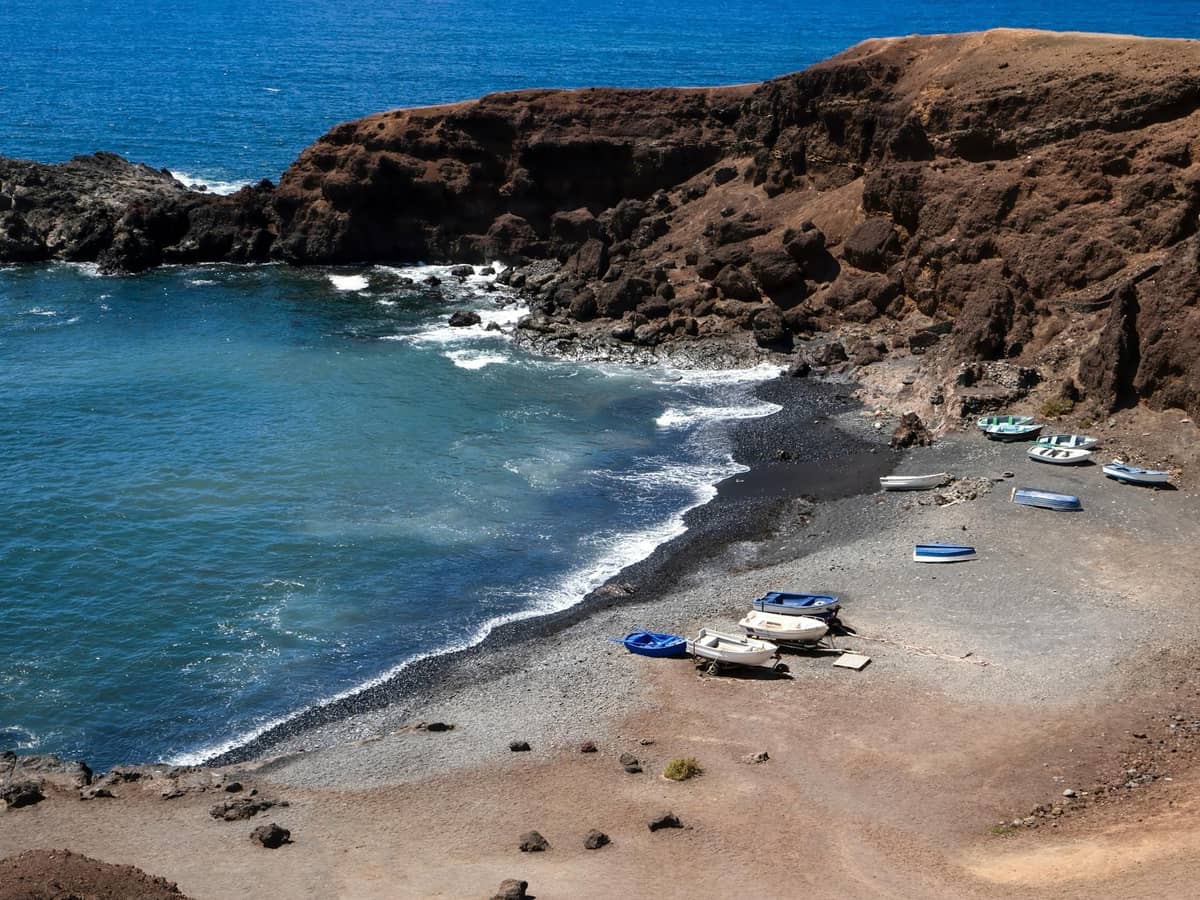
The black sand on Santorini's south and east coasts is not a quirk of geography — it is a direct consequence of the island's violent volcanic past. Santorini sits atop one of the most significant volcanic systems in the Mediterranean. The catastrophic Minoan eruption, dated to roughly 1600–1500 BC, collapsed the island's central landmass into what is now the caldera. Over millennia, lava flows cooled rapidly on contact with seawater, fragmenting into basaltic rock. Wind, wave action, and time eroded those fragments into the dark sand and pebble mix that lines the beaches today.
The darker the sand, the higher the iron and basalt content — which is also why it absorbs heat so aggressively. This is not the powdery white silica sand you find on Mykonos or Crete. Much of what looks like sand is actually a mix of coarse volcanic grains and small pebbles. If you want to understand the geological forces that created these beaches, the Nea Kameni volcano in the caldera gives you the full context — walking across active lava fields makes the beach geology suddenly obvious.
⚠️ What to skip
Black volcanic sand heats up dramatically faster than white sand. On a clear July or August afternoon, walking barefoot is genuinely painful and can cause burns. Always bring water shoes or sandals — even if you only use them to walk from your sunbed to the sea.
The Main Black Sand Beaches: What Each One Is Actually Like
Santorini has three distinct black sand beach areas worth knowing about. They are not interchangeable. Each has a different atmosphere, crowd level, and practical setup.
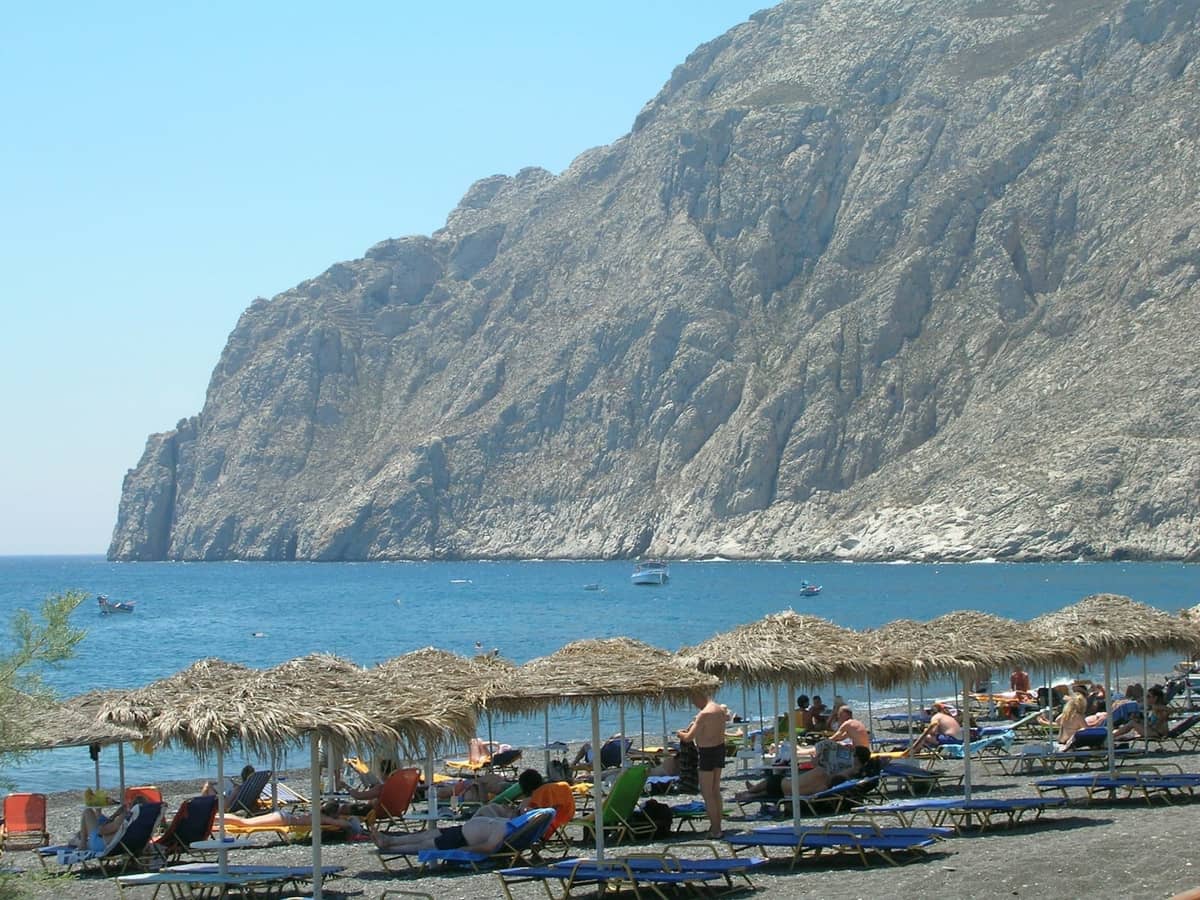
- Perissa and Perivolos The longest continuous stretch of black sand on the island, running roughly 7 km along the southeast coast. Perissa is the northern, more developed end with the most tourist infrastructure: beach clubs, sunbed rows, bars, and restaurants directly on the sand. Perivolos flows south from Perissa and gets progressively quieter and less organized the further you walk. Waters are generally calm and shallow near shore, making it the more family-suitable option. This is also a common stop on cruise ship excursions from Athinios port.
- Kamari Located on the east coast, Kamari is more compact than Perissa and has a fully developed promenade running parallel to the beach. The sand here is similarly dark and coarse, with sunbed rentals covering most of the organized sections. It sits closer to Santorini Airport (about 5 km), which matters if you want to maximize beach time on arrival or departure day. The backdrop is the distinctive Mesa Vouno cliff, which separates Kamari from Perissa geographically — the two villages are only connected by road around the mountain.
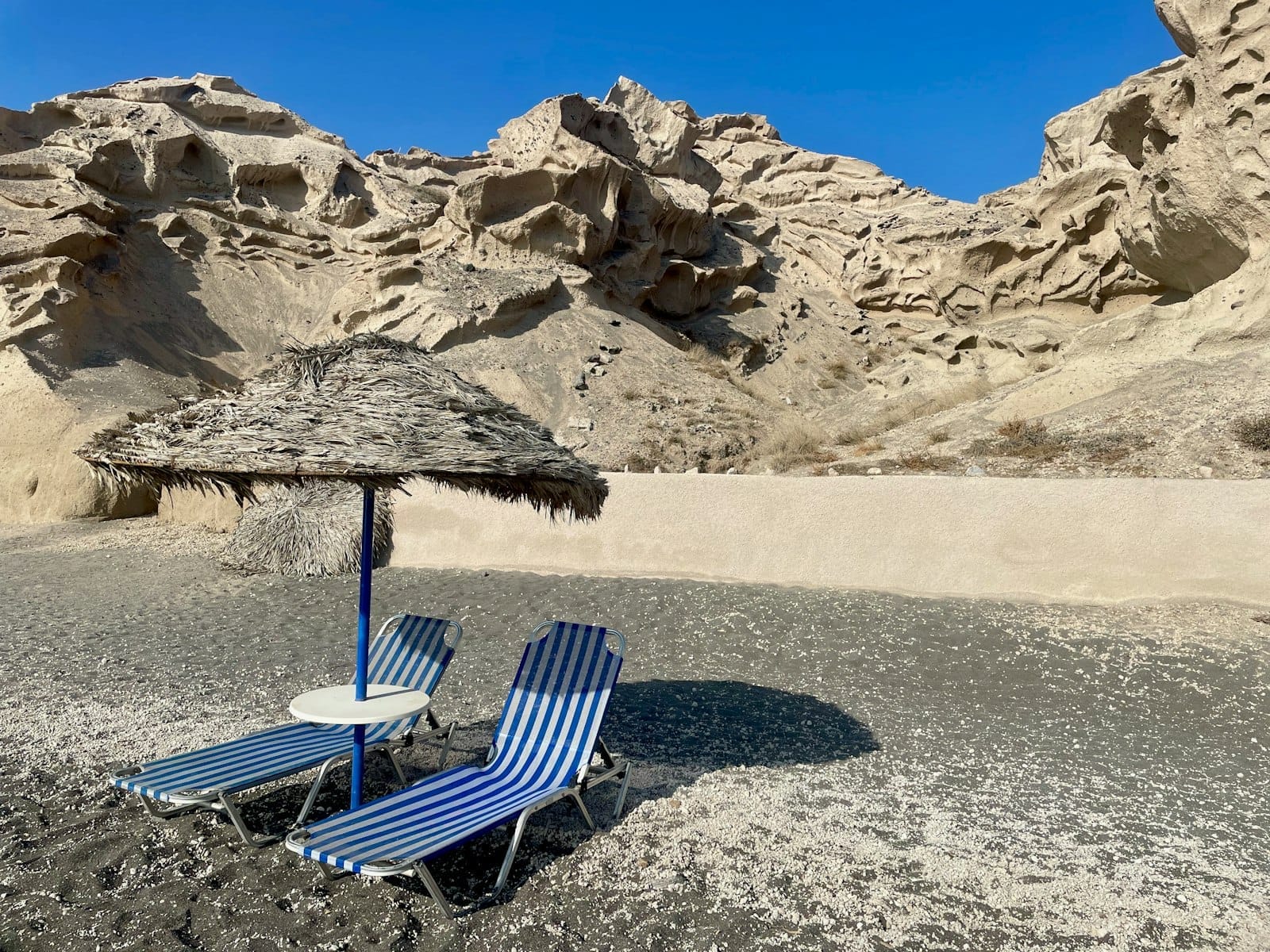
- Vlychada The least visited of the three, Vlychada sits on the south coast near a small marina. The cliffs here are white-grey pumice eroded into eerie, lunar shapes — genuinely dramatic scenery. The beach itself is darker sand mixed with grey pebbles, partly organized with a beach bar and sunbed section. Tavernas cluster around the marina. It attracts far fewer day-trippers than Perissa or Kamari, which is either its appeal or its drawback depending on what you want.
One detail often overlooked in planning: Perissa and Kamari are on opposite sides of the same mountain and cannot be reached from each other without a significant detour by road. If you want to visit Ancient Thera, the ruins perched on the ridge above, you can approach from either village — but pick one and commit to it for the day.
Getting to the Black Sand Beaches
Neither Perissa nor Kamari requires a rental car, which is worth stating plainly since Santorini's road network can be stressful to navigate in high season. The KTEL Santorini bus network runs regular services from Fira's central bus station to both beaches. The journey takes around 20-30 minutes to either destination. Fares are low by Greek standards, and the bus is the single most reliable budget transport option on the island. Check current schedules directly on the KTEL Santorini website, as frequency changes significantly between shoulder season and peak July-August.
If you're staying in Fira or anywhere on the caldera side of the island, taxis are a straightforward alternative, though fares climb during peak hours and late evenings. Pre-booked transfers give you a fixed price and are worth considering for airport connections. Renting an ATV or scooter is popular but comes with real risk on Santorini's narrow, winding roads, particularly around the hairpin descent into Perissa. Rental cars are more practical for anyone wanting to visit multiple beaches in a single day, including Vlychada.
💡 Local tip
If you're coming from Oia or Imerovigli, the drive to Perissa or Kamari is 35-45 minutes depending on traffic. Consider booking a taxi in advance during July and August — street hails become unreliable when the island is at peak capacity.
When to Go: Seasonal Realities
The beaches are accessible from roughly April through October, but the experience varies considerably depending on when you arrive. July and August are the warmest months for swimming, with sea temperatures typically in the mid-20s Celsius (around 23–26°C), but the beaches at Perissa and Kamari get genuinely crowded. Sunbed rows fill by mid-morning, parking areas overflow, and the promenade at Kamari becomes a slow shuffle of day-trippers.
Late May and June, or September into early October, are the practical sweet spots. Temperatures are still warm enough for comfortable swimming, crowds thin out noticeably, and the beach bars remain open and operational. September in particular is worth singling out: sea temperatures are at or near their warmest for the whole year (residual heat from summer), while visitor numbers drop sharply after the August peak. For a full comparison of how conditions shift across the year, the guide to visiting Santorini in September lays it out in detail.
Outside the main season, beach infrastructure scales back. Some beach clubs and restaurants operate reduced hours or close entirely between November and March. Vlychada is more likely to have facilities available in shoulder season than the larger organized sections, but verify directly with local operators before planning around it.
✨ Pro tip
Arrive at Perissa or Kamari before 10am in July or August if you want a sunbed without a wait. By 11am, the organized sections are at capacity and you'll either be laying towels on pebbles or paying premium rates at a beach club for guaranteed reservation.
Practical Information: Sunbeds, Costs, and What to Bring
Most of the organized beach frontage at Perissa and Kamari is divided between private beach clubs and operators who rent sunbeds and umbrellas as pairs. This is standard across Greece: the shoreline is legally public, but individual operators manage the sunbed sections and require either payment or a minimum spend at their bar or restaurant. Prices vary by operator and position (front row costs more than back row), but budgeting around 15-25 EUR for a pair of sunbeds plus umbrella is a reasonable working figure. Verify current rates on arrival as these fluctuate.
- Water shoes or sandals: non-negotiable in summer, both for hot sand and the pebbly shoreline entry
- High-SPF sunscreen: the dark sand reflects less light than white sand, but UV exposure on a cloudless Aegean day is intense
- Cash: smaller beach tavernas and snack stalls sometimes don't take cards, particularly at Vlychada
- Reef-safe sunscreen if you're swimming near rocky areas: standard guidance for any Greek beach
- A bag you don't mind getting wet: the sand-to-sea transition at Perissa is shallow but involves stepping over dark pebbles
Food options at the beach range from full taverna meals to takeaway gyros. Kamari's promenade has the widest selection at sit-down restaurants. If you're planning a full beach day and want to keep costs down, the Santorini on a budget guide has specific advice on eating near the east coast beaches without paying caldera-view prices.
Beyond the Black Sand: How the Beaches Fit Into a Wider Santorini Trip
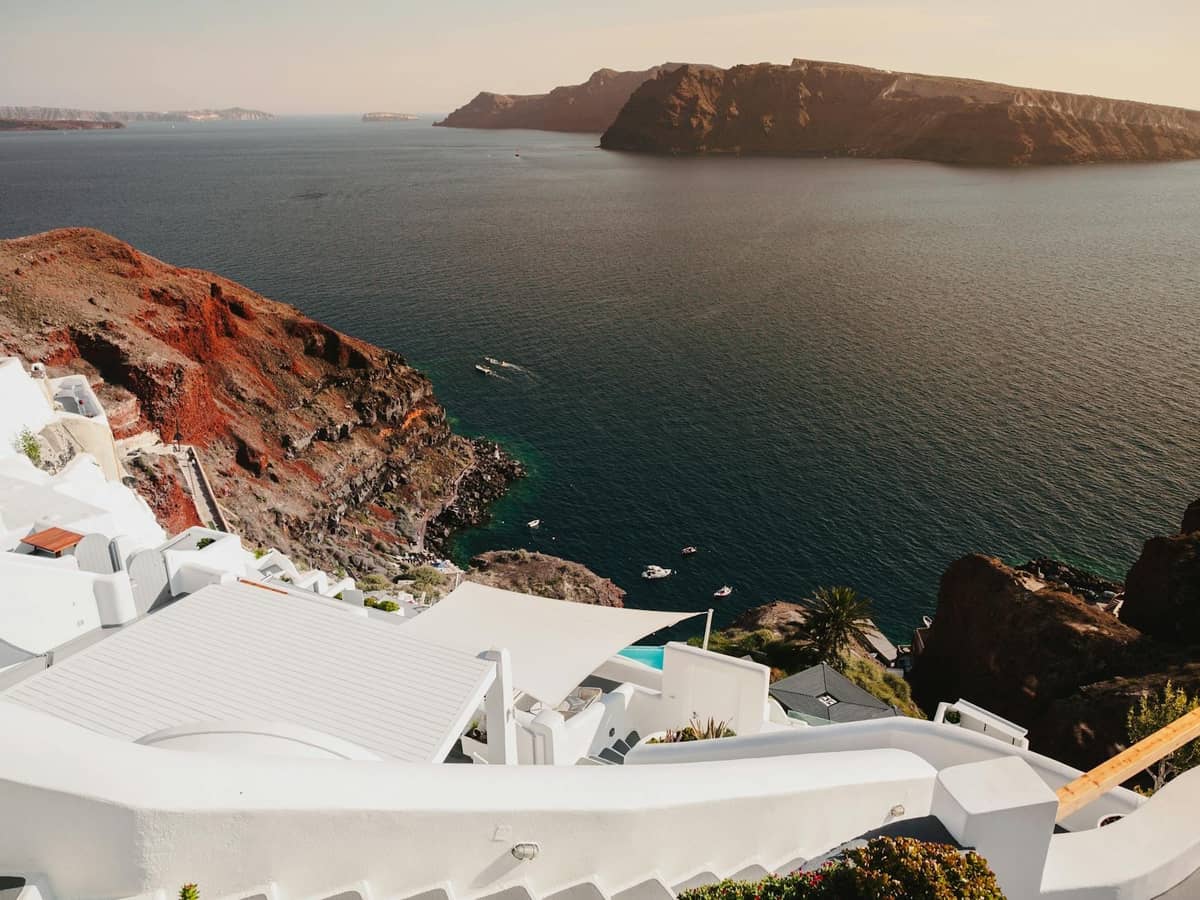
The black sand beaches occupy the south and east of the island, which is geographically and atmospherically separate from the caldera villages most visitors base themselves in. This is worth thinking about logistically. If you're spending two or three days on the island, consider dedicating one full day to the south coast: combine a morning at Perissa beach with an afternoon visit to the Akrotiri archaeological site on the southwest tip, which is one of the most significant Bronze Age sites in the Aegean.
Kamari pairs well with a stop at Ancient Thera, reached via a steep road up Mesa Vouno. The site sits at around 360 meters elevation and gives panoramic views over both Kamari and Perissa on clear days. Santorini also has beaches beyond the black sand: Red Beach near Akrotiri and White Beach further along the southwest coast offer striking contrast. The complete guide to Santorini's best beaches covers the full range including Red Beach and the less accessible options reachable only by boat.
If this is your first time on the island and you're trying to fit everything into a short trip, the 3-day Santorini itinerary provides a practical day-by-day framework that accounts for travel time between the caldera side and the beach side of the island.
FAQ
Is the black sand at Santorini actually sand or pebbles?
It's a mix of both. The beaches are primarily composed of coarse volcanic grains, small pebbles, and larger smooth stones — particularly closer to the waterline. It is not the fine, powder-soft sand found on typical Aegean white sand beaches. The texture varies across different sections of Perissa, Perivolos, and Kamari.
Which is better, Perissa or Kamari?
They are genuinely different experiences. Kamari has a more polished promenade with restaurants and shops, and it's closer to the airport. Perissa is longer, slightly more relaxed at its southern Perivolos end, and tends to attract a younger crowd. If you want to walk far along the beach with fewer people, head to the Perivolos section. If you want more dining options directly on site, Kamari has the edge.
How hot does the black sand get in summer?
Very hot — hot enough to cause burns on bare feet within seconds on a clear July or August afternoon. The dark color absorbs solar radiation far more efficiently than white sand. Water shoes or sandals are not a luxury item here; they're a basic precaution.
Can I get to the black sand beaches by public bus?
Yes. The KTEL Santorini bus network runs services from Fira's central bus station to both Perissa and Kamari. Journey time is roughly 20-25 minutes. Schedules and current fares are published on the official KTEL Santorini website, and frequency increases during the peak summer season.
Are the black sand beaches good for families with children?
Perissa and Perivolos are generally considered the most family-suitable because the water entry is relatively shallow and gradual near shore, and the long flat beach gives children plenty of space. The main practical concern for families is the heat of the sand — water shoes for kids are essential. Facilities including beach bars, restaurants, and toilets are well-established at both Perissa and Kamari.