Vlychada Beach: Santorini's Sculptural South Coast Escape
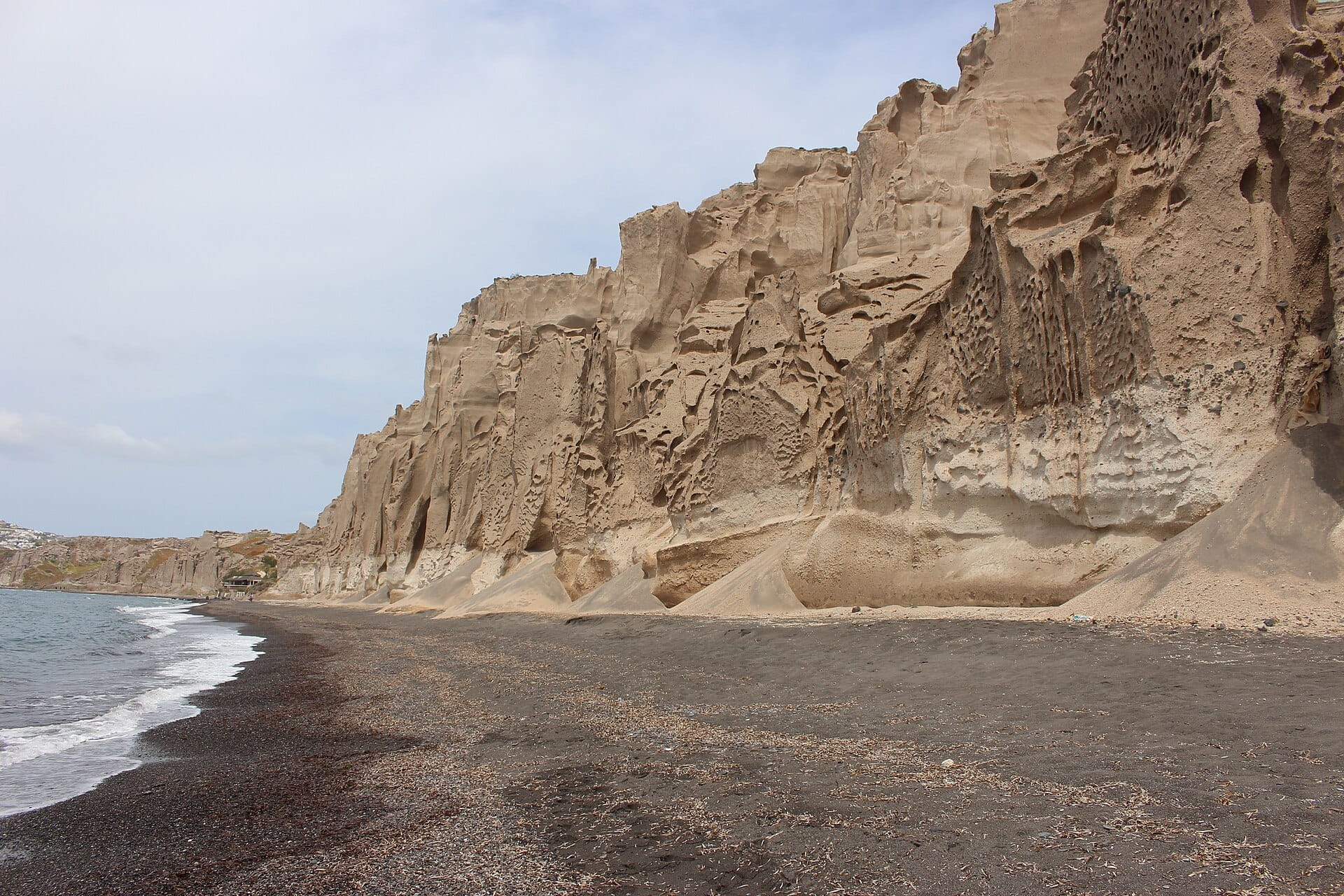
Vlychada Beach sits on Santorini's southern coast near Akrotiri, where layers of volcanic pumice have eroded into chalky white cliffs that look more like abstract sculpture than natural rock. The dark sand and relative seclusion make it one of the island's more atmospherically distinct beaches.
Quick Facts
- Location
- Southern coast of Santorini, near Vlychada settlement, Akrotiri area
- Getting There
- Best reached by car or rental ATV; approx. 10–13 km from Fira by road
- Time Needed
- 2–4 hours for a full beach visit; pair with nearby Akrotiri site for a half-day
- Cost
- Free public beach; sunbed/umbrella hire charged seasonally by beach operators
- Best for
- Geology enthusiasts, photography, travelers seeking quiet over scene
What Makes Vlychada Different from Santorini's Other Beaches
Santorini has no shortage of dramatic shorelines, but Vlychada Beach earns its reputation on geology alone. The cliffs that frame the western end of the beach are not painted or sculpted by human hands. They are compressed layers of pumice and volcanic ash, deposited by the catastrophic Thera eruption in the Late Bronze Age, then slowly carved by wind and rain into shapes that resemble melting wax, giant honeycombs, and figures mid-transformation. The effect is genuinely strange in the best possible way.
The beach itself is dark, covered in black and grey sand mixed with small pebbles. The water deepens fairly quickly from the shoreline, so it rewards confident swimmers but is less ideal for toddlers paddling in the shallows. The overall tone is quieter and more contemplative than the livelier beach towns on the east coast.
ℹ️ Good to know
The name appears in two spellings across tourism platforms: Vlychada and Vlichada. Both refer to the same beach. On road signs and local maps, you will typically see the transliteration Vlychada.
The Cliffs: Geology You Can Actually See
The pumice cliffs at Vlychada are among the most visually accessible pieces of volcanic geology on the island. Unlike the raw crater walls of Nea Kameni, which require a boat trip to reach, these formations are right at the beach's edge, close enough to examine the layering in detail. Each distinct band in the rock represents a different phase of volcanic activity or sediment accumulation over millennia.
The pale, almost white coloring of the cliffs contrasts sharply with the dark sand below, giving the beach a two-tone palette unlike anything at Kamari or Perissa. If you have already visited the Akrotiri Archaeological Site nearby, seeing these same pumice layers exposed in cliff form adds a physical dimension to what the excavation guides explain underground.
Walk toward the western end of the beach, close to the base of the cliffs, and you can see how the rock has been undercut and hollowed. The shapes change depending on the angle. Morning light, coming from the east, casts long shadows inside the hollows and makes the textures read most clearly. By midday, the flat overhead light flattens the relief and reduces the visual drama considerably.
Tickets & tours
Hand-picked options from our booking partner. Prices are indicative; availability and final rates are confirmed when you complete your booking.
Luxury Sunset Cruise in Santorini
From 120 €Free cancellationCruise of the volcanic islands around Santorini
From 45 €Instant confirmationFree cancellationGuided e-bike tour in Santorini
From 90 €Instant confirmationFree cancellationSantorini audio guide with TravelMate app
From 5 €Instant confirmation
How the Beach Changes Through the Day
Early morning at Vlychada is quiet in a way that few Santorini beaches manage by peak season. The dark sand absorbs heat quickly, so by 9 or 10 AM in July or August, walking barefoot becomes uncomfortable. Arriving before 9 AM gives you the cliffs in soft light, manageable sand temperatures, and significantly fewer people.
By late morning, the organized section of the beach fills with sunbeds and umbrellas occupied by guests from nearby accommodations and day visitors. The western, cliff-adjacent end remains less organized and tends to attract people who are more interested in the formations than in a relaxed beach day. There is a noticeable split in the type of visitor between these two zones.
Late afternoon brings a shift in light quality that lifts the cliffs' color from flat white into warmer ochre and cream tones. This is the most photogenic window, roughly one to two hours before sunset. The beach does not face west, so you will not get a dramatic sunset from the waterline itself, but the cliffs glow with reflected light in a way that rewards patience.
💡 Local tip
For photography: visit between 7:30 and 9:00 AM or between 5:00 and 7:00 PM. The midday hours flatten the cliff textures and the dark sand becomes an overexposed grey in direct sunlight. A polarizing filter helps with water reflections at any hour.
Getting There and Practical Logistics
Vlychada sits roughly 10 to 13 km from Fira by road, depending on your route. The most practical way to reach it is by rental car or ATV, both of which are widely available in Fira and at the airport. The road to the beach is straightforward and signposted, passing through the flat southern landscape of the island, which looks quite different from the dramatic caldera-edge terrain most visitors associate with Santorini.
There is a small harbor at Vlychada, and some sailing and boat tour operators use it as a departure point, which means parking can be limited at peak times. If you arrive by car, aim for mid-morning rather than midday to secure a spot without circling.
From the airport (JTR), Vlychada is approximately 11.9 km by road. From Athinios ferry port, it is about 9.6 km. Taxis are available from both points, though fares vary and it is worth confirming the current rate with the driver before setting off. There is no dedicated KTEL bus stop at the beach itself; check the current KTEL Santorini schedule at ktel-santorini.gr for any nearby service options, as routes and timetables change seasonally.
⚠️ What to skip
The dark sand at Vlychada heats to uncomfortable temperatures under direct sun by late morning. Beach shoes or sandals you can slip off at the water's edge make a real difference in comfort, especially for children.
Combining Vlychada with the Surrounding Area
The logical companion visit is Akrotiri archaeological siteAkrotiri Archaeological Site, one of the most significant Bronze Age excavations in the Aegean. It is a few kilometers away and typically takes two to three hours to explore properly. A morning at the site followed by an afternoon at the beach creates a natural half-day itinerary for the southwestern part of the island.
The Red Beach is also nearby, though it requires a short walk over rocky terrain to reach and can be surprisingly crowded by midseason. Vlychada is the less trafficked of the two and better suited to visitors who want more space and fewer people. The two beaches have completely different visual characters: Red Beach is all rust and terracotta; Vlychada is pale cliff against dark sand.
If you are building a full day in the south, the Lighthouse of Akrotiri makes a worthwhile stop in the late afternoon, especially for the open sea views across the southern tip of the island. It involves very little walking and takes under thirty minutes.
What to Realistically Expect: Honest Assessment
Vlychada is not a beach that works well as a pure sunbathing destination if that is your primary goal. The water deepens quickly, which limits shallow-water enjoyment for young children or non-swimmers. The organized section with sunbeds is comfortable enough, but it is not comparable in facilities or atmosphere to the established beach clubs at Perissa or Perivolos.
What Vlychada does well is atmosphere. It is one of the few beaches in Santorini where the surrounding geology actively competes with the water for your attention. Travelers drawn to Santorini's volcanic and archaeological history will find the setting coherent and rewarding. Those looking primarily for flat, warm-water swimming with easy wading should head to Kamari instead.
Accessibility for visitors with mobility limitations is unverified. The beach surface of mixed sand and pebbles, combined with the lack of confirmed information about step-free access or disabled parking, means that anyone with mobility concerns should contact local operators directly before making the trip.
Weather affects the experience more than at caldera-view attractions. The exposed southern coast can be choppy and windy, particularly during the meltemi season in July and August. On windy days, the pumice cliffs can send fine particles of dust across the beach. Check conditions before heading out, particularly if you are visiting primarily for photography.
Insider Tips
- Walk all the way to the western end of the beach, past the organized sunbed section, to get closest to the most dramatically shaped cliff formations. Most visitors stop at the first organized area and never reach the best geological features.
- The beach faces roughly south, which means morning light comes from the left (east) and evening light from the right (west). Evening light on the cliffs produces warmer tones and deeper shadows in the hollowed sections than any other time of day.
- The small harbor at Vlychada has a handful of seafood tavernas that tend to be priced for locals rather than tourists passing through from Oia or Fira. Lunch here costs noticeably less than at the island's more photographed spots.
- If you are combining Vlychada with the Akrotiri archaeological site on the same day, visit the site first when it opens to beat the tour groups, then head to the beach from late morning onward. Reversing the order means arriving at Akrotiri during its busiest midday period.
- The sea deepens quickly, which makes Vlychada better for swimming laps parallel to shore than for casual wading. Bring fins or a snorkel if you enjoy exploring underwater, as the rocky areas near the cliff base have clearer water than the sandy mid-beach section.
Who Is Vlychada Beach For?
- Geology and volcanic history enthusiasts who want to see pumice formations up close without a boat trip
- Photographers looking for an unusual beach composition combining pale cliffs and dark sand
- Couples or solo travelers who find the packed east-coast beach towns overstimulating
- Visitors building a half-day itinerary in the Akrotiri area alongside the archaeological site
- Confident swimmers and snorkelers who prefer deeper, clearer water over shallow wading
Nearby Attractions
Other things to see while in Akrotiri:
- Akrotiri Archaeological Site
Buried by a volcanic eruption around 1600 BC and preserved beneath layers of pumice for over three millennia, the Akrotiri Archaeological Site offers a rare, immersive window into a sophisticated Bronze Age civilization. Walk elevated walkways above multi-storey stone buildings, intact staircases, and ceramic storage vessels still standing where ancient inhabitants left them.
- Lighthouse of Akrotiri
Perched on the cliffs at Santorini's southwestern tip, the Akrotiri Lighthouse is a working 19th-century lighthouse with sweeping views of the Aegean and the caldera. Free to visit and far less crowded than the island's famous sunset spots, it rewards travelers willing to make the drive.
- Red Beach
Red Beach (Kokkini Paralia) sits at the southwestern tip of Santorini near Akrotiri, where iron-rich cliffs plunge into dark, rust-colored sand. It is one of the most geologically striking beaches in the Aegean, though ongoing rockfall hazards mean knowing what you're getting into before you arrive.
- Tomato Industrial Museum
Set inside a converted 1945 tomato-paste factory at Vlychada on Santorini's south coast, the Tomato Industrial Museum "D. Nomikos" tells the story of an industry that once defined island life. Expect machinery dating to 1890, filmed worker testimonies, and a surprisingly moving taste of what Santorini looked like before the tourists arrived.