Finikia Village: Santorini's Quiet Alternative to Oia
Finikia Village sits less than a kilometre from Oia but feels like a different island entirely. A traditional Cycladic farming settlement with cave houses, arched doorways, and pedestrian lanes too narrow for cars, it offers a genuine contrast to the tourist intensity of its famous neighbour. Entry is free, the pace is slow, and the photography is excellent without the crowds.
Quick Facts
- Location
- Finikia Village, 84702, northern Santorini — about 1–1.5 km from Oia
- Getting There
- KTEL bus to Oia, then a 10–15 min walk; also reachable by taxi or rental car from Fira (~11 km)
- Time Needed
- 45 minutes to 1.5 hours for a relaxed walk-through
- Cost
- Free to enter; individual cafes or shops charge their own prices
- Best for
- Photographers, architecture lovers, and anyone wanting to escape Oia's crowds
What Finikia Village Actually Is
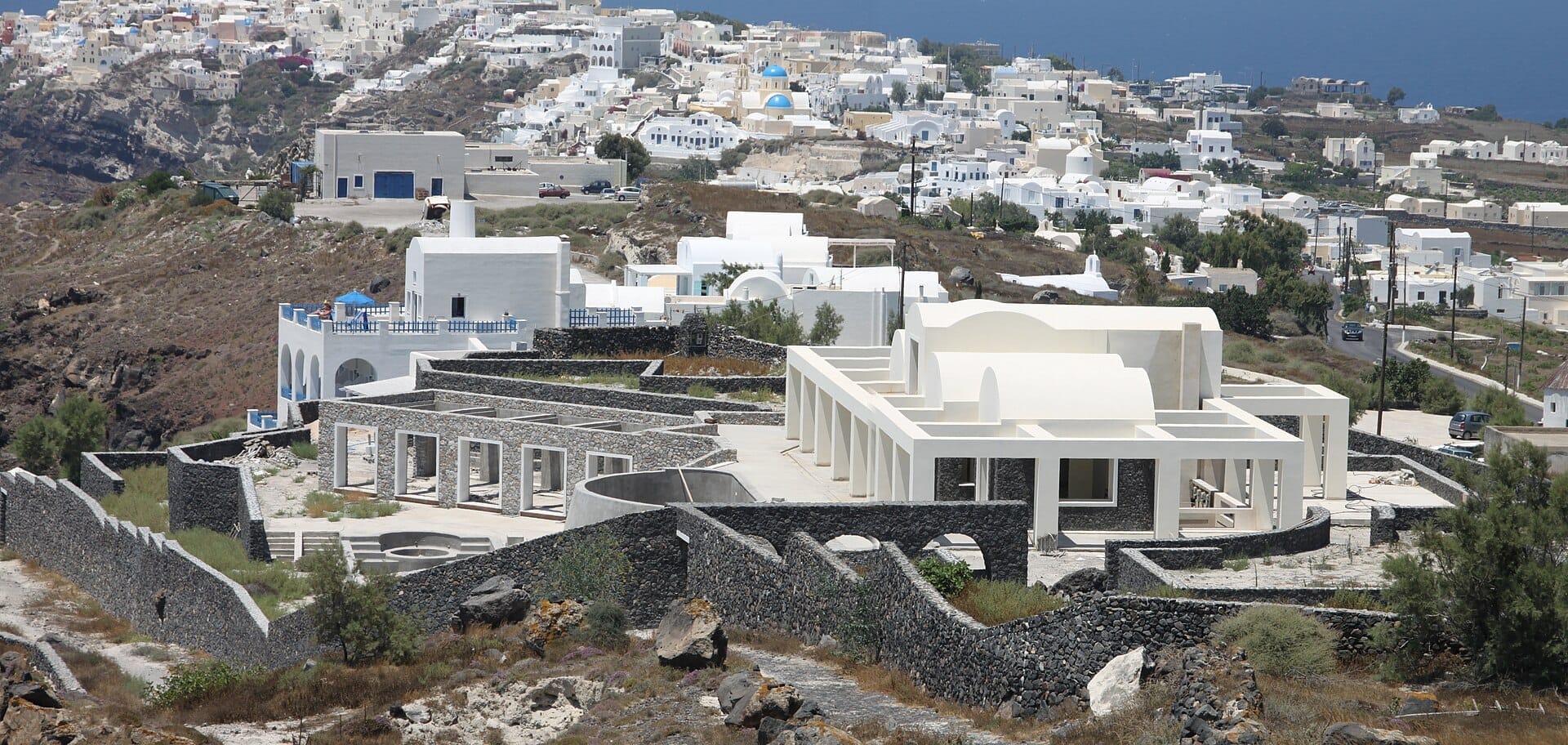
Finikia Village is a small, lived-in settlement on the northern side of Santorini, linked to Oia by a short footpath and about a century of diverging tourism fortunes. While Oia was rebuilt after the 1956 earthquake and gradually transformed into one of the most photographed villages in the Mediterranean, Finikia stayed closer to its agricultural roots. It remains a genuine residential village, not a set-piece for visitors.
The village name has a specific origin: its origin is uncertain and not clearly documented in widely available sources, though the village has long been associated with the nearby church of Agia Patrona at the entrance. The name stuck, and the church remains one of the few landmarks locals will point you toward. The village was historically home to vineyard workers and farmers who built their homes directly into the volcanic hillside, creating the cave-house architecture that defines the area.
ℹ️ Good to know
Finikia is a public village with no entrance fee and no set visiting hours. There is nothing to book in advance. Simply walk in from the Oia footpath or leave a car or taxi at the road above and descend into the lanes on foot.
The Architecture: Cave Houses and Stone Lanes
The physical character of Finikia is defined by its vernacular Cycladic architecture, built for function rather than aesthetics. Houses were carved into the volcanic rock or constructed with thick pumice walls and barrel-vaulted roofs, a design that keeps interiors cool in the island's hot summers and insulated during cooler winters. Doorways are low, arches are rounded, and exterior staircases lead to upper terraces barely wide enough for two people to pass.
The lanes themselves are pedestrian-only. Cars cannot reach the village centre, which means the soundscape is almost entirely footsteps, birdsong, and the occasional clink from a courtyard. Whitewashed walls press close on both sides of the narrower passages, and bougainvillea grows in unplanned bursts of colour over doorways and walls. The overall effect is of a village that was built to be useful, not decorative, and has ended up beautiful by accident.
Photographers familiar with Oia's iconic blue-domed churches will find Finikia's churches smaller and less polished, but more compositionally interesting precisely because they are not framed for tourist consumption. The light on whitewashed walls in the late afternoon, when the sun drops lower and shadows sharpen, is particularly strong material.
Tickets & tours
Hand-picked options from our booking partner. Prices are indicative; availability and final rates are confirmed when you complete your booking.
Luxury Sunset Cruise in Santorini
From 120 €Free cancellationCruise of the volcanic islands around Santorini
From 45 €Instant confirmationFree cancellationGuided e-bike tour in Santorini
From 90 €Instant confirmationFree cancellationSantorini audio guide with TravelMate app
From 5 €Instant confirmation
How the Village Changes Through the Day
Early morning in Finikia, before 9am, is quiet to the point of stillness. Residents are out walking dogs or tending small gardens. The air smells of warm stone and occasionally of bread from one of the small local establishments. There is almost no tourist traffic at this hour, and the low morning light throws long shadows across the lane walls in a way that is genuinely useful for photography.
Midday in peak summer, roughly July and August, sees a moderate increase in visitors, most of them arriving as an extension of a walk from Oia. The lanes provide shade, but the stone radiates heat by early afternoon. Carrying water is not optional in summer: there are very few convenience shops within the village, and the heat in the narrow passages can feel more intense than out in the open.
Late afternoon is the most rewarding time for a visit. The crowd that assembles in Oia for sunset typically focuses entirely on the caldera-facing viewpoints there, which means Finikia empties out rather than filling up as the evening approaches. The light at this hour is warm and directional, and the village is calm enough that you can hear the texture of the place.
💡 Local tip
If your main goal is sunset, stay in Oia for the view itself — Finikia generally does not offer the dramatic caldera panoramas seen from Oia’s cliff edge. But if you want good photographs without crowds, time your Finikia walk for 4–5pm, then return to Oia afterward.
Getting There: The Walk from Oia
The most natural way to reach Finikia is on foot from Oia. A well-worn footpath connects the two villages in around 15 to 25 minutes of easy walking on relatively flat terrain. The path passes through open landscape with scrub vegetation and occasional views across the northern part of the island. It is manageable in ordinary footwear but becomes uncomfortable in formal shoes or sandals without ankle support if the ground is uneven.
If you are coming directly from Fira or the airport, take a KTEL bus or taxi to Oia and walk from there. Finikia itself is not served by a regular bus stop within the village centre. Visitors arriving by rental car or taxi can be dropped at the road level above the village and walk down into the lanes. Parking on the road is limited, particularly in summer.
The walk between Oia and Finikia can also serve as a quieter segment of the longer Fira to Oia hiking trail, which runs between Fira and Oia for approximately 10 kilometres along much of the caldera rim. If you are doing that route in full, Finikia sits near the northern end and makes a natural final stop before reaching Oia.
Accessibility and Practical Limits
Finikia is not suitable for visitors with significant mobility limitations. The village lanes include uneven stone paving, steps between levels, and no paved ramp alternatives through the central passages. Wheelchairs and pushchairs cannot navigate the narrowest sections. The road-level approach to the village involves a descent that is manageable on foot but cannot be bypassed.
For visitors travelling with young children, the village is generally safe since there is no vehicle traffic in the lanes, but the same uneven surfaces apply. Children old enough to walk steadily will manage fine. Infants in a structured carrier are more practical than a stroller.
⚠️ What to skip
There are no reliable facilities within the village centre: no public toilets, no ATMs, and no guaranteed cafes or shops open outside of accommodation serving their own guests. Use facilities in Oia before you walk over.
Honest Assessment: What Finikia Is Not
Finikia does not offer the caldera views that draw most visitors to this part of the island. If panoramic views of the volcanic landscape are your primary interest, the Oia sunset viewpoint or the caldera-edge paths in Imerovigli will serve you better. Finikia faces inland, not toward the caldera, and its appeal is architectural and atmospheric rather than panoramic.
There is also a limit to how long you can usefully spend here. Unlike Oia, which has restaurants, galleries, boutiques, and viewpoints that justify several hours, Finikia is a compact village that most visitors will cover in under an hour. It is best understood as a complement to an Oia visit rather than a standalone destination. If you are on a tight itinerary with one day in northern Santorini, do not sacrifice other experiences for Finikia: instead, fold it into the Oia walk.
Visitors who want to understand Santorini's pre-tourism agricultural identity may also find value in pairing a Finikia visit with the Koutsoyannopoulos Wine Museum on the other side of the island, which documents the island's traditional viticulture in detail. Finikia's visual language, cave houses built into volcanic hillsides, tells part of the same story.
Photography in Finikia
Finikia rewards patient photography. The absence of crowds means you can frame shots without waiting for people to move, which is genuinely rare on this part of Santorini. The narrow lanes create strong compositional leading lines, and the contrast between whitewashed surfaces and dark volcanic stone gives images a graphic quality. For those building a Santorini photography itinerary, the village is worth an hour in the late afternoon specifically for this reason.
The church of Agia Patrona, near the village entrance, is a modest but photogenic subject, particularly when the bougainvillea around it is in full bloom in late spring and early summer. The low arched doorways of the cave houses, when framed against a bright sky, produce the kind of images that are typically very difficult to get in Oia without staging them around other tourists.
Insider Tips
- Walk to Finikia in the late afternoon, around 4–5pm in summer, when the majority of Oia visitors are claiming their sunset spots along the caldera wall. The village will be almost entirely to yourself.
- The path from Oia is easy to miss if you are not looking for it. Head east from the main Oia pedestrian street toward the edge of the village on the inland side, away from the caldera. Ask a local or your accommodation host to point you toward the Finikia footpath if you are unsure.
- If you are staying in Oia, a morning walk to Finikia before breakfast is one of the calmest thirty minutes you will have on the island. The light is soft, the lanes are empty, and the temperature is still manageable before the midday heat builds.
- Several small guesthouses and villa accommodations are located within or immediately adjacent to Finikia. Staying here rather than in Oia gives you the same proximity to northern Santorini's highlights at significantly lower noise levels at night.
- The church of Agia Patrona is the natural navigation anchor in the village. If you lose your orientation in the lanes, work back toward the church and the road above it to reorient yourself.
Who Is Finikia Village For?
- Photographers looking for Cycladic architecture without crowds
- Travellers who want a quiet base near Oia without Oia's noise and prices
- Hikers completing or beginning the Fira to Oia trail
- Visitors interested in traditional Aegean village architecture and everyday Greek island life
- Anyone who has already seen Oia and wants a lower-key follow-up experience on the same day
Nearby Attractions
Other things to see while in Oia:
- Ammoudi Bay
Ammoudi Bay is the small volcanic harbor tucked 200-plus steps below Oia's clifftop streets. It offers swimming off jagged lava rocks, a handful of seafood tavernas perched at water level, and caldera boat tours departing from the quay. Access is free, but the steep descent demands good footwear and reasonable fitness.
- Blue-Domed Churches of Oia
The blue-domed churches of Oia are the image most people picture when they think of Santorini. Two small cliff-side churches, Agios Spyridonas and the Anastasi Church, sit on the caldera edge above the Aegean and draw more cameras per square metre than almost anywhere else in Greece. Here is what a visit actually looks like, how to find them, and when the crowds thin enough to make it worthwhile.
- Naval Maritime Museum
Tucked into the pedestrian lanes of Oia, the Naval Maritime Museum occupies a beautifully restored 19th-century captain's mansion and tells the story of Santorini's once-thriving maritime trade. It is a calm, unhurried stop that rewards curious travelers willing to look beyond the caldera views.
- Oia Sunset Viewpoint
Every evening, hundreds of visitors gather at the ruins of Castle Agios Nikolaos on Oia's western edge to watch the sun drop into the Aegean. The spectacle is real and genuinely moving. So is the crowd. Here's what to expect, when to arrive, and whether it's worth the effort.