Santo Wines Winery: Where Santorini's Volcanic Terroir Meets the Caldera Rim
Perched on the western cliffs near Pyrgos, Santo Wines is Santorini's largest wine cooperative, founded in 1911 and representing around 1,200 growers. The clifftop terrace delivers unobstructed caldera views, and the tasting flights introduce you to the island's distinctive Assyrtiko grape in a setting that few wineries anywhere can match.
Quick Facts
- Location
- Pyrgos Kallistis 847 00, Santorini — western cliffs, approx. 4 km south of Fira
- Getting There
- By car, taxi, or organised wine tour from Fira; winery sits on the main road near Pyrgos village
- Time Needed
- 1.5–3 hours depending on tasting package chosen
- Cost
- Terrace and shop entry is free; wine tastings and tours are paid — confirm current pricing directly with the winery
- Best for
- Wine lovers, sunset chasers, couples, and anyone wanting caldera views without hiking to Oia
- Official website
- santowines.gr
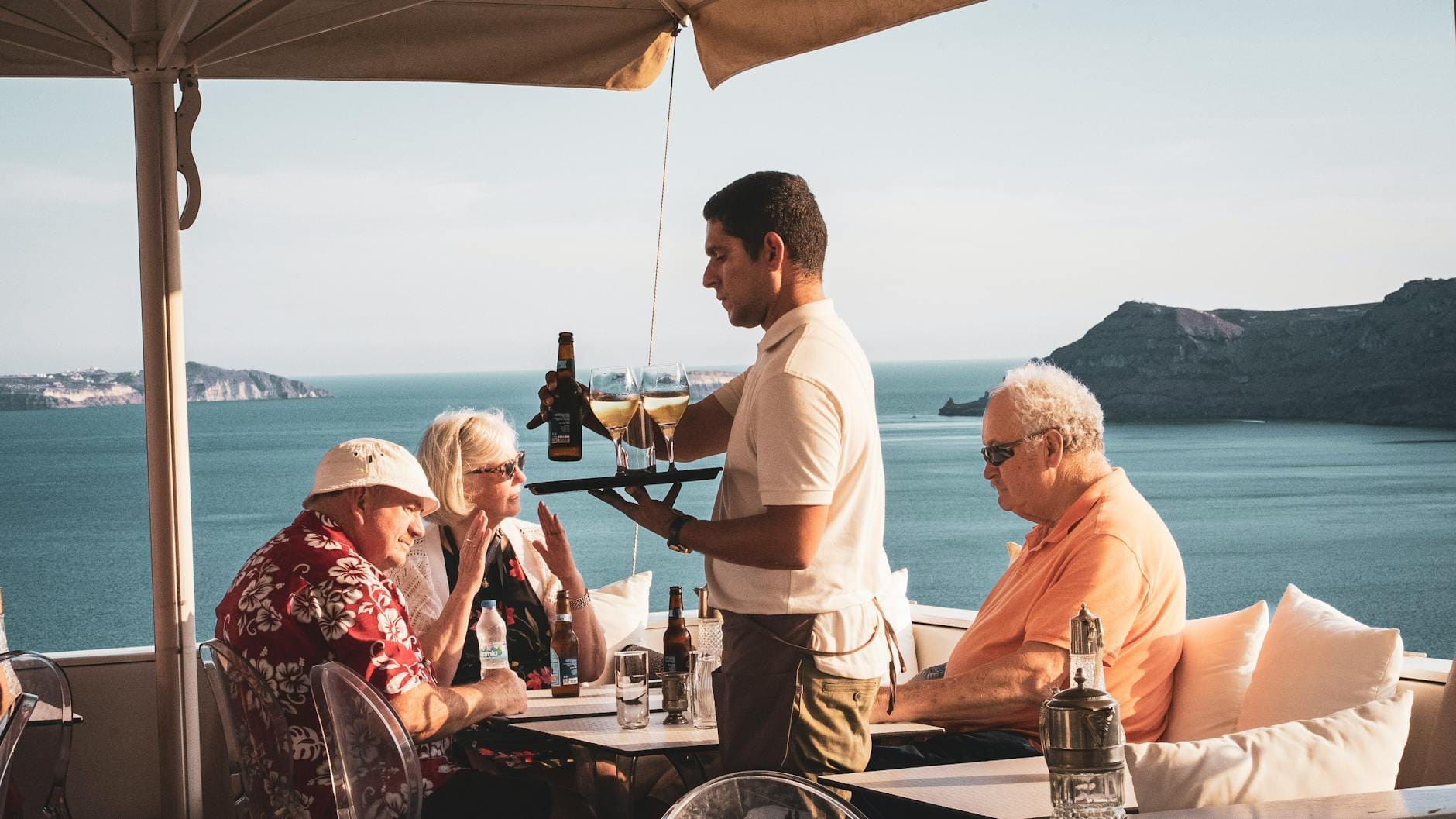
What Santo Wines Actually Is
Santo Wines — officially the Union of Santorini Cooperatives — is not a boutique family operation. It is the island's cooperative winery, founded in 1911 under the name 'Santorini Vine and Wine Protection Fund' and today representing around 1,200 growers across the island. The modern wine tourism center near Pyrgos was completed in 1992 and processes fruit from vineyards that, in many cases, contain pre-phylloxera vines trained in the island's distinctive basket-weave kouloura style.
That history matters because it shapes what you taste here. These are not wines made by a single winemaker chasing a personal style. They represent the agricultural output of an entire island, unified by volcanic soils, scarce rainfall, and high-acid indigenous varieties. Assyrtiko is the star: a white grape capable of producing wines that age for decades, with a saline, mineral edge unlike anything from the mainland.
For context on how Santorini's wine culture fits into the island's broader identity, the Santorini wine guide covers the island's main producers, grape varieties, and tasting routes in detail.
The Terrace: What You See and Smell
The view from the Santo Wines terrace is one of the most expansive caldera panoramas on the island, and unlike the narrow clifftop paths of Oia or Imerovigli, it is wide, open, and accessible by road. The entire crescent of the caldera stretches in front of you: Fira's white buildings to the north, the dark mass of Nea Kameni volcano in the center of the water, and the flat profile of Thirasia closing the far side.
In the early morning, the caldera surface catches low-angle light and the air still carries a faint coolness. The winery itself smells of stone, barrel wood, and, faintly, the sulfurous mineral character that the island's volcanic terroir eventually finds its way into. By midday, the terrace can get genuinely hot — the exposed basalt and white surfaces retain heat — and the tourist coaches start arriving. The experience changes character significantly after about 4 p.m., when the afternoon shadow begins to creep across the terrace and the light on the caldera turns from flat white to amber.
💡 Local tip
Arrive between 9:00–10:30 a.m. or after 5:00 p.m. The midday window between noon and 4 p.m. brings the largest coach tour groups and the harshest light for photos. The terrace stays open until midnight in summer, and early evening is genuinely excellent.
If the caldera view is what draws you most, compare it against the perspectives from Imerovigli's caldera viewpoints and Skaros Rock — each offers a different angle on the same dramatic geography.
Tickets & tours
Hand-picked options from our booking partner. Prices are indicative; availability and final rates are confirmed when you complete your booking.
Flavors of Santorini food and wine tour
From 220 €Instant confirmationFree cancellationSantorini half-day family tour with wine museum visit
From 200 €Instant confirmationFree cancellationCooking class and wine tasting in Santorini
From 145 €Instant confirmationFree cancellationSantorini sunset tour with wine tasting
From 110 €Instant confirmationFree cancellation
Tastings, Tours, and What to Expect
Entry to the terrace and the retail shop is free. The wine tasting experiences are paid and structured as flights, typically ranging from a short introduction to Assyrtiko and Vinsanto through to more comprehensive sessions covering the full range of the cooperative's portfolio. Food pairings using local ingredients are available on some packages. Exact pricing is not published in a fixed format and can vary by season and booking channel, so check the winery website or a booking partner like GetYourGuide before you arrive.
Vinsanto deserves particular attention. This is a sweet wine made from sun-dried Assyrtiko and Aidani grapes, with production methods documented on the island since at least the medieval period. Aged in oak barrels, it develops notes of dried fig, orange peel, caramel, and a bracing acidity that keeps it from cloying. It is the wine most likely to surprise people who think they do not like sweet wines.
The shop stocks the full range of Santo Wines labels, including wines not always found in regular retail channels. If you are planning to buy bottles to take home, note that Santorini's summer heat makes wine storage in a car or luggage a real concern. The shop can advise on packaging, and many visitors ship purchases directly.
ℹ️ Good to know
Santo Wines is open year-round, with typical hours of 9:00–22:00 daily, extending to midnight in summer months. Confirm current hours directly with the winery before your visit, particularly in winter.
The Sunset Question: Worth It or Overhyped?
Santo Wines is frequently marketed as a sunset venue, and the caldera-facing terrace does offer a genuine western exposure. The sun sets over the sea, and when conditions are right — a few clouds on the horizon, clear air — the light can be outstanding. However, the sunset experience here is categorically different from Oia. The terrace is wide and can hold a large number of people at once, which means it does not carry the same sense of drama or exclusivity that draws crowds to the Oia viewpoint.
What Santo Wines offers instead is a comfortable, seated sunset with a glass of wine in hand, without the hour-long queue to claim a viewing spot. That is a real trade-off worth thinking about: you sacrifice theatrical positioning for comfort and practicality. On evenings with high humidity or a marine haze, neither viewpoint delivers a dramatic sunset, so weather is the bigger variable in either case.
For a fuller breakdown of where to watch the sunset across the island, including crowd levels and what conditions affect the experience, the Santorini sunset guide is the most useful starting point.
Getting There and Practical Logistics
Santo Wines sits on the main road connecting Fira to Pyrgos, approximately 4 km south of the capital. By car or rental ATV, it is an easy 10-minute drive. Taxis from Fira are straightforward but should be booked in advance during peak season when demand exceeds supply. A number of organised wine tours include Santo Wines as a stop, which can be a convenient option if you want transport handled for you.
Public buses on the KTEL Santorini network serve routes through the interior of the island, but the winery is not at a main bus stop, so a taxi or car remains the most practical approach for most visitors. Driving to the winery and then doing a tasting requires planning around transport home: taxis back to Fira can involve a wait.
If you are combining Santo Wines with a visit to the village of Pyrgos, the two make a natural half-day pairing. The village is only a few minutes away and offers its own caldera views, medieval streets, and the hilltop Kasteli fortress.
⚠️ What to skip
Accessibility: The modern wine tourism center includes wide terrace areas, but the site also has stepped sections along the clifftop. If wheelchair access is a priority, contact the winery directly before visiting to confirm which areas are fully accessible.
Who Should Skip This (And Who Should Not)
If you have no interest in wine and are purely chasing views, Santo Wines offers genuinely good caldera panoramas but you will feel slightly out of place on a terrace designed around tasting experiences. The view itself, while excellent, can be matched from several other points around the island without a commercial context.
For wine-curious visitors, this is one of the more accessible introductions to Santorini's wine culture anywhere on the island. The cooperative scale means the wines are approachable in price and style, and the staff are experienced at guiding people who are not specialists. For serious wine travellers, Santo Wines is a useful benchmark for the island's production, though smaller estates offer more intimate tastings.
If you want to compare the cooperative scale of Santo Wines with a boutique perspective, Venetsanos Winery and the Art Space Santorini winery in Exo Gonia both offer very different atmospheres and are worth visiting on the same day.
Insider Tips
- Book tasting packages in advance during July and August. Walk-in availability can be limited for the more comprehensive flights, and pre-booking locks in your preferred time slot at a specific caldera-facing table.
- Ask specifically about Vinsanto aged 10 years or more. The standard tasting flights often feature younger expressions; the older barrique-aged versions, available in the shop, show the wine at a different level of complexity.
- The shop sells several Santo Wines labels at prices often lower than you will find in hotel restaurants or Fira retail shops. If you plan to drink Santorini wine during your stay, buying at the source is practical as well as enjoyable.
- The terrace is oriented southwest, which means the best photography light arrives in the last two hours before sunset. Midday shots tend to be flat and washed out due to overhead sun reflecting off the white surfaces.
- Combine your visit with a walk through Pyrgos village afterward. It is one of the least crowded medieval settlements on the island, and the walk to the Kasteli at the top takes less than 15 minutes from the main square.
Who Is Santo Wines For?
- Wine enthusiasts wanting a structured introduction to Assyrtiko and Vinsanto in their place of origin
- Couples looking for a caldera-view experience that does not require hiking or standing in a crowd
- Photographers who want wide, open caldera compositions in the late afternoon light
- Travellers combining the winery visit with an exploration of Pyrgos village on the same afternoon
- Anyone curious about Santorini's agricultural heritage and how cooperative farming shaped the island's wine industry
Nearby Attractions
Other things to see while in Pyrgos:
- Art Space Santorini
Art Space Santorini, formally known as Art Space Argyros Canava, is an unusual triple attraction in Exo Gonia near Pyrgos: a working winery housed in 19th-century pumice-carved cave cellars, a gallery showing contemporary paintings and sculptures, and a small museum of traditional winemaking. It rewards visitors who want something beyond the caldera views.
- Castle of Pyrgos (Kasteli)
Perched above the village of Pyrgos Kallistis, the Castle of Pyrgos — known locally as Kasteli — is a Venetian-era fortified ruin that rewards visitors with 360-degree views across the island. Free to visit and largely off the standard tourist circuit, it offers a quieter, more textured alternative to the caldera-edge crowds.
- Koutsoyannopoulos Wine Museum
Set 8 metres below the volcanic earth of Vothonas, the Koutsoyannopoulos Wine Museum traces three centuries of Santorini winemaking through a 300-metre cave corridor. It combines a self-guided audio tour with a structured wine tasting, making it one of the more substantive indoor experiences on the island.
- Profitis Ilias Monastery
Perched at roughly 565 metres above sea level on the summit of Mount Profitis Ilias, this 18th-century Orthodox monastery is the highest structure on Santorini. The monastery is not generally open to casual visitors, but the surrounding viewpoint is among the most complete panoramas on the island, taking in the caldera, the eastern beaches, and on clear days, neighbouring Cycladic islands.