Manolas Village, Thirasia: The Caldera View Santorini Forgot to Overrun
Manolas is the tiny capital of Thirasia, the inhabited island sitting just across the caldera from Santorini. With around 140 permanent residents, no ticket gates, and the same volcanic panorama as Oia but a fraction of the foot traffic, it offers a strikingly different version of the same scenery. Getting there requires a short boat ride and a climb, which is exactly why most visitors never make it.
Quick Facts
- Location
- Manolas, Thirasia island, Santorini caldera complex, South Aegean, Greece
- Getting There
- Ferry or excursion boat from Santorini (Athinios port or caldera-side tours) to Thirasia's Riva or Korfos port; then 270 steps up to the village from Korfos, or road access from Riva
- Time Needed
- 2 to 4 hours including the crossing; most day-trip excursions allow 1.5 to 2 hours in the village
- Cost
- Free to enter; ferry or excursion boat fare applies (verify current prices with operators)
- Best for
- Travelers wanting caldera views without crowds, slow-travel explorers, photographers seeking quieter compositions
- Official website
- www.santoriniports.gov.gr/en/thirasia-guide
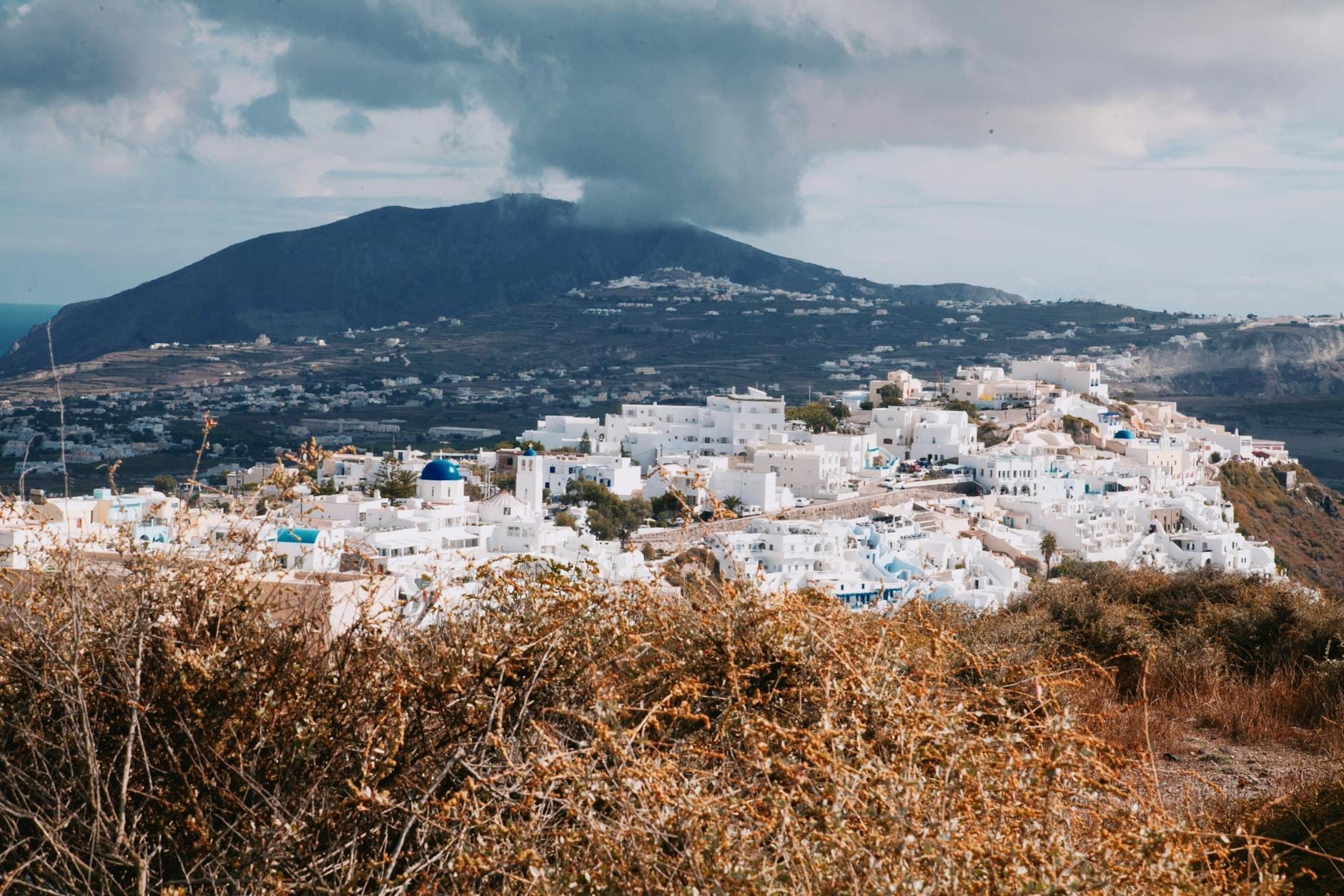
What Manolas Actually Is
Manolas is the capital and largest settlement of Thirasia, the crescent-shaped island on the northwestern edge of the Santorini caldera complex. While Thirasia is technically part of the same volcanic archipelago as Santorini, the two feel like different worlds. Manolas village sits right on the caldera rim, about 1.5 nautical miles from Oia across the water, with the same panorama of the ash-grey volcanic islets of Nea Kameni and Palea Kameni at its feet. But the streets here are quiet enough to hear goat bells and the occasional chair scraping on a taverna terrace.
The village has roughly 140 permanent residents. That number is important context: this is not a resort village that has been preserved for tourists. People live here year-round, grow tomatoes, keep chickens, and attend the Orthodox festivals at churches like Agios Konstantinos, which is noted as having been built in 1874. Other small churches scattered through the lanes include Agios Ioannis, Agios Charalambos, Agia Kyriaki, and Agia Irene Chrysovalantou, each with its own name-day celebration that briefly brings the island to life.
ℹ️ Good to know
Manolas has no admission fee and no official opening hours. It is a living village with public streets. The main cost is your ferry or boat ticket from Santorini.
Getting There: The Crossing and the Climb
Thirasia is reachable by small ferry and by organized day-trip excursion boats that depart from Santorini. Most organized tours leave from the caldera side of Santorini and stop at Thirasia as part of a wider sailing itinerary. Independent travelers can take a ferry from Athinios port on Santorini, though schedules vary by season and should be confirmed with local operators before you plan your day.
Thirasia has two ports. Riva is the principal port where most vessels now dock, and it connects to Manolas by road. Korfos is the smaller, older port sitting almost directly below the village, connected by a steep footpath of roughly 270–300 steps carved into the cliff face. Climbing from Korfos to Manolas takes roughly 20 to 30 minutes depending on pace and the heat, and the path is uneven in places. If you land at Korfos, donkeys are occasionally available for the ascent. For visitors with mobility concerns, arriving via Riva is the more accessible option. If you are planning a full exploration of the island, the Thirasia island overview has broader context on what to expect.
⚠️ What to skip
The Korfos to Manolas path involves around 270 uneven steps in direct sun. Wear closed shoes, carry water, and avoid the midday climb in peak summer when temperatures can sit in the high 20s°C. The path is not suitable for those with significant mobility impairments.
If you arrive on an organized excursion, your boat schedule effectively sets a hard departure time. Pay attention to it. Manolas is not a place where you can easily improvise an extra hour, and missing the last boat back is a genuinely inconvenient situation on an island of just over 300 people.
Tickets & tours
Hand-picked options from our booking partner. Prices are indicative; availability and final rates are confirmed when you complete your booking.
Luxury Sunset Cruise in Santorini
From 120 €Free cancellationCruise of the volcanic islands around Santorini
From 45 €Instant confirmationFree cancellationGuided e-bike tour in Santorini
From 90 €Instant confirmationFree cancellationSantorini audio guide with TravelMate app
From 5 €Instant confirmation
The Village on Arrival: What You See and Feel
The first thing that strikes most visitors arriving from the Korfos steps is the silence. After the compressed pedestrian traffic of Fira or Oia on the opposite side of the caldera, Manolas feels startlingly empty. The lanes are narrow, white-plastered, and often no wider than a single person with a small bag. Bougainvillea spills over low walls. The ground underfoot is irregular paving stone, so flat-soled shoes with grip are a practical choice.
The caldera-facing edge of the village opens up suddenly: you step out of a tight lane and find yourself looking at the full arc of the Santorini caldera, with the main island's cliff villages across the water and the dark volcanic islets of Nea Kameni and Palea Kameni sitting in the middle distance. The view is essentially the same geographical panorama as you get from Oia or Imerovigli, but reversed. Where those villages look west and southwest across the water, Manolas looks east. In the morning, when Santorini's white buildings catch the early light, the view from here has a particular quality you do not get from the main island.
A handful of tavernas and cafes operate along the caldera edge, most with outdoor seating facing the view. Don't expect a wide menu or fast service: this is a village kitchen, not a tourist restaurant, and that is precisely the appeal. If you are curious about the volcanic geography you are looking at from this side of the caldera, the Santorini caldera guide explains the geological history in detail.
How the Experience Changes by Time of Day
Morning arrivals have the most to gain. The light is cooler, the climb from Korfos is less punishing, and the village is at its quietest before any day-trip groups arrive. Locals move through the lanes on errands; a bakery smell might drift out of a doorway. The caldera view in the morning light, with Santorini's white villages illuminated on the opposite rim, is worth the early effort.
Midday is the hardest window, particularly in July and August. The sun is overhead, shade in the lanes is limited, and the Korfos climb becomes taxing. If your excursion arrives at noon, drink water before you leave the boat and move slowly.
Late afternoon brings a different atmosphere. Most day-trippers have left by mid-afternoon, and the village returns to something closer to its everyday rhythm. The caldera takes on warmer tones as the sun drops. Note that Manolas faces east, so it does not catch the famous Santorini sunset in the same way as caldera-rim spots on the main island. If a sunset view is your primary goal, the main island is the better base.
What to Do Beyond the View
Manolas is not structured around attractions in the conventional sense. There are no museums, no ticketed sites, no guided circuits. The activity is the place itself: walking the lanes, sitting at a table with a view, looking at the churches, and simply being somewhere that has not been heavily shaped by mass tourism.
The churches are worth finding. Agios Konstantinos, built in 1874, is one of the more photographed, with its simple Cycladic bell tower. Most churches remain open during the day but are quiet unless a service is scheduled. Modest dress is appropriate inside. If you have enough time on the island, the terrain between Manolas and the southern coast of Thirasia is walkable for those who want to extend the visit into something closer to a proper hike. The Santorini hiking guide covers trail options across the wider caldera area including Thirasia routes.
Photography here rewards patience over speed. The blue-domed church compositions that have become shorthand for the Aegean exist here without crowds queuing in front of them. Early morning or late afternoon light works well on the whitewashed surfaces. The caldera panorama from the village edge is a genuinely strong wide-angle shot, with the volcanic islets as foreground interest and the main island across the water.
💡 Local tip
For photography, position yourself along the caldera edge in the first hour after sunrise. The main island is lit from behind you, the water is calm, and you will have the viewpoint entirely to yourself.
Honest Assessment: Who This Is For and Who Should Pass
Manolas rewards travelers who are comfortable with the idea that the destination itself is the experience, rather than a checklist of things to see and do. If you come hoping for restaurants serving polished food, a beach, or a dense roster of sights, you will be underwhelmed in the space of about 20 minutes. This is a working village, and the pleasure is unhurried observation, a coffee with a caldera view, and the knowledge that you are looking at Santorini from an angle almost no one considers. For travelers who have already spent time on the main island, Manolas provides real contrast. For first-time visitors with only two or three days, the primary Santorini experiences, including Fira, Oia, and the archaeological sites, should probably take precedence. See our 3-day Santorini itinerary for how to structure limited time on the main island before deciding whether to add a Thirasia crossing.
Visitors with significant mobility limitations should approach carefully. The Korfos route involves around 270 uneven steps with no elevator alternative, and the village streets are narrow and sometimes sloped. Arriving via Riva by road is the more manageable route, but confirm access arrangements with your ferry or tour operator in advance. For broader context on whether Santorini overall suits your travel style, the is Santorini worth visiting guide addresses the honest trade-offs of the destination.
Anyone traveling on a tight schedule should also note that Thirasia is not something you can squeeze into an already full day without sacrificing something else. Factor in travel time to and from Athinios, the crossing, the climb, village time, and the return. Budget at least half a day from Santorini. If you want to understand the full range of things competing for your time, the things to do in Santorini overview helps with prioritization.
Insider Tips
- If your excursion docks at Korfos, start climbing immediately rather than waiting for the group. The steps are steep enough that a slow crowd makes them significantly harder. Set your own pace early.
- The tavernas on the caldera edge in Manolas are not open year-round and hours in shoulder season can be unpredictable. Carry a small amount of food and a full water bottle from Santorini, particularly if you are visiting before June or after October.
- Manolas faces east across the caldera, which means the morning light is exceptional for photography and the afternoon can produce harsh backlight on the main island view. Plan your photography window accordingly.
- The church of Agios Konstantinos is often unlocked during daytime hours and worth a brief look inside for its simple traditional interior. Dress modestly and keep noise down, especially if a caretaker is present.
- If your schedule allows flexibility, ask your boat operator whether a return via Riva rather than Korfos is possible. The descent back down the 270 steps is easier on the legs than the ascent, but knees feel it on the way down in warm weather.
Who Is Manolas Village, Thirasia For?
- Repeat visitors to Santorini looking for a genuinely different perspective on the caldera
- Slow travelers and those who find heavily touristed villages hard to enjoy
- Photographers wanting caldera compositions without crowds in the frame
- Travelers on sailing or boat tours who want to understand the full caldera island group
- Anyone curious about what a small Cycladic island actually looks like when it is not shaped around tourism