Santorini Caldera: The Volcanic Heart of the Island
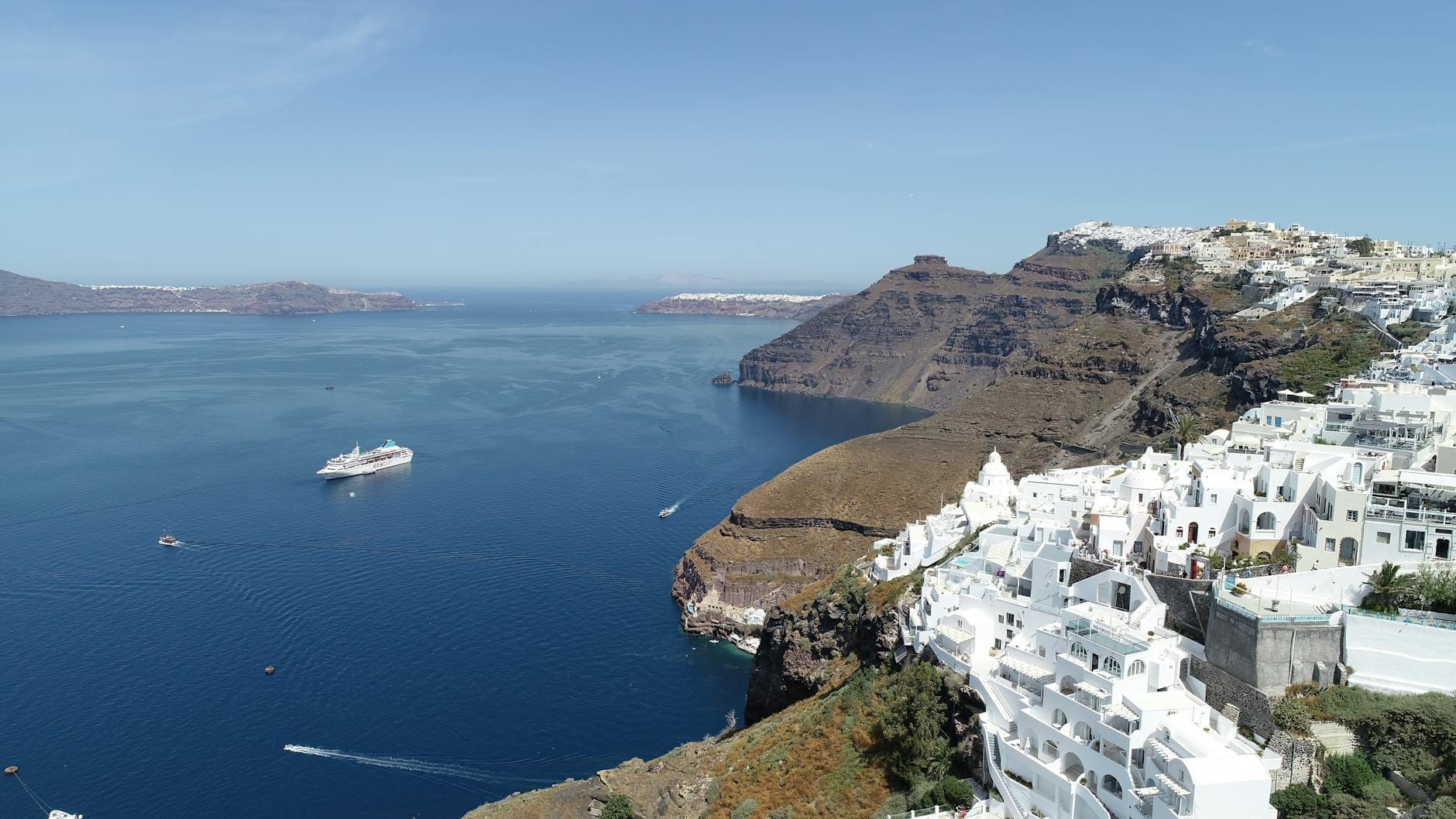
The Santorini Caldera is a vast, sea-flooded volcanic crater stretching roughly 12 km by 7 km, ringed by cliffs up to 300 metres high. It is the geological event that shaped everything about this island — its shape, its villages, its light, and the reason millions of people come here each year.
Quick Facts
- Location
- Western side of Santorini; viewpoints along Oia, Fira, Firostefani, Imerovigli, and Akrotiri
- Getting There
- KTEL buses connect Fira with most caldera-rim villages; taxis and rental vehicles also widely used from Athinios Port and Santorini Airport (JTR)
- Time Needed
- 1–2 hours for a single viewpoint; half a day to full day if hiking the rim trail or combining a boat excursion
- Cost
- Free to view from public areas; boat excursions to the Kameni volcanic islets are priced by private operators — check directly with tour providers
- Best for
- Geology enthusiasts, photographers, sunrise and sunset seekers, hikers, and anyone wanting to understand what makes Santorini look the way it does
What the Santorini Caldera Actually Is
The Santorini Caldera is not a lake, not a bay, and not a lagoon. It is a partially submerged volcanic caldera — a collapsed magma chamber — approximately 12 kilometres long and 7 kilometres wide, with steep cliffs on three sides and a maximum depth of around 385 metres. The dramatic crescent-shaped landmass that most people picture when they think of Santorini is the surviving western rim of this ancient volcanic structure. The cliffs you see rising from the water, reaching heights of up to 300 metres, are the interior walls of that collapsed crater.
The caldera's current form is largely the result of the so-called Minoan eruption of Thera, one of the largest volcanic events of the past 3,500 years, which caused the central section of the island to collapse inward. The sea rushed in, the center disappeared, and the surviving arc became home to the towns and villages we know today. Inside the caldera sit two younger volcanic islets: Palea Kameni and Nea Kameni, both composed of lava domes and flows that postdate the main island.
Understanding this geology is not optional background reading. It changes how you see everything. The white buildings are not just a local building tradition — they are perched on the inner wall of a volcano. The dark pumice rock underfoot, the rust-coloured cliffs at Red Beach, the black volcanic sand at Perissa and Kamari: all of it reads differently once you know what you are standing on. For a deeper dive into the island's volcanic story, the Santorini volcano and hot springs guide covers boat excursions to the active crater islets in detail.
The Caldera Rim: Where to Stand and What You Will See
The caldera is best experienced from the villages built directly onto its rim. Each one offers a slightly different perspective on the same enormous geological bowl. Fira, the island's capital, sits at roughly 260 metres above sea level and provides the most accessible viewing — wide terraces, cafes, and a constant flow of visitors throughout the day. From here, the caldera stretches north toward Oia and south toward Akrotiri, with the Kameni islets sitting dark and low in the centre of the water.
Moving north from Fira, the villages of Firostefani and Imerovigli sit higher on the rim and are noticeably quieter. The caldera view from Imerovigli is broader and less interrupted by infrastructure — fewer cables overhead, fewer tour groups pressing against the railings. Imerovigli is also the departure point for Skaros Rock, a dramatic volcanic promontory that juts into the caldera and rewards those willing to pick their way down the rocky path with an almost 360-degree view of the water below.
Oia, at the northern tip, is the most photographed vantage point on the island. The combination of blue-domed churches, white cubic buildings, and the enormous caldera view behind them is instantly recognisable. That fame comes at a cost: Oia is extremely busy from mid-morning through sunset, and the narrow lanes can feel genuinely congested during peak summer months. The view itself, however, is not overhyped. It is one of the more striking coastal panoramas in the Mediterranean, and the northern orientation gives Oia a slightly different colour palette at dusk compared to caldera views further south.
💡 Local tip
If you want the caldera view without the crowds, visit Firostefani or Imerovigli rather than Fira's main terrace or Oia. The perspective is comparable and the paths are far less congested, even in July and August.
Tickets & tours
Hand-picked options from our booking partner. Prices are indicative; availability and final rates are confirmed when you complete your booking.
Luxury Sunset Cruise in Santorini
From 120 €Free cancellationCruise of the volcanic islands around Santorini
From 45 €Instant confirmationFree cancellationGuided e-bike tour in Santorini
From 90 €Instant confirmationFree cancellationSantorini audio guide with TravelMate app
From 5 €Instant confirmation
How the Caldera Changes Through the Day
The caldera is a different place depending on the hour. At dawn, before cruise ship passengers arrive and before the tour buses fill the parking areas, the rim villages are genuinely quiet. The water in the caldera takes on a deep, almost graphite colour in early morning light, and the air is cooler and carries a faint mineral quality — the smell of volcanic stone warmed slowly from the night. This is the best time for photography: soft directional light, empty lanes, and the occasional fishing boat crossing the dark water far below.
By mid-morning, the character shifts. Cruise ships anchor in the caldera and tender boats begin ferrying passengers up to Fira's old port, where the cable car or the infamous donkey path delivers them to the clifftop. From around 10 am until early afternoon, the main terrace areas in Fira and the central lanes of Oia are at their most crowded. If you are sensitive to heat and noise, this is the window to avoid. The caldera does not disappear — you can still see it from a cafe table — but the experience of standing quietly on the rim and taking it in is harder to come by.
Late afternoon, roughly two hours before sunset, brings a second surge of visitors specifically seeking the light. The caldera at that hour glows amber and copper, and the shadows thrown by the cliff walls turn the water below a deep indigo. For photographers, this is the most dramatic window. For everyone else, it is simply striking. After sunset, if you stay on the rim, the caldera shifts again — the volcanic islets in the centre disappear into darkness, the lights of the villages reflect off the water, and the whole scene becomes unexpectedly intimate.
ℹ️ Good to know
Sunset over the caldera is spectacular, but the crowd at Oia's main viewpoint on summer evenings is significant. Arrive at least 90 minutes before sunset to secure a good position, or consider the caldera rim at Imerovigli for a less contested alternative.
Hiking the Caldera Rim
One of the most rewarding ways to experience the caldera is on foot. The Fira to Oia hiking trail follows the caldera rim for approximately 10 kilometres, passing through Firostefani and Imerovigli before descending into Oia. The route takes roughly three to four hours at a comfortable pace, and for much of it the caldera is directly beside you, dropping hundreds of metres to the water. The path surface varies between paved sections, cobblestone, and rough volcanic rock — sturdy shoes are non-negotiable.
The hike is best done in the cooler months, specifically April through June and September through October. In July and August, midday temperatures can exceed 30°C and there is almost no shade on the exposed rim sections. If you do hike in summer, start no later than 7 am to complete the exposed central section before the heat peaks. Carry at least 1.5 litres of water per person regardless of season — there are no reliable water sources on the trail itself.
The trail offers views that no road or terrace quite replicates: the full arc of the caldera from changing angles, the volcanic islets directly below, and occasional glimpses across to Thirasia on the opposite rim. For a full overview of what to expect on the hike and how to plan it, the Santorini hiking guide covers conditions, timing, and logistics in detail.
⚠️ What to skip
The caldera rim path has sections with no barrier between the trail and the cliff edge. The drops are severe — in places, over 200 metres. Stay on marked paths and keep children close. The path can also be slippery in winter rain.
Accessing the Caldera by Boat
Viewing the caldera from the rim is one thing. Crossing it by boat is another experience entirely. From the water, the scale of the cliffs becomes much clearer — the height of the walls, the striated layers of volcanic rock in multiple colours, and the relative smallness of the villages perched at the top. Looking up at Oia or Fira from a boat in the caldera gives a completely different sense of proportion.
Caldera boat excursions typically depart from the Old Port of Fira (reached by cable car or the stepped path from the clifftop) and include stops at Nea Kameni volcano and the geothermal hot springs at Palea Kameni. These tours are operated by private companies; prices and schedules vary by operator and season, so check directly with providers before booking. The hot springs are warm rather than hot — a yellow-green tinge from sulphur — and swimming to them from an anchored boat is part of the experience.
Sailing tours that circumnavigate the caldera and include a sunset return are popular and tend to book up well in advance during peak months. If a boat excursion is on your list, booking several days ahead is sensible in July and August. The water inside the caldera is generally calm compared to the open Aegean, but those with strong seasickness sensitivity should still take precautions.
Practical Notes and Who Should Reconsider
Access to the caldera rim viewpoints in Fira, Firostefani, Imerovigli, Oia, and Akrotiri is free and available at all hours — these are public paths and streets, not ticketed sites. There is no single entrance point and no fixed opening time. Some of the most dramatic views are from private hotel terraces and restaurant decks, which are accessible only to guests or paying customers.
Mobility is a genuine consideration here. The caldera rim is characterised by steep paths, uneven cobblestones, and stairways — often without handrails. The stepped path from the Old Port to Fira is not suitable for wheelchairs or pushchairs, and the caldera rim walking paths throughout the villages involve frequent changes in level. The cable car between Fira and the Old Port provides a more manageable descent for those with limited mobility, but the rim paths themselves remain challenging.
Travellers who find large crowds genuinely unpleasant should calibrate their expectations carefully in July and August. The caldera does not disappear, but the experience of standing quietly on the edge and absorbing it changes significantly when hundreds of other visitors are doing the same. If crowd sensitivity is high, the shoulder months of April to June and September to October offer the same geology and light with considerably less competition for space. The best time to visit Santorini guide breaks down exactly how crowd levels shift across the year.
Winter visits — roughly November through March — are quiet and inexpensive, but many restaurants and hotels along the rim close for the season, and the caldera can be overcast or misty for stretches. The light is softer and the atmosphere is atmospheric in a different way, but it is not the blue-sky panorama most people have in mind. Rain makes the rim paths slippery and reduces visibility across the water significantly.
Insider Tips
- The best unobstructed caldera view in Fira is not from the main terrace near the cable car — it is from the northern end of the clifftop path, where the crowd thins and the angle opens up toward Firostefani. Walk ten minutes north from the cable car station and the difference is immediate.
- Firostefani sits on a slightly elevated section of the rim between Fira and Imerovigli. At dawn, with the caldera catching the first eastern light, it is one of the quietest and most photogenic positions on the island. Almost no one is here before 7 am.
- If you are booking a caldera boat tour, look for operators that offer smaller group sizes — some of the bigger catamaran tours can feel like floating buses. Smaller sailboats with eight to twelve passengers allow a much more comfortable experience on the water.
- The caldera cliffs display distinct geological layers when viewed from the water — dark lava at the bottom, lighter ash deposits in the middle, and reddish or white tephra toward the top. A basic understanding of what those layers represent makes the visual far more interesting. The volcanic history guide covers this clearly.
- Photographing the caldera is most rewarding in the thirty minutes after sunrise and the thirty minutes before sunset. Midday light is harsh, flattens the cliff textures, and washes out the colour contrast between the white buildings and the blue water.
Who Is Santorini Caldera For?
- Geology and science-minded travellers who want to understand what they are looking at, not just photograph it
- Photographers working in early morning or late afternoon light, when the caldera's colours and shadow play are at their most dramatic
- Hikers who want to experience the full scale of the caldera on the rim trail from Fira to Oia
- Couples and honeymooners for whom the scale and setting justify the crowds, especially at dusk from Oia or Imerovigli
- Repeat visitors to Greece who want a deeper experience of the island beyond the standard terrace-and-sunset itinerary
Nearby Attractions
Combine your visit with:
- Cape Columbo Beach
Cape Columbo Beach sits on Santorini's northeastern tip, backed by 10-metre volcanic ash cliffs and named after the Kolumbo submarine crater offshore. It is unorganized, free, and deliberately hard to reach — which is precisely the point. Bring everything you need and expect a beach that feels nothing like the island's famous caldera-side postcards.
- Emporio Medieval Village
Emporio is Santorini's largest village and home to the Kastelli, a 15th-century fortified settlement widely regarded as the best-preserved medieval castle village on the island. Free to explore and far removed from the caldera crowds, it rewards visitors with labyrinthine alleys, stone watchtowers, and a genuine sense of lived-in history.
- Megalochori Village
Tucked into southwestern Santorini roughly 6–7 km from Fira, Megalochori is one of the island's oldest villages, with roots documented back to the 17th century. Its narrow whitewashed lanes, traditional wine canavas, and Cycladic mansions offer a noticeably different pace from the caldera-rim crowds.
- Nea Kameni Volcano
Nea Kameni is the youngest volcanic landform in the eastern Mediterranean, rising from the center of Santorini's caldera. Reached only by boat and requiring a steep hike across bare lava fields, it offers a stark, geological contrast to the whitewashed villages on the cliffs above.