Oia Windmills: History, Views, and What to Actually Expect
Perched on the clifftop northwestern edge of Oia, the windmills are among Santorini's most photographed structures. Dating from the 17th century, they once ground grain for the island's population. Today they're free to view from public paths, though the crowds that gather at sunset demand some planning.
Quick Facts
- Location
- Northwestern edge of Oia, near the Castle of St Nicholas, Santorini
- Getting There
- KTEL bus from Fira to Oia, then a 10-15 min walk west along Nikolaou Nomikou Street toward the caldera
- Time Needed
- 30-60 minutes to view and photograph; longer if you explore the surrounding caldera paths
- Cost
- Free to view from public paths
- Best for
- Architecture enthusiasts, photographers, history-minded travelers, and early risers
What the Oia Windmills Are, and Why They Matter
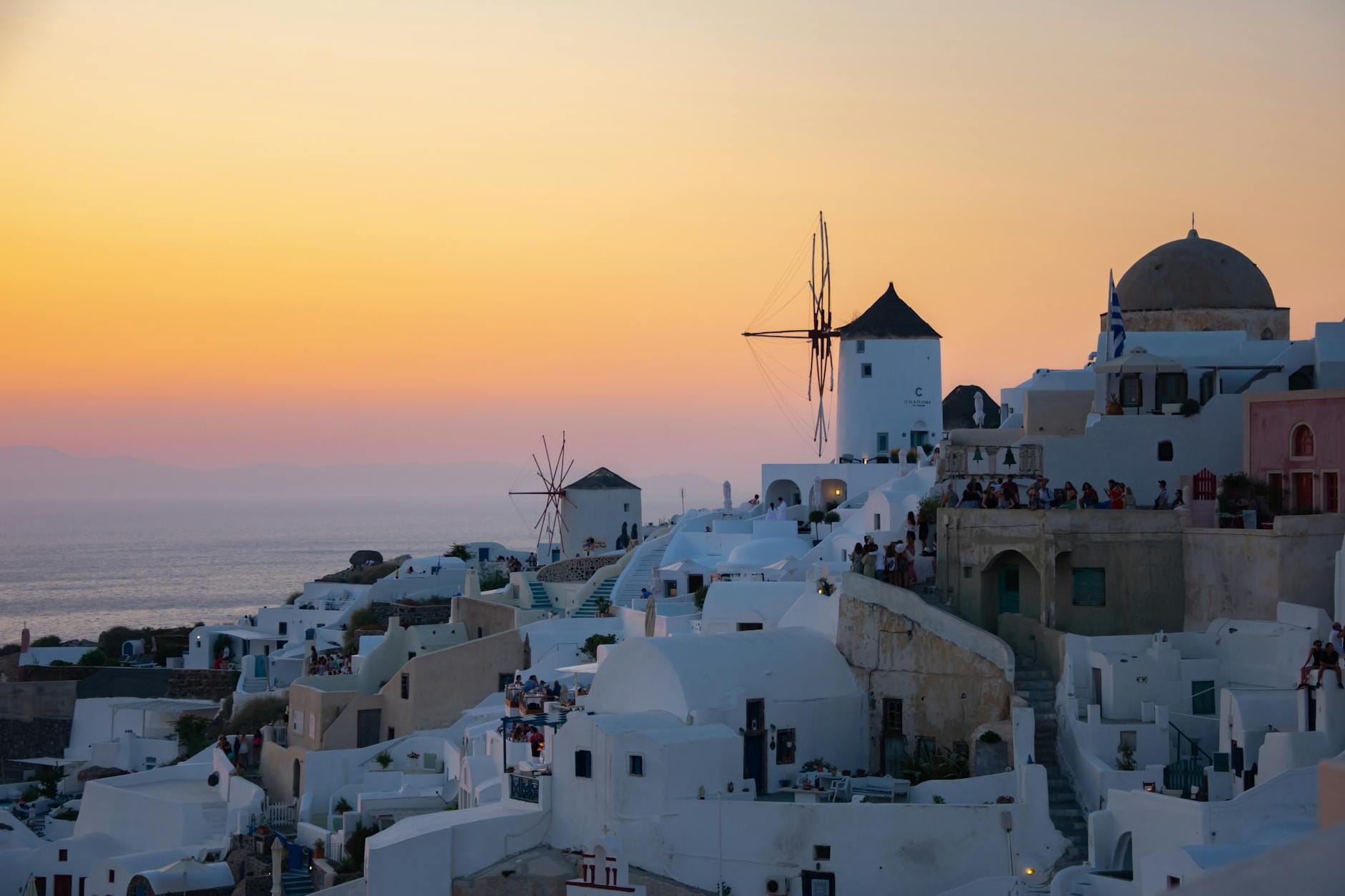
The Oia Windmills are cylindrical stone structures sitting on the caldera rim at the northwestern tip of Santorini, roughly 100 to 150 meters above the Aegean. From a distance, their whitewashed towers and conical wooden cap-frames are instantly recognizable against the deep blue water below. Up close, the scale is more modest than photographs suggest, but the architectural detail rewards attention: thick volcanic-stone walls, narrow timber sails, and the kind of proportions that speak to a purely functional original purpose.
At their peak, Santorini is reported to have had around 70 windmills spread across Oia, Fira, and Pyrgos. They were built primarily during and after the Venetian period, from roughly the 16th through the 19th centuries, and served as the island's main grain-milling infrastructure. The windmill closest to the Castle of St Nicholas in Oia is commonly reported to date from the 17th century. It no longer operates commercially and has been converted into accommodation, but its exterior form is intact and visible from the adjacent public footpaths.
Understanding this history changes how you look at the structures. These weren't decorative additions to a scenic village. They were industrial necessities on an island with no rivers and few flat stretches of land. The winds that funnel through the caldera from the north, the same Meltemi winds that make summer sailing on Santorini so dynamic, drove these mills reliably for centuries. For more on how the island's volcanic geography shaped its built environment, the Santorini history and ancient ruins guide provides useful context.
💡 Local tip
The windmills are visible from the public footpath running west from Oia's main promenade. You do not need to book or pay anything to see and photograph them. Simply walk toward the Castle of St Nicholas and they appear naturally along the route.
How the Experience Changes by Time of Day
Early morning, between 7 and 9am, is the most useful window to visit. The caldera light is low and warm, casting long horizontal shadows across the mills' curved stone faces. Oia's pedestrian paths are largely empty at this hour, and you can stand directly in front of the structures without negotiating around other visitors. The air carries the smell of stone still cool from overnight, and occasionally the sound of water being drawn from cisterns in nearby houses.
By midday in peak season (July and August), the promenade and windmill area fills steadily. Tour groups arrive from cruise ships docked at Athinios port, and the paths around the castle viewpoint become genuinely congested. The light at this hour is harsh and flat for photography, and the heat reflected from whitewashed walls is intense. If midday is your only option, bring water, wear sun protection, and expect to share the space.
Sunset is when the windmills attract their largest crowds, drawn by the same evening light that makes the Oia sunset viewpoint one of the most visited spots on the island. The windmills benefit from this light too, turning a deep amber in the final hour before dark. However, the surrounding area can be shoulder-to-shoulder with visitors. If you want the windmills with the sunset light but without the worst of the crowd, position yourself slightly east of the main castle viewpoint, where the angle is still excellent but the concentration of people is lower.
⚠️ What to skip
The windmills that have been converted into private suites are not open to the public. Access to the interiors is restricted to guests. Do not assume any door marked as a windmill is a public entrance.
Tickets & tours
Hand-picked options from our booking partner. Prices are indicative; availability and final rates are confirmed when you complete your booking.
Santorini half-day family tour with wine museum visit
From 200 €Instant confirmationFree cancellationSantorini sunset tour with wine tasting
From 110 €Instant confirmationFree cancellationLuxury Sunset Cruise in Santorini
From 120 €Free cancellationCruise of the volcanic islands around Santorini
From 45 €Instant confirmationFree cancellation
Getting There: The Walk from Oia's Main Promenade
Oia is reachable from Fira by KTEL bus, taxi, or rental vehicle. The KTEL route between Fira and Oia runs regularly during the tourist season, though schedules and fares should be checked directly with the operator before travel. From the main bus stop in Oia, the windmills are a 10 to 15 minute walk west along Nikolaou Nomikou Street, the village's principal pedestrian artery.
The path itself is one of the more pleasant walks in Oia: narrow, lined with galleries, small shops, and occasional gaps in the buildings that open onto caldera views. The surface is uneven cobblestone in places, and there are steps as you descend toward the castle area. The windmills appear on your left as you approach the western edge of the village, rising above a layer of blue-domed chapels and cave-cut terraces.
Walkers who want to extend the experience can consider approaching Oia along the caldera trail from Fira or Imerovigli. This is a multi-hour hike that arrives at Oia from the south, delivering you directly to the caldera rim views before you reach the windmills. Details on the full route are covered in the Fira to Oia hiking trail guide.
Accessibility
The route to the windmills involves inclines, cobblestone surfaces, and steps that are typical of Santorini's caldera villages. No step-free access to the windmill viewpoint area has been documented in available sources. Visitors with mobility limitations should plan accordingly and may find the upper sections of Oia's main promenade more manageable than the descent toward the castle.
Photography: What Actually Works Here
The windmills photograph best when framed with caldera context. A tight crop of just the tower loses the drama of the drop below. The classic composition places one mill in the foreground with the caldera, the volcanic island of Nea Kameni, and the open Aegean filling the background. A wide-angle lens or a phone camera in its standard mode captures this well. For tips on working with Santorini's difficult midday light and the particular challenges of white architecture against bright sky, the Santorini photography guide covers techniques in detail.
If you are specifically after the windmill with sunset light and minimal human interference in the frame, arrive at least 90 minutes before sunset and secure a position early. Shooting upward from just below the castle terrace puts the mill against a clear sky rather than a crowd. The eastern face of the nearest mill catches the last direct light well and goes deep orange in the final 20 minutes before the sun drops below the caldera rim.
Drone photography in Oia is subject to Greek aviation regulations and restricted airspace around populated areas. Check current Civil Aviation Authority of Greece rules before flying any unmanned aircraft near the village.
What to Set Your Expectations Against
The Oia windmills are genuinely attractive structures with legitimate historical interest. They are not, however, a stand-alone destination that justifies a dedicated trip on their own. Most visitors encounter them naturally while walking through Oia toward the sunset viewpoint or the castle, and that is the right way to approach them: as part of a longer walk through the village rather than a primary attraction.
Travelers who have come to Santorini specifically for caldera drama and Cycladic architecture will find the windmills fit naturally into a morning or evening in Oia. Those looking for museums, archaeological depth, or beach time will find more return elsewhere. For a fuller picture of how to prioritize your time on the island, the 3-day Santorini itinerary offers a sensible sequence.
Visitors who struggle with steep terrain, uneven surfaces, or heat exposure may find the walk to the windmills taxing in peak summer. The path is open and exposed to the sun with very little shade. Early morning visits sidestep the worst of the heat and the crowds simultaneously.
Seasonal Considerations
April through June and September through October offer the most comfortable conditions for walking around Oia. Temperatures are lower than the July and August peak, crowds are thinner, and the light in shoulder season tends to be warmer and more varied than the flat brightness of high summer. The Meltemi wind, which can be strong from July through August, occasionally makes standing on the exposed caldera edge uncomfortable, though it also keeps temperatures from climbing as high as they would otherwise.
Winter visits to the windmills are quieter and occasionally atmospheric when low clouds settle around the caldera rim, but several businesses in Oia close between November and March. If you are considering a visit outside the main season, the Santorini weather by month guide will help you gauge what to expect.
Insider Tips
- Walk past the main windmill toward the very tip of the castle promontory. From there, looking back east, you get a view of the mill with the village stacked behind it and the caldera below, a composition most visitors miss because they stop at the obvious frontal angle.
- The windmills are quietest on weekday mornings in May and October. Weekend afternoons in July and August are the worst combination for crowds.
- If you want caldera wind noise in your ears and nobody else in your frame, show up at 6:30am. The village is almost silent and the morning light is soft and directional.
- Several windmills in Oia have been converted into private suites. If staying in a windmill villa is on your list, book well in advance as they are limited in number and in high demand from April through October.
- The windmills pair naturally with the Castle of St Nicholas viewpoint immediately adjacent. Combining both in a single walk takes under an hour and covers two of Oia's most recognizable landmarks without retracing your steps.
Who Is Oia Windmills For?
- Architecture and history enthusiasts who want to understand the island's pre-tourism functional past
- Photographers seeking the classic Santorini caldera composition with an authentic foreground subject
- Early risers who want Oia's most famous corridor without the peak-season crowds
- Travelers combining the windmill walk with the Fira-to-Oia caldera hike as a natural end point
- Couples building a broader Oia evening itinerary around the sunset and caldera views
Nearby Attractions
Other things to see while in Oia:
- Ammoudi Bay
Ammoudi Bay is the small volcanic harbor tucked 200-plus steps below Oia's clifftop streets. It offers swimming off jagged lava rocks, a handful of seafood tavernas perched at water level, and caldera boat tours departing from the quay. Access is free, but the steep descent demands good footwear and reasonable fitness.
- Blue-Domed Churches of Oia
The blue-domed churches of Oia are the image most people picture when they think of Santorini. Two small cliff-side churches, Agios Spyridonas and the Anastasi Church, sit on the caldera edge above the Aegean and draw more cameras per square metre than almost anywhere else in Greece. Here is what a visit actually looks like, how to find them, and when the crowds thin enough to make it worthwhile.
- Finikia Village
Finikia Village sits less than a kilometre from Oia but feels like a different island entirely. A traditional Cycladic farming settlement with cave houses, arched doorways, and pedestrian lanes too narrow for cars, it offers a genuine contrast to the tourist intensity of its famous neighbour. Entry is free, the pace is slow, and the photography is excellent without the crowds.
- Naval Maritime Museum
Tucked into the pedestrian lanes of Oia, the Naval Maritime Museum occupies a beautifully restored 19th-century captain's mansion and tells the story of Santorini's once-thriving maritime trade. It is a calm, unhurried stop that rewards curious travelers willing to look beyond the caldera views.