Kamari Beach: Santorini's Black Pebble Shore Explained
Kamari Beach is Santorini's longest stretch of black volcanic beaches, running along the southeastern coast beneath the dramatic cliffs of Mesa Vouno. It offers a full range of amenities, a walkable seafront strip, and easy access from Fira, making it one of the most practical beach destinations on the island.
Quick Facts
- Location
- Kamari village, southeastern Santorini, approx. 10 km from Fira
- Getting There
- KTEL bus from Fira (frequent in high season); taxi or car approx. 15–20 min from Fira
- Time Needed
- 2–5 hours for a beach day; longer if combining with Ancient Thera hike
- Cost
- Beach access is free; sunbed and umbrella rental charged by private operators (prices vary)
- Best for
- Families, beach-focused travelers, history enthusiasts, accessible tourism
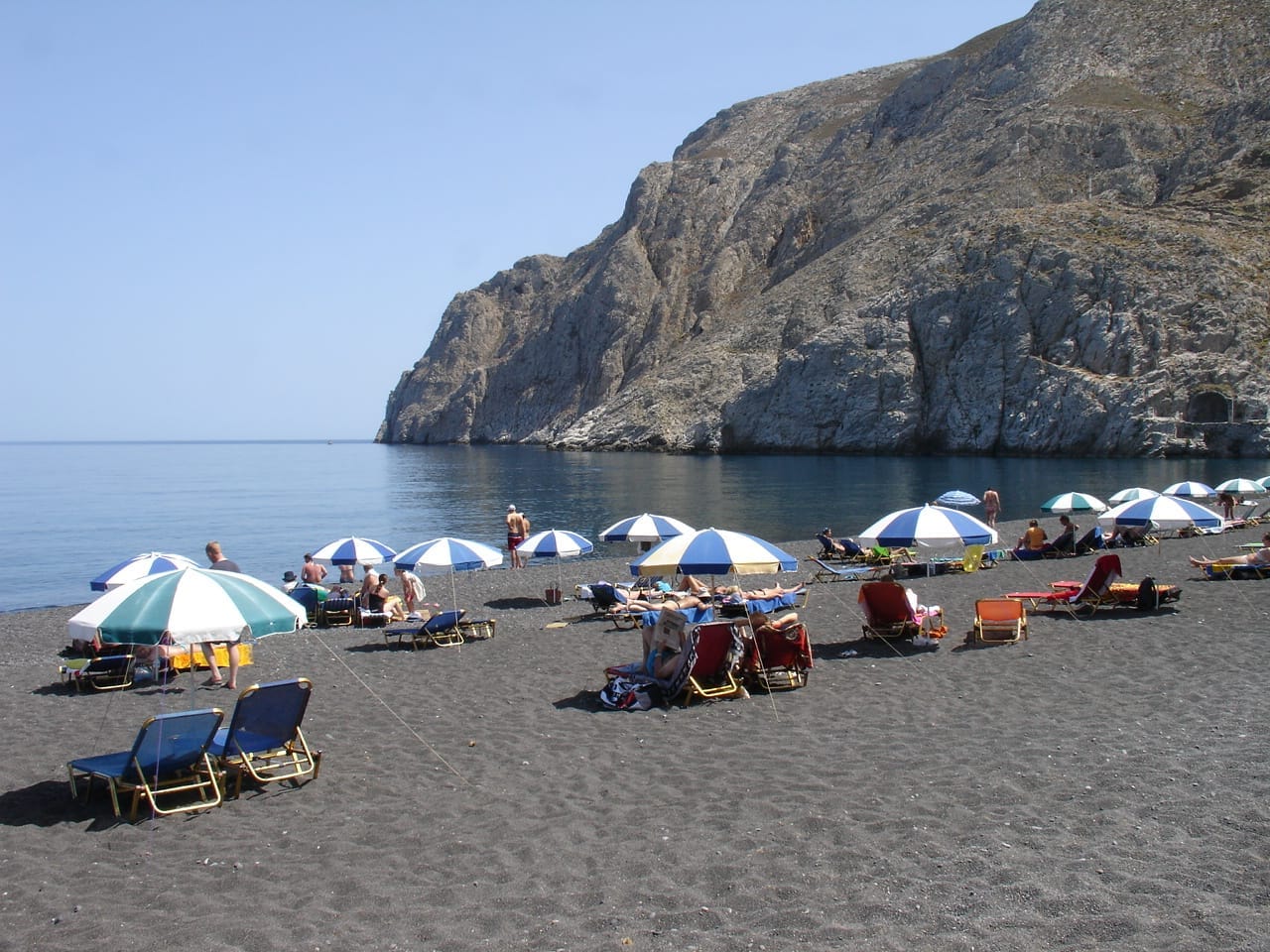
What Kamari Beach Actually Looks Like
Kamari Beach is unlike the powder-sand beaches you might picture from Greek tourism posters. The shore is made up mostly of black volcanic pebbles and lava stones, compact and dark underfoot, stretching in a broad arc along Santorini's southeastern coastline. The beach forms one of the longest continuous stretches of shoreline on the island, running along the coast beneath Mesa Vouno, a sharp mountain ridge that rises roughly 360 meters and forms the beach's dramatic southern terminus.
That mountain backdrop is what makes Kamari visually distinctive. The cliff face of Mesa Vouno drops almost vertically to the waterline at the south end, creating an abrupt contrast between the open blue Aegean and raw volcanic rock. On a clear morning, before the beach fills up, the scene is genuinely striking. The black pebbles absorb heat quickly, so by mid-afternoon in July or August the surface temperature is significant. Water shoes or sandals are not optional here — they are essentially required.
💡 Local tip
Pack water shoes or sandals. The black pebbles get extremely hot by midday in summer and the uneven surface makes barefoot walking uncomfortable, especially near the water's edge.
How the Beach Changes Through the Day
Early morning at Kamari, roughly before 9am, is a different experience from what most visitors see. The seafront road is quiet, the sunbed operators are still setting up their rows, and the water is calm and clear. The pebbles haven't yet warmed to their midday temperature. A few local swimmers and joggers use the beach at this hour. The light from the east catches the dark stones in a way that gives them a faintly metallic sheen.
By late morning, the beach transitions to its full resort character. Rows of sunbeds extend across much of the organized section of the beach, and the seafront road behind fills with foot traffic moving between restaurants, cafes, and shops. The water is cleaner and more transparent than Santorini's caldera beaches because this is the open Aegean rather than the protected crater bay, which means there can also be more wave action when the wind picks up.
The beach faces east, which has a practical implication: you get direct morning sun from early on, but by late afternoon the cliffs of Mesa Vouno begin to cast shade across the southern section of the beach. If you prefer shade without paying for an umbrella, arriving after 4pm in summer and positioning yourself near the south end is a reasonable strategy. The water temperature in June through September is generally warm enough for extended swimming.
ℹ️ Good to know
Kamari Beach faces east, not west. There is no sunset view from the beach itself. If a Santorini sunset is on your list, you'll need to head to the caldera side of the island.
Tickets & tours
Hand-picked options from our booking partner. Prices are indicative; availability and final rates are confirmed when you complete your booking.
Luxury Sunset Cruise in Santorini
From 120 €Free cancellationCruise of the volcanic islands around Santorini
From 45 €Instant confirmationFree cancellationGuided e-bike tour in Santorini
From 90 €Instant confirmationFree cancellationSantorini audio guide with TravelMate app
From 5 €Instant confirmation
The History Behind the Name and the Village
The name Kamari comes from the Greek word for arch, kamara. At the southern end of the beach there is a small stone arch, the remnant of an old customs building from the Venetian period, during a period when the area served a practical maritime function. This arch is still standing and is the site of the local Epiphany ceremony, the Blessing of the Waters, held each January. It is easy to walk past without noticing its significance, but it is one of the older surviving structures in this part of the island.
The modern village of Kamari itself is not particularly ancient. Much of it was built by residents of the nearby settlement of Episkopi Gonias following the devastating earthquake of July 1956, which caused widespread destruction across Santorini. What looks like a settled, established resort town is largely a post-earthquake construction, which explains the relatively uniform low-rise layout of the buildings along the seafront road.
The cliffs of Mesa Vouno that tower above the beach's south end also contain the ruins of Ancient Thera, a Greco-Roman hilltop city established around the 9th century BC. The site is accessible via a road that winds up from Kamari, and combining a beach morning with an afternoon visit to the ruins makes for a full day. The views from the top, back down over Kamari Beach and across to Perissa on the other side of the ridge, are genuinely worth the effort.
The Seafront Strip: What to Expect
Running parallel to the beach is a pedestrian-friendly seafront road lined with restaurants, bars, cafes, and small shops. The strip is fully walkable and reasonably well organized, which makes Kamari one of the more practical beach towns on Santorini for those who want amenities close at hand. You will find everything from Greek tavernas serving grilled fish and mezedes to international fast-food style options catering to package tourists.
The quality of restaurants varies considerably. The spots at the northern end of the strip, slightly further from the main parking area, tend to be quieter and sometimes better value. Midday eating on the strip can feel hectic during peak season, especially in July and August. Late lunch, after 2:30pm, or early dinner before 7pm, reduces both wait times and prices at many establishments.
Kamari also has an open-air cinema operating in summer, one of those low-key local institutions that adds texture to an evening after the beach. If your visit extends into the evening, the strip takes on a different pace. For broader context on how to spend time in this part of the island, the Kamari village guide covers the town in more detail.
Practical Details: Access, Sunbeds, and Accessibility
Kamari Beach is a public beach with free access. There are no entry gates or ticketed zones. However, much of the organized section of the beach is covered by rows of sunbeds and umbrellas managed by private operators. Renting a set typically includes an umbrella and two loungers; pricing is set by individual operators and varies by season and location on the beach. Expect to pay more for front-row positions closer to the water. There is no official published tariff, so it is worth checking the price board before committing.
There is a section of free, unorganized beach toward the southern end, near the stone arch, where you can lay a towel without renting a sunbed. This area tends to be less crowded, partly because it requires a longer walk from the main parking and bus drop-off point.
Kamari Beach has a Seatrac system installed, which provides an autonomous sea-access ramp for visitors with mobility impairments, allowing wheelchair users to enter the water independently. This makes Kamari one of the more accessible beaches on the island. The seafront road itself is flat and paved, suitable for strollers and wheelchairs, though the pebble surface of the beach itself remains uneven.
💡 Local tip
Getting here by KTEL bus from Fira is simple and inexpensive. Buses run regularly in high season on the Fira–Kamari route. Check current timetables at the KTEL office in Fira or at ktel-santorini.gr, as schedules change seasonally.
Who This Beach Suits and Who It Doesn't
Kamari works well for travelers who want a full beach day with services close at hand, families with children who need access to restaurants and shade structures, and anyone combining beach time with a cultural excursion to Ancient Thera on the ridge above. The accessible infrastructure also makes it one of the better choices for travelers with mobility needs.
If you are looking for seclusion, dramatic caldera scenery, or a quieter stretch of coast, Kamari is probably not the right fit. In July and August it fills up significantly, and the seafront strip can feel generic. The island's more secluded options, including Cape Columbo Beach in the north, offer a very different atmosphere. For context on how Kamari compares to other beach options across the island, the guide to Santorini's best beaches is a useful reference.
The black pebble surface is also worth flagging for travelers with young children who are accustomed to sandy beaches. Getting the pebbles out of shoes and bags is not an issue in the same way as sand, but the texture underfoot takes some adjustment, and children often find it harder to play at the water's edge compared to a sand beach.
Photography at Kamari Beach
The most photogenic element of Kamari is the Mesa Vouno cliff face rising at the south end of the beach. Morning light hits this from a good angle, and shooting with the mountain behind the arch remnant captures the beach's geological character well. The black pebbles also photograph differently from sand: they absorb light rather than reflecting it, which can make midday shots look flat. Early morning or the hour before sunset produces more texture and depth. For a broader look at composition and timing across the island, the Santorini photography guide covers the island's key shooting spots in detail.
One underused shot at Kamari: the view looking north from the stone arch back along the full length of the beach toward the open horizon, with the row of taverna awnings and the Aegean extending to the right. It gives a sense of the beach's scale that the typical straight-on water shot misses entirely.
Insider Tips
- Arrive before 9am if you want the beach with minimal crowds and a chance to swim in calm water before the tourist buses arrive. The beach is open 24 hours.
- The stone arch at the south end of the beach is easy to miss. Walk past the main sunbed area to find it, and look for the small information sign nearby explaining its history as an old customs structure.
- Combine Kamari Beach with a morning visit to Ancient Thera. The road up to the ruins starts from Kamari, and the views looking down over the black beach from the hilltop are some of the most unusual perspectives in Santorini.
- If you want a sunbed without the premium pricing, walk further south toward the stone arch. Prices at the south end of the organized section tend to be lower than the central rows, and there is also some free unorganized beach space near the arch.
- The open-air cinema on the seafront road operates in summer. It is a genuinely local experience and a good option for an evening after dinner on the strip.
Who Is Kamari Beach For?
- Families who need beach amenities, food options, and accessible infrastructure within easy reach
- Travelers arriving or departing from Santorini Airport, given Kamari is only about 6 km away
- History-minded visitors combining the beach with a trip up to Ancient Thera on Mesa Vouno
- Visitors with mobility needs, thanks to the Seatrac ramp system and flat seafront road
- Budget-conscious travelers who want a full beach day without needing a rental car, using the KTEL bus from Fira
Nearby Attractions
Other things to see while in Kamari:
- Ancient Thera
Perched on the rocky ridge of Mesa Vouno at 360 metres above sea level, Ancient Thera is one of Santorini's most historically significant open-air ruin sites. Founded by Dorian colonists in the 9th century BC, the city survived Hellenistic, Roman, and Byzantine periods before being abandoned to the wind and stone. It rewards visitors who make the climb with extraordinary views, genuine archaeological remains, and near-silence compared to the island's busier spots.
- Monolithos Beach
Monolithos Beach sits on Santorini's southeast coast near Kamari, offering a long stretch of fine volcanic black sand, gently shelving shallow water, and a noticeably calmer atmosphere than the island's more famous shores. Free to access, easy to reach by road, and equipped with a children's playground, it suits families and travelers who want the beach without the performance.