Monolithos Beach: Santorini's Quietest Black Sand Shore
Monolithos Beach sits on Santorini's southeast coast near Kamari, offering a long stretch of fine volcanic black sand, gently shelving shallow water, and a noticeably calmer atmosphere than the island's more famous shores. Free to access, easy to reach by road, and equipped with a children's playground, it suits families and travelers who want the beach without the performance.
Quick Facts
- Location
- Monolithos village, east coast of Santorini, near Kamari
- Getting There
- By car (free parking on site), taxi, or KTEL bus from Fira or Kamari. Verify current bus schedules at ktel-santorini.gr
- Time Needed
- 2–4 hours; a full day is easy if you bring children
- Cost
- Free beach access. Sunbed and umbrella sets reported around €10 (verify locally)
- Best for
- Families with young children, travelers seeking a calm alternative to busier beaches
What Monolithos Beach Actually Is
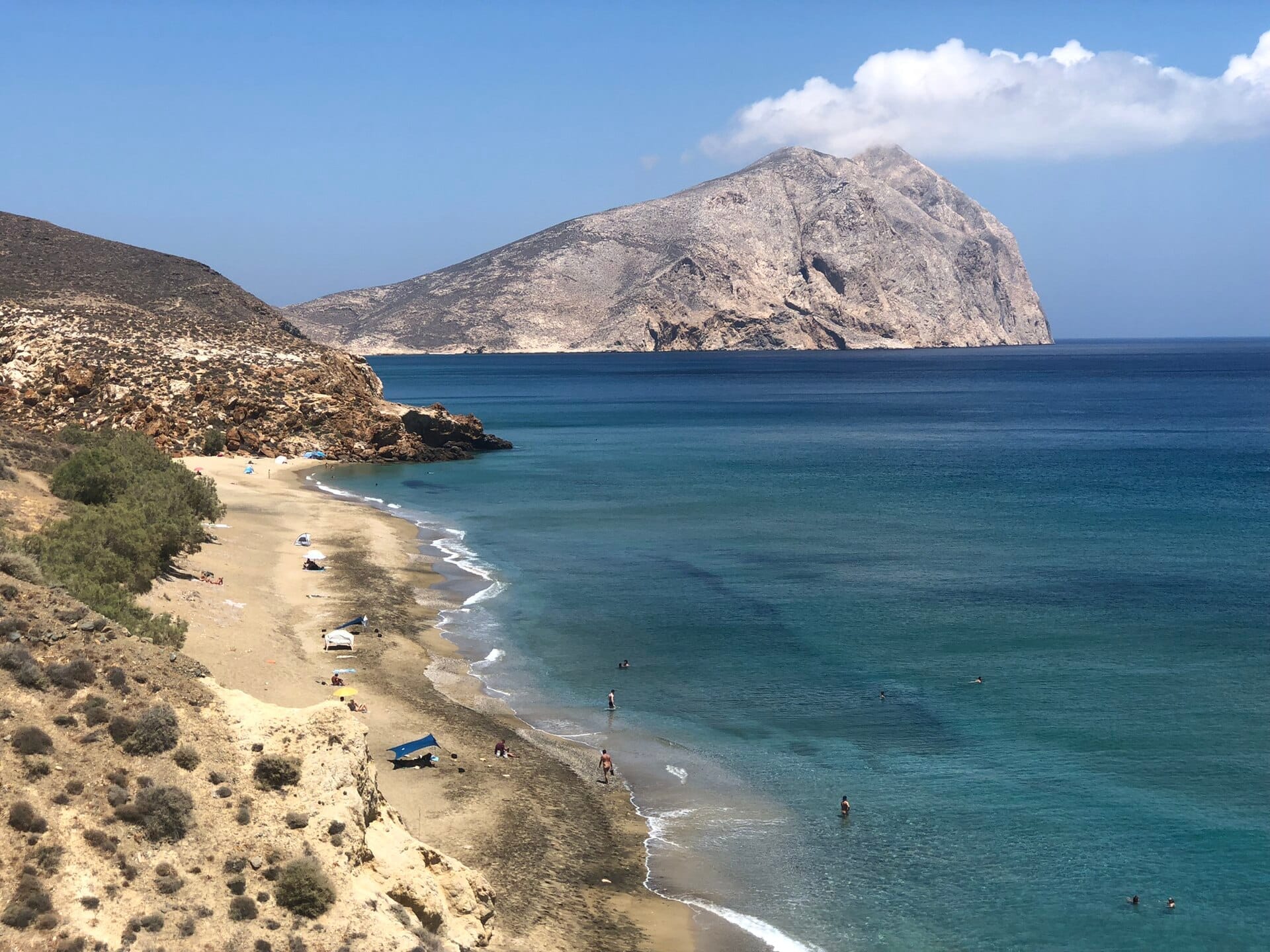
Monolithos Beach is a public, free-access stretch of volcanic black sand on Santorini's east coast, roughly 6 kilometres from Fira and a short drive north of parts of Kamari’s beach area. Its name comes from the large solitary rock formation, the Monólitho, that rises at one end of the beach with the small whitewashed church of Agios Ioannis perched on top. That rock is visible from almost anywhere on the sand and gives the beach its unmistakable identity.
Unlike the caldera-view beaches that dominate Santorini's marketing, Monolithos faces the open Aegean to the east. The horizon is clean water, not cliffs or postcard scenery. That distinction shapes everything about the experience: the light is different, the crowd is different, and the mood is noticeably more low-key.
💡 Local tip
Monolithos is one of the few Santorini beaches with free roadside parking directly adjacent to the sand. If you're renting a car or scooter, this removes one of the biggest logistical headaches of beach-hopping on the island.
The Sand, the Water, and What Makes It Different
The sand at Monolithos is fine-grained and dark grey — softer underfoot than you might expect from a volcanic beach, and considerably finer than the darker volcanic sand at beaches like Perissa. In strong sunlight it absorbs heat quickly, so water shoes or sandals are worth having if you're sensitive to hot surfaces. The trade-off is that the texture is genuinely pleasant, and the beach is wide enough to spread out even in the middle of summer.
The sea entry is gentle. The seabed slopes gradually and stays shallow for a meaningful distance from the shore, which is why Monolithos is consistently described as one of the better beaches on the island for young children. There are typically no sharp rocks at the waterline in the main swimming areas, and the calm conditions on most summer days mean the surf stays manageable. For a broader look at how Santorini's different beaches compare, the best beaches in Santorini guide covers the tradeoffs between volcanic, pebble, and organized beach options across the island.
The water clarity is good. On calm mornings before the wind picks up, visibility through the shallow water is high enough that you can see the sandy bottom clearly. By early afternoon, if the meltemi is blowing, surface chop can reduce visibility slightly and make swimming less comfortable for smaller children — but the shallowness means the water stays safe.
Tickets & tours
Hand-picked options from our booking partner. Prices are indicative; availability and final rates are confirmed when you complete your booking.
Luxury Sunset Cruise in Santorini
From 120 €Free cancellationCruise of the volcanic islands around Santorini
From 45 €Instant confirmationFree cancellationGuided e-bike tour in Santorini
From 90 €Instant confirmationFree cancellationSantorini audio guide with TravelMate app
From 5 €Instant confirmation
How the Beach Changes Through the Day
Mornings at Monolithos are noticeably quiet. Before 10am the beach has a working, unhurried feel: a few locals walking dogs along the shoreline, early-rising families setting up for the day, and the particular smell of salt air mixing with warm volcanic sand that hasn't yet been baked by high sun. The light at this hour is soft and east-facing, which makes the rock formation and the church above it photograph well without harsh shadows.
By midday the organized section of the beach fills up with sunbed renters, and the small tavernas and cafes behind the sand get busy. The playground area attracts families with younger children who need a break from the water. This is the loudest and most social part of the day, but even at peak hours Monolithos doesn't approach the density of the main Kamari or Perissa strips.
Late afternoon brings a shift in light and a slight cooling in the air. Many visitors leave after 5pm, and the beach quietens considerably. The Monólitho rock catches the low sun from the west at this hour and turns a warm ochre-grey. If you want the place to yourself for swimming, the window between 5pm and sunset is consistently peaceful.
ℹ️ Good to know
Monolithos faces east, which means it gets morning light but loses direct sun on the water itself by late afternoon as the sun shifts west. Unlike Oia or the caldera rim, this is not a sunset-watching beach — the sky to the east simply darkens. Come for the morning or midday swim, not the evening show.
Facilities and What to Expect On the Ground
The beach is partly organized with sunbeds and umbrellas available for hire — recent visitor reports place a set at around €10, though this is subject to change and worth confirming with the operator on arrival. Beyond the organized section, free space on the sand is available without any obligation to rent. This mix of organized and free areas is one of Monolithos's more practical qualities.
There is a children's playground directly on the beach, as well as a beach volleyball area. A handful of tavernas and snack bars operate behind the beach during the main season, offering food, cold drinks, and basic facilities including showers and toilets. The overall infrastructure is modest but functional — enough for a full day without needing to plan ahead extensively.
Specific wheelchair-accessible infrastructure such as dedicated ramps or amphibious beach wheelchairs is not confirmed by available sources. The flat terrain between the parking area and the sand is relatively easy to navigate, but travelers with specific accessibility requirements should contact local services in advance to verify current provisions.
The Monólitho Rock and the Church of Agios Ioannis
The rock formation that gives the beach its name is more than a landmark. The church of Agios Ioannis (Saint John) sits at its crest, small and white against the volcanic grey of the stone. It's visible from the water and from most points along the beach. The rock itself is climbable by a short path, and the view from the church down over the sand and the Aegean is worthwhile — particularly in the morning when haze hasn't yet built up over the water.
For context on Santorini's volcanic geology, which explains why the sand at Monolithos and other east-coast beaches is dark, the volcano and hot springs guide gives a clear overview of the island's eruptive history and the geological forces that shaped its coastline.
Getting There and Practical Logistics
Monolithos is among the most accessible beaches on Santorini for drivers. Free parking is available directly beside the beach — a genuine rarity on an island where parking at popular spots often means walking considerable distances or competing for space. The drive from Fira takes roughly 10–15 minutes and the approach road is straightforward.
Public buses on the KTEL network connect Fira with Kamari, and a separate KTEL route serves Monolithos with stops in the area. Schedules vary by season and should be confirmed at the KTEL website or through the getting around Santorini guide before you plan your day. Taxis from Kamari or Fira are a reliable fallback, particularly for return journeys in the evening.
If you are combining Monolithos with other stops, Kamari village is the natural companion: its main street, beach promenade, and restaurants are a short drive or walk away, and the archaeological site of Ancient Thera sits on the ridge above Kamari if you want to add a cultural dimension to a beach day.
⚠️ What to skip
The black sand at Monolithos heats up fast under strong summer sun. If you're visiting between June and August, arrive before 10am or after 4pm to avoid burning your feet walking from the parking area to the waterline. Bring water shoes for children who aren't wearing sandals.
Is Monolithos Worth Your Time? An Honest Assessment
Monolithos Beach is not the most spectacular beach on Santorini by conventional measures. It lacks the dramatic red and black cliff backdrops of Red Beach, the long organized promenade of Kamari, or the pebble-and-shallow-reef appeal of Perissa. What it offers instead is simplicity: a wide, quiet stretch of sand, easy access, free parking, gentle water, and none of the social performance that comes with more photogenic locations.
For families with young children, it may be the single best beach choice on the island precisely because of its shallow entry and playground. For solo travelers or couples primarily chasing dramatic Santorini scenery, it is less compelling — the viewpoints guide will serve that motivation better. Monolithos rewards the traveler who is done performing for Instagram and simply wants to swim.
Visitors who find Kamari too noisy or crowded often end up at Monolithos as a quieter alternative with broadly similar facilities. It's also worth noting that the beach is generally less discussed in travel media than its southern neighbors, which contributes directly to its calmer atmosphere in peak season.
Insider Tips
- Arrive before 9:30am in July and August to get free sand space in the shade cast by the Monólitho rock — it moves quickly, but for the first hour or two it covers a usable strip of beach.
- The church of Agios Ioannis on top of the rock is unlocked on certain feast days. If you happen to be there on one of these occasions, the interior is small but worth a look for the traditional iconography.
- Monolithos is close to Santorini's airport flight path. If noise is a concern, bring awareness of flight schedules — the island's busiest arrival windows in peak season can bring low overhead traffic.
- Combining Monolithos with a visit to Ancient Thera, the archaeological site on the ridge above Kamari, makes a logical half-day: beach in the morning, ruins in the cooler late afternoon when the site gets afternoon shade on the approach path.
- The tavernas directly behind the beach tend to price modestly compared to the Kamari strip — a practical detail if you're watching your budget on a long beach day.
Who Is Monolithos Beach For?
- Families with toddlers and young children who need shallow, calm water and a playground on site
- Travelers with a rental car who want a beach day without parking stress
- Visitors seeking a quieter black-sand beach experience without the crowds of Kamari or Perissa
- Early risers who want to swim in the morning light before the heat and wind build
- Budget-conscious travelers: free access, free parking, and relatively affordable on-beach food options
Nearby Attractions
Other things to see while in Kamari:
- Ancient Thera
Perched on the rocky ridge of Mesa Vouno at 360 metres above sea level, Ancient Thera is one of Santorini's most historically significant open-air ruin sites. Founded by Dorian colonists in the 9th century BC, the city survived Hellenistic, Roman, and Byzantine periods before being abandoned to the wind and stone. It rewards visitors who make the climb with extraordinary views, genuine archaeological remains, and near-silence compared to the island's busier spots.
- Kamari Beach
Kamari Beach is Santorini's longest stretch of black volcanic beaches, running along the southeastern coast beneath the dramatic cliffs of Mesa Vouno. It offers a full range of amenities, a walkable seafront strip, and easy access from Fira, making it one of the most practical beach destinations on the island.