Museum of Prehistoric Thera: Santorini's Bronze Age in One Room
The Museum of Prehistoric Thera in Fira houses the finest artifacts recovered from ancient Akrotiri, including original wall paintings from the Minoan-era settlement buried by the island's catastrophic volcanic eruption. For anyone serious about understanding what Santorini was before the caldera and the cruise ships, this is the most important building on the island.
Quick Facts
- Location
- Fira, Thira (Santorini) 84700, Greece
- Getting There
- Short walk from Fira's central KTEL bus station; no metro on the island
- Time Needed
- 1 to 2 hours
- Cost
- €10 standard admission; free on select national holidays and first Sunday of each month (Nov–Mar)
- Best for
- History lovers, archaeology enthusiasts, hot-day escapes, solo travelers
- Official website
- archaeologicalmuseums.gr/en/museum/5df34af3deca5e2d79e8c191
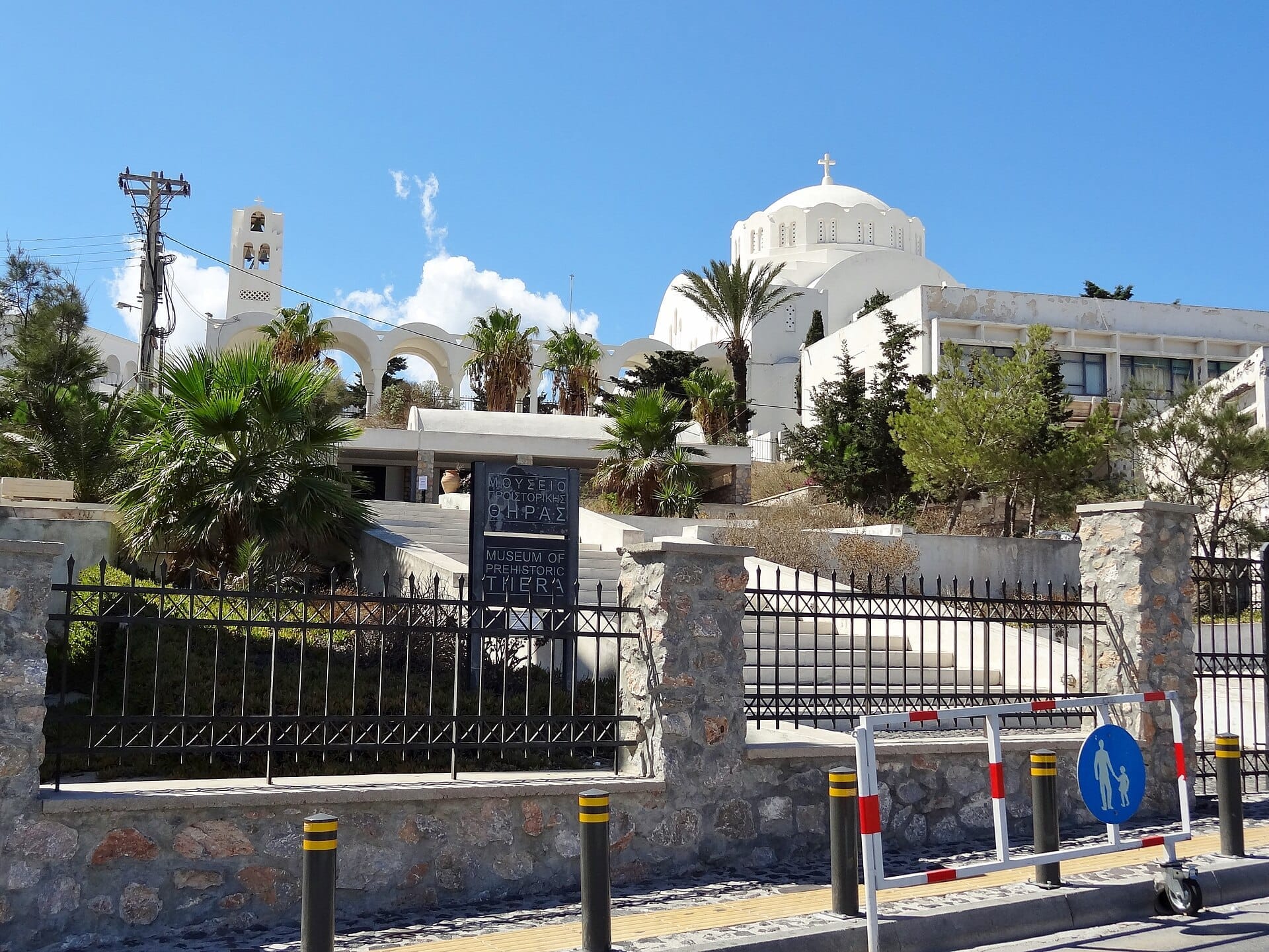
What the Museum Actually Is
The Museum of Prehistoric Thera, known in Greek as Μουσείο Προϊστορικής Θήρας, is a state archaeological museum operated by the Greek Ministry of Culture. It sits in the center of Fira, the island's capital, and its collection is focused exclusively on the prehistoric period, covering finds from the Akrotiri settlement and other excavations across the island. This is not a generalist island museum with Roman coins and Ottoman-era pottery spread across uninspiring cases. The collection is concentrated, significant, and coherent.
The museum's headline exhibit is the second-floor gallery of Theran wall paintings, inaugurated in August 2021 under the title 'Thera wall paintings: The masterpieces of the Aegean Prehistory.' These frescoes were recovered from Akrotiri, the Bronze Age settlement on the island's southern tip that was preserved under volcanic ash, much like Pompeii but predating it by more than a thousand years. Displayed according to their original iconographic programs, they represent some of the best-preserved prehistoric paintings found anywhere in the Aegean.
ℹ️ Good to know
Opening hours: Tuesday closed year-round. All other days: 08:00–20:00 in summer (1 April–31 October) and 08:00–15:30 in winter (1 November–31 March). Last admission 20 minutes before closing. Verify hours with the official website before visiting, as public holidays can affect schedules.
The Akrotiri Connection: Why This Collection Matters
Santorini's fame today rests on scenery produced by volcanic catastrophe. Roughly 3,600 years ago, a massive eruption collapsed the island's center and formed the caldera that now draws millions of visitors. But before that event, the island was home to a sophisticated Bronze Age society. The Akrotiri archaeological site preserves the physical remains of that civilization. This museum preserves what was inside the buildings.
The Akrotiri settlement was abandoned before the eruption, so no human remains were found there. What was left behind tells a different story: multi-story buildings, advanced drainage systems, furniture, ceramic vessels, and extraordinary painted walls. The inhabitants appear to have had trade connections across the eastern Mediterranean, and the art reflects that reach. You will see imagery of lilies, swallows, antelopes, and sea life, rendered with a fluency and naturalism that challenges assumptions about prehistoric artistic sophistication.
If you plan to visit the site itself afterward, the museum provides essential context. For a practical route through both, the guide to Santorini's history and ancient ruins covers the sequence and logistics.
Tickets & tours
Hand-picked options from our booking partner. Prices are indicative; availability and final rates are confirmed when you complete your booking.
Couples' Aromatherapy Massage in Santorini
From 210 €Instant confirmationFree cancellationLuxury Sunset Cruise in Santorini
From 120 €Free cancellationCruise of the volcanic islands around Santorini
From 45 €Instant confirmationFree cancellationGuided e-bike tour in Santorini
From 90 €Instant confirmationFree cancellation
Inside the Museum: What You Will See
The building is modest from the outside and the interior is not large, but the exhibition design prioritizes clarity over spectacle. Cases are well-lit and labeled in both Greek and English. The ground floor presents ceramics, tools, storage vessels, and portable objects from Akrotiri and other prehistoric sites on the island. Pay attention to the ceramic forms: Theran pottery from this period shows a distinct stylistic identity, with spiral motifs and bold geometric bands that recur across the collection.
The standout object on the lower floor is the gold ibex figurine, a small but arresting piece that signals the wealth and long-distance contacts of the Akrotiri community. Nearby cases display obsidian blades and stone tools, grounding the exhibition in the daily material reality of the settlement alongside its artistic achievements.
The second floor is where the visit shifts gear. The wall painting gallery presents large fresco sections mounted and framed to approximate their original spatial arrangement. The room is cool and dimly lit around the perimeters, with the paintings themselves clearly illuminated. The 'Boxing Children' fresco and the 'Fisherman' panels are the most frequently reproduced, but in person the scale and detail of the 'Spring Fresco,' with its swallows in flight above red lilies, is the image most visitors carry away. Allow time to stand still and look rather than photograph immediately.
💡 Local tip
Photography is generally permitted in Greek state museums without flash. Check for any updated restrictions at the entrance. Soft natural-style lighting works well here for the fresco gallery.
When to Visit and How to Get There
The museum opens at 08:00 every day except Tuesday. Arriving close to opening time, especially between June and September, means you will have the galleries largely to yourself. By mid-morning in peak season, tour groups from cruise ships begin arriving in Fira, and although this museum is not on every itinerary, it does see noticeable foot traffic from late morning through early afternoon. The galleries are air-conditioned, which makes a mid-afternoon visit on a hot July or August day genuinely comfortable, though crowds will be at their peak.
Fira is the island's transport hub. The KTEL bus station is a short walk from the museum, with services connecting to Akrotiri, Oia, Kamari, Perissa, and the airport. If you are arriving from elsewhere on the island, the bus is the most practical option. Taxis are available in Fira but can be scarce during busy periods. For orientation in Fira itself, the Fira town center covers the layout of the surrounding area.
The museum is accessible: the building has a ramp, a lift, wheelchair-accessible toilets, and a printed museum guide is available. For visitors with mobility considerations, the layout is manageable, though it is worth confirming specifics by phone (+30 22860 25405) or email (amthi@culture.gr) before visiting.
Admission, Free Days, and Practical Costs
The standard entry fee is €10. Greece's state museum system offers free admission on several designated dates throughout the year: 6 March (in memory of Melina Mercouri), 18 April (International Monuments Day), 18 May (International Museums Day), the last weekend of September (European Heritage Days), 28 October (national holiday), and the first Sunday of each month from 1 November through 31 March. If your visit aligns with any of these dates, it is worth planning around them.
The €10 entry is reasonable relative to the quality of the collection. For travelers managing costs carefully, the Santorini on a budget guide has broader advice on reducing expenses across the island without cutting the experiences that matter.
Pairing This Museum With the Rest of Fira
The Museum of Prehistoric Thera and the Archaeological Museum of Thera are distinct institutions covering different periods. The Archaeological Museum focuses on finds from the ancient Greek and later periods. Visiting both in a single morning is possible given the shared opening hours and proximity, though it makes for a dense cultural itinerary. Decide in advance which period interests you more and give that museum the bulk of your attention.
After the museum, Fira's caldera path is a five-minute walk. The path north toward Firostefani offers some of the island's most dramatic edge-of-cliff perspectives without requiring significant effort. For a structured approach to the island's viewpoints, the guide to Santorini's views and viewpoints maps out the best options by location and time of day.
⚠️ What to skip
The museum is closed every Tuesday, year-round. This catches visitors by surprise more than almost any other detail. Check your travel days carefully before building an itinerary around a Tuesday visit.
Who Should Skip This Museum
Travelers with no interest in archaeology or prehistory, and those primarily visiting Santorini for beaches, sunsets, and dining, will likely find the museum slow. The exhibition is restrained and academic in tone. There is no interactive technology, no dramatized audio experience, and no large gift shop. Children under around ten years old may find it difficult unless they have a specific interest in ancient history. The frescoes are genuinely beautiful, but if your party has no patience for museum pacing, the experience will feel underwhelming for the time it takes.
That said, on a scorching August afternoon when the caldera path is blinding white and the sun is directly overhead, this air-conditioned, uncrowded space earns appreciation from visitors who would not ordinarily prioritize a museum. Context matters.
Insider Tips
- Arrive at 08:00 on the dot during peak season. The fresco gallery on the second floor is at its least crowded in the first 45 minutes, before any organized tours appear.
- Pick up the printed museum guide at the entrance desk rather than relying only on case labels. It provides iconographic explanations for the wall paintings that significantly deepen the experience.
- If you are visiting the Akrotiri archaeological site the same day, do the museum first. Seeing the objects in context before walking through the excavated buildings reverses the usual sequence and often produces a sharper understanding of both.
- The first Sunday of each month from November through March, entry is free. This is a genuine benefit for off-season visitors and is worth planning around if your dates allow.
- The museum closes at 20:00 in summer and 15:30 in winter, which can be earlier than many visitors expect for a major attraction. Last admission is at 15:10. An afternoon arrival after a long lunch is a reliable way to miss the last entry.
Who Is Museum of Prehistoric Thera For?
- History and archaeology enthusiasts who want to understand Santorini beyond its scenery
- Travelers visiting the Akrotiri archaeological site and seeking context for what they will see
- Cultural travelers building a half-day Fira itinerary combining museums, the caldera path, and lunch
- Solo visitors who prefer self-paced, quiet indoor spaces
- Anyone seeking a genuinely cool and calm hour away from Santorini's summer heat
Nearby Attractions
Other things to see while in Fira:
- Archaeological Museum of Thera
Set in the heart of Fira, the recently renovated Archaeological Museum of Thera brings together centuries of island history under one roof. The star exhibit is the Kore of Thera, a 2.48-metre Archaic statue carved from Naxian marble and hidden from public view for over two decades. For anyone serious about understanding Santorini beyond its postcard image, this is the clearest starting point.
- Fira–Oia Hiking Trail
The Fira–Oia Hiking Trail is Santorini's most rewarding walk: a 10-kilometre path along the caldera rim connecting the island's capital to its most photographed village. Free to walk, open at all hours, and lined with volcanic cliffs, whitewashed chapels, and sweeping Aegean views, it rewards those who go prepared and go early.
- Fira Town Center
Fira is the administrative and social heart of Santorini, built on the rim of the caldera at roughly 260 meters above the Aegean. Free to enter and walkable from multiple directions, it offers caldera views, museums, restaurants, and a cable car connection to the old port — all within a compact, cliff-top layout that rewards early risers and punishes late arrivals in summer.
- Firostefani
Perched on the caldera rim just north of Fira, Firostefani is a small whitewashed village that blends into Santorini's capital while offering noticeably calmer streets and sweeping volcano views. Its name translates literally as 'Crown of Fira,' and the elevated position earns that title. Entry is free, the caldera path is walkable from Fira in under 15 minutes, and the atmosphere is several degrees quieter than either Fira's main drag or Oia's famous sunset strip.