Fira Town Center: Santorini's Capital on the Caldera Edge
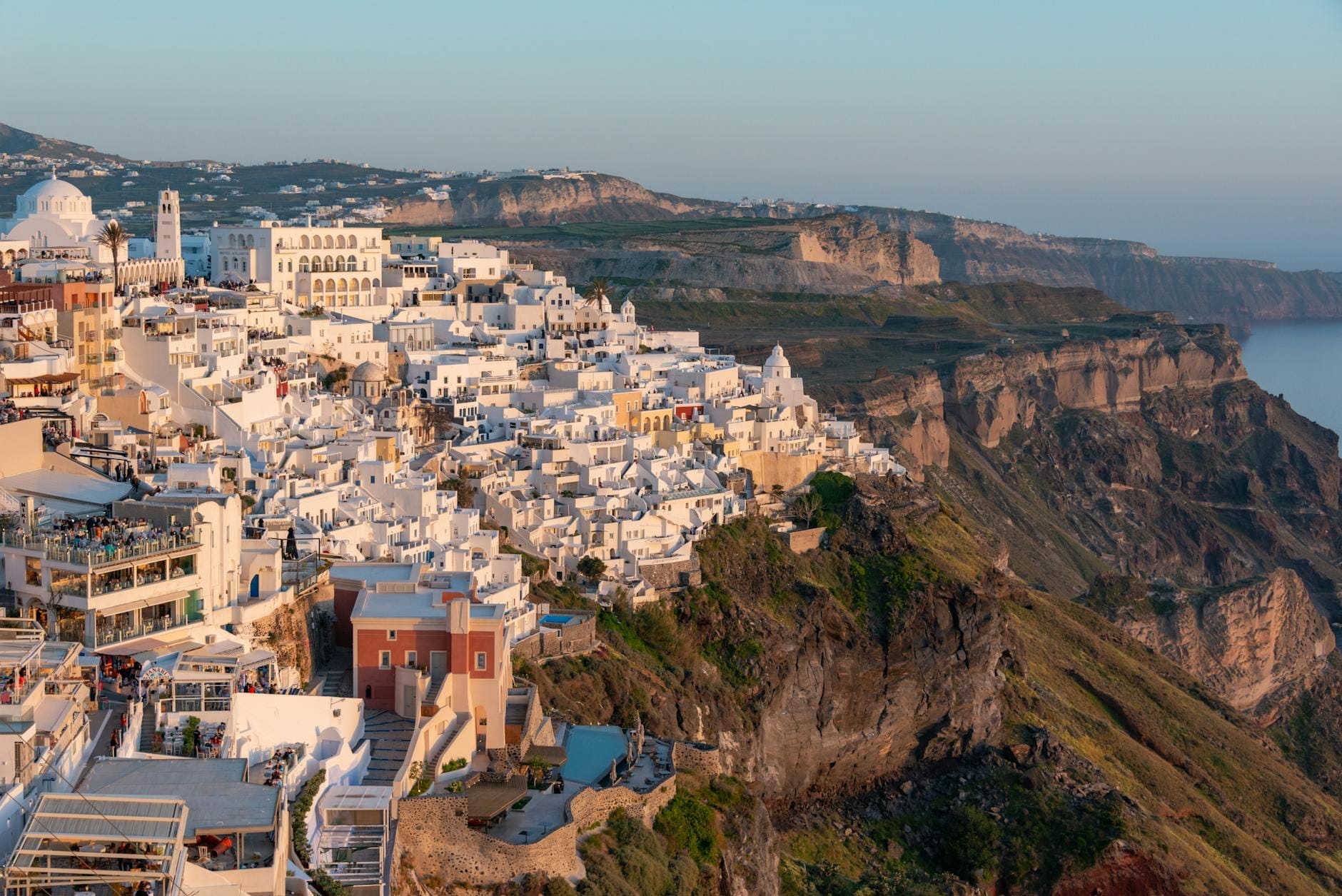
Fira is the administrative and social heart of Santorini, built on the rim of the caldera at roughly 260 meters above the Aegean. Free to enter and walkable from multiple directions, it offers caldera views, museums, restaurants, and a cable car connection to the old port — all within a compact, cliff-top layout that rewards early risers and punishes late arrivals in summer.
Quick Facts
- Location
- Fira (Thira), Santorini, Cyclades, Greece — caldera rim, western side of the island
- Getting There
- KTEL bus from airport, port, or other villages; taxi or rental vehicle; cable car from Old Port
- Time Needed
- 2–5 hours for a relaxed walk; longer if visiting museums or dining
- Cost
- Free to enter the town; individual museums charge separate fees
- Best for
- First-time visitors to Santorini, museum-goers, caldera view seekers, nightlife
What Fira Actually Is
Fira Town Center is the capital of Santorini, the island also known formally as Thira or Thera. It sits on the western caldera rim at approximately 260 meters above sea level, which means its streets are not flat — they cascade down toward the cliff edge in a series of terraces, alleys, and staircases. The town is compact but dense, mixing whitewashed Cycladic architecture with Venetian-influenced church facades and the occasional concrete building patched in after the devastating earthquake of 1956 levelled much of the island.
Access to the town itself is free. There are no gates or tickets to walk the main squares, peer over the caldera wall, or browse the shopping streets. What you pay for are specific experiences: a cable car ride up from the old port, entry to the Archaeological Museum of Thera, or a table at a caldera-view restaurant. Everything else — the architecture, the views, the atmosphere — is simply there.
ℹ️ Good to know
Fira became Santorini's capital only at the end of the 18th century, after the old capital at Skaros was devastated and residents moved south to what is now the town center.
The Caldera Edge: What You See and Feel
The western edge of Fira is a continuous promenade that runs along the caldera wall, with open views across to the submerged volcanic crater and the smaller islands of Nea Kameni and Palea Kameni sitting in the center. On a clear day, the opposite rim of the caldera — a dark, layered cliff of volcanic rock striped with red, grey, and black sediment — is visible roughly ten kilometers away. Below, the water is a deep, flat blue, almost unmoving compared to the open Aegean on the island's eastern side.
The caldera path changes character depending on which section you walk. The central section near the cable car station and the Three Bells of Fira church gets the most foot traffic and is lined with cafes and souvenir shops. Move north toward Firostefani and the crowds thin noticeably, the path becomes narrower, and the views open up without restaurant umbrellas blocking the foreground.
For a broader sense of what Santorini's caldera looks like from multiple vantage points across this guide island, the Santorini views and viewpoints guide covers how Fira's perspective compares to Oia, Imerovigli, and other rim villages.
Tickets & tours
Hand-picked options from our booking partner. Prices are indicative; availability and final rates are confirmed when you complete your booking.
Walking Tour of Fira town in Santorini
From 49 €Instant confirmationFree cancellationSantorini catamaran cruise with pick-up, BBQ and drinks from Fira
From 70 €Instant confirmationFree cancellationLuxury Sunset Cruise in Santorini
From 120 €Free cancellationCruise of the volcanic islands around Santorini
From 45 €Instant confirmationFree cancellation
How the Town Changes Through the Day
Early morning — roughly 7:00 to 9:30 — is when Fira is genuinely quiet. Bakeries open, locals pick up coffee, and the caldera path is nearly empty. The light at this hour is soft and low, hitting the white walls at an angle that makes them glow amber rather than the blown-out white you get in midday photos. The air smells of bread and the faint sulfur that occasionally drifts from the volcanic islands in the caldera.
By 10:00 in peak season (June through September), cruise ship tenders begin arriving at the old port below, and either the cable car or the stepped path up the cliff brings hundreds of visitors into town within a short window. The main shopping street, Ypapantis Street, becomes genuinely crowded by mid-morning and stays that way until late afternoon. This is the stretch of Fira that most people mean when they say it feels overwhelming.
Late afternoon and evening shift the energy entirely. Day-trippers from cruise ships return to port by 18:00 at the latest, and the town belongs again to hotel guests and independent travelers. Bars open in earnest from 21:00. The central square around Theotokopoulou Street becomes a steady stream of people moving between restaurants and bars, and this continues well into the early hours. If you are sensitive to noise, note that rooms close to the bar district can be audibly disruptive until 2:00 or 3:00 in the morning.
💡 Local tip
Visit the caldera viewpoint before 9:00 or after 19:00 in peak season. The difference in crowd density between these windows and midday is dramatic.
Getting There: Your Practical Options
Fira is roughly in the geographic center of Santorini, which makes it the island's main transport hub. KTEL public buses connect Fira to the airport (about 7 km), to beach towns on the eastern coast like Kamari and Perissa, and to villages including Oia in the north and Akrotiri in the south. The main bus terminal sits at the edge of the town center, near the main square. Bus fares are low, schedules are seasonal, and the KTEL Santorini website should be checked for current timetables before you travel.
If you arrive by ferry or cruise ship, you'll land at the old port far below the town. The Santorini cable car connects the port to the town above and takes under five minutes. There is also a stepped path of about 600 steps if you prefer to walk — or if the cable car queue is long. Mules are available on the path, though their use has attracted animal welfare concerns; travelers should make their own informed choice.
Taxis operate from a stand near the main square, and rental ATVs, scooters, and cars are widely available for those wanting to explore the island independently. Parking in Fira itself is limited and the narrow streets are not designed for vehicles, so most drivers park on the outskirts.
⚠️ What to skip
Fira's caldera-side streets involve significant elevation change, steep steps, and uneven cobblestones. Visitors using wheelchairs or with limited mobility will find large parts of the town inaccessible. The flat main shopping street is more manageable, but the caldera path itself is not.
Museums and Cultural Sites Within the Town
Fira holds two museums that are genuinely worth time, particularly on hot afternoons when walking outside is uncomfortable. The Museum of Prehistoric Thera houses artifacts recovered from the ancient city of Akrotiri, buried by volcanic eruption around 1600 BCE. The collection includes wall paintings, pottery, and objects that give clear context to what that Bronze Age civilization looked like before the eruption. The Archaeological Museum of Thera nearby covers a different period, focusing on finds from Ancient Thera and the Geometric to Roman eras.
Both institutions sit close to each other in the northern part of the town center. Entry fees apply to each, and hours change seasonally — check the Greek Ministry of Culture website before visiting. For broader context on Santorini's archaeological sites, the Santorini history and ancient ruins guide covers how the town's museums connect to the island's wider prehistoric and classical heritage.
The Orthodox Metropolitan Cathedral — one of the more architecturally prominent religious buildings in Fira — sits near the caldera edge and is worth a look from the outside regardless of religious interest. Like most of Fira's churches, it was rebuilt or significantly repaired after the 1956 earthquake. The interior is open to respectful visitors outside of service hours; modest dress (covered shoulders and knees) is expected.
Shopping, Eating, and What to Realistically Expect
Fira's main shopping street runs roughly parallel to the caldera and is dense with jewelry boutiques, fashion shops, souvenir sellers, and a mix of local and international brands. Gold and silver jewelry are particularly prevalent — Santorini has a long tradition of jewelry craft, and several shops on this stretch are multi-generational family businesses rather than tourist imports. Quality varies enormously, so take time to compare.
Restaurants on the caldera side charge a premium for their views, and this is largely unavoidable if the view is what you want. The food quality varies more than the prices suggest — caldera-view restaurants in peak season are often operating under volume pressure from full sittings, and service can feel rushed. For more reliable food at lower prices, walk one or two streets inland. The closer you get to the bus terminal area and the main square, the more practical and local the options become.
Santorini has a distinct food culture worth exploring beyond restaurant meals. For a useful overview of local specialties and where to find them, the what to eat in Santorini guide covers traditional dishes and where Fira fits into the island's food geography.
One honest note: Fira is not Santorini's most photogenic town. That distinction is generally given to Oia in the north, with its blue-domed churches and better-preserved whitewashed architecture. Fira is more commercial, more convenient, and more alive at night — but if picture-perfect Cycladic scenery is your primary goal, it may feel like a compromise.
Walking North: The Connection to Firostefani and Imerovigli
One of the most rewarding things to do from Fira requires no planning: walk north along the caldera path. Within fifteen minutes, the town thins and you cross into Firostefani, which feels quieter and more residential. Continue further and you reach Imerovigli, with its elevated caldera views and the prominent rock formation of Skaros jutting into the water below. This section of path is one of the most scenic walks on the island.
The most ambitious version of this walk continues all the way to Oia. The Fira to Oia hiking trail covers the full 10-kilometer route, including difficulty, timing, and what to bring. Doing even a partial section — from Fira to Imerovigli — takes around 45 minutes each way and is manageable for most reasonably fit visitors.
Insider Tips
- The caldera path north of the cable car station gets noticeably quieter within five minutes of walking. Most visitors stop near the Three Bells of Fira church and go no further, which means the views just past that point are yours almost alone.
- The Museum of Prehistoric Thera is genuinely undervisited relative to how good its collection is. Mid-morning on a weekday in shoulder season, you can have entire rooms to yourself.
- If you are arriving by cable car from the old port, walk left (north) immediately on reaching the top, not right into the main shopping strip. The caldera views from the northern path are better, and you will have them before the midday crowds arrive.
- Rooms in the caldera-view hotels in Fira can be significantly cheaper than equivalent views in Oia, sometimes by 30–50 percent for the same season. The view across the water is comparable; the architecture around you is less manicured.
- The KTEL bus stop in Fira is the island's central transit hub, making it the most practical base for day trips without a rental vehicle. Buses to Kamari beach, Akrotiri, and Perissa all leave from here.
Who Is Fira Town Center For?
- First-time visitors to Santorini who want a central base with easy access to transport
- Museum and archaeology enthusiasts: the Museum of Prehistoric Thera alone justifies a visit
- Travelers who want caldera views without paying Oia accommodation prices
- Night owls: Fira has the island's most active after-dark scene by a wide margin
- Cruise ship passengers with limited time who want to see the caldera and do some shopping in a few hours
Nearby Attractions
Other things to see while in Fira:
- Archaeological Museum of Thera
Set in the heart of Fira, the recently renovated Archaeological Museum of Thera brings together centuries of island history under one roof. The star exhibit is the Kore of Thera, a 2.48-metre Archaic statue carved from Naxian marble and hidden from public view for over two decades. For anyone serious about understanding Santorini beyond its postcard image, this is the clearest starting point.
- Fira–Oia Hiking Trail
The Fira–Oia Hiking Trail is Santorini's most rewarding walk: a 10-kilometre path along the caldera rim connecting the island's capital to its most photographed village. Free to walk, open at all hours, and lined with volcanic cliffs, whitewashed chapels, and sweeping Aegean views, it rewards those who go prepared and go early.
- Firostefani
Perched on the caldera rim just north of Fira, Firostefani is a small whitewashed village that blends into Santorini's capital while offering noticeably calmer streets and sweeping volcano views. Its name translates literally as 'Crown of Fira,' and the elevated position earns that title. Entry is free, the caldera path is walkable from Fira in under 15 minutes, and the atmosphere is several degrees quieter than either Fira's main drag or Oia's famous sunset strip.
- Lost Atlantis Experience
The Lost Atlantis Experience in Megalochori is Santorini's only museum dedicated entirely to the Atlantis myth, using 9D simulation, holograms, and digital exhibits to explore the legend's possible link to the island's volcanic past. Opened in 2019 and spread across 700 square metres, it offers a rainy-day alternative and a genuinely different angle on the island's ancient story.