Megaro Gyzi Museum: Fira's Most Overlooked Window into Santorini's Past
Housed in one of the few 17th-century mansions to survive the 1956 earthquake, the Megaro Gyzi Museum in Fira holds rare maps, engravings, and photographs documenting Santorini across the centuries. Small in scale but dense in local history, it rewards travelers who want more than caldera views.
Quick Facts
- Location
- Near the Catholic Cathedral, Fira (Thira), Santorini
- Getting There
- Short walk from Fira's main KTEL bus station; no metro or rail on the island
- Time Needed
- 45–90 minutes
- Cost
- Admission fee applies; verify current price locally or by phone before visiting
- Best for
- History enthusiasts, slow travelers, those wanting context before exploring the island
- Official website
- http://gyzimegaron.gr
What the Megaro Gyzi Museum Actually Is
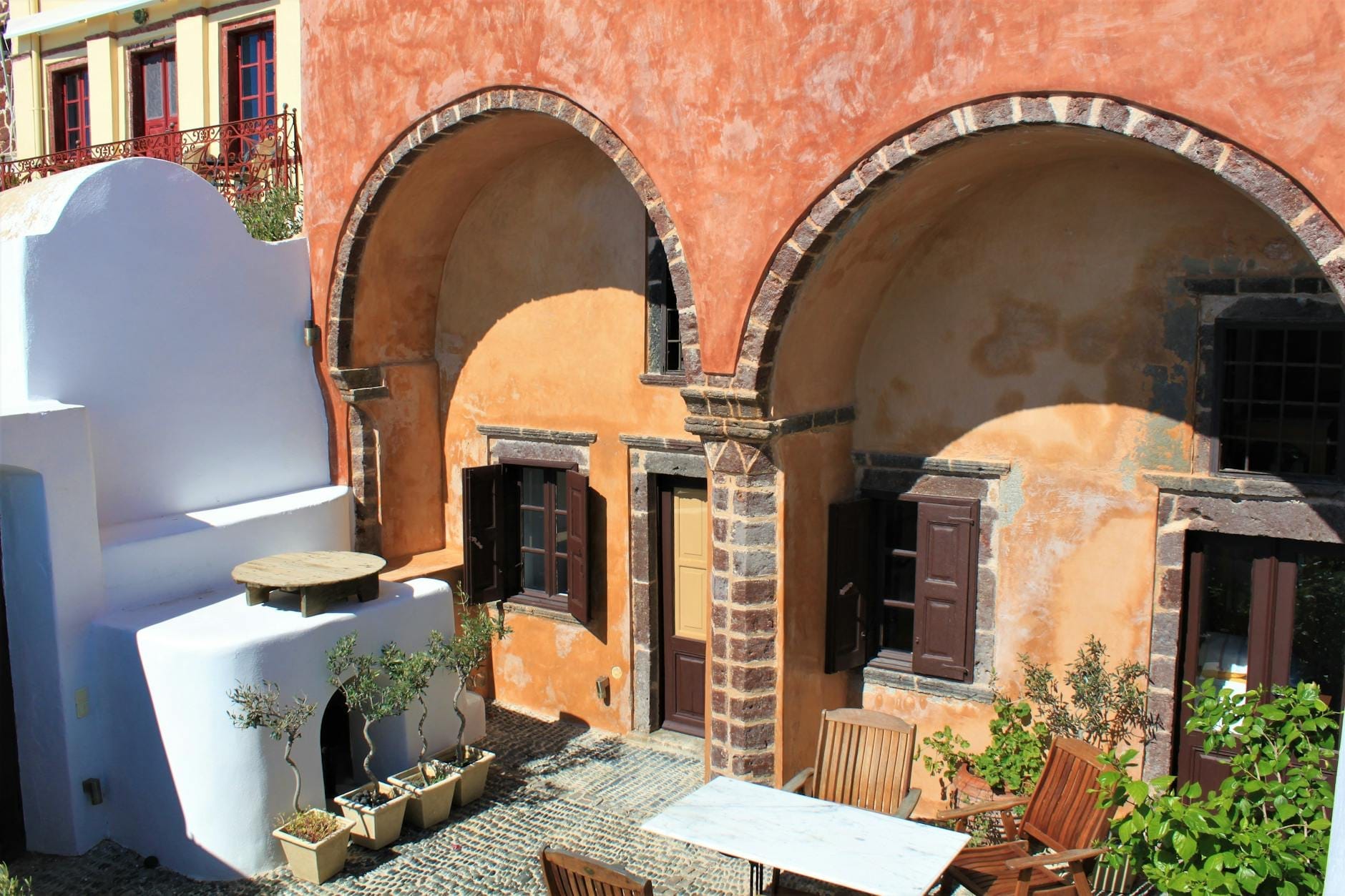
The Megaro Gyzi Museum is a cultural center and exhibition space operating out of a restored 17th-century Venetian-era mansion in Fira, the island's capital. The building belonged to the Gyzi family, a prominent Venetian noble lineage whose coat of arms is still visible above the entrance. The Catholic Diocese of Thira founded the Cultural Center toward the end of the 1970s and donated the mansion for that purpose, making this one of the few heritage institutions on the island with a clear founding mandate and a fixed, permanent home.
What makes the location itself significant is survival. The 1956 earthquake that devastated large parts of Fira reduced most of this neighborhood to rubble. The Gyzi mansion was one of the few 17th‑century mansions to survive, though it sustained serious damage in the earthquake. The building was subsequently restored and adapted to serve as a cultural venue, with minimal modifications to meet functional needs. Walking through it today, you are inside one of the last standing examples of pre-earthquake Fira domestic architecture.
⚠️ What to skip
Some listings flag the museum as temporarily closed. Before making it a priority stop, call ahead on +30 22860 23077 or check the official website at gyzimegaron.gr to confirm current operating status and hours.
The Collection: What You Will Actually See
The museum holds a focused collection rather than a sweeping one. The core of the permanent display consists of old maps, engravings, and photographs tracing Santorini's appearance and documented history across several centuries. The engravings in particular offer something genuinely rare: visual records of the island from European travelers and cartographers who passed through before photography existed. The maps show how perceptions of the island shifted over time, from early Venetian and Ottoman-era renderings to more precise modern surveys.
The photographic archive is where many visitors slow down longest. Black-and-white images of Fira and the surrounding villages before the 1956 earthquake provide a direct comparison with what the island looks like today. Seeing the density and character of pre-quake architecture makes the scale of that destruction comprehensible in a way that text descriptions cannot.
Beyond the permanent collection, the venue regularly hosts temporary exhibitions covering art, local manuscripts, and cultural events. The building doubles as a concert and performance space during the cultural season. If you are visiting Santorini in summer and want an evening away from restaurant terraces, check the events calendar on the official site. For broader context on what Santorini's history looks like across different institutions, the Museum of Prehistoric Thera in Fira covers the deeper archaeological record, while the Archaeological Museum of Thera holds finds from the classical period onward.
Tickets & tours
Hand-picked options from our booking partner. Prices are indicative; availability and final rates are confirmed when you complete your booking.
Luxury Sunset Cruise in Santorini
From 120 €Free cancellationCruise of the volcanic islands around Santorini
From 45 €Instant confirmationFree cancellationGuided e-bike tour in Santorini
From 90 €Instant confirmationFree cancellationSantorini audio guide with TravelMate app
From 5 €Instant confirmation
The Building Itself: Architecture and Atmosphere
The mansion sits close to the Catholic Cathedral in the upper part of Fira, in a quarter that retains a slightly different character from the more heavily touristed caldera-facing lanes. The streets here are narrower and quieter, with less foot traffic than the main pedestrian drag running toward the cliff edge. The building's stone facade is understated by Santorini standards: no cascading bougainvillea, no painted dome. What you notice instead is the weight and solidity of the masonry, and the proportions of a structure built to house a wealthy family rather than to attract passing visitors.
Inside, the rooms are cool even in midsummer, the stone walls thick enough to dampen the heat. Light enters through small windows, giving the interior a subdued quality that suits the archive material on display. The wooden beams and stonework of the restored sections are visible rather than concealed, which gives the space an honest quality: you are in an old building adapted for a new purpose, not a replica dressed up to look historic.
When to Visit and How Long to Spend
The museum operates May 1 to October 31, Monday to Saturday from 10:00 to 16:00, with Sundays closed. This schedule makes it a practical morning stop before the midday heat peaks and before the main caldera promenades fill with cruise passengers. In July and August, Fira's streets can be uncomfortably crowded by late morning; arriving at the museum around 10:00 lets you move at your own pace before the crush.
Budget 45 to 90 minutes, depending on how closely you read the captions and how much the photographic material draws you in. The collection is not exhaustive, and the rooms are not large. Some visitors feel satisfied in under an hour; others find the archival photographs absorbing enough to linger. The space is small enough that it never feels overwhelming, which is itself a practical advantage if you are partway through a full day of sightseeing.
💡 Local tip
Midweek mornings in shoulder season (May, June, September, October) are the quietest times. The museum receives far fewer visitors than Fira's caldera viewpoints, so overcrowding is rarely an issue — but peak-season midday visits can coincide with small group tours.
Getting There from Fira and Around the Island
The museum is located in central Fira, near the Catholic Cathedral, which itself sits a few minutes' walk from the main commercial pedestrian area. From the KTEL bus station in Fira, it is a short uphill walk into the Catholic quarter. There is no metro or rail on Santorini; the island's public transport is the KTEL bus network, which connects Fira to most villages, beaches, and the airport. Taxis and pre-booked transfers are also widely used. Verify current bus fares and schedules at ktel-santorini.gr before travel, as they change seasonally.
Fira is the island's central hub, so pairing a museum visit with other nearby stops is straightforward. The caldera viewpoints are a few minutes' walk in one direction; the Three Bells of Fira church and the Orthodox Metropolitan Cathedral are within easy walking distance. If you are planning a structured day in Fira, the Fira town center guide covers the full layout of what is worth your time in the area.
Photography, Accessibility, and Practical Notes
Photography policies inside the museum are not publicly documented online; it is courteous to ask at the entrance before photographing displays. The building exterior and courtyard are straightforward to photograph. For interior shots, the low-light conditions and the warm tones of stone and aged paper make for interesting images if you are shooting without flash.
Accessibility is a genuine consideration. The Gyzi mansion is a 17th-century structure and was only minimally adapted when converted to a cultural center. No official confirmation of step-free access or wheelchair-friendly routes appears in public documentation. Visitors with mobility needs should contact the museum directly on +30 22860 23077 before visiting. The streets leading to the museum from the main pedestrian area involve inclines typical of caldera-rim Fira, which can be challenging for those with limited mobility.
Admission fees are not published in an easily verifiable, dated format online. Confirm the current price at the door or by phone. For context on how this fits into a broader sightseeing budget, the Santorini on a budget guide covers cost-effective ways to structure a visit to the island.
Is the Megaro Gyzi Museum Worth Your Time?
For travelers whose entire Santorini visit is built around caldera views, sunsets, and beaches, this museum will feel like a detour. The collection is specialist in focus, the space is small, and nothing here is visually dramatic in the way the island's landscapes are. That is not a flaw; it is a description of what the museum is.
For travelers who want to understand what Santorini was before it became a global tourism landmark, the Megaro Gyzi Museum offers something the viewpoints cannot: documented evidence of the island's centuries of occupation, cartographic interpretation, architectural loss, and cultural persistence. The pre-earthquake photographs alone justify the admission fee for anyone with genuine curiosity about place and time. Travelers on a short itinerary who are choosing between this and the Museum of Prehistoric Thera should note that the latter covers a broader and older historical span; the Megaro Gyzi is more focused on the island's post-ancient identity.
If your Santorini visit is three days or fewer and focused primarily on the western caldera experience, this museum is genuinely optional. If you have more time or are approaching the island with historical curiosity, it earns its place on the itinerary. A useful framework: consult the Santorini history and ancient ruins guide to sequence the island's historical sites in a way that makes logical sense geographically and chronologically.
Insider Tips
- The Catholic quarter around the museum is significantly quieter than the caldera promenade at any hour. If you are staying in Fira and want a morning walk with less foot traffic, routing through this neighborhood before the museum opens is one of the calmer ways to see the town.
- The museum hosts cultural events and occasional concerts during the summer season. Check the official website at gyzimegaron.gr for an events calendar — an evening performance in the restored mansion is a very different experience from the daytime museum visit.
- The Gyzi coat of arms above the entrance is easy to walk past without noticing. Take a moment to look at it before going inside; it is a tangible remnant of the Venetian-era merchant families who shaped Fira's upper-town character for centuries.
- If the museum is closed or between seasons, the building exterior and the immediate Catholic Cathedral square are still worth the short walk from the main pedestrian street. The architectural contrast with the whitewashed cubist style common elsewhere in Fira is notable.
- Some visitors combine this stop with the Archaeological Museum of Thera, which is also in central Fira. The two together give you a reasonable survey of Santorini's documented history without requiring a vehicle or long transit.
Who Is Megaro Gyzi Museum For?
- Travelers with a genuine interest in local history, cartography, or pre-modern Mediterranean culture
- Those who want a break from the caldera crowds without leaving central Fira
- Visitors pairing multiple museum stops in a structured cultural day
- Architecture enthusiasts interested in pre-1956 earthquake building fabric
- Travelers on longer Santorini stays who have already covered the main scenic highlights
Nearby Attractions
Other things to see while in Fira:
- Archaeological Museum of Thera
Set in the heart of Fira, the recently renovated Archaeological Museum of Thera brings together centuries of island history under one roof. The star exhibit is the Kore of Thera, a 2.48-metre Archaic statue carved from Naxian marble and hidden from public view for over two decades. For anyone serious about understanding Santorini beyond its postcard image, this is the clearest starting point.
- Fira–Oia Hiking Trail
The Fira–Oia Hiking Trail is Santorini's most rewarding walk: a 10-kilometre path along the caldera rim connecting the island's capital to its most photographed village. Free to walk, open at all hours, and lined with volcanic cliffs, whitewashed chapels, and sweeping Aegean views, it rewards those who go prepared and go early.
- Fira Town Center
Fira is the administrative and social heart of Santorini, built on the rim of the caldera at roughly 260 meters above the Aegean. Free to enter and walkable from multiple directions, it offers caldera views, museums, restaurants, and a cable car connection to the old port — all within a compact, cliff-top layout that rewards early risers and punishes late arrivals in summer.
- Firostefani
Perched on the caldera rim just north of Fira, Firostefani is a small whitewashed village that blends into Santorini's capital while offering noticeably calmer streets and sweeping volcano views. Its name translates literally as 'Crown of Fira,' and the elevated position earns that title. Entry is free, the caldera path is walkable from Fira in under 15 minutes, and the atmosphere is several degrees quieter than either Fira's main drag or Oia's famous sunset strip.