District 1 is the historical and commercial center of Ho Chi Minh City, where French colonial architecture lines streets packed with street food vendors, luxury hotels, and some of the city's most important landmarks. Whether you are visiting the Notre-Dame Cathedral, wandering Nguyen Hue Walking Street, or eating pho at a sidewalk stall before sunrise, this is where Saigon's energy is most concentrated.
District 1 is the gravitational center of Ho Chi Minh City: a compact 7.72 square kilometers where French colonial grandeur, relentless commercial energy, and everyday Vietnamese street life collide on the same block. Every major landmark, most of the best hotels, and the city's most iconic street experiences are here, making it the obvious base for first-time visitors and a constant reference point for everyone else.
Orientation
District 1 sits on a peninsula formed by the Saigon River to the east and the Ben Nghe Canal to the south. It is bordered by District 3 to the north and west, District 4 across the Ben Nghe Canal to the south, District 5 (Cholon) further west, and Binh Thanh across the Thi Nghe Canal to the northeast. The whole district covers less than 8 square kilometers, which means almost everything within it is reachable on foot or in a short taxi ride.
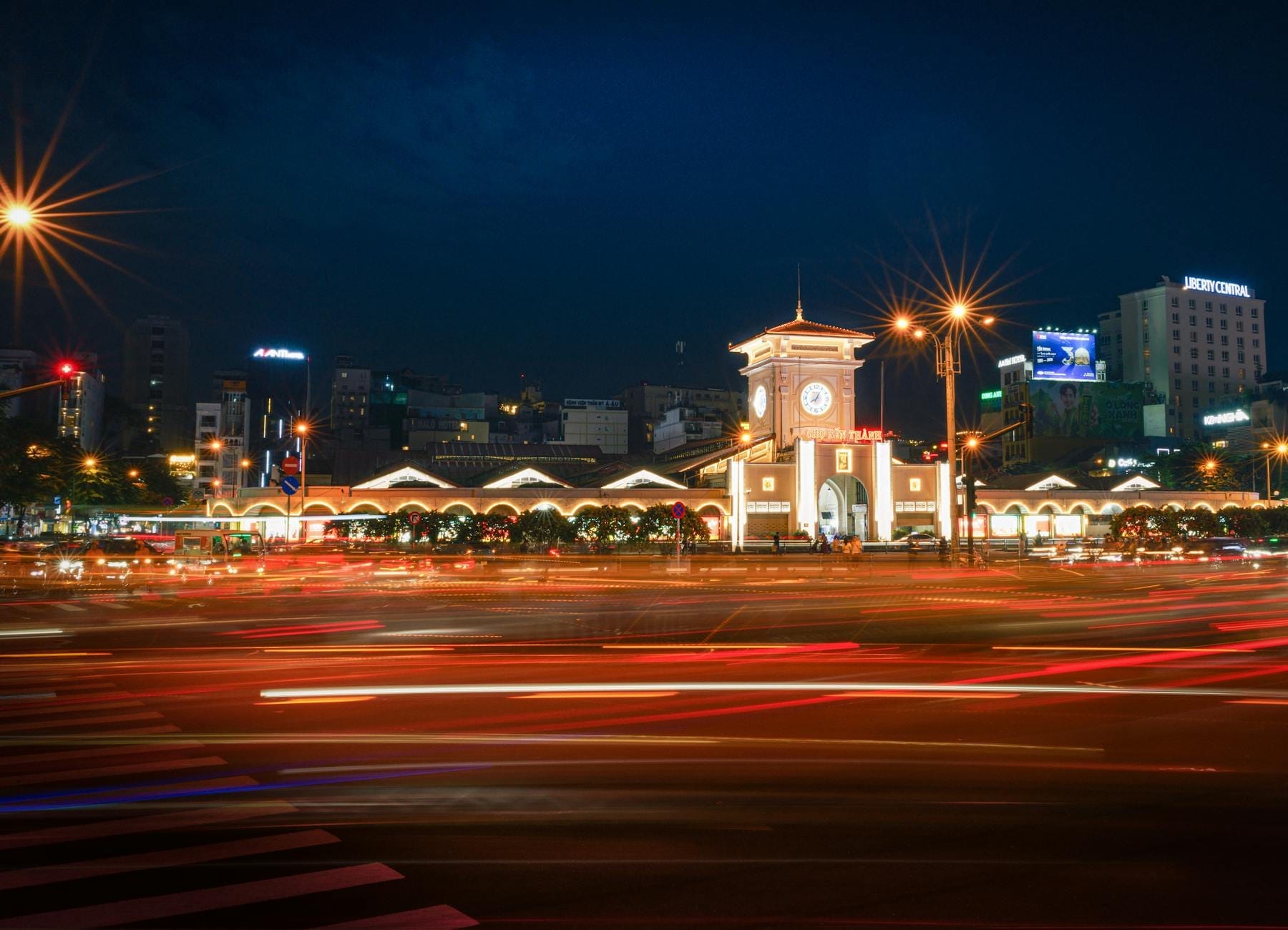
Tan Son Nhat International Airport is roughly six kilometers north, a 20 to 40 minute taxi or ride-hail journey depending on traffic. The district's spine runs roughly along Dong Khoi Street and Nguyen Hue Boulevard, both of which connect the Saigon River waterfront northward through the colonial core. Ben Thanh Market, at the southwestern end of Nguyen Hue, serves as the practical center of the district and the most intuitive landmark for orienting yourself.
The district divides naturally into sub-zones. The northeastern Ben Nghe and Da Kao wards hold the grandest colonial buildings and most of the cultural institutions. The Pham Ngu Lao ward in the southwest is the traditional backpacker zone, with Bui Vien Walking Street at its core. The riverfront along Ton Duc Thang Street connects the financial towers and upscale restaurants. Understanding these sub-zones will help you decide exactly where to stay.
ℹ️ Good to know
Under Vietnam's 2025 administrative reforms, District 1 was dissolved and its central area is now part of Saigon Ward, one of Ho Chi Minh City's 168 new wards. On the ground, nothing has changed in terms of streets, landmarks, or character, but official maps and government documents may use the new terminology.
Character & Atmosphere
Early mornings in District 1 belong to the locals. By 5:30am, the wet markets off Ton That Dam Street are already loud with the sound of ice being broken and motorbikes delivering produce. Street coffee sellers set up tiny plastic stools on sidewalks along Le Loi and Nguyen Thi Minh Khai, and the air carries the smell of pho broth that has been simmering since midnight. The light is soft and golden, and the streets, while never truly quiet, have a rhythm that belongs to the people who live here rather than those passing through.
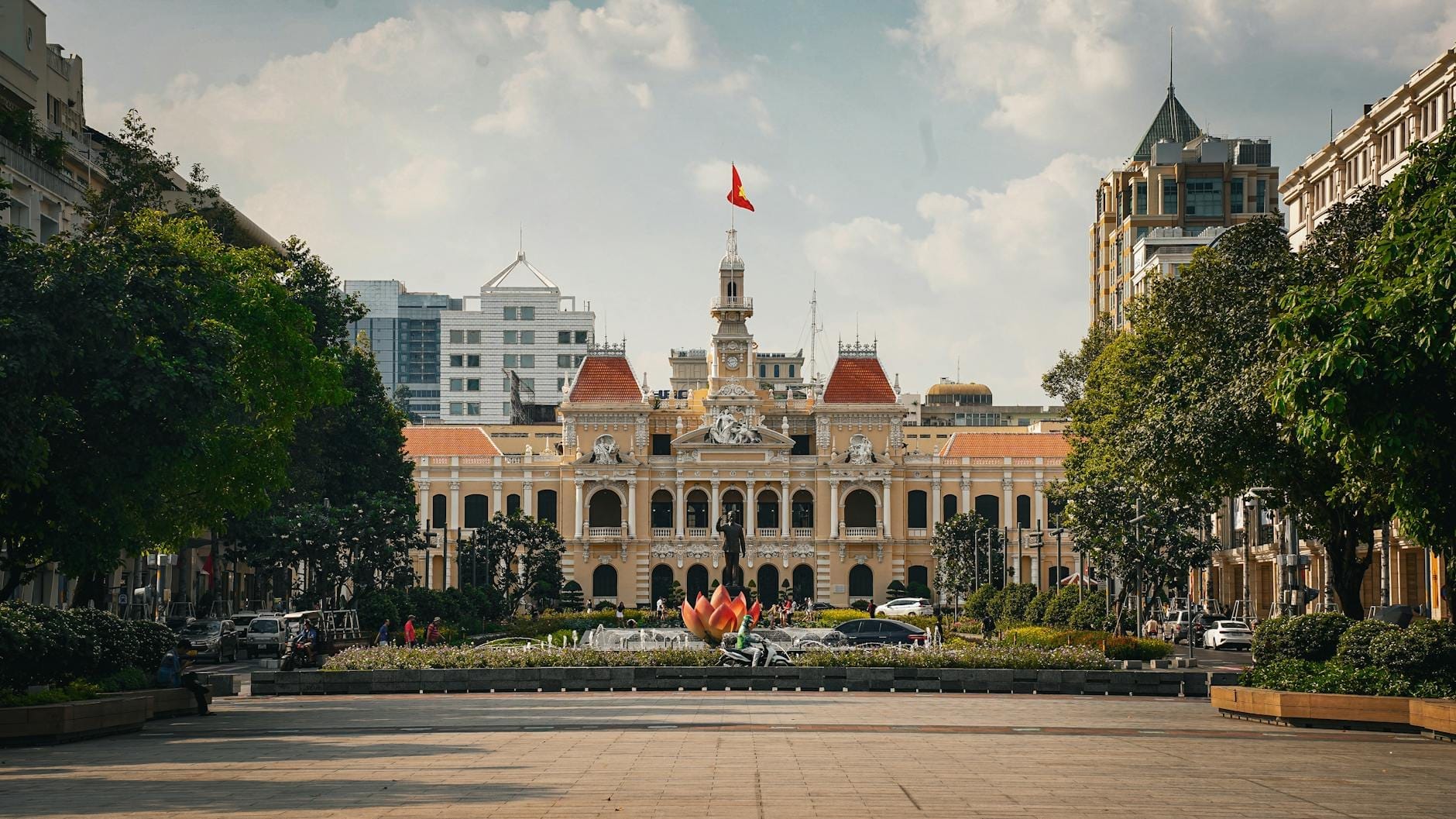
By mid-morning the tourist economy activates. Tour buses appear near Notre-Dame Cathedral. The walking streets fill with visitors pointing cameras at the People's Committee Building. The afternoon heat, which in the dry season can reach 35 degrees Celsius, empties the outdoor spaces somewhat and pushes everyone into air-conditioned cafes and shopping centers. The light becomes harsh and flat between noon and 3pm, then turns a rich amber by late afternoon, which is when the streets around Dong Khoi and the Nguyen Hue promenade look their best.
After dark, the district splits in two directions. The northern part around Dong Khoi, the Opera House, and the riverfront becomes the domain of rooftop bars, fine dining, and wine lists. The southern Pham Ngu Lao area shifts into a different register entirely: neon lights, beer sold from ice buckets on the street, backpackers, and a noise level that makes conversation difficult after 9pm. Both are legitimate versions of the district, and they are about 15 minutes apart on foot.
What makes District 1 feel distinct from anywhere else in the city is the density of contrast. You can walk from a 19th-century French cathedral to a glass-and-steel financial tower to a 30,000 VND bowl of banh mi eaten standing on a pavement in under ten minutes. The district has been described as Saigon's showcase, and while that brings crowds and some performative elements, the underlying city life is genuine and persistent.
What to See & Do
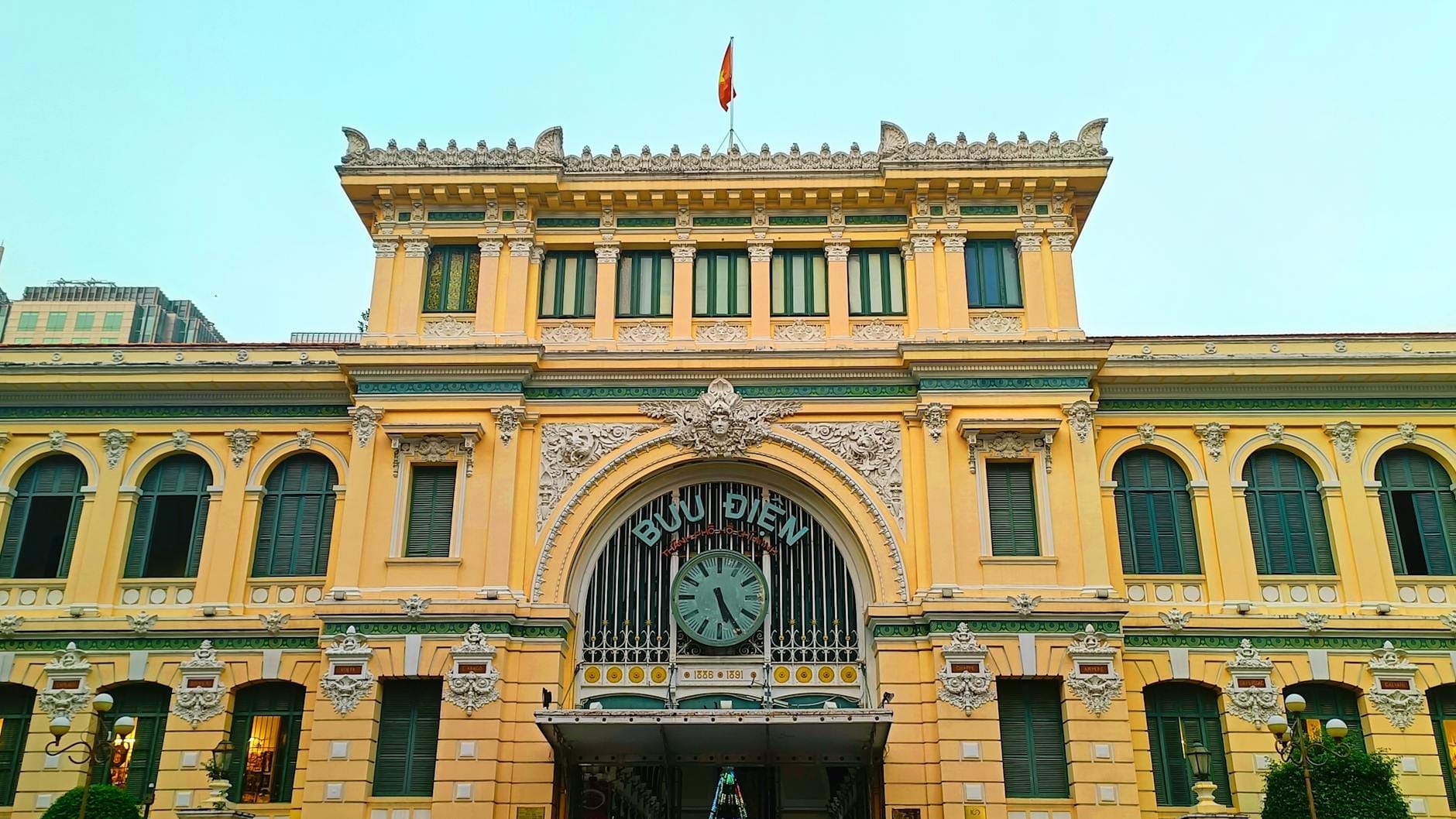
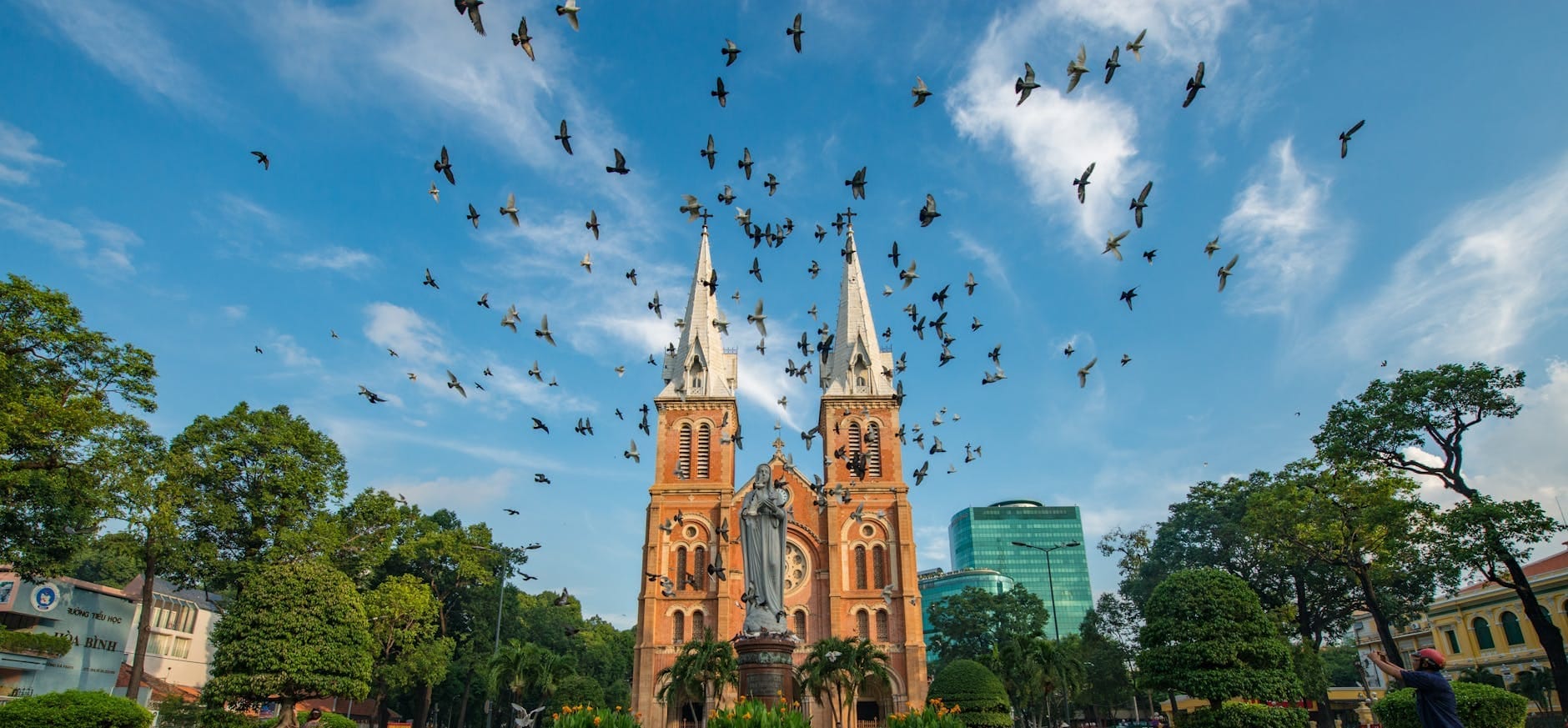
The colonial core around Paris Commune Square (Cong xa Paris) is the most photographed stretch in the city. Notre-Dame Cathedral, built between 1877 and 1880, anchors the northern end of the square. Immediately behind it, the Saigon Central Post Office is one of the finest examples of French colonial architecture in Southeast Asia, still functioning as a post office, and worth visiting for its barrel-vaulted interior alone.
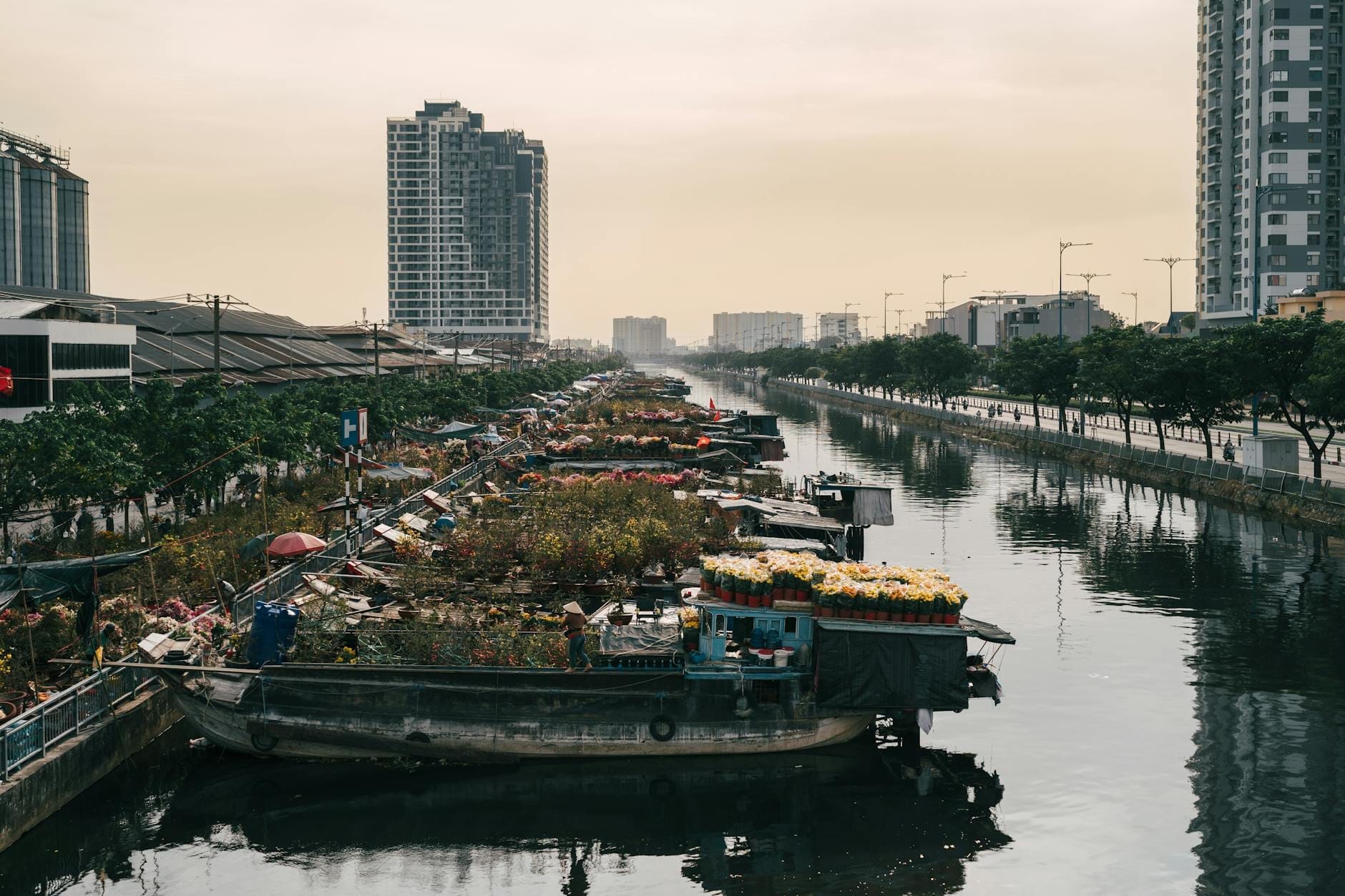
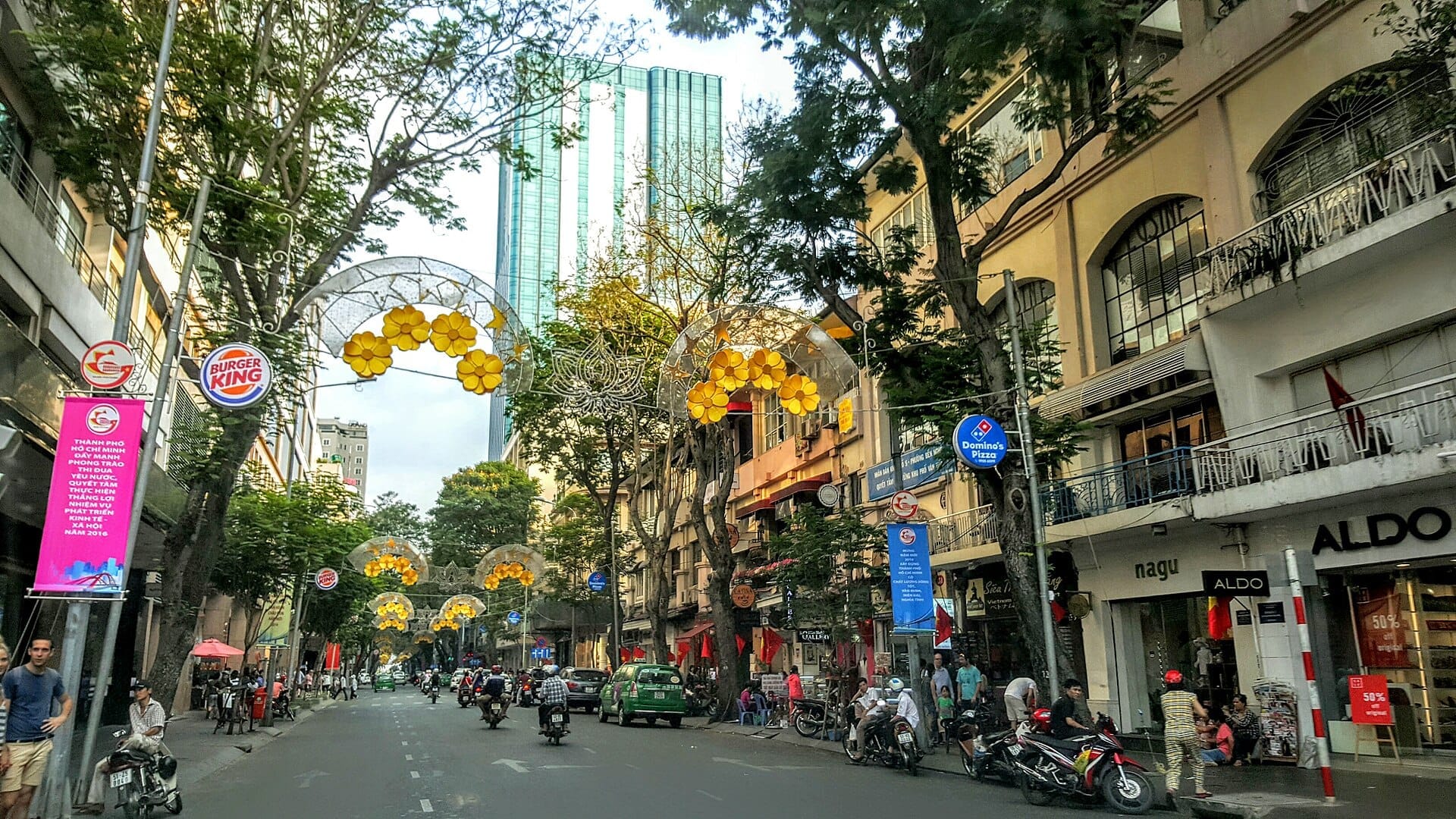
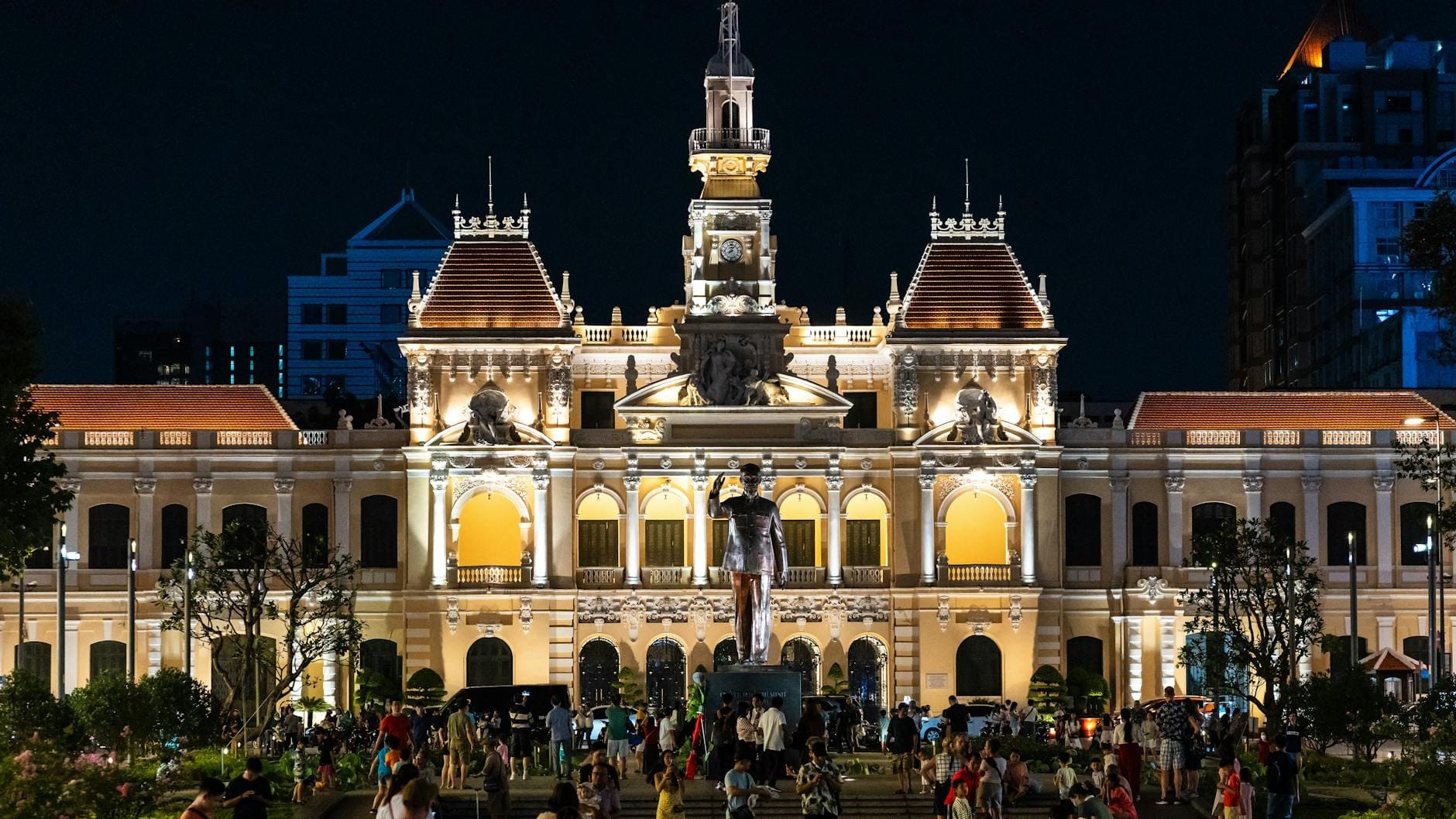
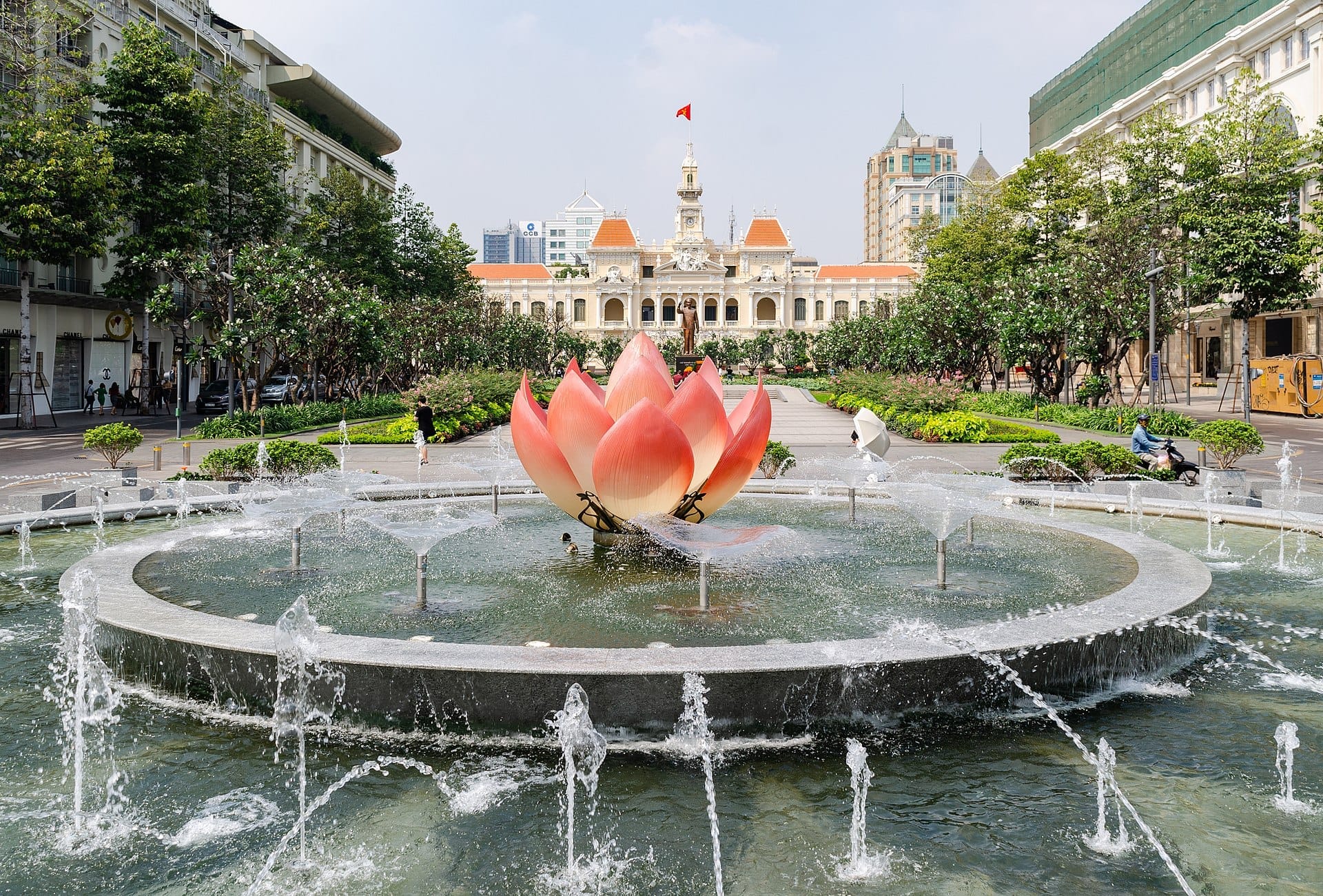
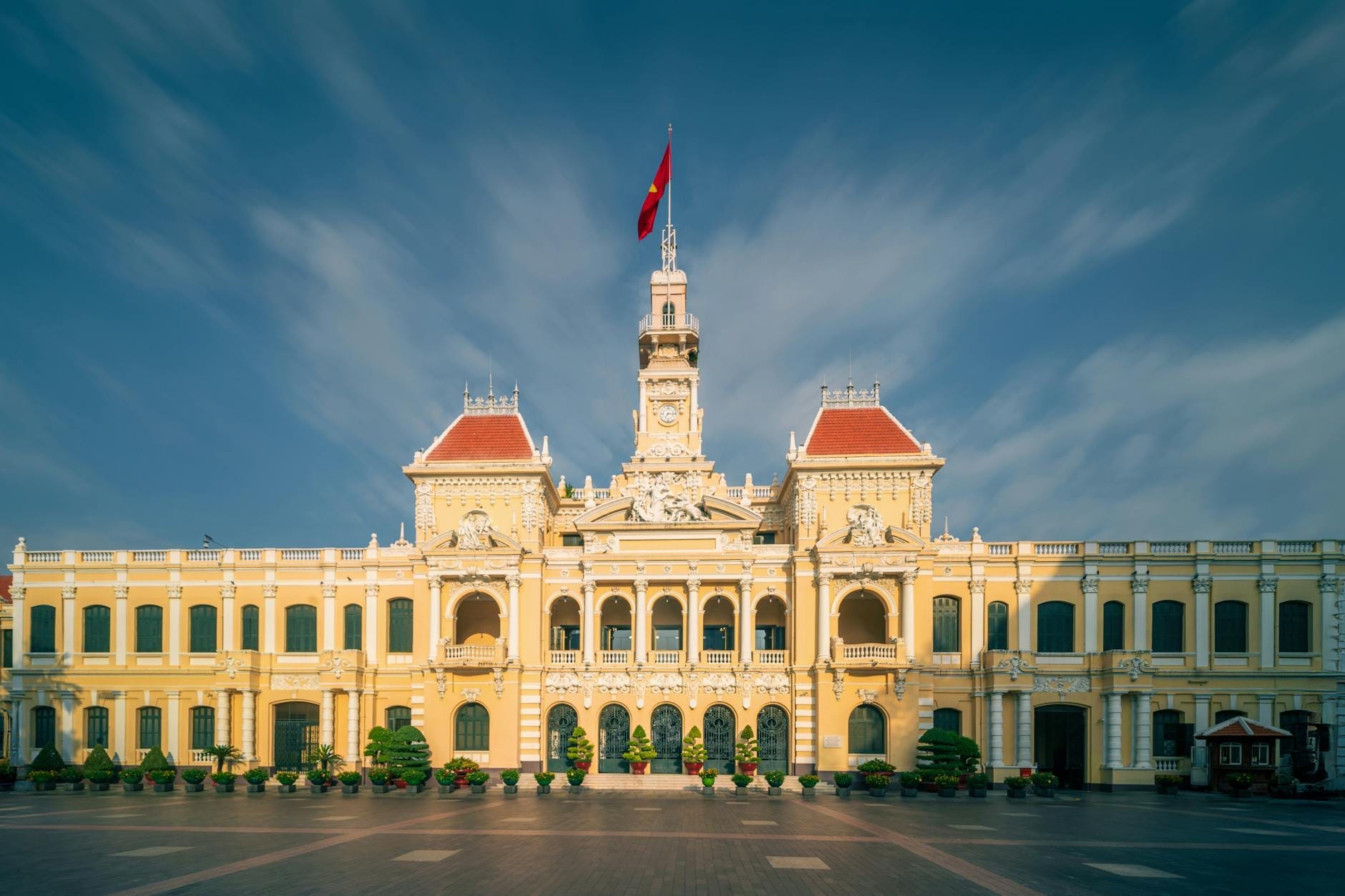
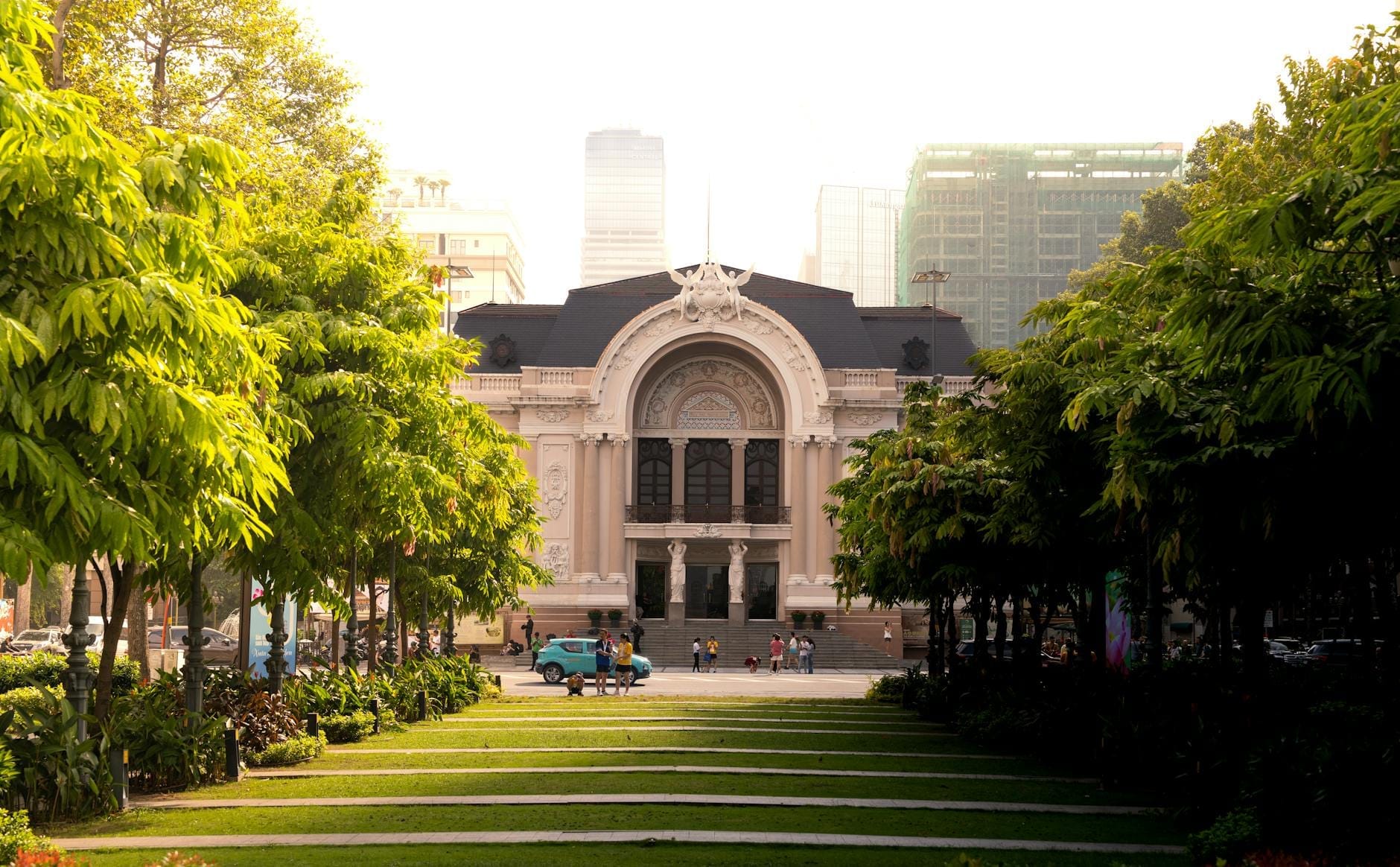
Walking south on Dong Khoi Street brings you to the Saigon Opera House, built in 1897 and still hosting performances most evenings. Continuing down Nguyen Hue Boulevard toward the river, the Nguyen Hue Walking Street is where locals gather on weekend evenings, where flower festivals take place during Tet, and where the People's Committee Building and its square host public events and light projections. The boulevard terminates at a riverside promenade with views across to Thu Thiem.
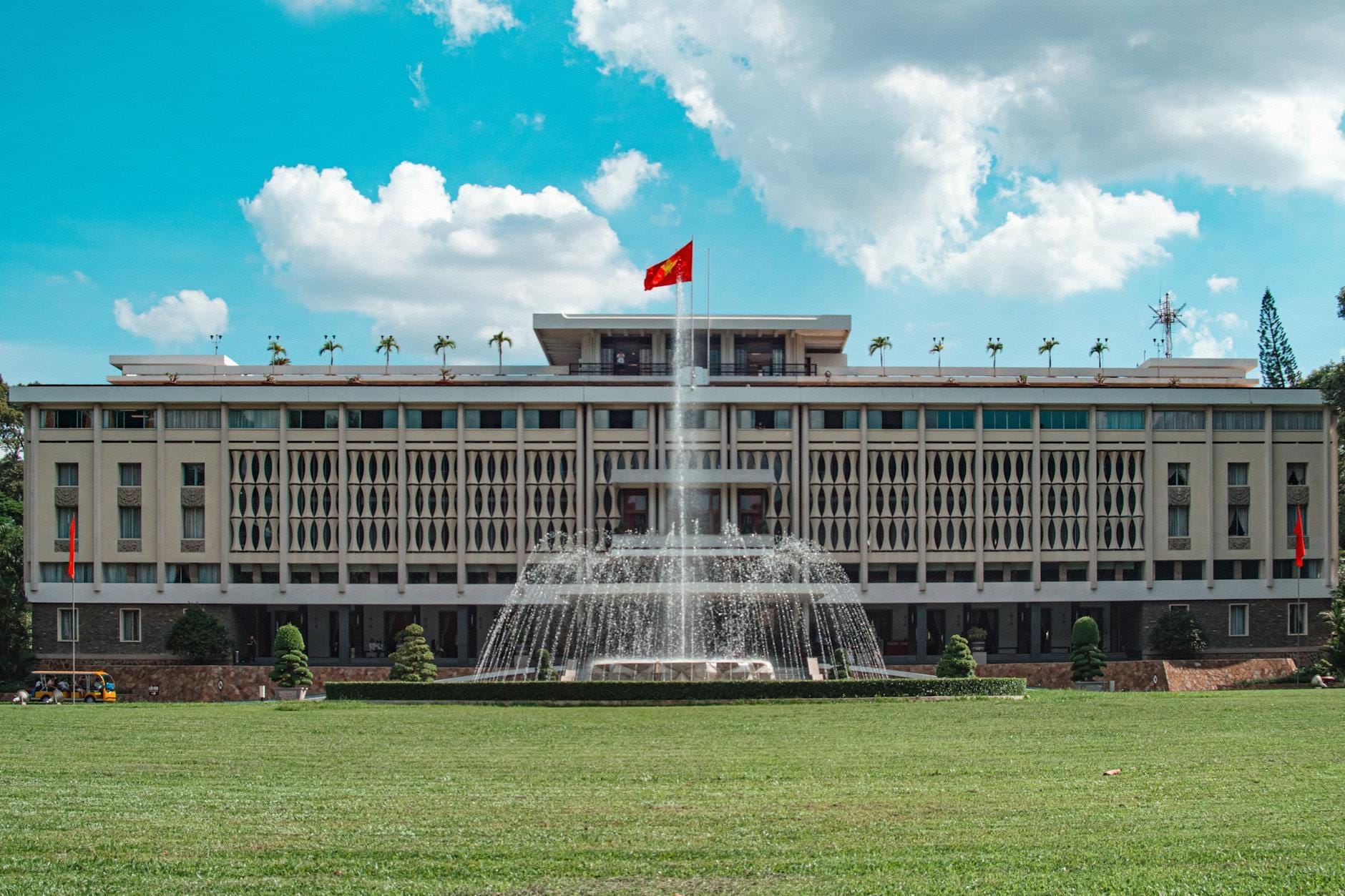
The War Remnants Museum on Vo Van Tan Street, at the boundary with District 3, is one of the most-visited attractions in Vietnam. It is confronting by design, and requires preparation rather than casual browsing. Nearby, the Reunification Palace offers a remarkable time-capsule experience: the building has been preserved largely as it was in 1975, from the rooftop helicopter pad to the underground command bunkers.
Ben Thanh Market: the most recognizable landmark in the city, best visited early morning for produce and local life rather than afternoon for souvenirs
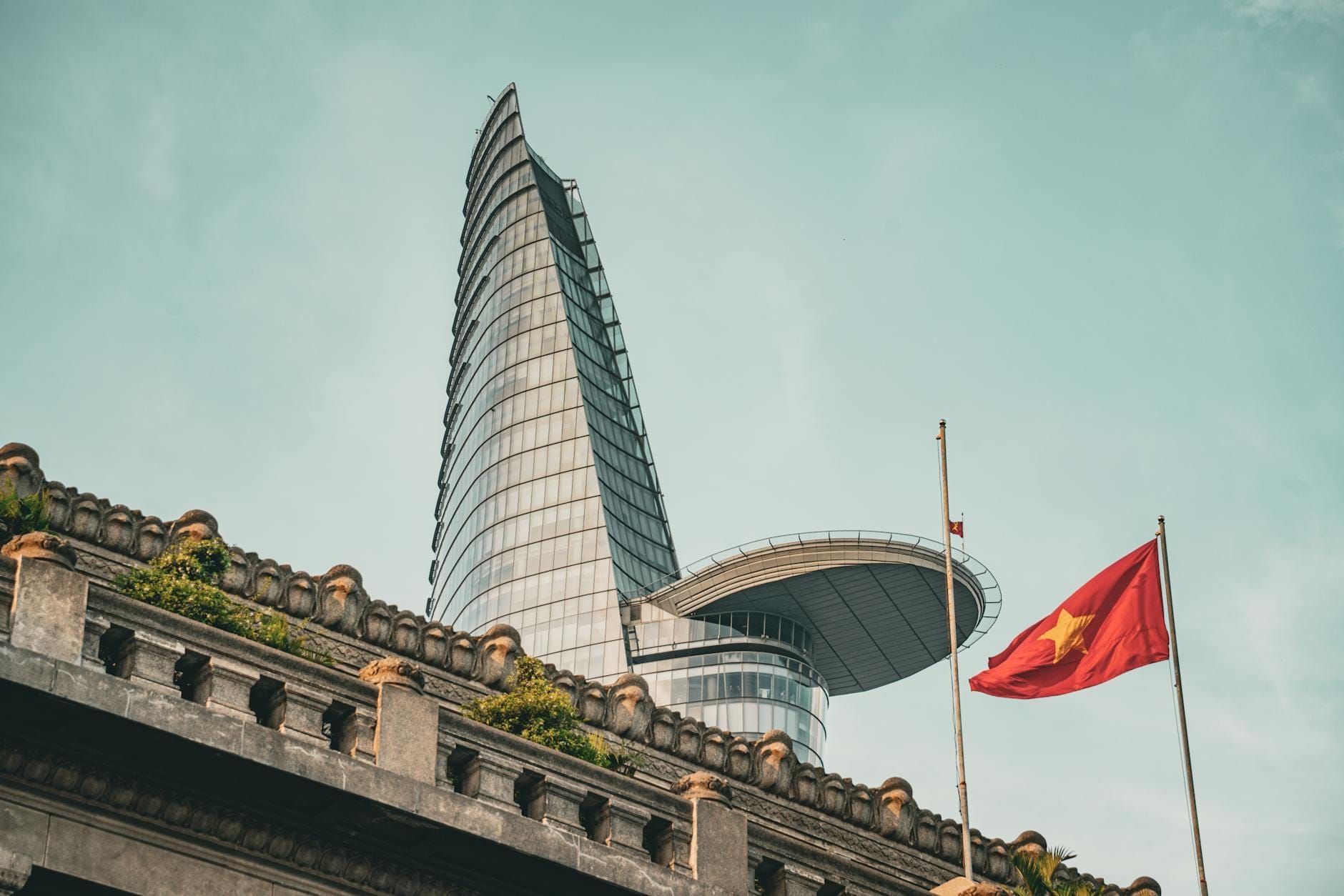
Bitexco Financial Tower Skydeck: views over the entire district and the Saigon River, best at dusk
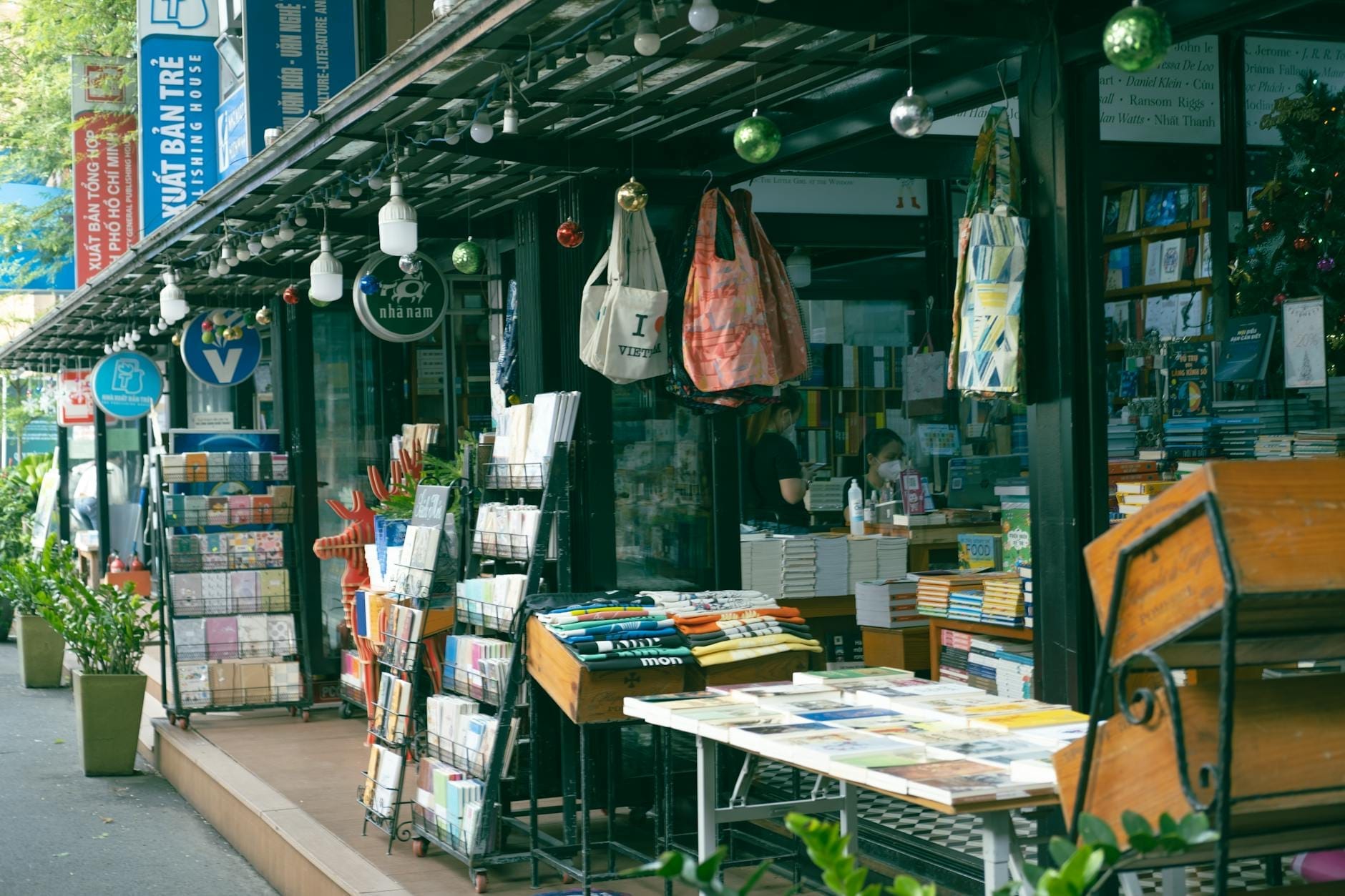
Ho Chi Minh City Book Street (Duong Sach): a pedestrian lane lined with bookshops and cafes, particularly popular on weekends
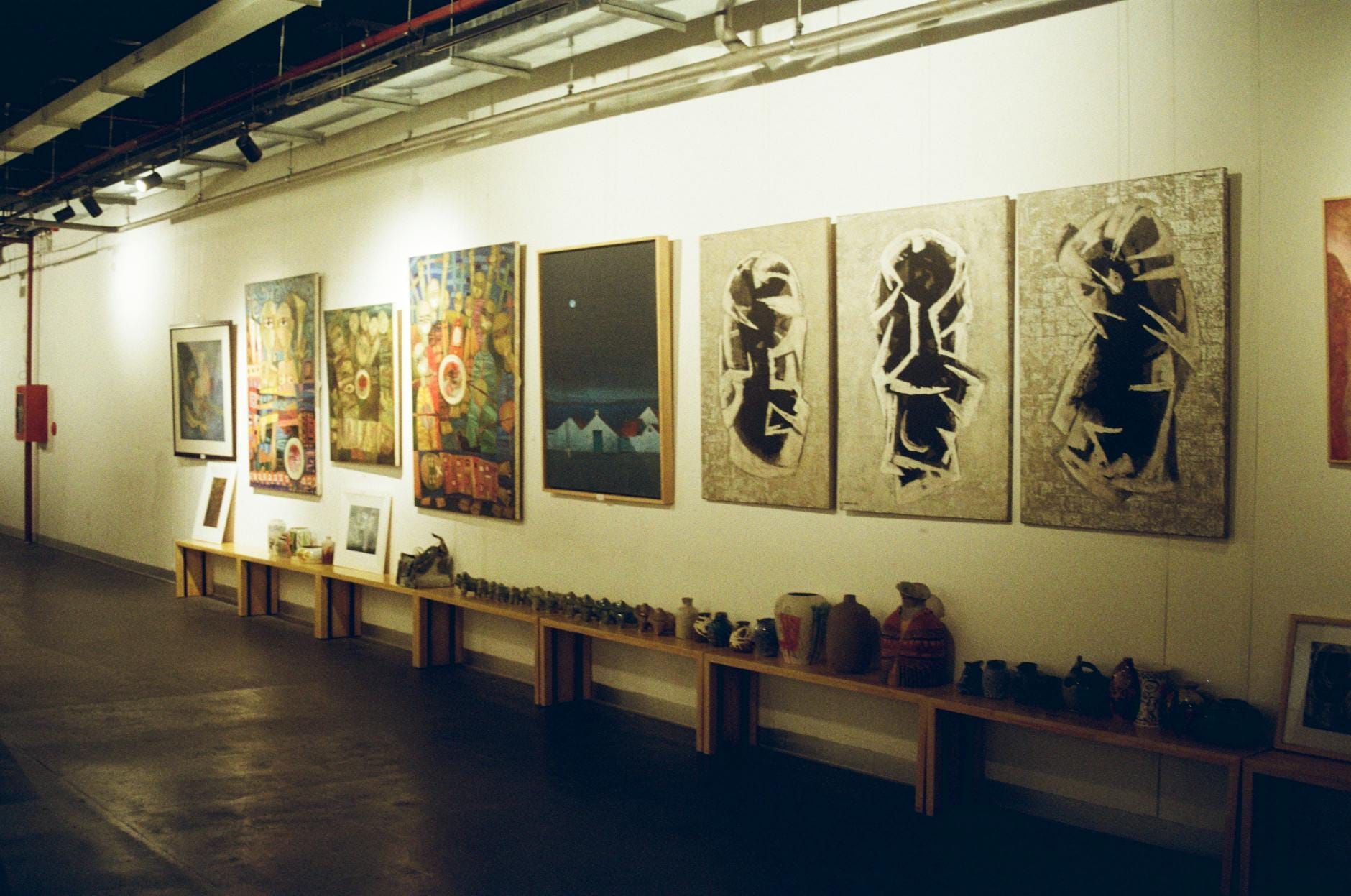
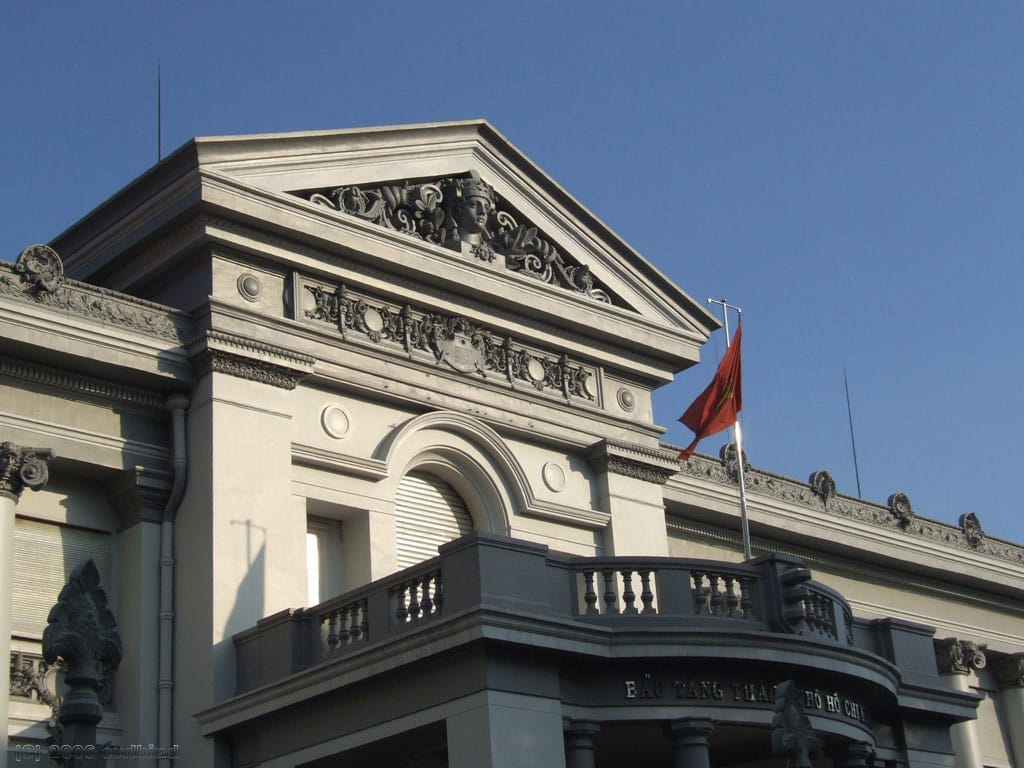
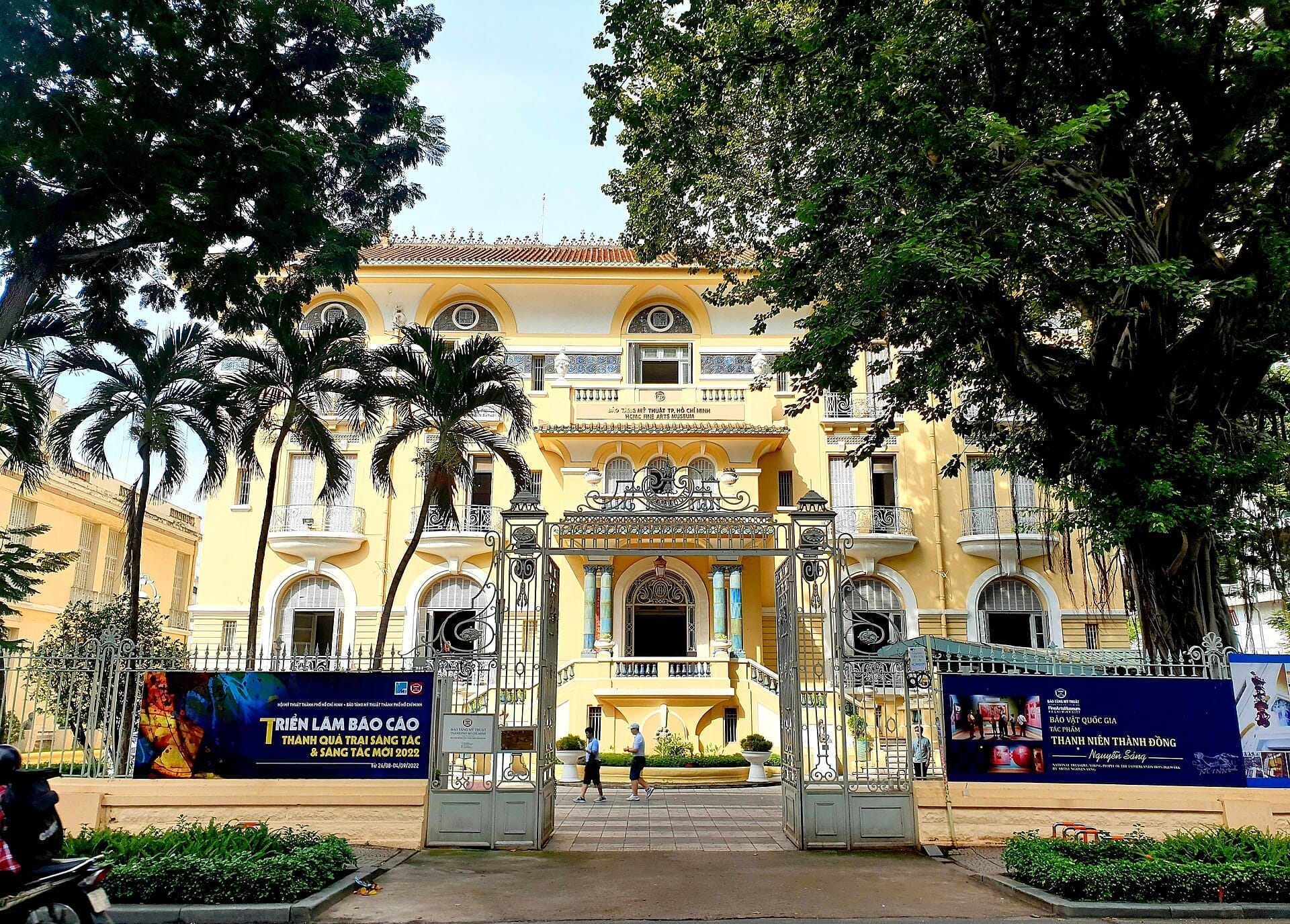
Museum of Fine Arts: French colonial building on Pho Duc Chinh Street housing three centuries of Vietnamese art
Da Kao neighborhood: quieter residential streets north of the cathedral, worth walking for their human scale and local cafes
For a broader overview of the city's attractions and how to fit them into a logical itinerary, the Ho Chi Minh City itinerary guide covers how to sequence District 1 alongside day trips and other neighborhoods.
Eating & Drinking
District 1 covers every price point in the city, from 20,000 VND street food to multi-course tasting menus. The challenge is not finding somewhere to eat but filtering out the places that survive on tourist foot traffic rather than food quality.
For street food, the area around Ben Thanh Market is convenient but heavily marked up. Better options are found a few blocks in any direction: banh mi carts on Calmette Street, com tam (broken rice) stalls in the alleyways off Ly Tu Trong, and pho spots in the Da Kao ward that have been operating for decades. The outdoor eating strip along Vinh Khanh Street is technically in District 4 but reachable in 10 minutes from southern District 1, and it is where locals go for grilled seafood.
The Dong Khoi and Hai Ba Trung corridor is where the city's upscale dining is concentrated. French and Japanese restaurants sit alongside Vietnamese fine dining, with prices comparable to mid-range European cities. The rooftop bars on and around Bui Thi Xuan and the towers along the waterfront offer cocktails with skyline views. For a deeper map of where to eat across the whole city, see the Ho Chi Minh City restaurant and food guide.
The Pham Ngu Lao area has a dense concentration of budget restaurants, smoothie bars, and traveler-oriented cafes. Quality is inconsistent, but the energy is infectious on weekend nights. For the wider street food scene across the city, the Ho Chi Minh City street food guide is worth reading before you start eating.
Broken rice (com tam): a Saigon staple, find it at small stalls open from around 6am and again from lunch through early evening
Banh mi: the best versions in District 1 come from long-running street carts rather than cafes; look for queues of motorbike riders
Ca phe sua da (Vietnamese iced coffee): ordered at any sidewalk stall; the condensed milk version is the local standard
Hu tieu: a southern noodle soup lighter than pho, widely available at small shops in Da Kao and around Ben Thanh
💡 Local tip
The streets immediately surrounding Ben Thanh Market charge tourist prices for food and drink. Walk two or three blocks away from the market perimeter in any direction and prices drop noticeably while quality improves.
Getting There & Around
From Tan Son Nhat Airport, the most practical option is a metered taxi or a ride-hail app (Grab is the dominant platform in Ho Chi Minh City). The journey to central District 1 is six kilometers but can take anywhere from 20 minutes to over an hour depending on the time of day. Airport taxis are typically metered and cost in the range of 150,000 to 250,000 VND to central locations, though this should be verified against current rates.
Within District 1, walking is the most efficient way to move between the major landmarks. The distance from Ben Thanh Market to Notre-Dame Cathedral is roughly 1.2 kilometers. From the cathedral to the Reunification Palace is another 700 meters. From Ben Thanh to the War Remnants Museum is about 1.5 kilometers. The whole district is compact enough that most visitors cover the central sights without any transport at all.
Ho Chi Minh City's metro system is in early stages. Metro Line 1 (Ben Thanh to Suoi Tien) became operational in late 2024, with the Ben Thanh station located next to the market of the same name, providing a direct rail link to the eastern suburbs. Metro Line 2 construction is scheduled to begin in late 2026 or beyond. Bus routes serve the district but schedules and routes can be difficult to navigate without local knowledge. Grab motorbike taxis (Grab Bike) remain the fastest and cheapest way to cover short distances. For a full breakdown of transport options across the city, the guide to getting around Ho Chi Minh City covers everything in detail.
Cycling is technically possible but not recommended for unfamiliar visitors. Traffic in District 1 is dense and follows local logic that takes time to read. Crossing roads as a pedestrian requires patience and a steady walking pace rather than stopping in the middle of the street.
⚠️ What to skip
Bag snatching by motorbike riders is a documented issue in District 1, particularly along the Nguyen Hue promenade and in the Pham Ngu Lao area at night. Carry bags on your non-street side, keep phones out of sight when not in use, and use inside pockets where possible.
Where to Stay
District 1 is the most hotel-dense area in Ho Chi Minh City, with options ranging from dorm beds in Pham Ngu Lao to five-star properties on Dong Khoi and Le Duan. For an overview of the full accommodation landscape across the city, the Ho Chi Minh City accommodation guide compares neighborhoods and price brackets.
The northeastern quadrant, roughly between Dong Khoi Street and the riverfront, is where the luxury hotels are concentrated. Staying here puts you within walking distance of the Opera House, the colonial landmarks, and the better restaurants, but it is also the priciest part of the district. Mid-range boutique hotels are found throughout the Ben Nghe and Nguyen Thai Binh wards, often in converted townhouses a few streets back from the main tourist corridors.
The Pham Ngu Lao ward is the budget accommodation center. Hostels, guesthouses, and cheap hotels are densely packed into a small area around De Tham and Bui Vien Streets. The location is convenient for transport connections and the price is right, but noise is a genuine issue. Rooms facing Bui Vien Street are effectively unusable for sleeping before midnight on weekends. Ask for a room on an upper floor facing away from the street if noise is a concern.
The Da Kao and Tan Dinh wards, at the northern edge of the district, offer a quieter alternative to both extremes. Streets here are more residential, the noise drops significantly after 10pm, and you are still only a 10 to 15 minute walk from the central landmarks. This is the best option for travelers who want the convenience of District 1 without the sensory overload of the tourist core.
Honest Assessment: Strengths and Drawbacks
District 1 earns its status as the obvious starting point for any visit to Ho Chi Minh City. The concentration of landmarks, transport connections, food options, and accommodation is unmatched elsewhere in the city. For a first visit of two or three days, you can walk to most of what matters and use the district as a base for trips further afield.
The drawbacks are real. The district is heavily touristed along its main corridors, and the commercial pressure to overcharge visitors is constant in markets, restaurants near major sights, and street-side souvenir stalls. The Pham Ngu Lao area in particular has a transient, impersonal quality that puts off travelers looking for authentic neighborhood life. For that, the streets of District 3 directly to the north offer more everyday Saigon texture with almost no sacrifice in convenience. The Chinese-Vietnamese neighborhood of Cholon in District 5 is the most distinct alternative for those who have already covered the colonial core.
Heat and noise are structural realities rather than occasional inconveniences. The district runs at high volume from before dawn until after midnight, and the tropical heat between November and April means midday sightseeing is genuinely uncomfortable without regular air-conditioning breaks. Visitors who plan around early morning and late afternoon activity, and who reserve midday for museums, cafes, or rest, will have a significantly better experience than those following a standard daytime schedule.
TL;DR
District 1 is Ho Chi Minh City's central district: under 8 square kilometers containing the city's most important colonial landmarks, markets, financial towers, and hotels.
Best for first-time visitors, anyone wanting walkable access to major sights, and travelers who want a wide range of accommodation and food at every price point.
The northeastern quadrant (Dong Khoi, Da Kao) is quieter and more elegant; the southwestern Pham Ngu Lao area is cheaper and louder, with Bui Vien Street running loud until 2am on weekends.
Key drawbacks: tourist pricing near main sights, bag-snatching risk on busy streets at night, and the Pham Ngu Lao area's noise level. Visitors seeking authentic neighborhood life may prefer District 3 as a complement or alternative base.
Essential sights include Notre-Dame Cathedral, the Central Post Office, Reunification Palace, the War Remnants Museum, and Nguyen Hue Walking Street, most of which are within a 30-minute walk of each other.
Ho Chi Minh City's tropical climate divides sharply into a dry season and a wet season, and timing your visit makes a bigger difference than most travelers expect. This guide breaks down every month, from ideal dry-season windows to the pros of traveling in the rain.
Ho Chi Minh City rewards deep exploration, but some of the most memorable experiences in southern Vietnam sit just beyond the city limits. These are the best day trips from Ho Chi Minh City, from underground war history to slow-boat river journeys.
Ho Chi Minh City's transport network is more layered than most visitors expect. From the newly opened Metro Line 1 to app-based motorbike taxis that slice through gridlock, this guide breaks down every practical way to get around Saigon, with honest assessments of what actually works.
Whether you have a long weekend or nearly a week, this guide breaks down exactly how to spend 2, 3, or 5 days in Ho Chi Minh City. From the war history of District 1 to the Chinese temples of Cholon and the tunnel networks of Cu Chi, every day is mapped out with honest advice on timing, crowds, and what's genuinely worth your time.
From cheap beers on Bùi Viện to cocktails 40 floors above the Saigon River, Ho Chi Minh City's nightlife runs seven days a week and rarely stops before 3 AM. This guide breaks down every scene by neighborhood, budget, and vibe so you spend less time deciding and more time out.
From crispy bánh xèo in District 4 to late-night snails on Nguyễn Thượng Hiền Street, Ho Chi Minh City's street food scene is one of the most diverse and affordable in Southeast Asia. This guide breaks down the essential dishes, the best neighborhoods to find them, honest pricing, and the traps worth avoiding.
Ho Chi Minh City, still widely called Saigon, packs more experiences per square kilometer than almost any city in Southeast Asia. This guide covers the top attractions, day trips, nightlife, food, and practical planning tips so you can spend less time deciding and more time exploring.
Ho Chi Minh City's food scene runs from sidewalk plastic stools to contemporary kitchens earning Michelin recognition. This guide cuts through the noise with specific restaurants, real prices in Vietnamese Dong, neighborhood breakdowns, and honest assessments of what's worth your time.
Choosing where to stay in Ho Chi Minh City (Saigon) shapes your entire trip. This guide breaks down the best neighborhoods by travel style and budget, with honest assessments of what each area delivers — and what it doesn't.