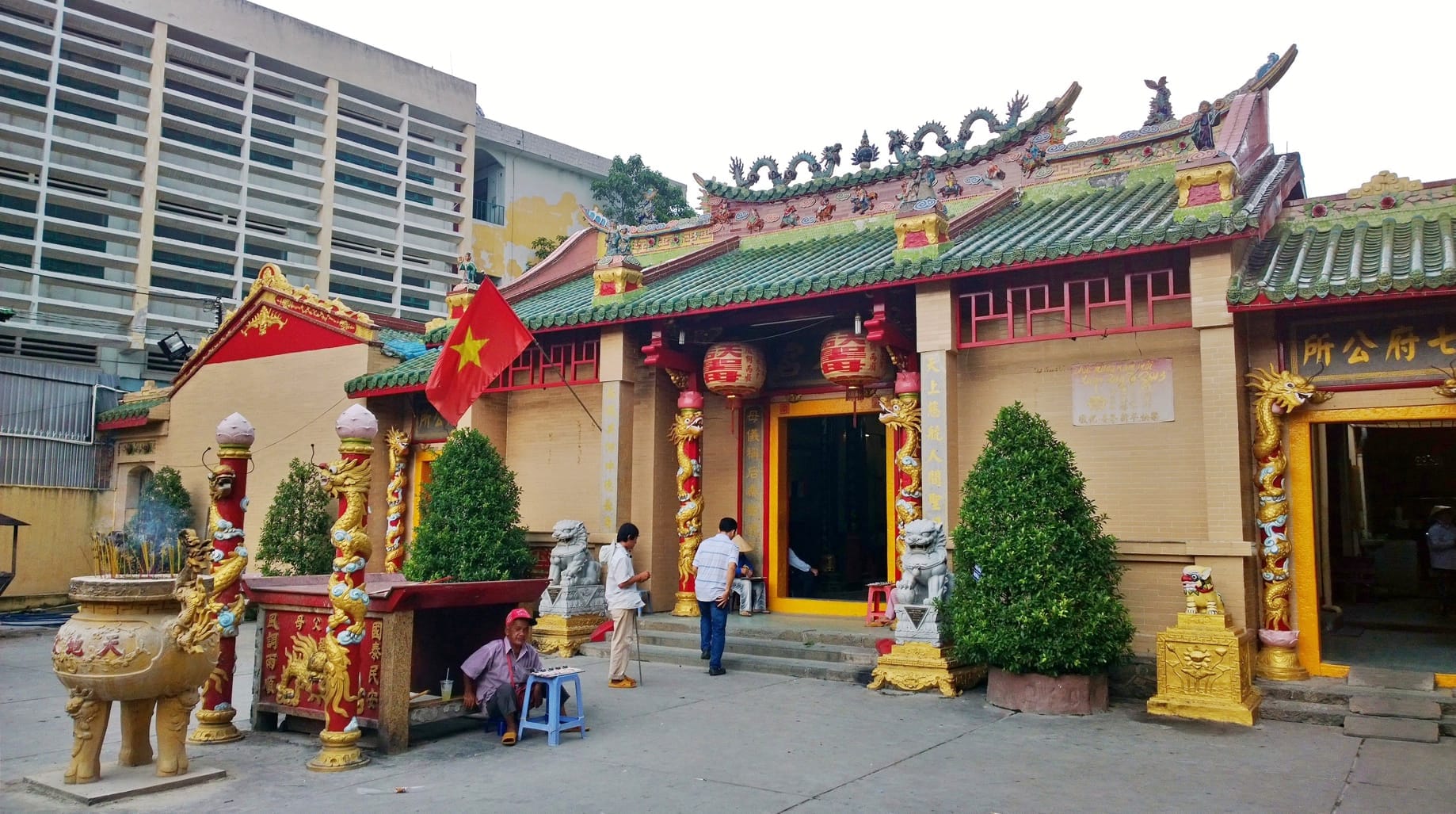
Chợ Lớn is Ho Chi Minh City's vast Chinatown, stretching across District 5 and parts of District 6, roughly 5 kilometers west of the downtown core. Founded by Chinese emigrants in 1778, it remains the largest Chinese community in Vietnam, with incense-filled pagodas, wholesale trading lanes, and a food culture rooted in the traditions of Chaozhou, Fujian, and Cantonese immigrants.
Chợ Lớn is where Ho Chi Minh City feels most like another city entirely. The signage shifts to Chinese characters, temple smoke drifts across narrow trading streets, and the commercial rhythm runs on its own clock, starting before sunrise and winding down only after the last dried-goods wholesaler packs up. This is not a tourist district performing its heritage; it is a living, working community that has been doing business on its own terms for nearly 250 years.
Orientation
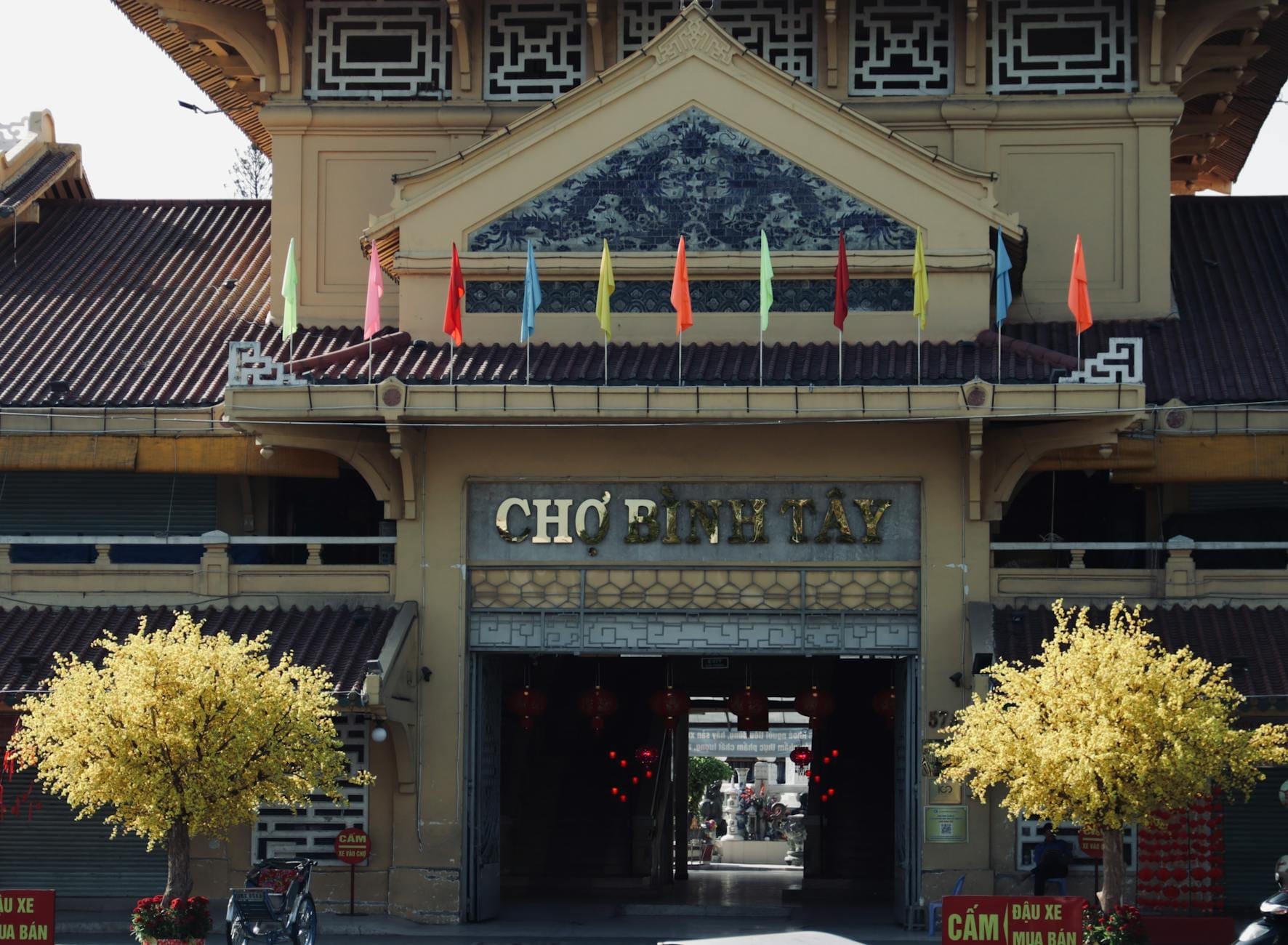
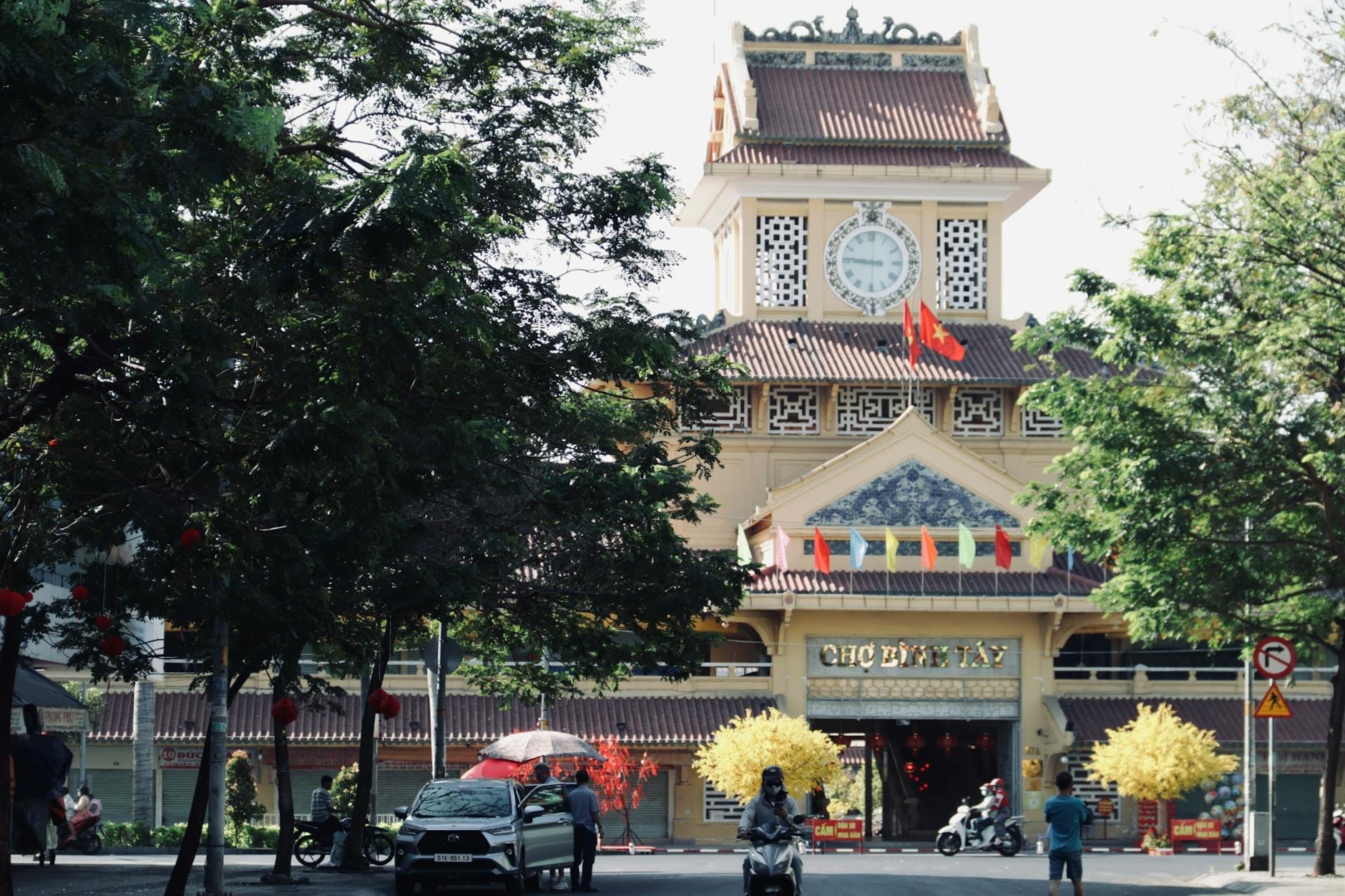
Chợ Lớn occupies the western reaches of Ho Chi Minh City, centered on Districts 5 and 6, and sits roughly 5 kilometers from the heart of District 1. The Tàu Hủ Canal (also called the Ben Nghe Canal in its eastern stretch) forms a natural southern boundary, while the neighborhood bleeds northward into the dense residential streets of District 11. The area is large enough that most visitors only scratch its eastern edge, around Bình Tây Market and the main temple cluster, without realizing how far the Chinese-influenced streetscape continues in every direction.
Administratively, the ward named Chợ Lớn was created in 2025 by merging former Wards 11, 12, 13, and 14 of District 5, covering about 1.67 km². But culturally, Chợ Lớn as a concept is much larger than any single ward boundary. The streets most visitors associate with the neighborhood, including Lương Nhữ Học (the paper and lantern street), Triệu Quang Phục, and the corridors around Bình Tây Market, span a radius of several kilometers. Think of the ward as the dense historical core and the surrounding districts as its natural extension.
For travelers based in District 1, Chợ Lớn feels like a genuine cross-city journey even though the distance is modest. The two areas are connected by Trần Hưng Đạo Boulevard, one of the city's longest east-west arteries, which transitions visibly as you travel west: the corporate towers and French colonial facades give way to shophouse terraces with Chinese clan association signage, medicinal herb shops, and stalls selling bulk dried goods to restaurant suppliers.
Character & Atmosphere
Chợ Lớn operates on a schedule driven by commerce, not tourism. By 5:00 in the morning, the lanes around Bình Tây Market are already thick with motorcycle carts, wholesale buyers loading sacks of dried spices and confectionery, and vendors arranging goods under fluorescent lights. The air carries a dense mix of dried shrimp, camphor from nearby temple supply shops, and roasting coffee. It is sensory overload in the best possible way, and it is almost entirely for a local audience.
By mid-morning, the wholesale frenzy settles into a steadier retail pace. This is the best time to walk the temple streets without crowds, when sunlight cuts through the smoke of incense coils hanging from pagoda ceilings and the sound of the city becomes a background hum rather than a roar. The streets around Thien Hau Pagoda and Ong Bon Pagoda see a near-constant flow of worshippers, mostly elderly residents who come daily and move through the ritual gestures with quiet familiarity.
Afternoons in Chợ Lớn slow considerably. Many family-run shophouses pull down their shutters during the hottest hours, and the streets feel almost quiet by the standards of a city this size. The light in this part of Ho Chi Minh City is particularly good in the late afternoon: it falls at a low angle across the yellow-painted shophouse facades on Châu Văn Liêm Street, catching the Chinese script carved into doorframes and the painted tile work on older buildings. Photographers tend to arrive at this hour for a reason.
After dark, Chợ Lớn is not a nightlife destination in any conventional sense. There are no rooftop bars here, no tourist-facing cocktail menus. What there is: brightly lit street food corners doing brisk trade, family restaurants packed with multigenerational tables, and the occasional mahjong parlor visible through a half-open door. The neighborhood feels safe and lived-in after dark, but it is not the place to come looking for the party side of Saigon.
💡 Local tip
Visit on a weekend morning when the pace around Bình Tây Market is most intense and the pagodas are busiest with worshippers. The combination of market commerce and active religious life gives the clearest sense of what makes Chợ Lớn distinct from anywhere else in the city.
What to See & Do
The anchor of any visit to Chợ Lớn is Bình Tây Market, a grand yellow-painted structure built in the 1920s with a distinctive clock tower and an inner courtyard surrounded by covered arcades. Unlike Bến Thành Market in District 1, which now caters primarily to tourists, Bình Tây remains a working wholesale market. The stalls deal in dried goods, spices, candy, traditional medicine ingredients, and household goods sold in bulk. Wandering the interior arcades at opening time is one of the more genuinely immersive market experiences available in Ho Chi Minh City.
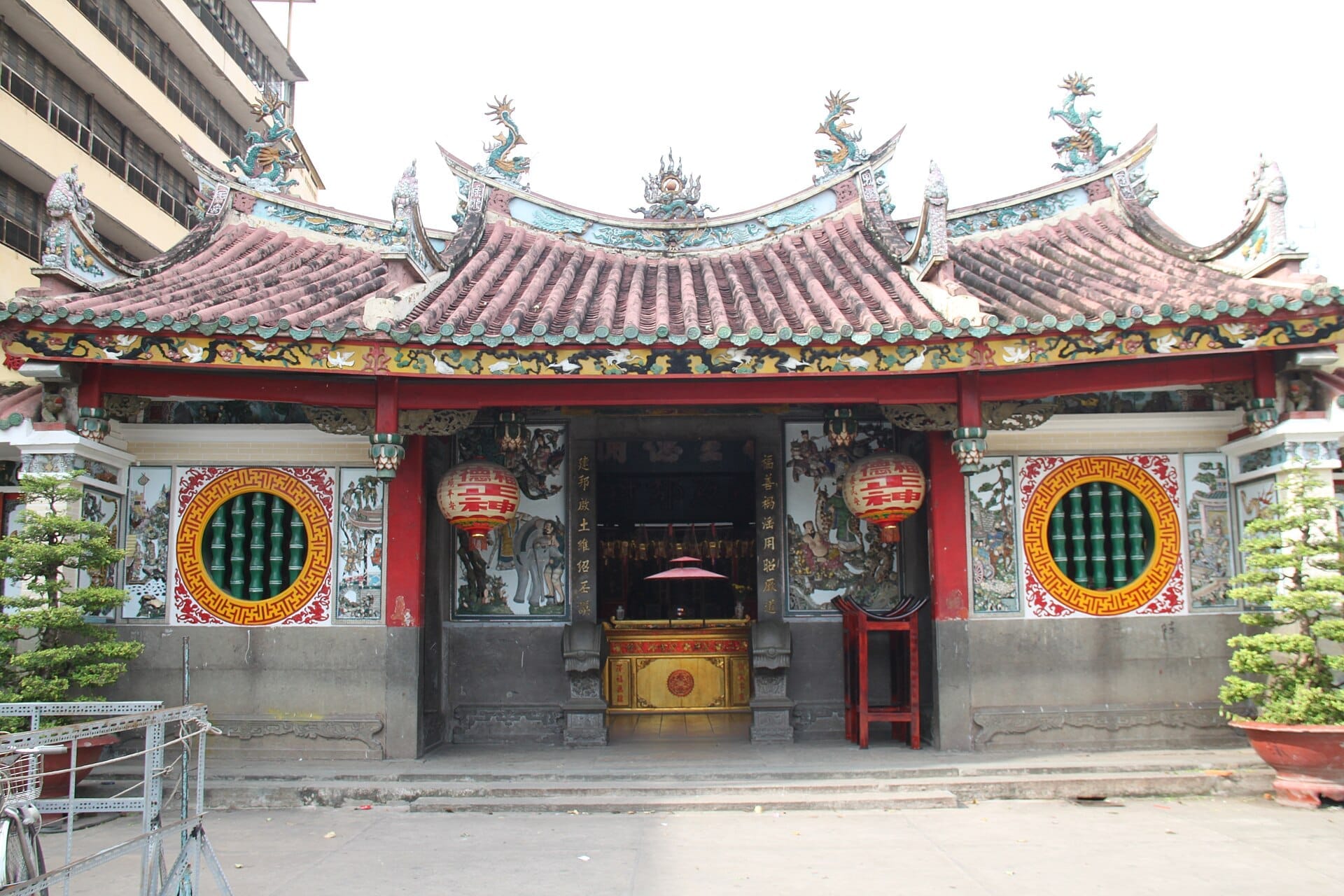
The pagoda circuit is the other essential activity. Thien Hau Pagoda on Nguyễn Trãi Street is the most visited, dedicated to the goddess of the sea and patroness of sailors, and reflects the maritime origins of the Fujian and Cantonese immigrants who funded its construction in the 18th century. The interior is dense with smoke from enormous hanging incense coils and decorated with elaborate ceramic figurines along the roofline. It is genuinely stunning architecture and one of the most atmospheric spaces in the entire city.
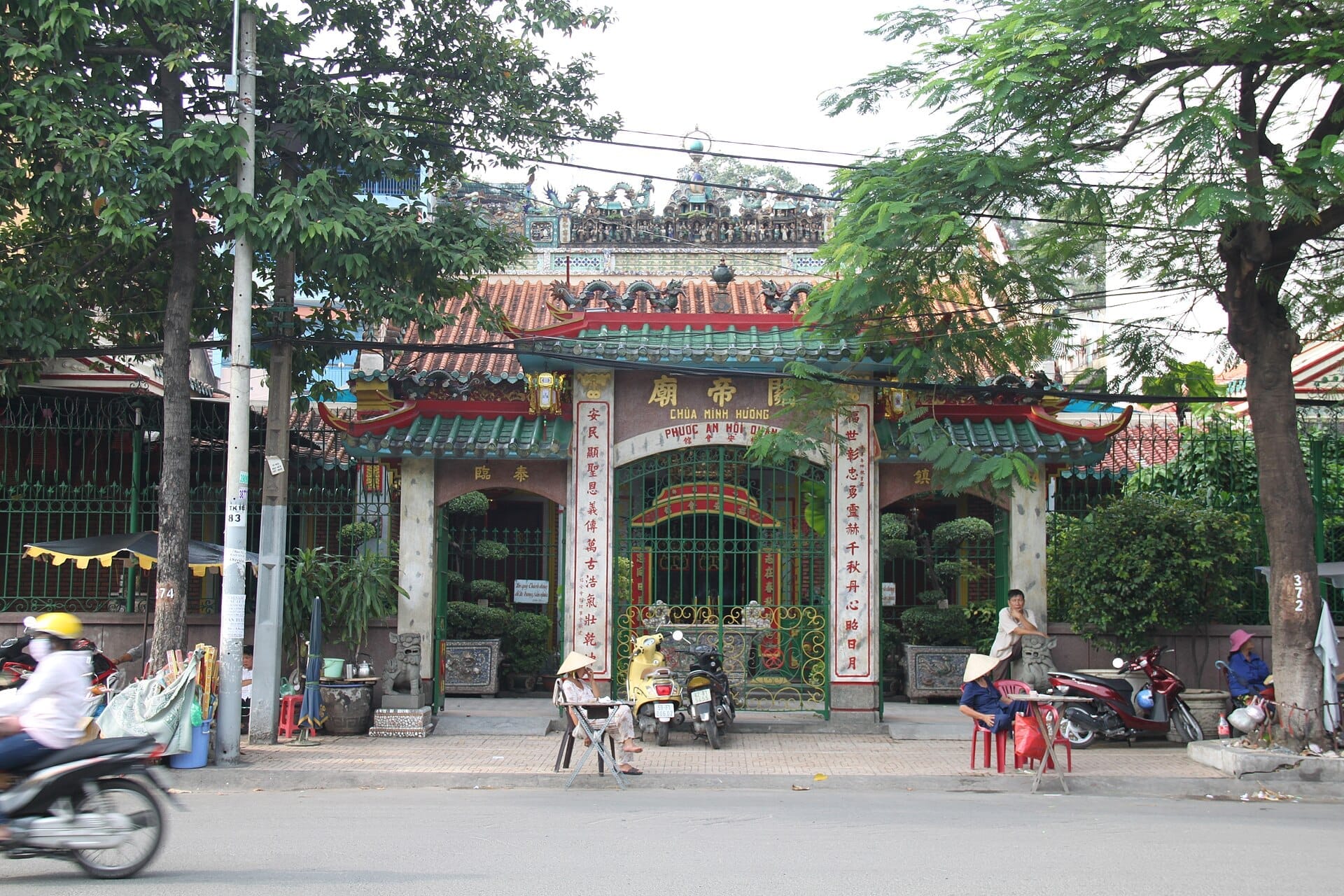
A short walk away, Ong Bon Pagoda and Phuoc An Hoi Quan Pagoda offer quieter but equally beautiful alternatives. Phuoc An Hoi Quan is particularly notable for its wooden carvings and the near-total absence of tourist foot traffic on most weekdays. These temples are not performance spaces; they are active places of worship, and visitors who approach them respectfully, maintaining quiet and dressing modestly, are generally welcomed without issue.
Lương Nhữ Học Street: the city's dedicated paper goods and lantern lane, where shops sell everything from ghost money for ceremonies to elaborately decorated paper offerings and festival decorations
The canal waterfront along the Tàu Hủ Canal: walk the embankment for views of the waterway and the mix of old warehouses and newer residential towers
Clan association buildings: several kongsi (Chinese clan houses) survive along the main streets, identifiable by their ornate facades and bilingual signage
Ceramic and traditional medicine districts: the streets north of Bình Tây Market contain dense clusters of shops dealing in traditional Chinese medicine ingredients, a sensory experience in their own right
ℹ️ Good to know
Chợ Lớn was founded in 1778 by Chinese merchants, primarily Teochew (Chaozhou) and Cantonese immigrants who established trading communities west of the original Saigon settlement. The name translates literally as 'Big Market,' a reflection of its commercial purpose from the very beginning. The area grew substantially in the late 19th and early 20th centuries under French colonial administration, which explains the hybrid architectural character still visible today: Chinese shophouses with French-influenced facades, wide boulevards cutting through dense trading lanes.
Eating & Drinking
The food culture in Chợ Lớn is among the most underrated in Ho Chi Minh City. The area has its own culinary identity, rooted in Chinese regional cooking traditions but adapted over generations into something distinctly Vietnamese-Chinese. For a broader sense of how this area fits into the city's food landscape, the Ho Chi Minh City street food guide covers the wider context, but Chợ Lớn deserves its own focused attention.
Dim sum is the obvious starting point. Several old-school dim sum restaurants in the area have been serving the same menu for decades, with trolley service in the mornings and a pace of eating that assumes you have nowhere else to be. The portions are generous, the prices are low by any standard, and the clientele is almost entirely local. Look for restaurants on and around Triệu Quang Phục and Châu Văn Liêm streets.
Street food here tilts toward Cantonese and Teochew traditions: congee (cháo) served with century egg and shredded ginger, sticky rice parcels wrapped in lotus or bamboo leaves, hủ tiếu Nam Vang (Phnom Penh-style noodle soup with a cleaner, lighter broth than the southern Vietnamese standard), and roast duck hanging in shopfront windows. The night food stalls around the market area serve grilled meats and noodle dishes until well past midnight.
Coffee in Chợ Lớn follows the older Saigon model: strong, dark, and served in a small glass with a layer of condensed milk at the bottom. The café culture here is less Instagram-oriented than in District 3 or the backpacker strip, and the prices reflect that. A coffee at a pavement stall near the market will cost a fraction of what the same drink costs in central Saigon.
Hủ tiếu Nam Vang: Phnom Penh-style noodle soup, a Chợ Lớn specialty with Chinese-Cambodian origins
Dim sum morning service: available at several established restaurants; arrive before 9:00 AM for the full trolley experience
Bánh bao (steamed buns): sold from roadside carts and small bakeries throughout the area
Roast meats: Cantonese-style roast pork and duck displayed in shopfront windows
Chè (sweet dessert soups): Chinese-influenced versions with red beans, lotus seeds, and grass jelly
Getting There & Around
As of 2026, no metro line connects Chợ Lớn to central Ho Chi Minh City, though Metro Line 2 (Bến Thành to Tham Lương) is in planning and construction phases that may eventually improve connectivity. For now, the practical options are ride-hailing apps (Grab and Be are the dominant platforms), public buses, or taking a taxi. The ride from Bến Thành Market in District 1 to Bình Tây Market takes roughly 15 to 25 minutes by car or motorbike depending on traffic, and the fare via Grab is modest.
Several public bus routes run along Trần Hưng Đạo Boulevard, connecting District 1 to the Chợ Lớn area directly. This is the cheapest option and gives a useful street-level view of the transition between the two neighborhoods, though buses can be slow during peak hours and the stops require some navigation. The bus fare is very low by any standard, and the route is well-established.
Within Chợ Lớn itself, walking is the best way to explore. The core area around Bình Tây Market, Thien Hau Pagoda, and the main temple streets is compact enough to cover on foot in two to three hours at a comfortable pace. The streets can be narrow and traffic moves unpredictably, so staying aware of your surroundings is more important than following any strict route. Renting a bicycle is another option if you want to cover more ground toward the canal waterfront or the quieter residential streets to the west.
⚠️ What to skip
Traffic in Chợ Lớn, particularly around Bình Tây Market in the early morning, is genuinely chaotic. Motorbikes carrying oversized loads, delivery trucks reversing into narrow laneways, and pedestrians moving in all directions simultaneously is the norm. Cross streets carefully and avoid assuming traffic will stop for you at minor crossings.
Where to Stay
Very few international visitors choose to base themselves in Chợ Lớn, and for most travelers, this makes sense. The neighborhood lacks the concentration of tourist-facing hotels, restaurants, and services available in District 1 or District 3, and the commute back from Chợ Lớn after an evening out in central Saigon adds time and cost. For context on the broader accommodation landscape, the where to stay in Ho Chi Minh City guide covers the full range of options across the city.
That said, staying in Chợ Lớn is a genuinely different experience from staying downtown. The guesthouses and smaller hotels in the area cater largely to domestic travelers and regional visitors from other parts of Vietnam and neighboring countries. Prices are lower, the atmosphere is more local, and waking up to the sound of the morning market is an experience that no hotel in District 1 can replicate. Travelers who prioritize cultural immersion over convenience will find it worthwhile.
If you do stay here, look for accommodation on or near Châu Văn Liêm or Nguyễn Trãi streets, which put you within walking distance of the main markets and pagodas while still being on a main road with easy Grab access. The streets further west toward the Bình Tiên and Bình Tây ward boundaries are quieter but more removed from the main sights.
Is Chợ Lớn Worth a Visit?
Chợ Lớn rewards visitors who come with patience and low expectations for convenience. It is not polished. The streets are not arranged for tourism. But that is precisely what gives it weight. A half-day itinerary that combines Bình Tây Market at opening time, a walk through the pagodas, a stop at a dim sum restaurant, and a stroll along Lương Nhữ Học Street offers a version of Ho Chi Minh City that feels genuinely distinct from the colonial landmark circuit in District 1. For a structured overview of how Chợ Lớn fits into a wider city itinerary, see the Ho Chi Minh City itinerary guide.
The neighborhood is not for travelers who prefer curated, English-friendly environments. Menus are often in Vietnamese and Chinese only. Navigation can be confusing. The energy is commercial and local rather than welcoming in any performed sense. But for anyone with a genuine interest in how this city actually works beyond its tourist face, Chợ Lớn is one of the most compelling half-days available in Ho Chi Minh City.
TL;DR
Chợ Lớn is Ho Chi Minh City's historic Chinatown, founded in 1778 and still operating as a major commercial and cultural hub centered on Districts 5 and 6, about 5 km west of District 1.
Best visited in the morning: Bình Tây Market, Thien Hau Pagoda, Ong Bon Pagoda, and the paper goods lanes of Lương Nhữ Học Street form the core sightseeing circuit.
Food is a major draw, particularly dim sum, hủ tiếu Nam Vang, and Cantonese roast meats; prices are lower here than in the tourist districts.
Getting here requires a taxi, Grab, or public bus from central Saigon; no metro connection exists as of 2026.
Best suited for travelers seeking authentic, commerce-driven local life rather than polished tourist infrastructure; not ideal for those who prioritize convenience or English-language accessibility.
Ho Chi Minh City's tropical climate divides sharply into a dry season and a wet season, and timing your visit makes a bigger difference than most travelers expect. This guide breaks down every month, from ideal dry-season windows to the pros of traveling in the rain.
Ho Chi Minh City rewards deep exploration, but some of the most memorable experiences in southern Vietnam sit just beyond the city limits. These are the best day trips from Ho Chi Minh City, from underground war history to slow-boat river journeys.
Ho Chi Minh City's transport network is more layered than most visitors expect. From the newly opened Metro Line 1 to app-based motorbike taxis that slice through gridlock, this guide breaks down every practical way to get around Saigon, with honest assessments of what actually works.
Whether you have a long weekend or nearly a week, this guide breaks down exactly how to spend 2, 3, or 5 days in Ho Chi Minh City. From the war history of District 1 to the Chinese temples of Cholon and the tunnel networks of Cu Chi, every day is mapped out with honest advice on timing, crowds, and what's genuinely worth your time.
From cheap beers on Bùi Viện to cocktails 40 floors above the Saigon River, Ho Chi Minh City's nightlife runs seven days a week and rarely stops before 3 AM. This guide breaks down every scene by neighborhood, budget, and vibe so you spend less time deciding and more time out.
From crispy bánh xèo in District 4 to late-night snails on Nguyễn Thượng Hiền Street, Ho Chi Minh City's street food scene is one of the most diverse and affordable in Southeast Asia. This guide breaks down the essential dishes, the best neighborhoods to find them, honest pricing, and the traps worth avoiding.
Ho Chi Minh City, still widely called Saigon, packs more experiences per square kilometer than almost any city in Southeast Asia. This guide covers the top attractions, day trips, nightlife, food, and practical planning tips so you can spend less time deciding and more time exploring.
Ho Chi Minh City's food scene runs from sidewalk plastic stools to contemporary kitchens earning Michelin recognition. This guide cuts through the noise with specific restaurants, real prices in Vietnamese Dong, neighborhood breakdowns, and honest assessments of what's worth your time.
Choosing where to stay in Ho Chi Minh City (Saigon) shapes your entire trip. This guide breaks down the best neighborhoods by travel style and budget, with honest assessments of what each area delivers — and what it doesn't.